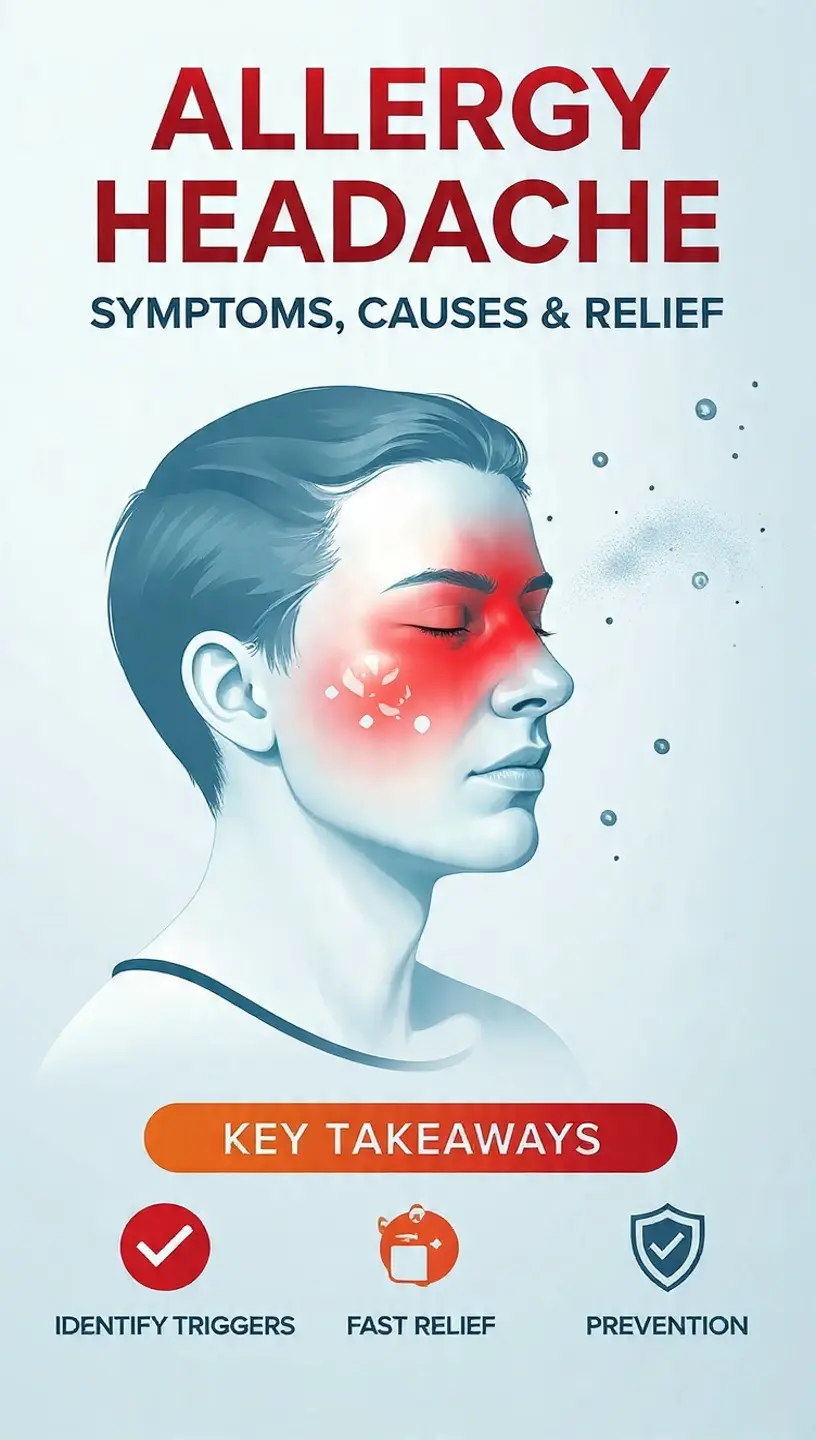
An allergy headache can turn a beautiful spring day into a miserable experience. When your immune system overreacts to pollen, dust, or pet dander, it triggers inflammation in your sinuses, creating intense pressure and pain around your forehead, cheeks, and eyes.
The good news? You can stop this pain before it starts by identifying your triggers, managing your environment, and using the right treatments at the right time.
What Is an Allergy Headache?
An allergic headache occurs when your body’s immune system reacts to substances such as pollen, mould, or dust mites. This reaction releases chemicals called histamines, which cause inflammation and swelling in your nasal passages and sinuses.
Your sinuses are hollow spaces in your skull located:
- Behind your forehead
- Around your eyes
- Inside your cheekbones
- Behind the bridge of your nose
When these spaces get inflamed and filled with mucus, pressure builds up. This pressure creates the throbbing, aching pain you feel.
Key Fact: The Misdiagnosis Problem
According to the American Migraine Foundation, about 90% of people who think they have a sinus headache from allergies have migraines. This is why proper diagnosis matters so much.
Allergy Headache Symptoms You Should Know
I’ve learned to spot my allergy-induced headache symptoms quickly. Here’s what to watch for:
Primary Symptoms
Facial Pain and Pressure
- Dull, throbbing ache around your sinuses
- Pain worsens when you bend forward or lie down
- Tenderness when you touch your face
- Pain that starts in the morning and improves as the day goes on
Nasal Symptoms
- Nasal congestion that won’t clear
- Thick, yellow or green mucus
- Reduced sense of smell
- Post-nasal drip is causing throat irritation
Other Common Signs
- Fatigue and feeling unwell
- Ear pressure or fullness
- Pain in your upper teeth
- Sinus pressure that radiates to your jaw
How to Tell: Allergy Headaches vs Migraines
Read more: Migraine vs Headache: Unmasking the Pain Differences
I used to confuse these two all the time. Here’s how I learned to tell them apart:
Allergy symptoms are causing headaches. Characteristics:
- Pain on both sides of your head
- Dull, constant aching
- Getting worse with movement
- Comes with clear allergic rhinitis symptoms (sneezing, runny nose, itchy eyes)
- No sensitivity to light or sound
- No nausea or vomiting
Migraine Characteristics:
- Usually one-sided throbbing pain
- Moderate to severe intensity
- Sensitivity to light, sound, or smell
- Nausea or vomiting
- Visual disturbances (auras)
- Getting worse with physical activity
According to WebMD, understanding this difference is crucial because treatments differ significantly between the two conditions.
Causes of Allergy Headaches
Understanding what triggers your allergy-induced headache is half the battle. I keep a symptom diary, and I recommend you do the same.
Common Triggers
Outdoor Allergens
- Pollen from trees, grass, and weeds
- Mould spores in damp areas
- Air pollution and smog
Indoor Allergens
- Dust mites in bedding and carpets
- Pet dander from cats, dogs, and other animals
- Indoor mould in bathrooms and basements
- Cockroach droppings
Environmental Factors
- Changes in weather or barometric pressure
- Strong odors or perfumes
- Cigarette smoke
- Chemical fumes
The Science Behind the Pain
When allergens enter your body, your immune system mistakes them for dangerous invaders. It releases histamine and other chemicals to fight them off. These chemicals cause:
- Blood vessels in your sinuses expand
- Mucus production increases dramatically
- Nasal tissues swell and are inflamed
- Sinus openings to blocked, trapping fluid inside
- Pressure builds up, creating pain
The Cleveland Clinic explains that this histamine headache response is your body’s well-intentioned but misguided attempt to protect you.
Allergy Headache Diagnosis
Getting the right diagnosis was crucial for my treatment success. Here’s what to expect:
When to See a Doctor
Visit your healthcare provider if you experience:
- Headaches last more than 7 days
- Severe pain that doesn’t respond to over-the-counter treatments
- Fever above 101°F with facial pain
- Vision changes or confusion
- Stiff neck with headache
- Symptoms worsening despite treatment
Diagnostic Process
Medical History and Physical Exam: Your doctor will ask about:
- When headaches occur
- What hones them or worse
- Other allergy symptoms
- Family history of allergies or migraines
Allergy Testing
- Skin prick tests (most common and accurate)
- Blood tests for specific IgE antibodies
- Patch tests for contact allergies
- Food elimination diets if food allergies are suspected
Imaging Studies
- CT scans to check for sinus blockages
- MRI if other conditions need ruling out
Allergy Headache Treatment Options That Actually Work
I’ve tried almost everything over the years. Here’s what works based on my experience and medical research:
Immediate Relief Strategies
Over-the-counter Medications
- Antihistamines like cetirizine or loratadine (I take this daily during peak seasons)
- Decongestants for quick relief of congestion and headache
- Pain relievers like ibuprofen or acetaminophen
- Combination products like ZYRTEC-D for dual action
Home Remedies
- Steam inhalation (I do this twice daily when symptoms flare)
- Warm compresses on your face for 10-15 minutes
- Saline nasal rinses with a neti pot
- Stay hydrated—drink 8-10 glasses of water daily
- Use a humidifier in your bedroom
Long-Term Management
Immunotherapy (Allergy Shots). This changed my life. After two years of weekly shots, my seasonal allergic rhinitis headaches were reduced by about 70%. According to the American College of Allergy, Asthma & Immunology, immunotherapy can provide lasting relief by retraining your immune system.
Prescription Medications
- Intranasal corticosteroid sprays (highly effective for prevention)
- Prescription of antihistamines for severe cases
- Leukotriene modifiers like montelukast
How to Stop Allergy Headaches Before They Start
Prevention is always better than treatment. I’ve developed a system that keeps me headache-free most days:
Environmental Control Measures
Outdoor Protection
- Check pollen counts daily (I use weather apps)
- Stay indoors when counts are highest (usually morning and early evening)
- Wear sunglasses to keep pollen out of your eyes
- Shower and change clothes after being outside
- Keep cars and home windows closed during peak seasons
Indoor Allergen Reduction
- Use HEPA air purifiers in bedrooms
- Wash bedding weekly in hot water (130°F minimum)
- Encase mattresses and pillows in allergen-proof covers
- Vacuum with HEPA filters twice weekly
- Keep indoor humidity between 30 50% to prevent mould
- Remove carpeting if possible (hard floors collect less dust)
Lifestyle Modifications
Diet and Hydration
- Avoid foods that trigger histamine release (aged cheese, wine, processed meats)
- Eat anti-inflammatory foods (berries, fatty fish, leafy greens)
- Drink plenty of water to thin mucus
- Limit alcohol, which can worsen sinus inflammation
Sleep and Stress Management
- Sleep with your head elevated to promote drainage
- Practice stress-reduction techniques (stress worsens allergies)
- Get 7-9 hours of quality sleep nightly
- Exercise regularly to boost immune function
Natural Remedies for Allergy Headaches
I supplement my medical treatment with natural approaches:
Evidence-Based Natural Options
Herbal Remedies
- Butterbur extract (shown to reduce migraine frequency)
- Local honey (may help build tolerance to local pollens)
- Ginger tea for anti-inflammatory effects
- Peppermint oil applied to temples
Nutritional Supplements
- Quercetin (natural antihistamine)
- Vitamin C (supports immune function)
- Omega-3 fatty acids (reduce inflammation)
- Probiotics (support gut-immune connection)
Physical Therapies
- Acupuncture (I’ve found this helpful during severe flare-ups)
- Massage therapy for neck and facial tension
- Chiropractic care for structural alignment
Managing Seasonal Allergy Headaches
Hay fever headache patterns follow seasonal changes. I’ve learned to anticipate and prepare:
Spring (March-June)
- Tree pollen peaks
- Start medications 2 weeks before symptoms typically begin
- Keep windows closed
- Use air conditioning with clean filters
Summer (June-September)
- Grass pollen dominates
- Mold spores increase in humid areas
- Limit outdoor activities during peak pollen times
- Shower before bed to remove pollen
Fall (September-November)
- Ragweed causes most problems
- Mold thrives in fallen leaves
- Continuing protective measures
- Clean gutters to prevent mold
Winter (December-March)
- Indoor allergens intensify
- Dry air worsens symptoms
- Focus on indoor allergen control
- Use humidifiers carefully to avoid mould
My Experience with Allergy Headaches
I remember my first serious allergic rhinitis headache like it was yesterday. I woke up on a gorgeous April morning with what felt like a vice grip around my forehead. My face ached, my nose was completely blocked, and I couldn’t think straight. I thought I had a regular headache, so I took some ibuprofen and waited. Nothing happened.
After three days of misery, I finally saw my doctor. She explained that my sinus pressure from allergies was the real culprit. That conversation changed everything for me. I learned to recognize the signs early and act before the pain became unbearable.
Key Takeaways
Here’s what you need to remember about allergy headache management:
- Identify your triggers through testing and tracking
- Start prevention early—don’t wait for symptoms
- Use multiple strategies for best results (medications + environmental control + lifestyle changes)
- Differentiate between Sinus pressure headache, allergies, and migraines for proper treatment
- Seek professional help if home treatments aren’t working
- Be consistent with prevention measures during your trigger seasons
- Stay hydrated to thin mucus and reduce inflammation
- Monitor pollen counts and adjust activities accordingly
FAQs About Allergy Headache
How does an allergy headache feel?
A sinus pressure headache, allergies, feels dull, constant pressure or pain around your sinuses, particularly in your forehead, cheeks, and around your eyes. The pain typically worsens when you bend forward or lie down and often improves throughout the day.
You’ll usually have other allergy symptoms like nasal congestion, sneezing, and itchy eyes alongside the headache. Unlike migraines, Histamine headaches don’t cause sensitivity to light or nausea.
What helps with allergy headaches?
The most effective treatments combine antihistamines to reduce allergic reactions, decongestants to relieve sinus pressure, and pain relievers for immediate relief. I’ve found that starting with a warm compress on my face, drinking extra water, and using a saline nasal rinse helps quickly.
For long-term relief, identify and avoid your triggers, use air purifiers, and consider immunotherapy if symptoms are severe.
How long do allergy headaches last?
They typically last as long as you’re exposed to the allergen. This could be a few hours if you briefly encounter a trigger, or several days to weeks during peak allergy seasons.
With proper treatment, most people experience relief within 1-3 days. If your headache lasts longer than a week despite treatment, see your doctor—you might be dealing with a sinus infection or another condition.
Does drinking water help with allergies?
Yes, staying well-hydrated helps thin the mucus in your sinuses, making it easier to drain and reducing sinus pressure from allergies. According to Harvard Health, drinking 8-10 glasses of water daily can help prevent mucus from becoming thick and sticky, which contributes to blockages and headaches.
I notice a significant difference in my symptoms when I maintain proper hydration throughout the day.
When to worry about a headache?
Seek immediate medical attention if you experience: sudden, severe headache that’s the worst you’ve ever had; headache with fever, stiff neck, confusion, vision changes, or difficulty speaking; headache after a head injury; or headaches that progressively worsen despite treatment.
While allergy symptoms causing headaches are rarely dangerous, these red flags could indicate serious conditions like meningitis, stroke, or bleeding in the brain that require emergency care.
My Final Thoughts
Living with an Allergy headache doesn’t have to mean constant suffering. Since implementing these strategies, I’ve reduced my headache frequency by about 80%. The key is being proactive rather than reactive.
I’ve learned that everyone’s triggers and responses are different. What works perfectly for me might need adjustment for you. Be patient with yourself as you figure out your personal formula for relief.
The investment in proper testing, prevention, and treatment has given me back so many days I would have lost to pain. If you’re struggling, don’t give up. Work with your healthcare provider, stay consistent with your strategies, and keep trying until you find what works.
Reference
- American College of Allergy, Asthma & Immunology (ACAAI)
- American Migraine Foundation – Allergies and Migraine: How Do They Affect You?
- Cleveland Clinic – Allergic Rhinitis (Hay Fever)
- Harvard Health Publishing – Treatments for Post-Nasal Drip

Adel Galal is a health and wellness writer with over 30 years of experience studying and writing about health, fitness, nutrition, and healthy living. He is the founder of NextFitLife.com, where he shares practical, evidence-based guidance to support long-term health at any age. Adel’s mission is simple:
to help people make smarter health choices that fit real life, at any age.