Originally published: Aug 10, 2023
Last updated: July 17, 2026
Next review: July 2027
Written by: Adel Galal, Founder and Lead Writer at NextFitLife
Review status: Editorially reviewed using current American Heart Association, NCCIH, Arthritis Foundation, and open clinical research. This page has not been medically reviewed by a doctor, rheumatologist, pharmacist, or registered dietitian.
Reading time: About 22 minutes
They cannot replace medicine, physical therapy, surgery, or medical care.
Food can still matter.
A balanced dinner can provide fibre, protein, healthy fats, vitamins, minerals, and plant compounds.
These nutrients support normal body functions.
The best studied approach is not one magic spice or superfood.
It is a full Mediterranean diet pattern.
This pattern uses plenty of vegetables, fruit, beans, lentils, whole grains, nuts, seeds, fish, and olive oil.
It uses poultry, eggs, and dairy in moderate amounts.
It limits processed meat, refined grains, sugary drinks, excess salt, and foods high in saturated fat.
Some research suggests that this eating style may support lower levels of chronic inflammation.
Research in rheumatoid arthritis also suggests that some anti -inflammatory eating patterns may modestly improve pain.
The evidence is not strong enough to promise pain relief for every person.
The meals in this guide follow a food-first approach.
They use vegetables, beans, fish, whole grains, nuts, seeds, herbs, and extra virgin olive oil.
They are flexible.
You can change the protein, grain, vegetables, and seasoning to fit your needs.
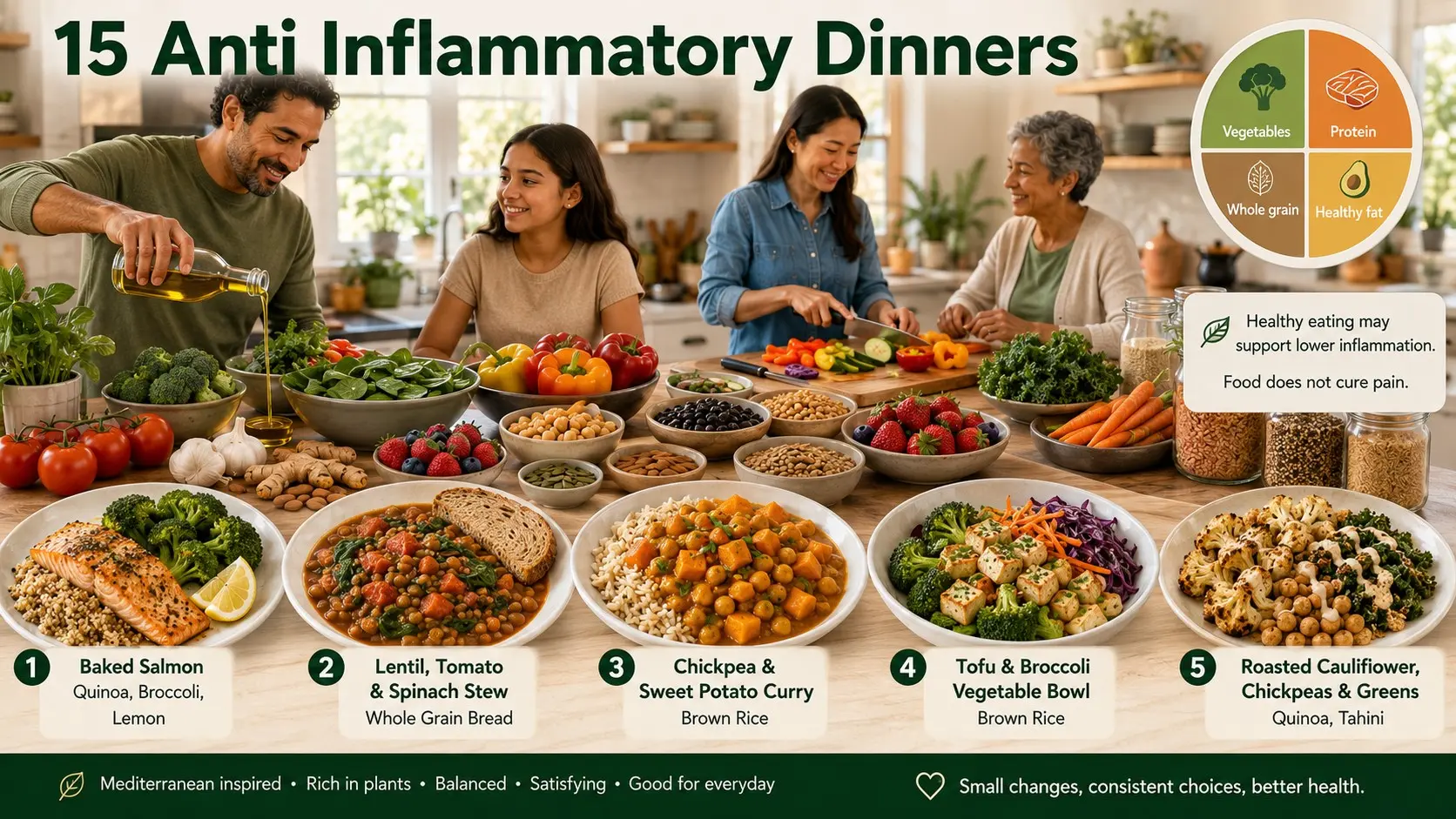
This guide explains 15 practical anti inflammatory dinners, how to build a balanced plate, how to prepare meals ahead, and when pain needs medical care.
For more bone and joint nutrition guides, visit the NextFitLife Bone and Joint Health Foods Hub.
Anti Inflammatory Dinners - Quick Answer
Good dinner choices include:
- Salmon with quinoa and broccoli
- Lentil, tomato, and spinach stew
- Chickpea and sweet potato curry
- Mediterranean baked cod
- Tofu and broccoli brown rice bowl
- Turkey and quinoa stuffed peppers
- Sweet potato and black bean tacos
- Chicken, barley, and vegetable soup
- White bean, kale, and tomato skillet
- Sardine and spinach whole grain pasta
- Cauliflower and chickpea tahini bowl
- Mushroom and lentil pasta sauce
- Shrimp and vegetable brown rice bowl
- Vegetable frittata with bean salad
- Baked chicken with farro and vegetables
No one's dinner is a cure.
Choose meals that you enjoy and can repeat.
Keep taking any prescribed medicine.
Speak with a qualified healthcare professional when pain, swelling, weakness, or stiffness continues.
Editorial and Advertising Disclosure
This guide was written and editorially reviewed by Adel Galal.
Adel is a health and wellness writer.
He is not a doctor, rheumatologist, pharmacist, pain specialist, or registered dietitian.
This article cannot diagnose inflammation or identify the cause of pain.
NextFitLife uses display advertising to support the website.
Advertising does not decide the meals, medical warnings, sources, or conclusions on this page.
Read the
Editorial Policy,
Medical Review Policy,
and
Corrections Policy.
Important Pain and Inflammation Safety Note
Inflammation is part of the body’s normal defence and repair system.
It becomes a concern when it is severe, harmful, or continues for too long.
Pain does not always mean inflammation.
Pain can come from injury, nerve damage, infection, arthritis, poor circulation, migraine, cancer, or another condition.
Do not stop arthritis medicine or another prescribed treatment because your diet improves.
Early treatment of inflammatory arthritis can help prevent permanent joint damage.
Seek urgent care for a hot, swollen joint with fever, sudden weakness, chest pain, severe abdominal pain, a major injury, or rapidly worsening symptoms.
What Does Anti Inflammatory Eating Mean?
There is no single official anti inflammatory diet.
Most useful guidance follows a Mediterranean-style pattern.
The Pattern Includes
- Vegetables
- Fruit
- Beans and lentils
- Whole grains
- Nuts and seeds
- Fish
- Olive oil
- Herbs and spices
- Minimally processed foods
The Pattern Limits
- Processed meat
- Large amounts of fatty red meat
- Sugary drinks
- Refined grains
- Highly processed snacks
- Excess salt
- Foods high in saturated fat
The Whole Pattern Matters
One spoon of turmeric cannot correct an otherwise poor diet.
One serving of salmon cannot cancel smoking, poor sleep, or missed medicine.
Benefits come from regular habits over time.
For a wider look at healthy meal choices, visit the NextFitLife Foods and Nutrition Hub.
Can Anti Inflammatory Dinners Reduce Pain?
They may help some people.
They will not help every type of pain.
Research in rheumatoid arthritis suggests that some anti inflammatory dietary patterns may produce a modest improvement in pain.
Omega-3-rich foods may also support symptom control in some people with rheumatoid arthritis.
The quality of the evidence is limited.
Diet should be an addition to treatment.
It should not replace treatment.
Food May Support
- Better overall diet quality
- A healthier body weight
- Heart health
- Blood glucose control
- Fibre intake
- Normal immune function
- Muscle and bone nutrition
Food Cannot
- Repair a torn ligament
- Treat a joint infection
- Reverse severe joint damage
- Stop an autoimmune disease alone
- Treat nerve compression
- Replace pain assessment
How to Build Anti Inflammatory Dinners
A balanced dinner does not need a long ingredient list.
Use four simple parts.
1. Add Plenty of Vegetables
Use two or more colours when possible.
Good choices include:
- Broccoli
- Spinach
- Kale
- Bell peppers
- Tomatoes
- Carrots
- Cauliflower
- Aubergine
- Courgette
- Cabbage
2. Choose a Protein
Useful choices include:
- Beans
- Lentils
- Chickpeas
- Tofu
- Tempeh
- Fish
- Chicken
- Turkey
- Eggs
3. Add a Whole Grain or Starchy Vegetable
Try:
- Oats
- Barley
- Brown rice
- Quinoa
- Farro
- Bulgur
- Whole grain pasta
- Sweet potato
4. Add a Healthy Fat
Use a small amount of:
- Olive oil
- Avocado
- Walnuts
- Almonds
- Chia seeds
- Ground flax seeds
- Tahini
This creates a meal rich in plant-based foods, protein, fibre, and unsaturated fats.
15 Easy Anti Inflammatory Dinners
Each recipe makes about two adult servings.
Adjust portions for age, activity, appetite, and health needs.
Season to taste.
1. Salmon With Quinoa and Broccoli
This meal provides protein, vegetables, whole grains, and marine omega-3 fatty acids.
Ingredients
- Two salmon fillets
- One cup cooked quinoa
- Two cups of broccoli
- One tablespoon of olive oil
- Lemon juice
- Garlic
- Black pepper
- Fresh dill or parsley
Method
- Heat the oven.
- Place the salmon and broccoli on a tray.
- Add olive oil, garlic, pepper, and lemon.
- Bake until the fish is fully cooked.
- Serve with warm quinoa and herbs.
Simple Swap
Use trout, sardines, tofu, or chickpeas instead of salmon.
2. Lentil, Tomato, and Spinach Stew
This is a simple high-fibre meal with plant protein.
Ingredients
- One cup cooked lentils
- One can chop tomatoes
- Two cups of spinach
- One small onion
- One carrot
- Garlic
- One teaspoon of cumin
- One tablespoon of olive oil
Method
- Cook the onion and carrot in olive oil.
- Add garlic and cumin.
- Add tomatoes and lentils.
- Simmer until thick.
- Stir in the spinach.
Serve with brown rice or whole grain bread.
3. Chickpea and Sweet Potato Curry
This dinner combines chickpeas, vegetables, herbs, and spices.
Ingredients
- One can of chickpeas, rinsed
- One medium sweet potato
- One can of chopped tomatoes
- Two cups of spinach
- One small onion
- Garlic
- Fresh ginger
- Turmeric
- Cumin
- One tablespoon of olive or rapeseed oil
Method
- Cook the onion in oil.
- Add garlic, ginger, turmeric, and cumin.
- Add sweet potato, tomatoes, and a little water.
- Cook until the potato is soft.
- Add chickpeas and spinach.
Serve with brown rice or quinoa.
4. Mediterranean Baked Cod
This meal uses fish, tomatoes, vegetables, olives, and herbs.
Ingredients
- Two cod fillets
- One cup of cherry tomatoes
- One courgette
- One bell pepper
- A small amount of olives
- One tablespoon of olive oil
- Lemon
- Oregano
- Black pepper
Method
- Place the vegetables in a baking dish.
- Add olive oil and oregano.
- Place the cod on top.
- Add lemon and pepper.
- Bake until the fish is fully cooked.
Serve with barley, brown rice, or whole-grain bread.
5. Tofu and Broccoli Brown Rice Bowl
This is a flexible plant-based dinner.
Ingredients
- Firm tofu
- Two cups of broccoli
- One bell pepper
- One carrot
- One cup cooked brown rice
- Fresh ginger
- Garlic
- Low-sodium soy sauce
- One teaspoon sesame oil
Method
- Cook the tofu until lightly golden.
- Add broccoli, pepper, and carrot.
- Add ginger and garlic.
- Add a small amount of soy sauce and sesame oil.
- Serve over brown rice.
Choose gluten-free tamari if needed.
6. Turkey and Quinoa Stuffed Peppers
This meal combines lean poultry, vegetables, and whole grains.
Ingredients
- Two large bell peppers
- Lean turkey mince
- One cup cooked quinoa
- Chopped tomatoes
- Onion
- Garlic
- Parsley
- Smoked paprika
Method
- Cook the turkey with onion and garlic.
- Add tomatoes, quinoa, parsley, and paprika.
- Fill the pepper halves.
- Bake until the peppers are soft and the turkey is fully cooked.
Plant-Based Swap
Replace turkey with lentils or black beans.
7. Sweet Potato and Black Bean Tacos
This colourful meal provides fibre, plant protein, and vegetables.
Ingredients
- One sweet potato
- One can of black beans, rinsed
- Corn tortillas
- Shredded cabbage
- Tomato
- Avocado
- Lime
- Cumin
- Smoked paprika
Method
- Roast the sweet potato with cumin and paprika.
- Warm the black beans.
- Fill each tortilla with sweet potato and beans.
- Add cabbage, tomato, avocado, and lime.
Use plain yogurt instead of a heavy cream sauce.
8. Chicken, Barley, and Vegetable Soup
This is a complete dinner with protein, vegetables, and a whole grain.
Ingredients
- Cooked chicken
- Cooked barley
- Carrot
- Celery
- Courgette
- Spinach
- Onion
- Garlic
- Fresh ginger
- Low sodium stock
Method
- Cook the onion, carrot, and celery.
- Add garlic and ginger.
- Add stock, barley, and chicken.
- Simmer until the vegetables are soft.
- Add spinach before serving.
Use beans instead of chicken for a plant-based version.
9. White Bean, Kale, and Tomato Skillet
This fast dinner uses common store- cupboard foods.
Ingredients
- One can of white beans, rinsed
- One can of chopped tomatoes
- Two cups chopped kale
- Garlic
- Onion
- One tablespoon of olive oil
- Oregano
- Black pepper
Method
- Cook onion and garlic in olive oil.
- Add tomatoes and oregano.
- Add beans and kale.
- Cook until the kale is soft.
Serve with whole-grain toast or brown rice.
10. Sardine and Spinach Whole- Grain Pasta
Sardines provide protein, omega-3 fats, and calcium when the soft bones are eaten.
Ingredients
- Whole grain pasta
- One can of sardines
- Two cups of spinach
- Cherry tomatoes
- Garlic
- Lemon
- Parsley
- One teaspoon olive oil if needed
Method
- Cook the pasta.
- Cook garlic and tomatoes in a pan.
- Add spinach and sardines.
- Add pasta, lemon, and parsley.
- Mix gently and serve.
Choose sardines with less added salt when possible.
11. Cauliflower and Chickpea Tahini Bowl
This dinner provides vegetables, legumes, whole grains, and sesame.
Ingredients
- One small cauliflower
- One can of chickpeas, rinsed
- One cup cooked quinoa
- Mixed leafy greens
- Tahini
- Lemon juice
- Garlic
- Cumin
- Olive oil
Method
- Roast the cauliflower and chickpeas with cumin.
- Mix tahini, lemon, garlic, and water.
- Place quinoa and greens in bowls.
- Add roasted cauliflower and chickpeas.
- Add a small amount of tahini sauce.
12. Mushroom and Lentil Pasta Sauce
This meal replaces processed meat with mushrooms and lentils.
Ingredients
- Cooked green or brown lentils
- Chopped mushrooms
- Chopped tomatoes
- Onion
- Carrot
- Garlic
- Oregano
- Whole grain pasta
Method
- Cook onion, carrot, garlic, and mushrooms.
- Add tomatoes, lentils, and oregano.
- Simmer until thick.
- Serve over whole-grain pasta.
Add walnuts for extra texture when safe.
13. Shrimp and Vegetable Brown Rice Bowl
This dinner combines seafood, vegetables, and a whole grain.
Ingredients
- Peeled shrimp
- One cup cooked brown rice
- Broccoli
- Bell pepper
- Carrot
- Edamame
- Garlic
- Ginger
- Low sodium soy sauce
Method
- Cook the shrimp until fully cooked.
- Remove it from the pan.
- Cook the vegetables with garlic and ginger.
- Return the shrimp.
- Serve with brown rice.
Use tofu when shellfish is not suitable.
14. Vegetable Frittata With Bean Salad
Eggs can fit into a balanced Mediterranean-style meal.
Ingredients
- Four eggs
- Spinach
- Bell pepper
- Courgette
- Tomato
- Herbs
- One cup mixed beans
- Cucumber
- Lemon
- Olive oil
Method
- Cook the vegetables until soft.
- Add beaten eggs.
- Cook until the eggs are fully set.
- Mix beans, cucumber, lemon, herbs, and a little olive oil.
- Serve the salad beside the frittata.
15. Baked Chicken With Farro and Roasted Vegetables
This meal follows a simple lean protein, whole grain, and vegetable formula.
Ingredients
- Two skinless chicken portions
- One cup cooked farro
- Aubergine
- Courgette
- Bell pepper
- Red onion
- Olive oil
- Lemon
- Rosemary
- Garlic
Method
- Place the chicken and vegetables on a tray.
- Add a small amount of olive oil, lemon, rosemary, and garlic.
- Bake until the chicken is fully cooked.
- Serve with warm farro.
Gluten Free -Swap
Use quinoa or brown rice instead of farro.
Foods to Use More Often in Anti Inflammatory Dinners
Vegetables and Fruit
They provide fibre, vitamins, minerals, and polyphenols.
Use many colours across the week.
Beans and Lentils
They provide plant protein and soluble fibre.
They can replace some processed or fatty meat.
Whole Grains
Whole grains include oats, barley, brown rice, quinoa, bulgur, and whole -grain pasta.
They provide more fibre than many refined grains.
Fish
Salmon, sardines, trout, herring, and mackerel provide useful omega-3 fats.
Food should come before a fish oil supplement for most people.
Nuts and Seeds
Walnuts, almonds, pumpkin seeds, chia seeds, and flax seeds provide unsaturated fats and fibre.
Use a small portion because they are filling.
Olive Oil
Olive oil can replace butter, ghee, lard, coconut oil, and creamy sauces.
Use a sensible amount.
All oils are rich in energy.
Foods to Limit in an Anti Inflammatory Eating Pattern
No single food causes every case of inflammation.
The amount and overall pattern matter.
Processed Meat
Limit frequent consumption of sausages, bacon, salami, and meat pies.
Choose fish, beans, tofu, or lean poultry more often.
Refined Grains
Replace some white bread, white pasta, and refined cereal with whole-grain versions.
Sugary Drinks
Water and unsweetened drinks are simpler daily choices.
Highly Processed Snacks
Crisps, biscuits, pastries, and sweets can fit in occasionally.
They should not replace balanced meals.
Excess Saturated Fat
Use less butter, ghee, cream, fatty meat, coconut oil, and palm oil.
Use olive oil, nuts, seeds, avocado, and fish more often.
For cholesterol-related swaps, read Foods to Lower Cholesterol NHS Advice Supports.
Turmeric, Ginger, and Garlic in Anti Inflammatory Dinners
Herbs and spices add flavour.
They can help reduce the need for excess salt and heavy sauces.
Turmeric
Turmeric contains curcumin.
Research into concentrated curcumin products is still developing.
Evidence does not support calling turmeric the one food that kills inflammation.
A culinary amount can fit into curry, soup, rice, and roasted vegetables.
Ginger
Ginger adds flavour to soup, curry, fish, tofu, and vegetable dishes.
Large concentrated supplements may interact with medicine.
Garlic
Garlic can add flavour to vegetables, beans, fish, chicken, and sauces.
It is not a replacement for blood pressure or cholesterol treatment.
Supplements Are Different
A spice used in dinner is different from a concentrated capsule.
Supplements can create side effects and medicine interactions.
Ask a pharmacist before using them with blood thinners or other medicines.
Simple Meal Preparation for Anti Inflammatory Dinners
Prepare a few basic foods once.
Use them in different ways during the week.
Cook One Grain
Prepare brown rice, quinoa, barley, or farro.
Cook One Legume
Prepare lentils, chickpeas, black beans, or white beans.
Roast a Tray of Vegetables
Use peppers, carrots, courgette, cauliflower, aubergine, and onions.
Make One Simple Sauce
Try:
- Lemon and olive oil
- Tahini and lemon
- Tomato and garlic
- Plain yogurt and herbs
Add Fresh Protein
Cook fish, chicken, eggs, tofu, or another protein when needed.
Use Frozen Foods
Frozen vegetables, fruit, fish, and cooked grains can save time.
Choose products without heavy sauces or excess salt.
Changing Anti Inflammatory Dinners for Health Needs
Rheumatoid Arthritis
Diet may support symptom care.
It cannot stop joint damage alone.
Continue disease-modifying medicine as prescribed.
Osteoarthritis
A balanced diet may support weight, muscle, and heart health.
Exercise, strength work, physical therapy, and pain treatment may also be needed.
Diabetes
Beans, grains, fruit, milk, and starchy vegetables contain carbohydrates.
Follow your personal meal and medicine plan.
Choose suitable portions and monitor blood glucose as advised.
Kidney Disease
Beans, nuts, seeds, tomatoes, potatoes, dairy, and whole grains may contain potassium or phosphorus.
Do not use a general meal plan in place of your kidney diet.
Read the NextFitLife Diet for Kidney Disease Guide.
Coeliac Disease
Use certified gluten-free grains.
Suitable choices may include rice, quinoa, buckwheat, and certified gluten- free oats.
Inflammatory Bowel Disease
High-fibre meals may not suit every person during a flare.
Texture and fibre may need to change.
Follow advice from the gastroenterology team or dietitian.
Acid Reflux
Tomatoes, citrus, garlic, onion, chilli, mint, and fatty meals may trigger symptoms in some people.
Triggers differ.
Use foods that you tolerate.
Blood Thinners
Leafy green vegetables contain vitamin K.
People taking warfarin may be advised to keep vitamin K intake steady.
Do not remove all greens without medical advice.
Pregnancy
Cook meat, poultry, eggs, fish, and seafood safely.
Choose fish lower in mercury.
Use pasteurized dairy products.
Discuss herbs and supplements with a maternity professional.
Food Allergies
Replace nuts, sesame, dairy, eggs, fish, shellfish, soy, or wheat when you have an allergy.
Check sauces and packaged foods for hidden ingredients.
Common Myths About Anti Inflammatory Dinners
Myth: One Food Kills Inflammation
No.
Inflammation is a complex body process.
No single food switches it off.
Myth: Turmeric Makes Pain Disappear
No.
Turmeric can add flavour.
It is not a cure for arthritis, injury, or chronic pain.
Myth: Every Nightshade Vegetable Causes Joint Pain
No strong evidence shows that tomatoes, peppers, aubergine, or potatoes cause inflammation in everyone.
Avoid a food only when it causes a clear personal problem or a clinician advises it.
Myth: Gluten Causes Inflammation in Everyone
No.
People with coeliac disease must avoid gluten.
Other people may need testing before removing it.
Myth: Seed Oils Are Always Inflammatory
No.
Unsaturated plant oils can fit a healthy diet.
The full diet and amount matter.
Myth: Eggs Are Always Inflammatory
No.
Eggs can fit into a balanced meal unless an allergy or another personal reason makes them unsuitable.
Myth: Anti Inflammatory Food Replaces Medicine
No.
Diet supports health.
It does not replace proven treatment.
When Pain or Inflammation Needs Medical Care
Arrange a Medical Appointment for
- Pain lasting for several weeks
- Morning stiffness that continues
- Repeated joint swelling
- Reduced movement
- Unexplained fatigue or weight loss
- Weakness or numbness
- Pain that affects sleep or daily tasks
- Symptoms that do not improve with treatment
Seek Urgent Medical Care for
- A hot swollen joint with fever
- Sudden severe pain
- Chest pressure or breathing difficulty
- Sudden weakness or facial drooping
- Loss of bladder or bowel control
- A major injury or visible deformity
- Severe abdominal pain
- Black stool or vomiting blood
- A serious allergic reaction
Conclusion
Anti inflammatory dinners are balanced meals based on vegetables, beans, whole grains, fish, healthy fats, herbs, and minimally processed foods.
They may support lower inflammatory activity and better overall health.
They cannot promise a life without pain.
The full eating pattern matters more than one ingredient.
Start with vegetables.
Add beans, fish, tofu, chicken, eggs, or another protein.
Add a whole grain or starchy vegetable.
Use a small amount of olive oil, nuts, seeds, avocado, or tahini.
Keep prescribed treatment in place.
Seek medical care for persistent or severe pain.
Use this anti inflammatory dinners guide by choosing one recipe, preparing the ingredients, and adding it to your meals this week.
References and Sources
- American Heart Association. What Is the Mediterranean Diet?Current guidance about vegetables, fruit, whole grains, beans, nuts, seeds, olive oil, fish, poultry, processed foods, sugar, saturated fat, and the wider heart healthy eating pattern.
- National Center for Complementary and Integrative Health. Nutritional Approaches for Musculoskeletal Pain and Inflammation.Open evidence about omega 3 fats, turmeric, curcumin, pain research, supplement limits, and safety concerns.
- National Center for Complementary and Integrative Health. Omega 3 Supplements and Foods.Current evidence about omega 3 rich foods, rheumatoid arthritis pain, prescribed medicine, pregnancy seafood advice, and the difference between food, supplements, and prescription products.
- Arthritis Foundation. Anti Inflammatory Diet Guidance.Open practical guidance about Mediterranean style eating, fish, vegetables, fruit, nuts, seeds, olive oil, fibre, and arthritis nutrition.
- Schönenberger and colleagues. Effect of Anti Inflammatory Diets on Pain in Rheumatoid Arthritis.Open systematic review and analysis examining pain outcomes while noting the need for stronger and more consistent research.
Continue Reading on NextFitLife
Frequently Asked Questions
What are anti inflammatory dinners?
They are balanced meals based on vegetables, fruit, beans, whole grains, fish, nuts, seeds, olive oil, herbs, and minimally processed foods.
Can anti inflammatory dinners stop pain?
No. They may support overall health and may modestly improve some symptoms, but they cannot treat every cause of pain.
What is the best anti inflammatory dinner?
There is no single best meal. A useful choice combines vegetables, a suitable protein, a whole grain or starchy vegetable, and an unsaturated fat.
What food kills inflammation?
No food kills inflammation. The full eating pattern matters more than one food or spice.
Is turmeric the strongest anti inflammatory food?
No. Turmeric can add flavour, but it is not a cure. Evidence for concentrated curcumin products remains limited.
Is salmon good for anti inflammatory dinners?
Salmon provides protein and omega 3 fats. It can fit a Mediterranean style dinner with vegetables and whole grains.
Are beans anti inflammatory?
Beans provide fibre, plant protein, vitamins, and minerals. They fit well in an anti inflammatory eating pattern.
Are eggs inflammatory?
Eggs can fit a balanced diet for most people. They are not automatically inflammatory.
Are tomatoes inflammatory?
No strong evidence shows that tomatoes cause inflammation in everyone. Avoid them only when they cause a clear personal problem.
Is whole grain pasta suitable?
Yes. Whole grain pasta provides more fibre than refined pasta and can be combined with vegetables, beans, fish, or a tomato sauce.
Can chicken fit anti inflammatory dinners?
Yes. Choose skinless chicken and combine it with vegetables, whole grains, beans, herbs, and olive oil.
Are plant based dinners better?
Plant based meals can provide fibre and useful nutrients. Fish and lean poultry can also fit a Mediterranean style pattern.
Should I avoid gluten?
People with coeliac disease must avoid gluten. Other people should not remove it without a clear reason or professional advice.
Should I avoid nightshade vegetables?
Not routinely. Tomatoes, peppers, aubergine, and potatoes do not cause inflammation in every person.
Can diet replace rheumatoid arthritis medicine?
No. Medicine can slow joint damage. Diet may support health but should not replace prescribed treatment.
How quickly will an anti inflammatory diet work?
There is no fixed timeline. Some people notice changes over weeks or months, while others do not notice pain improvement.
Are anti inflammatory dinners safe with kidney disease?
Not every recipe is suitable. Potassium, phosphorus, protein, sodium, and fluid may need personal limits.
Is this article medical advice?
No. It provides general education. A qualified healthcare professional should diagnose pain and inflammatory disease.

Health & wellness writer with 30+ years of experience in nutrition, fitness, and healthy aging. Founder of NextFitLife.com — evidence-based health guidance.