Published: Mar 7, 2023
Last updated: July 16, 2026
Next review: July 2027
Written by: Adel Galal, Founder and Lead Writer at NextFitLife
Review status: Editorially reviewed and checked against current NIH, NCCIH, FAO, PubMed, and MedlinePlus information. This page has not been medically reviewed by a doctor, pharmacist, herbal medicine specialist, or registered dietitian.
Reading time: About 18 minutes
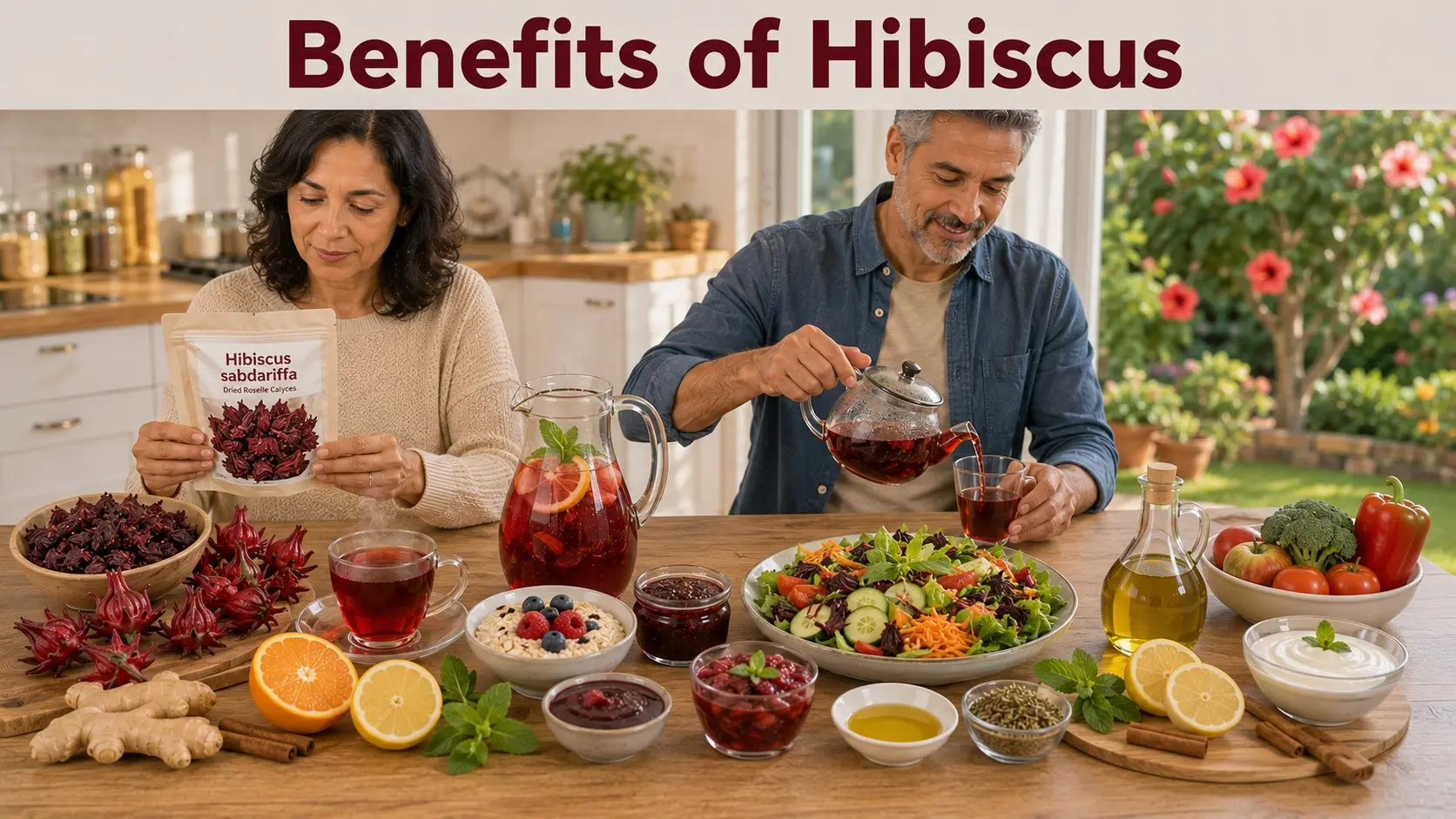
The red part used for tea is usually the fleshy calyx around the seed pod.
It is not simply an ordinary flower petal.
Hibiscus has a tart taste that is often compared with cranberry.
It can be served hot or cold.
It can also be used in sauces, jams, fruit dishes, salad dressings, syrups, and baked food.
Research suggests that regular hibiscus intake may produce a small reduction in blood pressure in some adults.
This does not mean hibiscus tea can treat a dangerous reading.
It does not replace blood pressure medicine.
Evidence for cholesterol, blood sugar, liver health, weight loss, and other claims is less certain.
This guide explains the benefits of hibiscus, its culinary and traditional roles, simple recipes, medicine concerns, pregnancy cautions, and signs that indicate the need for medical care.
For wider drink guidance, visit the NextFitLife Healthy Drinks Guide.
Benefits of Hibiscus - Quick Answer
Hibiscus can be enjoyed as a tart, colourful, usually caffeine-free herbal drink.
Possible benefits include:
- Adding variety to normal fluid intake
- Providing plant compounds called anthocyanins and polyphenols
- Replacing some sugary drinks when served without much sugar
- Producing a small blood pressure reduction in some adults
- Adding natural colour and tart flavour to recipes
Hibiscus has not been proven to:
- Cure high blood pressure
- Lower blood pressure during an emergency
- Remove plaque from arteries
- Detox the liver or kidneys
- Cause meaningful weight loss
- Cure diabetes
- Prevent cancer
- Replace medicine
Choose food-grade Hibiscus sabdariffa.
Do not use an ornamental garden plant unless a qualified expert has confirmed the exact species and safe food use.
Editorial and Advertising Disclosure
This guide was written and editorially reviewed by Adel Galal.
Adel is a health and wellness writer.
He is not a doctor, pharmacist, botanist, herbal medicine specialist, or registered dietitian.
This page cannot identify a plant, diagnose a medical condition, or check whether hibiscus is safe with your medicine.
NextFitLife uses display advertising to support the website.
Advertising does not decide the claims, recipes, warnings, references, or conclusions on this page.
Read the
Editorial Policy,
Medical Review Policy,
and
Corrections Policy.
Important Hibiscus Safety Note
Do not use hibiscus tea to treat a dangerously high blood pressure reading.
Do not stop blood pressure or diabetes medicine because you start drinking hibiscus.
Hibiscus may add to the effects of medicines that lower blood pressure or blood glucose.
Ask a doctor or pharmacist before regular use if you take medicine or have a diagnosed condition.
Pregnancy and breastfeeding safety information is limited.
Avoid concentrated extracts and medicinal amounts unless a maternity professional approves them.
Use only food-grade roselle from a reliable supplier.
Do not make tea from an unknown ornamental hibiscus plant.
What Is Hibiscus?
Hibiscus is the name of a large group of flowering plants.
Different species have different uses.
Some are mainly ornamental.
Some have traditional food uses.
The species most often used for red hibiscus drinks is Hibiscus sabdariffa.
This plant belongs to the mallow family.
It is commonly called roselle.
Common Names
Roselle drinks have many regional names.
- Karkade in Egypt, Sudan, and nearby regions
- Bissap in parts of West Africa
- Zobo in Nigeria
- Sobolo in Ghana
- Sorrel in parts of the Caribbean
- Agua de Jamaica in Mexico and parts of Latin America
- Sour tea in some research and commercial products
Recipes differ by region.
They may include ginger, cloves, cinnamon, citrus, fruit, sugar, or other ingredients.
Is Hibiscus Tea Caffeine-Free?
Pure hibiscus infusion is naturally caffeine-free.
A blended tea may contain black tea, green tea, mate, or another source of caffeine.
Read the ingredient list.
Which Part of Hibiscus Is Used?
The red ingredient commonly sold for hibiscus tea is the calyx of Hibiscus sabdariffa.
The calyx surrounds and protects the developing seed pod.
After the flower falls, the calyx becomes fleshy and red.
It may be used fresh, dried, or frozen.
Other Culinary Parts
In some food traditions, young roselle leaves and tender stems are cooked as greens or added to curries and soups.
Seeds are also used in some regional foods.
Food use depends on the exact variety and local preparation knowledge.
Do Not Confuse Food Roselle With Garden Hibiscus
A colourful ornamental hibiscus is not automatically the same species used in tea.
Garden plants may also have pesticide or fertilizer residues that are not approved for food use.
Buy a product labelled food-grade Hibiscus sabdariffa or roselle.
Traditional Culinary and Medicinal Properties of Hibiscus
Hibiscus has a long history in food and traditional medicine.
Traditional use can show cultural importance.
It does not prove that a remedy works in modern clinical care.
Traditional Culinary Uses
Roselle has been used in:
- Hot tea
- Cold drinks
- Fruit punches
- Jams and jellies
- Sauces
- Chutneys
- Syrups
- Desserts
- Salads
- Cooked greens
- Soups and curries
Traditional Medicinal Uses
Different cultures have used hibiscus preparations for blood pressure, fever, digestion, urine production, liver complaints, and general wellness.
These uses are historical practices.
They should not be described as proven treatments.
Traditional Knowledge and Modern Evidence
Modern research can test whether a traditional use produces a reliable benefit.
It must also examine dose, preparation, side effects, medicine interactions, and product quality.
Results from laboratory or animal studies do not automatically apply to people.
What Does Research Say About the Benefits of Hibiscus?
The amount of evidence differs by health claim.
| Claim | Current evidence | Practical conclusion |
|---|---|---|
| Lower blood pressure | Some trials and reviews suggest a small effect. | May support care, but does not replace medicine. |
| Lower cholesterol | Results are mixed, and products vary. | Do not use instead of a heart-healthy diet or medicine. |
| Improve blood sugar | Some studies suggest possible changes, but evidence is not strong enough for treatment. | Monitor glucose and continue prescribed care. |
| Cause weight loss | A recent review found no meaningful clinical benefit. | Do not use as a fat loss remedy. |
| Detox the liver | No good clinical proof supports detox claims. | Do not use it to treat liver disease. |
| Protect the kidneys | Evidence is not sufficient for treatment claims. | Kidney disease needs a personal medical plan. |
| Prevent cancer | Laboratory findings do not prove benefit in people. | It is not a cancer treatment. |
The form used in a study also matters.
Tea, powder, capsule, and concentrated extract are not equal products.
The dose may also differ widely.
Benefits of Hibiscus for Blood Pressure
Blood pressure is the health area with the most human research on hibiscus.
Systematic reviews suggest that Hibiscus sabdariffa may reduce systolic and diastolic pressure in some adults.
The average effect appears modest.
Study quality, preparation, dose, treatment length, and participant health differ.
What This Means
Unsweetened hibiscus tea may fit a wider heart-healthy diet.
It should be viewed as a beverage, not as an emergency drug.
It should not replace a prescribed treatment plan.
NCCIH states that the evidence for blood pressure products such as roselle remains limited and that their effects are small.
Possible Additive Effects
Regular concentrated hibiscus use may add to the effect of blood pressure medicine.
This could cause dizziness, weakness, faintness, or an unusually low reading in some people.
Discuss regular use with your doctor or pharmacist.
A High Reading Is Not a Tea Problem
No drink can safely treat a dangerous blood pressure reading.
For clear emergency thresholds and symptoms, read What to Drink to Lower Blood Pressure Quickly: Safe Facts.
Does Hibiscus Lower Cholesterol?
Research on hibiscus and cholesterol has produced mixed results.
Some studies report changes in LDL cholesterol, total cholesterol, or triglycerides.
Other studies do not show an obvious benefit.
Products and does vary greatly.
Do Not Replace Proven Care
Hibiscus should not replace:
- A diet lower in saturated fat
- Foods rich in soluble fiber
- Regular physical activity
- Stopping smoking
- A statin or another prescribed medicine
For practical cholesterol guidance, visit the NextFitLife Heart Health and Cholesterol Hub.
Hibiscus, Blood Sugar and Diabetes
Some small studies and research reviews suggest that hibiscus may affect fasting glucose or other metabolic measurements.
The evidence is not strong enough to use hibiscus as a diabetes treatment.
Sweetened Hibiscus Drinks
Traditional hibiscus drinks can contain a large amount of sugar.
A sweet drink may raise blood glucose even when the hibiscus itself is being studied for possible metabolic effects.
Check the full recipe.
Use less sugar or choose an unsweetened version.
Diabetes Medicine Safety
People taking insulin or glucose-lowering medicine should be careful with concentrated extracts.
Monitor blood glucose as directed.
Do not reduce medicine because of tea.
Does Hibiscus Help With Weight Loss?
Hibiscus is often sold in slimming and detox products.
A 2024 systematic review of randomized trials did not find a meaningful clinical benefit for weight loss.
Hibiscus does not burn belly fat.
It does not block food calories.
It does not replace balanced meals and activity.
Where It May Help Indirectly
Unsweetened hibiscus tea can replace soda, sweet tea, or a high-calorie cafe drink.
The useful change comes from reducing added sugar and calories.
It does not come from a special fat-burning property.
Hibiscus for Liver and Kidney Health
Hibiscus is often described as a liver detox or a kidney cleansing tea.
Those claims are not supported by strong clinical evidence.
The Liver Does Not Need a Tea Cleanse
The liver processes substances and performs many essential jobs.
Hibiscus has not been shown to remove toxins or cure fatty liver, hepatitis, cirrhosis, or liver failure.
Kidney Disease Needs Personal Advice
People with kidney disease may have personal limits for fluid, potassium, sodium, and herbal products.
Tea may count toward a prescribed fluid limit.
Concentrated extracts may differ from normal food use.
Discuss them with the kidney team.
Read the NextFitLife Kidney and Liver Health Hub for safer condition-specific guidance.
Hibiscus, Anthocyanins and Antioxidants
The red colour of roselle comes partly from pigments called anthocyanins.
Hibiscus also contains other polyphenols and organic acids.
These compounds can show antioxidant activity in laboratory testing.
What Antioxidant Does Not Mean
The word antioxidant does not prove that hibiscus prevents cancer, slows aging, repairs organs, or protects every cell.
A laboratory result is not the same as a clinical outcome in people.
Enjoy hibiscus as one plant food within a varied diet.
Do not depend on it as a disease prevention treatment.
Culinary Benefits of Hibiscus
The clearest benefits of hibiscus are often culinary.
It adds colour, tartness, aroma, and variety without caffeine when used as a pure infusion.
Tea and Cold Drinks
Dried calyces can be steeped or gently simmered in water.
The drink can be served hot or chilled.
Ginger, cinnamon, citrus, mint, or fruit can add flavour.
Sauces and Compotes
Cooked hibiscus has a tart taste similar to cranberry.
It can be used in fruit sauces, chutney, relish, or compote.
Jams and Jellies
Roselle contains natural pectin and has long been used in jam and jelly recipes.
These products can still contain a lot of added sugar.
Use a realistic portion.
Salad Dressings
A strong unsweetened infusion can be mixed with olive oil, herbs, and a little vinegar or citrus.
Its tart flavour can reduce the need for a very sweet dressing.
Cooked Leaves
Young roselle leaves are used as sour greens in some cuisines.
They may be cooked with vegetables, fish, meat, grains, or legumes.
Only use leaves from a known edible roselle variety.
For more ideas about balanced food use, visit the Foods and Nutrition Hub.
Four Simple Hibiscus Recipes
These recipes use food-grade dried Hibiscus sabdariffa.
Adjust the strength and portion to taste.
1. Basic Hot Hibiscus Tea
Ingredients
- One to two teaspoons dried hibiscus calyces
- One cup of hot water
- A slice of ginger or lemon if desired
Method
- Place the hibiscus in a clean cup or pot.
- Add hot water.
- Steep for five to ten minutes.
- Strain.
- Serve without sugar or use a small amount if needed.
A stronger drink is not automatically more effective.
2. Cold Karkade With Citrus
Ingredients
- Four cups of safe drinking water
- Two tablespoons of dried hibiscus
- Two orange or lemon slices
- A few mint leaves
- Ice if desired
Method
- Steep or gently simmer the hibiscus.
- Allow it to cool.
- Strain into a clean, covered container.
- Add citrus and mint.
- Refrigerate promptly.
Use little or no added sugar.
3. Hibiscus Berry Compote
Ingredients
- One cup mixed berries
- One-half cup strong hibiscus infusion
- One small chopped apple
- Cinnamon to taste
Method
- Place all ingredients in a small pan.
- Cook gently until the fruit softens.
- Allow the mixture to thicken.
- Serve a small amount with plain yogurt or oatmeal.
4. Hibiscus Olive Oil Dressing
Ingredients
- Two tablespoons of strong, unsweetened hibiscus infusion
- Two tablespoons of olive oil
- One teaspoon of lemon juice
- Black pepper
- Fresh herbs
Method
- Whisk all ingredients together.
- Taste before adding salt.
- Use a small amount on salad, beans, or roasted vegetables.
Sugar in Hibiscus Drinks
Pure hibiscus is naturally tart.
Many commercial and traditional drinks add enough sugar to make them very sweet.
The added sugar can change the health profile of the drink.
Check Packaged Products
Read the label for:
- Serving size
- Added sugar
- Total carbohydrate
- Caffeine from blended ingredients
- Other herbs or extracts
- Preservatives
Reduce Sugar Gradually
Use fruit, cinnamon, ginger, or mint for flavour.
Dilute a sweet bottled product with water or sparkling water.
Choose a smaller serving.
The NextFitLife Healthy Eating and Lifestyle Hub includes more practical label and meal guidance.
Hibiscus Side Effects and Safety
Normal food amounts may be tolerated by many adults.
Safety information is more limited for strong extracts, powders, capsules, and long-term medicinal use.
Potential Side Effects
Some people may experience:
- Stomach discomfort
- Nausea
- Gas
- Loose stool
- Headache
- Dizziness
- Low blood pressure symptoms
- An allergic reaction
Acidity and Reflux
Hibiscus is naturally tart and acidic.
It may bother reflux, a sensitive stomach, mouth sores, or sensitive teeth in some people.
Use a weaker drink or a smaller serving if it causes discomfort.
Allergy
Stop using the product if it causes itching, hives, swelling, wheezing, or breathing trouble.
Severe breathing difficulty or swelling of the mouth or throat requires emergency care.
Hibiscus and Medicine Interactions
Herbal products can interact with medicine.
The interaction risk may be greater with concentrated extracts than with an occasional weak tea.
Blood Pressure Medicine
Hibiscus may add to the blood pressure-lowering effects.
Ask for advice when you take:
- ACE inhibitors
- Angiotensin receptor blockers
- Calcium channel blockers
- Beta blockers
- Diuretics
- Other blood pressure medicine
Diabetes Medicine
Hibiscus may affect blood glucose in some people.
Extra monitoring may be needed with insulin or glucose-lowering medicine.
Other Medicines
Research on many interactions is incomplete.
Tell your doctor and pharmacist about hibiscus capsules, powders, extracts, and regular strong tea use.
Before Surgery
Tell the surgical team about every herb and supplement you use.
Follow their instructions about when to stop or restart products.
Hibiscus During Pregnancy, Breastfeeding and Childhood
Pregnancy
There is not enough high-quality human evidence to confirm the safety of medicinal hibiscus use during pregnancy.
Avoid concentrated extracts, capsules, and regular medicinal amounts unless your doctor or midwife approves them.
Ask about occasional food or tea use because ingredients, strength, and personal risks differ.
Breast Feeding
Safety information during breastfeeding is also limited.
Speak with a doctor, pharmacist, or qualified maternity professional before regular use.
Childrenbreastfeeding
Children do not need hibiscus supplements.
A sweetened hibiscus drink can provide a lot of added sugar.
Ask a pediatric professional before using herbal products for a health condition.
How to Choose and Store Hibiscus
Check the Species
Look for Hibiscus sabdariffa or roselle on the package.
Choose Food Grade Products
Buy from a supplier that sells the product for food or tea use.
Do not use decorative dried flowers or garden plants.
Look at Quality
The dried calyces should look clean and dry.
Avoid products with:
- Visible mold
- Moist clumps
- Insects
- An unusual chemical smell
- An unknown ingredient list
Store It Correctly
Keep dried hibiscus in a clean, dry, sealed container.
Protect it from moisture, heat, pests, and direct sunlight.
Refrigerate prepared tea promptly.
Discard it if the smell, taste, or appearance changes.
Common Myths About the Benefits of Hibiscus
Myth: Hibiscus Tea Cures High Blood Pressure
No.
It may have a slight effect on some adults.
It does not replace medicine or emergency care.
Myth: Hibiscus Burns Belly Fat
No.
Clinical research does not show meaningful weight loss.
Myth: Hibiscus Detoxes the Liver
No.
There is no proven hibiscus detox treatment.
Myth: More Hibiscus Gives More Benefit
No.
A stronger dose may increase side effects and interaction risks.
Myth: Every Hibiscus Flower Is Safe to Eat
No.
Use a known food species and a food-grade product.
Myth: Natural Means Safe With Medicine
No.
Plants can affect blood pressure, blood glucose, and the action.
When Hibiscus Needs Medical Help
Stop Using Hibiscus and Contact a Professional for
- Repeated dizziness
- Faintness
- Unusually low blood pressure readings
- Repeated low blood glucose readings
- Ongoing vomiting or diarrhea
- A new rash
- Medicine concerns
Seek Emergency Help for
- Difficulty breathing
- Swelling of the face, lips, tongue, or throat
- Fainting
- Severe chest pain
- Confusion
- A seizure
- Severe weakness
High Blood Pressure Emergency
Do not wait for hibiscus tea to work when a very high reading occurs with chest pain, breathing trouble, weakness, numbness, vision change, confusion, or speech difficulty.
Call emergency services.
Conclusion
The most realistic benefits of hibiscus are its tart flavour, bright colour, caffeine-free drink option, and small blood pressure effect.
It can be used in tea, cold drinks, sauces, compotes, dressings, jams, and other foods.
Traditional uses are culturally important, but they are not proof of medical treatment.
Hibiscus does not detox the body, cure diabetes, remove arterial plaque, or cause meaningful weight loss.
Choose food-grade Hibiscus sabdariffa.
Keep added sugar low.
Ask a doctor or pharmacist about regular use when you take medicine, are pregnant, or have a medical condition.
Use the benefits of hibiscus guide by trying one small unsweetened serving, checking the ingredient label, and treating hibiscus as a food rather than a cure.
References and Sources
- National Center for Complementary and Integrative Health. Hypertension and Complementary Health Approaches.Open NIH guidance states that roselle may have a small blood pressure effect, while evidence remains limited and treatment should not be replaced.
- Ellis and colleagues. Effects of Hibiscus sabdariffa on Blood Pressure and Cardiometabolic Markers.Open systematic review and analysis of clinical studies examining blood pressure and other cardiovascular measurements.
- Norouzzadeh and colleagues. Efficacy and Safety of Hibiscus sabdariffa in Cardiometabolic Health.Recent systematic review evaluated blood pressure, lipids, glucose, body measurements, inflammation, and reported safety.
- Dilokthornsakul and colleagues. Hibiscus sabdariffa and Obesity Treatment.Systematic review and analysis that did not find a meaningful clinical weight loss benefit.
- Boushehri and colleagues. Sour Tea and Cardiometabolic Measures.Systematic review examining blood pressure and glycemic measurements while noting the need for stronger research.
- Food and Agriculture Organization. Hibiscus Post-Harvest Compendium.Open information about Hibiscus sabdariffa, roselle calyces, tea, drinks, sauces, jams, leaves, processing, and food quality.
- MedlinePlus. Herbal Medicine. Open government health information explains that natural products are not automatically safe and can interact with medicine.
Continue Reading on NextFitLife
Frequently Asked Questions
What are the main benefits of hibiscus?
Hibiscus provides a tart flavour, colourful plant compounds, and a caffeine-free drink option. It may also cause a small reduction in blood pressure in some adults.
Are the benefits of hibiscus medically proven?
The best evidence concerns a modest blood pressure effect. Evidence for cholesterol, blood sugar, liver health, weight loss, and other claims is less certain.
Can hibiscus tea lower blood pressure?
It may lower blood pressure slightly in some adults. It cannot treat a dangerous reading and must not replace prescribed medicine.
How quickly does hibiscus tea lower blood pressure?
Hibiscus is not a fast emergency treatment. Research usually examines regular use over time rather than one drink.
Can I drink hibiscus tea with blood pressure medicine?
Ask your doctor or pharmacist. Hibiscus may add to the medicine's effect and could cause low readings or dizziness in some people.
Does hibiscus lower cholesterol?
Research results are mixed. Hibiscus should not replace a heart-healthy diet, cholesterol testing, or prescribed medicine.
Does hibiscus help with diabetes?
Some studies suggest possible effects on blood glucose, but evidence is not strong enough to use hibiscus as a diabetes treatment.
Does hibiscus cause weight loss?
No meaningful clinical weight loss benefit has been shown. Unsweetened tea may only help when it replaces a higher-calorie, sugary drink.
Does hibiscus detox the liver?
No. Hibiscus has not been proven to detox the liver or treat fatty liver, hepatitis, cirrhosis, or liver failure.
Which hibiscus is used for tea?
The red tea ingredient is usually the calyx of Hibiscus sabdariffa, also called roselle.
Can I use hibiscus flowers from my garden?
Do not assume an ornamental hibiscus is edible. The species may differ, and the plant may have chemical residues that are not suitable for food.
Is hibiscus tea caffeine-free?
Pure hibiscus infusion is naturally caffeine-free. Blended products may contain black tea, green tea, mate, or another caffeine source.
Is hibiscus safe during pregnancy?
Safety evidence is limited. Avoid concentrated products and medicinal amounts unless your doctor or midwife approves them.
How much hibiscus tea should I drink?
There is no universal medical dose. Product strength and personal risks differ. Begin with a small food serving and seek advice before regular concentrated use.
What are the side effects of hibiscus?
Possible effects include stomach discomfort, nausea, loose stool, headache, dizziness, low blood pressure symptoms, or allergy.
Is this article medical advice?
No. It provides general education. A qualified healthcare professional should assess health conditions, medicines, pregnancy, and herbal product safety.
Hibiscus and Medical Disclaimer
This content is for education only.
It does not replace plant identification, diagnosis, blood pressure care, diabetes treatment, medicine review, maternity advice, or emergency care.
This content is for general educational purposes and does not replace professional medical advice, diagnosis, or treatment. Consult an appropriately qualified healthcare professional for personal medical concerns. This article explains published guidance and does not provide a personal clinical assessment. Always consult qualified medical professionals for diagnosis and treatment of any health condition.
Seek urgent medical care for breathing difficulty, facial or throat swelling, fainting, severe chest pain, confusion, a seizure, or another severe reaction.

Health & wellness writer with 30+ years of experience in nutrition, fitness, and healthy aging. Founder of NextFitLife.com — evidence-based health guidance.