Published on: : Jul 24, 2022
Last updated: September 16, 2026
Next review: September 2027, or sooner if major pregnancy exercise guidance changes
Written and source-checked by: Adel Galal, Founder and Lead Writer at NextFitLife
Review status: Updated against current ACOG, CDC, WHO, and NHS pregnancy exercise guidance. This article has not been medically reviewed by an obstetrician, midwife, physiotherapist, pelvic health specialist, or other licensed healthcare professional.
Medical and Pregnancy Safety Notice
This content is for general educational purposes and does not replace professional medical advice, diagnosis, or treatment. Consult an appropriately qualified healthcare professional for personal medical concerns. This article explains published guidance and does not provide a personal clinical assessment. Always consult qualified medical professionals for diagnosis and treatment of any health condition.
I am also not an obstetrician, midwife, pelvic health physiotherapist, certified personal trainer, or other licensed pregnancy exercise professional.
Pregnancy exercise advice must be individualized when you have an obstetric or medical complication.
Discuss your exercise routine with your obstetric clinician or maternity team, especially when starting a new program or when your pregnancy is not uncomplicated.
Quick Answer: What Are the best exercises for Pregnancy?
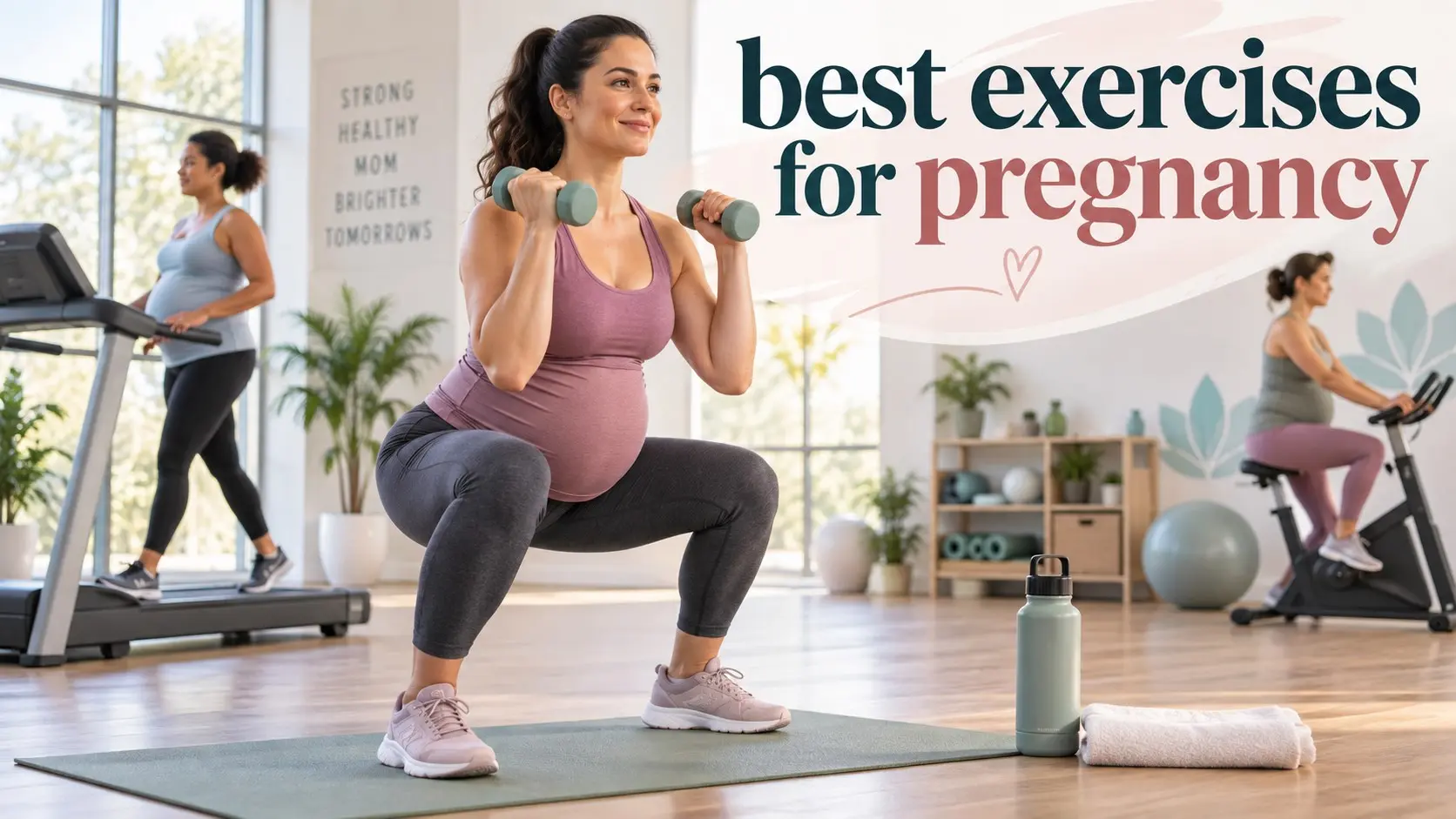
The best exercises for pregnancy include walking, swimming, water workouts, stationary cycling, strength training, modified prenatal yoga, modified Pilates, pelvic floor exercises, gentle mobility, and familiar running for experienced runners. Healthy pregnant adults should aim for at least 150 minutes of moderate aerobic activity weekly unless their clinician advises otherwise.
You do not need to complete 150 minutes at once.
Short sessions count.
Start small if you were inactive before pregnancy.
How Much Exercise Is Recommended During Pregnancy?
The CDC and World Health Organization recommend at least 150 minutes of moderate aerobic activity each week for pregnant people without contraindications.
WHO also recommends a mix of aerobic and muscle strengthening activity.
ACOG supports aerobic and strength conditioning before, during, and after an uncomplicated pregnancy.
| Activity | General goal | Examples |
|---|---|---|
| Moderate aerobic activity | At least 150 minutes each week | Walking, swimming, stationary cycling |
| Muscle strengthening | Include regularly if medically appropriate | Weights, bands, bodyweight exercises |
| Mobility | Use as comfortable | Gentle stretching, modified yoga |
| Pelvic floor work | Practice appropriate control and coordination | Pelvic floor contractions and relaxation |
| Daily movement | Move when comfortable | Walking, stairs, daily tasks |
Some activity is better than none.
If 30 minutes feels like too much, start with 5 or 10 minutes.
Then build slowly.
How Hard Should You Exercise While Pregnant?
Do not chase a fixed heart rate from a random chart.
Pregnancy changes normal heart rate responses.
ACOG says perceived effort and the talk test can be more useful.
For moderate exercise, you should still be able to talk.
If you are too breathless to speak normally, slow down.
This simple pregnancy exercise intensity test works for walking, cycling, swimming, and many other activities.
1. Walking is the easiest place to start
Walking during pregnancy is simple, low-cost, and easy to adjust.
You can walk outside.
You can walk on a treadmill.
You can split your walking into shorter sessions.
ACOG lists brisk walking among safe pregnancy activities.
If you were inactive before pregnancy, walking is one of the easiest ways to begin.
How to Start
- Begin with 5 to 10 comfortable minutes.
- Wear supportive shoes.
- Use a pace where you can still talk.
- Add time gradually.
- Slow down if your balance or comfort changes.
You do not need to walk fast enough to feel exhausted.
Consistency matters more.
2. Swimming and Water Exercise Reduce the Load on Your Body
Swimming during pregnancy is another strong option.
The water supports your body.
This can feel especially good as your abdomen grows.
ACOG and NHS guidance both list swimming and water exercise as suitable pregnancy activities.
Water workouts can train your heart and many muscle groups while reducing weight bearing stress.
Choose a safe pool.
Walk carefully on wet surfaces.
Drink water even though you are exercising in water.
3. Stationary Cycling Gives You Cardio Without Road Fall Risk
A growing abdomen changes balance.
That makes outdoor cycling less predictable later in pregnancy.
A stationary bike during pregnancy removes much of the fall risk linked with road cycling.
ACOG specifically lists stationary cycling as a safer option.
Adjust the seat and handlebars as your body changes.
Sit in a position that feels comfortable.
Use moderate resistance.
You do not need to turn every ride into a hard interval session.
4. Strength Training Can Stay in Your Pregnancy Routine
The old message that pregnant women should avoid weights is too broad.
ACOG encourages suitable strength training during pregnancy when pregnancy is uncomplicated.
Resistance can come from:
- Dumbbells
- Resistance bands
- Weight machines
- Bodyweight movements
The goal is control.
Do not prove how strong you are on every set.
Do not hold your breath through hard repetitions.
Change the exercise when your balance, abdomen, joints, or comfort make the old version awkward.
Simple Pregnancy Strength Exercise Ideas
| Movement | Possible option | Main focus |
|---|---|---|
| Squat | Chair squat or supported squat | Legs and glutes |
| Pull | Band row or supported dumbbell row | Back and arms |
| Push | Wall push-up or elevated push-up | Chest and arms |
| Hip movement | Supported hip hinge | Glutes and hamstrings |
| Calf work | Supported calf raise | Lower legs and balance |
| Core support | Bird dog or standing core work when comfortable | Trunk control |
The exact exercise depends on your training experience and pregnancy.
For general strength ideas, visit the NextFitLife Home Workouts and Equipment Hub.
5. Modified Prenatal Yoga Can Support Mobility and Relaxation
Prenatal yoga can combine movement, breathing, mobility, and relaxation.
Use a class designed for pregnancy when possible.
Tell the instructor how far along you are.
Normal yoga and prenatal yoga are not always the same.
Positions may need to change as your balance and abdomen change.
Avoid hot yoga.
ACOG warns against hot yoga because overheating is a concern during pregnancy.
Avoid long periods lying flat on your back later in pregnancy.
6. Modified Pilates Can Build Control Without Chasing Intensity
Prenatal Pilates can support posture, mobility, breathing, and controlled strength.
Choose pregnancy-appropriate movements.
Use an instructor who understands prenatal modifications when possible.
Skip movements that create pain, dizziness, heavy pelvic pressure, or uncomfortable abdominal strain.
ACOG also recommends avoiding positions that leave you still or flat on your back for long periods as pregnancy advances.
7. Pelvic Floor Exercise Is About Control, Not Endless Squeezing
Your pelvic floor supports the bladder, bowel, uterus, and other pelvic structures.
Pelvic floor exercises during pregnancy can help build awareness and control.
NHS pregnancy guidance recommends regular pelvic floor practice.
But good pelvic floor function is not only about squeezing harder.
You also need to relax the muscles.
Breathe normally.
Do not strain.
If you have pelvic pain, heaviness, bulging, trouble emptying the bladder or bowel, or pain with exercise, ask about assessment by a pelvic health physiotherapist or another qualified professional.
8. Gentle mobility helps you keep moving comfortably
Pregnancy changes your posture.
Your center of gravity moves.
Your joints may feel different.
Pregnancy mobility exercises can help you keep moving without forcing deep stretches.
Useful gentle movements can include:
- Shoulder rolls
- Supported hip movement
- Gentle cat and cow movements
- Pelvic tilts
- Ankle circles
- Gentle calf stretching
Pregnancy hormones can make joints more mobile.
More flexibility is not always better.
Do not force a joint farther simply because it will move there.
9. Experienced Runners May Keep Running
Activity advice depends on the pregnancy, prior fitness and any complications.
Running is not automatically banned during pregnancy.
ACOG states that women who were already experienced runners or joggers may continue during an uncomplicated pregnancy after discussing it with their obstetric clinician.
The CDC also says women who already performed vigorous aerobic activity before pregnancy can continue suitable activity during pregnancy.
That does not mean pregnancy is the best time to start a hard running program from zero.
If you are new to exercise, start with easier activity such as walking.
Slow Down or Modify Running if you notice
- Pelvic pain
- Pelvic pressure
- Urinary leakage
- Balance problems
- New joint pain
- Unusual fatigue
- Symptoms listed in the warning section below
A Better Way to Adjust Exercise by Trimester
Do not treat each trimester like a fixed workout program.
Symptoms and body changes matter more than the calendar alone.
| Stage | Common changes | Useful adjustments |
|---|---|---|
| First trimester | Fatigue, nausea, heat sensitivity | Keep familiar activity if comfortable. Shorten sessions when needed. Hydrate and avoid overheating. |
| Second trimester | Growing abdomen and changing balance | Use stable positions. Modify floor work. Reduce fall risk. Begin avoiding prolonged flat back positions. |
| Third trimester | More balance change, abdominal size, pelvic pressure, breathlessness | Use support. Reduce range or impact when needed. Use shorter sessions and comfortable cardio. |
There is no rule saying you must train harder in the second trimester.
There is also no rule saying all exercise must become extremely gentle in the third.
Adapt to your health and symptoms.
Why Flat Back Exercise Needs Modification Later in Pregnancy?
This point is often reduced to a rigid rule.
The real guidance is more specific.
ACOG notes that maintaining a flat back position during exercise after about 20 weeks can reduce blood return to the heart because of pressure from the uterus.
NHS guidance recommends avoiding long periods flat on your back, particularly after 16 weeks.
Those recommendations use slightly different timing.
The practical message is the same.
As pregnancy progresses, avoid prolonged flat back exercise and use side lying, standing, seated, elevated, or other comfortable alternatives.
Follow the advice of your own maternity team.
What Exercises Should You Avoid During Pregnancy?
Pregnancy does not require fear of movement.
It does require smarter risk choices.
ACOG advises avoiding activities with a high risk of abdominal impact, falling, overheating, or pressure-related injury.
Activities to Avoid Include
- Scuba diving
- Skydiving
- Hot yoga
- Hot Pilates
- Contact sports with abdominal impact risk
- Downhill skiing
- Water skiing
- Off-road cycling
- Gymnastics when fall risk is significant
- Horseback riding when fall risk is significant
- New activity at unaccustomed high altitude without appropriate guidance
Outdoor cycling also needs more caution as balance changes.
A stationary bike is easier to control.
Do you need to avoid all high-impact exercise?
No.
This is another place where old pregnancy advice becomes too broad.
ACOG does not say every healthy pregnant person must stop all vigorous or impact exercise.
Women who already perform vigorous aerobic exercise and have an uncomplicated pregnancy may be able to continue it.
That does not mean every activity stays suitable until delivery.
Running, jumping, sport, and higher intensity work need to match:
- Your training history
- Your balance
- Your symptoms
- Your pregnancy
- Your clinician's advice
Pregnancy is not the time to prove that you can ignore changing symptoms.
Use the Talk Test Instead of Chasing a Perfect Heart Rate
Moderate effort should feel like work.
But you should still be able to talk.
NHS guidance says that if you become too breathless to hold a conversation, you are probably working too hard.
ACOG gives similar advice.
This makes the pregnancy talk test a simple tool for many aerobic sessions.
Slow down if talking becomes difficult.
Hydration and Heat Matter More During Pregnancy
Do not let a workout become a heat test.
ACOG advises pregnant women to avoid overheating and stay well hydrated.
This matters especially early in pregnancy and in hot weather.
Simple Heat and Hydration Rules
- Drink water before, during, and after exercise.
- Use light clothing.
- Choose cooler times of day.
- Use indoor exercise when outdoor heat is extreme.
- Avoid hot yoga and hot Pilates.
- Stop if you feel dizzy, faint, or unwell.
When Should You Stop Exercising and Call Your Pregnancy Care Team?
Do not push through pregnancy warning signs.
ACOG recommends stopping exercise and contacting your obstetric clinician if you develop:
- Vaginal bleeding
- Dizziness or faintness
- Shortness of breath before exercise starts
- Chest pain
- Headache
- Muscle weakness that affects balance
- Calf pain or swelling
- Regular painful uterine contractions
- Fluid leaking or gushing from the vagina
- Significant abdominal pain
If symptoms are severe, sudden, or feel like an emergency, use the emergency care available where you live.
Who Needs Individual Exercise Advice?
Generic pregnancy workouts are not enough for every pregnancy.
Get individualized advice when you have an obstetric or medical complication.
This can include problems involving:
- Bleeding
- The placenta
- The cervix
- Preterm labor
- Ruptured membranes
- High blood pressure disorders
- Significant anemia
- Heart disease
- Lung disease
- Multiple pregnancy with complications
- Another condition your maternity team is monitoring
ACOG recommends clinical evaluation before prescribing exercise when medical or obstetric concerns are present.
A Simple Pregnancy Workout Week
This is an example for a healthy pregnancy when exercise has been approved.
It is not a medical prescription.
| Day | Activity | Major goal |
|---|---|---|
| Monday | 30-minute walk | Aerobic fitness |
| Tuesday | Pregnancy-appropriate strength session | Muscle strength |
| Wednesday | 20- to 30-minute swim or simple walk | Cardio and movement |
| Thursday | Prenatal yoga or gentle mobility | Mobility and relaxation |
| Friday | Pregnancy-appropriate strength session | Muscle strength |
| Saturday | 30-minute walk or stationary cycling | Aerobic fitness |
| Sunday | Rest or gentle movement | Recovery |
Move the days around.
Shorten sessions when needed.
Rest when your body needs rest.
If you did not exercise before pregnancy
Do not copy the routine of someone who trained for years before becoming pregnant.
Start slowly.
ACOG suggests beginning with as little as 5 minutes of activity per day if you are new.
You can add time gradually.
A simple start might be:
- Walk for 5 to 10 minutes.
- Rest and check how you feel.
- Repeat on several days.
- Add a few minutes when that feels comfortable.
- Add simple strength work after you understand safe form.
Slow progress is still progress.
If you were very active before pregnancy
You do not automatically have to become sedentary.
CDC, WHO, and ACOG all state that people who were already active before pregnancy can often continue appropriate activity during an uncomplicated pregnancy.
The important word is appropriate.
Your old program may still need changes.
Balance changes.
Your abdomen grows.
Heat tolerance matters.
Fuel and hydration matter.
Your recovery can change.
Discuss higher intensity training and competitive sport with your obstetric clinician.
Pregnancy Core Exercise Should Support Function, Not a Flat Stomach
Your core changes during pregnancy because the abdomen must make room for the growing uterus.
Do not train your abs to keep your stomach looking flat.
That is not the goal.
Core exercises during pregnancy should focus on breathing, posture, support, and movement control.
Options can include modified bird dogs, standing core exercises, supported carries, and other pregnancy-appropriate movements when comfortable.
If you notice persistent abdominal doming, pelvic symptoms, pain, or a movement that feels wrong, reduce the exercise and ask for qualified advice.
Our general Core Workouts at Home guide includes non-pregnancy exercises, so pregnant readers should use only movements approved for their stage and symptoms.
Exercise and Pregnancy Nutrition Work Together
Training while underfed is not the goal.
Pregnancy already changes energy and nutrient needs.
Regular meals, fluids, protein foods, carbohydrates, fruits, vegetables, healthy fats, and appropriate prenatal nutrients all matter.
Long or hard exercise can require more attention to food and hydration.
Do not use pregnancy exercise as a way to restrict pregnancy weight gain below what your medical team recommends.
For detailed food guidance, read Eating Healthy During Pregnancy: Best Foods and Safety Tips.
What Changes After the Baby Is Born?
Pregnancy fitness does not automatically continue at the same level after delivery.
Your recovery depends on birth, healing, bleeding, pain, pelvic floor symptoms, sleep, surgery, complications, and other factors.
ACOG says gentle activity may begin relatively early after an uncomplicated vaginal birth when you feel ready.
Cesarean birth and complications require more individualized guidance.
Running is different from gentle walking.
Do not treat a postpartum appointment as an automatic pass for hard impact training.
For a detailed progression, read the NextFitLife Postpartum Running Plan.
7 Pregnancy Exercise Mistakes I Would Avoid
1. Believing Pregnancy Means You Must Stop Exercising
Healthy uncomplicated pregnancies usually benefit from regular movement.
2. Starting a Hard New Program Overnight
Build gradually if you were inactive.
3. Using Fixed Trimester Rules for Everyone
Symptoms and medical needs differ.
4. Ignoring balance changes
Fall risk changes as your center of gravity changes.
5. Exercising Through Warning Signs
Bleeding, chest pain, dizziness, painful contractions, or fluid leakage are not workout discomforts to ignore.
6. Getting Overheated
Use water, ventilation, and sensible temperatures.
7. Treating Exercise as Weight Control
The goal is health, fitness, strength, comfort, and function.
Pregnancy is not the time for an aggressive weight loss program.
Conclusion: Keep Moving, but Make Pregnancy the Priority
The best exercises for pregnancy are the ones that keep you active without ignoring your changing body or medical needs.
Walk.
Swim.
Cycle indoors.
Keep up suitable strength work.
Use modified yoga or Pilates.
Train pelvic floor control.
And if you were already a runner, ask whether continued running still fits your pregnancy.
Your next step: discuss your current exercise with your maternity care professional, then choose one form of cardio and one simple strength routine you can repeat comfortably this week.
References and Sources
- American College of Obstetricians and Gynecologists. Exercise During Pregnancy.ACOG Exercise During Pregnancy FAQUsed for exercise safety, the 150-minute target, walking, swimming, stationary cycling, yoga, running, precautions, activities to avoid, and warning symptoms.
- American College of Obstetricians and Gynecologists. Physical Activity and Exercise During Pregnancy and the Postpartum Period.ACOG Committee Opinion 804Used for aerobic and strength exercise, activity progression, perceived exertion, the talk test, flat back exercise after 20 weeks, and exercise warning signs.
- Centers for Disease Control and Prevention. Pregnant and Postpartum Activity: An Overview.CDC Pregnancy Physical Activity GuidanceUpdated December 2025. Used for the 150-minute recommendation, moderate activity safety, and continuing familiar vigorous activity in healthy pregnancy.
- World Health Organization. Physical Activity Recommendations for Pregnant and Postpartum Women.WHO Physical Activity GuidanceUsed for aerobic activity, muscle strengthening, regular physical activity, and pregnancy and postpartum benefits.
- National Health Service. Exercise in Pregnancy.NHS Exercise in Pregnancy GuidanceUsed for the talk test, walking, swimming, pelvic floor exercises, heat precautions, fall risk, flat back exercise, and activities to avoid.
Continue Reading on NextFitLife
Use these NextFitLife guides for pregnancy nutrition, fitness, recovery, and postpartum exercise.
- Fitness and Home Workouts Hub for strength, cardio, equipment, and home training guidance.
- Eating Healthy During Pregnancy for balanced meals, prenatal nutrients, food safety, seafood, caffeine, and supplements.
- Postpartum Running Plan for a gradual return to running after childbirth.
- Core Workouts at Home for general core exercise ideas that can be adapted when pregnancy-appropriate.
- Fitness Tips for Women for strength, cardio, recovery, bone health, and life stage fitness.
- How to Get Fit Fast Safely for general beginner fitness planning outside pregnancy-specific restrictions.
About the Author
Adel Galal is the founder and lead writer of NextFitLife.
He has maintained a personal interest in health, fitness, nutrition, sleep, wellness, and healthy aging for more than 30 years.
His health and wellness writing and research communication experience spans more than 15 years.
Adel is not a physician, obstetrician, midwife, physiotherapist, registered dietitian, certified personal trainer, or other licensed healthcare professional.
His role is research communication.
He compares authoritative sources, checks important claims, identifies limits in the evidence, and explains health and fitness information in plain language.
Before founding NextFitLife, Adel spent 29 years working as an IT Manager for the Nestlé Egypt Region. His background in data, planning, information systems, structured review, and problem-solving supports his research process. These are not medical credentials.
Because pregnancy is a high-risk health topic, this article relies heavily on current guidance from ACOG, CDC, WHO, and NHS rather than general fitness advice.
Learn more about Adel, NextFitLife's research process, medical review standards, corrections policy, and editorial approach on the About NextFitLife page.
Frequently Asked Questions About the Best Exercises for Pregnancy
What is the best exercise during pregnancy?
There is no single best exercise for everyone. Walking, swimming, stationary cycling, suitable strength training, and modified prenatal yoga are common safe choices for healthy uncomplicated pregnancies.
How much exercise should I do while pregnant?
CDC, WHO, and ACOG recommend at least 150 minutes of moderate aerobic activity each week for most healthy pregnant adults. Shorter sessions can be combined across the week.
Can I start exercising if I did not work out before pregnancy?
Many healthy pregnant people can start. Begin slowly. ACOG suggests starting with as little as 5 minutes a day and adding time gradually. Discuss the plan with your pregnancy care professional.
Can I lift weights during pregnancy?
Yes, suitable resistance training can be part of an uncomplicated pregnancy. Use controlled movement, modify positions as your body changes, and get individualized advice when you have medical or obstetric complications.
Can I run during pregnancy?
Experienced runners with uncomplicated pregnancies may continue running. ACOG recommends discussing continued running with your obstetric clinician. Pregnancy is not the ideal time to begin a hard running program if you were previously inactive.
Is walking good during all three trimesters?
Walking is a common pregnancy exercise throughout pregnancy when it remains comfortable and medically appropriate. Pace, distance, terrain, and balance needs may change.
Is swimming safe during pregnancy?
Swimming and water workouts are listed by ACOG and NHS as suitable pregnancy exercise choices. The water supports body weight and can reduce strain.
Can I do squats while pregnant?
Many pregnant people can continue suitable squat movements. Range, load, foot position, and support may need to change as balance and comfort change. Stop if the exercise causes pain or other warning symptoms.
Should I avoid lying on my back during pregnancy workouts?
Avoid prolonged flat back exercise as pregnancy advances. ACOG notes that maintaining a flat back position after about 20 weeks may reduce blood return to the heart. NHS guidance recommends avoiding long periods flat on the back, particularly after 16 weeks.
Is prenatal yoga safe?
Modified prenatal yoga can be suitable. Avoid hot yoga and positions that are uncomfortable or keep you flat on your back for long periods later in pregnancy.
What exercise should I avoid during pregnancy?
Avoid scuba diving, skydiving, hot yoga, hot Pilates, contact sports with abdominal impact risk, and activities with a high chance of falling. Other activities may need individual modification.
When should I stop exercising during pregnancy?
Stop and contact your pregnancy care professional for vaginal bleeding, dizziness, chest pain, headache, shortness of breath before exercise, calf pain or swelling, painful regular contractions, fluid leakage, significant abdominal pain, or muscle weakness affecting balance.

Health & wellness writer with 30+ years of experience in nutrition, fitness, and healthy aging. Founder of NextFitLife.com — evidence-based health guidance.