Published: May 5, 2024
Last updated: July 18, 2026
Next review: July 2027
Written by: Adel Galal, Founder and Lead Writer at NextFitLife
Editorial review: Updated and checked against current pediatric digestive health guidance
Medical review status: This article has not been medically reviewed by a pediatrician or pediatric dietitian
Reading time: About 18 minutes
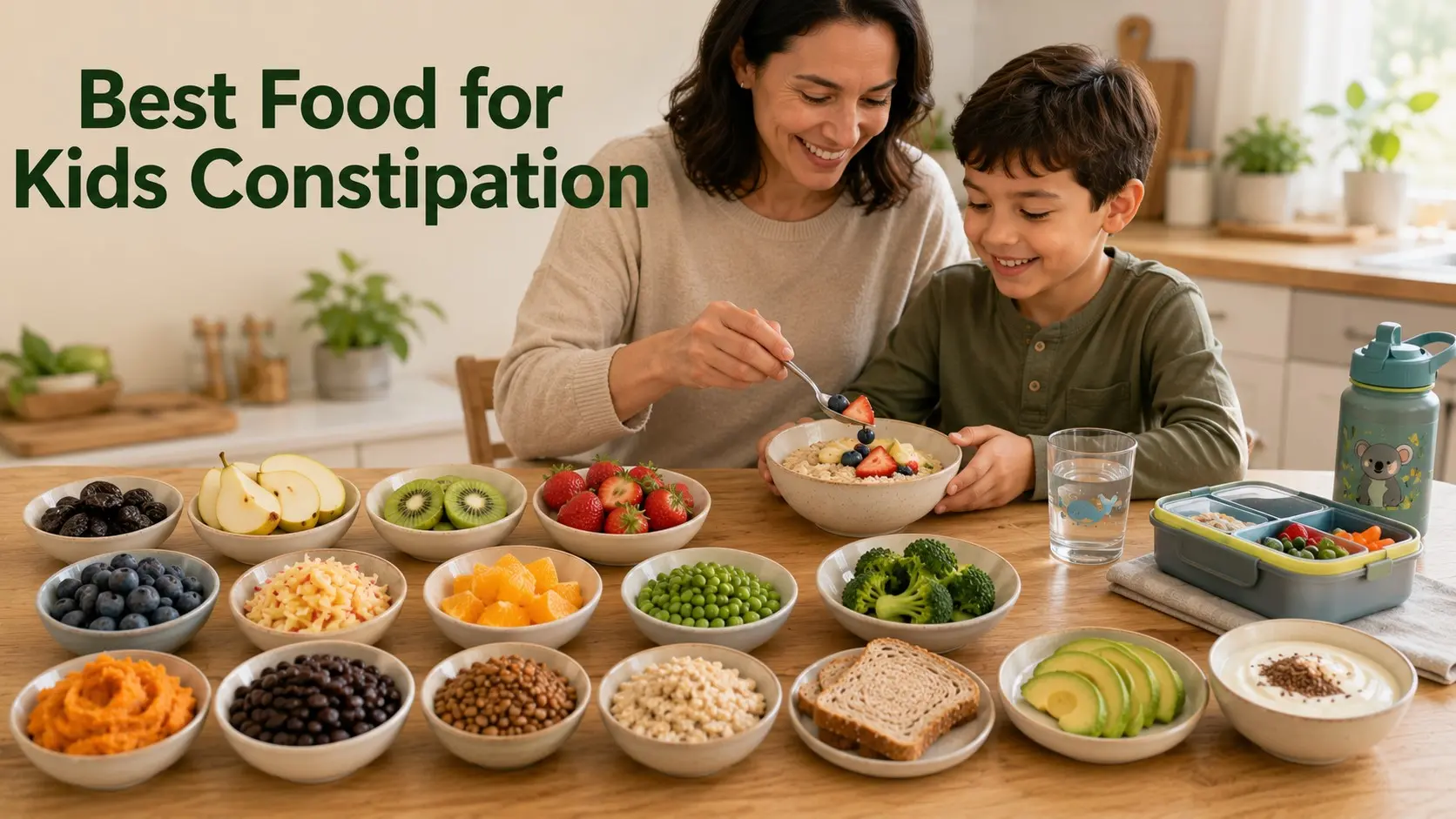
The Best Food for Kids Constipation includes fruit, vegetables, beans, oats, and whole grains.
These foods provide fiber.
Fiber can help make stool softer and easier to pass when a child also drinks enough fluid.
Food is helpful, but it is not always enough.
Many children become constipated because they hold stool after one painful bowel movement. The stool then becomes larger and harder. The child may become afraid to use the toilet.
When this cycle begins, fruit and water may not clear the stool that is already stuck.
A child may need a pediatric medical plan. This can include a stool softening medicine, a regular toilet routine, suitable food, fluid, and follow up.
This guide explains the best food choices, safe ways to add fiber, foods that may crowd fiber out, and signs that need medical care.
For a wider child nutrition guide, read 15 Best Food for Kids.
Important Medical Note
This content is for general educational purposes and does not replace professional medical advice, diagnosis, or treatment. Consult an appropriately qualified healthcare professional for personal medical concerns. I am also not a pediatrician, pediatric gastroenterologist, pharmacist, registered dietitian, or feeding specialist.
This content does not replace professional medical advice.
This article explains published guidance and does not provide a personal clinical assessment.
Always consult qualified medical professionals for diagnosis and treatment of any health condition.
Do not give a child laxatives, enemas, suppositories, mineral oil, magnesium products, herbal remedies, or adult constipation medicine unless a qualified healthcare professional gives clear instructions.
Quick Answer: What Is the Best Food for Kids Constipation?
The Best Food for Kids Constipation may include:
- Prunes
- Pears
- Kiwi
- Berries
- Apples with the skin when safe
- Oranges
- Peas
- Broccoli
- Sweet potatoes
- Beans
- Lentils
- Oats
- Whole grain bread and pasta
- Avocado
- Ground or safely prepared seeds
Start with a small amount.
Add fiber slowly.
Offer water with meals and snacks.
For a toilet trained child, encourage a calm toilet visit after meals. Make sure the child can rest both feet on the floor or a stable foot support.
Call a healthcare professional when constipation is painful, keeps returning, causes soiling, lasts more than two weeks, or does not improve with simple home steps.
What Is Constipation in Children?
Childhood constipation is not only about how often a child poops.
A child may be constipated when stool is:
- Hard
- Dry
- Large
- Lumpy
- Painful to pass
- Difficult to push out
A child may also feel that some stool is still inside.
Some children poop less than twice each week.
Other children poop more often but still pass hard and painful stool.
Softness and comfort matter more than a perfect daily number.
Common Signs of Constipation
Signs may include:
- Hard or dry stool
- Pain while pooping
- Straining
- Very large stool
- Small hard balls of stool
- Stomach pain
- Bloating
- Reduced appetite
- Hiding when the child needs to poop
- Standing on tiptoes
- Crossing the legs tightly
- Clenching the bottom
- Small stool marks in underwear
- Watery stool leaking around hard stool
The last sign can be confusing.
Parents may think the child has diarrhea.
It may actually be overflow soiling caused by constipation.
Why Children Hold Their Stool
Stool withholding is a common cause of functional constipation.
A child may hold stool because:
- A past bowel movement hurt
- The child fears the toilet
- The child does not want to stop playing
- A school toilet feels dirty or unsafe
- Toilet training became stressful
- The child feels embarrassed
- A diaper rash or small tear caused pain
Holding stool keeps it inside the colon longer.
More water leaves the stool.
The stool becomes harder.
The next bowel movement hurts more.
This creates a painful cycle.
Food Can Help, but Food Is Not Always the Full Treatment
Foods with fiber can support regular bowel habits.
Water helps fiber work properly.
Movement and a calm bathroom routine may also help.
However, food cannot always break apart a large mass of hard stool.
A child with fecal impaction may need medical treatment before diet changes can work well.
Do not keep adding more and more fiber when the child has severe pain, vomiting, a swollen belly, or cannot pass stool.
Get medical advice.
The 15 Best Food for Kids Constipation
1. Prunes
Prunes are dried plums.
They provide fiber and naturally occurring sorbitol.
Sorbitol can help pull water into the bowel in some children.
Simple ways to use prunes include:
- Chopping soft prunes into oats
- Blending a prune into plain yogurt
- Adding prune puree to porridge
- Serving a small amount with breakfast
Start with a small portion.
Too much may cause gas, cramps, or loose stool.
Whole dried fruit can be sticky and difficult for young children to chew. Cut it into very small pieces or use a smooth puree.
2. Pears
Pears provide water and fiber.
They also contain natural sorbitol.
Serve pears:
- Soft and sliced
- Grated
- Cooked
- Mashed
- Mixed with oats
- Added to plain yogurt
Keep the skin when the child can chew it safely.
The skin contains fiber.
Cook or grate firm pears for young children.
3. Kiwi
Kiwi provides fiber, water, and vitamin C.
Some children enjoy it because it is soft and sweet.
Peel the kiwi and cut it into age safe pieces.
Serve it with breakfast or as a snack.
Kiwi can cause an allergic reaction in some people.
Stop serving it and seek help when it causes hives, swelling, repeated vomiting, coughing, wheezing, or breathing trouble.
4. Berries
Strawberries, blueberries, raspberries, and blackberries are useful fiber rich foods.
They also provide water and vitamin C.
Add berries to:
- Oats
- Plain yogurt
- Whole grain cereal
- A fruit bowl
- Whole grain pancakes
Cut berries into safe pieces for young children.
Frozen berries can be useful and affordable. Prepare them according to local food safety guidance.
5. Apples
Apples provide fiber, especially when the skin remains on.
Hard apple pieces can be a choking risk for young children.
Serve apple:
- Grated
- Thinly sliced
- Cooked until soft
- Mixed into oats
- Served with a thin layer of nut or seed butter when safe
Applesauce may contain less fiber than a whole apple.
Choose unsweetened applesauce when using it.
6. Oranges
Whole oranges provide water and fiber.
Juice contains less fiber.
Remove seeds and tough pieces.
Cut each segment into safe pieces for younger children.
Offer whole fruit more often than juice.
7. Green Peas
Green peas provide fiber, plant protein, vitamins, and carbohydrate.
Add peas to:
- Rice
- Pasta
- Soup
- Mashed potato
- Eggs
- Chicken meals
Cook peas until soft.
Mash or flatten them for children who cannot chew whole peas safely.
8. Broccoli
Broccoli provides fiber and vitamin C.
Steam or roast it until soft.
Serve small florets with:
- Yogurt dip
- Hummus
- Rice
- Pasta
- Eggs
- Chicken
Large raw pieces are difficult for young children to chew.
Cooked broccoli may also cause gas when a child is not used to much fiber.
Start small.
9. Sweet Potatoes
Sweet potatoes provide fiber, potassium, and beta carotene.
Serve them:
- Mashed
- Baked
- Roasted until soft
- Mixed with lentils
- Added to soup
Keep the skin for older children when it is clean and easy to chew.
Avoid adding a large amount of sugar.
10. Beans
Black beans, white beans, kidney beans, and chickpeas provide fiber and plant protein.
Use beans in:
- Soup
- Rice
- Pasta sauce
- Hummus
- Wraps
- Simple stews
Beans may cause gas at first.
Begin with one or two spoonfuls.
Increase the amount slowly.
Cook beans until very soft. Mash or flatten them when needed for choking safety.
11. Lentils
Lentils provide fiber, protein, iron, and magnesium.
Red lentils become soft and are easy to add to meals.
Use lentils in:
- Soup
- Tomato sauce
- Rice dishes
- Mashed vegetables
- Soft patties
Pair lentils with a vitamin C food such as tomatoes, peppers, berries, or oranges.
This can support iron absorption.
12. Oats
Oats provide soluble fiber.
They can be a simple breakfast for children.
Cook oats with water, milk, or a suitable fortified drink.
Add:
- Pears
- Prunes
- Berries
- Kiwi
- Ground flaxseed
- Plain yogurt
Choose plain oats more often than products with a large amount of added sugar.
13. Whole Grains
Whole grains may provide more fiber than refined grains.
Useful choices include:
- Whole grain bread
- Whole grain pasta
- Brown rice
- Barley
- Quinoa
- Whole grain cereal
Change one grain at a time.
A child who eats only white bread may accept a sandwich made with one white slice and one whole grain slice first.
Read the NextFitLife High Fiber Foods Chart for Constipation for more food ideas.
14. Avocado
Avocado provides fiber and healthy fat.
Healthy fat can help a growing child obtain enough energy.
Serve avocado:
- Mashed on toast
- Mixed with beans
- Added to eggs
- Placed in a wrap
- Served with rice
Avocado is soft and easy to prepare for many ages.
15. Ground Flaxseed or Soaked Chia
Ground flaxseed and chia seeds provide fiber.
They should be introduced slowly.
Mix a small amount into:
- Oats
- Plain yogurt
- Soup
- A soft fruit mixture
- A homemade muffin
Do not give a young child a dry spoonful of seeds.
Offer enough fluid.
Seeds are not a quick cure for stool that is already hard and stuck.
How Much Fiber Does a Child Need?
Fiber needs change with age and sex.
The National Institute of Diabetes and Digestive and Kidney Diseases notes that children may need about 14 to 31 grams each day, depending on age and sex.
The American Academy of Pediatrics also gives a simple general guide.
Add five to the child’s age.
A five year old may begin with a goal of about 10 grams each day.
This is only a simple guide.
It does not replace personal advice.
Many parents do not need to count every gram.
A simple goal is to offer fruit and vegetables during the day, plus beans or whole grains.
Add Fiber Slowly
Adding a large amount of fiber in one day can cause:
- Gas
- Bloating
- Stomach pain
- More discomfort
Make one change every few days.
Examples include:
- Add berries to breakfast
- Replace one refined grain with a whole grain
- Add two spoonfuls of beans to lunch
- Offer a pear as a snack
Increase fluid as fiber rises.
Why Water Matters
Hydration helps fiber work.
A child who is dehydrated may pass harder stool.
Offer water:
- After waking
- With breakfast
- At school
- With snacks
- With lunch
- After active play
- With dinner
The right amount depends on the child’s age, size, activity, health, and weather.
Urine that is pale yellow often suggests suitable hydration.
Very dark urine, dry mouth, few toilet visits, or strong thirst may suggest the child needs more fluid.
Water alone may not treat established constipation.
Does Fruit Juice Help?
Prune, pear, or apple juice may help some children because these drinks contain natural sugars such as sorbitol.
Juice has less fiber than whole fruit.
It can also add a large amount of sugar when served freely.
Use a small, age suitable amount only when it fits the child’s care plan.
Ask a pediatrician before giving juice as a constipation remedy to a baby.
Do not replace water, meals, breast milk, or formula with large amounts of juice.
Best Breakfast for Kids Constipation
Try one of these simple breakfasts.
Prune and Pear Oats
- Cooked oats
- Soft chopped pear
- A small amount of prune puree
- Plain yogurt when suitable
Berry Yogurt Bowl
- Plain yogurt
- Berries
- Oats
- A small amount of ground flaxseed
Whole Grain Toast Plate
- Whole grain toast
- Mashed avocado
- Soft fruit
- Water
Best Lunch for Kids Constipation
Bean and Rice Bowl
- Brown or white rice
- Soft black beans
- Peas
- Avocado
- Tomatoes
Lentil Soup
- Soft lentils
- Carrots
- Tomatoes
- Sweet potato
- Whole grain bread
Chicken and Fiber Plate
- Soft chicken pieces
- Whole grain pasta
- Broccoli
- Pear slices
Best Snacks for Kids Constipation
Useful snack ideas include:
- Pear with plain yogurt
- Kiwi with oats
- Berries with yogurt
- Whole grain toast with avocado
- Hummus with soft vegetables
- Soft prunes chopped into porridge
- Apple prepared safely with a thin layer of nut butter
Choose age safe textures.
Whole nuts, popcorn, hard raw vegetables, and large apple pieces can be choking hazards for young children.
A Three Day Food Plan for Kids Constipation
This plan is a general example.
It does not replace medical treatment.
Day 1
Breakfast: Oats with pear and plain yogurt.
Snack: Kiwi.
Lunch: Lentil soup with whole grain bread.
Snack: Berries.
Dinner: Chicken, sweet potato, and peas.
Day 2
Breakfast: Whole grain toast with avocado and egg.
Snack: Soft pear slices.
Lunch: Bean and rice bowl with vegetables.
Snack: Plain yogurt with ground flaxseed.
Dinner: Salmon, brown rice, and broccoli.
Day 3
Breakfast: Oats with berries and a small amount of prune puree.
Snack: Orange pieces.
Lunch: Chickpea pasta with tomato sauce and peas.
Snack: Apple prepared safely.
Dinner: Lentils, sweet potato, and cooked vegetables.
Foods That May Crowd Out Fiber
No single food causes constipation in every child.
The problem may begin when foods with little fiber replace fruit, vegetables, beans, and whole grains.
Limit frequent large portions of:
- Chips
- Fast food
- Processed meat
- Instant noodles
- Cookies
- Candy
- Refined snack foods
- Large amounts of cheese
- Meals made only from meat and refined grains
Meat, eggs, milk, and cheese can still fit into a child’s diet.
They do not provide much fiber.
Pair them with vegetables, fruit, beans, or whole grains.
Does Milk Cause Constipation?
Milk does not cause constipation in every child.
Large amounts may reduce appetite for meals that contain fiber.
A few children may have constipation linked with cow milk protein, but this is not something to diagnose at home.
Do not remove dairy without medical advice.
A dairy free diet can become low in calcium, vitamin D, iodine, protein, and vitamin B12.
Do Bananas Cause Constipation?
Bananas do not cause constipation in every child.
Ripeness, portion size, the rest of the diet, and the individual child may matter.
A ripe banana can fit into a balanced eating pattern.
Pair it with oats, berries, pear, or another fiber food.
Do not depend on banana as the main fruit every day.
Does Yogurt Treat Constipation?
Plain yogurt can be part of a healthy meal.
It provides protein and calcium.
Some yogurt contains live bacteria.
There is not enough evidence to promise that probiotics will treat constipation in every child.
Choose yogurt for nutrition, not as a guaranteed laxative.
Can Exercise Help?
Regular movement can support normal digestion and bowel habits.
Child friendly movement includes:
- Walking
- Dancing
- Bike riding
- Playground activity
- Ball games
- Active indoor games
Movement will not clear severe impaction.
For more ideas, visit NextFitLife Constipation Exercises.
Create a Calm Toilet Routine
A regular bowel movement routine can help a toilet trained child.
Try these steps:
- Invite the child to sit after a meal.
- Keep the visit brief and calm.
- Support both feet on the floor or a stable stool.
- Keep the knees slightly above the hips.
- Do not demand that the child poop.
- Praise sitting and trying.
- Do not punish accidents.
Eating starts a natural bowel signal.
This is why sitting after breakfast or dinner may help.
Why Foot Support Matters
Dangling feet make it harder for a child to relax.
A stable foot support helps the child sit in a better position.
The child should feel safe.
Do not use an unstable box or a stool that may slide.
Do Not Shame Soiling
Encopresis means stool leaks into underwear because the bowel is backed up.
The child is usually not doing this on purpose.
Anger and punishment can increase fear and stool holding.
Stay calm.
Clean the child without shame.
Contact a pediatric healthcare professional for a treatment plan.
Constipation in Babies
Babies have different bowel patterns from older children.
A breastfed baby may go several days without stool and still be healthy when the stool is soft.
Straining alone does not always mean constipation.
Hard, dry, or painful stool is more concerning.
Do not:
- Dilute formula
- Change formula repeatedly
- Give honey
- Give herbal tea
- Use an enema
- Use a suppository
- Give laxative medicine
- Give extra water without age specific advice
Contact a pediatrician for a baby with hard stool, feeding problems, vomiting, a swollen belly, poor growth, or constipation that began soon after birth.
When Medicine May Be Needed
Diet changes may help mild constipation.
Established pediatric constipation often needs medicine prescribed or recommended by a healthcare professional.
A clinician may recommend an osmotic laxative such as polyethylene glycol or macrogol.
The medicine helps hold water in the stool.
The amount depends on the child, age, symptoms, and whether a large stool mass is present.
Do not copy a dose from another child or from a website.
Some children need treatment for weeks or months.
Do not stop prescribed treatment suddenly unless the healthcare professional tells you to stop.
Why Home Laxative Experiments Can Be Unsafe
Different products work in different ways.
Some can cause:
- Cramping
- Diarrhea
- Dehydration
- Mineral problems
- Medicine interactions
- Injury when used incorrectly
Magnesium products can be dangerous for children with kidney problems.
Mineral oil can be dangerous if it enters the lungs.
Enemas and suppositories should not be a casual first step.
Ask a qualified healthcare professional.
Keep a Simple Stool Record
A short record can help the pediatrician.
Write down:
- The date
- Whether the child pooped
- Whether the stool was hard or soft
- Whether it hurt
- Any blood
- Any soiling
- Food and fluid changes
- Medicine given
- Stomach pain or vomiting
Do not make the child feel watched or judged.
The record is for care, not punishment.
When to Contact a Healthcare Professional
Arrange medical advice when:
- Constipation lasts more than two weeks
- Home changes do not help
- Constipation keeps returning
- The child is afraid to poop
- Stool is very large or painful
- There is regular underwear soiling
- The child loses appetite
- The child has ongoing stomach pain
- There is repeated blood on the stool or paper
- The child is not growing well
- The child takes medicine that may cause constipation
Warning Signs That Need Prompt Care
Seek prompt medical care for:
- A swollen belly with vomiting
- Green vomit
- Severe or increasing stomach pain
- Fever with a very unwell child
- A large amount of blood
- Weight loss or poor growth
- Leg weakness
- Loss of bladder control with weakness
- Very thin ribbon shaped stool
- Constipation that began at birth
- Failure to pass the first stool within 48 hours after birth
- Signs of dehydration
Do not wait for a food remedy when these signs are present.
Common Myths About the Best Food for Kids Constipation
Myth: Prunes cure every case
Prunes may support softer stool.
They cannot clear every impaction or treat every cause.
Myth: More fiber always works faster
A sudden large increase may cause gas and pain.
Fiber should rise slowly with suitable fluid.
Myth: Water alone cures constipation
Water supports hydration.
It may not clear stool that is already hard and stuck.
Myth: Soiling is bad behavior
Soiling may be overflow from severe constipation.
The child needs care, not punishment.
Myth: Every child must poop daily
Normal frequency varies.
Soft, easy, pain free stool is more important.
Myth: Probiotics always solve constipation
Research does not support a guaranteed benefit for every child.
Myth: All laxatives are dangerous
Doctor guided laxatives are a standard part of pediatric constipation care.
The unsafe step is choosing products or doses without guidance.
Myth: The child will become dependent on prescribed stool softeners
Many children need maintenance treatment while the bowel returns to normal and fear of painful stool improves.
Follow the medical plan and reduce medicine only as directed.
Five High Authority References and Sources
- National Institute of Diabetes and Digestive and Kidney Diseases: Eating, Diet, and Nutrition for Constipation in ChildrenOpen guidance about fiber foods, liquids, gradual changes, and foods with little fiber.
- American Academy of Pediatrics: Constipation in ChildrenOpen pediatric guidance about stool withholding, overflow soiling, fiber, water, toilet posture, probiotics, and medicine.
- National Institute of Diabetes and Digestive and Kidney Diseases: Treatment for Constipation in ChildrenOpen guidance about food, fluids, toilet routines, doctor-recommended laxatives, and medicine safety.
- NHS England: National Clinical Constipation Pathway for ChildrenOpen clinical guidance about red flags, fecal impaction, laxative care, maintenance treatment, diet, fluids, and follow up.
- National Health Service: Constipation in ChildrenOpen parent guidance about early medical help, fruit, vegetables, fluids, activity, toilet routines, foot support, and soiling.
Conclusion: Best Food for Kids Constipation
The Best Food for Kids Constipation includes prunes, pears, kiwi, berries, vegetables, beans, lentils, oats, and whole grains.
Add fiber slowly.
Offer water regularly.
Create a calm toilet routine with safe foot support.
Start today with one small step. Add pear to breakfast, beans to lunch, or berries to a snack.
Contact a pediatric healthcare professional when constipation is painful, lasts more than two weeks, causes soiling, or does not improve.
Internal Links and NextFitLife Hubs
- NextFitLife Foods and Nutrition Hub
- Gut Health and Digestion Foods Hub
- Healthy Eating and Lifestyle Hub
- Meal Prep and Recipes Hub
- Beverages and Drinks Hub
- 15 Best Food for Kids
- High Fiber Foods Chart for Constipation
- Constipation Exercises
Frequently Asked Questions About the Best Food for Kids Constipation
What is the Best Food for Kids Constipation?
The Best Food for Kids Constipation includes prunes, pears, kiwi, berries, apples, peas, broccoli, beans, lentils, oats, sweet potatoes, and whole grains.
What food will help a child poop?
Fiber foods such as pears, prunes, kiwi, berries, beans, lentils, vegetables, oats, and whole grains may support softer stool when the child also drinks enough fluid.
What food softens stool quickly?
No food can promise fast relief. Prunes and pears may help some children, but hard stool or fecal impaction may need doctor guided medicine.
How can I help my child poop today?
Offer suitable fluid, a fiber food, gentle movement, and a calm toilet visit after a meal. Contact a healthcare professional when the child has pain, vomiting, a swollen belly, or cannot pass stool.
Are bananas good for a constipated child?
A ripe banana can fit into a balanced diet. It does not help every child. Offer different fruit such as pears, berries, kiwi, oranges, and prunes during the week.
Does milk cause constipation in children?
Milk does not cause constipation in every child. Large amounts may reduce appetite for fiber foods. Do not remove dairy unless a healthcare professional advises it.
Does yogurt help children poop?
Plain yogurt can be nutritious, but probiotics have not been proven to treat every case of childhood constipation. Add fruit or oats for more fiber.
How much fiber should a child eat?
Needs depend on age and sex. A simple pediatric guide is the child’s age plus five grams each day. A doctor or dietitian can set a personal goal.
Can too much fiber make constipation worse?
Yes. A sudden increase may cause gas and pain. Fiber supplements without enough fluid may also make constipation worse.
Should I give my child a laxative?
Only after a pediatric healthcare professional recommends the product and dose. Do not use adult laxatives, enemas, suppositories, or magnesium products on your own.
Why is my child having poop accidents?
Watery stool may leak around a large hard stool. This is called overflow soiling or encopresis. It is usually not deliberate and needs medical care.
When should I call the doctor?
Call when constipation lasts more than two weeks, keeps returning, causes pain or soiling, or does not improve. Seek prompt care for vomiting with belly swelling, severe pain, poor growth, leg weakness, or constipation that began after birth.

Health & wellness writer with 30+ years of experience in nutrition, fitness, and healthy aging. Founder of NextFitLife.com — evidence-based health guidance.