Next review: August 2027, or sooner if acute dental pain or emergency dental guidance changes
Written and source checked by: Adel Galal, Founder and Editor of NextFitLife
Medical review status: Editorially reviewed against current ADA, NIDCR, NHS, and FDA guidance. This article has not been medically reviewed by a dentist, endodontist, oral surgeon, physician, or pharmacist.
Quick Answer: What Is the Best Natural Tooth Pain Relief?
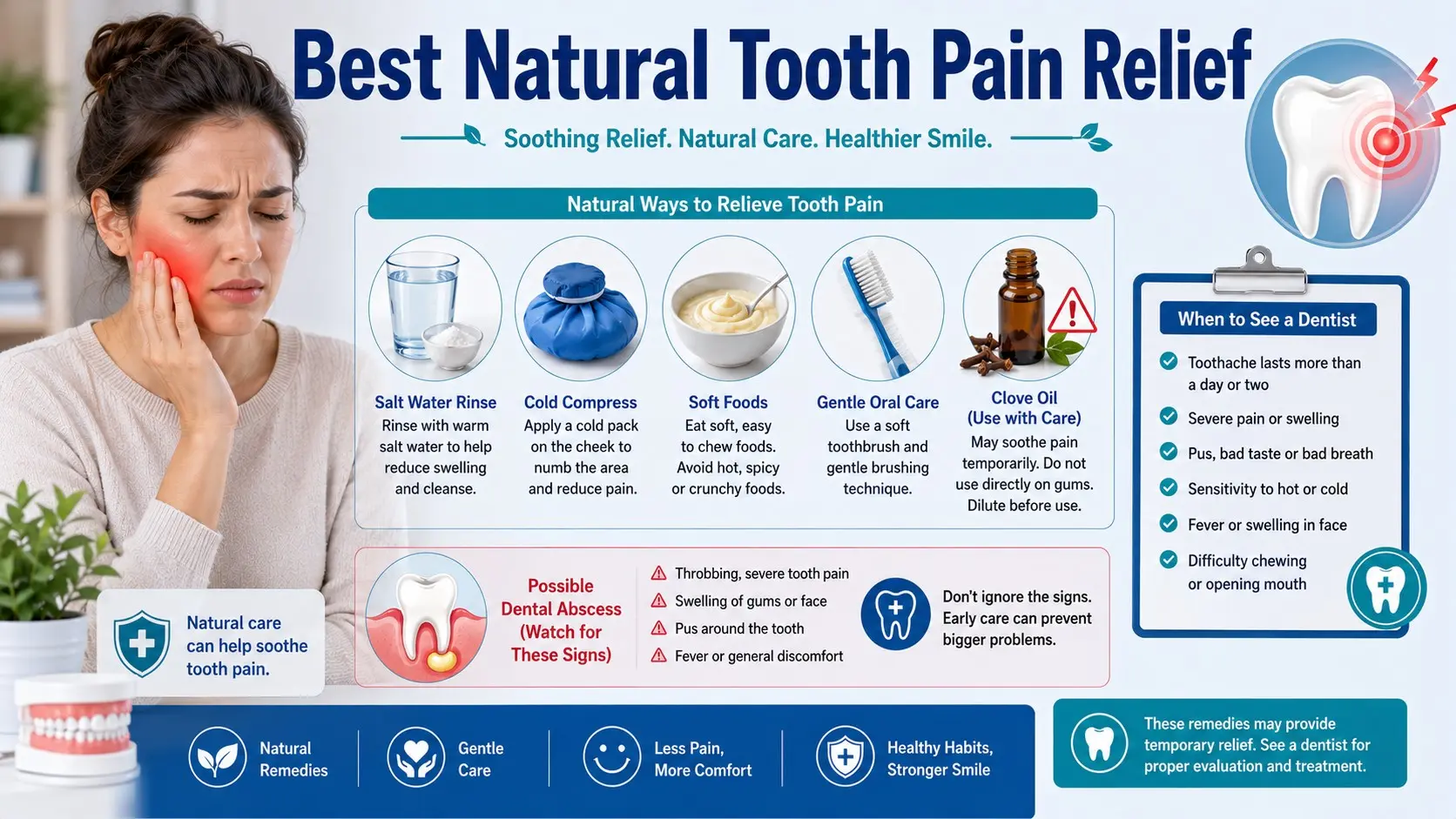
The best natural tooth pain relief is temporary comfort while you arrange dental care. A warm salt water rinse, soft foods, avoiding very hot, cold, sweet, or hard foods, and a cold compress on the outside of the cheek may make a toothache easier to tolerate.
These steps do not fill a cavity, repair a cracked tooth, drain an abscess, treat deep tooth decay, or cure an infected tooth.
If pain lasts more than 2 days, is severe, keeps returning, wakes you at night, hurts when biting, or comes with fever, a bad taste, or facial swelling, arrange dental assessment.
For broader guidance, visit the Pain Management & Conditions Hub and First Aid & Home Remedies Hub.
When Tooth Pain Needs Urgent or Emergency Care
A dental abscess will not go away on its own and needs urgent dental treatment.
Arrange urgent dental care for:
- severe or persistent tooth or mouth pain
- facial, cheek, jaw, or gum swelling
- fever or feeling systemically unwell
- a bad taste or pus
- pain when biting
- difficulty opening the mouth
- a swelling or lump in the mouth that is growing or not going away
Seek emergency medical care for:
- difficulty breathing, speaking, or swallowing
- severe swelling of the mouth, lips, throat, or neck
- swelling or pain around the eye, or sudden vision problems
- heavy mouth bleeding that will not stop
- a serious facial or jaw injury
Do not try to treat these symptoms with clove oil, salt water, aspirin, antibiotics left over from another illness, or another home remedy.
Medical and Dental Notice
This article provides general education. It cannot diagnose a cavity, cracked tooth, pulp inflammation, dental abscess, gum disease, jaw disorder, sinus problem, or another cause of pain.
Temporary relief should not be used to postpone necessary dental treatment.
Why Does a Tooth Hurt?
Tooth pain is a symptom, not a diagnosis. Common causes include:
- tooth decay or a cavity
- a dental abscess
- a cracked, broken, or damaged tooth
- a loose or broken filling
- gum disease
- a partially erupted or infected wisdom tooth
- tooth grinding or jaw clenching
- food trapped around a painful area
- recent dental treatment
- tooth injury
- tooth sensitivity
NIDCR explains that untreated tooth decay can progress from enamel damage to a cavity and can eventually cause pain, infection, and tooth loss.
15 Safer Steps for Temporary Tooth Pain Relief
1. Rinse With Warm Salt Water
NHS toothache guidance suggests dissolving about half a teaspoon of salt in a glass of warm water, gently rinsing the mouth, and spitting it out.
Do not swallow the rinse. Children should not use a salt water rinse if there is a risk they may swallow it.
2. Use a Cold Compress on the Outside of the Cheek
A wrapped cold pack may help with temporary comfort, especially when pain follows minor injury or swelling. Do not place ice directly on the tooth or skin.
3. Eat Soft Foods
Choose foods that need little chewing, such as yoghurt, scrambled eggs, soft rice, oatmeal, mashed vegetables, or soup that is not very hot.
4. Chew on the Other Side
Reducing pressure on the painful tooth may make eating more tolerable while you wait for treatment.
5. Avoid Very Hot or Very Cold Foods and Drinks
Temperature extremes can trigger pain in an inflamed, decayed, cracked, or sensitive tooth.
6. Limit Sweet Foods and Drinks
Decay-causing bacteria use sugars and starches to produce acids that attack enamel. Reducing frequent sugar exposure supports oral health but does not repair an established cavity.
7. Avoid Hard or Crunchy Foods
Do not test a painful tooth by biting hard foods. A cracked or damaged tooth may worsen under pressure.
8. Keep Brushing Gently
Use a soft toothbrush and fluoride toothpaste. Clean gently rather than scrubbing the painful area.
9. Do Not Aggressively Floss Around the Sore Tooth
Current NHS toothache guidance advises using a soft toothbrush and avoiding flossing around the sore tooth while waiting for an appointment. If food is obviously trapped, ask a dentist or pharmacist for safe advice rather than repeatedly digging around the gum.
10. Keep Your Head Raised if Lying Flat Worsens Pain
Some dental pain feels more intense when lying flat. A supported, slightly raised position may feel more comfortable.
11. Drink Normally and Avoid Dehydration
Drink water according to your usual needs. Excess water does not treat dental infection.
12. Avoid Smoking
NHS toothache guidance advises not smoking because it can make some dental problems worse.
13. Ask a Pharmacist About Suitable Pain Relief
This is not a natural remedy, but it is more evidence based than many DIY treatments. A pharmacist can help determine whether ibuprofen, paracetamol or acetaminophen, or another option is appropriate for you.
14. Check for Abscess and Emergency Warning Signs
Look for facial swelling, fever, bad taste, pus, worsening pain, trouble opening the mouth, swallowing problems, or breathing difficulty. These change the urgency of care.
15. Book a Dentist to Treat the Cause
This is the step that resolves the underlying problem. Home care is a bridge to dental treatment, not a replacement for it.
What Does Current Guidance Say About Toothache Pain Medicine?
The American Dental Association's living guideline for adolescents and adults says NSAIDs such as ibuprofen or naproxen, alone or combined with acetaminophen, can effectively manage acute toothache when definitive dental treatment is not immediately available.
The ADA lists nonopioid medicines as first-line therapy for acute dental pain. Opioids are reserved for limited situations when first-line treatment is inadequate or contraindicated.
This does not mean NSAIDs are safe for everyone. Kidney disease, stomach ulcers or bleeding, some cardiovascular conditions, pregnancy, asthma triggered by NSAIDs, blood-thinning medicines, allergies, and other factors can change what is safe.
Follow the product label and ask a dentist, pharmacist, or clinician before combining medicines. Never exceed recommended doses.
What Should You Not Put on a Painful Tooth or Gum?
A painful mouth is vulnerable to chemical burns and irritation. Avoid DIY treatments that can injure tissue or delay proper care.
- do not place aspirin tablets directly on the gum or tooth
- do not apply household bleach
- do not use undiluted hydrogen peroxide
- do not use vinegar or lemon juice as a tooth treatment
- do not apply undiluted essential oils
- do not use very hot packs against swollen tissue
- do not use tooth-whitening chemicals on a painful tooth
- do not apply garlic paste or other irritating homemade mixtures
- do not use alcohol as a disinfectant for toothache
If a product causes burning, whitening of the gum, swelling, rash, or worsening pain, stop using it and seek advice.
Is Clove Oil the Best Natural Tooth Pain Relief?
No. Clove-derived eugenol has a history of dental use, but concentrated home clove oil is not a substitute for diagnosis or definitive treatment.
Because product concentration and instructions vary, NextFitLife does not recommend using concentrated clove oil as a first-line DIY treatment. If you are considering a clove-containing oral product, use only a product intended for oral use and follow its label, or ask a dentist or pharmacist.
Do not use clove oil to delay treatment for swelling, fever, pus, severe pain, or a suspected abscess.
What About Benzocaine Toothache Gels?
Benzocaine is a topical anesthetic found in some nonprescription oral products. It can temporarily numb tissue, but it also carries important safety warnings.
The FDA warns that benzocaine can cause methemoglobinemia, a rare but potentially life-threatening condition that reduces the blood's ability to carry oxygen. Benzocaine products should not be used for teething pain in infants and young children.
For an adult toothache, follow the product label and ask a pharmacist or dentist if you have health conditions, take other medicines, or are unsure whether the product is appropriate.
Can Natural Remedies Cure a Dental Abscess?
No. NHS guidance states that a dental abscess needs urgent dental treatment and will not go away on its own.
Depending on the source of the infection, treatment may involve draining the abscess, root canal treatment, or removing a tooth that cannot be saved.
Salt water, a cold compress, soft foods, or pain medicine may temporarily reduce discomfort. They do not remove the source of infection.
Do You Need Antibiotics for Tooth Pain?
Not every toothache needs antibiotics.
The ADA recommends against antibiotics for most pulpal and periapical dental pain and localized swelling when definitive dental treatment is available. Dental procedures such as pulpotomy, root canal treatment, or drainage are prioritized. Antibiotics become more important when infection has systemic involvement, such as fever or malaise, or when a dentist determines they are indicated.
Do not use leftover antibiotics, share antibiotics, or start antibiotics without a dentist or clinician evaluating the problem.
How Does a Dentist Treat the Cause of Tooth Pain?
| Possible cause | Possible dental treatment |
|---|---|
| Cavity | Fluoride treatment for very early decay or a filling when a cavity has formed; deeper damage may need further restorative care. |
| Dental abscess | Drainage, root canal treatment, or extraction depending on the tooth and infection. |
| Cracked tooth | Assessment followed by bonding, a crown, root canal treatment, or extraction depending on severity. |
| Gum disease | Professional cleaning and periodontal treatment according to severity. |
| Lost or broken filling | Repair or replacement after the tooth is assessed. |
| Grinding or clenching | Assessment of the bite, tooth damage, jaw muscles, and whether a night guard or other treatment is appropriate. |
How Can You Reduce the Chance of Future Tooth Pain?
NIDCR recommends habits that reduce tooth-decay risk:
- brush twice daily with fluoride toothpaste
- clean between teeth regularly
- limit frequent sugary foods and drinks
- attend dental check-ups based on your dental needs
- get early problems treated before they become painful
For a complete daily routine, read the NextFitLife Oral Hygiene Guide.
Key Takeaway
Best natural tooth pain relief means temporary symptom care, not a natural cure.
Warm salt water rinses, soft foods, avoiding painful triggers, a cold compress, and suitable pain medicine may make a toothache easier to tolerate while you arrange dental treatment.
A cavity, cracked tooth, dental abscess, infected tooth, or gum disease needs professional diagnosis and treatment. Do not rely on clove oil, aspirin on the gum, essential oils, bleach, peroxide, vinegar, antibiotics left over from another illness, or other DIY treatments.
Seek urgent dental care for severe or persistent pain, swelling, fever, pus, bad taste, or difficulty opening the mouth. Seek emergency medical care for breathing or swallowing difficulty, severe mouth or neck swelling, or swelling around the eye.
References and Authoritative Sources
- American Dental Association: Acute Pain Management — Toothache
- American Dental Association: Antibiotics for Dental Pain and Swelling
- NIDCR: Tooth Decay
- NHS: Toothache
- NHS: Dental Abscess
- FDA: Benzocaine and Oral Pain Safety
Source review date: August 9, 2026
These organizations do not endorse NextFitLife.
Frequently Asked Questions About Natural Tooth Pain Relief
What is the best natural tooth pain relief?
Safe temporary measures include a warm salt water rinse, soft foods, avoiding very hot, cold, sweet, or hard foods, and a wrapped cold compress on the cheek. These steps do not treat the underlying dental problem.
How long should I wait before seeing a dentist?
NHS guidance recommends seeing a dentist if toothache lasts more than 2 days. Seek care sooner for severe pain, swelling, fever, a bad taste, pain when biting, or other concerning symptoms.
Can salt water cure a tooth infection?
No. Salt water may soothe the mouth and help with short-term comfort, but it does not drain an abscess or eliminate the source of a deep dental infection.
Can clove oil cure toothache?
No. A clove-containing product may provide temporary numbing for some people, but it cannot repair decay, a crack, or an abscess. Concentrated DIY clove oil should not be used as a substitute for dental treatment.
Can I put aspirin on my tooth?
No. Do not place aspirin tablets directly on a painful tooth or gum. Use medicines only by their intended route and according to the label or professional advice.
Are ibuprofen and paracetamol used for toothache?
Yes, in suitable people. Current ADA and NHS guidance includes nonopioid pain medicines for temporary dental pain relief. Ask a pharmacist or dentist what is safe with your health conditions and other medicines.
Does a dental abscess go away on its own?
No. NHS guidance states that a dental abscess needs urgent dental treatment and will not go away on its own.
Do all dental infections need antibiotics?
No. ADA guidance recommends definitive dental treatment rather than antibiotics for most localized pulpal and periapical dental pain and swelling. Antibiotics are used when clinically indicated, including selected infections with systemic involvement.
When is tooth pain an emergency?
Seek emergency care for difficulty breathing, speaking, or swallowing, severe swelling of the mouth or neck, swelling or pain around the eye, sudden vision problems, uncontrolled mouth bleeding, or serious facial injury.
Is this article medically reviewed?
No. It was source checked against current ADA, NIDCR, NHS, and FDA guidance but has not been medically reviewed by a licensed dental or medical professional.
Medical and Dental Disclaimer
NextFitLife provides general educational information. This page cannot diagnose toothache, dental abscess, tooth decay, gum disease, or another oral condition and cannot replace a dental examination, X-ray, prescription, procedure, or emergency care.

Health & wellness writer with 30+ years of experience in nutrition, fitness, and healthy aging. Founder of NextFitLife.com — evidence-based health guidance.