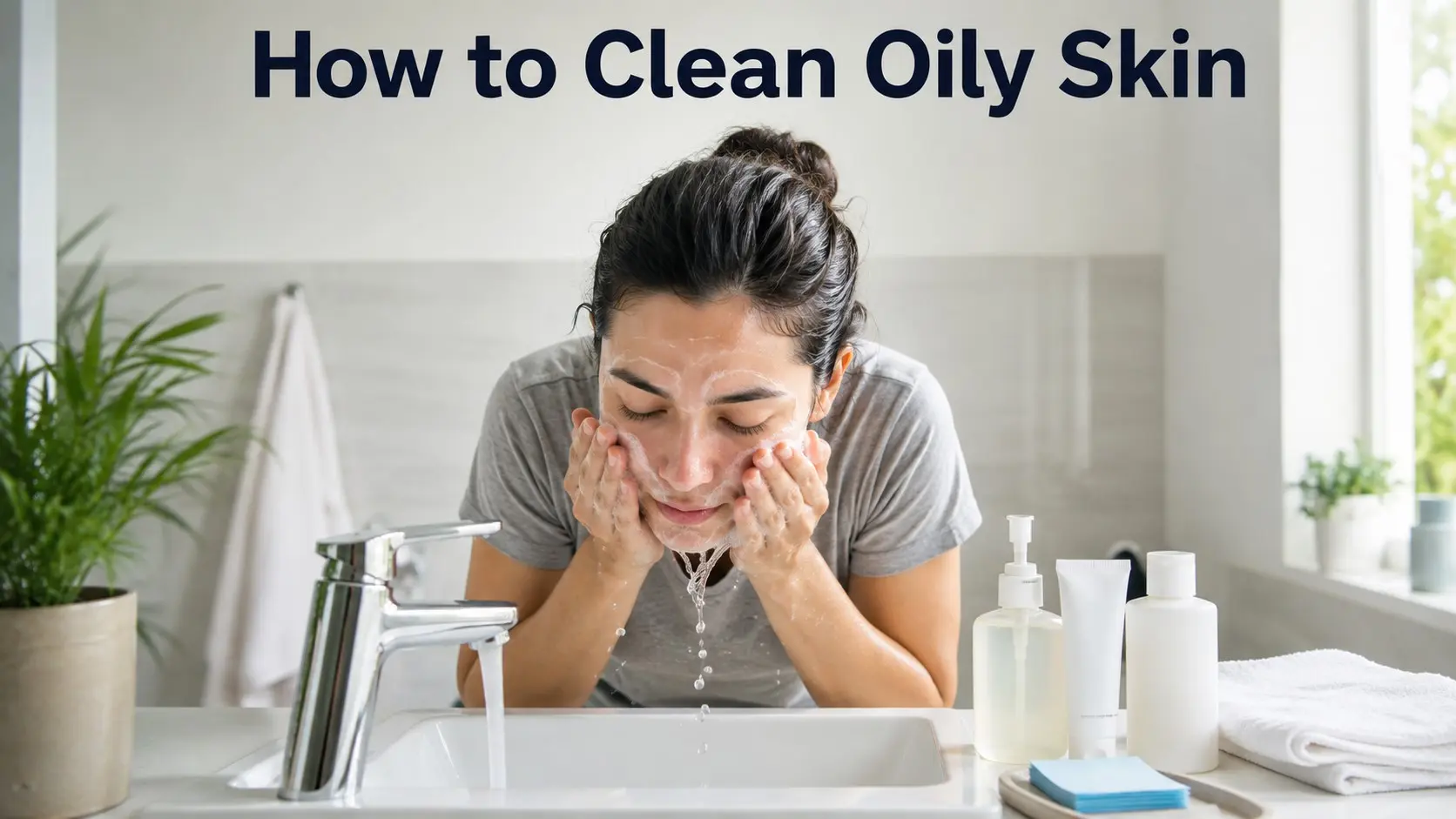
If you want to know how to Clean Oily Skin, start with one important fact.
Oily skin is not dirty skin.
Your skin naturally makes sebum.
Sebum helps protect the skin.
The problem comes when your skin produces more oil than you want or when oil mixes with dead skin cells and contributes to clogged pores.
You may notice:
- A shiny forehead
- An oily nose
- An oily chin
- Visible pores
- Blackheads
- Whiteheads
- Makeup that moves during the day
- Frequent acne breakouts
The answer is not to scrub harder.
It is not to wash your face five times a day.
It is not to dry your skin with alcohol.
And it is not to stop using moisturizer.
Current dermatologist guidance favors gentle cleansing up to twice daily and after sweating.
A simple routine usually works better than an aggressive one.
The goal is to reduce excess shine while protecting your skin barrier.
When Oily Skin May Need More Than Skin Care
Oily skin itself is common and usually harmless.
But see a dermatologist or other qualified healthcare professional if you have:
- Painful deep acne
- Nodules or cysts
- Acne scars
- A rapidly worsening rash
- Severe burning after skin products
- Persistent redness and peeling
- Sudden major changes in your skin
- Acne that is affecting your emotional wellbeing
Severe acne can scar.
Early professional treatment may reduce that risk.
How to Clean Oily Skin the Right Way
The simplest answer is:
- Wash your face up to twice a day.
- Wash again after heavy sweating.
- Use a mild gentle cleanser.
- Use lukewarm water.
- Use your fingertips instead of scrubbing.
- Consider salicylic acid if clogged pores or acne are a problem.
- Apply a lightweight moisturizer.
- Use broad spectrum sunscreen with SPF 30 or higher.
- Use blotting papers for excess shine during the day.
- Choose noncomedogenic skin care and makeup products.
You do not need to make your face feel tight or dry.
Tight skin after washing can be a sign that your cleanser is too harsh.
What Is Oily Skin?
Oily skin produces enough sebum to create visible shine or a greasy feeling.
The American Academy of Dermatology describes oily skin as skin that looks shiny and greasy.
Sebum Is Normal
Sebum is made by sebaceous glands.
Your skin needs some oil.
It helps support the skin surface and reduce water loss.
Too Much Oil Can Contribute to Clogged Pores
Oil can combine with dead skin cells inside a pore.
This can contribute to:
- Blackheads
- Whiteheads
- Pimples
- Acne
Oily Skin Is Not the Same as Acne
You can have oily skin without acne.
You can also have acne without extremely oily skin.
They often overlap, but they are not identical.
Why Is My Skin So Oily?
There is rarely one single cause.
Genetics Matter
Some people naturally produce more sebum than others.
Hormones Matter
Oil production can change during:
- Puberty
- The menstrual cycle
- Pregnancy
- Other hormonal changes
Weather Can Affect Shine
Heat and humidity can make oily skin feel more noticeable.
Skin Care Can Make Oiliness Look Worse
A strong cleanser can irritate skin.
Aggressive washing may make the skin feel uncomfortable and can make oil control harder.
Acne Treatments Can Dry Skin
Products containing salicylic acid, benzoyl peroxide, or retinoids can cause dryness and irritation.
This is one reason even acne prone skin may need moisturizer.
1. Wash Oily Skin Up to Twice a Day
More washing does not mean cleaner or less oily skin.
The American Academy of Dermatology recommends cleansing up to twice daily and after sweating.
A Simple Schedule
Wash:
- After waking
- Before bed
- After heavy sweating
Do Not Wash Every Time You See Shine
Frequent washing can irritate your skin.
After Exercise
Sweat can irritate acne prone skin.
Clean your face gently after heavy sweating when possible.
Three or Four Full Washes Are Usually Not Needed
If you become shiny during the day, blotting papers may be a gentler option.
2. Choose a Gentle Face Cleanser
A harsh cleanser can make oily skin feel temporarily dry.
That does not make it a better cleanser.
Look for Words Such As
- Gentle
- Mild
- Oil free
- Noncomedogenic
- For oily skin
- For acne prone skin
A Gentle Foaming Cleanser Can Work Well
AAD specifically recommends mild gentle foaming cleansers for oily skin.
Avoid Strong Alcohol Based Cleansers
They can irritate skin.
Strong Soap Is Not Required
Your facial skin does not need to squeak after cleansing.
A squeaky feeling can mean too much surface oil has been removed.
3. Wash With Lukewarm Water
Water temperature matters.
Use Lukewarm Water
It cleans without exposing skin to unnecessary heat.
Very Hot Water Is Not Better
Hot water can irritate skin.
Very Cold Water Does Not Close Pores
Pores do not work like doors.
Cold water cannot permanently close them.
Use Your Fingertips
Wet your face.
Apply cleanser gently using clean fingertips.
Rinse.
Pat dry with a clean soft towel.
4. Do Not Scrub Oily Skin
This is one of the most important rules.
Scrubbing Does Not Clean Pores From the Inside
Blackheads are not dirt trapped in your skin.
Avoid Aggressive Tools
You usually do not need:
- Rough washcloths
- Hard facial brushes
- Abrasive scrubs
- Harsh cleansing grains
Scrubbing Can Irritate Acne
Inflamed skin often becomes worse when repeatedly rubbed.
Gentle Cleaning Is Enough
Your fingertips can effectively apply cleanser without creating unnecessary friction.
5. Consider Salicylic Acid for Oily and Clogged Skin
Salicylic acid is one of the most useful ingredients for oily acne prone skin.
What Salicylic Acid Does
AAD explains that salicylic acid helps open clogged pores and exfoliate the skin.
It can help with:
- Whiteheads
- Blackheads
- Pimples
- Oiliness
You Can Find It in Cleansers
This is often a simple way to introduce it.
Do Not Assume Stronger Is Better
Salicylic acid can cause:
- Dryness
- Stinging
- Peeling
- Irritation
Reduce Use if Your Skin Becomes Irritated
You may need to alternate it with a simple gentle cleanser.
Do Not Add Many Acids at Once
Using salicylic acid, glycolic acid, lactic acid, scrubs, and other exfoliating products together can damage the skin barrier.
Add one product at a time.
6. Moisturize Even if Your Skin Is Oily
This surprises many people.
Oily skin can still become dehydrated or irritated.
AAD Recommends Moisturizer for Oily Skin
This is especially useful when acne treatments dry the skin.
Choose a Lightweight Product
Look for:
- Oil free
- Noncomedogenic
- Water based
- Light lotion
- Gel texture
Moisturizer Supports the Skin Barrier
A damaged skin barrier can cause:
- Burning
- Stinging
- Dry patches
- Redness
- Peeling
Use Less if You Need Less
You do not need a thick layer.
A light application may be enough.
If your skin becomes irritated easily, read Treatment of Skin Irritation.
7. Use Sunscreen Every Day You Need Sun Protection
Oily skin still needs protection from ultraviolet radiation.
Choose Broad Spectrum Protection
AAD recommends broad spectrum sunscreen with SPF 30 or higher.
Look for Oily Skin Friendly Labels
Useful terms include:
- Noncomedogenic
- Will not clog pores
- Oil free
A Lightweight Texture Can Feel Better
Many people with oily skin prefer:
- Fluid sunscreen
- Gel sunscreen
- Light lotion
Darker Skin Tones May Prefer Tinted Sunscreen
A tinted sunscreen may reduce visible white residue on deeper skin tones.
Sunscreen Is Not Only for Preventing Sunburn
Sun protection also helps reduce:
- Premature skin aging
- Dark spots
- Ultraviolet skin damage
- Skin cancer risk
For a broader routine, read Healthy Skin 101.
8. Remove Makeup Before Sleeping
Do not sleep with makeup on.
Choose Noncomedogenic Makeup
Look for labels such as:
- Oil free
- Noncomedogenic
- Will not clog pores
Remove Makeup Gently
You may need a gentle makeup remover before cleansing.
Avoid Scrubbing Mascara and Foundation Off
Use enough remover to loosen the product first.
Then Cleanse Normally
Your night routine should leave skin clean, not raw.
9. Use Blotting Papers for Shine During the Day
Blotting papers can remove visible oil without another full facial wash.
How to Use Them
Press the paper gently onto oily areas.
Leave it for a few seconds.
Lift it away.
Do Not Rub
AAD recommends pressing rather than rubbing the paper across the face.
Good Areas to Blot
- Forehead
- Nose
- Chin
Blotting Does Not Treat the Cause of Oiliness
It is simply a convenient way to control shine.
10. Keep Your Hands Off Your Face
Touching your face repeatedly transfers material from your hands to your skin.
Your Hands Pick Up
- Oil
- Dirt
- Microorganisms
- Product residue
Do Not Pick Blackheads
Squeezing can injure skin.
Do Not Pop Pimples
This can increase inflammation and scarring risk.
Touch Your Face When Needed
Clean hands are appropriate when:
- Washing
- Moisturizing
- Applying sunscreen
- Applying makeup
Simple Morning Routine for Oily Skin
You do not need ten products.
Step 1: Cleanse
Use a gentle cleanser.
If you tolerate it and need help with clogged pores, a salicylic acid cleanser can be considered.
Step 2: Moisturize
Use a light noncomedogenic moisturizer if needed.
Step 3: Sunscreen
Finish with broad spectrum SPF 30 or higher when you will have ultraviolet exposure.
Optional Makeup
Choose oil free or noncomedogenic products.
That is enough for many people.
Simple Night Routine for Oily Skin
Step 1: Remove Makeup and Sunscreen
Use a gentle remover when needed.
Step 2: Cleanse
Wash with lukewarm water and a mild cleanser.
Step 3: Apply Acne Treatment if Needed
This may include a product recommended by your pharmacist, doctor, or dermatologist.
Step 4: Moisturize
Use a lightweight noncomedogenic moisturizer.
Keep the Routine Consistent
Changing products every few days makes it difficult to tell what is helping or irritating your skin.
What if You Have Oily Skin and Acne?
Oily skin and acne often occur together.
Do Not Try to Wash Acne Away
Acne is not caused simply by poor hygiene.
Salicylic Acid Can Help Clogged Pores
It is useful for whiteheads, blackheads, and some pimples.
Benzoyl Peroxide Can Help Some Acne
Benzoyl peroxide can reduce acne causing bacteria and is available in washes and leave on treatments.
It can also cause dryness and irritation.
Treatment Takes Time
AAD advises giving acne treatment several weeks to work.
See a Dermatologist Earlier for Severe Acne
Do not wait for deep painful acne to create scars.
Professional treatment is especially important for nodules, cysts, or scarring.
Should You Exfoliate Oily Skin?
You can, but you do not have to.
More Exfoliation Is Not Better
AAD warns that inappropriate exfoliation can damage skin and increase redness or breakouts.
Chemical Exfoliation Can Be Gentler Than Scrubbing for Some People
Ingredients may include:
- Salicylic acid
- Glycolic acid
- Lactic acid
Do Not Stack Everything Together
Your skin may not tolerate several acids plus acne medicine plus scrubbing.
Stop if Your Skin Burns
Mild temporary tingling can occur with some products.
Persistent burning, redness, swelling, cracking, or pain means your skin needs a simpler routine.
Can You Close Large Pores on Oily Skin?
You cannot permanently open and close pores like doors.
Why Pores May Look Larger
They may become more visible because of:
- Oil
- Clogging
- Skin structure
- Genetics
- Age
- Sun damage
Keeping Pores Clear Can Improve Their Appearance
Salicylic acid may help when oil and dead skin are contributing to clogging.
Sun Protection Also Matters
Ultraviolet damage affects skin structure over time.
Pore Size Is Not a Sign of Dirty Skin
Do not scrub your face trying to erase normal pores.
What Makeup Is Best for Oily Skin?
You do not have to stop wearing makeup.
Look for
- Oil free
- Water based
- Noncomedogenic
- Matte products if you prefer less shine
Remove Makeup Before Bed
This is more important than buying an expensive foundation.
Clean Makeup Tools
Wash brushes and applicators regularly according to the product instructions.
Stop a Product That Clearly Triggers Breakouts
Even a product labeled noncomedogenic may not suit every person.
How Should Men Clean Oily Skin?
The basic routine is the same.
Use a Facial Cleanser
Harsh body soap may be too drying or irritating for facial skin.
Wash After Exercise
Sweat trapped beneath hats, helmets, or facial hair can irritate acne prone skin.
Clean the Skin Beneath a Beard
Oil, dead skin cells, and bacteria can collect around beard hair.
Shaving Can Irritate Skin
If shaving causes bumps or burning, use gentle techniques and avoid repeatedly scraping the same area.
10 Common Mistakes When Cleaning Oily Skin
- Washing the face too often
- Using very hot water
- Scrubbing hard
- Using strong alcohol based products
- Skipping moisturizer
- Skipping sunscreen
- Using many exfoliating acids together
- Squeezing blackheads
- Sleeping in makeup
- Changing the entire routine every few days
The Simplest Routine Often Wins
Start with:
Cleanser.
Moisturizer.
Sunscreen.
Then add one treatment only if you need it.
Common Myths About How to Clean Oily Skin
Myth: Oily Skin Means Your Face Is Dirty
No.
Oil is produced naturally by sebaceous glands.
Myth: Wash Your Face Five Times a Day
No.
Frequent washing can irritate skin.
Myth: Oily Skin Does Not Need Moisturizer
No.
Oily skin can still become dehydrated or irritated.
Myth: Alcohol Toner Is the Best Way to Remove Oil
No.
Alcohol based cleansers can irritate oily skin.
Myth: Scrubbing Removes Blackheads
No.
Blackheads form inside pores.
Abrasive scrubbing can worsen irritation.
Myth: Hot Water Opens Pores
No.
Pores do not open and close like doors.
Myth: Cold Water Closes Pores
No.
Cold water cannot permanently shrink pores.
Myth: Toothpaste Dries Pimples Safely
No.
NHS guidance warns that toothpaste contains ingredients that can irritate and damage skin.
Myth: Lemon Juice Is a Natural Toner
Natural does not mean safe.
Acidic household ingredients can irritate skin.
Myth: Baking Soda Is Good for Oily Skin
No.
It can disrupt the skin surface and cause irritation.
Myth: You Need a Facial Brush
No.
Your fingertips are enough for normal cleansing.
Myth: Sunscreen Makes All Oily Skin Worse
No.
Choose a sunscreen formulated for oily or acne prone skin.
Myth: Oil Free Means a Product Cannot Cause Acne
No product works for everyone.
Use oil free and noncomedogenic labels as useful starting points, not guarantees.
Myth: Oily Skin Never Becomes Sensitive
No.
You can have oily and sensitive skin at the same time.
When Should You See a Dermatologist for Oily Skin?
Consider professional care if:
- Your oily skin suddenly changes dramatically
- You have painful acne
- You have nodules or cysts
- You are developing acne scars
- Over the counter treatment is not helping
- Your skin is constantly burning or peeling
- You cannot find products your skin tolerates
- Acne is affecting your confidence or mental wellbeing
Oily Skin Alone Is Not a Disease
You do not need medical treatment simply because your skin has shine.
Treatment Should Match the Problem
A dermatologist can help distinguish between:
- Simple oily skin
- Acne
- Rosacea
- Contact dermatitis
- Seborrheic dermatitis
- Other skin conditions
References and Sources
This guide was checked against current open dermatologist and public health guidance about oily skin, face washing, acne care, moisturizers, salicylic acid, sunscreen, and skin irritation.
- American Academy of Dermatology: How to Control Oily SkinDermatologist guidance on cleansing oily skin, gentle foaming cleansers, noncomedogenic products, acids, moisturizers, sunscreen, makeup, blotting papers, and avoiding alcohol based products and scrubbing.
- American Academy of Dermatology: Face Washing 101Dermatologist guidance on using a gentle cleanser, lukewarm water, fingertips, avoiding scrubbing, patting dry, and limiting routine washing to twice daily and after sweating.
- American Academy of Dermatology: Acne Diagnosis and TreatmentClinical information about acne treatments including salicylic acid, which helps open clogged pores and exfoliate skin and can help treat whiteheads and pimples.
- American Academy of Dermatology: Moisturizer and Acne Prone SkinGuidance explaining why oily and acne prone skin may still need moisturizer, especially when salicylic acid, benzoyl peroxide, retinoids, or other treatments cause dryness and irritation.
- National Health Service: AcneNHS guidance recommending mild cleansing with lukewarm water, no more than twice daily washing, avoiding squeezing blackheads and pimples, removing makeup before bed, and choosing noncomedogenic products.
Conclusion
How to Clean Oily Skin is simpler than many skin care routines make it sound.
Wash gently.
Do not scrub.
Cleanse up to twice daily and after heavy sweating.
Use lukewarm water.
Try salicylic acid if clogged pores are a problem and your skin tolerates it.
Use a lightweight moisturizer.
Wear broad spectrum SPF 30 or higher.
Use blotting papers when you want to reduce shine.
And do not try to make your face completely oil free.
Your skin needs some natural oil.
Take action today: Use this How to Clean Oily Skin guide to simplify your routine to a gentle cleanser, suitable moisturizer, and sunscreen. Add one acne or oil control ingredient only when you actually need it and stop any product that causes persistent burning or irritation.
Continue Your Skin Care Plan on NextFitLife
Use these related guides for more information about healthy skin, irritation, smoking, nutrition, and daily skin care.
- NextFitLife Health Hub
- Skin Health Guide
- Healthy Skin 101
- Treatment of Skin Irritation
- Smoking Impact on Skin
- Healthy Eating
- Nutrition and Vitamins Hub
Main Health Hub: Return to the NextFitLife Health Hub for the complete health library.
Skin Health Hub: Visit the Skin Health Guide for skin types, the skin barrier, acne, eczema, pigmentation, sun protection, aging, and warning signs.
Basic Skin Routine: Read Healthy Skin 101 for cleansing, moisturizing, sunscreen, and simple daily skin care.
Skin Irritation: Read Treatment of Skin Irritation if products are causing burning, redness, dryness, itching, or peeling.
Smoking and Skin: Read Smoking Impact on Skin for current evidence about wrinkles, collagen, healing, psoriasis, circulation, and tobacco exposure.
Nutrition: Read Healthy Eating for balanced food choices that support general health and normal skin function.
Medical Disclaimer
I am not a dermatologist or a doctor, and this content does not replace professional medical advice.
This article explains published guidance and does not provide a personal clinical assessment.
Always consult qualified medical professionals for diagnosis and treatment of any health condition.
I am also not a pharmacist, aesthetic physician, cosmetic chemist, or other licensed healthcare professional.
This article provides general skin care education only.
It does not diagnose acne, hormonal disorders, rosacea, seborrheic dermatitis, contact dermatitis, or another skin condition.
It does not prescribe salicylic acid, benzoyl peroxide, retinoids, antibiotics, or another acne treatment.
It does not guarantee that a cleanser or skin care routine will stop oil production or clear acne.
Skin type, allergies, medicines, pregnancy, medical conditions, and current treatments can change which products are appropriate for you.
Frequently Asked Questions About How to Clean Oily Skin
How to Clean Oily Skin correctly?
Wash gently with a mild facial cleanser and lukewarm water up to twice daily and after heavy sweating. Use your fingertips, do not scrub, and follow with a suitable lightweight moisturizer.
How many times should I wash oily skin?
Dermatologists generally recommend washing up to twice daily and after sweating.
Should I wash oily skin in the morning?
Yes, a gentle morning cleanse works well for many people with oily skin.
Should I wash oily skin before bed?
Yes. Cleansing before bed removes excess oil, dirt, sunscreen, and makeup from the day.
Can I wash oily skin three times a day?
An extra gentle wash after heavy sweating can be reasonable, but frequent routine washing can irritate skin.
What is the best cleanser for oily skin?
A mild gentle cleanser made for facial skin is a good starting point. AAD recommends gentle foaming cleansers and oil free or noncomedogenic products for oily skin.
Is foaming cleanser good for oily skin?
Yes. A gentle foaming cleanser can remove excess surface oil without requiring aggressive scrubbing.
Is salicylic acid good for oily skin?
Yes. Salicylic acid can help reduce oiliness, exfoliate skin, and open clogged pores. Reduce use if it causes irritation.
Does salicylic acid remove blackheads?
Salicylic acid can help clear clogged pores and is commonly used for blackheads and whiteheads.
Can salicylic acid irritate skin?
Yes. It can cause dryness, peeling, burning, or irritation in some people.
Should oily skin use moisturizer?
Yes. Oily skin can still become dehydrated or irritated, especially when acne treatments are used.
What moisturizer is best for oily skin?
Many people prefer a lightweight, oil free, water based, or gel moisturizer labeled noncomedogenic.
Does moisturizer make oily skin more oily?
A heavy product may feel greasy, but a suitable lightweight moisturizer can hydrate oily skin without necessarily clogging pores.
Does oily skin need sunscreen?
Yes. Oily skin still needs ultraviolet protection. Choose broad spectrum SPF 30 or higher and look for a noncomedogenic formula.
What sunscreen is good for oily skin?
Look for terms such as noncomedogenic, will not clog pores, or oil free. Lightweight fluid or gel textures may feel more comfortable.
Should I scrub oily skin?
No. Aggressive scrubbing can irritate skin and worsen acne.
Does hot water remove facial oil?
Hot water may remove surface oil but can also irritate skin. Lukewarm water is the better choice.
Does cold water close pores?
No. Pores do not permanently open or close with water temperature.
Can I use alcohol toner on oily skin?
AAD advises avoiding alcohol based cleansers for oily skin because they can irritate the skin.
Are blotting papers good for oily skin?
Yes. They can absorb visible surface oil during the day without requiring another full face wash.
How should I use blotting paper?
Press it gently onto oily areas for a few seconds and lift it away. Do not rub it across the face.
Should I squeeze blackheads?
No. Squeezing can damage the skin, increase inflammation, and contribute to scarring.
Are blackheads caused by dirt?
No. Blackheads form when material inside a clogged pore is exposed to air and darkens.
Does toothpaste help pimples?
No. NHS guidance advises against toothpaste because ingredients in it can irritate and damage facial skin.
Is lemon good for oily skin?
Using lemon juice directly on facial skin can cause irritation. It is not needed for normal oily skin care.
Is baking soda good for oily skin?
No. Baking soda can irritate the skin surface and is not recommended as a routine facial cleanser.
Can I exfoliate oily skin every day?
Daily exfoliation may be too irritating for many people, especially if you also use acne treatments. Frequency depends on the ingredient and your skin tolerance.
Why is my face oily but also peeling?
Oily skin can still become irritated or dehydrated. Acne treatments, harsh cleansers, frequent washing, and skin conditions can cause peeling.
Why does my face become oily a few hours after washing?
Sebaceous glands continue producing sebum after cleansing. Washing cannot permanently stop natural oil production.
Can you permanently stop oily skin?
No simple cleanser can permanently switch off the sebaceous glands. Skin care can control shine and clogged pores, while medical treatment may help selected people with significant acne or oiliness.
Does oily skin age more slowly?
AAD notes that oily skin can have some benefits because natural oil helps preserve the skin, and people with oily skin may have thicker skin and fewer wrinkles. Sun protection is still essential.
What is the best morning routine for oily skin?
Use a gentle cleanser, lightweight moisturizer if needed, and broad spectrum SPF 30 or higher.
What is the best night routine for oily skin?
Remove makeup and sunscreen, cleanse gently, apply any needed acne treatment, and finish with a lightweight moisturizer.
When should oily skin see a dermatologist?
See a dermatologist if you have painful acne, nodules, cysts, scarring, persistent irritation, a sudden major change in oiliness, or acne that is not improving with appropriate care.

Health & wellness writer with 30+ years of experience in nutrition, fitness, and healthy aging. Founder of NextFitLife.com — evidence-based health guidance.