Published: September 12, 2026
Last updated: September 12, 2026
Next review: September 2027, or sooner if important cocoa nutrition or food safety guidance changes
Written and source-checked by: Adel Galal, Founder and Lead Writer at NextFitLife
Medical review status: This article has not been medically reviewed by a doctor or registered dietitian.
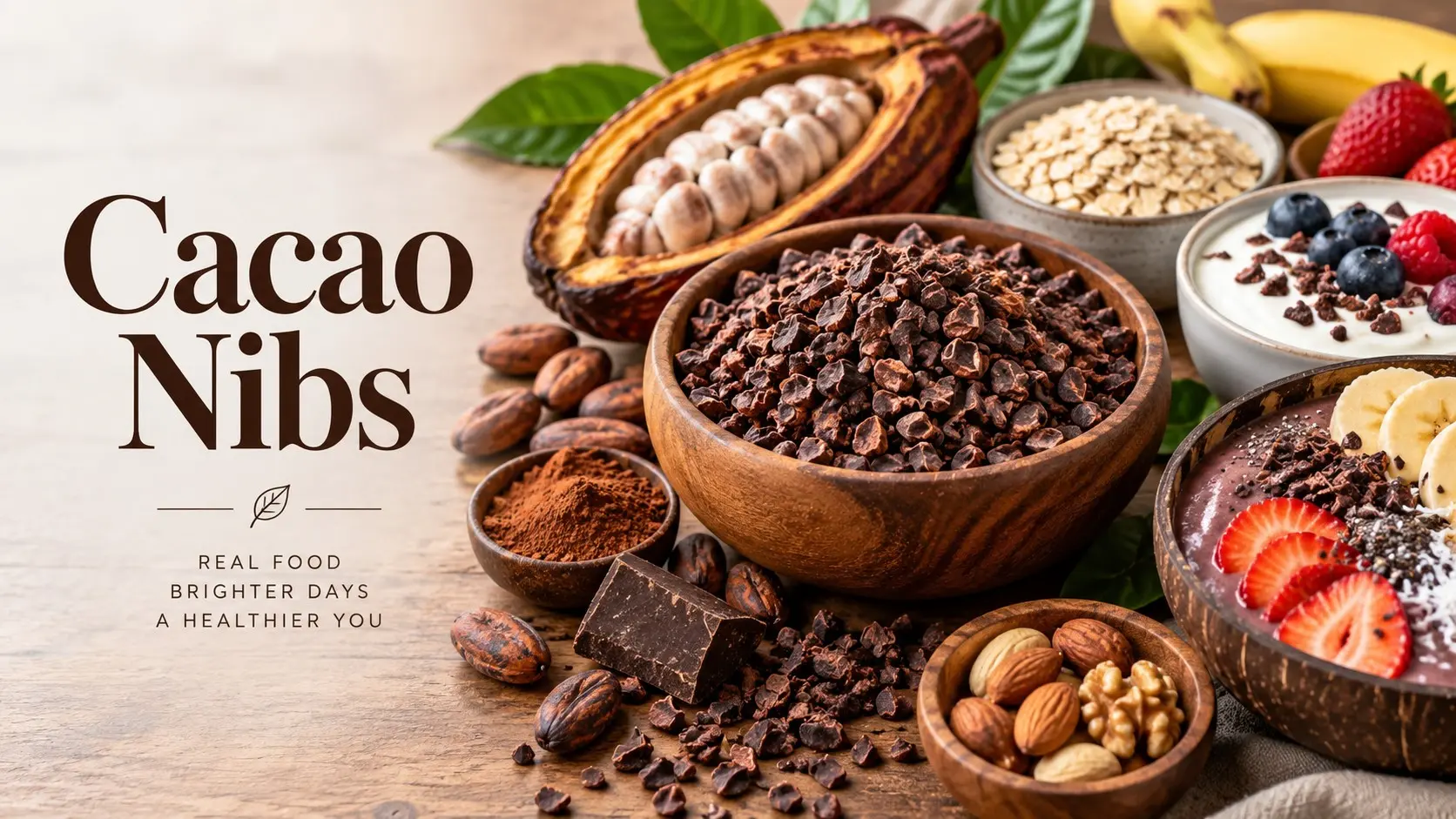
Cacao Nibs give you the deep taste of chocolate without turning cacao into a candy bar.
They are crunchy.
They are bitter.
They contain no added sugar when you buy plain cacao nibs.
They also contain fibre, minerals, fat, and naturally occurring plant compounds called cocoa flavanols.
That sounds impressive.
But cacao nibs are not medicine.
They do not detox your body.
They do not cure inflammation.
They do not guarantee better heart health.
And eating more cacao does not automatically mean getting more benefit.
The best way to think about cacao nibs is much simpler.
They are a nutrient-rich cacao food that can add flavour, crunch, minerals, fibre, and cocoa plant compounds to an overall healthy diet.
This guide explains what cacao nibs are, what the science says, how much to eat, how to use them, and what safety issues are worth knowing.
Important medical note: This content is for general educational purposes and does not replace professional medical advice, diagnosis, or treatment. Consult an appropriately qualified healthcare professional for personal medical concerns. This article explains published guidance and does not provide a personal clinical assessment. Always consult qualified medical professionals for diagnosis and treatment of any health condition.
What Are Cacao Nibs?
Quick answer: Cacao nibs are small pieces of cacao beans.
Cacao beans come from the fruit of the Theobroma cacao tree.
The beans are normally fermented and dried before they become cacao ingredients.
Depending on the product, the beans may also be roasted.
The outer shell is removed.
The remaining bean is broken into small pieces.
Those pieces are cacao nibs.
Plain nibs usually contain no added sugar.
That makes them very different from a normal chocolate bar.
Are Cacao Nibs the Same as Chocolate?
No.
Chocolate is made from cacao ingredients but normally contains other ingredients too.
Depending on the chocolate, these may include:
- Sugar
- Cocoa butter
- Milk
- Flavorings
- Emulsifiers
Plain cacao nibs are much simpler.
They are pieces of the cacao bean itself.
That is why they taste much more bitter than a sweet chocolate bar.
Cacao Nibs vs Cocoa Powder vs Dark Chocolate
| Food | Texture | Typical Added Sugar | Best Use |
|---|---|---|---|
| Cacao nibs | Crunchy pieces | None in plain products | Toppings, oatmeal, yogurt, trail mixes, baking |
| Natural cocoa powder | Fine powder | Usually none when unsweetened | Drinks, baking, oatmeal, smoothies |
| Dutch-processed cocoa | Fine powder | Usually none when unsweetened | Baking and smoother cocoa flavour |
| Dark chocolate | Solid and smooth | Usually yes | Dessert or snack |
Harvard notes that processing matters.
Alkalizing cocoa, which is often called Dutch processing, can reduce flavanol levels.
Flavanol content can also vary greatly from one cacao product to another.
This means you should not assume one tablespoon of cacao nibs provides a precise therapeutic dose of flavanols.
What Do Cacao Nibs Contain?
Cacao nibs provide several useful nutrients and food components.
Exact amounts change with the brand, growing region, processing, and serving size.
Check the Nutrition Facts label for your product.
| Component | Why It Matters |
|---|---|
| Cocoa flavanols | Plant compounds studied for vascular and cardiovascular effects |
| Dietary fiber | Supports normal bowel function and contributes to fullness |
| Magnesium | Needed for normal muscle, nerve, blood glucose, blood pressure, bone, protein, and DNA functions |
| Iron | Needed to make hemoglobin and carry oxygen through the body |
| Copper | Supports several normal enzyme and metabolic functions |
| Fat | Naturally present in cacao beans and contributes energy and texture |
| Theobromine | A naturally occurring methylxanthine stimulant found in cacao |
| Caffeine | Present in smaller amounts than many coffee drinks, but the amount varies |
Cacao nibs can be nutrient rich.
That does not mean you need large amounts.
11 Remarkable Cacao Nibs Benefits and Nutrition Advantages
1. Cacao Nibs Provide Cocoa Flavanols
One of the most interesting parts of cacao is its cocoa flavanols.
These are plant compounds found naturally in cacao beans.
Researchers have studied them for their effects on blood vessels and cardiovascular health.
They appear to influence nitric oxide pathways that help blood vessels relax.
But there is an important limit.
Most clinical research uses cocoa products or standardized cocoa extracts with known flavanol amounts.
A normal bag of cacao nibs may not tell you how much flavanol it contains.
So the science does not justify treating cacao nibs like a medicine.
2. They May Support Normal Blood Vessel Function
Cocoa flavanols have been studied for their ability to support blood flow and endothelial function.
This is one of the better studied areas of cacao research.
The endothelium is the thin layer of cells that lines blood vessels.
Healthy endothelial function helps vessels respond normally.
Still, eating cacao nibs does not replace:
- Blood pressure treatment
- Cholesterol treatment
- Exercise
- Sleep
- Smoking cessation
- A balanced diet
3. Cocoa Research Has Shown Interesting Heart Findings
The large COSMOS randomized trial studied a standardized cocoa extract rather than cacao nibs.
The original trial included more than 21,000 older adults.
Cocoa extract did not significantly reduce the trial's primary outcome of total cardiovascular events.
However, researchers observed a lower rate of cardiovascular death as a secondary outcome.
A newer 2026 analysis of COSMOS also reported encouraging findings when cardiovascular events were ranked by severity.
These results are interesting.
But they still do not prove that a spoonful of cacao nibs prevents a heart attack or stroke.
The studied intervention had a standardized amount of cocoa flavanols.
Normal food products vary.
4. They Provide Dietary Fiber
Cacao nibs contain dietary fiber.
Fiber supports normal bowel function.
It can also contribute to fullness after eating.
Cacao nibs should not be your main source of fiber.
Build your diet around a wider range of:
- Vegetables
- Fruit
- Beans
- Lentils
- Oats
- Whole grains
- Nuts
- Seeds
For a broader guide, visit the NextFitLife Gut Health and Digestion Foods Hub.
5. They Can Contribute Magnesium
Cacao products can contribute magnesium.
Your body needs magnesium for many normal functions.
According to the NIH Office of Dietary Supplements, magnesium is involved in:
- Muscle function
- Nerve function
- Blood glucose regulation
- Blood pressure regulation
- Protein production
- Bone structure
- DNA production
This does not mean cacao nibs treat magnesium deficiency.
A varied diet is still important.
Learn more in our Zinc and Magnesium Benefits guide.
6. They Can Contribute Iron
Cacao nibs also contain plant based iron.
Iron is needed to make hemoglobin.
Hemoglobin helps red blood cells carry oxygen.
The iron in plant foods is nonheme iron.
Your body generally absorbs it less efficiently than heme iron from animal foods.
Eating vitamin C rich food with plant iron can help improve absorption.
Try cacao nibs with:
- Strawberries
- Kiwi
- Orange
- Berries
Do not use cacao nibs to treat anemia without medical assessment.
7. Plain Cacao Nibs Usually Have No Added Sugar
Chocolate flavour often comes with a lot of added sugar.
Plain cacao nibs are different.
They normally contain no added sugar unless the manufacturer adds other ingredients.
This makes them useful when you want chocolate flavour without making the food very sweet.
Try adding a small amount to oatmeal or yogurt with fruit.
The fruit adds natural sweetness.
8. They Add Strong Flavour in a Small Portion
Cacao nibs have a strong, bitter chocolate taste.
You often do not need much.
A small amount can add:
- Crunch
- Chocolate aroma
- Bitterness
- Texture
This can make oatmeal, yogurt, fruit, and smoothie bowls more interesting without adding a sweet chocolate sauce.
9. They Pair Well With Nutrient-Rich Foods
A cacao nib is only one food.
The meal around it matters more.
Pair cacao nibs with:
- Berries
- Banana
- Oats
- Plain yogurt
- Soy yogurt
- Nuts
- Seeds
- Whole grain cereal
This creates a meal or snack with more variety.
For more everyday options, read our Top Healthy Foods guide.
10. They Can Be a Less Sweet Alternative to Chocolate Chips
Cacao nibs can replace some chocolate chips in certain foods.
They will not taste the same.
They are much less sweet.
But they work well in:
- Oatmeal
- Granola
- Energy bites
- Muffins
- Banana bread
- Trail mix
This is useful if you enjoy a strong chocolate flavour and do not need a very sweet result.
11. They Can Fit Into a Balanced Eating Pattern
This may be the most important benefit.
Cacao nibs do not need to be a miracle food to be useful.
They can simply be one enjoyable part of a varied diet.
A healthy diet is built from many foods.
Think vegetables, fruit, beans, whole grains, protein foods, nuts, seeds, and suitable fats.
One food should not carry the whole diet.
Do Cacao Nibs Reduce Inflammation?
Cocoa flavanols have been studied in relation to inflammation.
In 2025, Harvard researchers reported new COSMOS findings involving high-sensitivity C-reactive protein, a marker of inflammation.
The study concerned a standardized cocoa extract in older adults.
It did not prove that normal servings of cacao nibs cure inflammation.
That distinction matters.
Inflammation is also not one disease.
It can be connected with infection, autoimmune disease, injury, obesity, smoking, chronic disease, and many other factors.
Do not use cacao nibs instead of medical care for an inflammatory condition.
Do Cacao Nibs Improve Mood?
Cacao contains compounds such as theobromine and caffeine.
These can have stimulant effects.
Some people may feel more alert after cacao.
That does not mean cacao treats depression, anxiety, poor concentration, or another mental health condition.
The response can also go the other way.
If you are sensitive to stimulants, cacao may make you feel:
- Restless
- Jittery
- More awake at night
- Uncomfortable
Pay attention to your own response.
Do Cacao Nibs Improve Blood Sugar?
Cocoa flavanols have been studied for effects involving insulin sensitivity and glucose metabolism.
But this does not mean cacao nibs treat diabetes.
The COSMOS trial has also examined cocoa extract and diabetes outcomes.
Cacao nibs should be treated as food, not diabetes medicine.
If you have diabetes, consider the whole meal, total carbohydrate, medication, and your personal glucose response.
Are Cacao Nibs Good for Weight Loss?
Cacao nibs do not burn body fat.
They do not speed metabolism enough to create meaningful weight loss on their own.
They contain fibre and have a strong taste, which may help make a meal satisfying for some people.
But they also contain fat and calories.
Large portions can add significant energy.
If weight management is your goal, use cacao nibs as a topping rather than eating large handfuls.
For safer weight management guidance, visit the Weight Loss and Metabolism Hub.
How Much Cacao Nibs Should You Eat?
There is no official daily requirement for cacao nibs.
You do not need to eat them every day.
You also do not need the one or two ounce daily portions sometimes promoted online.
A practical place to start is a small topping portion.
For example:
- One teaspoon
- One tablespoon
- A small sprinkle over oatmeal or yogurt
If you enjoy them and tolerate them well, the portion can fit your diet and energy needs.
Read your product label because serving sizes and calories vary.
12 Easy Ways to Eat Cacao Nibs
1. Add Them to Oatmeal
Sprinkle cacao nibs over oats with banana and cinnamon.
2. Add Them to Plain Yogurt
Mix plain yogurt, berries, and a small amount of cacao nibs.
3. Use Them in a Smoothie Bowl
Use cacao nibs as a crunchy topping rather than blending everything smooth.
4. Pair Them With Banana
Banana naturally balances the bitterness of cacao.
5. Add Them to Overnight Oats
Add nibs in the morning if you want them to stay crunchy.
6. Mix Them Into Trail Mix
Combine a small amount with unsalted nuts and dried fruit.
Watch the portion because all three foods can be energy dense.
7. Sprinkle Them Over Berries
Strawberries and raspberries pair especially well with bitter cacao.
8. Use Them in Homemade Granola
Add the nibs after baking if you want more texture.
9. Put Them on Whole Grain Cereal
Add fruit and suitable milk or fortified plant milk.
10. Add Them to Chia Pudding
The contrast between soft pudding and crunchy nibs works well.
11. Use Them in Banana Bread
Replace some sweet chocolate pieces with cacao nibs.
12. Add Them to Healthy Sweet Snacks
A small amount of cacao nibs can bring chocolate flavor to fruit based snacks.
Explore more ideas in our Healthy Sweet Snacks guide.
What Do Cacao Nibs Taste Like?
Cacao nibs are not naturally sweet.
They taste:
- Bitter
- Deeply chocolate-like
- Roasted
- Nutty
- Slightly earthy
If you expect a chocolate chip, the first bite can be surprising.
Pair them with fruit when you want natural sweetness.
Are Raw Cacao Nibs Better?
The word “raw” can make a product sound healthier.
That does not prove it is nutritionally superior.
Cacao processing is complex.
Beans normally undergo fermentation and drying.
Products sold as raw may also use processing temperatures that differ among manufacturers.
Roasting can change flavor and some plant compounds.
But you should not assume that a product labeled raw automatically has a clinically meaningful flavanol advantage.
If flavanol content matters to you, a product with independently verified flavanol information is more useful than marketing language alone.
Cacao vs Cocoa: Is There a Real Difference?
The words cacao and cocoa are often used inconsistently.
Some companies use “cacao” for less processed products and “cocoa” for more heavily processed products.
But the label alone does not tell you exactly how the beans were fermented, heated, roasted, alkalized, or processed.
Read the ingredient list.
Look at how the manufacturer describes processing.
For cocoa powder, “alkalized” or “processed with alkali” indicates Dutch processing.
Harvard notes that alkalization can substantially reduce cocoa flavanols.
Important Cacao Nibs Safety Issues
1. Cadmium Can Occur in Cocoa Products
Cacao deserves one safety discussion that many articles skip.
Cocoa products can contain cadmium.
Cadmium is a toxic metal that can occur naturally in soil.
Cacao plants can absorb it.
Levels vary by growing region and product.
The FDA states that chocolate is one food it monitors for cadmium.
The agency also notes that cocoa percentage and growing region can influence cadmium levels.
This does not mean you should panic or stop eating cacao.
The FDA notes that cocoa products are a minor contributor to total dietary cadmium exposure in international assessments.
The smarter approach is variety.
Do not make huge amounts of one cacao product your main everyday food.
Choose reputable manufacturers.
If a company publishes independent heavy metal testing, that information can help you compare products.
2. Lead Is Another Contaminant Worth Knowing About
Lead can also occur in some cocoa and chocolate products.
The amount varies.
Food safety regulators monitor lead exposure because there is no known beneficial role for lead in the body.
Again, the answer is not fear.
Use normal portions and dietary variety.
3. Cacao Contains Stimulant Compounds
Cacao naturally contains caffeine and theobromine.
The amount can vary from product to product.
People who are very sensitive may notice:
- Difficulty sleeping
- Restlessness
- Palpitations
- Jitteriness
- Headache
If cacao affects your sleep, eat it earlier in the day or use less.
4. Pregnancy Requires Attention to Total Caffeine
If you are pregnant, count cacao as one potential source of caffeine.
Your total caffeine intake can also include coffee, tea, cola, energy drinks, chocolate, and some medicines.
Follow your healthcare professional's current pregnancy guidance.
5. Cacao May Trigger Reflux in Some People
Chocolate and cocoa foods can worsen reflux symptoms for some people.
That does not happen to everyone.
If symptoms repeatedly appear after cacao, reduce the portion or avoid it and discuss persistent reflux with a healthcare professional.
6. Headaches Can Be Individual
Some people report chocolate as a headache trigger.
Others do not.
If you have migraines, use your own symptom pattern rather than assuming cacao is always a trigger.
7. Cacao Nibs Are Calorie Dense
Cacao beans naturally contain fat.
That means cacao nibs can add calories quickly when eaten by the handful.
A topping portion is very different from a large bowl.
8. Read the Allergy Label
Pure cacao does not naturally contain milk, peanuts, or tree nuts.
But commercial products can be processed in facilities that handle common allergens.
If you have a serious food allergy, read the package carefully.
How to Choose Good Cacao Nibs
Keep the shopping process simple.
Look for a Short Ingredient List
The ideal plain product may list only cacao nibs.
Check for Added Sugar
Plain nibs usually do not need added sugar.
Check the Serving Size
This helps you understand calories, fat, fiber, and minerals.
Consider Heavy Metal Testing
If the company provides credible third party testing for cadmium and lead, that can add useful information.
Do Not Assume Organic Means Heavy Metal Free
Organic certification addresses farming practices.
It does not automatically mean a cacao product contains no naturally occurring cadmium.
Do Not Buy Based on “Superfood” Claims
Look at the food.
Look at the label.
Ignore exaggerated promises.
How to Store Cacao Nibs
Keep cacao nibs:
- In a sealed container
- In a cool place
- Away from moisture
- Away from direct sunlight
- Away from strong odors
Follow the manufacturer's storage instructions.
Discard the product if it develops signs of mold, unusual moisture, insects, or an abnormal smell.
Who Should Be More Careful With Cacao Nibs?
Ask a healthcare professional for personal guidance if you:
- Are pregnant
- Are highly sensitive to caffeine
- Have persistent heart palpitations
- Have uncontrolled reflux
- Have chronic kidney disease
- Have iron deficiency or anemia you are trying to treat
- Take medicines affected by stimulants or caffeine
- Have a history of severe food allergy
- Develop repeated symptoms after eating cacao
General nutrition information cannot check your medicines or diagnose the cause of symptoms.
Cacao Nibs Myths
Myth: Cacao Nibs Detox the Body
No.
Your liver, kidneys, lungs, digestive system, skin, and other organs perform normal waste processing and elimination.
Cacao nibs do not perform a special detox.
Myth: More Cacao Means More Antioxidant Benefit
No.
More food also means more calories and more exposure to everything else in that food.
Flavanol levels also vary.
Myth: Cacao Nibs Cure High Blood Pressure
No.
Cocoa flavanols have been studied for vascular effects.
Cacao nibs are not a replacement for blood pressure medicine or medical care.
Myth: Cacao Nibs Cure Diabetes
No.
Do not change diabetes treatment because of cacao research.
Myth: Raw Cacao Is Always Healthier
Not necessarily.
The word raw does not tell you the exact flavanol content, contaminant level, or overall quality.
Myth: Cacao Nibs Have No Calories Because They Have No Sugar
False.
Cacao beans naturally contain fat and energy.
No added sugar does not mean no calories.
My Practical Approach to Cacao Nibs
At NextFitLife, I prefer a simple approach.
I do not call cacao nibs a cure.
I do not turn flavanol research into a promise about one supermarket product.
I look at the whole food.
I look at the human research.
I look at what the research actually tested.
I also look at the safety issues.
That includes caffeine, portions, food contaminants, medicines, and individual tolerance.
Cacao nibs can be a useful food.
They do not need exaggerated claims to earn a place in a healthy diet.
Conclusion
Cacao Nibs can add intense chocolate flavor, crunch, fiber, minerals, and naturally occurring cocoa compounds to your diet.
The strongest research interest centers on cocoa flavanols and vascular health.
But studies using standardized cocoa extracts should not be turned into promises about ordinary cacao nibs.
Use cacao nibs as food.
Enjoy a small amount with oats, yogurt, berries, banana, or other nutritious foods.
Keep your whole diet varied.
And choose reputable cacao products when possible.
Your next step: Start with a small spoonful of cacao nibs on oatmeal, yogurt, or fruit and decide whether you enjoy their naturally bitter chocolate flavor before buying or eating larger amounts.
References and Sources
- Harvard T.H. Chan School of Public Health. Dark Chocolate, The Nutrition Source.
Read the Harvard cocoa and flavanol overview. - Harvard Gazette. You Want Chocolate. You Need Flavanols. Published September 30, 2025.
Read the 2025 Harvard COSMOS update. - COSMOS Research Group. Effect of Cocoa Flavanol Supplementation for the Prevention of Cardiovascular Disease Events. American Journal of Clinical Nutrition. Full article available through PubMed Central.
Read the open COSMOS randomized clinical trial. - National Institutes of Health Office of Dietary Supplements. Magnesium Fact Sheet for Consumers.
Read the NIH magnesium guidance. - United States Food and Drug Administration. Cadmium in Food and Foodwares.
Read the FDA cadmium and cocoa safety information.
Explore More NextFitLife Nutrition Guides
Continue exploring food, minerals, digestion, and balanced nutrition with these NextFitLife guides:
- Nutrition and Vitamins HubExplore magnesium, iron, zinc, vitamin B12, vitamin D, food sources, deficiencies, and supplement safety.
- Zinc and Magnesium BenefitsLearn what magnesium does, where to find it in food, and when supplements need more care.
- Gut Health and Digestion Foods HubExplore dietary fiber, digestion, constipation, gut friendly foods, and digestive safety.
- Top Healthy Foods GuideBuild a varied diet using vegetables, fruit, beans, whole grains, protein foods, nuts, seeds, and healthy fats.
- Healthy Sweet SnacksFind practical ways to pair fruit, nuts, yogurt, cacao, and other foods when you want something sweet.
- Weight Loss and Metabolism HubExplore portions, fiber, protein, meal planning, and safe sustainable weight management.
About the Author
Adel Galal is the Founder and Lead Writer at NextFitLife.
He focuses on making health, food, nutrition, fitness, and wellness information easier to understand and use in normal life.
His content combines real-life experience, extensive research, and consultation with healthcare providers.
For food and nutrition guides, he checks current government, university, public health, and peer-reviewed sources and separates established nutrition facts from early or uncertain research.
Adel is not a doctor, dermatologist, registered dietitian, toxicologist, or other licensed healthcare professional.
NextFitLife content is educational and does not replace medical or nutrition care.
Learn more about Adel, NextFitLife, and the site's editorial approach on the About Us page.
Frequently Asked Questions
What are cacao nibs?
Cacao nibs are small pieces of cacao beans. Plain nibs usually contain no added sugar and have an intense, bitter chocolate taste.
Are cacao nibs healthy?
Cacao nibs can fit into a healthy diet. They provide fiber, minerals, fat, and cocoa plant compounds. They are still calorie containing food and do not prevent or cure disease by themselves.
What are the main benefits of cacao nibs?
Cacao nibs provide cocoa flavanols, dietary fibre, magnesium, iron, copper, and strong chocolate flavour without needing added sugar in a plain product. Cocoa flavanols have been studied for vascular health, but clinical research does not prove that ordinary cacao nibs prevent disease.
How much cacao nibs should I eat per day?
There is no official daily requirement. A small topping portion such as a teaspoon or tablespoon can be a practical starting point. Your ideal portion depends on your diet, energy needs, tolerance, and the product.
Can I eat cacao nibs every day?
They can fit into a daily diet for many people, but eating them every day is not required. Dietary variety is more important than depending on one food.
Do cacao nibs contain caffeine?
Yes. Cacao naturally contains some caffeine as well as theobromine. Amounts vary by product. People who are stimulant sensitive may prefer smaller portions or earlier use during the day.
Can cacao nibs keep you awake?
They can in some people because cacao contains caffeine and theobromine. If cacao affects your sleep, reduce the portion and avoid eating it late in the day.
Are cacao nibs good for weight loss?
Cacao nibs do not cause weight loss. They contain fiber and strong flavor but also contain fat and calories. Small portions can fit into a balanced weight management plan.
Are cacao nibs good for diabetes?
Cacao nibs are usually unsweetened, but that does not make them a diabetes treatment. Cocoa compounds have been researched for metabolic effects, but people with diabetes should follow their individual medical and nutrition plan.
Are cacao nibs better than dark chocolate?
They are different. Plain cacao nibs usually contain no added sugar and keep the crunchy cacao bean texture. Dark chocolate is smoother and normally contains sugar and additional cocoa butter. Which is better depends on how you use it and your overall diet.
Are cacao nibs better than cocoa powder?
Neither is automatically better. Nibs are crunchy pieces of cacao bean, while cocoa powder blends easily into foods and drinks. Processing affects cocoa compounds, and products vary.
Do cacao nibs contain magnesium?
Yes. Cacao products can contribute magnesium. Magnesium supports normal muscle, nerve, blood glucose, blood pressure, bone, protein, and DNA functions. Cacao nibs should not be used alone to treat magnesium deficiency.
Do cacao nibs contain iron?
Yes. They can contribute nonheme iron. Plant iron is not absorbed as efficiently as heme iron, so cacao nibs should not be relied on as treatment for iron deficiency or anemia.
Do cacao nibs contain heavy metals?
Cocoa products can contain cadmium and sometimes lead. Levels vary by growing region and product. The FDA monitors contaminants in foods including chocolate. Normal portions, dietary variety, reputable brands, and credible third party testing can help reduce unnecessary exposure.
Are raw cacao nibs better than roasted cacao nibs?
Not automatically. Processing can change flavor and plant compounds, but the word raw does not tell you the exact flavanol level, nutritional quality, or contaminant level of a product.
How do I make cacao nibs taste less bitter?
Pair them with naturally sweet foods such as banana, strawberries, blueberries, oatmeal, yogurt, or a smoothie bowl. Start with a small amount until you become used to the flavor.

Health & wellness writer with 30+ years of experience in nutrition, fitness, and healthy aging. Founder of NextFitLife.com — evidence-based health guidance.