Published:Mar 11, 2023
Last updated: September 27, 2026
Next review: September 2027, or sooner if major depression or mental health guidance changes
Written and source checked by: Adel Galal, Founder and Lead Writer at NextFitLife
Depression comorbidities are other mental or physical health conditions that exist alongside depression. They matter because symptoms can overlap, one condition can worsen another, and treatment for one problem may need to be adjusted when another condition is present.
Depression does not always arrive alone.
Someone may have depression plus an anxiety disorder. Another person may be living with depression and chronic pain, diabetes, insomnia, an eating disorder, or a substance use disorder.
The useful question is not simply, “What else can occur with depression?”
It is:
Which symptoms belong to depression, which belong to another condition, and does that second condition change the treatment plan?
Get Urgent Help When Safety Is at Risk
If you or someone else may act on thoughts of suicide or self harm, cannot stay safe, has taken steps to self harm, or may seriously harm another person, contact local emergency services or go to the nearest emergency department now.
Hallucinations, delusions, severe confusion, or rapidly worsening behavior also need prompt professional assessment.
In the United States, call or text 988 for the Suicide and Crisis Lifeline. Outside the United States, use your local emergency or crisis service.
This content is for general educational purposes and does not replace professional medical advice, diagnosis, or treatment. Consult an appropriately qualified healthcare professional for personal medical concerns. This article explains published guidance and does not provide a personal clinical assessment. Always consult qualified medical professionals for diagnosis and treatment of any health condition.
Quick Answer: What Conditions Commonly Occur With Depression?
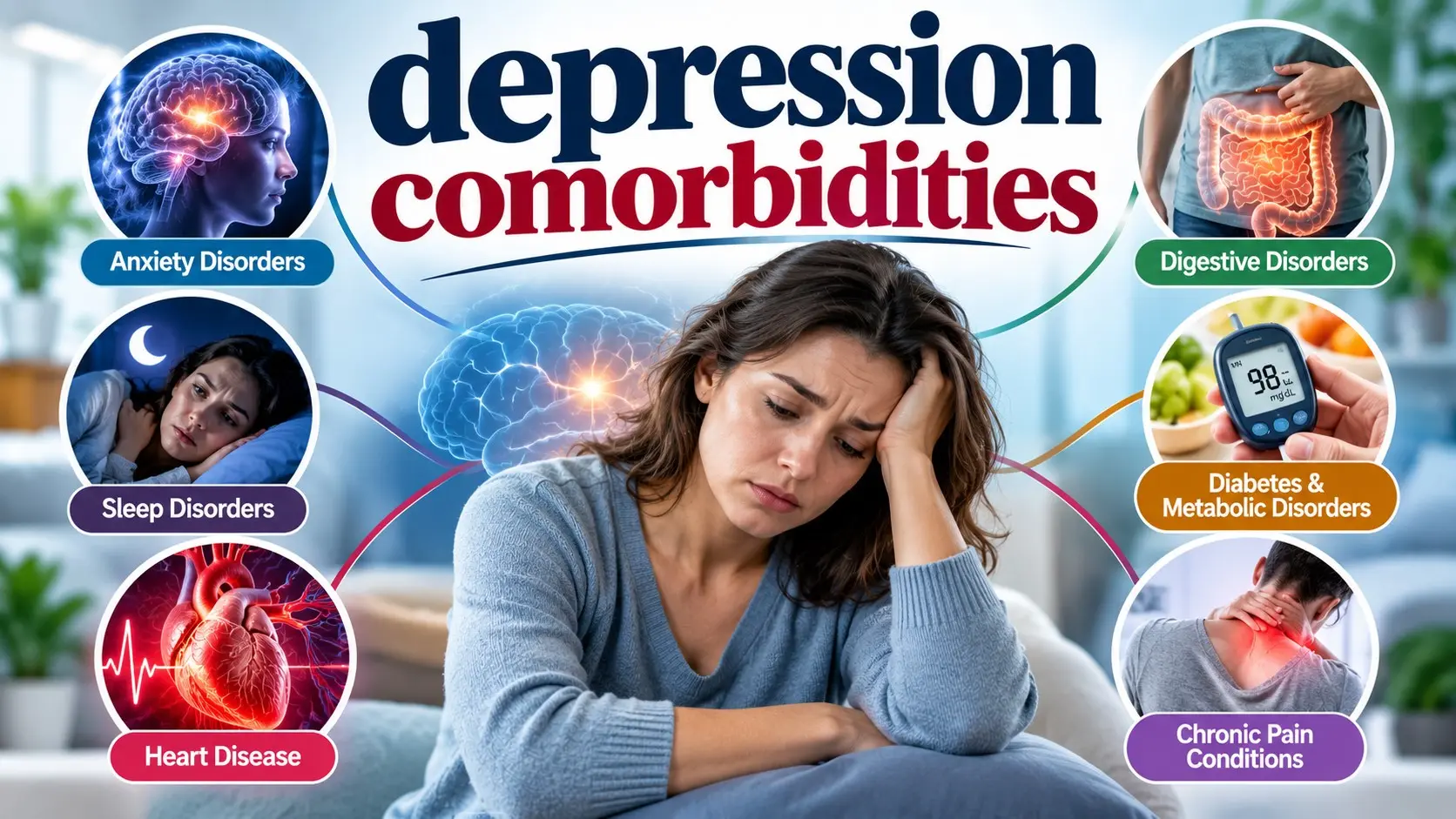
Common depression comorbidities include anxiety disorders, substance use disorders, eating disorders, chronic pain, sleep disorders, and chronic physical illnesses such as diabetes and heart disease.
These conditions can share symptoms with depression, make daily functioning harder, and sometimes change which treatments are safest or most useful.
A complete assessment should therefore look beyond mood alone and review sleep, pain, substance use, eating patterns, medical illness, medicines, and any history of mania or hypomania.
For a broader mental health overview, visit the NextFitLife Mental Health & Wellness Guide.
Table of Contents
- What comorbidity means
- Why depression overlaps with other conditions
- 1. Anxiety disorders
- 2. Substance use disorders
- 3. Eating disorders
- 4. Chronic pain
- 5. Sleep disorders
- 6. Chronic physical diseases
- Bipolar disorder and depression
- Medical problems that can look like depression
- How comorbidity changes treatment
- Questions to ask a clinician
- When to seek urgent help
- References and Sources
- Continue Reading on NextFitLife
- About the Author
- Frequently Asked Questions
What Does Comorbidity Mean?
Comorbidity means that two or more distinct health conditions are present in the same person.
With depression, this can involve another mental health condition, a physical illness, or both.
For example:
- Depression plus generalized anxiety disorder
- Depression plus alcohol use disorder
- Depression plus chronic back pain
- Depression plus diabetes
- Depression plus an eating disorder
This does not mean depression caused the second condition.
It also does not mean the second condition caused depression.
Sometimes the relationship goes in both directions. Sometimes the conditions share risk factors. Sometimes illness stress, medication effects, sleep problems, pain, inflammation, disability, genetics, or life circumstances contribute to both.
The word comorbidity describes coexistence.
It does not prove causation.
Why Does Depression So Often Overlap With Other Conditions?
Depression affects mood, motivation, sleep, appetite, concentration, energy, and daily function.
Many other conditions affect some of the same systems.
That creates overlap.
For example, both depression and chronic pain can reduce sleep and physical activity. Diabetes can create treatment stress and fatigue, while depression can make daily diabetes care harder. Anxiety can disturb sleep and concentration, which can make depressive symptoms feel heavier.
The National Institute of Mental Health notes that depression can coexist with chronic illnesses such as diabetes, cancer, heart disease, and chronic pain, and that each condition can make the other harder to manage.
This is one reason a good depression assessment should not stop after a symptom checklist.
1. Anxiety Disorders
Anxiety disorders are among the most important conditions to screen for when depression is present.
Someone can feel low, hopeless, or exhausted while also living with persistent worry, panic attacks, social fear, or physical anxiety symptoms.
Possible clues include:
- Excessive worry that is hard to control
- Feeling tense or on edge
- Panic attacks
- A racing heartbeat during anxiety
- Avoiding feared places or situations
- Trouble relaxing
- Sleep disturbance
- Poor concentration
The overlap can be confusing because poor sleep, fatigue, irritability, and difficulty concentrating can occur with both depression and anxiety.
Why the Combination Matters
Depression with significant anxiety can produce greater distress and may require a treatment plan that targets both sets of symptoms.
NIMH recommends comprehensive treatment when anxiety occurs with another mental health condition.
Psychotherapy may address both disorders, while medication decisions depend on the exact diagnoses, severity, previous treatment response, other medicines, pregnancy status, substance use, and medical history.
Do not assume that every anxious feeling during depression means a separate anxiety disorder.
A clinician looks at duration, severity, triggers, and whether the symptoms meet criteria for another diagnosis.
2. Substance Use Disorders
Substance use disorders can coexist with depression and make treatment more complicated.
Alcohol, cannabis, sedatives, stimulants, opioids, and other substances can affect mood, sleep, judgment, anxiety, motivation, and medication safety.
Sometimes people use alcohol or drugs because they are trying to escape sadness, numbness, anxiety, trauma, pain, or insomnia.
The relief may feel immediate.
The longer term effect can be very different.
Substance use can worsen mood symptoms, disrupt sleep, interfere with treatment, create withdrawal symptoms, and increase safety risks.
SAMHSA uses the term cooccurring disorders when a mental health disorder and a substance use disorder occur in the same person.
What Should Be Assessed?
A useful evaluation asks about:
- Alcohol
- Cannabis
- Prescription sedatives
- Opioids
- Stimulants
- Recreational drugs
- Nicotine
- Medication misuse
The goal is not blame.
The goal is safe treatment.
A person may need depression treatment and substance use treatment at the same time rather than waiting for one problem to disappear before addressing the other.
3. Eating Disorders
Eating disorders and depression can occur together.
NIMH notes that people with eating disorders are at higher risk for coexisting mental illnesses including depression, anxiety, and substance use disorders.
Eating disorders are not simply unhealthy diets.
They are serious mental illnesses that can have major physical consequences.
Examples include:
- Anorexia nervosa
- Bulimia nervosa
- Binge eating disorder
- Avoidant restrictive food intake disorder
Why Depression Can Be Hard to Separate From an Eating Disorder
Both can affect appetite, weight, self worth, energy, concentration, and social life.
The key difference is that an eating disorder involves its own pattern of eating behavior, food restriction, binge eating, compensatory behavior, food related fear, or distorted thoughts about weight and shape depending on the diagnosis.
Depression treatment alone may not address those behaviors.
Eating disorder care can require mental health treatment, medical monitoring, and nutrition support from appropriately trained professionals.
4. Chronic Pain
Chronic pain and depression have a particularly strong relationship.
Pain can limit work, exercise, sleep, relationships, and independence. Depression can then make pain harder to cope with while reducing motivation for rehabilitation or daily activity.
The relationship also works in the other direction.
Depressive symptoms can increase distress, amplify the impact pain has on daily life, and make recovery feel less achievable.
A 2025 systematic review and meta analysis in JAMA Network Open analyzed 376 studies involving more than 347,000 adults with chronic pain and found clinically significant depression in about 39% of participants.
That does not mean chronic pain automatically causes depression.
It shows why screening for both is reasonable.
Pain Conditions Can Include
- Chronic back pain
- Arthritis
- Fibromyalgia
- Migraine
- Neuropathic pain
- Persistent pain after injury
Treatment Needs Coordination
Some antidepressants are also used for selected pain conditions, but that does not make every antidepressant a pain medicine.
Pain treatment may also involve rehabilitation, physical therapy, sleep care, activity pacing, condition specific medicine, procedures, or psychological approaches.
Exercise can support both physical and mental health when it is medically appropriate. For a practical overview, see Physical Fitness and Mental Health.
5. Sleep Disorders
Sleep changes are already part of depression for many people.
This creates an important diagnostic trap.
Having insomnia during a depressive episode does not automatically mean you have a separate sleep disorder.
But a separate sleep disorder can coexist with depression.
Examples include:
- Chronic insomnia disorder
- Obstructive sleep apnea
- Restless legs syndrome
- Narcolepsy
- Circadian rhythm disorders
Sleep Apnea Deserves Special Attention
Sleep apnea can produce daytime tiredness, poor concentration, morning headache, irritability, and reduced energy.
Those symptoms can resemble or worsen depression.
Clues include:
- Loud snoring
- Witnessed breathing pauses
- Waking gasping
- Morning headaches
- Dry mouth on waking
- Severe daytime sleepiness
If those features are present, treating mood alone may leave an important sleep disorder untreated.
Sleep Can Also Reveal Bipolar Warning Signs
Insomnia with exhaustion is different from sleeping very little while feeling unusually energetic and not needing sleep.
Several nights of very little sleep combined with unusually high energy, racing thoughts, marked irritability, euphoria, or impulsive behavior can occur with mania or hypomania and needs prompt mental health assessment.
For broader sleep and mental health guidance, use the Mental Health & Wellness Guide.
6. Chronic Physical Diseases
Chronic illness and depression can affect one another.
Depression can occur alongside many chronic medical conditions.
NIMH specifically highlights conditions such as:
- Diabetes
- Heart disease
- Cancer
- Stroke
- Chronic pain disorders
- Multiple sclerosis
- Parkinson disease
- HIV
- Thyroid disease
The relationship can run in both directions.
A chronic illness can increase the risk of depression through stress, disability, pain, biological changes, medicine effects, and changes in daily life.
Depression can then make chronic illness management harder by reducing motivation, concentration, sleep quality, activity, medication adherence, or engagement with care.
Depression and Diabetes
Diabetes requires daily decisions about food, medicine, glucose monitoring, appointments, and physical activity.
Depression can make those tasks feel much harder.
The CDC notes that untreated mental health problems can make diabetes management more difficult, while the demands of diabetes can also affect mental health.
For more detail, see Diabetes and Mental Health.
Depression and Heart Disease
Heart disease and depression can coexist, particularly after major cardiac events or in people living with chronic cardiovascular disease.
Treatment planning may need to consider medicine interactions, physical activity limits, sleep, cardiac rehabilitation, and the emotional impact of living with heart disease.
Depression and Thyroid Disease
Thyroid problems can produce mood, energy, concentration, sleep, and weight changes.
This is one reason a clinician may consider physical causes when evaluating new depressive symptoms.
The broader connection between body and mind is covered in Mental Health vs. Physical Health.
A Major Treatment Check: Could This Be Bipolar Depression?
This is one of the most important issues missing from many simple depression comorbidity lists.
Depression can occur as part of bipolar disorder.
If a person is assessed only during a depressive episode, previous periods of mania or hypomania can be missed.
NIMH specifically warns that treating an initial depressive episode with an antidepressant alone when bipolar disorder is actually present can trigger mania or rapid cycling in some people.
Tell a clinician if you have ever had periods involving:
- Very little need for sleep
- Unusually high energy
- Racing thoughts
- Talking much faster than usual
- Marked irritability or euphoria
- Impulsive spending or risky behavior
- Feeling unusually powerful or capable
- Major behavior changes noticed by other people
Bipolar disorder is not something to diagnose from a checklist.
The important step is making sure the clinician knows the full mood history before treatment decisions are made.
Depression Symptoms Can Also Come From Medical Problems
Not every person with low mood, fatigue, poor concentration, or sleep changes has major depressive disorder.
A clinician may consider other explanations depending on the history.
Examples can include:
- Thyroid disorders
- Anemia
- Sleep apnea
- Neurological disease
- Medication side effects
- Substance effects or withdrawal
- Hormonal changes
- Serious chronic illness
This does not mean everyone with depression needs a huge laboratory panel.
Testing should follow the person's symptoms, medical history, examination, medicines, age, and risk factors.
If you are functioning outwardly but still feel persistently low, numb, or exhausted, you may also find High Functioning Depression Symptoms useful. Remember that “high functioning depression” is an informal description, not a formal diagnosis.
Symptom Overlap Can Hide the Second Condition
| Symptom | Can Occur With Depression | Other Conditions to Consider |
|---|---|---|
| Fatigue | Yes | Sleep apnea, anemia, thyroid disease, chronic illness, pain |
| Poor sleep | Yes | Insomnia disorder, sleep apnea, substance use, anxiety, pain |
| Poor concentration | Yes | Anxiety, sleep loss, ADHD, medicines, medical illness |
| Appetite or weight change | Yes | Eating disorders, thyroid disease, diabetes, medicines, other medical disease |
| Body pain | Can occur | Arthritis, fibromyalgia, neuropathy, migraine, injury, other pain disorders |
| Restlessness | Can occur | Anxiety, medication effects, substance use, mania or hypomania |
The goal is not to assign yourself six diagnoses.
The goal is to notice when the story does not fit one condition neatly.
How Do Depression Comorbidities Change Treatment?
The treatment plan should address the actual conditions present.
NIMH describes depression treatment as commonly involving psychotherapy, medication, or both.
Comorbidity adds another layer.
| When Depression Coexists With | What Care May Need to Include |
|---|---|
| Anxiety | Assessment and therapy that addresses both mood and anxiety symptoms, plus medication review when needed |
| Substance use | Mental health treatment plus substance use assessment and treatment, with extra attention to medication safety |
| Eating disorder | Mental health care, medical monitoring, and appropriate nutrition treatment |
| Chronic pain | Depression care plus condition specific pain treatment, rehabilitation, sleep support, and activity planning when appropriate |
| Sleep disorder | Treat depression while also diagnosing and treating the sleep disorder rather than assuming all sleep symptoms come from mood |
| Chronic medical disease | Coordinated mental and physical healthcare with review of symptoms, medicines, side effects, and self management burden |
A 2023 umbrella review in JAMA Psychiatry found that antidepressants were effective and generally safe for depression occurring with a range of medical diseases, while also noting that the quality and quantity of evidence varied across individual medical conditions.
That supports treating depression seriously even when another illness is present.
It does not mean the same antidepressant is suitable for every patient.
What Should a Good Assessment Include?
A useful depression assessment may cover:
- Mood symptoms. Low mood, loss of interest, guilt, hopelessness, irritability, and emotional numbness.
- Safety. Thoughts of death, suicide, self harm, or inability to stay safe.
- Anxiety. Worry, panic, avoidance, trauma symptoms, and physical anxiety.
- Sleep. Insomnia, oversleeping, snoring, apnea clues, and unusually low need for sleep.
- Substance use. Alcohol, drugs, nicotine, and medicine misuse.
- Pain. Chronic pain, migraine, fibromyalgia, arthritis, neuropathy, or injury.
- Eating behavior. Restriction, binge eating, purging, food fears, and major body image concerns.
- Physical health. Diabetes, heart disease, thyroid disease, neurological illness, and other chronic conditions.
- Medicines. Prescription drugs, over the counter products, supplements, and recent changes.
- Past mania or hypomania. Especially periods of little need for sleep, unusual energy, racing thoughts, or risky behavior.
This wider view is one of the strongest ways to avoid treating the wrong problem.
Can Lifestyle Habits Help?
Yes, but they should be placed correctly.
Sleep, regular meals, movement, social connection, and stress care can support general mental and physical health.
They are not substitutes for professional treatment when depression is persistent, severe, worsening, or significantly affecting daily life.
Physical activity can be one useful part of care for many people. See Physical Fitness and Mental Health for a practical evidence based guide.
For everyday mental health support that does not pretend self care is a cure, see Self Care Habits for Mental Health.
When Should You Contact a Professional?
Consider speaking with a qualified healthcare or mental health professional when symptoms:
- Last or keep returning
- Interfere with work, study, parenting, or relationships
- Change sleep or appetite significantly
- Increase alcohol or drug use
- Make pain harder to manage
- Make chronic illness care harder
- Cause major withdrawal from other people
- Produce hopelessness or severe distress
- Do not improve with your current treatment
You do not need to wait until you completely stop functioning.
Someone can still work, smile, and meet responsibilities while experiencing clinically important depression. For more on that pattern, see High Functioning Depression Symptoms.
Seven Mistakes to Avoid
1. Assuming Every Symptom Comes From Depression
Fatigue, insomnia, pain, weight changes, and poor concentration have many possible causes.
2. Assuming Comorbidity Means Causation
Two conditions can coexist without one directly causing the other.
3. Treating Substance Use as a Separate Moral Problem
Substance use disorders are medical conditions and can require coordinated treatment alongside depression.
4. Treating Sleep Problems Only With Sleep Hygiene
Persistent insomnia, sleep apnea, restless legs syndrome, or other sleep disorders may need their own evaluation.
5. Ignoring Chronic Physical Illness
Heart disease, diabetes, thyroid disease, pain, and neurological illness can all affect mood and treatment.
6. Missing Bipolar Warning Signs
A history of mania or hypomania can change the diagnosis and medication strategy.
7. Believing Exercise, Diet, or Supplements Should Replace Treatment
Healthy habits can support care. They do not replace appropriate diagnosis, therapy, medication, or medical treatment when those are needed.
Conclusion
Depression comorbidities matter because depression can overlap with anxiety disorders, substance use disorders, eating disorders, chronic pain, sleep disorders, and chronic physical diseases.
The real clinical challenge is not simply knowing that these conditions coexist. It is separating overlapping symptoms, identifying what needs its own diagnosis, checking for bipolar disorder or medical causes, and building one coordinated treatment plan rather than six disconnected ones.
Your next step: if depression treatment is not working as expected, ask whether anxiety, substance use, pain, sleep, eating behavior, a chronic medical illness, medication effects, or bipolar symptoms have been fully assessed.
References and Sources
- National Institute of Mental Health.
Depression. Covers depression symptoms, treatment, coexisting mental disorders, chronic illnesses, diabetes, cancer, heart disease, chronic pain, and the need for professional evaluation.Source:
https://www.nimh.nih.gov/health/publications/depression
- National Institute of Mental Health.
Understanding the Link Between Chronic Disease and Depression. Covers depression with heart disease, diabetes, cancer, pain, neurological disease, and other chronic medical conditions.Source:
https://www.nimh.nih.gov/health/publications/chronic-illness-mental-health
- Substance Abuse and Mental Health Services Administration.
Co Occurring Disorders and Other Health Conditions. Covers the coexistence of substance use disorders and mental health conditions and the need for coordinated care.Source:
https://www.samhsa.gov/substance-use/treatment/co-occurring-disorders
- National Institute of Mental Health.
Eating Disorders. Covers the major eating disorders, medical risks, treatment, and frequent coexisting depression, anxiety, and substance use disorders.Source:
https://www.nimh.nih.gov/health/topics/eating-disorders
- JAMA Network Open.
Prevalence of Depression and Anxiety Among Adults With Chronic Pain: A Systematic Review and Meta Analysis. Published March 7, 2025. Included 376 studies and 347,468 adults with chronic pain across 50 countries.Source:
https://jamanetwork.com/journals/jamanetworkopen/fullarticle/2831134
Continue Reading on NextFitLife
- Mental Health & Wellness Guide
for depression, stress, sleep, emotional health, brain fog, self care, and guidance on when professional support is needed - High Functioning Depression Symptoms
for hidden low mood, fatigue, poor concentration, sleep changes, self checks, and treatment limits - Physical Fitness and Mental Health
for exercise, mood, anxiety, sleep, brain health, and the limits of exercise as mental health treatment - Self Care Habits for Mental Health
for sleep, boundaries, daily support, social connection, and realistic self care - Diabetes and Mental Health
for diabetes distress, depression, anxiety, self management, and coordinated physical and mental healthcare - Mental Health vs. Physical Health
for the connection between mood, chronic disease, sleep, movement, stress, and physical health
About the Author
Adel Galal is the founder and lead writer of NextFitLife. His personal interest in health, fitness, nutrition, sleep, mental wellness, and healthy aging spans more than 30 years, and his health and wellness writing experience spans more than 15 years.
Before focusing on NextFitLife, Adel spent 29 years working as an IT Manager for the Nestlé Egypt Region. His professional background includes information systems, data analysis, structured research, planning, problem solving, and information management.
He applies those research skills to consumer health writing by comparing current public health and clinical sources, separating symptom overlap from diagnosis, checking where evidence is strong or uncertain, and explaining how mental and physical health conditions can interact without pretending that one simple cause explains every patient.
The sources cited in this article include current material from the National Institute of Mental Health, SAMHSA, CDC, JAMA Network Open, and recent peer reviewed literature on psychiatric and physical comorbidity in depression.
Adel is not a physician, psychiatrist, psychologist, therapist, counselor, pharmacist, registered nurse, or other licensed mental health professional. NextFitLife provides general educational information and does not replace mental health diagnosis, psychotherapy, medication management, substance use treatment, crisis intervention, or individualized medical care.
Learn more about Adel Galal, NextFitLife, sourcing standards, corrections, and the site's editorial approach on the About Us page.
Frequently Asked Questions About Depression Comorbidities
What does comorbidity mean in depression?
Comorbidity means that depression and at least one other distinct mental or physical health condition are present in the same person.
What conditions commonly occur with depression?
Common areas of overlap include anxiety disorders, substance use disorders, eating disorders, chronic pain, sleep disorders, and chronic medical conditions such as diabetes and heart disease.
Is anxiety commonly associated with depression?
Yes. Anxiety disorders and depression frequently occur together, and overlapping symptoms such as poor sleep, fatigue, and concentration difficulty can make assessment more complex.
Can depression and substance use occur together?
Yes. Mental health disorders and substance use disorders can coexist. SAMHSA refers to these as cooccurring disorders and supports treatment that addresses both problems.
Can chronic pain cause depression?
Chronic pain is strongly associated with depression, but the relationship is complex and can work in both directions. Pain can increase emotional distress while depression can make pain harder to cope with.
Can depression make pain feel worse?
Depression can increase the distress and disability linked with pain and may make sleep, movement, rehabilitation, and daily coping harder.
Can a sleep disorder look like depression?
Yes. Sleep apnea, chronic insomnia, and other sleep problems can cause fatigue, poor concentration, irritability, and low energy that overlap with depression symptoms.
Is insomnia always a separate disorder when someone has depression?
No. Sleep disturbance can be part of depression itself. A separate insomnia disorder is diagnosed only when the full clinical pattern supports it.
Can depression and eating disorders happen together?
Yes. NIMH notes that depression is among the mental illnesses that commonly coexist with eating disorders.
Can diabetes and depression occur together?
Yes. Depression can make diabetes self management harder, while the daily burden and complications of diabetes can affect mental health.
Can heart disease and depression happen together?
Yes. Depression frequently occurs in people with chronic physical illnesses including heart disease, and coordinated mental and cardiovascular care can be important.
Can thyroid disease look like depression?
Yes. Thyroid disorders can affect mood, energy, concentration, sleep, and weight. Clinicians may consider thyroid testing when the history suggests it.
Can medication cause depressive symptoms?
Some medicines can affect mood, sleep, energy, or concentration. A clinician should review medication timing and side effects rather than assuming every new symptom comes from depression.
What is the difference between depression and bipolar depression?
Major depressive disorder does not include a history of mania or hypomania. Bipolar disorder includes episodes of abnormal mood elevation, increased energy, or related symptoms in addition to depressive episodes.
Why should bipolar disorder be checked before depression treatment?
A history of mania or hypomania can change the diagnosis and medication plan. NIMH notes that antidepressant treatment alone can trigger mania or rapid cycling in some people with bipolar disorder.
Does having several comorbidities mean depression will not improve?
No. Comorbidity can make care more complex, but depression remains treatable. The plan may need to address several conditions together.
How are depression comorbidities treated?
Treatment depends on the conditions present and can include psychotherapy, medication, substance use treatment, sleep care, pain management, medical treatment, rehabilitation, nutrition care, and coordinated follow up.
Can exercise treat depression comorbidities?
Physical activity can support mood, sleep, physical health, and function for many people, but exercise should complement rather than replace professional treatment when depression or another disorder needs clinical care.
When should someone with depression seek professional help?
Seek professional assessment when symptoms persist, worsen, interfere with daily life, increase substance use, make chronic disease harder to manage, or cause major changes in sleep, eating, work, or relationships.
When is depression an emergency?
Use urgent professional help when someone may act on suicidal or self harm thoughts, cannot stay safe, has attempted self harm, may seriously harm another person, or develops severe confusion, psychosis, or another dangerous mental health change.

Health & wellness writer with 30+ years of experience in nutrition, fitness, and healthy aging. Founder of NextFitLife.com — evidence-based health guidance.