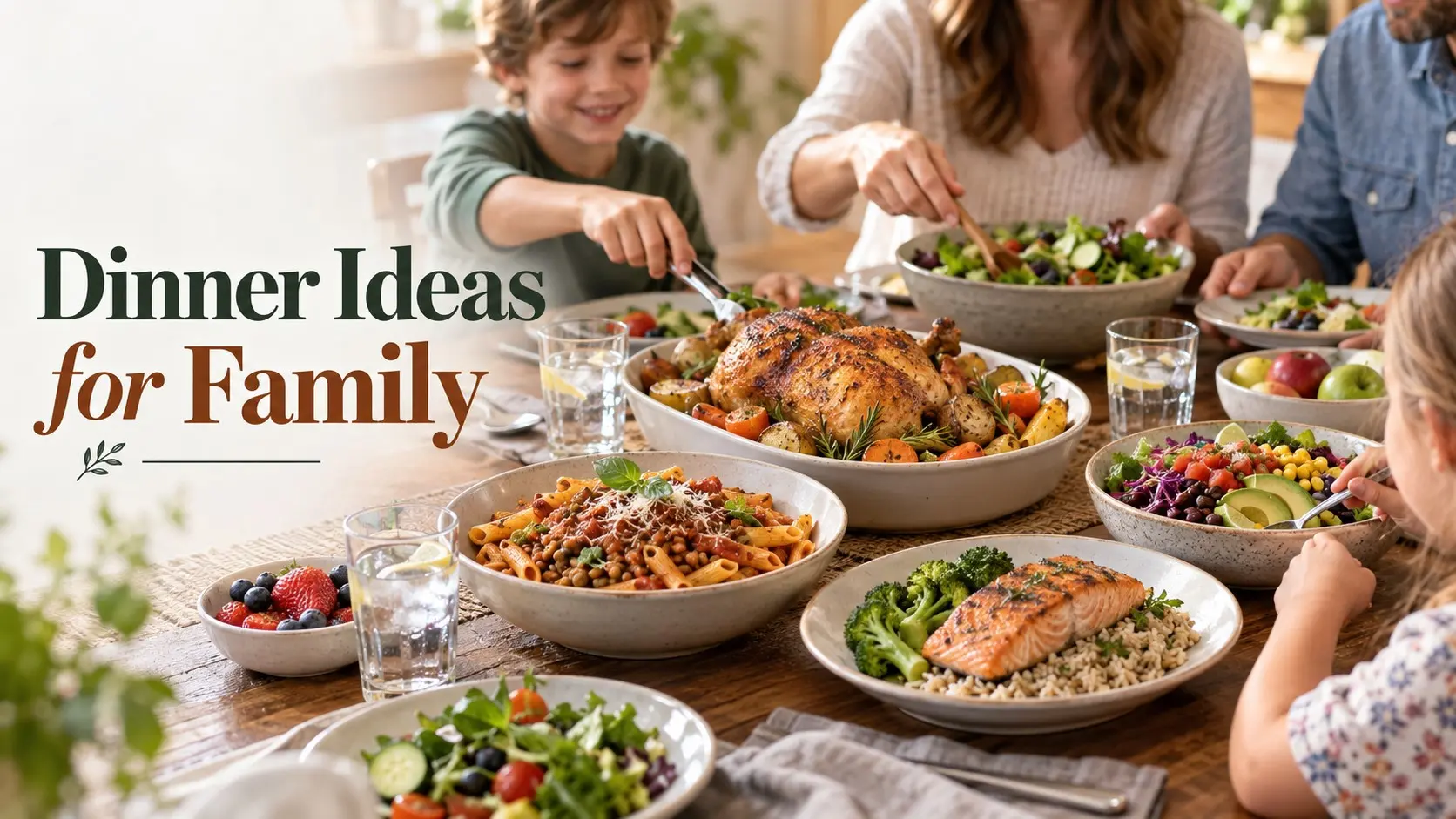
Published: September 13, 2026
Last updated: September 13, 2026
Next review: September 2027, or sooner if major family nutrition or food safety guidance changes
Written and source checked by: Adel Galal, Founder and Lead Writer at NextFitLife
Medical review status: This article has not been medically reviewed by a doctor, pediatrician, or registered dietitian.
Family dinner does not need to be fancy.
It needs to be realistic.
A good family meal gives everyone something familiar, adds useful nutrition, and does not leave the cook exhausted before anyone sits down.
That is the goal of these Dinner Ideas for Family.
You will find chicken.
Fish.
Beans.
Lentils.
Tofu.
Pasta.
Rice.
Potatoes.
Vegetables.
And a few meals designed specifically for nights when energy is low.
Healthy family dinners should fit real families.
Not social media.
Important medical note: I am not a dermatologist or a doctor, and this content does not replace professional medical advice. What I share comes from real life experience, extensive research, and consultation with healthcare providers. Always consult qualified medical professionals for diagnosis and treatment of any health condition.
Children have different nutrition, allergy, choking, growth, and portion needs depending on age and health. Adapt food size and texture for young children. Remove bones carefully. Whole nuts and other choking hazards may need to be avoided or changed depending on age. Ask your pediatrician or registered dietitian when your child has poor growth, severe food restriction, food allergies, swallowing problems, diabetes, digestive disease, or another condition that affects eating.
What Makes a Good Family Dinner?
Quick answer: Good Dinner Ideas for Family usually combine a protein food, vegetables or fruit, a grain, potato, bean, or other carbohydrate food, and a suitable source of fat. The meal does not need to be perfect. It needs to be enjoyable, affordable, safe, and easy enough to prepare again.
Current nutrition guidance favors simple, nutrient rich foods.
Think:
- Vegetables
- Fruit
- Beans and lentils
- Whole grains
- Fish
- Eggs
- Poultry
- Lean meats
- Tofu and soy foods
- Suitable dairy foods or fortified alternatives
- Nuts and seeds when age appropriate
- Olive oil and other unsaturated fats
You do not need all of them in one dinner.
Use variety across the week.
For a wider food guide, see the NextFitLife Top Healthy Foods Guide.
Use This Simple Family Dinner Formula
I use four parts.
| Part | Examples | Why It Helps |
|---|---|---|
| Protein food | Chicken, fish, eggs, beans, lentils, tofu, yogurt | Supports growth, repair, and satisfying meals |
| Vegetable or fruit | Broccoli, carrots, peas, tomatoes, salad, fruit | Adds fiber, vitamins, minerals, color, and variety |
| Carbohydrate food | Rice, potatoes, pasta, bread, beans, corn, whole grains | Provides energy and can make meals more satisfying |
| Suitable fat | Olive oil, avocado, tahini, nuts, seeds | Adds flavor and useful fats |
This is a template.
Not a law.
Soup with bread can be dinner.
Eggs with potatoes and vegetables can be dinner.
Leftovers can absolutely be dinner.
24 Dinner Ideas for Family
1. Sheet Pan Chicken, Potatoes, and Vegetables
This is one of the easiest family dinners.
Put chicken pieces, potatoes, carrots, peppers, or broccoli on a tray.
Add olive oil, garlic, herbs, and black pepper.
Roast everything together.
Use boneless pieces when that makes serving young children easier.
Add fruit or yogurt on the side if the meal needs something extra.
2. Lentil Tomato Pasta
Cook pasta.
Make a sauce with lentils, tomatoes, onions, garlic, and herbs.
Add spinach or grated vegetables if your family likes them.
Lentils bring protein foods and fiber into a familiar pasta dinner.
Use whole grain pasta if your family enjoys it.
Regular pasta is fine too.
3. Build Your Own Taco Bowls
Put the ingredients in separate bowls.
Try:
- Chicken, beans, tofu, or lean beef
- Rice
- Lettuce
- Tomato
- Corn
- Avocado
- Plain yogurt
- Salsa
This works well with picky eaters because everyone can build a plate from the same dinner.
You do not need to cook a separate meal.
4. Salmon, Rice, and Broccoli
Bake salmon with lemon and herbs.
Serve it with rice and broccoli.
Frozen broccoli works.
Frozen vegetables still count.
Check fish carefully for bones before serving children.
5. Chicken and Vegetable Fried Rice
Use cooked rice.
Add chicken, egg, peas, carrots, peppers, and other vegetables.
Cook it in a pan with garlic, ginger, and a moderate amount of sauce.
Using leftover rice makes this fast.
Keep cooked rice refrigerated safely and reheat it thoroughly.
6. Turkey Meatballs With Pasta and Tomato Sauce
Make simple turkey meatballs.
Serve with pasta, tomato sauce, and a vegetable.
Frozen peas are enough on a busy night.
You do not need a complicated salad.
7. Chickpea Curry With Rice
Cook chickpeas with tomatoes, onion, garlic, ginger, and curry spices.
Add spinach.
Serve with rice.
Use a small amount of coconut milk if you like the flavor, but the meal does not need to become mostly coconut cream.
Beans and legumes are useful, affordable family foods.
8. Beef and Broccoli Stir Fry
Use thin strips of lean beef.
Add broccoli, mushrooms, peppers, and onion.
Serve with rice or noodles.
Use sauce for flavor, not as the main ingredient.
Some bottled sauces contain a lot of sodium and added sugar.
9. Baked Potato Family Bar
Bake potatoes.
Then put toppings on the table.
Try:
- Beans
- Plain Greek yogurt
- Grated cheese
- Broccoli
- Corn
- Chopped tomato
- Leftover chicken
This is inexpensive.
It is also easy to customize.
10. Tofu Vegetable Noodles
Cook firm tofu until golden.
Add broccoli, carrots, peppers, cabbage, and noodles.
Use garlic and ginger for flavor.
This is a simple plant based family dinner.
Tofu absorbs flavor well and provides useful protein.
11. Chicken Fajita Tray
Roast chicken strips with peppers and onions.
Serve with tortillas, lettuce, tomato, avocado, and plain yogurt.
Let everyone build their own.
That gives children more control without making a second dinner.
12. Bean and Cheese Quesadillas
Spread mashed beans over a tortilla.
Add a moderate amount of cheese.
Fold and cook until crisp.
Serve with tomato salsa, cucumber, peppers, or fruit.
This is fast enough for nights when cooking motivation is close to zero.
13. Turkey and Bean Chili
Cook lean turkey with beans, tomatoes, onions, peppers, garlic, and spices.
Make a large pot.
Freeze extra portions.
This is one of the easiest meals for batch cooking.
Serve with rice, baked potato, bread, or avocado depending on your family.
14. Baked Fish Tacos
Bake white fish with mild seasoning.
Serve in tortillas with cabbage, tomato, avocado, and yogurt sauce.
For children who dislike mixed tacos, serve the fish, tortilla, and vegetables separately.
15. Vegetable Frittata With Potatoes
Eggs are not only breakfast food.
Make a frittata with eggs, spinach, peppers, mushrooms, or leftover vegetables.
Serve with potatoes and fruit or salad.
This is useful when the fridge looks almost empty.
16. Lentil Shepherd Style Pie
Cook lentils with carrots, peas, onions, and tomato.
Top with mashed potato.
Bake until hot.
This is an easy way to make a plant based dinner feel familiar.
17. Burger Bowls
Cook lean burger patties, turkey burgers, bean patties, or tofu patties.
Serve them with:
- Potatoes
- Lettuce
- Tomato
- Cucumber
- Corn
- Pickles
Add bread or buns for anyone who wants them.
The family does not need identical plates.
18. Pasta Primavera With Chicken or Beans
Cook pasta.
Add zucchini, peas, tomatoes, broccoli, and spinach.
Use chicken, white beans, or chickpeas for protein.
Finish with olive oil, herbs, and a small amount of cheese if desired.
19. Homemade Pizza Night
Pizza can be a family meal.
Use pizza dough or flatbread.
Add tomato sauce.
Then let everyone choose toppings.
Ideas include:
- Mushrooms
- Peppers
- Spinach
- Chicken
- Tuna
- Olives
- Tomato
- Cheese
Add salad, cucumber, carrots, or fruit on the side.
Keep it simple.
20. Vegetable Soup With Toasted Sandwiches
Soup does not have to be a starter.
Make vegetable, lentil, bean, or chicken soup.
Serve with toasted sandwiches.
Fill sandwiches with cheese and tomato, chicken, tuna, hummus, or another suitable filling.
This is especially good when the weather is cold or the week has been long.
21. Chickpea Couscous Bowls
Use couscous or a whole grain such as bulgur when available.
Add chickpeas, cucumber, tomato, parsley, roasted vegetables, and lemon.
Finish with tahini or olive oil.
Serve the ingredients separately for children who dislike mixed food.
22. Baked Chicken, Sweet Potato, and Green Beans
This is another low effort tray meal.
Use chicken.
Add sweet potato cubes and green beans.
Season with herbs and a little olive oil.
Roast until safely cooked.
No complicated sauce required.
23. Greek Style Chicken Bowls
Serve chicken with rice or potatoes.
Add cucumber, tomato, lettuce, olives, and plain yogurt.
Use herbs and lemon.
Put everything in separate bowls if that makes family dinner easier.
24. Leftover Remix Night
This deserves to be on the list.
Open the refrigerator.
Use what is already there.
Leftover chicken can become wraps.
Rice can become fried rice.
Roasted vegetables can go into eggs.
Beans can become quesadillas.
Pasta can become a vegetable pasta bake.
Leftovers save money and reduce waste.
They count as cooking.
Which Family Dinners Are Fastest?
| Meal | Best Shortcut | Good for |
|---|---|---|
| Quesadillas | Canned beans | Very busy evenings |
| Fried rice | Cooked rice and frozen vegetables | Using leftovers |
| Baked potato bar | Microwave or batch cooked potatoes | Different family preferences |
| Tofu noodles | Precut vegetables | Plant based nights |
| Soup and sandwiches | Frozen homemade soup | Low energy nights |
| Taco bowls | Canned beans and cooked rice | Picky eaters |
Frozen and Canned Foods Are Not Cheating
Fresh produce is useful.
So are frozen vegetables.
So are canned beans.
The CDC specifically includes frozen, dried, and canned vegetables and fruit among healthy options when products are chosen with little added sugar and lower sodium when possible.
Useful shortcuts include:
- Frozen broccoli
- Frozen peas
- Frozen mixed vegetables
- Canned beans
- Canned lentils
- Canned tomatoes
- Frozen fish
- Cooked grains
These foods make meal planning much easier.
How to Feed Picky Eaters Without Cooking Two Dinners
This is where family meals become stressful.
The American Academy of Pediatrics recommends a calm approach.
Serve the family meal.
Include at least one familiar food the child usually accepts.
Then allow the child to choose what and how much to eat from the foods offered.
Do not force bites.
Do not turn dessert into a reward for eating vegetables.
And do not assume a food is permanently rejected because it was refused once.
Repeated exposure matters.
Children may need to see or try a food many times before it becomes familiar.
Deconstructed Meals Work Very Well
A mixed casserole can look terrifying to a selective eater.
The same ingredients served separately may feel manageable.
Try:
- Rice in one bowl
- Chicken in another
- Tomatoes separately
- Cucumber separately
- Yogurt sauce separately
Everyone is still eating the same dinner.
This approach works especially well with:
- Taco bowls
- Fajitas
- Greek bowls
- Pizza
- Baked potatoes
- Pasta
Do Not Hide Every Vegetable
Blending vegetables into sauce can be useful.
It should not be the only way children see vegetables.
Children also need chances to learn what real foods look and taste like.
Add grated carrot to sauce if it helps.
But keep serving visible carrots at other meals too.
Family Meals Are About More Than Nutrition
Research on family meals has found associations with better diet quality and other positive outcomes in children and teenagers.
But much of the research is observational.
That means we should not claim family dinner itself causes every benefit.
The useful part is simpler.
Eating together can create a routine.
Adults can model eating vegetables and trying foods.
Children can see food served repeatedly without pressure.
And families get a regular moment to talk.
You Do Not Need Family Dinner Every Night
A family meal still counts if:
- One parent is working
- Dinner happens late
- You eat breakfast together instead
- The meal is leftovers
- The meal is sandwiches
- You ordered food
The goal is connection and routine.
Not perfection.
How to Make Dinner More Budget Friendly
Healthy family food does not need expensive ingredients.
Use more:
- Beans
- Lentils
- Eggs
- Potatoes
- Rice
- Oats
- Frozen vegetables
- Seasonal produce
- Canned tomatoes
- Tofu
- Whole chicken when suitable
Use expensive foods in smaller amounts.
For example, salmon can be served with plenty of vegetables and rice rather than becoming the entire plate.
Use One Protein Twice
This is one of my favorite shortcuts.
Cook extra chicken tonight.
Tomorrow it becomes:
- Wraps
- Taco bowls
- Fried rice
- Soup
- Salad
- Pizza topping
This cuts cooking time without making the family eat the exact same meal twice.
Use One Vegetable Three Ways
Roast peppers tonight.
Add them to eggs tomorrow.
Put the rest into pasta sauce.
This is practical batch cooking.
You do not need twenty meal prep containers.
A Simple 7 Day Family Dinner Plan
| Day | Dinner | Time Saving Move |
|---|---|---|
| Monday | Sheet pan chicken, potatoes, and vegetables | Cook extra chicken |
| Tuesday | Chicken taco bowls | Use Monday chicken |
| Wednesday | Lentil tomato pasta | Use canned lentils and tomatoes |
| Thursday | Salmon, rice, and broccoli | Use frozen broccoli |
| Friday | Homemade pizza night | Use flatbread or prepared dough |
| Saturday | Chickpea curry and rice | Cook extra curry for lunch |
| Sunday | Leftover remix night | Use what is already cooked |
How Much Food Should Children Eat?
There is no single child portion that fits every age.
Growth stage matters.
Activity matters.
Appetite changes from day to day.
The American Academy of Pediatrics recommends letting children respond to hunger and fullness rather than forcing them to clean the plate.
Parents decide what food is available and when meals happen.
The child can decide what and how much to eat from what is offered.
That does not mean unlimited snacks ten minutes later.
Regular meals and snacks help create structure.
Do Adults Need the Same Portions as Children?
No.
A family can eat the same food without identical portion sizes.
A teenager may need much more food than a preschool child.
An active adult may need more than someone with a small appetite.
Serve the same core foods.
Adjust amounts.
Do Family Dinners Need Meat?
No.
Family dinner can be built around:
- Lentils
- Beans
- Chickpeas
- Tofu
- Tempeh
- Eggs
Plant based meals can also reduce food costs.
For protein options, visit the NextFitLife High Protein Foods Guide.
Do Family Dinners Need Whole Grains Every Time?
No.
Whole grains are useful sources of fiber and nutrients.
But dinner does not fail because you served white rice.
You can use:
- Brown rice
- Whole grain pasta
- Bulgur
- Whole grain bread
- Oats
- Quinoa
when they fit your family.
You can also eat potatoes, corn, beans, and regular rice.
Variety across the week matters more than making one plate perfect.
What About Added Sugar?
Dinner itself is rarely the biggest problem.
Drinks and desserts can add a lot of added sugars.
Keep water as the default drink most of the time.
Milk or a suitable fortified alternative can also fit.
Dessert does not need to disappear.
It also does not need to happen every night.
Fruit can be a simple sweet ending.
For more ideas, use the NextFitLife Healthy Sweet Snacks Guide.
Family Dinner Does Not Need to Be Low Fat
Fat gives food flavor.
It also provides essential fatty acids and helps absorb fat soluble vitamins.
Use healthy fats such as:
- Olive oil
- Avocado
- Nuts and seeds when age appropriate
- Tahini
- Fish
The amount still matters.
A healthy oil poured without limit still adds a lot of energy.
Do Not Turn Dinner Into a Nutrition Lecture
This is especially important with children.
Put the food on the table.
Eat it yourself.
Talk about the day.
You do not need to explain the vitamin content of broccoli while everyone is trying to relax.
Healthy eating is partly learned by watching.
Let Children Help
Age appropriate jobs can include:
- Washing vegetables
- Tearing lettuce
- Mixing ingredients
- Setting the table
- Choosing between two vegetables
- Adding toppings
The American Academy of Pediatrics encourages involving children in choosing and preparing food.
It can make unfamiliar foods feel less threatening.
What if Your Child Only Eats Three Foods?
Typical picky eating is common.
Extreme food restriction is different.
Talk with your child's healthcare professional if a child:
- Is losing weight
- Is not growing as expected
- Gags or chokes frequently
- Has pain with eating
- Avoids entire food groups
- Eats only a very small number of foods
- Has strong fear around eating
- Has a known allergy
- Shows signs of nutrient deficiency
A family recipe article cannot assess those problems.
Safe Leftovers Matter
Meal prep only helps when the food stays safe.
USDA guidance says perishable cooked foods should be refrigerated within two hours.
If the surrounding temperature is above 90 degrees Fahrenheit, refrigerate them within one hour.
Divide large pots of soup, chili, rice dishes, and casseroles into shallow containers so they cool faster.
How Long Do Cooked Leftovers Keep?
USDA guidance says most cooked leftovers should be used within three to four days when stored properly in the refrigerator.
Reheat leftovers to 165 degrees Fahrenheit.
If food has sat out too long, do not rely on smell alone.
Throw it away.
Basic Safe Cooking Temperatures
| Food | Minimum Safe Internal Temperature |
|---|---|
| Chicken and turkey | 165°F |
| Ground beef, pork, lamb, and veal | 160°F |
| Whole beef, pork, lamb, and veal steaks, chops, and roasts | 145°F plus a 3 minute rest |
| Fish | 145°F |
| Leftovers | 165°F |
My Practical Family Dinner Rule
I use a simple test.
Can I make it?
Will most people at the table find something they can eat?
Does it include useful food?
Can I afford it?
Can leftovers become tomorrow's lunch?
If yes, it is a good family dinner.
I do not need every meal to look like a nutrition textbook.
Conclusion
The best Dinner Ideas for Family are the ones you can repeat without turning dinner into another stressful job.
Start with protein.
Add vegetables or fruit.
Add rice, pasta, potatoes, beans, bread, or another useful carbohydrate.
Use healthy fats and simple flavor.
Keep one familiar food on the table for selective eaters.
Use leftovers.
And remember that a simple meal eaten calmly is better than a perfect meal nobody wants to cook.
Your next step: Pick three dinners from this list for the coming week. Buy the ingredients once, cook extra protein or vegetables on the first night, and turn those leftovers into the next meal.
References and Sources
The following public and accessible sources were used to research and fact check this family dinner guide:
- United States Department of Health and Human Services and United States Department of Agriculture. Dietary Guidelines for Americans, 2025 to 2030.Current federal guidance emphasizing whole and nutrient rich foods including protein foods, vegetables, fruits, healthy fats, whole grains, and fewer highly processed foods with excess sodium and added sugar.
- Centers for Disease Control and Prevention. How to Have Healthier Meals and Snacks. Updated April 29, 2026.Current guidance on meal planning, protein foods, vegetables, fruit, whole grains, healthy fats, frozen and canned foods, added sugars, highly processed foods, and portions.
- World Health Organization. Healthy Diet. January 26, 2026.WHO describes adequacy, balance, moderation, and diversity as the main principles of a healthy diet and emphasizes varied minimally processed foods.
- American Academy of Pediatrics. How Do I Help My Picky Eater Try More Healthy Foods?AAP guidance covering family meals, repeated exposure, avoiding pressure, including familiar foods, letting children decide what and how much to eat from foods offered, and involving children in food preparation.
- United States Department of Agriculture Food Safety and Inspection Service. Keep Food Safe: Food Safety Basics.USDA guidance covering safe cooking temperatures, refrigeration within two hours, safe cooling, three to four day leftover storage, and reheating leftovers to 165°F.
Continue Reading on NextFitLife
Use these related NextFitLife guides to make family meal planning easier:
- Top Healthy Foods GuideBuild family meals around vegetables, fruit, beans, lentils, whole grains, eggs, fish, yogurt, tofu, nuts, seeds, and olive oil.
- Nutrition Tips for Improving Your HealthUse simple habits to improve vegetables, protein, fiber, hydration, portion awareness, and food variety.
- High Protein Foods GuideCompare chicken, eggs, fish, yogurt, beans, lentils, tofu, tempeh, and other protein foods for family meals.
- Healthy Lunch IdeasTurn dinner leftovers into easy next day lunches using protein, vegetables, whole grains, beans, and simple sauces.
- Healthy Breakfast Ideas for KidsUse simple breakfasts built around protein, fruit, whole grains, and age appropriate portions.
- Healthy Sweet SnacksFind fruit based and more balanced options for dessert or snacks.
- Natural Weight Loss GuideFor adults with a weight management goal, build the full routine around balanced meals, activity, sleep, and realistic habits.
Main nutrition guide: Visit the NextFitLife Healthy Foods Guide for more meal ideas and practical food choices.
About the Author
Adel Galal is the Founder and Lead Writer at NextFitLife.
He focuses on turning nutrition, fitness, and wellness research into simple steps that people can actually use.
His content combines real life experience, extensive research, and consultation with healthcare providers.
For family nutrition articles, he checks current public health guidance, pediatric recommendations, food safety guidance, and nutrition research before turning that evidence into practical meal ideas.
Adel is not a doctor, pediatrician, registered dietitian, allergist, feeding therapist, or other licensed healthcare professional.
This article provides general family nutrition education and does not replace individualized feeding advice, allergy management, medical nutrition therapy, or pediatric care.
Learn more about Adel, NextFitLife, and the site's editorial approach on the About Us page.
Frequently Asked Questions
What are easy dinner ideas for family?
Easy options include sheet pan chicken, lentil pasta, taco bowls, salmon with rice, chicken fried rice, quesadillas, chili, baked potatoes, soup with sandwiches, and homemade pizza.
What makes a family dinner healthy?
A practical family meal usually includes a protein food, vegetables or fruit, a grain, potato, bean, or other carbohydrate source, and a suitable fat. Variety across the week matters more than making one meal perfect.
What can I cook when my family is tired of everything?
Try build your own meals such as taco bowls, baked potato bars, pizza, fajitas, or Greek style bowls. Letting each person assemble the same basic ingredients can make familiar food feel different.
What are cheap family dinner ideas?
Beans, lentils, eggs, potatoes, rice, pasta, canned tomatoes, frozen vegetables, tofu, soup, chili, and baked potato meals are useful budget choices.
What can I cook for a picky eater?
Serve the same family meal but include at least one familiar food the child usually accepts. Keep mixed ingredients separate when helpful and avoid pressure, bribes, or forcing bites.
Should I make a separate meal for a picky child?
Usually not. The American Academy of Pediatrics recommends offering the family meal with at least one familiar food and allowing the child to decide what and how much to eat from what is offered.
How do I get my child to eat vegetables?
Keep offering vegetables without pressure. Let children see adults eat them, involve children in preparation, pair new foods with familiar foods, and accept that repeated exposure may be needed.
Do family dinners have to be eaten together every night?
No. Family meals are useful when they fit your schedule. Even a few shared meals each week can create routine and connection. Breakfast or lunch together can count too.
Are frozen vegetables healthy for family dinner?
Yes. Frozen vegetables can be practical and nutritious. CDC guidance includes frozen vegetables and fruit among healthy options.
Are canned beans healthy?
Yes. Canned beans provide protein and fiber. Draining and rinsing them can reduce some sodium.
Do family dinners need meat?
No. Beans, lentils, chickpeas, tofu, tempeh, and eggs can all form the protein part of a family meal.
Can leftovers be used for family dinner?
Yes. Leftovers can save time and reduce waste when they are cooled, stored, and reheated safely.
How long do leftovers last in the refrigerator?
USDA guidance says most cooked leftovers should be used within three to four days when refrigerated correctly.
How quickly should leftovers be refrigerated?
Perishable cooked food should usually be refrigerated within two hours, or within one hour when the surrounding temperature is above 90°F.
What temperature should leftovers be reheated to?
USDA recommends reheating leftovers to an internal temperature of 165°F.
How do I make family dinners healthier without changing everything?
Add one vegetable, use beans or lentils more often, serve water more often, include a clear protein source, and use whole grains when your family enjoys them. Small changes are easier to repeat.
What are good family dinners for busy weeknights?
Quesadillas, fried rice, taco bowls, baked potatoes, soup and sandwiches, sheet pan meals, eggs with vegetables, and leftover remix meals work well on busy nights.
How can I plan a week of family dinners?
Choose three or four main meals first, plan one leftover night, reuse ingredients across meals, and keep one emergency dinner such as eggs, soup, beans, or quesadillas available.
Should children clean their plates?
Children should be allowed to respond to hunger and fullness. Parents can choose what and when food is offered while children decide what and how much they eat from the foods available.
What should I do if my child eats very few foods?
Talk with a pediatrician or qualified feeding professional when food restriction affects growth, causes frequent gagging or choking, involves fear around food, or leaves the child eating only a very small number of foods.

Health & wellness writer with 30+ years of experience in nutrition, fitness, and healthy aging. Founder of NextFitLife.com — evidence-based health guidance.