Published: Sep 1, 2023
Last updated: July 2026
Reviewed for accuracy: Editorially reviewed and fact-checked against breast-cancer, oncology-supportive-care, nutrition, physical-activity, and cancer-survivorship sources
Reading time: 15–20 minutes
Breast Cancer and Weight Gain can feel confusing.
You may ask:
Did breast cancer make me gain weight?
Is this from treatment?
Is it from menopause?
Is it from stress?
Is it dangerous?
The answer is not always simple.
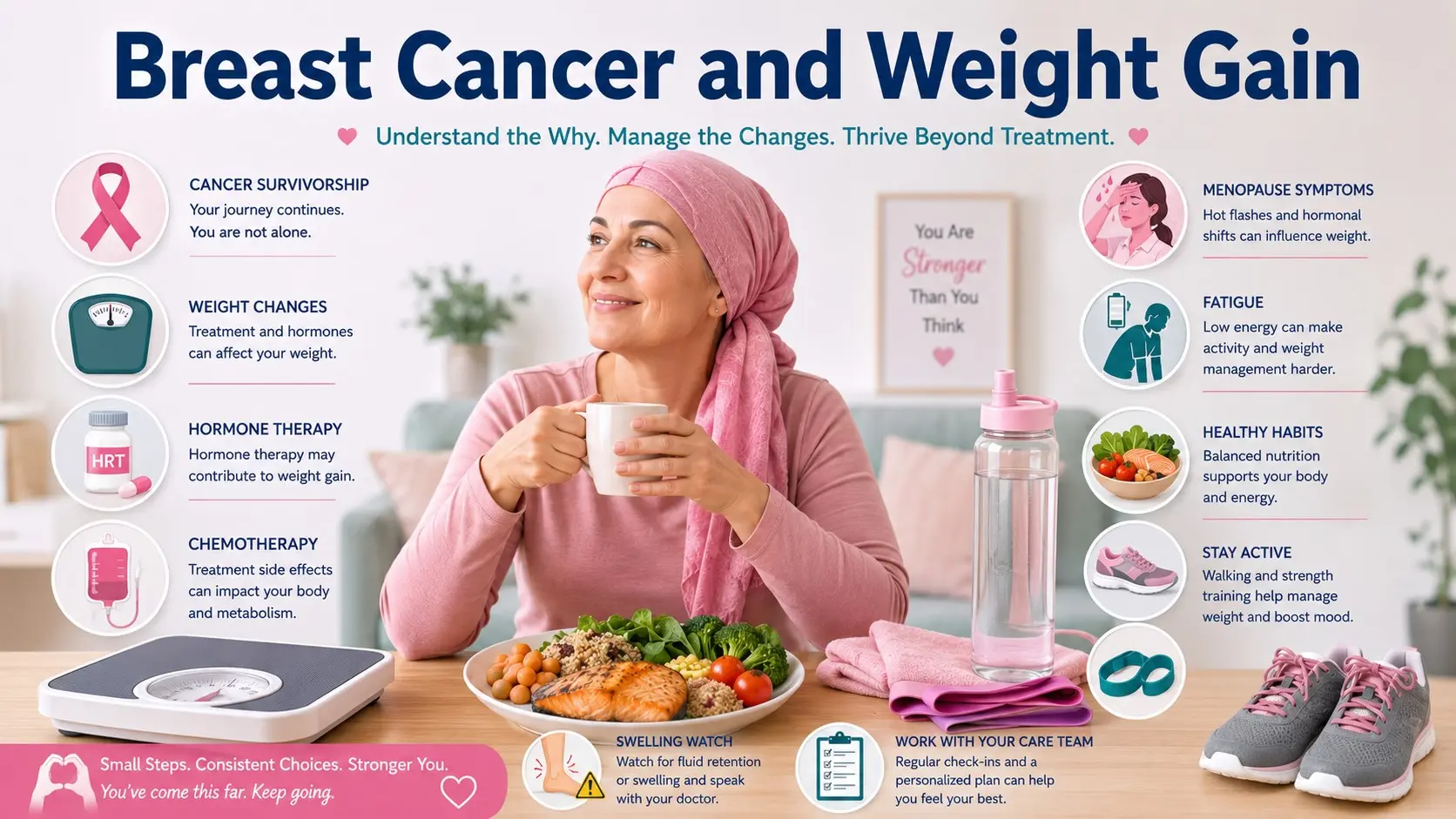
Breast cancer itself rarely causes weight gain directly. But breast cancer treatment can lead to weight gain for many reasons.
These may include hormone therapy, chemotherapy, steroids, early menopause, fatigue, less movement, sleep problems, stress, appetite changes, and muscle loss.
This guide explains Breast Cancer and Weight Gain, why it happens, what is normal, what is not normal, safe care steps, and when to ask your doctor.
For more help, visit our Cancer Awareness & Prevention Hub, Women’s Health Hub, Weight Management & Metabolism Hub, Nutrition & Vitamins Hub, Medical Tests & Screenings Hub, and Health Hub.
Medical note: This article is for education only. It does not diagnose or treat breast cancer, cancer recurrence, lymphedema, heart disease, thyroid disease, menopause symptoms, depression, eating disorders, diabetes, or any medical condition. Do not stop chemotherapy, hormone therapy, steroids, targeted therapy, immunotherapy, or any cancer medicine because of weight gain without talking to your oncology team. Get urgent care for sudden swelling, shortness of breath, chest pain, one-sided leg swelling, sudden severe headache, confusion, fainting, or rapid weight gain with swelling.
Quick Answer: Does Breast Cancer Make You Gain Weight?
Breast cancer itself usually does not directly make you gain weight.
But Breast Cancer and Weight Gain are often linked because treatment can change the body.
Weight gain may happen due to:
- Chemotherapy
- Hormone therapy
- Steroid medicines
- Early menopause
- Lower estrogen
- Fatigue
- Less movement
- Stress eating
- Poor sleep
- Fluid retention
- Muscle loss
- Lower metabolism
- Depression or anxiety
- Changes in appetite
Weight gain is common.
It is not your fault.
But sudden or fast weight gain should be checked.
Why Breast Cancer and Weight Gain Happen Together
Treatment can change your body.
It can change energy.
It can change hormones.
It can change sleep.
It can change appetite.
It can change the muscle.
This can make weight easier to gain and harder to lose.
Some people gain only a little.
Some gain more.
Some lose weight during treatment.
Each person is different.
Cause 1: Chemotherapy
Chemotherapy can affect weight in different ways.
Some people lose weight because of nausea or poor appetite.
Others gain weight.
Weight gain during or after chemotherapy may happen because of:
- Fatigue
- Less movement
- Nausea that feels better after eating
- Food cravings
- Stress
- Steroid medicines used with treatment
- Early menopause
- Muscle loss
- Lower daily activity
If you are on chemotherapy, ask your cancer team before changing your diet or exercise routine.
Cause 2: Hormone Therapy
Many breast cancers are hormone receptor-positive.
That means estrogen or progesterone can help cancer cells grow.
Hormone therapy may lower hormone levels or block hormone action.
Examples include:
- Tamoxifen
- Aromatase inhibitors
- Ovarian suppression
- Ovary removal in some cases
These treatments can cause menopause-like changes.
Some people notice weight gain, belly fat, hot flashes, joint pain, mood changes, or sleep trouble.
Do not stop hormone therapy because of weight gain.
Talk to your oncology team.
Cause 3: Early Menopause
Some breast cancer treatments can cause early menopause.
Menopause can change body fat, muscle, sleep, and metabolism.
Symptoms may include:
- Hot flashes
- Night sweats
- Poor sleep
- Mood changes
- Vaginal dryness
- Lower muscle mass
- Belly weight gain
Hormone replacement therapy is not safe for everyone after breast cancer.
Always ask your oncology team before using hormones or menopause supplements.
Cause 4: Steroid Medicines
Steroids may be used with some cancer treatments.
They can help with nausea, allergic reactions, swelling, or inflammation.
But they can also cause:
- Increased appetite
- Food cravings
- Fluid retention
- Sleep problems
- Higher blood sugar
- Rounder face
- Weight gain
Do not stop steroids suddenly unless your doctor tells you.
Cause 5: Fatigue and Less Movement
Cancer fatigue can be strong.
It is not normal tiredness.
It can make walking, cooking, shopping, and exercise feel hard.
Less movement can lead to:
- Lower calorie use
- Lower muscle mass
- Stiff joints
- Lower mood
- More weight gain
A small movement can still help.
Even short walks count.
Cause 6: Muscle Loss
Muscle helps support metabolism.
If treatment, fatigue, or inactivity leads to muscle loss, the body may burn fewer calories.
This can make weight gain easier.
Strength training may help, if your doctor says it is safe.
Start small.
Use light weights, bands, or bodyweight moves.
Cause 7: Stress, Mood, and Sleep
Breast cancer is stressful.
Stress can affect eating.
It can affect sleep.
It can affect hormones.
It can affect mood.
Some people eat less.
Some eat more.
Some crave sweet or salty foods.
Ask for help if you feel low, anxious, overwhelmed, or out of control with food.
For more support, visit our Mental Health & Wellness Hub.
Cause 8: Fluid Retention
Not all weight gain is fat.
Some weight gain is fluid.
Fluid retention may cause:
- Swollen ankles
- Puffy face
- Tight rings
- Sudden weight gain
- Shortness of breath in serious cases
Sudden fluid weight needs medical review.
Call your doctor if weight rises fast or swelling appears.
Cause 9: Lymphedema
Lymphedema is swelling from lymph fluid buildup.
It may happen after lymph node surgery or radiation.
It often affects the arm, hand, breast, chest wall, or underarm area.
Signs may include:
- One arm feels heavy
- One arm or hand swells
- Skin feels tight
- Jewelry feels tight
- Clothes fit tighter on one side
- Reduced arm movement
This is not general weight gain.
Tell your cancer team early.
Cause 10: Thyroid or Other Health Problems
Weight gain is not always from breast cancer treatment.
Other causes may include:
- Underactive thyroid
- Diabetes or insulin resistance
- Depression
- Sleep apnea
- Heart problems
- Kidney problems
- Other medicines
Ask your doctor if weight gain is sudden, large, or hard to explain.
When Weight Gain Needs Medical Review
Tell your doctor if you have:
- Sudden weight gain over a few days
- Swelling in legs, feet, face, arm, or hand
- Shortness of breath
- Chest pain
- New cough
- One-sided arm swelling
- One-sided leg swelling
- Fast heartbeat
- New belly swelling
- Extreme fatigue
- Feeling cold often
- Constipation with weight gain
- Low mood or loss of interest
- Weight gain after a new medicine
These signs can point to fluid retention, lymphedema, thyroid problems, heart problems, blood clots, medicine effects, or other issues.
When It May Be Urgent
Get urgent help now for:
- Chest pain
- Severe shortness of breath
- Fainting
- Confusion
- Sudden severe headache
- Weakness on one side
- One-sided leg swelling with pain
- Coughing blood
- Rapid swelling with breathing trouble
- Fever during chemotherapy
If you are in active cancer treatment and feel very unwell, call your cancer team.
Does Weight Gain Mean Breast Cancer Is Worse?
Usually, no.
Weight gain during treatment does not automatically mean the cancer is worse.
It often reflects treatment effects, hormone changes, appetite changes, and lower activity.
But new symptoms should still be checked.
Tell your team about sudden weight changes or swelling.
Can Weight Gain Affect Breast Cancer Recovery?
Weight is only one part of health.
Do not blame yourself.
Still, your care team may talk with you about healthy weight, muscle, heart health, diabetes risk, and energy.
The goal is not shame.
The goal is support.
Safe habits can help with strength, mood, sleep, fatigue, and long-term health.
Safe Weight Care During Breast Cancer Treatment
Do not start a harsh diet.
Your body needs fuel to heal.
Ask your oncology team or a registered dietitian if you are unsure.
1. Focus on Protein
Protein helps support muscle.
Good options may include:
- Eggs
- Fish
- Chicken
- Turkey
- Greek yogurt
- Beans
- Lentils
- Tofu
- Nuts
- Seeds
Your needs may change during treatment.
2. Add Fibre Foods
Fibre helps with fullness, gut health, and blood sugar.
Try:
- Vegetables
- Fruit
- Oats
- Beans
- Lentils
- Chickpeas
- Whole grains if tolerated
- Nuts and seeds
Add fibre slowly if your stomach is sensitive.
3. Drink Water
Hydration matters.
It may help with constipation, fatigue, and appetite signals.
Ask your doctor about fluids if you have heart, kidney, or fluid restriction issues.
4. Plan small meals
Some people feel better with smaller meals.
This may help with nausea and energy.
Try balanced meals with protein, fibre, and healthy fats.
5. Limit Sugary Drinks
Sugary drinks can add calories without fullness.
Try water, sparkling water, unsweetened tea, or other doctor-approved drinks.
6. Be Careful With Alcohol
Ask your oncology team about alcohol.
Alcohol can add calories and may not be safe with some medicines or liver concerns.
Exercise During and After Breast Cancer
Movement can help many people.
But safety comes first.
Ask your care team what is safe for you.
Good options may include:
- Walking
- Gentle stretching
- Light strength training
- Yoga
- Stationary cycling
- Water exercise if approved
- Balance exercises
Start with 5 to 10 minutes.
Build slowly.
Rest when needed.
Strength Training for Muscle
Strength training can help protect muscles.
It may also support metabolism and daily function.
Start gently with:
- Sit-to-stand from a chair
- Wall push-ups
- Light resistance bands
- Small dumbbells
- Step-ups
- Gentle core work
If you had lymph node surgery, radiation, or lymphedema, ask for guidance before starting upper-body strength training.
What If You Feel Too Tired to Exercise?
Start smaller.
Try:
- Walk for 2 minutes
- Stretch in bed
- March in place
- Stand during TV ads
- Do 5 chair stands
- Take one slow walk around the room
Small movement is still movement.
Food Tips for Treatment Days
Treatment days can be hard.
Simple options may help.
- Keep easy protein snacks ready.
- Use soft foods if your mouth hurts.
- Try bland foods for nausea.
- Eat small meals if large meals feel hard.
- Ask about nausea medicine.
- Do not force foods that make you sick.
If you are losing weight without trying, tell your team.
That also matters.
Do Not Use Extreme Diets
Be careful with diets that promise to fight cancer or melt weight fast.
Avoid:
- Starvation diets
- Juice cleanses
- Detox teas
- Very low-calorie diets without medical care
- Unproven cancer diets
- Many supplements at once
- Stopping treatment for diet plans
Food can support your body.
Food should not replace cancer treatment.
Supplements and Weight Loss Products
Do not take weight loss pills during breast cancer treatment without medical approval.
Some supplements can:
- Interact with cancer medicines
- Affect bleeding risk
- Affect the liver
- Affect hormones
- Raise heart rate
- Cause unsafe side effects
Ask your oncologist or pharmacist before using any supplement.
Breast Cancer and Weight Gain After Treatment
Weight gain can continue after treatment.
This may happen because of:
- Long-term hormone therapy
- Menopause symptoms
- Joint pain
- Fatigue
- Lower muscle mass
- Sleep problems
- Fear or stress
- Return-to-life routine changes
Recovery takes time.
Be patient with your body.
Ask for support if weight, fatigue, or mood feels hard to manage.
How to Talk to Your Doctor About Weight Gain
Be honest.
You are not complaining.
You are giving useful information.
Tell your doctor:
- When weight gain started
- How much weight has changed
- How fast it changed
- Any swelling
- Any shortness of breath
- Any new medicines
- Appetite changes
- Sleep changes
- Mood changes
- Activity level
- Hot flashes or menopause symptoms
- Constipation
- Pain or joint stiffness
Bring a medicine and supplement list.
Possible Tests Your Doctor May Consider
Your doctor may not need tests for every weight change.
But depending on symptoms, they may check:
- Thyroid test
- Blood sugar or A1C
- Kidney function
- Liver tests
- Blood count
- Heart tests to determine if fluid or breath symptoms are present
- Medicine side effect review
- Lymphedema assessment
- Nutrition assessment
Your cancer follow-up plan is also important.
What Not to Do
- Do not stop cancer treatment because of weight gain.
- Do not start diet pills without approval.
- Do not follow extreme detox plans.
- Do not ignore sudden swelling.
- Do not ignore shortness of breath.
- Do not blame yourself.
- Do not compare your body to others.
- Do not overexercise during severe fatigue.
- Do not skip protein during treatment.
- Do not hide supplements from your oncology team.
Simple 7-Day Breast Cancer Weight Support Plan
This plan does not replace cancer care.
It helps you start safely.
Day 1: Track Weight Gently
Write your weight once. Do not check many times a day.
Day 2: Note Swelling
Check ankles, hands, face, arm, and breast area for swelling.
Day 3: Add Protein
Add one protein food to a meal or snack.
Day 4: Walk for 5 Minutes
Walk slowly if your doctor says movement is safe.
Day 5: Review Drinks
Replace one sugary drink with water or unsweetened drink.
Day 6: Ask About Strength
Ask your team if light strength training is safe.
Day 7: Prepare Questions
Write down your weight, symptoms, medicine list, and concerns for your doctor.
Daily Checklist
- Did I take medicines as prescribed?
- Did I eat protein today?
- Did I eat a fiber food?
- Did I drink enough fluid for my plan?
- Did I move a little?
- Did I rest when needed?
- Did I notice swelling?
- Did I have shortness of breath?
- Did I sleep well?
- Do I need to call my care team?
Questions to Ask Your Doctor
- Could my treatment cause weight gain?
- Could my hormone therapy affect my weight?
- Could steroids be involved?
- Could this be fluid retention?
- Could I have lymphedema?
- Do I need thyroid or blood sugar tests?
- How much exercise is safe for me?
- Can I lift weights?
- Should I see a dietitian?
- Are weight loss medicines safe for me?
- Are my supplements safe?
- What symptoms mean urgent care?
FAQ
Does breast cancer make you gain weight?
Breast cancer itself usually does not directly cause weight gain. But Breast Cancer and Weight Gain can be linked because treatment may affect hormones, appetite, activity, sleep, muscle, and metabolism.
Why do people gain weight during breast cancer treatment?
Weight gain may happen due to chemotherapy, hormone therapy, steroids, early menopause, fatigue, less movement, stress, poor sleep, food cravings, fluid retention, and muscle loss.
Can chemotherapy cause weight gain?
Yes. Some people gain weight during or after chemotherapy. Fatigue, nausea, steroids, lower activity, early menopause, and muscle loss may all play a role.
Can hormone therapy for breast cancer cause weight gain?
Yes. Hormone therapy can change estrogen effects and may contribute to fat gain, muscle loss, lower metabolism, hot flashes, sleep changes, and weight changes in some people.
Can tamoxifen cause weight gain?
Some people report weight gain while taking tamoxifen. Weight change may also be linked with menopause, activity changes, stress, diet, and other medicines. Ask your oncology team about your case.
Can aromatase inhibitors cause weight gain?
Some people report weight gain or body composition changes while taking aromatase inhibitors. Joint pain, low estrogen, less movement, and menopause symptoms may also contribute.
Is weight gain after breast cancer treatment normal?
It can be common, but it should still be discussed with your care team. Sudden weight gain, swelling, shortness of breath, or one-sided swelling needs medical review.
How can I manage weight safely during breast cancer treatment?
Focus on protein, fibre, hydration, gentle movement, strength training if approved, sleep support, and dietitian guidance. Avoid extreme diets, detoxes, and weight loss pills without medical approval.
Should I stop breast cancer medicine if I gain weight?
No. Do not stop cancer medicine without your oncology team. They can review side effects, check for other causes, and help you manage weight safely.
When should I call my doctor about weight gain?
Call your doctor for sudden weight gain, swelling, shortness of breath, chest pain, one-sided arm or leg swelling, fast heartbeat, new belly swelling, extreme fatigue, or weight gain after a new medicine.
Related Reading
- Cancer Awareness & Prevention Hub
- Breast Cancer Symptoms and Treatment Tips
- Hot Flashes and Cancer: Possible Links and When to Check
- Treatment for High Estrogen in Females: Safe Care Options
- Cancer Prevention: Daily Habits That May Lower Risk
- Women’s Health Hub
- Weight Management & Metabolism Hub
- Nutrition & Vitamins Hub
- Healthy Lifestyle Roadmap: 14 Practical Tips for Better Health
- Health Hub
Key Takeaway
Breast Cancer and Weight Gain are often linked through treatment effects.
Breast cancer itself usually does not directly cause weight gain.
But chemotherapy, hormone therapy, steroids, early menopause, fatigue, less movement, poor sleep, stress, muscle loss, and fluid retention can all play a role.
Do not blame yourself.
Do not stop cancer treatment on your own.
Ask your oncology team for help.
Get checked fast for sudden weight gain, swelling, shortness of breath, chest pain, one-sided arm or leg swelling, or fever during treatment.
Best Trusted Sources
- American Cancer Society — Weight Changes and Cancer Treatment
- National Cancer Institute — Weight Changes and Cancer Treatment Side Effects
- Breastcancer.org — Weight Gain and Weight Loss From Breast Cancer Treatment
- Cancer Research UK — Side Effects of Hormone Therapy in Women
- Cancer Research UK — Exercise and Cancer

Health & wellness writer with 30+ years of experience in nutrition, fitness, and healthy aging. Founder of NextFitLife.com — evidence-based health guidance.