Published – February 20 Last Updated: February 20, 2026
Tired eyes from screens? Try eye yoga exercises! Eye yoga is ancient. It comes from India. Yogis practiced it for thousands of years. Now it helps modern vision problems.
Eye yoga exercises are simple. They relax your eyes. They strengthen eye muscles. They improve focus.
This guide teaches you –
- What eye yoga is
- Simple exercises to try
- How to practice safely
- When to do them
Let’s start your eye yoga journey!
What You’ll Learn
✓ Eye yoga basics
✓ Trataka meditation
✓ Eye rotation exercises
✓ Palming technique
✓ Daily routine
✓ Ayurvedic eye care
What Is Eye Yoga?
Eye yoga is an exercise for the eyes. It combines movement with breathing. It adds relaxation, too.
Ancient Origins
From India
- Part of the yoga tradition
- Thousands of years old
- Used by yogis
- Keeps vision sharp
- Prevents eye problems
Still works today!
How It Helps
Eye yoga helps
- Relax tired eyes
- Strengthen eye muscles
- Improve blood flow
- Reduce strain
- Increase focus
- Calm the mind
Best for
- Screen users
- Students
- Office workers
- Anyone with eye strain
→ Complete guide: Complete Guide to Eye Health: Vision Care, Prevention & Wellness
Benefits of Eye Yoga
Why try yoga for better vision?
Physical Benefits
Your eyes get
- Stronger muscles
- Better flexibility
- More blood flow
- Less tension
- Reduced fatigue
Mental Benefits
Your mind gets
- Better focus
- More calm
- Less stress
- Mental clarity
- Improved concentration
Vision Benefits
Studies show eye yoga helps:\
- Reduce eye strain
- Improve focusing
- Better eye coordination
- Fewer dry eyes
- Reduced headaches
Note – Eye yoga doesn’t cure vision problems. It supports eye health.
Core Eye Yoga Exercises
Try these basic eye yoga exercises.
1. Palming (Deep Rest)
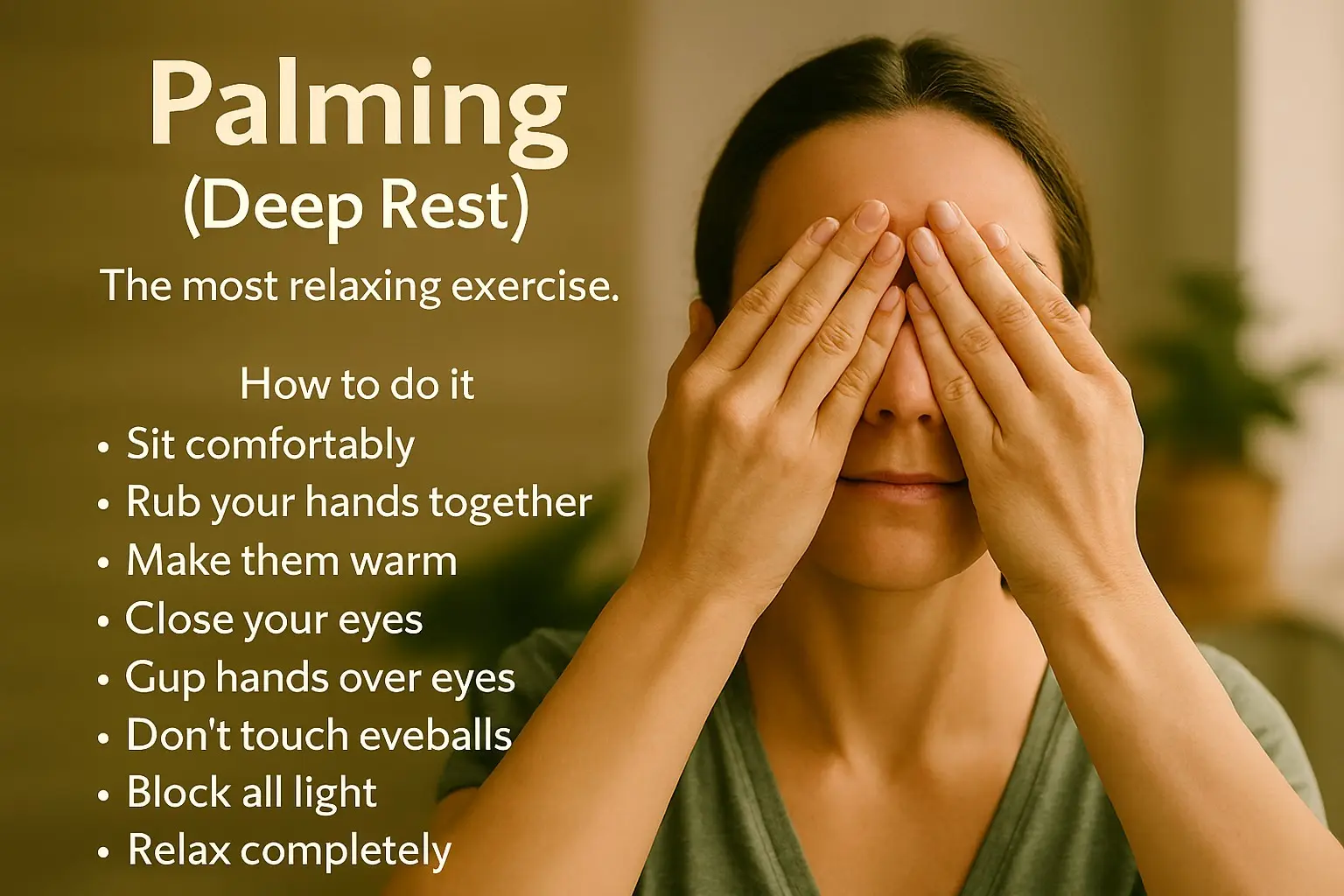
The most relaxing exercise.
How to do it
- Sit comfortably
- Rub your hands together
- Make them warm
- Close your eyes
- Cup hands over eyes
- Don’t touch eyeballs
- Block all light
- Relax completely
- Breathe deeply
- Stay 2-3 minutes
Tips:
- Make it very dark
- Keep shoulders relaxed
- Breathe slowly
- Clear your mind
Benefits
- Deep relaxation
- Rests light cells
- Reduces tension
- Calms mind
Do this – 3 times daily
2. Eye Rotations (Netra Vyayamam)
Strengthens all eye muscles.
Slow circles
- Sit with head still
- Look up high
- Move eyes in a circle
- Go very slowly
- Make big circles
- Do 5 clockwise
- Do 5 counterclockwise
- Close eyes and rest
Keep it smooth!
Benefits
- Exercises all muscles
- Improves flexibility
- Releases tension
- Better range of motion
Do this – Once daily
3. Up and Down (Vertical Movement)
Simple but powerful.
How to do it
- Sit straight
- Look up high
- Hold 3 seconds
- Look down low
- Hold 3 seconds
- Repeat 10 times
- Keep your head still
- Move only your eyes
Benefits
- Strengthens vertical muscles
- Improves movement
- Reduces stiffness
Do this – Once daily
4. Side to Side (Horizontal Movement)
Works the lateral muscles.
How to do it
- Look far right
- Hold 3 seconds
- Look far left
- Hold 3 seconds
- Repeat 10 times
- Head stays still
- Only the eyes move
Benefits
- Strengthens side muscles
- Better peripheral vision
- Reduces tension
Do this – Once daily
5. Diagonal Movements
Exercises the oblique muscles.
How to do it
- Look upper right corner
- Hold 2 seconds
- Look lower left corner
- Hold 2 seconds
- Repeat 5 times
- Switch directions
- Upper left to lower right
- Repeat 5 times
Benefits
- Works all muscles
- Improves coordination
- Builds strength
Do this – Once daily
6. Near and Far Focus (Sandhya)
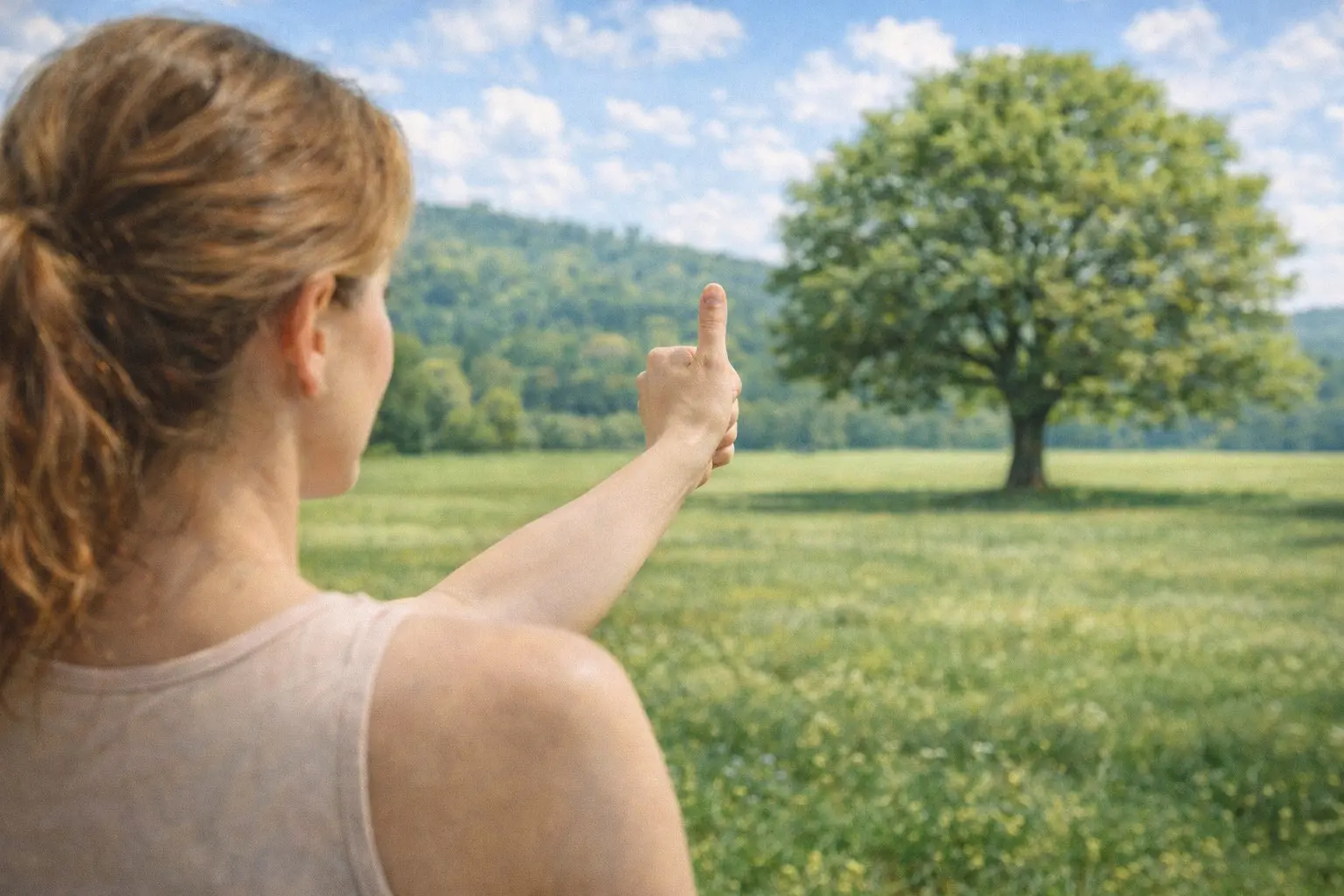
Improves focusing ability.
How to do it
- Hold thumb up
- Arm straight out
- Focus on the thumb
- Hold 5 seconds
- Look at the distant tree
- Hold 5 seconds
- Back to thumb
- Repeat 10 times
Benefits
- Better focusing
- Stronger eye muscles
- Less blur
Do this – 2-3 times daily
→ More exercises: Vision Therapy at Home: Exercises for Eye Coordination
Trataka – The Gazing Meditation
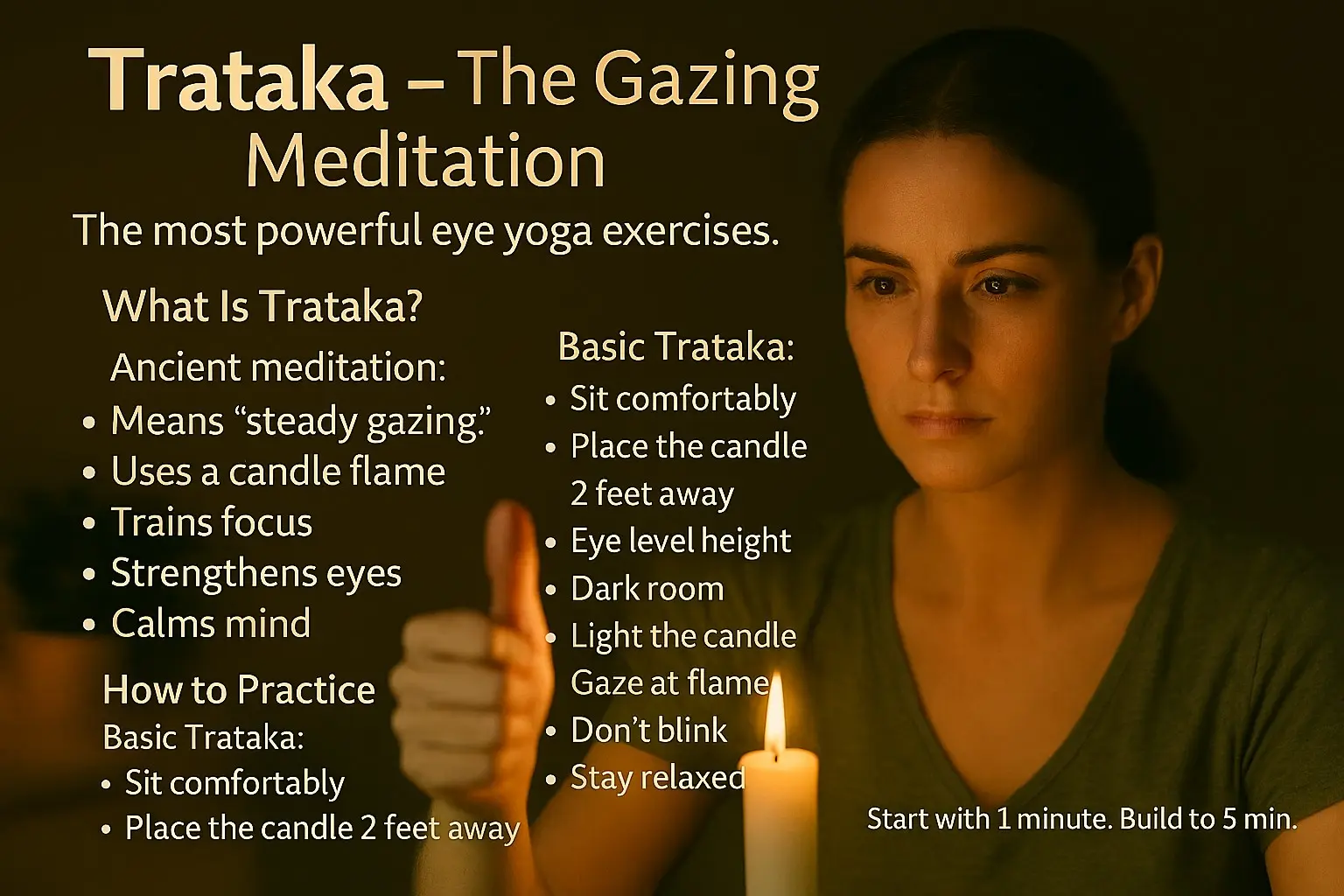
The most powerful eye yoga exercises.
What Is Trataka?
Ancient meditation:
- Means “steady gazing.”
- Uses a candle flame
- Trains focus
- Strengthens eyes
- Calms mind
How to Practice
Basic Trataka:
- Sit comfortably
- Place the candle 2 feet away
- Eye level height
- Dark room
- Light the candle
- Gaze at the flame
- Don’t blink
- Stay relaxed
- When tears come, close your eyes
- Visualize a flame inside
- Open and repeat
Start with 1 minute. Build to 5 minutes.
Benefits
Trataka helps
- Strengthen eyes
- Improve focus
- Calm mind
- Reduce thoughts
- Better concentration
- Mental clarity
Advanced practice
- Builds to 10-15 minutes
- Very powerful
- Needs consistency
Important – Don’t strain! Stop if uncomfortable.
Variations
Without candle
- Use a black dot on the wall
- Or a small object
- Same technique
- Safer for some people
Do this – Once daily, evening is best
Breathing Techniques for Eyes
Pranayama helps eye health.
Anulom Vilom (Alternate Nostril)
Calming breath for the eyes.
How to do it
- Sit comfortably
- Close the right nostril
- Breathe in left
- Close the left nostril
- Breathe out right
- Breathe in right
- Close the right nostril
- Breathe out left
- Repeat 10 times
Benefits
- Reduces eye pressure
- Calms the nervous system
- Improves circulation
- Relaxes eyes
Do this – Before eye exercises
Bhramari (Bee Breath)
Vibration for eye health.
How to do it
- Sit straight
- Close eyes
- Breathe in deep
- Make a humming sound while breathing out
- Feel vibration in the head
- Repeat 5 times
Benefits:
- Reduces tension
- Calms mind
- Relaxes the eye area
- Improves blood flow
Do this – When stressed
Ayurvedic Eye Care Practices
Ancient wisdom for modern eyes.
Netra Tarpana (Eye Bath)
Traditional eye treatment.
What it is
- Ghee bath for eyes
- Professional treatment
- Very relaxing
- Nourishes eyes
Best done by: Ayurvedic practitioner
Rose Water Wash
Simple home remedy.
How to use
- Get pure rose water
- Use an eye cup
- Fill with rose water
- Place over the closed eye
- Tilt head back
- Open eye in water
- Blink several times
- Repeat the other eye
Benefits
- Cools eyes
- Reduces redness
- Refreshes tired eyes
- Soothes irritation
Do this – Evening, as needed
Triphala Eye Wash
Ayurvedic herbal remedy.
What it is
- Three fruit mixture
- Soak overnight
- Strain well
- Use as an eye wash
Benefits
- Clean’s eyes
- Reduces inflammation
- Traditional remedy
Note – Ask your eye doctor first!
Copper Water Drinking
Ayurvedic tradition.
How to do it
- Store water in a copper vessel overnight
- Drink in the morning
- Supports overall health
Believed to help the eyes.
Daily Eye Yoga Routine
Simple routine for yoga for better vision.
Morning Routine (5 Minutes)
Wake up your eyes
- Palming (2 minutes)
- Eye rotations (1 minute)
- Up/down movements (1 minute)
- Side to side (1 minute)
Do before screens!
Midday Break (3 Minutes)
During work
- Palming (1 minute)
- Near-far focus (2 minutes)
Every 2-3 hours.
Evening Practice (10 Minutes)
After work:
- Breathing (2 minutes)
- All directional movements (5 minutes)
- Trataka (3 minutes)
- Final palming (1 minute)
Weekly Practice
Consistency matters
- Do the morning routine daily
- Midday breaks during work
- Evening practice 5-6 days
- One rest day weekly
Track Progress
Notice changes
- Eye comfort
- Focus ability
- Headache frequency
- Stress levels
- Sleep quality
Keep simple notes.
Combining Eye Yoga with Modern Life
Use ancient wisdom today.
For Computer Users
Screen time help
- Do palming hourly
- Eye rotations every 2 hours
- Near-far focus frequently
- Trataka before bed
Sets good habits!
For Students
Study support
- Palming between subjects
- Eye rotations during breaks
- Better concentration
- Less fatigue
For Drivers
Vision support
- Morning eye yoga
- Better night vision
- Improved focus
- Reduced strain
For Athletes
Performance boost
- Better eye-hand coordination
- Improved tracking
- Enhanced focus
- Quicker reactions
Safety Guidelines
Practice eye yoga exercises safely.
Important Rules
Always
- Move slowly
- Stay relaxed
- Breathe deeply
- Stop if pain
- Be gentle
Never
- Force movements
- Strain eyes
- Skip breathing
- Practice when exhausted
Who Should Be Careful
Check with a doctor if you have:
- Eye disease
- Recent surgery
- Glaucoma
- Retinal problems
- Eye injury
Signs to Stop
Stop if you get
- Eye pain
- Severe headache
- Dizziness
- Double vision
- Vision changes
See a doctor if it continues.
Tips for Success
Get better results.
Make It a Habit
Consistency wins
- Same time daily
- Set reminders
- Start small (5 minutes)
- Build slowly
- Don’t skip days
Create Sacred Space
Practice environment
- Muted place
- Ventilation
- Comfortable seat
- Low lighting
- No distractions
Combine with Meditation
Mindful practice
- Clear your mind
- Focus on breath
- Stay present
- Be patient
- Enjoy process
Be Patient
Results take time
- Minor improvements daily
- Big changes monthly
- Stay consistent
- Trust the process
Frequently Asked Questions
Q: Does eye yoga really work?
A: Yes! It reduces strain. It strengthens muscles. It improves comfort. But it doesn’t cure vision problems.
Q: How long to see results?
A: Some feel better immediately. Bigger changes take 2-4 weeks. Practice daily!
Q: Can eye yoga exercises improve my vision?
A: They improve function and comfort. They don’t eliminate glasses. Be realistic!
Q: Is it safe?
A: Yes, when done gently. Stop if in pain. See a doctor if concerned.
Q: How often should I practice?
A: Daily is best. Minimum 5 minutes. Ideal is 15-20 minutes.
Q: Can children do eye yoga? A: Yes! Successful for kids. Keep it fun. Brief sessions (5-10 minutes).
Q: Best time to practice?
A: Morning energies. Evening relaxes. Choose what fits you.
Q: Do I need equipment?
A: No! Maybe a candle for Trataka. Everything else is free.
Final Thoughts
Eye yoga exercises blend ancient wisdom with modern needs.
They help:
- Tired eyes
- Screen strain
- Focus problems
- Stress
- Overall eye health
Start simple
- Try palming today
- Do 5 minutes daily
- Add exercises slowly
- Be consistent
- Stay patient
Remember
- Ancient practice
- Modern benefits
- Free and simple
- Safe and gentle
- Results with practice
Key practices
- Palming (most important)
- Eye rotations
- Trataka meditation
- Deep breathing
- Daily consistency
Your eyes deserve care. Give them ancient wisdom. Start yoga for better vision today!
Medical Disclaimer
This article is for information only. Eye yoga is safe. But it doesn’t replace medical care. See an eye doctor for vision problems or eye disease.
References
Eye Yoga Exercises for Better Vision /eye-yoga-vision-health/
Peer-Reviewed Research & Clinical Studies
- Gupta, S.K., & Aparna, S. (2020). Effect of Yoga Ocular Exercises on Eye Fatigue. International Journal of Yoga, 13(1), 76–79.
https://pmc.ncbi.nlm.nih.gov/articles/PMC6937872/
- Centers for Disease Control and Prevention (CDC). (2024). Why Eye Exams Are Important. https://www.cdc.gov/vision-health/about-eye-disorders/why-eye-exams-are-important.html/
- World Health Organization (WHO). (2023). World Report on Vision. https://www.who.int/publications/i/item/9789241516570/

Adel Galal is a health and wellness writer with over 30 years of experience studying and writing about health, fitness, nutrition, and healthy living. He is the founder of NextFitLife.com, where he shares practical, evidence-based guidance to support long-term health at any age. Adel’s mission is simple:
to help people make smarter health choices that fit real life, at any age.