Published on: April 11, 2024
Updated on: October 11, 2026
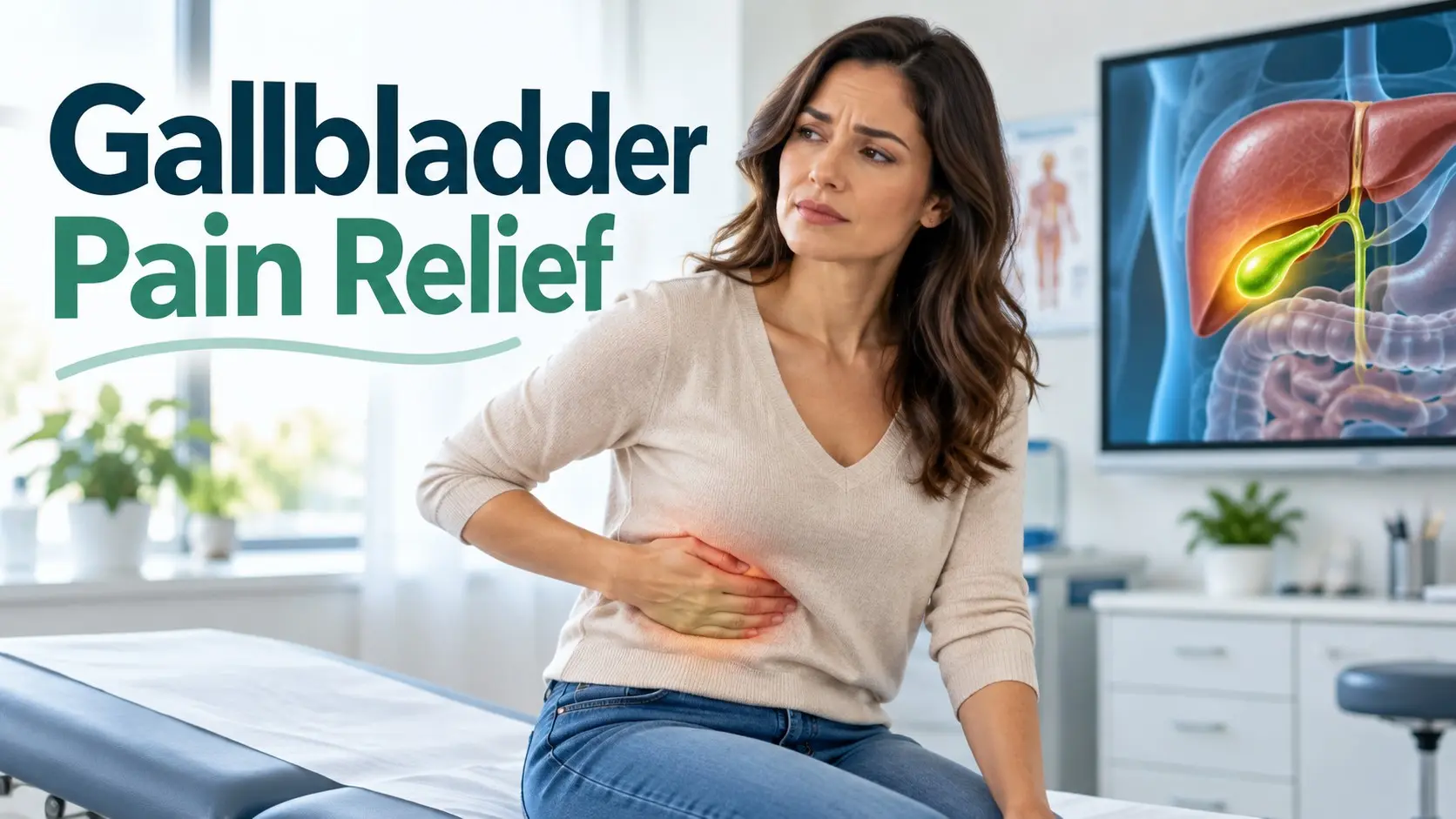
Gallbladder pain relief at home is limited. Gentle warmth, rest, normal hydration, avoiding a known food trigger, and pain medicine that is safe for you may ease symptoms temporarily. They cannot dissolve a gallstone, open a blocked bile duct, or treat acute gallbladder inflammation or infection.
That difference matters.
A gallbladder attack can settle after a stone moves, but the stone has not necessarily disappeared. Future attacks can happen, and a stone that remains trapped can lead to inflammation, infection, jaundice, or pancreatitis.
Medical note: This article is for general information and education. It does not replace medical advice, diagnosis, or treatment.
I am not a dermatologist or a doctor, and this content does not replace professional medical advice. What I share comes from real life experience, extensive research, and consultation with healthcare providers. Always consult qualified medical professionals for diagnosis and treatment of any health condition.
Clinical review status: This article has not been independently medically reviewed by a gastroenterologist, surgeon, emergency physician, or other licensed healthcare professional.
Get urgent medical help if:
- You have sudden severe abdominal pain.
- Pain lasts longer than about 30 minutes or keeps getting worse.
- Pain spreads from the abdomen to the back and you are vomiting.
- You have fever, chills, or feel very unwell.
- Your skin or the whites of your eyes become yellow.
- Your urine becomes dark or your stools become pale.
- You cannot keep fluids down.
- You become confused, faint, very weak, or difficult to wake.
These symptoms can occur with acute cholecystitis, a stone in the common bile duct, cholangitis, gallstone pancreatitis, or another abdominal emergency.
Table of Contents
- What Gallbladder Pain Feels Like
- Where the Pain Is Felt
- What Causes a Gallbladder Attack
- Biliary Colic vs Cholecystitis
- 12 Critical Steps for Safer Care
- Check Emergency Warning Signs
- Arrange Medical Assessment
- Rest During an Attack
- Use Gentle Warmth
- Choose Pain Medicine Safely
- Drink Normally
- Do Not Force Food While Vomiting
- Use Smaller Meals Between Attacks
- Avoid Your Personal Triggers
- Record Each Attack
- Skip Flushes and Unsupported Remedies
- Complete Testing and Discuss Definitive Treatment
- Foods and Gallbladder Pain
- Testing and Diagnosis
- Medical Treatment
- Gallbladder Removal
- Other Causes of Similar Pain
- Frequently Asked Questions
- References and Sources
What Does Gallbladder Pain Feel Like?
Gallbladder pain is usually steady and strong rather than a brief cramp.
A typical attack caused by gallstones can produce:
- Upper right abdominal pain beneath the ribs
- Pain in the upper middle abdomen
- Pain spreading to the right shoulder or shoulder blade
- Pain spreading into the upper back
- Nausea
- Vomiting
- Sweating
- Difficulty finding a comfortable position
NIDDK notes that gallbladder attacks often follow heavy meals and commonly occur in the evening or at night.
NHS guidance describes biliary colic as severe, constant abdominal pain that can last longer than 30 minutes and continue for several hours.
A short attack that settles still deserves attention, especially if it is your first episode or the attacks keep returning.
Where Is Gallbladder Pain Located?
| Pain Location | What It May Suggest | Important Context |
|---|---|---|
| Upper right abdomen | Classic gallbladder location | Can occur with biliary colic or inflammation |
| Upper middle abdomen | Can still be gallbladder pain | Can resemble stomach, heart, reflux, or pancreatic pain |
| Right shoulder or shoulder blade | Referred pain | Often occurs with upper abdominal pain |
| Upper abdomen into the back | Can occur with gallstones | Pain through to the back with vomiting can also suggest pancreatitis |
Pain location cannot diagnose the problem by itself.
For a focused comparison, read How to Differentiate Gallbladder and Liver Pain.
What Causes a Gallbladder Attack?
A common cause is a gallstone temporarily blocking bile flow.
The gallbladder stores bile made by the liver. When you eat, it contracts and releases bile into the small intestine to help digest fat.
If a stone blocks the outlet, pressure builds inside the gallbladder and pain begins.
Gallstones
Gallstones are hardened deposits that form from substances in bile.
Many people have gallstones and never develop symptoms.
Biliary Colic
Biliary colic happens when a stone causes temporary blockage and pain.
The pain can eventually stop if the obstruction clears.
Acute Cholecystitis
Acute cholecystitis is inflammation of the gallbladder, most often caused by persistent blockage of its outlet.
Pain tends to persist rather than simply settle, and fever or marked tenderness can occur.
Common Bile Duct Stone
A gallstone can leave the gallbladder and become trapped in the common bile duct.
This is called choledocholithiasis.
It can cause pain, jaundice, dark urine, pale stools, and abnormal liver blood tests.
Cholangitis
Cholangitis is infection of the bile ducts, often when bile flow is blocked.
This can become life threatening and needs urgent medical treatment.
Gallstone Pancreatitis
A stone can also block drainage near the pancreas and trigger acute pancreatitis.
Severe upper abdominal pain that spreads through to the back, especially with repeated vomiting, needs urgent assessment.
For more detail, see Pancreatitis Causes.
Biliary Colic vs Acute Cholecystitis
| Feature | Biliary Colic | Acute Cholecystitis |
|---|---|---|
| Blockage | Usually temporary | Usually persistent |
| Pain | Strong and steady, then settles | Persistent and often increasingly tender |
| Fever | Usually absent | Can occur |
| Vomiting | Can occur | Can be persistent |
| Care | Medical assessment and treatment planning | Urgent hospital assessment |
You cannot reliably distinguish these conditions at home.
Persistent pain, fever, jaundice, or repeated vomiting should move the priority away from home relief and toward medical care.
12 Critical Steps for Gallbladder Pain Relief and Safer Care
1. Check for Emergency Warning Signs First
Before trying to calm the pain at home, ask whether this could be a complication.
Seek urgent care for:
- Sudden severe pain
- Pain lasting longer than about 30 minutes or continuing for hours
- Fever or shaking chills
- Jaundice
- Repeated vomiting
- Dark urine
- Pale or clay colored stools
- Severe weakness
- Confusion
- Fainting
NHS and NIDDK both advise prompt medical attention for gallstone pain with these warning signs.
2. Arrange Medical Assessment for a First or Repeated Attack
Do not assume pain under the right ribs is automatically your gallbladder.
Similar pain can come from the stomach, pancreas, liver, kidney, lung, ribs, or even the heart.
A first significant episode deserves assessment.
Repeated attacks also deserve follow up because symptomatic stones often cause further attacks.
3. Rest While the Attack Is Active
There is no need to push through severe abdominal pain.
Sit or lie in a comfortable position while deciding whether urgent care is needed.
Rest does not remove a stone, but it reduces unnecessary strain while you monitor symptoms.
If you are faint, confused, or severely unwell, do not drive yourself.
4. Use Gentle Warmth for Temporary Comfort
A warm compress or wrapped hot water bottle may soothe the abdominal wall and make the pain easier to tolerate.
Keep it warm rather than very hot.
Use a cloth barrier to protect the skin.
Do not sleep on a heating pad.
Most importantly, warmth cannot dissolve a gallstone, clear a bile duct blockage, or treat infection.
5. Use Pain Medicine Only if It Is Safe for You
Over the counter pain medicine is not suitable for everyone.
A doctor or pharmacist can help you choose an option based on your medical history.
Extra caution is needed if you have:
- Kidney disease
- Liver disease
- A stomach ulcer or previous gastrointestinal bleeding
- Blood thinning medicine
- Heart failure
- Pregnancy
- Drug allergies
- Previous asthma reactions to anti inflammatory medicine
Do not combine several products that contain the same pain relieving ingredient.
And do not repeatedly mask severe or recurring abdominal pain instead of arranging assessment.
6. Drink a Normal Amount of Fluid
Water helps prevent dehydration.
That is useful if you have eaten less because of nausea.
But drinking large amounts of water does not flush a gallstone through the bile duct.
Lemon water does not dissolve established gallstones either.
Drink normally and comfortably rather than forcing litres of fluid in an attempt to move a stone.
7. Do Not Force Food if You Are Vomiting
If nausea is severe or you are actively vomiting, do not force a large meal.
Small sips of fluid may be easier to tolerate.
If you cannot keep fluids down, seek prompt medical care because dehydration and ongoing obstruction need assessment.
8. Choose Smaller Meals Between Attacks
Large meals can cause stronger gallbladder contraction.
While you are waiting for evaluation, smaller meals can be easier to tolerate.
Many people with symptomatic stones report trouble after rich or high fat meals.
That does not mean you need a nutritionally poor zero fat diet.
A balanced pattern with vegetables, fruit, whole grains, beans, lean proteins, and fats in amounts you personally tolerate is more sensible.
9. Avoid Foods and Drinks That Clearly Trigger Your Symptoms
NICE specifically advises people with symptomatic gallstones to avoid foods or drinks that trigger their symptoms while they are waiting for definitive treatment.
Common triggers can include:
- Fried food
- Very fatty meat
- Large creamy meals
- Rich sauces
- High fat desserts
- Very large meals
Triggers are individual.
If eggs, coffee, dairy, or another food does not trigger your symptoms, there is no reason to invent a restriction simply because someone online listed it.
10. Record What Happens During Each Attack
A short symptom record can make a medical visit much more useful.
Write down:
- When the pain started
- Where it started
- How strong it became
- How long it lasted
- Whether it moved to your shoulder or back
- What you ate before it began
- Whether you had nausea or vomiting
- Whether fever or chills occurred
- Whether your urine or stool changed color
Patterns help a clinician decide whether the symptoms sound like biliary pain or another digestive problem.
11. Skip Gallbladder Flushes and Unsupported Remedies
This is one place where a stronger article needs to be clear.
Apple cider vinegar, olive oil flushes, Epsom salts, castor oil, lemon juice, dandelion, and similar remedies have not been shown to clear an obstructing gallstone.
Mayo Clinic states that there is no reliable evidence that a gallbladder cleanse prevents or treats gallstones.
The lumps people sometimes see after an oil cleanse are not proof that stones came out of the gallbladder.
Cleanses can cause:
- Nausea
- Vomiting
- Diarrhea
- Dehydration
- Delayed medical treatment
Do not let a temporary change in symptoms convince you that a blocked duct or inflamed gallbladder has been treated.
12. Complete Testing and Discuss Definitive Treatment
Home comfort measures are not the endpoint if gallstones are causing repeated attacks.
Complete the blood tests, abdominal ultrasound, or other imaging your clinician recommends.
If symptomatic stones keep causing pain, discuss definitive management with a surgeon or gastroenterologist.
For many people, that means laparoscopic cholecystectomy, which removes the gallbladder and prevents stones inside it from causing future attacks.
What Foods Can Trigger Gallbladder Pain?
There is no universal gallbladder trigger list.
Fat causes the gallbladder to contract, so a very large or high fat meal can provoke symptoms when stones are already present.
That is why people often notice pain after:
- Fried meals
- Fatty cuts of meat
- Fast food
- Heavy cream sauces
- Large portions of cheese
- Pastries and rich desserts
The key word is trigger.
Diet does not pull a stone out of a blocked duct.
It can only help you reduce symptom provoking meals while you wait for medical treatment.
For symptoms that occur after meals but may not be gallbladder related, see Stomach Pain After Eating.
Do You Need a Zero Fat Diet?
Usually not.
A zero fat diet is difficult to sustain and can make the overall diet less balanced.
NICE guidance focuses on avoiding foods and drinks that trigger symptoms rather than prescribing the same extreme restriction to everyone.
NIDDK also recommends a generally healthy eating pattern with more fiber and healthy fats, fewer refined carbohydrates, and less sugar as part of gallstone prevention.
Work with a dietitian or clinician if eating repeatedly causes pain or your diet is becoming severely restricted.
Can Water, Lemon Water, or Apple Cider Vinegar Dissolve Gallstones?
No reliable evidence shows that these drinks dissolve an established gallstone quickly or reopen an obstructed bile duct.
Water is useful for hydration.
Lemon can make water more pleasant to drink.
Neither turns an acute gallbladder attack into a safely treated condition.
Apple cider vinegar also has no established role in clearing gallstones.
Can a Heating Pad Stop a Gallbladder Attack?
A heating pad may make you feel more comfortable.
That is all it should be expected to do.
It cannot:
- Dissolve a stone
- Force a stone through the duct
- Reverse acute cholecystitis
- Treat cholangitis
- Treat pancreatitis
If warmth makes the pain easier to tolerate but the pain keeps returning, you still need the underlying cause assessed.
How Are Gallstones Diagnosed?
Diagnosis starts with the story of the pain and a physical examination.
Doctors then use blood tests and imaging when gallstones are suspected.
| Test | What It Helps Check | When It May Be Used |
|---|---|---|
| Blood Tests | Infection, inflammation, jaundice, liver or pancreatic involvement | Common early investigation |
| Abdominal Ultrasound | Gallstones and gallbladder findings | First line imaging for suspected gallstones |
| MRCP | Detailed pictures of the bile ducts | When a duct stone is suspected |
| Endoscopic Ultrasound | Small stones in the bile duct | Selected cases when more detail is needed |
| ERCP | Treats stones or blockage in the ducts | Mainly when treatment of a duct problem is expected |
NIDDK describes ultrasound as the best imaging test for finding gallstones.
NICE also recommends ultrasound plus liver function tests as first line investigations when gallstone disease is suspected.
ERCP is different from a routine scan. Because it is invasive and has risks, it is commonly used when doctors expect to treat a bile duct stone or another duct problem.
For a broader look at testing, visit the Medical Tests and Screenings Hub.
How Are Symptomatic Gallstones Treated?
Treatment depends on where the stones are, what symptoms they cause, and whether a complication is present.
| Situation | Typical Medical Approach |
|---|---|
| Silent gallstones | Usually no treatment unless circumstances change |
| Repeated biliary colic | Gallbladder removal is commonly recommended |
| Acute cholecystitis | Urgent hospital treatment and surgical assessment |
| Common bile duct stone | ERCP or surgical bile duct clearance plus gallbladder management |
| Cholangitis | Emergency antibiotics, supportive care, and bile duct drainage |
| Gallstone pancreatitis | Hospital care followed by gallstone management |
What Is Gallbladder Removal Surgery?
Gallbladder removal is called a cholecystectomy.
Most planned operations are performed laparoscopically using small incisions and a camera.
You can live without a gallbladder.
The liver continues making bile, but instead of being stored in the gallbladder, bile flows more continuously into the small intestine.
NIDDK notes that a small number of people have softer or more frequent stools after surgery, and these changes are usually temporary.
For more on the relationship between the organs, read Gallbladder and Liver Functions.
Can Medicine Dissolve Gallstones?
Sometimes, but only in selected cases.
NIDDK explains that medicines such as ursodiol can dissolve some cholesterol stones, mainly when surgery is not suitable.
There are limits:
- They do not work for every stone.
- Treatment can take months or years.
- Stones can return.
- They are not a rapid treatment for an acute attack.
Do not buy bile acid products or supplements online and attempt to treat diagnosed gallstones without medical supervision.
Can Gallstones Cause Pancreatitis?
Yes.
A gallstone can move into the bile duct and block the shared drainage area near the pancreas.
This can trigger acute pancreatitis.
Warning symptoms include severe upper abdominal pain that may travel through to the back, often with nausea or vomiting.
Acute pancreatitis requires urgent hospital care.
If you want to understand the condition in more detail, see Pancreatitis Causes and Living With Pancreatitis.
What Else Can Cause Pain Under the Right Ribs?
Not every pain in the upper right abdomen is gallbladder pain.
Other possibilities include:
- Gastritis
- Acid reflux
- Peptic ulcer
- Liver inflammation
- Pancreatitis
- Kidney stone
- Kidney infection
- Pneumonia
- Muscle or rib injury
- Shingles
- Appendicitis with an unusual location
- Heart disease
Chest pressure, breathlessness, fainting, sweating, or pain moving into the arm, neck, or jaw needs emergency assessment rather than a gallbladder home remedy.
Can You Reduce the Risk of Gallstones?
No lifestyle plan prevents every gallstone.
NIDDK recommends several general steps that can reduce risk:
- Choose more fiber rich foods.
- Include suitable healthy fats.
- Reduce excess refined carbohydrates and sugar.
- Maintain a healthy weight when possible.
- Lose weight gradually rather than through crash diets.
- Stay physically active.
Rapid weight loss itself can increase gallstone risk.
If weight loss is one of your goals, see Natural Weight Loss.
What Should You Tell Your Healthcare Professional?
Bring a clear timeline.
Tell them:
- Where the pain starts
- How long it lasts
- Whether it moves to the shoulder or back
- What food came before it
- Whether you vomited
- Whether you had fever or chills
- Whether your urine became dark
- Whether your stools became pale
- Whether you have lost weight quickly
- Whether you are pregnant
- Which medicines and supplements you take
- Whether you have had previous gallstones or abdominal surgery
Questions to Ask About Gallbladder Pain
- Does this sound like biliary colic or something more urgent?
- Do I need an ultrasound and blood tests?
- Could a stone be in the common bile duct?
- Do I need MRCP or endoscopic ultrasound?
- Which pain medicine is safest for me?
- Which foods should I avoid while waiting for treatment?
- Do these symptoms suggest acute cholecystitis?
- Could this be gallstone pancreatitis?
- Should I see a surgeon?
- Would laparoscopic gallbladder removal be recommended?
- What should I do if another attack starts?
- Which symptoms mean I should go straight to emergency care?
Conclusion
Gallbladder pain relief at home should be treated as temporary comfort, not a cure for an obstructing gallstone.
Gentle warmth, appropriate pain relief, normal hydration, smaller meals, and avoiding personal food triggers may help between attacks. Gallbladder flushes, apple cider vinegar, lemon water, or large amounts of water cannot reopen a blocked bile duct.
If this is your first attack, attacks keep returning, or symptoms are severe, arrange medical assessment. Persistent pain, fever, jaundice, repeated vomiting, dark urine, pale stools, confusion, or fainting needs urgent care.
Your best next step is to identify the cause, complete the recommended tests, and discuss treatment that prevents the next attack rather than repeatedly trying to manage each episode at home.
References and Sources
- National Institute of Diabetes and Digestive and Kidney Diseases. Symptoms and Causes of Gallstones.
https://www.niddk.nih.gov/health-information/digestive-diseases/gallstones/symptoms-causes - National Institute of Diabetes and Digestive and Kidney Diseases. Diagnosis of Gallstones.
https://www.niddk.nih.gov/health-information/digestive-diseases/gallstones/diagnosis - National Institute of Diabetes and Digestive and Kidney Diseases. Treatment for Gallstones.
https://www.niddk.nih.gov/health-information/digestive-diseases/gallstones/treatment - NHS. Gallstones.
https://www.nhs.uk/conditions/gallstones/ - NHS. Acute Cholecystitis.
https://www.nhs.uk/conditions/acute-cholecystitis/ - National Institute for Health and Care Excellence. Gallstone Disease: Diagnosis and Management.
https://www.nice.org.uk/guidance/cg188 - Mayo Clinic. Gallstones: Symptoms and Causes.
https://www.mayoclinic.org/diseases-conditions/gallstones/symptoms-causes/syc-20354214 - Mayo Clinic. Gallbladder Cleanse: A Natural Remedy for Gallstones?
https://www.mayoclinic.org/diseases-conditions/gallstones/expert-answers/gallbladder-cleanse/faq-20058134 - National Institute of Diabetes and Digestive and Kidney Diseases. ERCP.
https://www.niddk.nih.gov/health-information/diagnostic-tests/endoscopic-retrograde-cholangiopancreatography
Internal Links + Hub
- Digestive Health and Gut Hub
- Liver Health Hub
- Medical Tests and Screenings Hub
- Complete Health Hub
- How to Differentiate Gallbladder and Liver Pain
- Gallbladder and Liver Functions
- Stomach Pain After Eating
- Pancreatitis Causes
- Pancreatitis Diet
- Living With Pancreatitis
- Natural Weight Loss
About the Author
Adel Galal is the Founder and Lead Writer at NextFitLife. He researches and writes educational content about health, nutrition, digestive health, fitness, sleep, wellness, and healthy aging.
His approach is to compare established medical guidance, public health resources, and research, then explain what the evidence supports, what remains uncertain, and where home care should stop and professional medical care should begin.
Adel is not a physician, gastroenterologist, surgeon, emergency clinician, pharmacist, registered dietitian, or other licensed healthcare professional. NextFitLife content is educational and does not replace professional medical advice, diagnosis, prescriptions, emergency assessment, or individualized treatment.
Learn more about Adel, NextFitLife, and its editorial approach on the About Us page.
Frequently Asked Questions
What can provide gallbladder pain relief at home?
Rest, gentle warmth, normal hydration, avoiding a known food trigger, and pain medicine that is safe for you may provide temporary comfort. These steps cannot remove a gallstone or treat gallbladder inflammation or infection.
Where is gallbladder pain usually felt?
Gallbladder pain commonly occurs in the upper right or upper middle abdomen. It can spread to the right shoulder, shoulder blade, or upper back.
How long can a gallbladder attack last?
Biliary colic can last longer than 30 minutes and continue for several hours. Persistent or worsening pain, especially with fever, vomiting, or jaundice, needs urgent assessment.
Can a heating pad help gallbladder pain?
Gentle warmth may provide temporary comfort, but it cannot dissolve a gallstone, clear a blocked bile duct, or treat acute cholecystitis.
Can drinking water flush out gallstones?
No. Normal hydration is useful, but drinking large amounts of water does not flush an established gallstone out of the gallbladder or bile duct.
Does lemon water dissolve gallstones?
No reliable evidence shows that lemon water dissolves established gallstones or clears bile duct obstruction.
Does apple cider vinegar relieve gallbladder pain?
Apple cider vinegar has not been shown to dissolve gallstones or treat acute gallbladder inflammation. Do not use it as a replacement for medical assessment.
Do gallbladder flushes work?
No reliable evidence shows that oil based gallbladder cleanses remove true gallstones. Mayo Clinic warns that these cleanses can cause nausea, vomiting, diarrhea, and abdominal pain.
Which foods commonly trigger gallbladder pain?
Large or high fat meals commonly trigger symptoms in some people with gallstones. Fried foods, fatty meats, rich sauces, and heavy desserts are common examples, but personal triggers vary.
What is the difference between biliary colic and acute cholecystitis?
Biliary colic usually comes from temporary stone blockage and eventually settles. Acute cholecystitis involves persistent blockage and inflammation, causing pain that tends to continue and can occur with fever or marked tenderness.
How are gallstones diagnosed?
Doctors use the symptom history, examination, blood tests, and abdominal ultrasound. MRCP or endoscopic ultrasound can be used when a bile duct stone is suspected.
When is gallbladder pain an emergency?
Seek urgent care for sudden severe pain, pain that persists, fever or chills, repeated vomiting, jaundice, dark urine, pale stools, confusion, fainting, or rapidly worsening illness.

Health & wellness writer with 30+ years of experience in nutrition, fitness, and healthy aging. Founder of NextFitLife.com — evidence-based health guidance.