Last updated: September 10, 2026
Next editorial review: September 2027 or sooner if major protein or nutrition guidance changes
Written and source-checked by: Adel Galal, Founder and Lead Writer at NextFitLife
Medical review status: This article is educational and source-checked. It has not been medically reviewed by a doctor, registered dietitian, sports dietitian, nephrologist, endocrinologist, or other licensed healthcare professional.
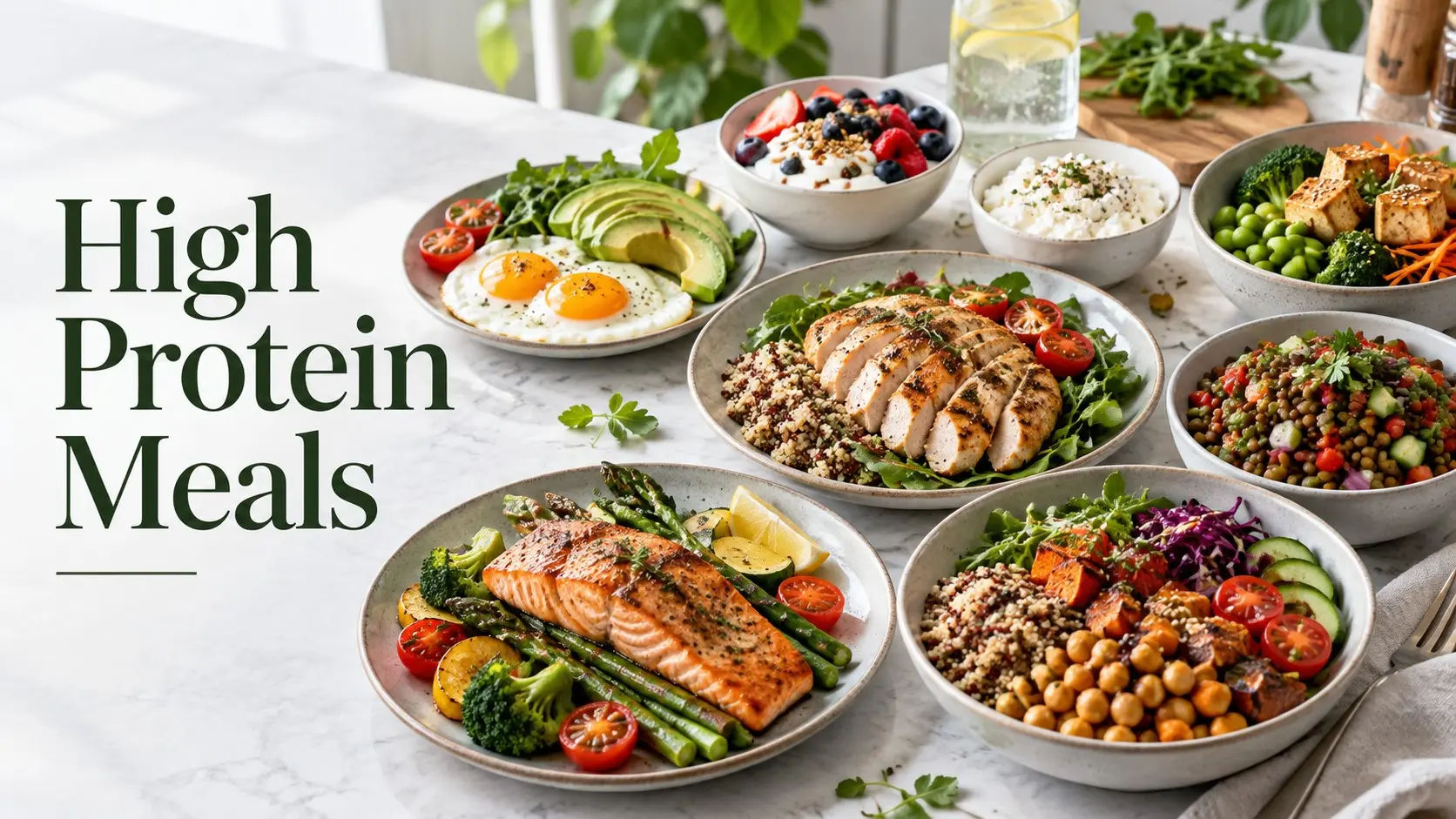
High Protein Meals do not need to mean chicken breast three times a day.
They can include fish.
Eggs.
Greek yogurt.
Cottage cheese.
Beans.
Lentils.
Tofu.
Tempeh.
Edamame.
And many other foods.
The best meals also give you vegetables, fibre, useful carbohydrates, and healthy fats.
Protein matters.
But the whole meal matters too.
Quick Answer: What Makes a Good High Protein Meal?
A good high protein meal starts with a clear protein source.
For many adults, a meal providing roughly 25 to 40 grams of protein can be a useful practical target.
This is not a medical rule.
Your needs depend on body size, age, activity, health, total daily intake, and goals.
A simple meal formula is:
- Choose one principal protein food.
- Add vegetables or fruit.
- Add a fibre-rich carbohydrate when useful.
- Add a healthy fat.
- Adjust the serving to your energy needs.
For a complete daily framework, read the NextFitLife High Protein Diet Plan.
Medical and Nutrition Safety Notice
This content is for general educational purposes and does not replace professional medical advice, diagnosis, or treatment. Consult an appropriately qualified healthcare professional for personal medical concerns. This article explains published guidance and does not provide a personal clinical assessment. Always consult qualified medical professionals for diagnosis and treatment of any health condition.
A higher protein intake is not right for every person.
Protein needs may change with kidney disease.
They can change during dialysis.
Pregnancy can change needs.
Older age can change needs.
Illness and surgery can change needs too.
If your healthcare team has given you a specific protein target, use that instead of a generic online number.
How Much Protein Do You Need in 2026?
Protein advice can look confusing.
That is because different numbers answer different questions.
The established adult Recommended Dietary Allowance is 0.8 grams per kilogram of body weight per day.
The Scientific Foundation for the Dietary Guidelines for Americans 2025 to 2030 explains that this level was designed mainly to prevent deficiency.
The current Dietary Guidelines use a higher practical protein serving goal of about 1.2 to 1.6 grams per kilogram per day, adjusted for individual energy needs.
NIH sports nutrition guidance gives a range of about 1.2 to 2.0 grams per kilogram per day for many athletes.
You do not need to choose the largest number.
You need the number that fits you.
Simple Protein Examples by Body Weight
| Body Weight | 0.8 g per kg | 1.2 g per kg | 1.6 g per kg |
|---|---|---|---|
| 60 kg | 48 g | 72 g | 96 g |
| 70 kg | 56 g | 84 g | 112 g |
| 80 kg | 64 g | 96 g | 128 g |
| 90 kg | 72 g | 108 g | 144 g |
| 100 kg | 80 g | 120 g | 160 g |
These are examples.
They are not prescriptions.
Why Spread Protein Across Your Meals?
Many people eat little protein at breakfast.
They eat a little more at lunch.
Then they try to eat nearly all of it at dinner.
You do not have to do that.
Spreading protein through breakfast, lunch, and dinner makes a daily target easier to reach.
It can also make meals more balanced.
This supports the LSI phrase protein distribution throughout the day.
24 High Protein Meals
The protein numbers below are estimates.
Brands and serving sizes vary.
Use your own labels when exact numbers matter.
6 High Protein Breakfast Meals
1. Greek Yogurt Berry Protein Bowl
Approximate protein: 30 to 35 grams
Add 250 grams of plain Greek yogurt to a bowl.
Top with berries.
Add oats.
Add hemp seeds.
Finish with cinnamon.
This gives you protein, fruit, fibre, and useful fats.
If you avoid dairy, use a high-protein fortified soy yogurt.
2. Egg and Cottage Cheese Toast Plate
Approximate protein: 35 to 40 grams
Cook two eggs.
Add cottage cheese.
Serve with whole-grain toast.
Add tomatoes and cucumber.
This makes a simple high protein breakfast without protein powder.
3. Smoked Salmon Egg Breakfast Bowl
Approximate protein: 30 to 35 grams
Use smoked salmon.
Add two boiled eggs.
Add cucumber.
Add tomato.
Add avocado.
Finish with a spoon of plain Greek yogurt and lemon.
Smoked salmon can be salty.
Keep the serving sensible if sodium matters.
4. Tofu and Edamame Scramble
Approximate protein: 30 grams
Crumble firm tofu into a pan.
Add edamame.
Add spinach, mushrooms, and peppers.
Season with turmeric, black pepper, garlic, and herbs.
This is a strong plant based high protein meal.
5. Protein Overnight Oats
Approximate protein: 30 to 35 grams
Mix oats with milk.
Add plain Greek yogurt.
Add chia seeds.
Leave it in the fridge overnight.
Add berries in the morning.
A fortified soy drink and high protein soy yogurt can make the meal dairy free.
6. Black Bean and Egg Breakfast Bowl
Approximate protein: 28 to 32 grams
Cook three eggs.
Add black beans.
Add tomato, spinach, and avocado.
Top with plain yogurt or salsa.
Beans add protein plus fibre.
6 High Protein Lunch Meals
7. Chicken Quinoa Power Bowl
Approximate protein: 38 to 42 grams
Slice grilled chicken breast.
Add cooked quinoa.
Add cucumber, tomato, peppers, and leafy greens.
Finish with olive oil and lemon.
This is a simple example of a balanced high protein meals.
8. Tuna and White Bean Salad
Approximate protein: 35 to 40 grams
Mix tuna with white beans.
Add celery.
Add tomato.
Add cucumber.
Add parsley and lemon.
Choose lower sodium tuna when needed.
9. Salmon and Lentil Salad
Approximate protein: 30 to 35 grams
Use cooked salmon.
Add green lentils.
Add rocket or spinach.
Add peppers and tomatoes.
Finish with olive oil and lemon.
This meal combines animal and plant protein.
10. Turkey Hummus Whole Grain Wrap
Approximate protein: 35 to 40 grams
Use cooked turkey breast.
Spread hummus on a whole grain wrap.
Add lettuce, cucumber, tomato, and peppers.
Roll and serve.
Choose fresh turkey more often than heavily processed deli meat.
11. Garlic Shrimp Quinoa Bowl
Approximate protein: 35 to 40 grams
Cook shrimp with garlic and olive oil.
Add cooked quinoa.
Add broccoli and peppers.
Finish with lemon.
Shrimp provides a lot of protein for a moderate serving.
12. Lentil and Cottage Cheese Bowl
Approximate protein: 30 to 35 grams
Add cooked lentils to a bowl.
Add cottage cheese.
Add cucumber, tomato, spinach, and herbs.
Finish with black pepper and lemon.
This is an easy meat-free lunch.
For more lunch ideas, visit High Protein Lunch Ideas.
6 High Protein Dinner Meals
13. Chicken Chickpea Tray Bake
Approximate protein: 40 to 45 grams
Roast chicken with chickpeas.
Add peppers, courgette, onion, and tomatoes.
Season with paprika, cumin, garlic, and herbs.
Serve with a green salad.
14. Salmon Sweet Potato and Broccoli Plate
Approximate protein: 30 to 35 grams
Bake salmon.
Add roasted sweet potato.
Add broccoli.
Serve with a lemon yogurt sauce if desired.
This meal gives protein plus useful carbohydrate for active people.
15. Turkey and Bean Chilli
Approximate protein: 40 to 45 grams
Brown lean turkey mince.
Add kidney beans.
Add tomatoes.
Add onions, peppers, garlic, and chilli.
Simmer until thick.
Serve with brown rice if it fits your needs.
16. Lean Beef Vegetable Rice Bowl
Approximate protein: 30 to 35 grams
Use lean beef strips.
Cook with broccoli, peppers, mushrooms, and onions.
Serve over brown rice.
Use red meat as one protein option rather than the only one.
17. Cod Potato and Green Pea Plate
Approximate protein: 35 to 40 grams
Bake cod with lemon and herbs.
Add potatoes.
Add peas and green vegetables.
Drizzle with a little olive oil.
Cod is a lean protein source.
18. Chicken Lentil Curry
Approximate protein: 38 to 42 grams
Cook chicken with lentils.
Add tomatoes.
Add spinach.
Season with curry spices.
Serve with a moderate portion of rice or whole grain flatbread if desired.
6 Vegan High Protein Meals
19. Tofu Edamame Peanut Stir Fry
Approximate protein: 35 to 40 grams
Cook firm tofu with edamame.
Add broccoli, peppers, mushrooms, and carrots.
Finish with a small amount of peanut and soy sauce.
Serve with brown rice or cauliflower rice depending on your energy needs.
20. Tempeh Quinoa Vegetable Bowl
Approximate protein: 30 to 35 grams
Cook sliced tempeh until golden.
Add quinoa.
Add broccoli, spinach, peppers, and cucumber.
Finish with tahini and lemon.
21. Lentil Pasta Tofu Bolognese
Approximate protein: 35 to 40 grams
Cook lentil pasta.
Crumble tofu into tomato sauce.
Add mushrooms, onions, carrots, and herbs.
Mix with the pasta.
This gives you protein from both lentils and soy.
22. Chickpea Tofu Tacos
Approximate protein: 30 to 35 grams
Cook tofu with chickpeas and taco spices.
Add the mix to corn or whole grain tortillas.
Top with cabbage, tomato, avocado, and salsa.
Adjust tortilla portions to your energy needs.
23. Seitan Vegetable Skillet
Approximate protein: 30 to 35 grams
Cook seitan with peppers, courgette, broccoli, and onion.
Add a tahini lemon sauce.
Serve with quinoa or potatoes when you need more energy.
Seitan contains gluten.
It is not suitable for people with coeliac disease or a medically required gluten-free diet.
24. Vegan Protein Yogurt Breakfast Bowl
Approximate protein: 25 to 35 grams depending on the product
Use a high protein fortified soy or pea based yogurt.
Add hemp seeds.
Add soy nuts or pumpkin seeds.
Add berries.
Add chia.
Check the yogurt label because plant yogurt protein varies widely.
For more detail, read Vegan Protein Yogurt.
What Should a High Protein Meal Include Besides Protein?
Do not stop at protein.
A useful meal can also include:
- Vegetables
- Fruit
- Beans
- Lentils
- Whole grains
- Potatoes
- Healthy fats
The American Heart Association recommends an overall dietary pattern rich in fruits, vegetables, whole grains, and healthier protein sources.
This is more useful than ranking foods only by grams of protein.
Best Protein Sources for High Protein Meals
| Protein Group | Examples | What Else They Provide |
|---|---|---|
| Fish | Salmon, sardines, tuna, cod, trout | Protein and nutrients, with omega 3 fats in oily fish |
| Poultry | Chicken, turkey | Concentrated protein |
| Eggs | Whole eggs | Protein, choline, vitamins and minerals |
| Dairy | Greek yogurt, cottage cheese, milk | Protein and calcium |
| Soy | Tofu, tempeh, edamame | Plant protein and other nutrients |
| Legumes | Lentils, chickpeas, beans | Protein plus fibre |
| Nuts and seeds | Hemp, pumpkin seeds, peanuts, almonds | Protein, fibre, unsaturated fats |
High Protein Meals for Muscle Gain
Protein supports muscle repair and growth.
But protein alone does not build muscle.
Resistance training is the main stimulus.
NIH guidance places many athletes around 1.2 to 2.0 grams of protein per kilogram per day.
A large resistance training meta-analysis found that average gains in fat-free mass stopped increasing much beyond about 1.6 grams per kilogram per day.
This supports the LSI phrase protein for muscle growth.
More is not automatically better.
Training quality matters.
Total energy matters.
Sleep matters.
Recovery matters.
For more guidance, see Foods to Avoid When Building Muscle.
Do You Need Protein Immediately After a Workout?
No.
You do not need to run to the locker room with a protein shake.
Protein around training can be useful.
But the famous 30-minute window is too strict.
Your total daily intake matters more.
Eat a normal protein-rich meal within a practical time around training.
High Protein Meals for Weight Loss
Protein can be useful during weight loss.
It may improve fullness.
It can also help reduce loss of lean tissue when calorie intake is lower.
The scientific report supporting the 2025 to 2030 Dietary Guidelines reviewed higher protein diets around 1.2 to 1.6 grams per kilogram per day.
Many trials reported better fat loss, lean mass preservation, or weight maintenance outcomes.
But protein does not make calories disappear.
A high protein meal for weight loss still needs portions that fit your overall energy needs.
See High Protein Foods for Weight Loss and the Weight Loss and Metabolism Guide.
Do High Protein Meals Burn Fat?
No.
Protein has a higher thermic effect than fat or carbohydrate.
But that does not turn a high protein meal into a fat burning treatment.
Fat loss still depends on the larger energy balance over time.
Do not use phrases such as “protein melts fat.”
That is not how human metabolism works.
Can High Protein Meals Help You Feel Full?
They can.
Protein tends to be satisfying.
But the strongest meals often combine protein with fibre and food volume.
Try:
- Chicken plus vegetables and quinoa
- Greek yogurt plus berries and chia
- Lentils plus vegetables
- Tofu plus edamame and broccoli
- Eggs plus beans and vegetables
This combines protein and fibre.
High Protein Does Not Mean Low Carb
This point matters.
You can eat plenty of protein and still eat:
- Oats
- Potatoes
- Fruit
- Rice
- Quinoa
- Beans
- Lentils
- Whole grain bread
Carbohydrates can support exercise and provide fibre-rich foods.
A high protein diet and a ketogenic diet are not the same thing.
Do You Need to Avoid Fat?
No.
Fat is an essential part of a normal diet.
Choose sources such as:
- Olive oil
- Avocado
- Nuts
- Seeds
- Oily fish
Food quality still matters when protein is high.
Why Protein Quality Matters
Protein foods provide amino acids.
Your body needs nine essential amino acids from food.
Animal protein generally provides all essential amino acids in useful proportions.
Soy is also a strong plant protein.
A varied plant diet can meet protein needs too.
You do not need to combine every plant protein in the same bite.
Animal Protein Versus Plant Protein
You do not need to turn this into a competition.
Both can fit.
Fish can provide protein plus omega 3 fats.
Dairy can provide protein plus calcium.
Eggs provide protein plus choline.
Beans and lentils provide protein plus fibre.
Nuts and seeds add protein plus unsaturated fats.
Soy gives a useful plant protein option.
Using several sources creates more dietary variety.
Can Vegetarians Eat Enough Protein?
Yes.
Useful vegetarian protein foods include:
- Eggs
- Greek yogurt
- Cottage cheese
- Milk
- Tofu
- Tempeh
- Edamame
- Beans
- Lentils
- Chickpeas
- Nuts
- Seeds
Can Vegans Eat High Protein Meals?
Yes.
Use:
- Tofu
- Tempeh
- Edamame
- Soy drink
- Beans
- Lentils
- Chickpeas
- Peas
- Seitan when gluten is suitable
- Hemp seeds
- Pumpkin seeds
- Peanuts
- Fortified higher protein plant yogurt
A vegan diet also needs reliable vitamin B12.
See What Foods Contain Vitamin B12 UK for more detail.
Are Protein Powders Required?
No.
Food can meet protein needs.
Protein powder is convenient.
That is its main advantage.
You may use whey, soy, pea, or another suitable protein when normal food is not practical.
But a powder should not push vegetables, fruit, whole grains, beans, and other foods out of your diet.
Are Protein Bars High Protein Meals?
Usually not.
A bar is more often a snack.
Some bars contain substantial protein.
They can also contain added sugar, saturated fat, sugar alcohols, sodium, or many processed ingredients.
Read the label.
A bar does not become a complete meal because the wrapper says protein.
What About Processed Meat?
Bacon contains protein.
Sausage contains protein.
Many deli meats contain protein.
That does not make them my first choice.
The American Heart Association recommends shifting toward plant protein, regularly eating fish and seafood, and choosing lean and minimally processed meat when meat is used.
Protein quality includes the food around the protein.
High Protein Meal Prep
You do not need to cook 24 different recipes on Sunday.
Prepare building blocks.
Choose Two Proteins
For example:
- Chicken
- Tofu
Cook One or Two Carbohydrate Foods
For example:
- Quinoa
- Potatoes
- Brown rice
Prepare Vegetables
Roast a tray of:
- Broccoli
- Peppers
- Carrots
- Courgette
- Onion
Keep Easy Protein Foods Ready
Keep:
- Eggs
- Greek yogurt
- Cottage cheese
- Tinned tuna
- Beans
- Lentils
- Edamame
Then build different meals without starting from zero.
Food Safety for High Protein Meal Prep
Protein meal prep often includes meat, fish, eggs, dairy, tofu, and cooked leftovers.
Food safety matters.
USDA says perishable food should not sit at room temperature for more than two hours.
That drops to one hour when the temperature is above 90°F or about 32°C.
Refrigerate leftovers quickly in shallow containers.
Use most cooked leftovers within three to four days.
Reheat leftovers to 165°F or 74°C.
Cook poultry to 165°F or 74°C.
Cook fish to 145°F or about 63°C.
Use a food thermometer when food safety is uncertain.
Can High Protein Meals Cause Constipation?
They can if your version removes fibre.
A meal made only from meat, cheese, eggs, and protein powder may provide almost no fibre.
Keep plant foods in the diet.
Use:
- Vegetables
- Fruit
- Beans
- Lentils
- Whole grains
- Nuts
- Seeds
Are High Protein Meals Safe for Your Kidneys?
This answer depends on kidney health.
The higher protein ranges tested in healthy adults have not shown clear kidney harm over the durations studied.
But chronic kidney disease is different.
People with CKD who are not on dialysis may be advised to reduce protein.
People receiving dialysis often need more.
Use an individual renal nutrition plan if you have kidney disease.
What About Older Adults?
Protein becomes more important as maintaining muscle gets harder with age.
Strength activity also matters.
Older adults can make meals easier with foods such as:
- Eggs
- Greek yogurt
- Cottage cheese
- Fish
- Soft chicken
- Lentil soup
- Tofu
- Milk or fortified soy drink
Texture can be adjusted when chewing is difficult.
High Protein Meals on a Budget
High protein does not require steak and salmon every day.
Lower cost options can include:
- Eggs
- Lentils
- Beans
- Chickpeas
- Tinned tuna
- Tinned sardines
- Milk
- Plain yogurt
- Tofu
- Peanut butter
- Frozen edamame
Dry beans and lentils can be especially economical.
High Protein Meals Without Chicken
You have many choices.
Try:
- Salmon
- Cod
- Sardines
- Tuna
- Shrimp
- Eggs
- Greek yogurt
- Cottage cheese
- Beans
- Lentils
- Tofu
- Tempeh
- Edamame
Your diet does not need to look like a bodybuilding meal prep box.
High Protein Meals Without Protein Powder
All 24 meals in this guide can be made without protein powder.
That is intentional.
You can reach substantial meal protein from ordinary foods.
Powder remains an optional convenience.
Common High Protein Meal Mistakes
| Mistake | Better Approach |
|---|---|
| Eating almost all protein at dinner | Spread protein across meals |
| Thinking every meal must contain 50 g protein | Match the meal to your daily target |
| Removing vegetables to make room for meat | Keep plant foods on the plate |
| Avoiding all carbohydrates | Use useful carbs that fit your needs |
| Using processed meat every day | Choose fish, legumes, soy, eggs, and lean meat more often |
| Drinking several shakes instead of eating meals | Use supplements for convenience, not as the whole diet |
| Thinking more protein always means more muscle | Train well and meet an appropriate target |
| Ignoring calories during weight loss | Use portions that fit your energy needs |
| Ignoring fibre | Add vegetables, fruit, legumes, grains, nuts, and seeds |
| Following a generic high protein diet with CKD | Use an individual renal nutrition plan |
How I Evaluate High Protein Meals
I have maintained a personal interest in health, fitness, nutrition, sleep, wellness, and healthy aging for more than 30 years.
My health and wellness writing and research communication experience spans more than 15 years.
Before focusing full-time on NextFitLife, I spent 29 years working as an IT Manager for the Nestlé Egypt Region.
That background developed skills in data analysis, structured review, information management, research organisation, and problem solving.
These are research and communication skills.
They are not medical or nutrition qualifications.
When I assess a high protein meal, I do not only ask how many grams of protein it has.
I also ask:
Where are the vegetables?
Where is the fibre?
Is the protein heavily processed?
Does the meal have enough energy for the person's goal?
Does it provide useful fats?
Is the meal practical?
Can someone enjoy it more than once?
That is the difference between chasing protein numbers and building a real diet.
Conclusion: Build High Protein Meals You Can Repeat
High Protein Meals can support muscle, recovery, healthy aging, and weight management when they fit your needs.
But you do not need extreme portions.
And you do not need protein powder in every meal.
Use fish.
Eggs.
Chicken.
Greek yogurt.
Cottage cheese.
Beans.
Lentils.
Tofu.
Tempeh.
Edamame.
Add vegetables.
Add useful carbohydrates.
Add healthy fats.
Your next step is simple: choose four of the 24 High Protein Meals in this guide, buy the ingredients, and rotate them through your next week instead of trying to change your whole diet at once.
References and Sources
- National Institutes of Health Office of Dietary Supplements. Dietary Supplements for Exercise and Athletic Performance.
Authoritative guidance on protein intake for athletes, including the commonly used range of approximately 1.2 to 2.0 grams per kilogram per day and the importance of adequate calories, carbohydrate, fat, fluids, vitamins, and minerals.
NIH Protein and Athletic Performance Guidance - U.S. Department of Health and Human Services. Scientific Foundation for the Dietary Guidelines for Americans 2025 to 2030.
Current scientific foundation covering the established adult protein RDA, the adult protein AMDR, higher protein diets around 1.2 to 1.6 grams per kilogram, food quality, plant and animal protein, body composition, and minimally processed protein foods.
Scientific Foundation for the Dietary Guidelines 2025 to 2030 - American Heart Association. Diet and Lifestyle Recommendations.
Current guidance recommending a varied dietary pattern with vegetables, fruits, whole grains, plant proteins such as beans, peas, lentils, and nuts, regular fish and seafood, and lean minimally processed meat when meat is eaten.
American Heart Association Diet Guidance - Morton RW and colleagues. Protein Supplementation and Resistance Training Meta Analysis.
Large open access systematic review and meta analysis showing that protein supplementation can support resistance training adaptations while average additional gains in fat free mass levelled off around total protein intakes near 1.6 grams per kilogram per day.
Open Access Protein and Resistance Training Meta Analysis - USDA Food Safety and Inspection Service. Keep Food Safe.
Official food safety guidance for poultry, fish, cooked meals, refrigeration, leftovers, reheating, and safe holding times used in the meal prep section of this guide.
USDA Food Safety Guidance
Continue Reading on NextFitLife
- High Protein Diet Plan
- High Protein Lunch Ideas
- High Protein Foods for Weight Loss
- Healthy Lunch Ideas for Weight Loss
- Vegan Protein Yogurt
- Foods to Avoid When Building Muscle
- Healthy Fitness Foods
- Weight Loss and Metabolism Guide
- Nutrition and Vitamins Hub
- Healthy Foods Guide
About the Author
Frequently Asked Questions About High Protein Meals
What are high protein meals?
High protein meals contain a meaningful serving of protein from foods such as fish, eggs, poultry, dairy, beans, lentils, tofu, tempeh, or other protein sources. A balanced meal also includes plant foods and other nutrients.
How much protein should a high protein meal contain?
For many adults, about 25 to 40 grams at a main meal is a useful practical range, but there is no single amount for everyone. Body size, activity, age, health, and total daily needs matter.
How much protein do adults need per day?
The established adult RDA is 0.8 grams per kilogram per day. Current U.S. Dietary Guidelines use a broader goal around 1.2 to 1.6 grams per kilogram per day, while many athletes use about 1.2 to 2.0 grams per kilogram.
What are easy high protein breakfasts?
Useful breakfasts include Greek yogurt with seeds, eggs with cottage cheese, tofu and edamame scramble, overnight oats with yogurt, and eggs with beans.
What are easy high protein lunches?
Try chicken quinoa bowls, tuna and white bean salad, salmon with lentils, turkey wraps, shrimp quinoa bowls, or lentils with cottage cheese.
What are easy high protein dinners?
Good options include chicken and chickpea tray bakes, salmon with vegetables, turkey bean chilli, lean beef bowls, cod with potatoes, and chicken lentil curry.
What are good vegan high protein meals?
Tofu and edamame stir fry, tempeh quinoa bowls, lentil pasta with tofu, chickpea tofu tacos, seitan vegetable skillets, and high protein soy yogurt bowls are useful examples.
Can high protein meals help build muscle?
Protein supports muscle repair and growth, but resistance exercise is the main muscle building stimulus. Adequate calories and recovery also matter.
How much protein should I eat to build muscle?
Many athletes need about 1.2 to 2.0 grams per kilogram per day. Large resistance training research suggests that around 1.6 grams per kilogram is enough to maximize average muscle gains for many healthy adults.
Do I need protein immediately after exercise?
No. You do not need to meet a strict 30 minute window. Total daily protein and eating a practical protein rich meal around training matter more.
Can high protein meals help with weight loss?
They can help some people feel fuller and may help preserve lean mass during weight loss. They do not burn fat by themselves, so total calorie intake still matters.
Do high protein meals boost metabolism?
Protein has a higher thermic effect than fat or carbohydrate, but this effect should not be exaggerated. A high protein meal does not automatically cause fat loss.
Are high protein meals low carb?
Not necessarily. High protein meals can include oats, potatoes, rice, quinoa, fruit, beans, lentils, and whole grain bread.
Can high protein meals contain healthy fats?
Yes. Olive oil, avocado, nuts, seeds, and oily fish can add useful unsaturated fats to a high protein meal.
Can vegetarians eat high protein meals?
Yes. Eggs, dairy, tofu, tempeh, edamame, beans, lentils, chickpeas, nuts, and seeds provide many vegetarian protein options.
Can vegans get enough protein?
Yes. A well planned vegan diet can use soy foods, beans, lentils, chickpeas, peas, seitan when suitable, nuts, seeds, whole grains, and higher protein fortified plant products.
Do plant proteins count?
Yes. Protein from beans, lentils, tofu, tempeh, nuts, seeds, and grains contributes to daily protein intake.
Do I need protein powder?
No. All 24 meals in this guide can be prepared without protein powder. Powders are optional convenience products.
Are protein bars a complete meal?
Usually not. Some contain substantial protein, but a complete meal should also provide a wider range of nutrients and suitable food volume.
Can high protein diets cause constipation?
They can if protein foods replace most fibre rich foods. Keep vegetables, fruit, beans, lentils, whole grains, nuts, and seeds in the diet.
Are high protein meals safe for healthy kidneys?
Moderately higher protein intakes have not shown clear kidney harm in healthy adults over the periods studied. People with chronic kidney disease need individual protein advice.
Should people with kidney disease eat high protein meals?
Not without professional advice. Protein needs can be lower in some people with chronic kidney disease and higher for people receiving dialysis.
Are high protein meals good for older adults?
Protein can be important for maintaining muscle with age. Strength activity is also important, and medical conditions may change the correct protein target.
Can high protein meals be cheap?
Yes. Eggs, lentils, beans, chickpeas, canned tuna, sardines, tofu, plain yogurt, peanut butter, and frozen edamame can provide lower cost protein.
How long can meal prep stay in the refrigerator?
USDA advises using most cooked leftovers within three to four days when properly refrigerated. Perishable food should be chilled within two hours of cooking.
What is the best high protein meal?
There is no single best meal. Choose a protein source you enjoy, add vegetables or fruit, include useful carbohydrates when needed, and add healthy fats in a portion that fits your goals.

Health & wellness writer with 30+ years of experience in nutrition, fitness, and healthy aging. Founder of NextFitLife.com — evidence-based health guidance.