Published: Nov 19, 2023
Last updated: July 2026
Reviewed for accuracy: Editorially reviewed and fact-checked against COVID-19, digestive-health, dehydration, public-health, and medical sources
Reading time: 15–20 minutes
How Long Does Diarrhea Last with COVID?
Many people ask this.
COVID is often known for cough, fever, sore throat, and tiredness.
But it can also affect the gut.
Some people get diarrhea.
Some get nausea.
Some get vomiting.
Some get belly pain.
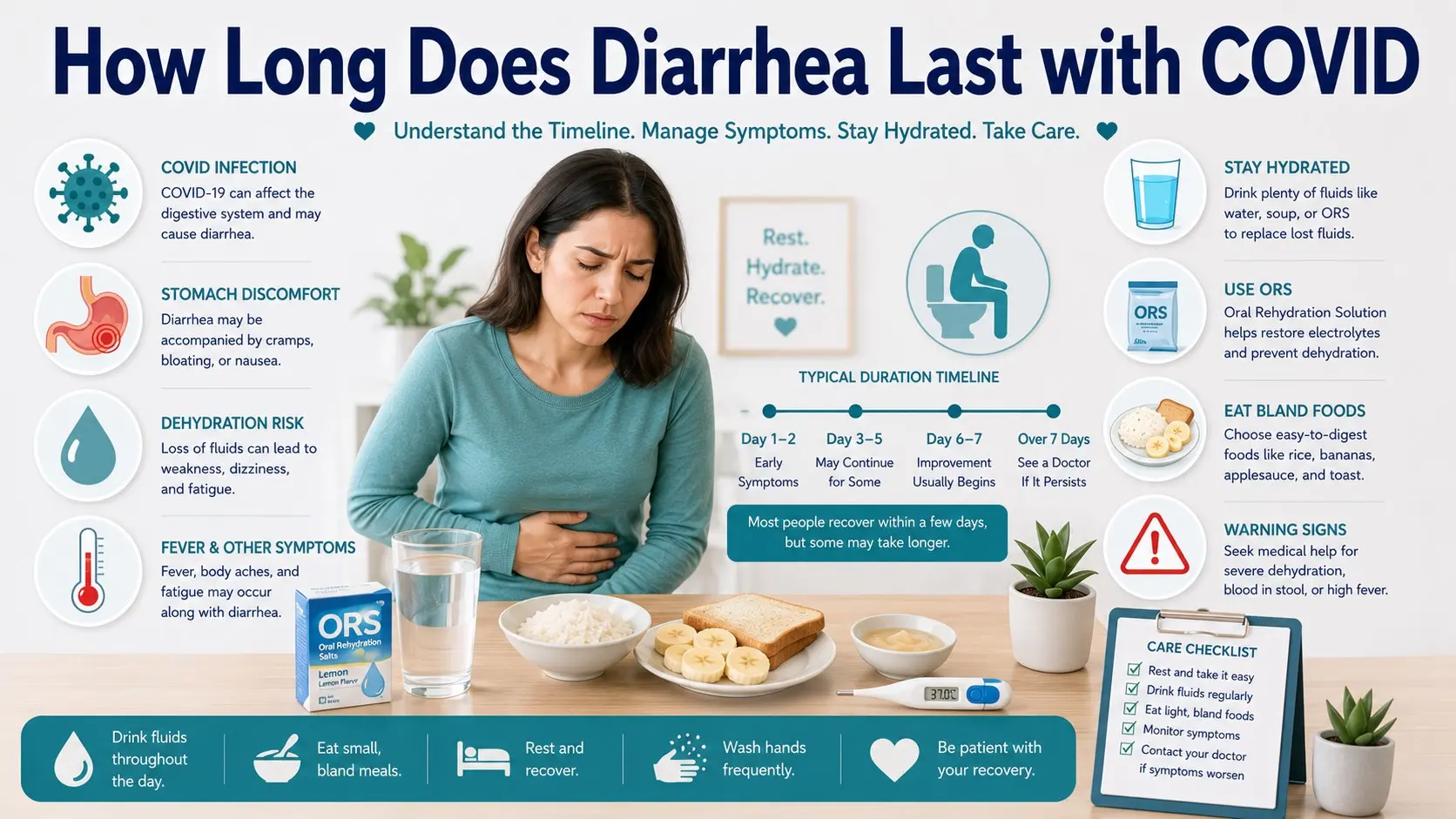
For many people, COVID diarrhea lasts a few days.
Some studies found it lasts about 4 to 5 days on average.
But it can last longer.
It can also come from another cause, like stomach flu, food poisoning, medicine, stress, or another infection.
This guide explains how long COVID diarrhea may last, why it happens, how to care for it, what to eat, what to avoid, and when to call a doctor.
For more help, visit our Digestive Health & Gut Hub, Infections & Immune Health Hub, First Aid & Home Remedies Hub, Medical Tests & Screenings Hub, Lung & Respiratory Health Hub, and Health Hub.
Medical note: This article is for education only. It does not diagnose or treat COVID-19, diarrhea, dehydration, food poisoning, norovirus, inflammatory bowel disease, long COVID, medication side effects, or any medical condition. Get urgent medical help for severe dehydration, trouble breathing, chest pain, new confusion, fainting, blood in stool, black stool, severe belly pain, high fever, blue lips, or if a baby, older adult, pregnant person, or high-risk person is getting worse.
Quick Answer: How Long Does Diarrhea Last with COVID?
How Long Does Diarrhea Last with COVID?
For many people, it lasts a few days.
In studies, COVID diarrhea often lasted around 4 to 5 days on average.
Some people had diarrhea for 1 to 14 days.
But every person is different.
Diarrhea may last longer if you have:
- Long COVID
- Another stomach infection
- Food poisoning
- Medication side effects
- Antibiotic-related diarrhea
- Dehydration
- Irritable bowel syndrome
- Inflammatory bowel disease
- A weak immune system
- Ongoing fever or illness
Call a doctor if diarrhea lasts more than 2 days without improvement, is severe, or comes with warning signs.
Can COVID Cause Diarrhea?
Yes.
COVID can cause diarrhea in some people.
It can also cause other digestive symptoms.
These may include:
- Nausea
- Vomiting
- Stomach pain
- Loss of appetite
- Loose stool
- Watery stool
- Bloating
- Cramping
Some people get gut symptoms before cough or fever.
Some get them with other COVID symptoms.
Some get them after other symptoms start.
Why Does COVID Cause Diarrhea?
COVID can affect more than the lungs.
It can affect the digestive system too.
Diarrhea may happen because of:
- Gut irritation from the virus
- Inflammation
- Changes in gut bacteria
- Fever and fluid loss
- Eating less
- Stress on the body
- Medicine side effects
- Antibiotics or antivirals in some people
- Another infection at the same time
This is why it is not always easy to know if diarrhea is from COVID alone.
COVID Diarrhea Timeline
The timeline can vary.
Day 1 to Day 3
Diarrhea may start early.
It may come with nausea, fever, sore throat, body aches, or tiredness.
Some people only have gut symptoms at first.
Day 3 to Day 7
For many people, diarrhea starts to improve.
Hydration matters most during this time.
Food may still feel hard.
After 1 Week
If diarrhea continues after a week, check for other causes.
Call a doctor if symptoms are not improving.
After 2 Weeks
Diarrhea for 2 weeks or more should be reviewed.
Your doctor may check for infection, medicine side effects, gut disease, or post-COVID issues.
After 4 Weeks
Diarrhea that lasts for weeks may be part of a longer recovery in some people.
It may also be long COVID.
But do not assume.
Get medical review.
When COVID Diarrhea May Not Be COVID
Diarrhea during a COVID infection may have another cause.
Possible causes include:
- Norovirus
- Food poisoning
- Traveler’s diarrhea
- Antibiotic side effect
- New medicine
- Too much magnesium
- Too much vitamin C
- Lactose intolerance
- Stress
- IBS flare
- Inflammatory bowel disease flare
- Celiac disease
- Gallbladder or pancreas problems
If symptoms are severe, bloody, or long-lasting, get checked.
What COVID Diarrhea May Feel Like
COVID diarrhea may be mild or strong.
You may have:
- Loose stool
- Watery stool
- More trips to the bathroom
- Belly cramps
- Urgency
- Nausea
- Low appetite
- Fatigue
- Fever
- Body aches
Blood in stool is not typical and needs medical advice.
Black stool also needs care.
Red Flags: When to Call a Doctor
Call a doctor if diarrhea:
- Lasts more than 2 days in an adult without improvement
- Lasts more than 24 hours in a young child
- Is very frequent
- Stops you from drinking fluids
- Comes with repeated vomiting
- Comes with severe belly pain
- Comes with rectal pain
- Comes with fever
- Comes with blood or pus
- Comes with black stool
- Causes dizziness
- Causes very little urine
- Happens in pregnancy
- Happens in an older adult
- Happens in a person with a weak immune system
Do not wait if you feel worse.
Emergency Warning Signs
Get urgent help now if diarrhea comes with:
- Trouble breathing
- Chest pain or chest pressure
- New confusion
- Fainting
- Cannot wake or stay awake
- Blue, gray, or pale lips or skin
- Severe dehydration
- No urine or very little urine
- Severe weakness
- Blood in stool
- Black tarry stool
- Severe belly pain
- High fever and feeling very unwell
These signs can be serious.
Call emergency services.
Signs of Dehydration
Diarrhea can make you lose fluid and salts.
This can lead to dehydration.
Signs include:
- Thirst
- Dry mouth
- Dark urine
- Peeing less than usual
- Dizziness
- Weakness
- Fast heartbeat
- Dry skin
- Headache
- Confusion
- Sleepiness
Babies, older adults, pregnant people, and people with chronic illness can dehydrate faster.
What to Do at Home
Mild diarrhea can often be managed at home.
The main goal is to prevent dehydration.
1. Drink Fluids Often
Take small sips.
Do not wait until you feel very thirsty.
Good choices may include:
- Water
- Oral rehydration solution
- Broth
- Diluted juice
- Weak tea
- Ice chips
- Electrolyte drinks if needed
Ask a doctor about fluids if you have heart, kidney, or liver disease.
2. Use Oral Rehydration if Needed
Oral rehydration solution can replace fluid and salts.
This may help if diarrhea is frequent.
It may be especially useful for children, older adults, and high-risk people.
Use it as directed.
3. Eat Small Meals
You do not need to force food.
Start small.
Try bland foods if they feel okay.
Options may include:
- Rice
- Banana
- Toast
- Crackers
- Applesauce
- Soup
- Boiled potatoes
- Oatmeal
- Plain pasta
- Lean chicken if tolerated
Return to normal food slowly as you improve.
4. Rest
Your body needs energy to recover.
Rest if you feel weak.
Do not push hard exercise while you have diarrhea, fever, or dehydration.
5. Track Symptoms
Write down:
- How many stools per day
- Stool color
- Vomiting
- Fever
- Fluid intake
- Urine amount
- Belly pain
- Medicine use
- COVID test date
- Other symptoms
This helps if you need a doctor visit.
What Not to Eat or Drink at First
Some foods can make diarrhea worse.
During active diarrhea, try to limit:
- Alcohol
- Greasy food
- Very spicy food
- Large meals
- Lots of dairy if it worsens symptoms
- Too much coffee
- Sugary drinks
- Very high-fiber meals at first
- Artificial sweeteners that trigger diarrhea
Add foods back slowly.
Your gut may need time.
Should You Take Anti-Diarrhea Medicine?
Ask a doctor or pharmacist first.
Some people can use medicine safely.
Others should avoid it.
Do not use anti-diarrhea medicine if you have:
- Blood in stool
- Black stool
- High fever
- Severe belly pain
- Suspected food poisoning
- Possible C. diff infection
- Diarrhea after antibiotics
- Severe dehydration
Do not give adult diarrhea medicine to children unless a clinician says it is safe.
COVID Treatment and Diarrhea
Some people with COVID may qualify for antiviral treatment.
This is more important for people at high risk of severe illness.
COVID treatment works best when started early.
Ask a doctor quickly if you test positive and are high risk.
Tell your doctor if you have diarrhea, vomiting, kidney disease, liver disease, or take many medicines.
Some medicines can interact with COVID treatments.
Can COVID Diarrhea Be Long COVID?
Sometimes digestive symptoms can last after COVID.
Long COVID can include diarrhea, stomach pain, and constipation.
Long COVID is not the only possible cause of long diarrhea.
Other causes must be checked too.
See a doctor if diarrhea lasts for weeks, keeps returning, or affects weight, sleep, work, or daily life.
How to Tell COVID Diarrhea from Stomach Flu
It can be hard.
COVID, norovirus, and food poisoning can overlap.
Clues that may suggest COVID include:
- Positive COVID test
- Recent COVID exposure
- Sore throat
- Cough
- Fever
- Body aches
- Runny nose
- Fatigue
- Loss or change of smell or taste
Clues that may suggest stomach bug or food poisoning include:
- Sudden vomiting
- Several people sick after the same meal
- Watery diarrhea after food exposure
- Symptoms after travel
- Severe stomach cramps
Testing is the best way to know if COVID is involved.
Can Children Get COVID Diarrhea?
Yes.
Children can get diarrhea with COVID.
But children can also get diarrhea from many other viruses.
Call a doctor if a child has:
- Diarrhea lasting more than 24 hours
- Signs of dehydration
- No tears when crying
- Very little urine
- Dry mouth
- Sleepiness or low energy
- Blood in stool
- High fever
- Repeated vomiting
- Severe belly pain
- Symptoms in a baby under 3 months
Do not give anti-diarrhea medicine to children unless a healthcare professional says so.
COVID Diarrhea in Older Adults
Older adults can dehydrate faster.
They may also have more risk from COVID.
Call a doctor early if an older adult has diarrhea with:
- Weakness
- Confusion
- Dizziness
- Little urine
- Poor fluid intake
- Fever
- Shortness of breath
- Falls
- Many medicines
- Heart or kidney disease
Do not wait for severe symptoms.
COVID Diarrhea During Pregnancy
Pregnancy needs extra care.
Call a healthcare professional if you are pregnant and have COVID with diarrhea.
Get help faster if you have:
- Dehydration
- Fever
- Repeated vomiting
- Severe belly pain
- Reduced fetal movement
- Dizziness
- Shortness of breath
- Chest pain
- Bleeding
Do not take medicines without pregnancy-safe advice.
COVID Diarrhea and Antibiotics
Antibiotics do not treat COVID.
COVID is caused by a virus.
Antibiotics only treat certain bacterial infections.
Antibiotics can also cause diarrhea.
Call a doctor if diarrhea starts after antibiotics, especially if it is watery, severe, or comes with fever or belly pain.
COVID Diarrhea and Probiotics
Some people ask about probiotics.
Probiotics may help some types of diarrhea.
But they are not right for everyone.
Ask a doctor first if you:
- Have a weak immune system
- Are very sick
- Have a central line
- Are pregnant
- Are you giving them to a baby
- Have a serious gut disease
Food and fluids are still the main care for mild diarrhea.
How to Prevent Spreading Germs
COVID can spread through respiratory droplets and close contact.
Other diarrhea germs can spread through stool.
Good hygiene matters.
Try these steps:
- Wash hands often.
- Use soap and water after bathroom use.
- Clean bathroom surfaces.
- Do not prepare food for others while sick.
- Use separate towels if possible.
- Follow current local COVID guidance.
- Stay home while fever or strong symptoms are present.
- Mask if you must be around high-risk people.
Hand sanitizer helps with many germs, but soap and water are best after diarrhea.
When Can You Eat Normally Again?
Go slowly.
When diarrhea improves, add foods back.
Try:
- Normal meals in smaller portions
- Protein foods
- Cooked vegetables
- Fruit if tolerated
- Soup
- Rice or potatoes
- Yogurt only if dairy agrees with you
If a food makes diarrhea worse, pause it and try later.
What Not to Do
- Do not ignore dehydration.
- Do not take anti-diarrhea medicine with blood or fever unless a doctor says so.
- Do not take antibiotics for COVID diarrhea unless prescribed.
- Do not drink alcohol during active diarrhea.
- Do not force heavy meals.
- Do not ignore diarrhea in babies, older adults, or pregnancy.
- Do not assume all diarrhea during COVID is from COVID.
- Do not delay care for severe belly pain.
- Do not ignore black stool.
- Do not skip COVID treatment advice if you are high risk.
Simple 7-Day COVID Diarrhea Care Plan
This plan does not replace medical care.
It helps you track and recover safely.
Day 1: Start Fluids
Take small sips often. Watch urine color and amount.
Day 2: Use Bland Food
Try rice, toast, banana, crackers, soup, or potatoes if hungry.
Day 3: Check Improvement
If diarrhea is not improving, call a doctor.
Day 4: Review Medicines
Ask if any medicine could be causing diarrhea.
Day 5: Add Food Slowly
Return to normal meals in small portions.
Day 6: Watch for Long Symptoms
Track fatigue, belly pain, stool changes, and appetite.
Day 7: Book Care if Needed
Call a doctor if diarrhea continues, returns, or affects daily life.
Daily Checklist
- How many times did I have diarrhea today?
- Am I drinking enough?
- Am I peeing normally?
- Is my urine dark?
- Do I feel dizzy?
- Do I have fever?
- Do I have blood or black stool?
- Do I have severe belly pain?
- Am I vomiting?
- Am I high risk for severe COVID?
- Do I need to call a doctor?
Questions to Ask Your Doctor
- Is this likely from COVID?
- Could this be food poisoning or another infection?
- Do I need a stool test?
- Do I need a COVID test?
- Do I need oral rehydration solution?
- Can I take anti-diarrhea medicine?
- Could my medicine be causing diarrhea?
- Do I qualify for COVID treatment?
- What should I eat?
- What symptoms mean urgent care?
- Could this be long COVID?
- When should I follow up?
FAQ
How Long Does Diarrhea Last with COVID?
How Long Does Diarrhea Last with COVID varies by person. Many cases last a few days. Studies have reported an average of around 4 to 5 days, but some people may have diarrhea for 1 to 14 days or longer.
Can COVID cause diarrhea without a cough?
Yes. Some people may have digestive symptoms like diarrhea, nausea, vomiting, or stomach pain before breathing symptoms or without strong cough symptoms. Testing can help confirm COVID.
When should I worry about COVID diarrhea?
Worry if diarrhea is severe, lasts more than 2 days without improvement, causes dehydration, or comes with blood, black stool, severe belly pain, high fever, repeated vomiting, dizziness, or little urine.
Can COVID diarrhea last for weeks?
It can in some people, but diarrhea for weeks should be checked. It may be long COVID, another infection, medicine side effects, IBS, inflammatory bowel disease, or another gut problem.
What helps with diarrhea from COVID?
Fluids, oral rehydration solution, small bland meals, rest, and symptom tracking may help mild cases. Ask a doctor before using anti-diarrhea medicine, especially with fever, blood, or severe pain.
What should I eat with COVID diarrhea?
Try small amounts of bland foods such as rice, banana, toast, crackers, soup, potatoes, oatmeal, or plain pasta. Drink fluids often. Add normal food back slowly as symptoms improve.
Can COVID medicine cause diarrhea?
Some medicines can cause diarrhea as a side effect. COVID treatments can also interact with other medicines. Ask your doctor or pharmacist if diarrhea starts after a new medicine.
Is diarrhea a long COVID symptom?
Yes. Digestive symptoms such as diarrhea, stomach pain, or constipation can happen with long COVID. But ongoing diarrhea should be evaluated to rule out other causes.
Can children get diarrhea with COVID?
Yes. Children can have diarrhea with COVID or with other common viruses. Call a doctor if a child has diarrhea for more than 24 hours, signs of dehydration, blood in stool, fever, or severe belly pain.
Do I need antibiotics for COVID diarrhea?
No, antibiotics do not treat COVID because COVID is caused by a virus. Antibiotics are only used for certain bacterial infections and can sometimes cause diarrhea.
Related Reading
- Digestive Health & Gut Hub
- Infections & Immune Health Hub
- First Aid & Home Remedies Hub
- Medical Tests & Screenings Hub
- Stomach Gurgling and Gas: Causes and Relief
- Stomach Pain After Eating: Causes and When to Worry
- Stomach Pain, Gurgling, Gas, and Diarrhea
- Constipation Exercises: 10 Simple Moves That May Help
- Healthy Lifestyle Roadmap: 14 Practical Tips for Better Health
- Health Hub
Key Takeaway
How Long Does Diarrhea Last with COVID?
For many people, it lasts a few days.
Studies suggest around 4 to 5 days on average.
But it can last longer.
Hydration is the main care step.
Use fluids, oral rehydration if needed, bland food, and rest.
Get medical help if diarrhea lasts more than 2 days without improvement, causes dehydration, or comes with blood, black stool, severe belly pain, high fever, repeated vomiting, dizziness, little urine, trouble breathing, chest pain, or confusion.
References and Sources
- CDC — Clinical Presentation of COVID-19
- CDC — Symptoms of COVID-19
- CDC — Long COVID Signs and Symptoms
- NHS — COVID-19 Symptoms and What to Do
- NIDDK — Symptoms and Causes of Diarrhea
Additional Research Sources
- Digestive Symptoms in COVID-19 Patients with Mild Disease
- Attaching Clinical Significance to COVID-19-Associated Diarrhea
- MedlinePlus — Diarrhea
- Mayo Clinic — Diarrhea: When to See a Doctor
- NHS — Diarrhoea and Vomiting

Health & wellness writer with 30+ years of experience in nutrition, fitness, and healthy aging. Founder of NextFitLife.com — evidence-based health guidance.