Published on: June 2026
Updated on: October 20, 2026
Mediterranean diet and heart health have one of the strongest evidence bases in nutrition.
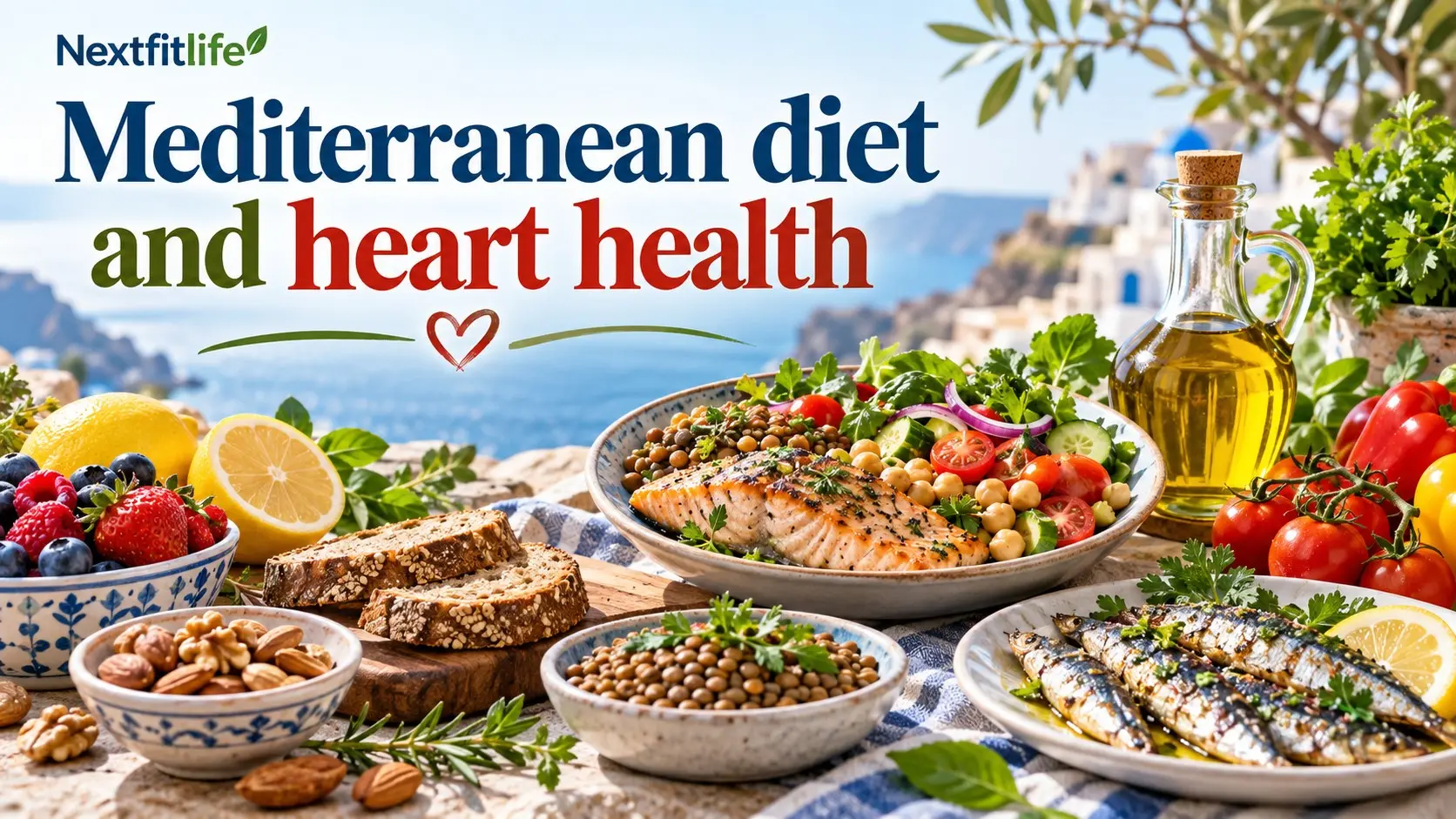
This eating pattern centers on vegetables, fruit, beans, lentils, whole grains, nuts, seeds, fish, and olive oil. It also limits processed meat, foods high in saturated fat, added sugar, excess sodium, and many highly processed foods.
One large randomized trial, PREDIMED, found about a 30 percent relative reduction in a combined outcome of heart attack, stroke, or cardiovascular death in adults at high cardiovascular risk who followed Mediterranean diets supplemented with extra virgin olive oil or nuts.
That does not mean every person will cut their personal heart attack risk by exactly 30 percent. Your starting risk, medicines, smoking status, blood pressure, cholesterol, diabetes, activity, sleep, and genetics still matter.
Quick answer: The Mediterranean diet is one of the best supported eating patterns for cardiovascular health. It emphasizes whole plant foods, fish, nuts, and unsaturated fats such as olive oil while reducing processed meat, added sugar, excess sodium, and highly processed foods. The strongest evidence supports the overall pattern, not one miracle ingredient.
Medical note: This article is for general information and education. It does not replace medical advice, diagnosis, or treatment.
I am not a dermatologist or a doctor, and this content does not replace professional medical advice. What I share comes from real life experience, extensive research, and consultation with healthcare providers. Always consult qualified medical professionals for diagnosis and treatment of any health condition.
Heart Attack and Stroke Symptoms Still Need Emergency Care
A healthy diet can lower long term cardiovascular risk. It cannot treat an active heart attack or stroke.
Seek emergency help for possible heart attack symptoms such as:
- Chest pressure, squeezing, heaviness, or pain
- Shortness of breath
- Pain spreading to the arm, shoulder, jaw, back, or upper abdomen
- Cold sweat
- Sudden nausea
- Lightheadedness
- Sudden unusual weakness
For possible stroke, think FAST:
- Face: sudden facial droop
- Arm: sudden weakness or numbness
- Speech: sudden trouble speaking
- Time: call emergency services immediately
Table of Contents
- What the Mediterranean diet really is
- What the 30 percent figure means
- The PREDIMED trial explained
- 11 strong heart benefits
- Foods to eat most often
- Olive oil and heart health
- Nuts and seeds
- Fish and seafood
- Beans, lentils, and whole grains
- What to limit
- Red meat and processed meat
- Alcohol and red wine
- Mediterranean diet and cholesterol
- Mediterranean diet and blood pressure
- Mediterranean diet and diabetes
- Weight loss and calories
- Simple plate method
- 7 day meal plan
- Budget friendly approach
- Common myths
- Frequently asked questions
- References and Sources
What Is the Mediterranean Diet?
There is no single official Mediterranean menu.
Countries around the Mediterranean have different foods, cultures, and cooking traditions.
The American Heart Association describes a Mediterranean eating pattern as one that commonly includes:
- Vegetables
- Fruit
- Beans and lentils
- Whole grains
- Nuts and seeds
- Olive oil
- Fish and seafood
- Moderate amounts of poultry, eggs, and dairy
- Less red and processed meat
- Fewer sweets and highly processed foods
The goal is not to eat Italian or Greek food every day.
You can build the same pattern with local foods from Egypt, the Middle East, Africa, Asia, Europe, or the Americas.
What matters most is the food pattern.
What Does the Famous 30 Percent Number Actually Mean?
This number is often repeated online without enough context.
In PREDIMED, people at high cardiovascular risk were assigned to one of three dietary groups:
- A Mediterranean diet supplemented with extra virgin olive oil
- A Mediterranean diet supplemented with mixed nuts
- A control diet that received advice to reduce dietary fat
The Mediterranean groups had roughly a 30 percent lower relative risk of the combined primary outcome of:
- Heart attack
- Stroke
- Cardiovascular death
This was a combined cardiovascular outcome.
It should not be translated into the claim that everyone who starts a Mediterranean diet lowers their individual heart attack risk by exactly 30 percent.
Relative Risk vs Absolute Risk
This distinction matters.
If a treatment lowers risk from 10 percent to 7 percent, that is a 30 percent relative reduction but a 3 percentage point absolute reduction.
Someone starting with a much lower cardiovascular risk would usually have a smaller absolute benefit.
Your personal benefit depends on your starting risk.
The PREDIMED Trial: Why It Matters and Why Context Matters Too
The PREDIMED trial enrolled 7,447 adults in Spain who were at high cardiovascular risk but had not yet had a major cardiovascular event when they entered the trial.
The study became famous because it measured real cardiovascular events rather than only cholesterol or body weight.
However, there is an important history that should not be hidden.
The original PREDIMED report was later withdrawn and republished after researchers identified problems with random assignment at some study sites.
The corrected analysis still supported a cardiovascular benefit from the Mediterranean diet intervention.
This makes PREDIMED important evidence, but it should be described accurately rather than as perfect proof that one diet guarantees a fixed result for everyone.
11 Strong Benefits of the Mediterranean Diet for Heart Health
1. It Can Lower Major Cardiovascular Event Risk
The strongest reason this eating pattern receives attention is its association with fewer major cardiovascular events.
PREDIMED provides randomized trial evidence in people at high cardiovascular risk.
More recent reviews also support Mediterranean style eating for both primary and secondary cardiovascular prevention.
2. It Replaces Saturated Fat With Unsaturated Fat
Olive oil, nuts, seeds, and fish provide more unsaturated fats.
They can replace butter, fatty meat, and foods high in saturated fat.
The replacement matters.
Simply adding olive oil to a diet that remains high in saturated fat and excess calories is not the same as improving the whole pattern.
3. It Can Support Healthier LDL Cholesterol
Foods rich in soluble fiber and unsaturated fats can help improve LDL cholesterol.
Useful foods include:
- Beans
- Lentils
- Oats
- Barley
- Nuts
- Seeds
- Olive oil
However, diet does not replace statins or other cholesterol medicine when those treatments are indicated.
4. It Supports Better Blood Pressure Control
A Mediterranean style pattern is naturally rich in vegetables, fruit, beans, nuts, and minimally processed foods.
That can increase potassium and lower excess sodium when meals are prepared wisely.
These changes can support healthier blood pressure.
5. It Can Improve Blood Sugar Patterns
Whole grains, beans, vegetables, nuts, and minimally processed foods are often more filling and contain more fiber than refined carbohydrates.
This can support glucose control and lower the risk of type 2 diabetes as part of an overall healthy lifestyle.
6. It Provides More Dietary Fiber
Dietary fiber supports heart health in several ways.
It can:
- Help lower LDL cholesterol
- Improve fullness
- Support bowel health
- Improve glucose regulation
- Support a healthy gut microbiome
7. It Makes Plant Foods the Main Part of More Meals
A Mediterranean diet is strongly plant forward.
That does not mean vegan.
It means vegetables, fruit, whole grains, beans, lentils, nuts, and seeds make up a large share of what you eat.
8. It Can Reduce Reliance on Processed Meat
Processed meat can add sodium, saturated fat, and other compounds that make it a poor choice for frequent eating.
Replacing some processed meat meals with beans, lentils, fish, or poultry improves the overall food pattern.
9. It Fits Stroke Prevention Guidance
The American Heart Association and American Stroke Association recommend Mediterranean style eating as part of primary stroke prevention.
The 2024 stroke prevention guideline specifically highlights Mediterranean eating, especially patterns rich in nuts and olive oil.
10. It Works Without a Special Supplement
You do not need a Mediterranean diet pill.
The cardiovascular benefit comes from the combined eating pattern.
No supplement reproduces the full mix of fiber, unsaturated fats, minerals, plant compounds, protein, and food substitutions created by a good diet.
11. It Can Be Maintained Long Term
The pattern allows many foods.
You can eat:
- Bread
- Rice
- Pasta
- Potatoes
- Fruit
- Yogurt
- Fish
- Chicken
- Beans
- Nuts
- Olive oil
The goal is not perfect restriction.
The goal is a better pattern you can keep.
Mediterranean Diet Foods at a Glance
| Food Group | Choose More Often | Why It Fits |
|---|---|---|
| Vegetables | Tomatoes, leafy greens, peppers, carrots, aubergine, courgette, okra | Fiber, potassium, vitamins, plant compounds |
| Fruit | Citrus, berries, apples, pears, grapes, pomegranate | Fiber and micronutrients |
| Legumes | Lentils, chickpeas, beans, fava beans | Plant protein and fiber |
| Whole grains | Oats, barley, brown rice, whole grain bread, bulgur | Fiber and slower digestion than refined grains |
| Nuts and seeds | Walnuts, almonds, pistachios, sesame, seeds | Unsaturated fats, protein, fiber, minerals |
| Fish | Sardines, salmon, mackerel, trout, other seafood | Protein and marine omega 3 fats in oily fish |
| Cooking fat | Extra virgin olive oil and other unsaturated plant oils | Replaces foods high in saturated fat |
Extra Virgin Olive Oil and Heart Health
Extra virgin olive oil is one of the signature foods in Mediterranean eating.
It is rich in monounsaturated fat and contains plant compounds such as polyphenols.
The useful question is not whether olive oil is magical.
The useful question is what it replaces.
Replacing butter, ghee, shortening, or other foods high in saturated fat with olive oil can improve the quality of dietary fat.
Adding large amounts of olive oil on top of an already high calorie diet is different.
Do You Need Several Tablespoons Every Day?
No universal number works for everyone.
Your energy needs, body weight goals, food intake, and medical conditions matter.
Olive oil is calorie dense.
Use it as a primary cooking and dressing fat rather than treating it like a medicine that must be consumed by the spoonful.
Nuts and Seeds
Nuts provide unsaturated fat, fiber, protein, magnesium, and other nutrients.
Good choices include:
- Walnuts
- Almonds
- Pistachios
- Hazelnuts
- Peanuts
- Sesame
- Seeds
Choose unsalted or lightly salted options when possible.
A small handful can make a useful snack or meal addition.
Fish and Seafood
Fish can replace red or processed meat while providing high quality protein.
Oily fish also provides EPA and DHA omega 3 fats.
Examples include:
- Sardines
- Salmon
- Mackerel
- Trout
- Herring
The American Heart Association commonly recommends eating fish twice per week as part of a heart healthy diet.
You do not need an expensive fish.
Canned sardines or salmon can be practical choices. Check sodium if you are managing high blood pressure.
Do Omega 3 Fats From Fish Lower Triglycerides by 30 Percent?
High dose prescription omega 3 medicines can lower triglycerides in selected patients.
That is not the same as saying two fish meals per week will lower everyone's triglycerides by 30 percent.
Fish is recommended because it fits a healthy dietary pattern and can replace less healthy protein sources.
Do not turn a useful food recommendation into an exact drug like promise.
Beans and Lentils: One of the Best Mediterranean Staples
Beans and lentils are inexpensive and easy to use.
They provide:
- Protein
- Fiber
- Potassium
- Magnesium
- Folate
Examples that fit easily into everyday meals include:
- Lentil soup
- Chickpea salad
- Hummus
- White bean stew
- Fava beans
- Lentils with rice and vegetables
A meal built around legumes can replace a meat based meal without leaving you hungry.
Whole Grains Matter
Whole grains keep more of the original grain structure and fiber.
Good options include:
- Oats
- Barley
- Bulgur
- Brown rice
- Whole grain bread
- Whole grain pasta
You do not need to ban white rice or white bread forever.
The practical goal is to make whole grain choices more common.
What Should You Limit?
The Mediterranean pattern is defined partly by what appears less often.
Limit:
- Processed meat
- Frequent large portions of fatty red meat
- Sugary drinks
- Many highly processed snacks
- Foods high in saturated fat
- Large amounts of added sugar
- Excess sodium
Read our Worst Foods for Heart Health guide for practical swaps.
Does the Mediterranean Diet Ban Red Meat?
No.
It simply gives red meat a smaller role than vegetables, legumes, fish, nuts, whole grains, and other plant foods.
Processed meat should be limited more strongly.
This includes foods such as:
- Sausages
- Bacon
- Salami
- Many deli meats
When you do eat red meat, portion size and overall frequency matter.
Do You Need to Drink Red Wine?
No.
This is an important 2026 update.
Wine is not required for a Mediterranean diet.
The American Heart Association's 2026 dietary guidance says that if you do not drink alcohol, do not start.
Alcohol can raise blood pressure and is linked with several health risks.
Do not begin drinking wine because you think it will protect your heart.
Read our Alcohol and Heart Health guide for more detail.
Mediterranean Diet and Cholesterol
This eating pattern can improve the foods that influence cholesterol.
It usually means:
- More soluble fiber
- More unsaturated fat
- Less processed meat
- Less saturated fat
- More whole plant foods
These changes can support lower LDL cholesterol.
However, diet may not be enough when LDL is very high, inherited, or part of high cardiovascular risk.
Use prescribed cholesterol medicine when your clinician recommends it.
Mediterranean Diet and Blood Pressure
A Mediterranean style pattern can support healthy blood pressure, but sodium still matters.
A Mediterranean meal can become very salty if it contains large amounts of:
- Olives
- Pickles
- Feta or salty cheese
- Processed meat
- Ready made sauces
- Packaged bread
Use herbs, lemon, garlic, pepper, cumin, coriander, and other spices to add flavor without relying only on salt.
If blood pressure is your main goal, DASH is another highly supported dietary pattern.
Read our High Blood Pressure guide.
Mediterranean Diet and Type 2 Diabetes
Mediterranean eating can fit diabetes prevention and diabetes care.
The pattern provides high fiber carbohydrate sources such as:
- Beans
- Lentils
- Whole grains
- Whole fruit
- Vegetables
It also limits sugary drinks and many refined foods.
Portion size still matters when glucose needs careful management.
If you use insulin or glucose lowering medicine, changes in food intake can affect blood sugar and medication needs.
Read our Diabetes and Heart Disease guide.
Does the Mediterranean Diet Cause Weight Loss?
It can, but weight loss is not automatic.
Olive oil, nuts, seeds, cheese, bread, and other Mediterranean foods can provide many calories.
If you eat more energy than your body uses, you can gain weight on a Mediterranean diet.
For weight loss, keep the quality of the food pattern while adjusting portions and total energy intake.
That usually works better than removing healthy foods simply because they contain fat.
A Simple Mediterranean Plate
You do not need to count every gram.
A practical plate can look like this:
| Plate Area | Foods | Examples |
|---|---|---|
| About half | Vegetables | Salad, roasted vegetables, leafy greens, tomatoes, peppers |
| About one quarter | Protein | Fish, beans, lentils, chickpeas, chicken |
| About one quarter | Whole grain or starchy food | Bulgur, brown rice, whole grain bread, potato |
| Added fat | Unsaturated fat | Olive oil, nuts, seeds |
A Practical 7 Day Mediterranean Meal Plan
| Day | Breakfast | Lunch | Dinner |
|---|---|---|---|
| 1 | Oats, yogurt, berries, walnuts | Lentil soup with salad and whole grain bread | Grilled fish, vegetables, bulgur |
| 2 | Whole grain toast, tomato, egg, fruit | Chickpea salad with olive oil and lemon | Chicken, roasted vegetables, brown rice |
| 3 | Plain yogurt, fruit, almonds | Fava beans, salad, whole grain bread | Bean stew with vegetables and barley |
| 4 | Oats with apple and cinnamon | Hummus, vegetables, whole grain bread, fruit | Sardines, tomato salad, potato, greens |
| 5 | Eggs, tomato, cucumber, whole grain toast | Lentil and vegetable bowl | Whole grain pasta with tomato, vegetables, beans |
| 6 | Yogurt, oats, fruit, seeds | Tuna or bean salad with olive oil | Chicken and vegetable tray bake with brown rice |
| 7 | Whole grain bread, tahini, fruit | Bean soup with mixed salad | Baked fish, lentils, vegetables |
Portions should match your appetite, body size, activity, health conditions, and weight goals.
Mediterranean Diet on a Budget
You do not need salmon, imported olive oil, or expensive organic foods.
Low cost options include:
- Lentils
- Beans
- Fava beans
- Chickpeas
- Oats
- Seasonal vegetables
- Seasonal fruit
- Canned sardines
- Frozen vegetables
- Brown rice
- Bulgur
- Peanuts
Frozen and canned foods can fit well.
Choose products with less added salt and sugar when possible.
Do Frozen Vegetables Count?
Yes.
Frozen vegetables are often picked and frozen soon after harvest.
They can be practical, affordable, and nutritious.
The main thing to check is what has been added.
Plain frozen vegetables are different from vegetables packaged with creamy sauces, excess salt, or added fat.
Does Mediterranean Eating Require Organic Food?
No.
Organic food is not required for cardiovascular benefit.
Eating enough vegetables, fruit, beans, whole grains, nuts, and healthy protein matters far more than whether every item carries an organic label.
Mediterranean Diet vs DASH
Both are excellent heart healthy eating patterns.
| Feature | Mediterranean Style | DASH |
|---|---|---|
| Main emphasis | Plant foods, olive oil, nuts, fish | Blood pressure friendly eating with strong sodium focus |
| Vegetables and fruit | High | High |
| Whole grains | Encouraged | Encouraged |
| Nuts and legumes | Strong emphasis | Encouraged |
| Dairy | Moderate | Often emphasizes low fat dairy |
| Sodium | Limit excess sodium | A major focus |
You do not have to choose one forever.
A Mediterranean style diet can also be made lower in sodium.
Mediterranean Diet vs Low Fat Diet
A heart healthy diet does not need to be extremely low in total fat.
The type of fat matters.
A diet rich in olive oil, nuts, seeds, and fish can contain a moderate amount of fat while still being heart healthy.
The bigger goal is to replace saturated and trans fats with healthier unsaturated fats.
Does One Food Explain the Benefit?
No.
This is one of the most useful lessons from Mediterranean diet research.
Olive oil is helpful.
Fish is helpful.
Beans are helpful.
Nuts are helpful.
Vegetables are helpful.
But the strongest message is the pattern created when these foods replace less healthy choices.
What About Supplements?
A Mediterranean style diet does not require:
- Fish oil capsules
- Polyphenol pills
- Olive leaf extracts
- Resveratrol
- Vitamin packs
Some people need supplements for a diagnosed deficiency or specific medical reason.
That is different from using supplements as a substitute for food.
Read our Heart Health Supplements guide for an evidence based overview.
How to Start Without Changing Everything at Once
Week 1: Add One Vegetable to Lunch and Dinner
Do not begin with a long list of banned foods.
Begin by adding foods that improve the meal.
Week 2: Replace Some Saturated Fat
Use olive oil or another unsaturated plant oil more often instead of butter, ghee, or shortening.
Week 3: Add Two Legume Meals
Use beans, lentils, chickpeas, or fava beans as the main protein in two meals.
Week 4: Add Fish
Try fish twice during the week if it fits your health needs, culture, and budget.
Week 5: Upgrade Snacks
Replace some sweets or packaged snacks with fruit, plain yogurt, nuts, or vegetables.
Week 6: Review Drinks
Reduce sugary drinks.
Choose water, sparkling water without added sugar, tea, or coffee that fits your health needs.
Who Should Personalize the Mediterranean Diet?
The basic pattern is healthy for many people, but medical conditions can change the details.
Speak with a qualified healthcare professional or dietitian if you have:
- Chronic kidney disease
- Heart failure with fluid restrictions
- Diabetes treated with medicines that can cause low blood sugar
- Food allergies
- Swallowing problems
- Severe gastrointestinal disease
- Warfarin treatment
- Very high triglycerides
- Unintentional weight loss
- Pregnancy with special nutrition needs
For example, people with advanced kidney disease may need individual limits for potassium, phosphorus, protein, or fluid even though many Mediterranean foods are normally healthy.
Mediterranean Diet Myths Worth Dropping
Myth 1: The Diet Cuts Everyone's Heart Attack Risk by 30 Percent
No. PREDIMED found about a 30 percent relative reduction in a combined cardiovascular outcome among high risk adults. Individual benefit varies.
Myth 2: The PREDIMED Trial Was Perfect
No. The original report was republished after problems with randomization were identified. The corrected analysis still supported the main conclusion.
Myth 3: You Need Red Wine
No. You do not need alcohol for heart health. If you do not drink, current American Heart Association guidance says not to start.
Myth 4: Olive Oil Is Unlimited
No. Olive oil is a healthy fat, but it still provides calories.
Myth 5: Red Meat Is Forbidden
No. The pattern simply places more emphasis on plants, legumes, fish, and other protein sources while red and processed meat appear less often.
Myth 6: Mediterranean Food Has to Be Expensive
No. Lentils, beans, oats, seasonal vegetables, sardines, fava beans, and whole grains can build a very affordable Mediterranean style diet.
Myth 7: You Need Imported Mediterranean Food
No. Local foods can follow the same nutritional pattern.
Myth 8: It Works Because of One Superfood
No. The strongest evidence supports the whole dietary pattern.
Myth 9: Healthy Food Means Calories Do Not Matter
No. Energy balance still matters for body weight.
Myth 10: Diet Can Replace Heart Medicine
No. Healthy eating works alongside treatment for blood pressure, cholesterol, diabetes, and cardiovascular disease when medicine is needed.
Myth 11: You Must Follow the Diet Perfectly
No. Better adherence over time matters more than one imperfect meal.
Conclusion: Mediterranean Diet and Heart Health Work as a Pattern
Mediterranean diet and heart health are strongly linked because this eating pattern improves many parts of cardiovascular nutrition at the same time.
It replaces some saturated fat with unsaturated fat, adds fiber rich foods, increases vegetables and legumes, brings fish and nuts into the diet, and reduces reliance on processed meat, sugary drinks, and highly processed foods.
The famous 30 percent PREDIMED result is important, but it needs accurate context. It represents an approximate relative reduction in a combined cardiovascular outcome among people already at high cardiovascular risk, not a guaranteed 30 percent drop in every person's heart attack risk.
The practical lesson is much simpler.
Eat more vegetables, fruit, beans, lentils, whole grains, nuts, and fish. Use olive oil or other unsaturated oils in place of fats high in saturated fat. Reduce processed meat, added sugar, excess sodium, and highly processed foods. Do not start drinking alcohol for heart health.
Your next step: improve one meal today. Add vegetables, replace one processed meat with beans or fish, or switch a saturated fat source for an unsaturated one. Small changes that you keep are more valuable than a perfect diet that lasts one week.
Internal Links + Hub
- Heart Health 101
- Heart Healthy Diet
- Heart Healthy Foods and Cholesterol
- Worst Foods for Heart Health
- Heart Health Supplements
- Alcohol and Heart Health
- Diabetes and Heart Disease
- What Causes High Blood Pressure
- Heart Health and Hormones
About the Author
Adel Galal is a father of four, three sons and a daughter, and a grandfather of four, with 33 years of hands on parenting experience. He is the founder of Parnthub.com, based in Cairo, Egypt, where he shares practical guidance on feeding, development and family life from newborns to teenagers.
Adel is not a medical professional. Health articles cite trusted sources and are for general information only.
For more information about NextFitLife, its editorial approach, and content standards, visit the NextFitLife About Us page.
Frequently Asked Questions About Mediterranean Diet and Heart Health
Does the Mediterranean diet really reduce heart attacks by 30 percent?
The PREDIMED trial found roughly a 30 percent relative reduction in a combined outcome of heart attack, stroke, or cardiovascular death among adults at high cardiovascular risk. This does not mean every person will lower their individual heart attack risk by exactly 30 percent.
What are the main foods in a Mediterranean diet?
The pattern emphasizes vegetables, fruit, beans, lentils, whole grains, nuts, seeds, fish, olive oil, and other minimally processed foods. Poultry, eggs, and dairy can be included in moderate amounts, while processed meat and highly processed foods are limited.
Do I need extra virgin olive oil?
Extra virgin olive oil is a traditional Mediterranean fat and was used in PREDIMED. Other unsaturated plant oils can also fit heart healthy eating. The main goal is to replace foods high in saturated fat rather than simply adding more oil.
How much olive oil should I eat each day?
There is no universal amount that everyone needs. Use olive oil as a main cooking or dressing fat while keeping total energy intake suitable for your body weight and health goals.
Does the Mediterranean diet require red wine?
No. Wine is not required. Current American Heart Association guidance says that people who do not drink alcohol should not start for heart health.
Can the Mediterranean diet lower LDL cholesterol?
It can support healthier LDL levels because it emphasizes soluble fiber and unsaturated fats while reducing foods high in saturated fat. People with very high LDL or high cardiovascular risk may still need medication.
Is the Mediterranean diet good for high blood pressure?
Yes. The pattern can support blood pressure by emphasizing vegetables, fruit, legumes, nuts, and minimally processed foods. Sodium still matters, so salty cheese, processed foods, pickles, and sauces should be kept in check.
Is the Mediterranean diet good for diabetes?
Yes. A Mediterranean style pattern can fit diabetes prevention and treatment because it emphasizes fiber rich plant foods, healthy fats, and minimally processed carbohydrates. Portions and medicines still need individual adjustment.
Will I lose weight on a Mediterranean diet?
You may lose weight if your total energy intake is lower than your needs, but weight loss is not automatic. Olive oil, nuts, cheese, bread, and other healthy foods still contain calories.
Can I follow a Mediterranean diet without fish?
Yes. A plant forward Mediterranean pattern can use beans, lentils, nuts, seeds, eggs, dairy, or other suitable protein sources. People who avoid fish should make sure their overall diet still meets protein and nutrient needs.
Is the Mediterranean diet better than DASH?
Both are strongly supported heart healthy eating patterns. DASH places extra focus on sodium and blood pressure, while Mediterranean style eating strongly emphasizes olive oil, nuts, legumes, fish, vegetables, and other plant foods.
Can the Mediterranean diet replace cholesterol or blood pressure medicine?
No. Healthy eating is an important part of cardiovascular care, but it should not replace prescribed statins, blood pressure medicines, diabetes treatment, or other cardiovascular therapies when they are medically indicated.
References and Sources
- American Heart Association. 2026 Dietary Guidance to Improve Cardiovascular Health.https://professional.heart.org/en/science-news/2026-dietary-guidance-to-improve-cardiovascular-health/top-things-to-know
- American Heart Association. What Is the Mediterranean Diet?https://www.heart.org/en/healthy-living/healthy-eating/eat-smart/nutrition-basics/mediterranean-diet/
- Estruch R, et al. Primary Prevention of Cardiovascular Disease With a Mediterranean Diet Supplemented With Extra Virgin Olive Oil or Nuts. New England Journal of Medicine. Revised PREDIMED analysis.https://www.nejm.org/doi/full/10.1056/NEJMoa1800389
- American Heart Association and American Stroke Association. 2024 Guideline for the Primary Prevention of Stroke.https://professional.heart.org/en/science-news/2024-guideline-for-the-primary-prevention-of-stroke/top-things-to-know
- Hareer LW, et al. The Effectiveness of the Mediterranean Diet for Primary and Secondary Prevention of Cardiovascular Disease: An Umbrella Review.https://pubmed.ncbi.nlm.nih.gov/39143663/
- Volpe R, et al. Efficacy of Mediterranean Diet for the Prevention of Cardiovascular Disease: Systematic Review and Meta Analysis Featured in the Italian National Guidelines. Nutrition. 2026.https://pubmed.ncbi.nlm.nih.gov/41539166/
- Molani Gol R, Rafraf M. Effects of the Mediterranean Diet on the Secondary Prevention of Cardiovascular Diseases: A Systematic Review of Randomised Controlled Trials.https://pubmed.ncbi.nlm.nih.gov/40011219/
- American Heart Association. What Goes Into a Mediterranean Diet and How to Get Started.https://www.heart.org/en/news/2022/08/23/what-goes-into-a-mediterranean-diet-and-how-to-get-started
Medical disclaimer: I am not a dermatologist or a doctor, and this content does not replace professional medical advice. What I share comes from real life experience, extensive research, and consultation with healthcare providers. Always consult qualified medical professionals for diagnosis and treatment of any health condition.

Health & wellness writer with 30+ years of experience in nutrition, fitness, and healthy aging. Founder of NextFitLife.com — evidence-based health guidance.