Published: November 18, 2022
Last updated: September 20, 2026
Next review: September 2027, or sooner if major cholesterol, nutrition, or cardiovascular guidance changes.
Written and source checked by: Adel Galal, Founder and Lead Writer at NextFitLife
Medical review status: This article has not been medically reviewed by a cardiologist, lipid specialist, physician, pharmacist, or registered dietitian.
HDL is often called the good cholesterol.
That name can make one idea sound simple.
Raise HDL and your heart is safe.
Modern heart guidance is more careful than that.
HDL matters.
But it is only one part of your cholesterol picture.
Your LDL cholesterol matters.
Your triglycerides matter.
Your blood pressure matters.
Diabetes matters.
Smoking matters.
Family history matters.
Your overall cardiovascular risk matters most.
This is an important update to the old idea of searching for one food that will push HDL higher.
Some foods for increasing HDL cholesterol may support a healthier HDL level.
Others help mainly by lowering LDL or triglycerides.
Both can be good for your heart.
A heart healthy eating pattern matters more than one special food.
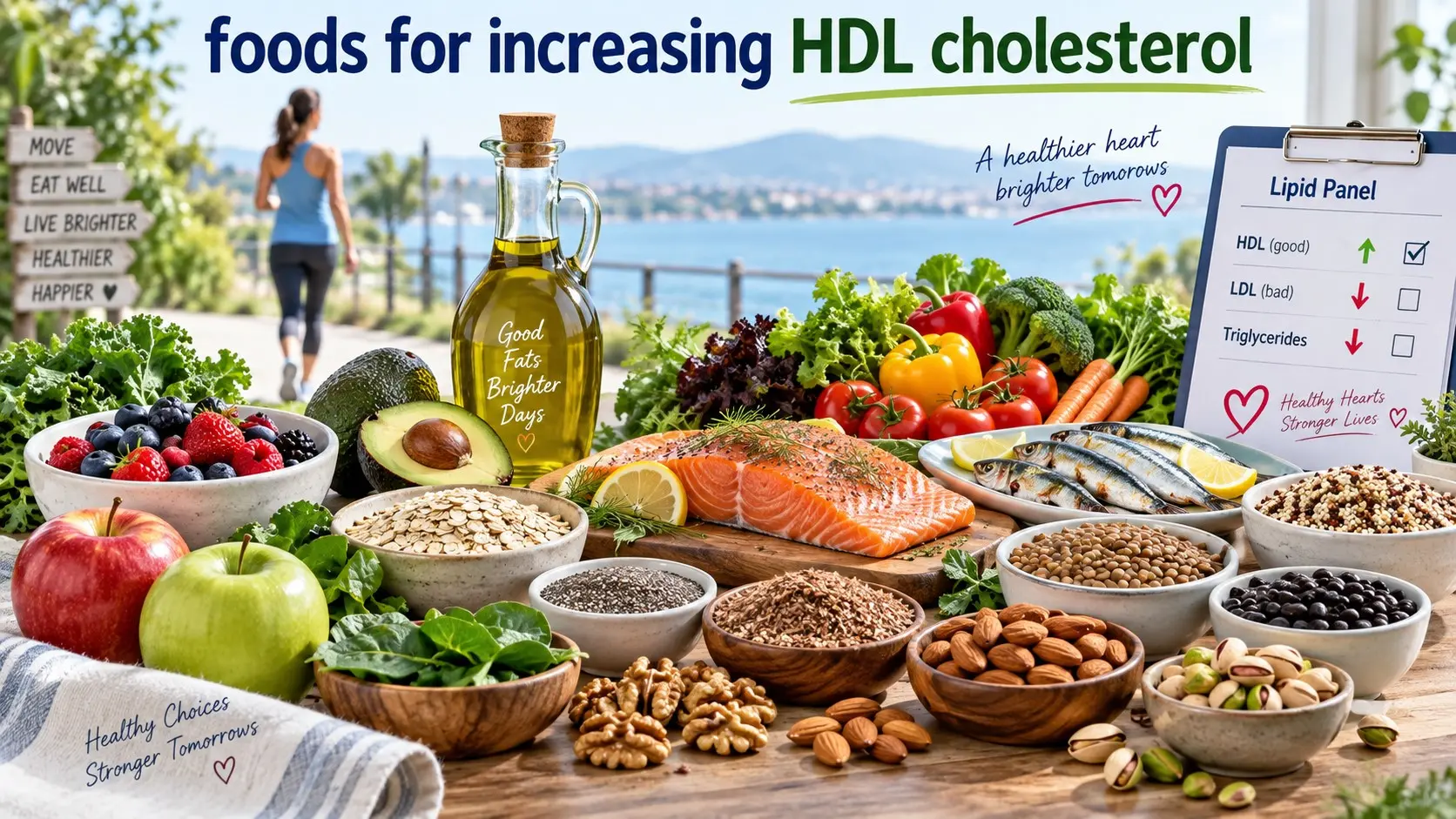
This guide explains 12 smart foods and food groups that can support a healthier cholesterol profile.
It also explains why simply chasing a higher HDL number is no longer the main goal.
For more cardiovascular topics, visit the NextFitLife Heart and Cardiovascular Health Hub.
Medical Notice
This content is for general educational purposes and does not replace professional medical advice, diagnosis, or treatment. Consult an appropriately qualified healthcare professional for personal medical concerns. This article explains published guidance and does not provide a personal clinical assessment. Always consult qualified medical professionals for diagnosis and treatment of any health condition.
Do not stop a statin or another cholesterol medicine because your diet improves.
Do not start niacin, fish oil, red yeast rice, or another supplement solely to change HDL without medical advice.
Seek urgent medical care for chest pressure, severe shortness of breath, fainting, sudden face drooping, arm weakness, trouble speaking, or another possible heart attack or stroke symptom.
Quick Answer: What Foods Can Support HDL Cholesterol?
Foods rich in unsaturated fats are the most useful place to start.
Examples include olive oil, avocado, nuts, seeds, and oily fish.
Foods rich in soluble fiber are important too.
Examples include oats, beans, lentils, apples, berries, and barley.
Some of these foods may modestly support HDL cholesterol.
Many of them are even more useful because they help lower LDL cholesterol or improve the total lipid pattern.
The best approach is to replace foods high in saturated fat with foods rich in unsaturated fat and fiber.
Table of Contents
- What HDL Cholesterol Really Means
- Why Raising HDL Alone Is Not the Goal
- 12 Foods That Support a Healthy Cholesterol Profile
- Foods to Eat Less Often
- Exercise and HDL Cholesterol
- Smoking and HDL
- Weight and Cholesterol
- Sleep and Cholesterol
- Alcohol and HDL
- What HDL Numbers Mean
- Can HDL Be Too High?
- What to Check on a Lipid Panel
- Medicines and HDL
- Simple Heart Healthy Meal Plan
- Common HDL Myths
- When to Talk With a Doctor
- References and Sources
- Conclusion
- NextFitLife Heart Resources
- About the Author
- Frequently Asked Questions
What Is HDL Cholesterol?
HDL means high density lipoprotein.
Cholesterol cannot move through blood by itself.
It travels inside particles called lipoproteins.
HDL is one type.
LDL is another.
HDL helps carry cholesterol away from tissues and back toward the liver.
The liver can then process and remove some of that cholesterol.
This is one reason HDL became known as good cholesterol.
People with low HDL often have a higher risk of heart disease.
But that relationship is more complicated than doctors once believed.
Important 2026 Update: Higher HDL Is Not the Main Treatment Goal
This is the most important point in this article.
A higher HDL number has often been linked with lower cardiovascular risk.
But simply forcing HDL higher does not automatically prevent heart attacks.
Medicines developed mainly to raise HDL have not consistently reduced cardiovascular events.
Modern cholesterol treatment therefore focuses more on harmful cholesterol particles and the person's total cardiovascular risk.
Important targets can include:
- LDL cholesterol
- Non HDL cholesterol
- Triglycerides
- Lipoprotein(a) when appropriate
- Apolipoprotein B in selected people
- Overall heart attack and stroke risk
HDL remains useful information.
It simply should not be viewed alone.
If your HDL is low but your LDL is high, lowering LDL is usually a much more important treatment goal.
For a complete food plan, see our Low Cholesterol Diet Plan.
12 Smart Foods That Support HDL and Heart Health
1. Extra Virgin Olive Oil
Olive oil is rich in monounsaturated fats.
These fats are generally better for cholesterol than saturated fats.
The most important step is replacement.
Use olive oil instead of butter, ghee, lard, or another fat high in saturated fat.
You can use olive oil in salad dressing.
You can roast vegetables with it.
You can use a small amount for cooking.
Olive oil is still calorie dense.
You do not need large amounts.
2. Avocado
Avocado provides unsaturated fat and fiber.
It can replace foods that are higher in saturated fat.
Try avocado on whole grain toast.
Add it to salad.
Use it in a sandwich instead of a large amount of cheese or butter.
The benefit comes from the whole food pattern.
Eating avocado in addition to a diet already high in saturated fat is less useful than making a healthy swap.
3. Walnuts
Walnuts contain unsaturated fats.
They also provide plant based omega 3 fat called ALA.
Nuts can support heart health when they replace snacks high in saturated fat or refined carbohydrates.
Choose unsalted walnuts when possible.
A small handful is enough for many people.
4. Almonds and Pistachios
Almonds and pistachios provide healthy fats, fiber, protein, and plant compounds.
They are useful snacks when eaten instead of biscuits, pastries, or chips.
Choose unsalted versions.
Portion size still matters.
Nuts are nutritious but energy dense.
5. Salmon
Salmon provides marine omega 3 fatty acids.
Omega 3 fats are especially useful for triglyceride health.
They may also support a healthier overall lipid profile.
Choose grilled, baked, roasted, or poached salmon more often than deep fried fish.
The American Heart Association encourages fish and seafood as part of a heart healthy eating pattern.
6. Sardines, Mackerel, and Trout
Salmon is not the only useful fish.
Sardines, mackerel, herring, and trout also provide omega 3 fats.
They can be affordable choices too.
Watch sodium in canned fish.
Choose lower sodium options when possible.
If you do not eat fish, you can still build a heart healthy eating pattern with plant foods.
7. Ground Flaxseed
Flaxseed provides fiber and ALA omega 3 fat.
Ground flaxseed is usually easier for the body to use than whole flaxseed.
Add a spoonful to oatmeal.
Mix it into yogurt.
Add it to a smoothie.
Flaxseed is not a medicine.
Its main value is as part of a nutritious eating pattern.
8. Chia Seeds
Chia seeds provide fiber, plant omega 3 fat, and minerals.
Add them to oats.
Mix them into yogurt.
Use them in a simple chia pudding without large amounts of added sugar.
Increase high fiber foods gradually if your current intake is low.
Drink suitable fluids unless a healthcare professional has given you a fluid restriction.
9. Oats
Oats are especially useful because they contain soluble fiber.
That fiber can help lower LDL cholesterol.
This may matter more for heart risk than a small change in HDL.
Choose plain oats more often than heavily sweetened instant oatmeal.
Add berries, nuts, seeds, or cinnamon for flavor.
Oats are a good example of why an HDL article should not focus only on raising HDL.
Lowering harmful LDL is just as important.
10. Beans and Lentils
Beans and lentils provide soluble fiber and plant protein.
They can replace some fatty red meat or processed meat.
Examples include:
- Black beans
- Kidney beans
- Chickpeas
- Lentils
- White beans
If you use canned beans, choose lower sodium products when possible.
Rinsing canned beans can also reduce some sodium.
11. Berries and Whole Fruit
Berries provide fiber and many plant compounds.
Whole fruit is usually a better everyday choice than juice.
Useful choices include:
- Blueberries
- Strawberries
- Raspberries
- Apples
- Pears
- Oranges
Fruit does not need to directly raise HDL to help your heart.
The fiber and overall nutrient pattern still matter.
12. Whole Grains
Whole grains provide fiber and nutrients.
Examples include:
- Barley
- Brown rice
- Whole grain bread
- Whole grain pasta
- Whole grain cereals with little added sugar
Barley is especially rich in soluble fiber.
Whole grains can replace refined carbohydrates such as white bread, pastries, and sugary cereal.
That can support a healthier cholesterol and triglyceride pattern.
Foods to Eat Less Often for Better Cholesterol
Adding healthy foods is only half the plan.
You also need to look at what they replace.
Eat less of foods high in saturated fat.
Examples include:
- Butter
- Ghee
- Lard
- Fatty meat
- Sausage
- Bacon
- Processed meat
- Cream
- Large amounts of full fat cheese
- Coconut oil
- Palm oil
- Many pastries
- Some fried foods
Also limit foods and drinks high in added sugar.
Very high refined carbohydrate intake can contribute to high triglycerides and an unhealthy lipid pattern.
Exercise May Help HDL More Than Many Individual Foods
Food matters.
Movement matters too.
Regular activity can help lower LDL and triglycerides and may raise HDL.
A useful goal for many adults is about 150 minutes of moderate aerobic activity each week.
You can build toward this slowly.
Try:
- Brisk walking
- Cycling
- Swimming
- Dancing
- Gardening
Strength exercise is useful too.
Choose activity you can keep doing.
Visit the NextFitLife Fitness Hub for more movement guidance.
Smoking Can Lower HDL Cholesterol
Smoking damages the heart and blood vessels.
It can also lower HDL.
Stopping smoking can improve HDL and reduce cardiovascular risk.
The biggest benefit is not the HDL number.
The biggest benefit is lowering the risk of heart attack, stroke, lung disease, cancer, and early death.
If you smoke, ask for help quitting.
Evidence based support improves the chance of success.
Weight and HDL Cholesterol
People with excess abdominal body fat often have lower HDL and higher triglycerides.
Losing a modest amount of weight may improve these numbers in some people.
But weight is not the only marker of health.
Focus on repeatable habits.
Eat well.
Move more.
Sleep enough.
Avoid crash diets.
If weight loss is medically appropriate, gradual change is usually more sustainable.
Sleep Can Affect Cholesterol Too
Heart health does not stop at the kitchen.
Poor or irregular sleep has been linked with less favorable cholesterol patterns.
Many adults need about seven to nine hours of sleep.
Try to keep a regular sleep schedule.
Ask for medical advice if you have loud snoring, gasping during sleep, severe daytime sleepiness, or repeated morning headaches.
Sleep apnea can affect cardiovascular health.
Do Not Start Drinking Alcohol to Raise HDL
Alcohol can sometimes raise HDL.
That does not make alcohol a heart treatment.
Alcohol can also raise triglycerides.
It can raise blood pressure.
It can affect the liver.
It can contribute to several cancers.
If you do not drink, do not start because you want a higher HDL number.
If you drink, less alcohol generally means less alcohol related harm.
What Is a Good HDL Cholesterol Level?
HDL is measured in a lipid blood test.
Common reference points are:
- Below 40 mg/dL in adult men is considered low
- Below 50 mg/dL in adult women is considered low
- Higher HDL has traditionally been associated with lower cardiovascular risk
But these numbers should not be interpreted alone.
Your doctor also needs to consider LDL, triglycerides, blood pressure, diabetes, smoking, age, family history, and other risk factors.
A person with HDL of 65 can still have dangerous LDL.
A person with low HDL may have other numbers that matter more for treatment.
Can HDL Cholesterol Be Too High?
Higher is not always better.
Very high HDL does not guarantee protection.
Some people have extremely high HDL because of genetics or other factors.
Research has linked very high levels with unexpected cardiovascular risk in some groups.
This is another reason not to chase the HDL number itself.
If your HDL is unusually high, ask your healthcare professional how to interpret it with the rest of your lipid panel.
What Should You Check on a Lipid Panel?
A lipid panel usually includes:
- Total cholesterol
- LDL cholesterol
- HDL cholesterol
- Triglycerides
Modern risk assessment may also use other measurements for selected people.
Non HDL Cholesterol
This includes cholesterol carried in particles that can promote artery plaque.
Lipoprotein(a)
Lipoprotein(a), also called Lp(a), is strongly influenced by genetics.
Current cardiovascular guidance supports checking it at least once in adulthood for risk assessment.
Apolipoprotein B
ApoB may help in selected cases because it estimates the number of potentially harmful lipoprotein particles.
Not everyone needs every test.
Your clinician can decide what is useful for your risk.
For more testing guidance, visit the Medical Tests and Screenings Hub.
Do Medicines Raise HDL Cholesterol?
Some cholesterol medicines may change HDL modestly.
But medicines are generally not prescribed simply to raise HDL.
The main treatment goal is usually lowering LDL and cardiovascular risk.
Statins
Statins lower LDL cholesterol.
They also reduce heart attack and stroke risk in people who benefit from treatment.
Do not stop a statin because your HDL improves.
Niacin
Niacin can raise HDL.
But raising HDL with niacin has not been shown to provide the cardiovascular benefit people once expected when added to modern therapy.
Niacin can also cause side effects.
Do not take high dose niacin without medical advice.
Supplements
The American Heart Association does not recommend dietary supplements as a replacement for established cholesterol treatment.
Supplements can interact with medicines.
Some can cause liver or muscle problems.
Discuss them with your healthcare team.
A Simple Heart Healthy Day
Breakfast
Plain oatmeal with berries, ground flaxseed, and walnuts.
Lunch
Bean and vegetable salad with olive oil and lemon.
Add avocado if you enjoy it.
Snack
An apple with a small handful of unsalted almonds.
Dinner
Baked salmon with vegetables and barley or brown rice.
Drinks
Choose water, sparkling water without added sugar, unsweetened tea, or another low sugar drink.
The goal is not one perfect day.
The goal is a pattern you can repeat.
Simple Food Swaps That Help More Than Adding a Superfood
- Use olive oil instead of butter.
- Use nuts instead of pastries for a snack.
- Choose fish instead of processed meat.
- Choose beans or lentils instead of fatty meat in some meals.
- Choose oats instead of sugary cereal.
- Choose whole fruit instead of juice.
- Choose whole grains instead of refined grains.
- Choose water instead of soda.
These swaps improve the total dietary pattern.
That is more useful than adding one supposed HDL boosting food to an otherwise unhealthy diet.
Common HDL Cholesterol Myths
Myth: The Higher My HDL, the Safer My Heart
No.
HDL is only one part of cardiovascular risk.
Very high HDL is not automatically protective.
Myth: Oats Directly Raise HDL
Oats are excellent heart healthy food.
Their strongest cholesterol benefit is lowering LDL through soluble fiber.
They still belong in this guide because lowering LDL improves the whole cholesterol picture.
Myth: Green Tea Is an HDL Booster
Green tea can be an unsweetened drink within a healthy diet.
Evidence does not support calling it a reliable treatment for low HDL.
Myth: Dark Chocolate Raises HDL Enough to Protect the Heart
Dark chocolate can fit a balanced diet.
It should not be treated as cholesterol medicine.
Chocolate can contain significant calories, saturated fat, and added sugar.
Myth: Drinking Wine Is Good for HDL
Alcohol is not recommended as a way to raise HDL.
If you do not drink, do not start.
Myth: A High HDL Cancels Out a High LDL
No.
High LDL can still promote plaque buildup even when HDL is high.
LDL and overall cardiovascular risk still need treatment when appropriate.
When Should You Talk With a Healthcare Professional?
High cholesterol usually causes no symptoms.
A blood test is the way to know your levels.
Ask about a lipid panel if you have:
- A family history of early heart disease
- A family history of very high cholesterol
- High blood pressure
- Diabetes
- Kidney disease
- Smoking history
- Obesity
- Known heart or blood vessel disease
You may need medicine even when you eat well.
That does not mean your diet failed.
Genes can have a strong effect on cholesterol.
People with familial hypercholesterolemia often need medication.
People who already have cardiovascular disease often need strong LDL lowering too.
Urgent Heart and Stroke Warning Signs
Cholesterol itself does not normally cause symptoms.
Its complications can be emergencies.
Seek urgent medical care for:
- Chest pressure or severe chest pain
- Sudden severe shortness of breath
- Pain spreading to an arm, jaw, back, or shoulder
- Sudden face drooping
- Sudden weakness or numbness on one side
- New trouble speaking
- Sudden major vision change
- Fainting
Do not try to treat these symptoms with food, tea, exercise, or supplements.
References and Sources
- American Heart Association: 2026 Guideline on the Management of Dyslipidemia
Current cardiovascular guidance covering LDL cholesterol, non HDL cholesterol, cardiovascular risk, lipoprotein(a), ApoB, treatment goals, and modern lipid management. - American Heart Association: 2026 Dietary Guidance to Improve Cardiovascular Health
Current dietary guidance emphasizing vegetables, fruit, whole grains, healthy protein, unsaturated fats, minimally processed food, less saturated fat, less added sugar, and less sodium. - National Heart, Lung, and Blood Institute: Blood Cholesterol Treatment and Therapeutic Lifestyle Changes
Open NIH guidance covering saturated fat, soluble fiber, physical activity, weight management, smoking, sleep, and heart healthy eating. - MedlinePlus: HDL, The Good Cholesterol
Open National Library of Medicine guidance explaining HDL, healthy fats, fiber, exercise, smoking, weight, and cholesterol testing. - Mayo Clinic: HDL Cholesterol and How to Improve Your Cholesterol
Updated guidance explaining why HDL is not treated as an isolated target and how food, exercise, smoking cessation, and overall cardiovascular care fit together.
Conclusion: Use Foods for Increasing HDL Cholesterol Wisely
The best approach to foods for increasing HDL cholesterol is not to chase one number.
Build a heart healthy pattern.
Use olive oil instead of butter.
Eat nuts and seeds.
Eat fish if it fits your diet.
Add oats, beans, lentils, fruit, vegetables, and whole grains.
Move your body regularly.
Do not smoke.
Protect your sleep.
Do not start drinking alcohol to raise HDL.
Most importantly, know your full lipid panel.
HDL matters.
But LDL, triglycerides, non HDL cholesterol, and your total cardiovascular risk matter too.
Your action today: Choose two food swaps from this guide and check when you last had a complete cholesterol blood test.
Continue Reading on NextFitLife
Use these NextFitLife resources to learn more about HDL cholesterol, LDL, diet, blood testing, heart health, and cardiovascular risk.
- Heart and Cardiovascular Health Hub
- Low Cholesterol Diet Plan
- How to Improve Blood Circulation Safely
- Diabetes and Heart Diseases
- Nutrition and Vitamins Hub
- Medical Tests and Screenings Hub
- Fitness Hub
- General Wellness and Healthy Lifestyle Hub
Frequently Asked Questions About HDL Cholesterol
What is HDL cholesterol?
HDL is a lipoprotein that carries cholesterol from tissues toward the liver. It is often called good cholesterol because higher levels have traditionally been associated with lower cardiovascular risk.
What foods increase HDL cholesterol?
Foods rich in unsaturated fats such as olive oil, avocado, nuts, seeds, and oily fish may support healthier HDL levels. Fiber rich foods such as oats and beans are also valuable because they help improve the overall cholesterol profile.
What is the best food for HDL cholesterol?
There is no single best food. Replacing saturated fats with unsaturated fats from olive oil, nuts, avocado, seeds, and fish is more useful than relying on one special food.
Do oats increase HDL cholesterol?
Oats are excellent for cholesterol, but their strongest proven effect is lowering LDL through soluble fiber rather than directly raising HDL.
Does salmon raise HDL?
Fatty fish such as salmon provides omega 3 fats. These are especially helpful for triglycerides and overall cardiovascular health and may modestly affect HDL in some people.
Does olive oil increase HDL?
Olive oil contains monounsaturated fat. Using it instead of foods high in saturated fat can support a healthier cholesterol profile and may support HDL function or levels.
Do nuts raise HDL?
Nuts contain unsaturated fat and fiber. Some studies show modest changes in HDL, but their larger benefit comes from improving the overall heart healthy diet.
Does avocado raise HDL cholesterol?
Avocado provides monounsaturated fat and fiber. It can support a healthier lipid pattern, especially when it replaces saturated fat rich foods.
Can berries raise HDL cholesterol?
Berries are nutritious but should not be promoted as a reliable HDL raising treatment. They provide fiber and plant compounds that fit a heart healthy eating pattern.
Does green tea increase HDL?
Evidence is not strong enough to treat green tea as an HDL boosting therapy. Unsweetened tea can still be part of a healthy diet.
Does dark chocolate increase HDL?
Some studies have examined cocoa and cholesterol, but dark chocolate should not be used as treatment for low HDL. Portion size, saturated fat, calories, and added sugar still matter.
Can exercise raise HDL?
Yes. Regular physical activity can modestly raise HDL while also lowering triglycerides and supporting overall cardiovascular health.
Can stopping smoking raise HDL?
Yes. Smoking can lower HDL. Quitting may improve HDL and produces much larger benefits for heart, lung, blood vessel, and cancer risk.
Should I drink wine to raise HDL?
No. Alcohol should not be started as an HDL treatment. Alcohol has other health risks and can raise blood pressure, triglycerides, and cancer risk.
What HDL level is considered low?
HDL below 40 mg/dL in adult men and below 50 mg/dL in adult women is commonly considered low. Your full cardiovascular risk matters more than one number.
Is HDL above 60 always good?
Not necessarily. Higher HDL has traditionally been associated with lower risk, but very high HDL does not guarantee protection. HDL should be interpreted with LDL, triglycerides, and overall cardiovascular risk.
Can HDL be too high?
Extremely high HDL may not always be protective. Some very high levels are linked with genetic differences and unexpected cardiovascular risk.
Should treatment focus on HDL or LDL?
Modern cardiovascular treatment usually focuses much more on lowering LDL and other harmful cholesterol particles than on raising HDL alone.
Do statins raise HDL?
Some statins may raise HDL modestly, but their major benefit is lowering LDL and reducing cardiovascular risk.
Should I take niacin to raise HDL?
Do not take high dose niacin solely to raise HDL without medical advice. Raising HDL with medicine has not produced the heart protection once expected, and niacin can cause side effects.
How quickly can HDL improve?
Changes vary from person to person. Food, exercise, smoking cessation, weight changes, health conditions, medicines, and genetics all affect HDL. Repeat blood testing is the only way to measure change.
Can I have heart disease with high HDL?
Yes. High HDL does not cancel out high LDL, diabetes, smoking, high blood pressure, elevated Lp(a), or existing artery disease.

Health & wellness writer with 30+ years of experience in nutrition, fitness, and healthy aging. Founder of NextFitLife.com — evidence-based health guidance.