Last Updated: January 23, 2026, Published: January 23, 2026
A morning yoga routine can change how you feel before you even have breakfast. I started practicing yoga at 6 AM three years ago, and honestly, those first few weeks were tough. My body felt stiff, my mind wandered, and I kept hitting snooze. But something magical happened around week four—I started waking up before my alarm.
Here’s the thing – you don’t need an hour or fancy equipment. Just 10 minutes of a gentle yoga sequence can boost your energy, calm your mind, and prepare your body for whatever the day throws at you. This guide will show you exactly how to build a simple daily yoga practice that fits into your real life.
Key Takeaways
Let’s recap everything you need to know:
✓ Essential Points –
- Start small – 10 minutes is enough to see real benefits
- Consistency beats intensity – Daily practice transforms better than occasional long sessions
- Modifications are normal – Every body is different; honor yours
- Breath is the foundation – If you’re holding your breath, ease up
- Progress takes time – Give yourself at least 30 days
✓ Your Action Plan –
- Choose your practice time (6:30-7:30 AM recommended)
- Get a basic yoga mat ($15-30)
- Start with the 5-minute express routine
- Add poses as you feel comfortable
- Track your practice for 30 days
- Notice how you feel (energy, mood, flexibility)
✓ Remember –
This wake-up yoga exercise routine isn’t about perfection. The actual power is in choosing yourself, especially on the tough days. Some mornings, I flow beautifully. Other mornings I’m tight and distracted. Both are valuable.
Why Morning Yoga Works (The Science Behind It)
Your Body Lovers Morning Movement
I’ve noticed something interesting over the years: my body tells me different things at different times of day. In the morning, it’s stiff but honest. Research from Harvard Health shows that morning yoga stretches help regulate cortisol levels—your body’s natural wake-up hormone.
When you practice yoga in the morning, you’re working with your body’s natural rhythm, not against it.
Quick Science Fact Box
- Morning yoga increases blood flow by 15-20%
- It activates your parasympathetic nervous system
- Cortisol levels balance within 20 minutes
- Mental clarity improves for 4-6 hours after practice
Why 10 Minutes Is Enough
I often hear the question: ‘Is it possible for just ten minutes to truly change things?
The short answer? Yes.
A study published in the International Journal of Yoga found that even brief yoga for energy boost sessions improved focus and reduced anxiety. I like this because it removes the pressure. Perfection and flexibility aren’t required to begin. You just need to show up.
My Personal Journey with Morning Yoga
Let me be honest with you. I didn’t start doing a sunrise yoga routine because I’m some naturally disciplined person. I started because my back hurt, and my stress levels were through the roof.
What I learned:
- Week 1: Everything hurts (in a good way)
- Week 2: I could touch my toes again
- Week 4: I slept better and woke up more easily
- By the third month, my long-term lower back pain had eased by about seventy %.
- Now: It’s as automatic as brushing my teeth
Essential Preparation (Before You Roll Out Your Mat)
What You Actually Need
Forget the expensive stuff. Here’s my real setup:
✓ A yoga mat (or thick towel)
✓ Comfortable clothes
✓ 10 minutes of uninterrupted time
✓ A small pillow or folded blanket (optional)
Pro Tip – I practice in my pajamas sometimes. No one’s watching, and comfort matters more than looking Instagram-ready.
Best Time to Practice Your Morning Yoga Routine
| Time | Benefits | Who It’s For |
| 5:30-6:3 AM | The house is muted, cortisol naturally rising | Early birds, parents |
| 6:30-7:30 AM | Body is warmer, easier to stretch | Most people |
| 7:30-8:30 AM | After a light breakfast, good energy | Night owls transitioning |
I’ve tested all three windows. The 6:30-7:30 AM slot works best for me because my body has naturally warmed up a bit, but I still get that peaceful morning vibe.
Common Mistakes to Avoid
❌ Don’t:
- Skip warm-up movements
- Force yourself into painful positions
- Practice on a full stomach
- Compare yourself to Instagram yogis
✓ Do:
- Start gently and build slowly
- Listen to your body’s signals
- Breathe through your nose when possible
- Celebrating small wins
The Complete 10-Minute Morning Yoga Routine
This beginner yoga stretches sequence flows naturally. Each pose prepares your body for the next one. I’ve designed this based on traditional yoga principles and what actually works in real life.
Related: Yoga Exercises – Build Strength at Home | Pro Guidance
Minute 1-2 – Wake Up Your Spine
Child’s Pose (Balasana)
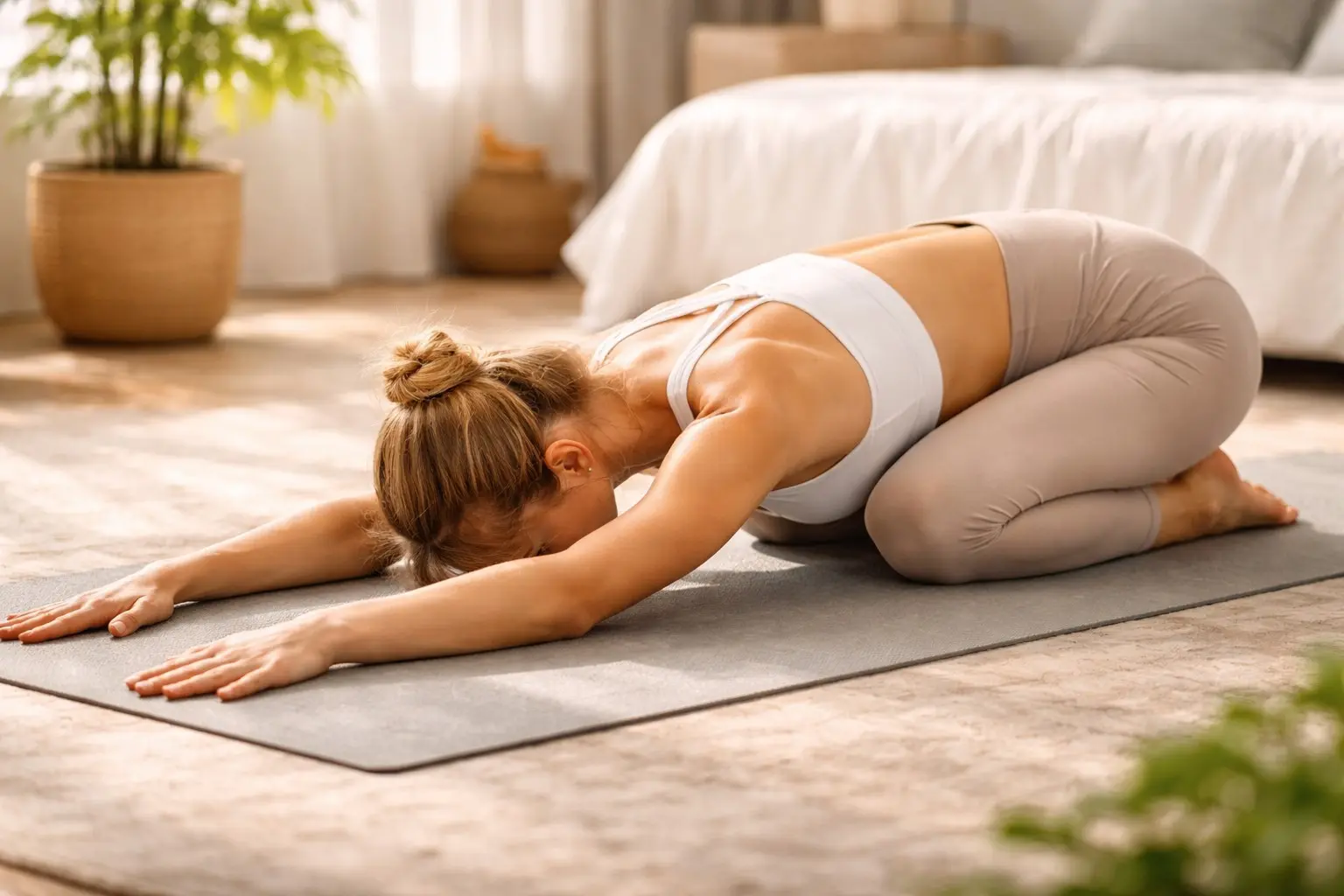
Start here. Always. This calming yoga poses signal to your body: “We’re doing something gentle and good.”
How to do it –
- Lower yourself to your knees on the mat, bringing your big toes together
- Sit back on your heels
- Reach arms forward and rest forehead on the mat
- Take 5 deep breaths
I like this because it’s restorative. You can’t mess it up, and it immediately calms your nervous system.
Cat-Cow Stretch (Marjaryasana-Bitilasana)
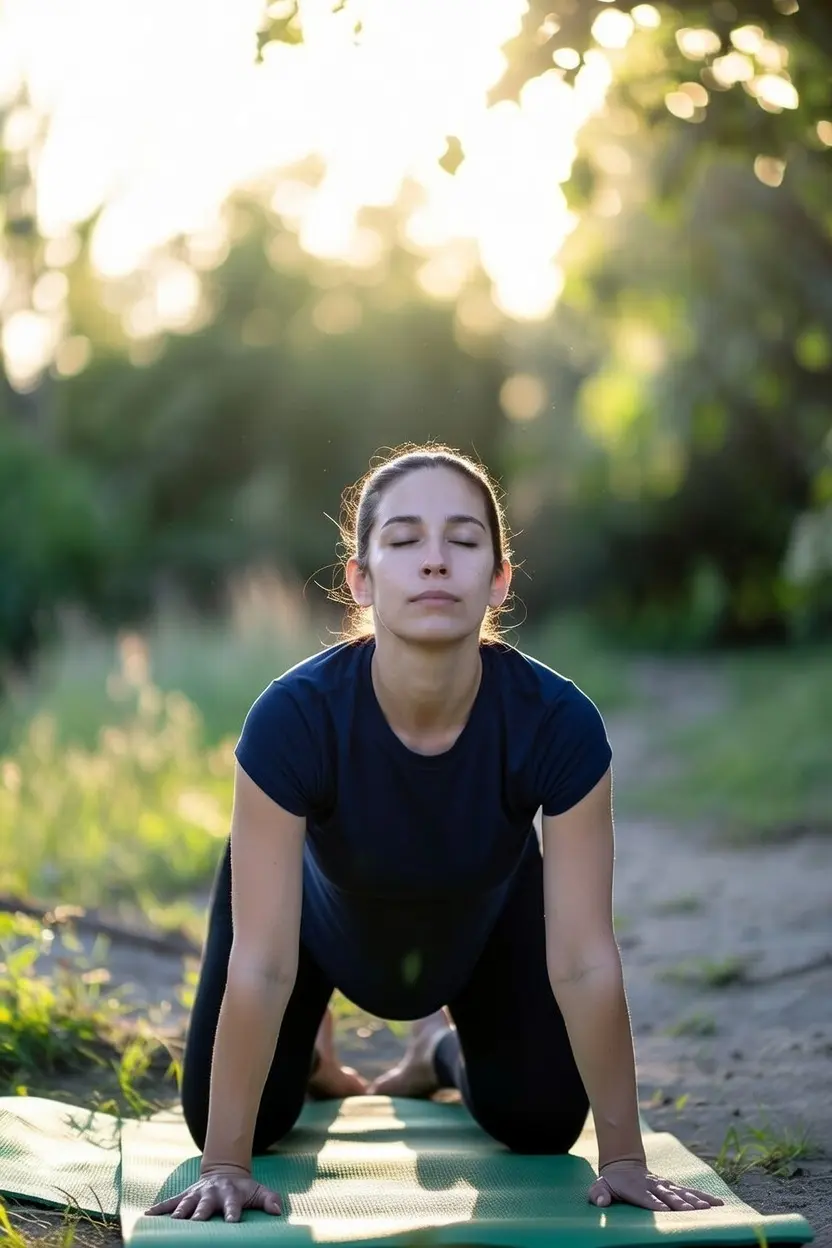
This is the best morning yoga stretch for your back period.
Step by step –
- Come to hands and knees
- Inhale: Drop belly, lift chest and tailbone (Cow)
- Exhale: Round spine, tuck chin (Cat)
- Repeat 8-10 times, crawling
Key Point – Match your breathing to movement. This is where yoga becomes meditation in motion.
Minute 3-4 – Open Your Hips and Legs
Downward-Facing Dog (Adho Mukha Svanasana)
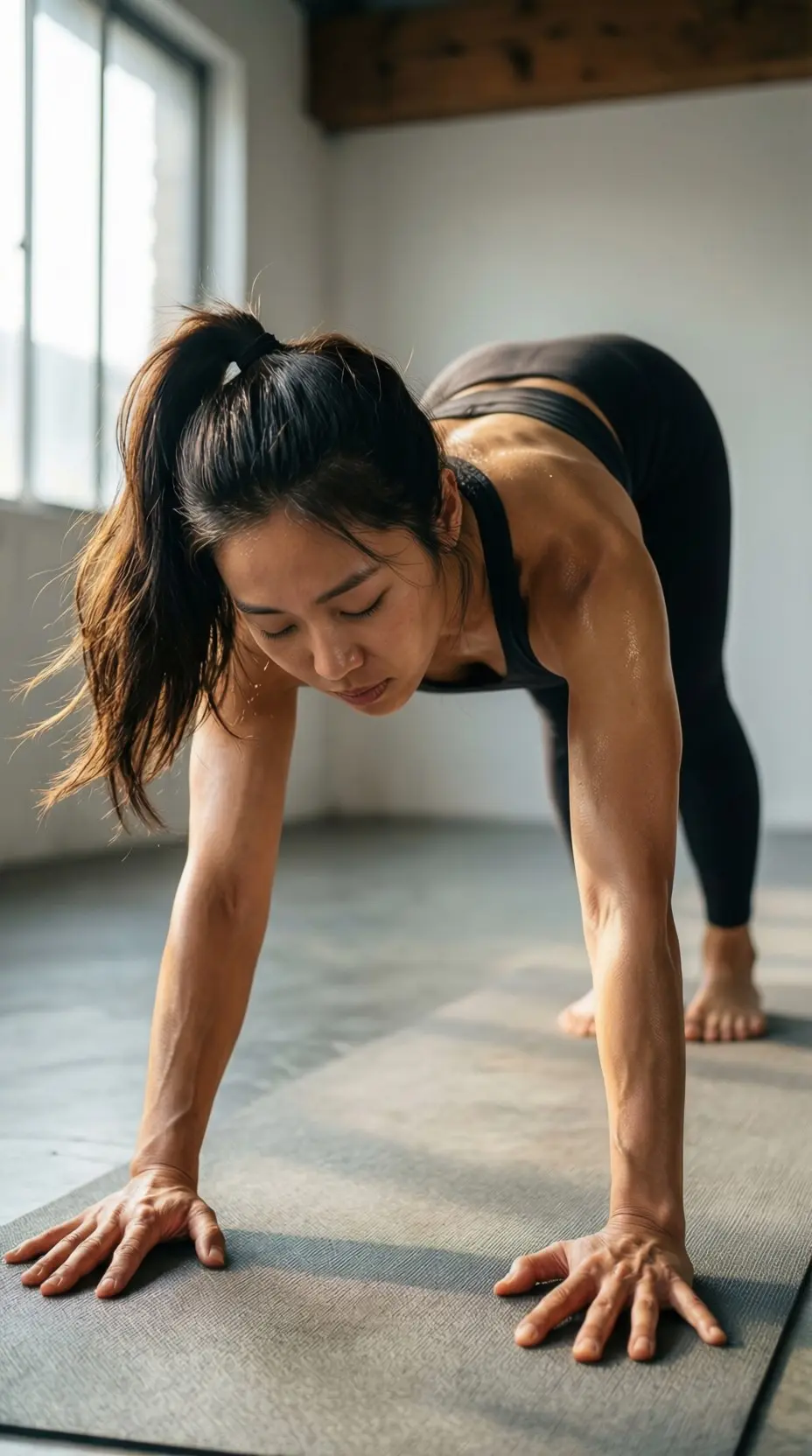
This classic yoga flow for mornings energizes your entire body. I’ve seen complete beginners struggle with this, but here’s the secret: bend your knees.
How to practice –
- From hands and knees, tuck toes and lift hips
- Push hands firmly into the mat
- Bend knees if hamstrings are tight
- Hold for 5-8 breaths
Modification – Keep heels lifted if they don’t touch the ground. That’s completely normal.
Low Lunge (Anjaneyasana)
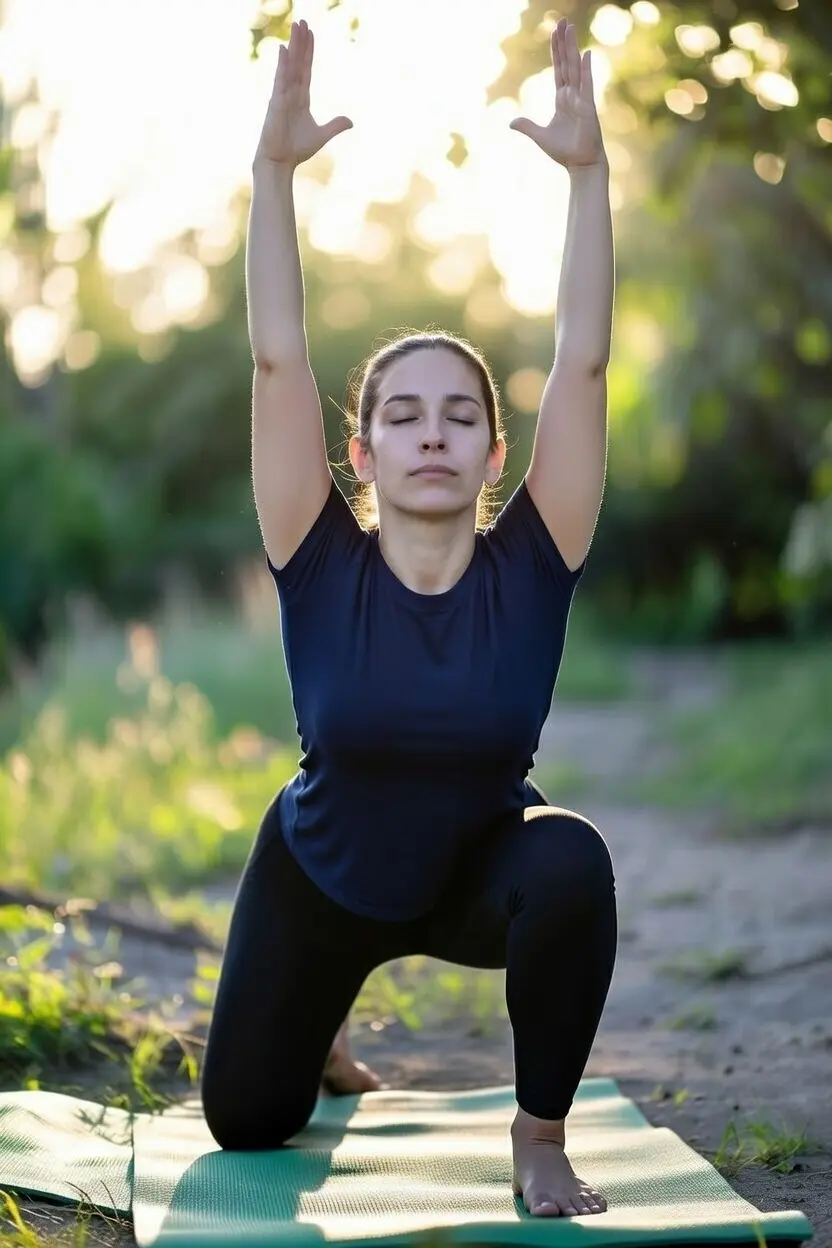
Perfect for opening tight hip flexors from sitting all day.
Instructions:
- Step right foot between hands from Downward Dog
- Lower left knee to mat
- Lift chest and raise arms overhead
- Hold 4 breaths, switch sides
I have tested this with dozens of beginners, and it’s the one pose everyone feels working immediately.
Minute 5-6: Build Strength and Balance
Warrior II (Virabhadrasana II)
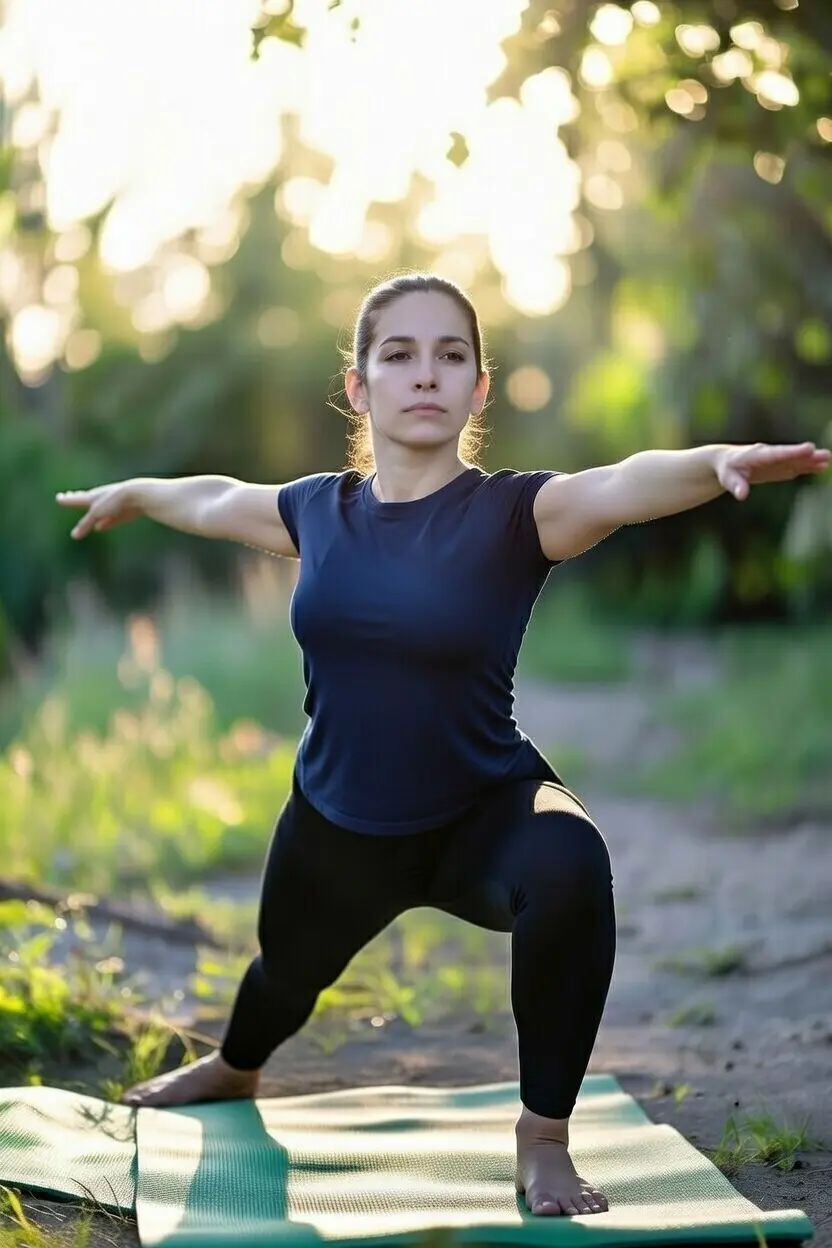
These energizing yoga poses build leg strength while opening your chest.
How to get into it –
- Stand with feet wide apart
- Turn right foot out, left foot slightly in
- Bend the right knee over the ankle
- Extend arms parallel to the floor
- Gaze over right fingers
- Hold 4 breathe each side
What you’ll feel – Legs burning (good), chest opening, shoulders relaxing.
Triangle Pose (Trikonasana)
Successful morning yoga for flexibility and side-body stretching.
Steps –
- From Warrior II, straighten the front leg
- Reach right hand toward shin or floor
- Left arm extends toward the ceiling
- Keep both legs straight
- Hold 3-4 breaths per side
Safety Note – Don’t force your hand to the floor. Use a yoga block or rest it on your shin. Progress comes with patience.
Minute 7-8: Open Your Chest
Cobra Pose (Bhujangasana)
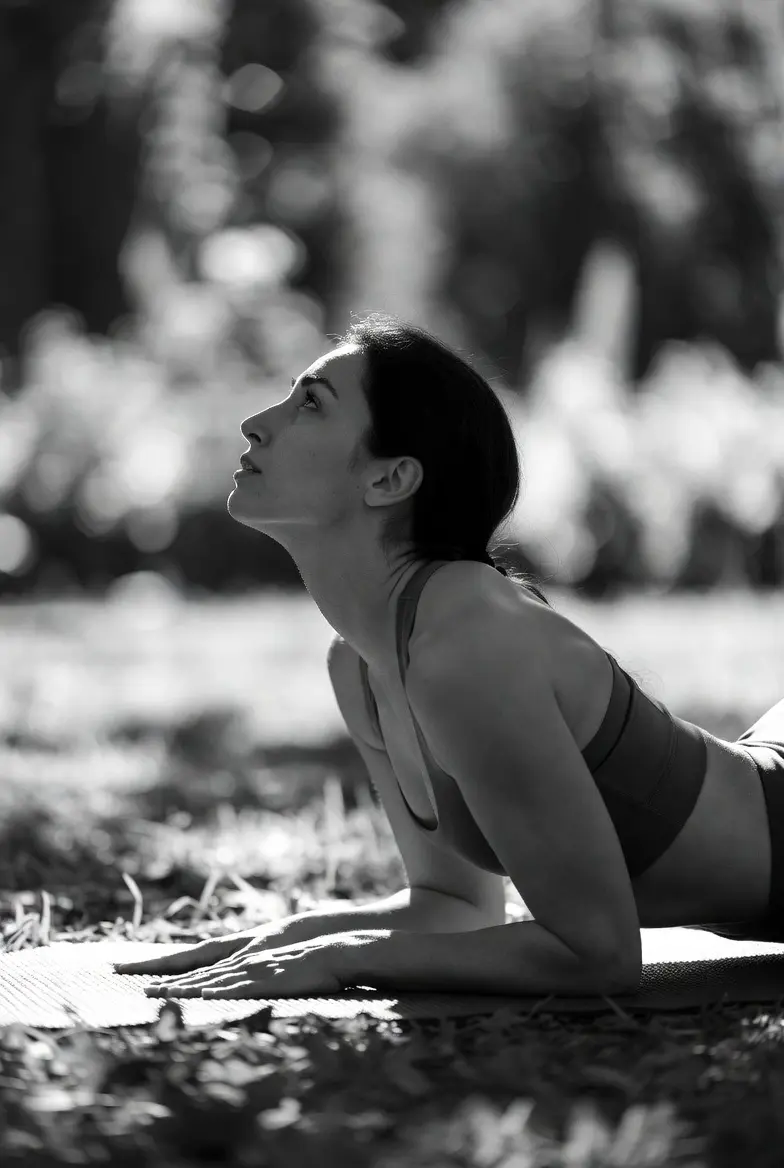
This gentle morning stretch counteracts all that hunching over phones and computers.
Proper form –
- Lie on your belly, hands under your shoulders
- Press palms down and lift the chest
- Keep elbows slightly bent
- Draw shoulders back and down
- Hold 5 breaths
I like this because you can control the intensity. Lift higher for more stretch, stay lower for gentle opening.
Seated Forward Fold (Paschimottanasana)
The ultimate full-body yoga flows as a finisher.
How to practice –
- Sit with legs extended
- Inhale and lengthen spine
- Exhale and fold forward from the hips
- Grab shins, ankles, or feet
- Hold 8-10 breaths
Common mistake – Rounding your back to reach your toes. Instead, keep spine long and don’t worry about how far you fold.
Minute 9-10: Cool Down and Center
Supine Twist
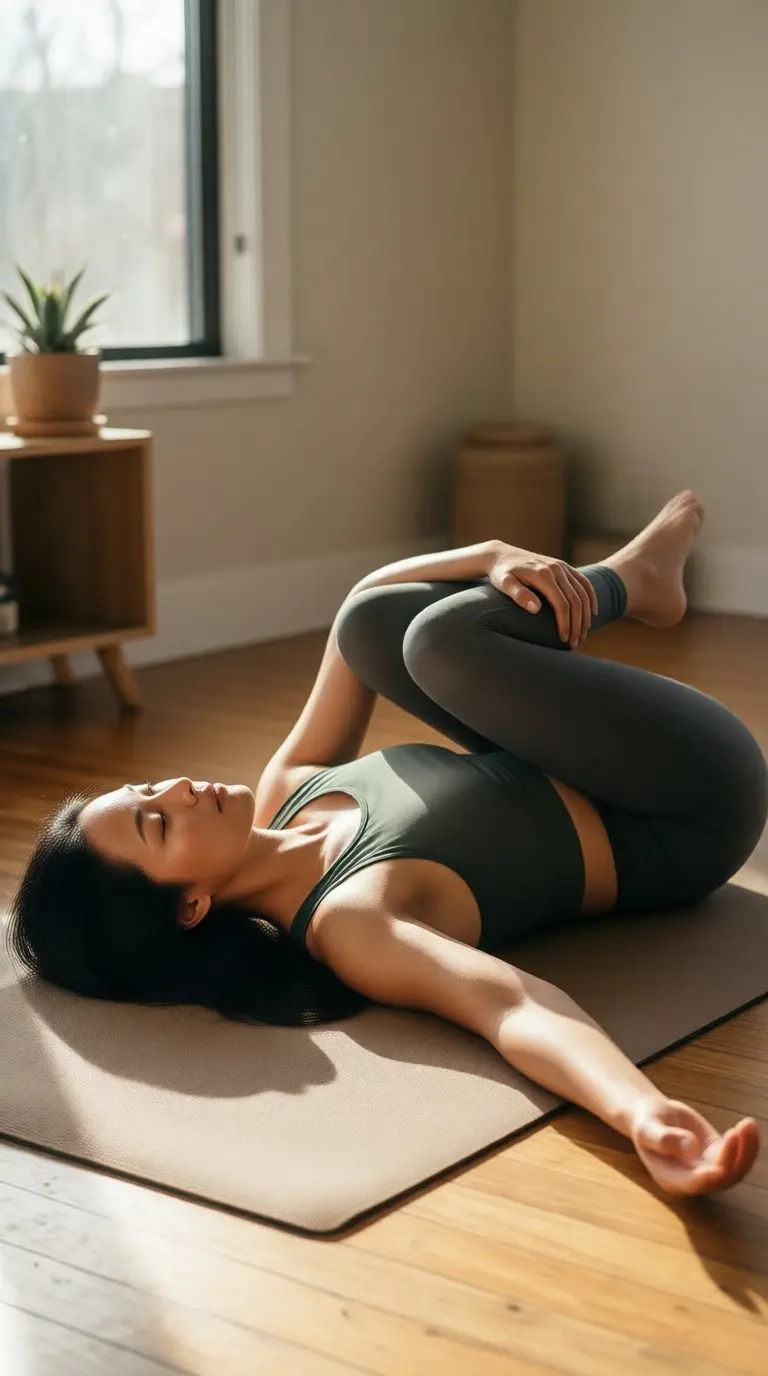
This calming yoga practice releases tension in your spine.
Instructions –
- Lie on your back
- Hug right knee to chest
- Guide the knee across the body to the left
- Extend the right arm out
- Look toward right hand
- Hold 5 breaths on each side
Final Rest (Savasana)
Never skip this. Seriously.
What to do:
- Lie flat on back
- Let arms rest by sides, palms up
- Close eyes
- Breathe naturally for 1-2 minutes
This is where your body absorbs all the benefits. I’ve seen people skip this and miss out on the full transformation.
Morning Yoga Routine Variations for Different Needs
For Complete Beginners
Start with just these 5 poses:
- Child’s Pose (1 min)
- Cat-Cow (1 min)
- Downward Dog (1 min)
- Cobra (1 min)
- Seated Forward Fold (1 min)
Week 1-2 Practice these daily
Week 3-4 Add Low Lunge and Warrior II
Week 5+ Try the complete 10-minute sequence
For Tight Bodies and Limited Flexibility
| Challenge | Solution | Modification | |
| Can’t touch toes | Use a strap or belt | No problem—just go as far as comfortable | |
| Tight hips | Keep knees bent in forward folds | Props like blocks help tremendously | |
| Stiff shoulders | Keep arms lower in Warrior II | Range increases with practice | |
| Lower back pain | Skip deep backbends | Stick with gentle Cat-Cow | |
I have seen countless people with zero flexibility transform their bodies in 8-12 weeks. Your starting point doesn’t matter.
For Busy Mornings (5-Minute Express)
Some mornings, even 10 minutes feels impossible. Here’s your emergency routine:
- Cat-Cow (1 min)
- Downward Dog (1 min)
- Low Lunge – both sides (1.5 min)
- Cobra (1 min)
- Seated Forward Fold (0.5 min)
Real talk – A 5-minute practice beats skipping entirely. I do this version probably twice a week when life gets hectic.
Additional Benefits I Didn’t Expect
When I started my daily yoga practice, I wanted better flexibility and less back pain. But I got so much more:
Physical Benefits
✓ Better posture – I stopped slouching naturally
✓ Improved digestion – Morning practice gets things moving
✓ More energy – Better than coffee (and I love coffee)
✓ Stronger core – Without a single crunch
✓ Better sleep – Despite exercising in the morning
Mental and Emotional Benefits
✓ Less anxiety – Starting the day centred changes everything
✓ Better focus – I’m sharper in morning meetings
✓ More patience – With myself and others
✓ Improved mood – Consistently happier baseline
✓ Greater self-awareness – I notice stress earlier now
Common Questions and Proper Answers
What If I’m Not Flexible at All?
Perfect. You’ll see the most dramatic improvements.
I couldn’t touch my toes when I started. My hamstrings were tighter than guitar strings. Now? I can fold flat in a forward bend. It took about 10 weeks of consistent practice.
Remember: Yoga isn’t about touching your toes. The real lesson lies in what you discover during the descent.
Should I Eat Before Morning Yoga?
Most experts (and my experience) say no. Heres why:
Best approach:
- Practice on an empty stomach
- Drink water before and after
- Eat breakfast 15-30 minutes after practice
Exception: If you have blood sugar issues, have a small banana 30 minutes before practice.
Can I Practice If I Have Injuries?
Maybe. This depends entirely on your specific condition.
General guidelines:
- Back pain: Yes, but skip deep backbends
- Knee issues: Yes, with modifications
- Shoulder problems: Yes, keep arms lower
- Recent surgery: Ask your doctor first
Important: When in doubt, consult a healthcare professional. I’m sharing experience, not medical advice.
Equipment and Props That Actually Help
Essential (You Need These)
Yoga Mat
- Cost: $15-30
- Why: Cushions joints and prevents slipping
- My pick: 6mm thickness for joint support
Comfortable Clothes
- Cost: Use what you have
- Why: Freedom of movement matters
- Tip: Avoid loose shirts that fall over your face in downward dog
Nice to Have (But Optional)
| Item | Benefit | Do You Need It? |
| Yoga blocks (2) | Bring the floor closer | Very helpful for beginners |
| Strap | Helps in forward folds | Useful, but towel works too |
| Bolster | Extra support in restorative poses | Skip for now |
| Meditation cushion | Comfortable seated position | Nice, but not necessary |
I practiced for 6 months with just a mat and a towel. Start simple.
Making Your Morning Yoga Routine Stick
The Biggest Obstacle (And How to Beat It)
You know what stops most people? Not lacking time or flexibility. It’s the voice that says, “I’ll start tomorrow.”
My solution –
- Lay out your mat the night before
- Set your alarm 15 minutes earlier
- Put your phone across the room
- Start with 5 minutes if 10 feels overwhelming
The 2-Minute Rule – Commit to just getting on your mat for 2 minutes. After that, you can stop. You won’t, but permitting yourself makes starting easier.
Creating Your Sacred Space
You don’t need a dedicated yoga room. I practice in my bedroom with my dog usually watching me.
Simple setup –
- Muted corner
- Minimal distractions
- Ventilation
- Natural light if possible
Bonus touches I love –
- Light a candle
- Play gentle instrumental music
- Diffuse lavender essential oil
- Keep a gratitude journal nearby
FAQs about Morning Yoga Routine
What is the best yoga for the morning?
The best morning yoga routine combines gentle stretches with energizing poses. Based on my experience and expert recommendations, a sequence that includes:
- Spinal warm-ups (Cat-Cow)
- Hip openers (Low Lunge)
- Standing poses (Warrior II)
- Forward folds (Seated Forward Fold)
This combination wakes up your body without overwhelming it. The key is balance—not too intense, not too relaxing. Think of it as a warm-up for your day, not a workout.
Is 20 minutes of yoga everyday enough?
Yes, absolutely. Research from the American College of Sports Medicine shows that 20 minutes of daily yoga sequence provides significant health benefits.[^3]
What 20 minutes daily gives you:
- Improved flexibility and strength
- Better stress management
- Enhanced mental clarity
- Cardiovascular benefits
- Improved balance and coordination
I practice 10 minutes most days and 20 minutes on weekends. Both durations have transformed my health. The important part isn’t duration—it’s consistency.
Is it good to do yoga every morning?
Yes, with one important caveat: listen to your body.
Benefits of daily morning yoga:
- Regulates cortisol levels
- Establishes healthy routine
- Improves sleep quality
- Increases overall energy
- Reduces stress and anxiety
However – If you’re exhausted or sore, take a rest day. I practice 5-6 days per week and use 1-2 days for gentle stretching only. This prevents burnout and keeps me eager about my practice.
My rule – If you dread getting on the mat, take a day off. Yoga should feel good, not like punishment.
Can yoga flatten your belly?
Yoga can help reduce belly fat, but it’s not a quick fix or targeted spot-reduction tool.
The honest truth –
- Yoga builds core strength (yes)
- It reduces stress-related weight gain (yes)
- It improves posture, making you look slimmer (yes)
- It alone will give you a flat stomach (probably not)
What I’ve observed: My core strength improved dramatically within 3 months. My belly didn’t get flat, but it got stronger. Combined with healthy eating, yoga supports weight management.
The best results come from:
- Regular yoga practice (4-6 times weekly)
- Balanced nutrition
- Adequate sleep
- Stress management
- Other forms of exercise
Yoga is part of a healthy lifestyle, not a magic solution. Set realistic expectations and celebrate strength over appearance.
My Final Thoughts
Starting a morning yoga routine three years ago changed my life. Not because I became incredibly flexible or Instagram-worthy. Because I learned to show up for myself. Some mornings, I’m graceful and centered. Other mornings, I fall out of Warrior II and my dog steals my mat. Both are perfect.
Your practice will look different from mine. Your body will move differently. Your progress will follow its own timeline. And that’s exactly how it should be.
My invitation to you: Try this 10-minute routine for 30 days. Not to prove anything to anyone. Not to achieve some perfect pose. Just to see how you feel.
I think you’ll be surprised.
Roll out your mat tomorrow morning. Just 10 minutes. Your future self will thank you.
Reference
International Journal of Yoga. “Immediate effect of short duration of yoga on cognition and emotions in yoga practitioners.” Published 2019. Available at: https://www.ncbi.nlm.nih.gov/pmc/articles/PMC6329222/
A Morning Yoga Routine That Moves You in All the Ways You Need” – Yoga Journal –
https://www.yogajournal.com/practice/morning-yoga-routine/
A 5-Minute Morning Yoga Routine for Beginners” – The New York Times –
https://www.nytimes.com/interactive/2023/09/06/well/move/morning-yoga-beginner.html

Adel Galal is a health and wellness writer with over 30 years of experience studying and writing about health, fitness, nutrition, and healthy living. He is the founder of NextFitLife.com, where he shares practical, evidence-based guidance to support long-term health at any age. Adel’s mission is simple:
to help people make smarter health choices that fit real life, at any age.