
Published on: June 2024
Updated on: October 12, 2026
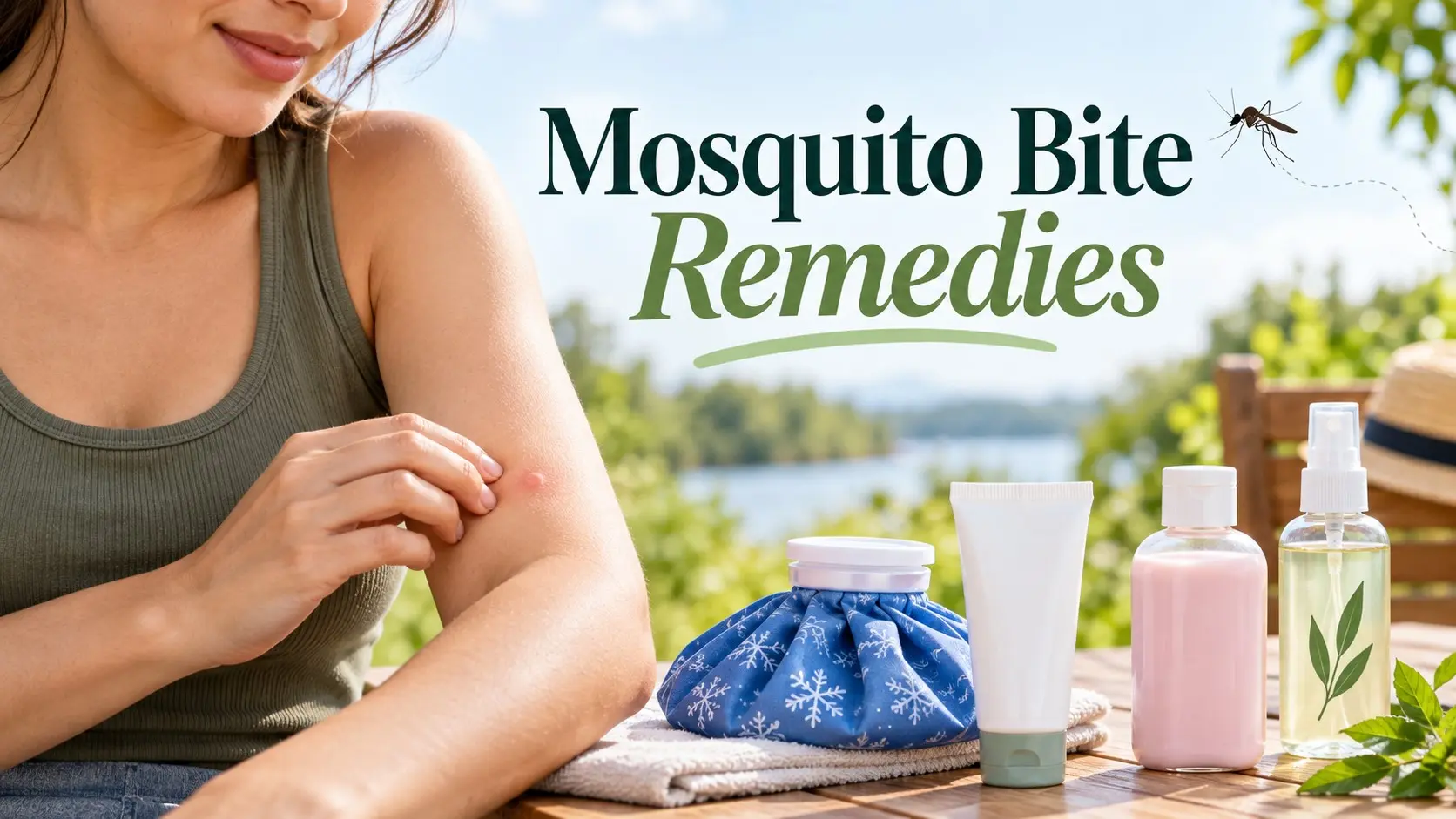
Mosquito Bite Remedies that work best are usually simple. Wash the bite, cool the skin, reduce the itch, and avoid scratching. A cold compress, hydrocortisone cream, calamine lotion, and an appropriate oral antihistamine can all help while the bite heals.
Most mosquito bites improve on their own within a few days.
The biggest mistake is often scratching until the skin breaks.
Broken skin can turn a harmless itchy bump into a bacterial infection.
Medical note: This article is for general information and education. It does not replace medical advice, diagnosis, or treatment.
I am not a dermatologist or a doctor, and this content does not replace professional medical advice. What I share comes from real life experience, extensive research, and consultation with healthcare providers. Always consult qualified medical professionals for diagnosis and treatment of any health condition.
Medical review status: This article has not been independently medically reviewed by a dermatologist, allergist, physician, pharmacist, infectious disease specialist, or other licensed healthcare professional.
Get emergency help now if a bite is followed by:
- Difficulty breathing
- A feeling that the throat is closing
- Swelling of the lips, tongue, or face
- Severe dizziness or fainting
- Chest pain
- A rapid heartbeat that does not settle
- Repeated vomiting with signs of a serious allergic reaction
These can be signs of a severe allergic reaction and need urgent medical care.
Quick answer: For an ordinary mosquito bite, wash the area, apply a wrapped cold pack for about 10 minutes, avoid scratching, and use an appropriate anti itch treatment such as hydrocortisone or calamine. An oral antihistamine may help when itching or swelling is stronger.
Table of Contents
- Why Mosquito Bites Itch
- 11 Fast Relief Steps
- Wash the Bite
- Use a Cold Compress
- Apply Gentle Pressure
- Use Hydrocortisone
- Try Calamine Lotion
- Consider an Oral Antihistamine
- Use Pain Relief if Needed
- Try Colloidal Oatmeal
- Raise a Swollen Arm or Leg
- Protect Broken Skin
- Stop the Scratch Cycle
- What Not to Put on a Bite
- Skeeter Syndrome
- Signs of Infection
- Mosquito Borne Illness
- Children and Mosquito Bites
- How to Prevent New Bites
- Frequently Asked Questions
- References and Sources
Why Do Mosquito Bites Itch?
A mosquito bite is not caused by the needle like mouthpart alone.
While feeding, the mosquito introduces a small amount of mosquito saliva into the skin.
Your immune system recognizes proteins in that saliva as foreign.
This can trigger a histamine response.
The result can be:
- Itching
- Redness
- Swelling
- A small raised bump
- A hive like spot
- Occasionally a small blister
Some people react much more strongly than others.
Children, people exposed to a new mosquito species, and people with certain immune conditions can develop larger reactions.
How Long Does a Mosquito Bite Last?
Most ordinary bites improve within a few days.
The itching may be strongest during the first day or two.
A larger allergic reaction can last longer.
If a bite becomes more painful, hotter, more swollen, or increasingly red instead of settling down, think about infection or a larger allergic reaction rather than assuming it is normal healing.
11 Fast Mosquito Bite Remedies
1. Wash the Bite With Soap and Water
Start simple.
The CDC recommends washing the bite and the surrounding skin with soap and water.
This removes dirt and helps protect the skin, especially if you have already scratched the area.
Use gentle soap.
There is no need to scrub the bump hard.
2. Use a Cold Compress or Wrapped Ice Pack
A cold compress is one of the easiest ways to reduce itching and swelling.
The CDC recommends an ice pack for about 10 minutes and says it can be reapplied as needed.
Mayo Clinic also recommends cold treatment for mosquito bites.
Wrap ice in a light cloth rather than placing it directly on the skin for a long period.
Cold can help with:
- Itch
- Burning
- Swelling
- Mild pain
3. Try Gentle Pressure for a Few Seconds
Mayo Clinic lists brief pressure as another simple way to calm an itchy bite.
Press gently on the bump for about 10 seconds.
Do not dig into the skin with a fingernail.
The idea is gentle pressure, not injury.
4. Use Hydrocortisone Cream When Appropriate
Over the counter hydrocortisone cream can reduce inflammation, itching, and swelling from insect bites.
Mayo Clinic and the NHS both include topical hydrocortisone among useful options.
Follow the product label.
Do not use more often or for longer than instructed.
Ask a pharmacist or healthcare professional before using it:
- On a very young child
- Near the eyes
- On broken skin
- On infected skin
- On a large skin area
- If you have another skin condition
5. Try Calamine Lotion
Calamine lotion is another common option for itchy bites.
Mayo Clinic includes calamine among its recommended mosquito bite comfort measures.
Apply it according to the label.
It may leave a pale pink or white residue as it dries.
Calamine can soothe itch, but it does not remove mosquito saliva or prevent mosquito borne disease.
6. Consider an Oral Antihistamine for Stronger Itching
An oral antihistamine may help when itching or swelling is more noticeable.
Mayo Clinic lists nonsedating options such as cetirizine or loratadine for stronger reactions.
These medicines are not appropriate for every person.
Follow the label and ask a pharmacist or healthcare professional if you:
- Are pregnant
- Are breastfeeding
- Take other medicines
- Have kidney or liver disease
- Are giving medicine to a child
- Are unsure which product is right for you
Older antihistamines such as diphenhydramine can cause marked drowsiness in some people.
Do not drive or perform dangerous tasks if a medicine makes you sleepy.
7. Use a Pain Reliever if the Bite Is Sore
Mosquito bites are usually itchy rather than painful.
A larger bite can sometimes feel sore.
The NHS notes that common pain medicines such as paracetamol or ibuprofen may help painful insect bites or stings when they are safe for you.
Use the correct product and dose for your age and health conditions.
Pain that is getting worse rather than better deserves more attention because infection can also cause pain.
8. Try Colloidal Oatmeal for Widespread Itching
Colloidal oatmeal can soothe irritated or itchy skin.
This can be more useful when you have several bites rather than one small bump.
You can use an oatmeal bath or a product made for irritated skin.
Keep the water lukewarm rather than very hot.
Stop if the product irritates your skin.
9. Raise the Area if an Arm or Leg Is Swollen
If a bite on an arm or leg has become swollen, the NHS advises keeping the area raised when possible.
Elevation may help reduce swelling.
Combine this with cold treatment.
Rapidly expanding swelling, severe pain, or whole limb swelling should be assessed by a healthcare professional.
10. Protect the Skin if You Scratched It Open
If scratching has broken the skin, wash the area with soap and water.
Keep it clean.
A clean bandage can protect the area from more scratching and dirt.
Cleveland Clinic notes that broken skin increases the risk of infection.
Watch the area closely over the next few days.
11. Stop the Scratch Cycle
This may be the most important remedy after cooling the bite.
Scratching makes inflammation worse.
It can also damage the skin.
Try:
- Keeping fingernails short
- Covering the bite with clothing
- Using a small clean bandage
- Applying cold when the urge to scratch becomes strong
- Using an appropriate anti itch treatment
If itching is severe enough to stop you sleeping or working, ask a pharmacist or clinician about stronger treatment rather than scratching through the skin.
Does Baking Soda Help Mosquito Bites?
Guidelines are not completely uniform.
The CDC includes a baking soda and water paste as an option for mosquito bite itching.
Its instructions use about one tablespoon of baking soda mixed with enough water to make a paste, left on for about 10 minutes, then washed off.
However, NHS advice for insect bites is more cautious and advises against home remedies such as bicarbonate of soda.
Because simple cold treatment, hydrocortisone, calamine, and oral antihistamines have clearer practical roles, you do not need baking soda to manage an ordinary mosquito bite.
What About Apple Cider Vinegar?
There is no good reason to believe apple cider vinegar “neutralizes” mosquito saliva.
That explanation in the old article was misleading.
Vinegar is acidic and can sting or irritate broken or sensitive skin.
It is not one of the main mosquito bite treatments recommended by CDC, Mayo Clinic, or the American Academy of Dermatology.
Does Honey Help?
Honey has interesting laboratory and wound care properties, but it is not necessary for an ordinary mosquito bite.
Putting sticky food on irritated skin can also be messy.
If the skin is broken or infected, use normal wound care and seek medical advice when needed rather than relying on kitchen remedies.
Does Aloe Vera Help?
Aloe vera may feel cooling and soothing for some people.
It is not as well established as cold treatment, hydrocortisone, calamine, or oral antihistamines.
If you use an aloe product, choose a simple product that does not contain ingredients that irritate your skin.
Stop if it burns, stings, or makes the rash worse.
Does Toothpaste Help Mosquito Bites?
Toothpaste is not a recommended mosquito bite treatment.
It can contain flavorings, detergents, whitening agents, or other ingredients that irritate skin.
Use products designed for skin instead.
Does Rubbing Alcohol Help?
Alcohol may feel cool as it evaporates, but it can dry and irritate skin.
It is not needed for an ordinary mosquito bite.
Soap and water are enough for cleaning intact skin.
What Is Skeeter Syndrome?
Skeeter syndrome is a large local allergic reaction to mosquito saliva.
Mayo Clinic notes that it can sometimes be confused with a bacterial skin infection.
It may cause:
- A large area of redness
- Marked swelling
- Heat
- Pain
- Strong itching
Children can be more likely to have large reactions.
The reaction can look dramatic.
That does not mean every large bite is infected.
A doctor may need to examine the area when swelling is severe or the diagnosis is unclear.
How Can You Tell Skeeter Syndrome From Infection?
The timing gives a useful clue.
A strong allergic reaction can become large relatively quickly after the bite.
A bacterial infection often develops after the skin has been scratched or broken and may worsen over time.
| Feature | Large Local Reaction | Possible Infection |
|---|---|---|
| Timing | Can swell soon after the bite | Often worsens after skin damage |
| Itch | Often strong | May be replaced by increasing tenderness or pain |
| Redness | Can be large but may stabilize | May keep spreading |
| Warmth | Possible | Often increases with infection |
| Pus | Not typical | Can occur |
| Red streak | Not typical | Needs medical assessment |
Do not diagnose the difference from a table alone if the skin looks seriously inflamed.
What Does an Infected Mosquito Bite Look Like?
The CDC says an infected bite may become red and warm, and a red streak may spread outward.
Other warning signs can include:
- Increasing pain
- Increasing swelling
- Pus
- Spreading redness
- Fever
- Feeling unwell
See a healthcare professional if the bite keeps worsening.
Do not keep applying new home remedies to skin that may be infected.
Can a Mosquito Bite Cause a Serious Disease?
Sometimes.
Most mosquito bites cause only a local skin reaction.
But some mosquitoes can transmit viruses or parasites.
CDC lists mosquito borne infections that include:
- West Nile virus
- Dengue
- Zika
- Malaria
- Yellow fever
- Several forms of viral encephalitis
The actual risk depends on where you live, where you traveled, the local mosquito species, season, and current outbreaks.
A cream for itching does not prevent an infection that was transmitted during the bite.
When Should You See a Doctor After a Mosquito Bite?
Contact a healthcare professional if you develop:
- Fever
- Headache
- Body aches
- A widespread rash
- Marked weakness
- Very large swelling
- Swollen lymph nodes
- Worsening redness or pain
- Signs of infection
This is especially important if symptoms appear after travel to an area where mosquito borne illnesses occur.
Tell the clinician about your recent travel and mosquito exposure.
Are Mosquito Bites Different in Children?
Children can develop larger local reactions than adults.
They may also scratch more, which increases the risk of broken skin and infection.
Keep fingernails short and use treatments that are appropriate for the child's age.
Do not give a child an antihistamine or use medicated creams without checking the age instructions.
For babies and younger children, see Baby Mosquito Bite Remedy.
Can Pregnant People Use Mosquito Repellent?
CDC states that EPA registered insect repellents are considered safe and effective when used as directed, including during pregnancy and breastfeeding.
Approved active ingredients include:
- DEET
- Picaridin
- IR3535
- Oil of lemon eucalyptus
- PMD
- 2 undecannone
Always follow the product label.
How to Prevent Mosquito Bites
Prevention is more useful than treating the next itch.
Use a Proven Insect Repellent
CDC recommends EPA registered insect repellent products containing ingredients such as:
- DEET
- Picaridin
- IR3535
- Oil of lemon eucalyptus
- PMD
- 2 undecannone
Use the product exactly as directed.
Higher concentration does not always mean stronger protection. It often means longer protection time for some ingredients.
Children Need Extra Care
CDC advises against products containing oil of lemon eucalyptus or PMD in children younger than 3 years.
Do not put repellent on a child's hands, eyes, mouth, cuts, or irritated skin.
An adult should apply repellent to their own hands before carefully applying it to a child's face.
Wear Covering Clothes
Loose fitting long sleeves, long pants, socks, and closed shoes can reduce exposed skin.
This is useful in places with heavy mosquito activity.
Use Permethrin on Clothing and Gear
CDC recommends permethrin treated clothing and gear as another layer of protection.
Permethrin is for clothing and gear according to the product instructions.
Do not apply products made for treating clothing directly to your skin.
Remove Standing Water
Mosquitoes can breed in small amounts of water.
Check:
- Buckets
- Plant trays
- Old tires
- Outdoor containers
- Pet water areas
- Blocked drains
- Children's outdoor toys
Empty, cover, clean, or remove water holding containers when practical.
Do Not Rely Only on Dawn and Dusk
The old article said mosquitoes are mainly active at dawn and dusk.
That is not true for every species.
CDC notes that mosquitoes can bite during the day and night.
Use protection based on local mosquito activity, not only the time of day.
What Are the Best Mosquito Bite Remedies Before Bed?
Night itching can be frustrating.
Before bed:
- Wash the area gently.
- Apply a wrapped cold pack.
- Use an appropriate topical itch treatment.
- Cover the bite lightly if you tend to scratch while asleep.
- Ask a pharmacist whether an oral antihistamine is suitable for you if the itch remains strong.
Do not choose a sedating antihistamine simply because you want it to make you sleep.
Use medicines for their intended purpose and follow the label.
Can You Make a Mosquito Bite Disappear Overnight?
Usually no.
Most treatments reduce itching and swelling while your immune response settles.
They do not instantly erase the bite.
Time is part of the treatment.
If a product promises to remove every mosquito bite within minutes, be cautious.
Why Does Scratching Feel Good for a Moment?
Scratching creates a stronger sensation that briefly competes with the itch signal.
The relief does not last.
Scratching also adds more irritation to already inflamed skin.
This can create an itch and scratch cycle.
Cooling the area is safer.
What if You Have Many Mosquito Bites?
Several bites can create much more total itching and swelling than one bite.
Use cool treatment over the affected areas and avoid scratching.
An oral antihistamine may be more practical than treating dozens of spots individually if it is safe for you.
Seek medical advice if you have widespread swelling, hives, fever, dizziness, breathing symptoms, or feel seriously unwell.
Conclusion
Mosquito Bite Remedies do not need to be complicated.
Wash the area, use cold treatment, protect the skin, and choose proven itch relief such as hydrocortisone, calamine, or an appropriate antihistamine when needed.
Avoid scratching, because broken skin raises the risk of infection.
Also pay attention to the bigger picture. A very large reaction may be skeeter syndrome, worsening redness may be infection, and fever or body aches after mosquito exposure can point to a mosquito borne illness.
Your best next step is simple: treat the bite gently today, then prevent the next one with a proven repellent, covering clothes, and mosquito control around your home.
References and Sources
- Centers for Disease Control and Prevention. About Mosquito Bites.
https://www.cdc.gov/mosquitoes/about/about-mosquito-bites.html - Centers for Disease Control and Prevention. Preventing Mosquito Bites.
https://www.cdc.gov/mosquitoes/prevention/index.html - Mayo Clinic. Mosquito Bites: Diagnosis and Treatment.
https://www.mayoclinic.org/diseases-conditions/mosquito-bites/diagnosis-treatment/drc-20375314 - Mayo Clinic. Mosquito Bites: Symptoms and Causes.
https://www.mayoclinic.org/diseases-conditions/mosquito-bites/symptoms-causes/syc-20375310 - NHS. Insect Bites and Stings.
https://www.nhs.uk/conditions/insect-bites-and-stings/ - NHS. Hydrocortisone for Skin.
https://www.nhs.uk/medicines/hydrocortisone-for-skin/ - American Academy of Dermatology. Tips to Prevent and Treat Bug Bites.
https://www.aad.org/public/everyday-care/injured-skin/bites/prevent-treat-bug-bites - American Academy of Dermatology. Bug Bites and Stings: When to See a Dermatologist.
https://www.aad.org/public/everyday-care/injured-skin/bites/bug-bites-see-dermatologist
Internal Links + Hub
- First Aid and Home Remedies Hub
- Skin, Hair and Nail Health Hub
- Skin Health Guide
- Baby Mosquito Bite Remedy
- What Causes Allergies?
- What Causes Itchy Legs Below the Knee?
- Infections and Immune Health Hub
- NextFitLife Health Hub
About the Author
Adel Galal is the Founder and Lead Writer of NextFitLife.com.
Adel has maintained a personal interest in health, fitness, nutrition, sleep, wellness, and healthy aging for more than 30 years. His health and wellness writing experience spans more than 15 years.
His approach is to compare current public health and medical guidance with popular home remedy claims, remove explanations that are not well supported, and turn the evidence into practical steps readers can use safely.
For first aid and skin topics, he focuses on simple care that has clear support, along with warning signs that show when an ordinary home remedy is no longer enough.
Adel is not a dermatologist, allergist, physician, pharmacist, infectious disease specialist, or other licensed healthcare professional. NextFitLife content is educational and does not replace diagnosis, prescription treatment, allergy care, travel medicine, or emergency care.
Learn more about Adel and NextFitLife on the About Us page.
Frequently Asked Questions
What are the best Mosquito Bite Remedies?
For most ordinary bites, wash the area, apply a cold compress, avoid scratching, and use an appropriate anti itch treatment such as hydrocortisone or calamine. An oral antihistamine can help stronger itching when it is safe for you.
How do you stop a mosquito bite from itching fast?
A wrapped cold pack can give quick temporary relief. Hydrocortisone, calamine, or an appropriate oral antihistamine can provide additional relief. Avoid scratching because it can make inflammation and infection risk worse.
How long should I put ice on a mosquito bite?
CDC recommends applying an ice pack for about 10 minutes and reapplying it as needed. Wrap the ice in cloth instead of leaving ice directly against the skin for a long period.
Does hydrocortisone help mosquito bites?
Yes. Over the counter hydrocortisone can reduce itching and swelling from insect bites. Follow the label and ask a healthcare professional before using it on young children, broken skin, infected skin, or sensitive areas.
Does calamine lotion help mosquito bites?
Yes. Calamine can soothe itching from mosquito bites. It helps with comfort while the bite heals but does not prevent mosquito borne infection.
Should I take an antihistamine for mosquito bites?
An oral antihistamine may help stronger itching or swelling. Mayo Clinic lists nonsedating options such as cetirizine and loratadine. Follow the label and check with a pharmacist or doctor if you have medical conditions, take other medicines, or are treating a child.
Does baking soda help mosquito bites?
CDC lists a baking soda and water paste as an option for itching, while NHS guidance is more cautious about home remedies such as bicarbonate of soda. You can usually manage a bite without it by using cold treatment and established anti itch products.
Does apple cider vinegar help mosquito bites?
There is no good evidence that vinegar neutralizes mosquito saliva. It can irritate sensitive or broken skin, so it is not one of the main treatments recommended by major medical sources.
What is skeeter syndrome?
Skeeter syndrome is a large local allergic reaction to proteins in mosquito saliva. It can cause marked redness, swelling, warmth, pain, and itching and can sometimes look similar to a skin infection.
How do I know if a mosquito bite is infected?
Possible signs include worsening redness, increasing warmth, increasing pain, pus, fever, or a red streak spreading away from the bite. Seek medical care if these changes develop.
Can mosquito bites spread disease?
Yes. Infected mosquitoes can transmit illnesses such as West Nile virus, dengue, Zika, malaria, yellow fever, and some forms of encephalitis. Risk depends on location, travel, mosquito species, and current outbreaks.
When should I worry after a mosquito bite?
Get medical advice for fever, headache, body aches, widespread rash, marked swelling, swollen lymph nodes, or signs of infection. Emergency symptoms include trouble breathing, throat swelling, swelling of the face or tongue, severe dizziness, or fainting.
What is the best way to prevent mosquito bites?
Use an EPA registered repellent with an approved active ingredient such as DEET, picaridin, IR3535, oil of lemon eucalyptus, PMD, or 2 undecannone. Cover exposed skin, consider permethrin treated clothing, and reduce standing water around the home.
Are mosquitoes only active at dawn and dusk?
No. Some species are more active at certain times, but CDC notes that mosquitoes can bite during both the day and night. Use protection whenever mosquitoes are active where you are.

Health & wellness writer with 30+ years of experience in nutrition, fitness, and healthy aging. Founder of NextFitLife.com — evidence-based health guidance.

