Published: August 2026
Last Updated: August 27, 2026
Next Review: August 2027, or sooner if major nail care guidance changes
Review Status: Written and source checked using current dermatology and public health guidance
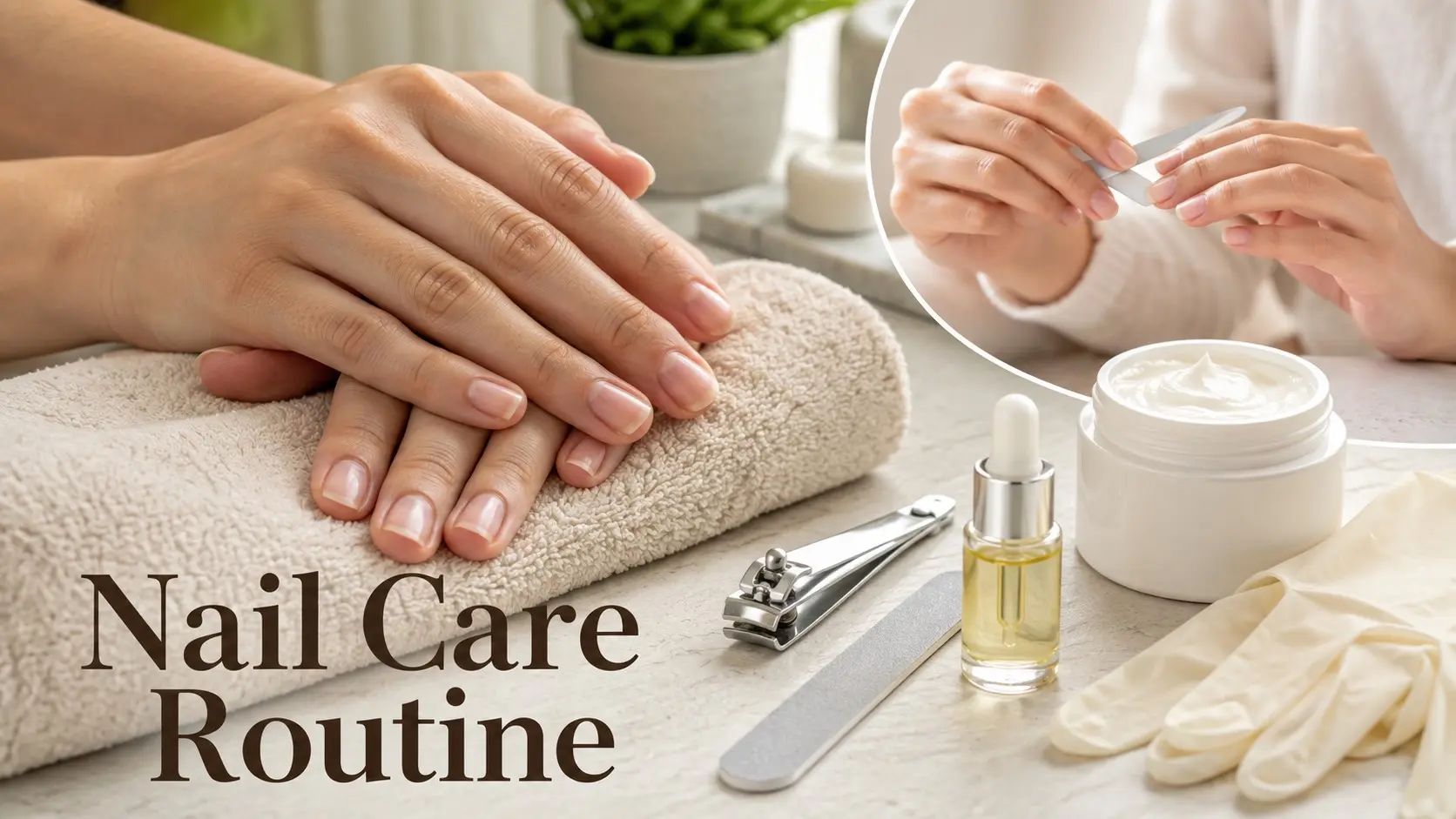
A good nail care routine does not need many products.
It needs gentle habits.
Keep your nails clean.
Keep them dry after washing.
Trim them with clean tools.
File rough edges.
Moisturize the nail and skin around it.
Protect your hands during wet work.
Leave your cuticles alone.
These simple steps can help protect healthy nails from avoidable splitting, breaking, irritation, and infection.
Quick Answer
A simple nail care routine includes washing under the nails, drying the hands well, moisturizing after washing, keeping nails at a practical length, filing snags gently, protecting the cuticle, using gloves for wet or chemical work, and cleaning nail tools. Once each week, check your nails for new changes and trim or file them when needed.
Medical note: I am not a dermatologist or a doctor, and this content does not replace professional medical advice. This article explains published guidance and does not provide a personal clinical assessment. Always consult qualified medical professionals for diagnosis and treatment of any health condition.
What This Nail Care Routine Covers
- A simple morning routine
- Care after hand washing
- An evening nail routine
- A weekly nail routine
- How to trim fingernails
- How to trim toenails
- How to care for cuticles
- How to protect nails during chores
- How to use polish more gently
- Basic manicure safety
- How to clean nail tools
- What nail changes need medical attention
What Does a healthy nail look like?
Healthy nails vary from person to person.
They do not need to look perfect.
MedlinePlus says healthy nails are usually smooth and consistent in color.5
Some small ridges can be normal.
Small white marks can also occur after minor injury.
Look for changes rather than perfection.
A nail that suddenly changes may matter more than a nail that has always looked the same.
Read Healthy Nails and Unhealthy Nails if you want a fuller guide to nail appearance.
Why a Nail Care Routine Matters
Your nails face stress every day.
Water affects them.
Soap affects the surrounding skin.
Cleaning products can irritate them.
Picking can damage them.
Long nails can catch on objects.
Manicures can also cause damage when the nail or cuticle is handled too roughly.
A routine reduces avoidable damage.
It also helps you notice recent changes early.
The Simple Daily Nail Care Routine
You do not need ten products.
Use a few simple habits each day.
Morning Nail Care Routine
1. Look at your nails
This takes a few seconds.
Check for:
- A new split
- A rough edge
- Redness
- Swelling
- Pain
- New lifting
- A new color change
You do not need to inspect every tiny line.
The goal is to notice meaningful change.
2. Moisturize dry hands and nails
Dry skin around the nails can crack.
The nail can also become dry.
Apply a simple hand cream or ointment when needed.
Rub some over the nail and skin around it.
This is basic nail moisturizing.
3. Smooth a snag before it becomes a tear
Do not pull a rough nail edge.
Use a clean file.
File gently in one direction.2
This can stop a small snag from becoming a bigger break.
Nail Care After Washing Your Hands
Hand washing is important.
Do not avoid it to protect your nails.
CDC recommends cleaning under the nails because germs can collect there.3
Use this simple routine
- Wash with soap and water.
- Clean around and under the nails.
- Rinse well.
- Dry your hands and nails.
- Apply moisturizer if your skin feels dry.
You do not need to dig hard under the nail.
Gentle cleaning is enough.
A soft nail brush can be used when needed.
Evening Nail Care Routine
Night is a good time for simple cuticle care and moisture.
Step 1: Wash and dry your hands
Remove visible dirt.
Dry the spaces around the nails.
Step 2: Check rough edges
File only when needed.
Do not file healthy nails every night.
Step 3: Moisturize
Apply hand cream, ointment, or petroleum jelly around the nails.
You can also use a simple cuticle oil if it does not irritate your skin.
The goal is moisture.
The product does not need to be expensive.
Step 4: Leave the cuticle intact
Do not cut it.
Do not pull it.
Do not scrape it away.
The cuticle helps protect the growing nail from germs.1
Your Weekly Nail Care Routine
Once each week, spend a few minutes on nail maintenance.
- Check all fingernails and toenails.
- Clean your tools.
- Trim nails that are too long.
- File rough edges.
- Check the skin around each nail.
- Look for lifting or color change.
- Moisturize after trimming.
- Check whether polish needs gentle removal.
You do not need to trim every nail every week.
Trim when needed.
How to Trim Fingernails Correctly
The American Academy of Dermatology gives simple trimming advice.2
Soften the nails first
Trim after a bath or shower when possible.
The nails may be easier to cut.
Use the right tool
Use clean nail clippers or nail scissors.
Cut mostly straight across
Do not dig deeply into the sides.
Round sharp corners gently
Use a file to smooth the edge.
Do not cut too short
Leave a small amount of nail.
Very short trimming can irritate the skin.
How to File Nails
Use a clean nail file or emery board.
Move in one direction rather than sawing hard from side to side.2
Do not remove large amounts of nail with aggressive filing.
A file is mainly for shape and rough edges.
Good shapes for daily life
A gentle round or softly squared shape often catches less on clothing.
Choose a shape that fits your nails and daily work.
How to Trim Toenails
Toenails need slightly different care.
Cut them straight across.2
Do not cut deep into the corners.
This may lower the chance of an ingrown toenail.
Use a toenail clipper.
Keep it clean.
Wear shoes with enough room around the toes.
Seek medical care for severe pain, swelling, pus, or a nail that keeps growing into the skin.
How to Care for Cuticles
Your cuticle is not dead skin that must be removed.
It acts as a barrier.
AAD and CDC both advise against cutting cuticles.13
Do this
- Moisturize the area
- Leave the cuticle intact
- Clip only loose dead skin that is clearly separated
- Use clean tools
Avoid this
- Cutting deep into the cuticle
- Pulling skin
- Picking the nail fold
- Forcing the cuticle back
Redness and swelling around the nail can be a sign of infection.
What Should You Do With a Hangnail?
Do not bite it.
Do not rip it.
CDC recommends clipping a hangnail with a clean nail trimmer.3
Cut only the loose part.
Do not cut healthy skin.
Apply moisturizer afterward.
Protect Nails During Dishes and Cleaning
Repeated water exposure can make nails more fragile.
Cleaning products can also irritate your hands.
Wear suitable gloves for:
- Washing dishes
- Bathroom cleaning
- Kitchen cleaning
- Gardening
- Using household chemicals
Dry your hands after the job.
Apply moisturizer if needed.
This is one of the simplest habits for protecting brittle nails.
If your nails already split or peel often, read How to Get Strong Nails.
Do Not Use Your Nails as Tools
Nails are not can openers.
They are not scrapers.
They are not screwdrivers.
AAD advises against using nails as tools because this can cause chips, splits, and lifting.1
Use a real tool instead.
This small habit can prevent many breaks.
How to Stop Nail Biting and Picking
Biting can damage the nail.
Picking can injure the skin around it.
Both can increase the chance of irritation or infection.
Try simple steps.
- Keep nails short
- File rough edges quickly
- Keep hands busy
- Notice when you bite
- Use moisturizer instead of picking dry skin
If biting is severe or hard to control, ask a healthcare professional about support.
A Simple Polish Routine
Nail polish can fit into a healthy routine.
You do not need to avoid it forever.
The key is gentle use.
Before polish
- Check that the nail looks healthy
- Do not cover a painful or infected looking nail
- Keep tools clean
After removing polish
Moisturize the nail and surrounding skin.
AAD notes that polish removers can dry nails.4
Give damaged or very dry nails a break from cosmetic products when needed.
Gel and Artificial Nail Care
Gel and artificial nails are beauty choices.
They are not needed for nail health.
If your nails become thin, sore, peeling, or brittle after repeated manicures, reduce the source of damage.
Do not use artificial nails to hide a painful or unexplained nail change.
Do not let a manicure cause bleeding or significant pain.
For weak nails after gel or acrylic use, read How to Get Strong Nails.
How to Choose a Safer Nail Salon
A manicure should not cause an infection.
AAD recommends paying attention to salon hygiene.4
Look for:
- A clean work area
- Clean tools
- Good hand hygiene
- Safe handling of equipment
- A technician who does not cut your cuticles
Stop the service if it causes pain or bleeding.
How to Clean Nail Tools
Clean tools are part of good nail hygiene.
CDC says nail grooming tools should be cleaned before use.3
AAD also advises regular tool cleaning.2
Basic routine
- Remove visible nail material.
- Clean the tool.
- Disinfect it using a suitable method.
- Dry it fully.
- Store it in a clean place.
Do not share personal nail tools when you can avoid it.
What Should Be in a Basic Nail Care Kit?
You only need a few items.
- Fingernail clippers
- Toenail clippers
- A fine nail file
- Hand cream or ointment
- Protective household gloves
- A soft nail brush if needed
Cuticle oil is optional.
A simple moisturizer can work well.
You do not need a large collection of nail products.
A Minimal Nail Care Routine
If you want the shortest routine possible, do this.
Every day
- Keep nails clean
- Dry them after washing
- Moisturize when dry
- Do not bite or pick
- Use gloves for wet work
Every week
- Check nail color and shape
- Trim when needed
- File snags
- Clean your tools
That is enough for many people.
Nail Care Routine for Dry Nails
Dry nails need less damage and more moisture.
Morning
Apply cream after washing.
During the day
Use gloves for dishes and chemicals.
Evening
Apply a thicker cream, ointment, or petroleum jelly around the nails.
Keep nails shorter while they are fragile.
Read How to Prevent Nail Breakage if cracking is your main problem.
Nail Care Routine for People Who Wash Their Hands Often
Healthcare work, food work, childcare, and other jobs may require frequent washing.
Do not reduce needed hand washing.
Instead:
- Dry the hands well
- Moisturize when possible
- Keep nails short
- Avoid picking dry skin
- Use work-safe gloves when required
Clean hands are more important than long cosmetic nails.
Nail Care Routine After a Manicure
Keep the area clean.
Moisturize dry skin.
Do not pick polish.
Do not pull lifting product from the nail.
Watch for:
- Redness
- Swelling
- Burning
- Itching
- Pain
- Lifting
Stop using a product if it causes a significant skin reaction.
Nail Care Routine Without Polish
You do not need polish for neat nails.
Try this routine.
- Trim when needed.
- File sharp edges.
- Wash and dry the nails.
- Apply moisturizer.
- Protect hands during chores.
This simple routine keeps the focus on natural nail care.
Do Nails Need to Breathe?
Nails are made from hardened keratin.
They do not breathe like lungs.
A break from polish can still be useful.
It can reduce repeated product exposure.
It also lets you see the nail clearly.
This can make it easier to notice a new change.
Should You Use Nail Hardeners?
Some products can coat the nail and make it feel harder.
That does not mean they fix every cause of weak nails.
Very brittle nails may need less water exposure, fewer cosmetic procedures, and better protection.
If weakness is your main problem, use the dedicated How to Get Strong Nails guide.
What About Food and Supplements?
This page focuses on routine care.
Food is a separate part of nail health.
A varied diet supports normal nail growth.
Do not assume that every weak nail means you need a vitamin pill.
For the nutrition intent, read Foods for Healthy Nail Growth.
For weak and brittle nails, read How to Get Strong Nails.
How Long Does a Nail Care Routine Take to Work?
Some changes are fast.
Dry skin may feel better after regular moisturizing.
Rough edges can be fixed at once.
Other changes take much longer.
A damaged nail has to grow forward.
You cannot repair the entire nail plate in one night.
Take photos every few weeks if you want to track progress.
Use the same light each time.
Common Nail Care Mistakes
Cutting the cuticle
This can damage a natural barrier against germs.
Using nails as tools
This can cause splitting or lifting.
Pulling hangnails
Clip them instead.
Sharing tools
Use clean personal tools when possible.
Ignoring wet hands
Dry the hands and nails well.
Peeling cosmetic products off
This can remove layers from the natural nail.
Covering an abnormal nail
Do not hide pain, swelling, lifting, or a major color change under artificial nails.
Taking supplements without a reason
Nail appearance alone cannot diagnose a nutrient deficiency.
When Nail Changes May Need Medical Care
Nails can change because of injury.
They can also change because of infection or another health condition.
MedlinePlus notes that nail changes can sometimes give clues about health problems.5
Speak with a qualified healthcare professional if you notice:
- A new dark streak
- Persistent yellow or green color
- A thick or crumbling nail
- Nail lifting
- Pain
- Pus
- Swelling
- Bleeding
- A major shape change
- A nail problem that does not improve
Do not assume every yellow nail is fungus.
Other problems can look similar.
If you suspect fungus, read Best Nail Fungus Treatment at Home and seek proper diagnosis when needed.
My Approach to Nail Care
I prefer simple routines.
I do not think healthy nails require a shelf full of products.
I have spent years researching health, nutrition, fitness, beauty, and healthy aging for NextFitLife.
My background in information technology management also taught me to review information carefully.
I compare sources.
I look for claims that are too strong.
I separate useful daily habits from marketing promises.
That approach matters with nail care.
A plain moisturizer can be useful.
Clean tools matter.
Gentle trimming matters.
Cuticle protection matters.
Time matters.
Those simple habits often matter more than a product with a dramatic promise.
Conclusion: Build a Nail Care Routine You Can Repeat
A good nail care routine should be simple.
Keep nails clean.
Dry them well.
Trim gently.
File rough edges.
Moisturize dry nails and skin.
Protect your cuticles.
Wear gloves for wet work.
Keep your tools clean.
Watch for new nail changes.
Your next step: Start tonight. Moisturize your nails, check for rough edges, and set aside clean clippers and a file for your weekly routine.
References and Sources
This guide was source-checked using dermatology and public health resources that are freely accessible to readers.
- American Academy of Dermatology. 11 Dermatologists' Tips for Healthy Nails.This resource explains basic healthy nail habits, including keeping nails clean and dry, trimming them carefully, filing snags, avoiding nail biting, leaving cuticles intact, and not using nails as tools.
- American Academy of Dermatology. How to Trim Your Nails.This guide explains how to trim fingernails and toenails, how to file nails, why cuticles should be protected, how to clean tools, and why moisturizing after trimming can help dry nails.
Read the American Academy of Dermatology nail trimming guide
- Centers for Disease Control and Prevention. Healthy Habits: Nail Hygiene.CDC explains that dirt and germs can collect under fingernails. It recommends keeping nails short and clean, cleaning under nails, cleaning grooming tools, avoiding nail biting, and not cutting cuticles.
- American Academy of Dermatology. Manicure and Pedicure Safety.This resource covers safer salon care, moisturizing nails after polish removal, protecting the cuticle, and checking salon cleanliness and tool handling.
Read the American Academy of Dermatology manicure and pedicure safety guide
- MedlinePlus. Nail Diseases.This United States National Library of Medicine resource explains normal nail features, common nail problems, infection, nail changes, and why keeping nails clean, dry, and trimmed can help prevent some problems.
Explore the NextFitLife Nail Care Library
Main Nail Care Hub: Nail Care Guide
Beauty Hub: NextFitLife Beauty Guides
Frequently Asked Questions About Nail Care Routines
What is the best basic nail care routine?
Keep nails clean and dry, moisturize when they feel dry, trim them carefully, file rough edges, leave cuticles intact, protect hands during wet work, and clean nail tools.
How often should I trim my nails?
Trim them when they become too long or start catching on things. Fingernails usually need trimming more often than toenails.
Should I cut my cuticles?
No. Cuticles help protect the growing nail from germs. Cutting them can increase irritation and infection risk.
Should I use cuticle oil every day?
You can use a simple cuticle oil if it does not irritate your skin. A hand cream, ointment, or petroleum jelly can also moisturize the nail and surrounding skin.
Should I file nails in one direction?
Yes. Gentle filing in one direction can reduce rough edges without the repeated sawing motion that may weaken nails.
How do I keep nails clean without damaging them?
Wash your hands with soap and water, clean gently under the nails, rinse well, and dry the hands and nails. Do not dig sharply under the nail.
Can I wear nail polish and still have healthy nails?
Yes. Polish can fit into a nail care routine. Remove it gently, moisturize afterward, and do not cover a painful, infected, or unexplained nail change.
How often should I take a break from gel or artificial nails?
There is no one schedule for everyone. If your nails become thin, sore, peeling, or brittle, reduce repeated cosmetic procedures and allow the damaged nail to grow forward.
Are nail salons safe?
Many are. Choose a clean salon with safe tool handling and good hygiene. Ask the technician not to cut your cuticles, and stop if a service causes pain or bleeding.
How should I clean my nail tools?
Remove visible debris, clean and disinfect the tools using a suitable method, dry them fully, and keep them in a clean place.
What should I do if my nails keep breaking?
Keep them shorter, reduce repeated water and chemical exposure, moisturize them, file snags gently, and avoid using nails as tools. Persistent brittle nails may need a closer look at the cause.
When should I see a dermatologist about my nails?
Get medical advice for new dark streaks, persistent colour changes, thickening, crumbling, lifting, pain, swelling, pus, bleeding, or a major nail change that does not improve.

Health & wellness writer with 30+ years of experience in nutrition, fitness, and healthy aging. Founder of NextFitLife.com — evidence-based health guidance.