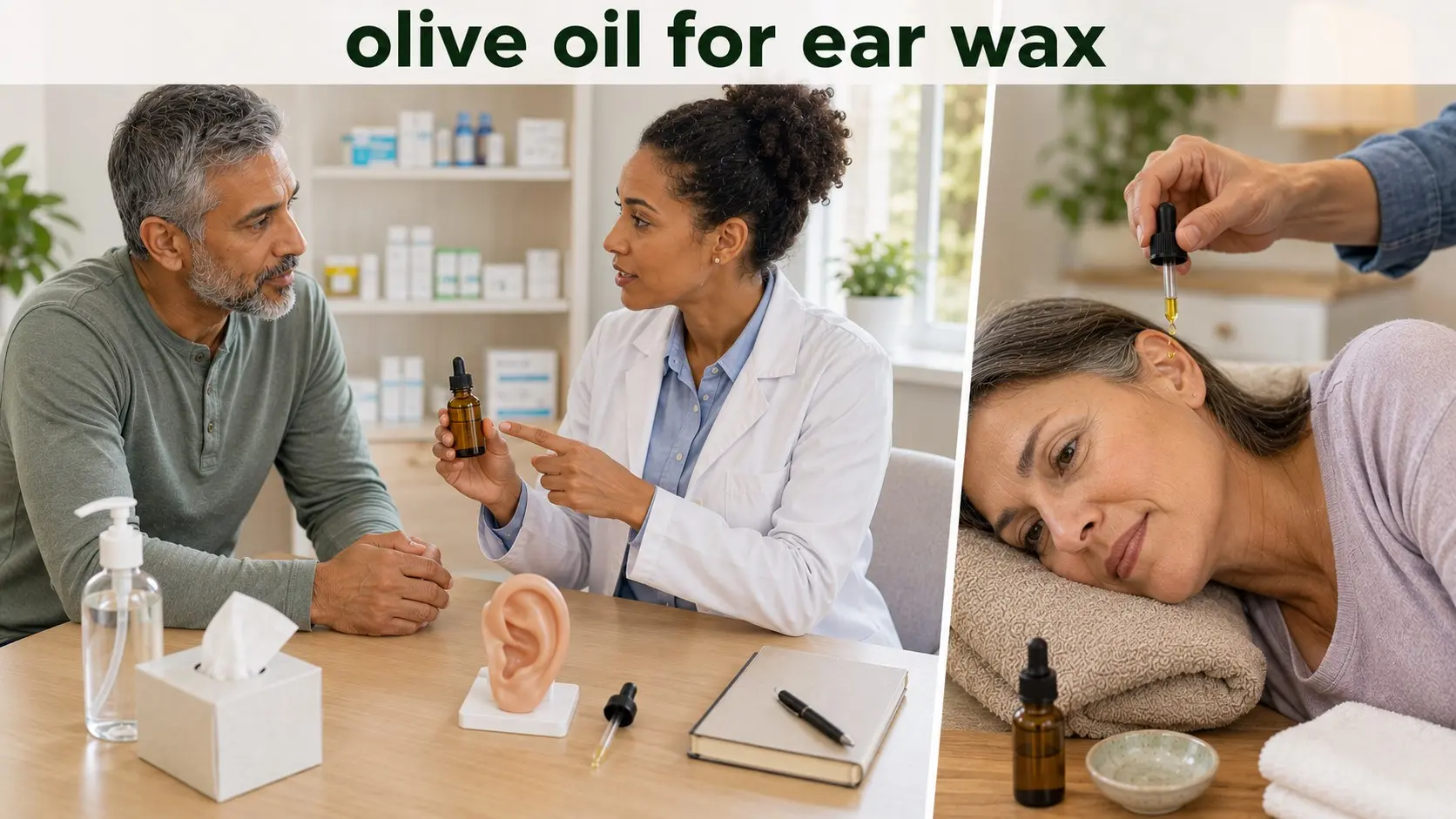
Published: March 2024
Last updated: July 16, 2026
Next review: July 2027
Written by: Adel Galal, Founder and Lead Writer at NextFitLife
Review status: Editorially reviewed and checked against current NHS, NIH, Cochrane, MedlinePlus, and ear specialist guidance. This page has not been medically reviewed by a doctor, audiologist, pharmacist, or ear specialist.
Reading time: About 16 minutes
But a blocked feeling does not always mean wax.
Pain, pressure, ringing, dizziness, and hearing loss can have other causes.
Some causes need urgent care.
Olive oil for earwax does not treat an infection.
It does not repair a damaged eardrum.
It does not cure tinnitus.
It does not restore hearing caused by nerve or inner ear damage.
It should never delay care for sudden hearing loss.
This guide explains how olive oil for ear wax may be used, what the research says, who should avoid drops, and when you need an ear examination.
Olive Oil for Ear Wax - Quick Answer
Olive oil may act as an earwax softener.
NHS guidance suggests placing two or three drops into the affected ear.
Lie with the ear facing upward for five to ten minutes.
Repeat three or four times daily for three to five days.
Wax may come out slowly over the next two weeks.
Do not use drops if you have or may have a perforated eardrum.
Ask a pharmacist or clinician first if you have ear tubes, previous ear surgery, drainage, bleeding, severe pain, infection, or an uncertain diagnosis.
Do not use cotton buds or other objects.
Get urgent care for sudden hearing loss.
Editorial and Advertising Disclosure
This guide was written and editorially reviewed by Adel Galal.
Adel is a health and wellness writer.
He is not a doctor, audiologist, pharmacist, or ear specialist.
This page cannot examine your ear canal or confirm that wax is causing your symptoms.
NextFitLife uses display advertising to support the website.
Advertising does not decide the advice, sources, warnings, or conclusions on this page.
Read the
Editorial Policy,
Medical Review Policy,
and
Corrections Policy.
Important Ear Safety Warning
Do not place olive oil or another liquid into an ear when the eardrum may have a hole.
Do not use drops when fluid, pus, or blood is coming from the ear.
Do not use drops after ear surgery unless your clinician approves them.
Do not use oil for sudden hearing loss.
Do not pour oil into an ear that contains a battery or another foreign object.
A sudden loss of hearing may feel like simple earwax buildup.
It is a medical emergency.
What Is Earwax?
Earwax is also called cerumen.
It is made inside the outer ear canal.
Earwax has a useful job.
It traps dust and small particles.
It helps protect the skin.
It also helps keep the canal from becoming too dry.
Most wax moves outward on its own.
Jaw movement and normal skin movement help this process.
Earwax Is Not Dirt
A small amount of wax is normal.
It does not need to be removed.
Cleaning too often may irritate the ear.
It may also push wax deeper.
What Is Cerumen Impaction?
Cerumen impaction means wax is stuck or blocking the ear canal.
It may cause symptoms.
It may also stop a clinician from seeing the eardrum.
Possible symptoms include:
- A blocked feeling
- Gradual hearing loss
- Earache
- Itching
- Ringing or buzzing
- Hearing aid problems
These symptoms do not prove that wax is the cause.
When Olive Oil for Ear Wax May Help
Olive oil for ear wax may help when wax has become hard or blocked the ear canal.
The oil may soften and lubricate the wax.
This may help it move outward.
It may also prepare the wax for microsection, ear irrigation, or manual removal.
Symptoms That May Fit Earwax
- Hearing that became muffled slowly
- A full or blocked feeling
- Wax seen near the ear opening
- Mild itching
- Hearing aid feedback
Slow symptoms may fit wax.
They may still need an examination.
Use It Only for Suspected Wax
Do not use olive oil as a daily wellness treatment for healthy ears.
Do not use it for every ear symptom.
Oil placed in the outer ear canal cannot treat an inner ear problem.
What Olive Oil for Ear Wax Cannot Treat?
Ear Infection
An ear infection may cause pain, fever, discharge, swelling, or hearing changes.
Olive oil does not kill the cause of an infection.
Some infections need medical treatment.
Tinnitus
Wax may sometimes contribute to tinnitus.
Removing confirmed wax may help in that case.
Olive oil does not treat tinnitus caused by noise, medicine, hearing loss, or inner ear disease.
Dizziness
Dizziness has many causes.
Olive oil does not treat an inner ear balance condition.
Pressure From a Cold
Pressure from a cold often comes from behind the eardrum.
Oil stays in the outer canal.
It does not reach the area behind the eardrum.
Damaged Hearing
Wax-related hearing loss may improve after removal.
Olive oil cannot repair the hearing nerve, middle ear, or inner ear.
How to Use Olive Oil for Ear Wax Safely
Use these steps only when wax is the likely cause and no warning sign is present.
Step 1: Ask a Pharmacist When Unsure
A pharmacist can suggest a suitable earwax product.
Tell the pharmacist about pain, surgery, tubes, discharge, hearing loss, allergies, and medicine.
Step 2: Use a Clean Product
A pharmacy bottle with a clean dropper is easy to control.
Follow the product instructions.
Do not mix the oil with herbs, essential oils, garlic, vinegar, or another home remedy.
Step 3: Wash Your Hands
Clean hands help protect the bottle and ear opening.
Step 4: Warm the Closed Bottle in Your Hand
Cold drops may cause brief dizziness.
Do not use a microwave.
Do not heat the oil on a stove.
Step 5: Lie on Your Side
Keep the affected ear facing upward.
Step 6: Add Two or Three Drops
Hold the dropper above the ear opening.
Do not insert the tip into the canal.
Do not let the tip touch the ear.
Step 7: Wait Five to Ten Minutes
Stay on your side.
This gives the oil time to reach the wax.
Step 8: Wipe Only the Outer Ear
Use a clean tissue or cloth.
Do not put tissue into the canal.
Step 9: Repeat for Three to Five Days
NHS guidance suggests three or four applications daily.
Follow different instructions when your pharmacist or clinician gives you a personal plan.
Step 10: Stop if Symptoms Get Worse
Stop using the drops if you develop pain, burning, rash, bleeding, drainage, strong dizziness, or worse hearing.
15 Safety Tips for Olive Oil for Ear Wax
- Use olive oil only for suspected wax.
- Ask a pharmacist when the cause is unclear.
- Do not use drops with a known eardrum hole.
- Ask first after ear surgery.
- Ask first if you have ear tubes.
- Do not use drops with bleeding or drainage.
- Do not use drops for sudden hearing loss.
- Use a clean bottle and dropper.
- Do not insert the dropper into the canal.
- Do not heat the oil.
- Do not add essential oils or herbs.
- Do not use cotton buds.
- Do not scrape wax with a camera tool.
- Stop if pain or strong dizziness starts.
- Arrange an examination if symptoms remain after five days.
Who Should Avoid Olive Oil Ear Drops?
Do not use olive oil ear drops without professional advice when any item below applies.
Perforated Eardrum
A perforated eardrum is a hole or tear.
Oil may pass through it into the middle ear.
Ear Surgery
Previous surgery can change the ear.
Use only products approved by your surgeon or ear specialist.
Ear Tubes
Ear tubes create an opening through the eardrum.
Ask which drops are safe.
Drainage or Bleeding
Pus, fluid, blood, or a bad smell may point to infection or injury.
Severe Ear Pain
Severe pain is not normal for self-care.
Sudden Hearing Loss
Rapid hearing loss needs urgent medical care.
Do not try oil for several days first.
Foreign Object
Do not pour liquid onto a battery, bead, food item, cotton, or another object.
Some objects swell when wet.
A battery is an emergency.
Diabetes or Reduced Immunity
Ask a clinician about pain, discharge, swelling, or broken ear canal skin.
An infection can become serious more quickly.
Does Olive Oil for Ear Wax Work?
The evidence is limited.
Ear drops may help some people with a partial or complete wax blockage.
But research has not proved that olive oil works better than water, saline, or another type of drop.
A Cochrane review included ten studies.
The evidence quality was low.
One study suggested drops may clear more ears than doing nothing.
The review could not identify the best product.
What the Evidence Means
Olive oil for ear wax is one possible short-term softening option.
It is not a guaranteed cure.
Some wax plugs need professional removal.
Do Not Use It Every Day Without Advice
Guidance about prevention differs.
NHS guidance says regular drops may help some people with repeated blockages.
Ear specialist guidance does not advise daily olive oil for everyone.
Ask a clinician for a personal prevention plan.
Is a Blocked Ear Always Earwax?
No.
A blocked ear can have several causes.
| Symptom | May happen with wax | Why care may be needed |
|---|---|---|
| Gradual muffled hearing | Yes | Hearing loss can have other causes. |
| Full or blocked feeling | Yes | Fluid, infection, or inner ear hearing loss may feel similar. |
| Mild itching | Yes | Eczema or an outer ear infection may itch. |
| Tinnitus | Sometimes | One-sided or lasting tinnitus needs assessment. |
| Severe pain | Not normal for simple self-care | Infection or injury may be present. |
| Drainage or blood | No | Infection or eardrum damage may be present. |
| Sudden hearing loss | Do not assume wax | Urgent medical care is needed. |
When Earwax Symptoms Need Medical Care
Sudden Hearing Loss
Sudden hearing loss may happen at once or over a few days.
It may come with ear fullness, ringing, or dizziness.
People sometimes mistake it for wax.
Get urgent medical assessment.
Get Prompt Medical Advice for
- Severe or increasing pain
- Fluid, pus, or blood
- Fever
- Swelling near the ear
- Strong or lasting dizziness
- Facial weakness
- An ear injury
- A foreign object
- Symptoms after diving
- Symptoms after flying that do not improve
Arrange an Ear Examination When
- Symptoms remain after five days
- The ear is badly blocked
- You cannot hear normally
- Wax keeps returning
- You are not sure that wax is the cause
Olive Oil for Ear Wax in Children
Children can develop a wax blockage.
They can also have infections, fluid behind the eardrum, skin conditions, or foreign objects.
These problems may look like wax.
Ask a pediatric clinician or pharmacist before treating a young child.
Do Not Guess the Cause
A child may not explain pain, dizziness, or hearing loss clearly.
Pulling the ear does not prove wax is present.
Never Insert Objects
Do not use cotton buds, clips, curettes, or camera tools.
Seek Care for
- Pain
- Fever
- Drainage
- Bleeding
- A foreign object
- Hearing or speech changes
- Balance problems
- Symptoms after an injury
Possible Side Effects of Olive Oil Ear Drops
Many people tolerate a short course.
Possible effects include:
- A more blocked feeling
- Temporary muffled hearing
- Mild itching
- Skin irritation
- A rash
- Brief dizziness from cold drops
- Fluid leaking from the outer ear
Why the Ear May Feel More Blocked
The oil may coat the wax.
The wax may also soften and expand.
This can briefly increase fullness.
Marked or sudden hearing loss still needs urgent assessment.
When to Stop
Stop the drops and seek advice if you develop:
- Pain
- Burning
- Strong dizziness
- Bleeding
- Pus or discharge
- Swelling
- A spreading rash
Professional Earwax Removal
When drops do not work, a trained professional can examine the ear.
They can confirm that wax is present.
They can also look for infection or eardrum damage.
Microsuction
Microsuction uses a small suction device.
The clinician looks into the ear while removing the wax.
Ear Irrigation
Ear irrigation uses a controlled water flow.
It is not suitable for every person.
It may be unsafe for some surgery histories, eardrum problems, or infections.
Manual Removal
A trained professional may use a small tool while viewing the canal.
Do not copy this method at home.
Earwax Removal Methods to Avoid
Cotton Buds
Cotton buds often push wax deeper.
They may scratch the canal or damage the eardrum.
Hairpins, Keys, and Clips
Never place a hard or sharp object in the ear.
Home Camera Tools
A camera does not make scraping safe.
A small hand movement can cause injury.
Ear Candles
Ear candles have no good evidence for removing wax.
They may cause burns or more blockage.
Home Ear Vacuums
There is no good evidence that home vacuums safely clear wax.
Essential Oils
Do not add tea tree oil, eucalyptus oil, oregano oil, or another essential oil.
They may irritate the ear canal.
Forceful Flushing
Do not force water into an ear.
Ask a clinician before home irrigation.
How to Prevent Repeated Earwax Blockage
You cannot stop the ear from making wax.
Wax protects the ear.
Leave the Canal Alone
Clean only the visible outer ear.
Use a soft cloth.
Do not enter the canal.
Avoid Cotton Buds
They may push wax inward.
Keep Hearing Devices Clean
Earbuds, earplugs, and hearing aids may affect wax movement.
Follow the cleaning instructions.
Ask About a Personal Prevention Plan
Some people make more wax.
Others have narrow canals, skin conditions, or hearing aids.
A clinician may suggest occasional drops or planned checks.
Do not start daily olive oil use without advice.
Common Olive Oil for Ear Wax Myths
Myth: Olive Oil Cures Ear Infections
No.
Infections may need medical treatment.
Myth: Olive Oil Restores All Hearing Loss
No.
It may soften wax that blocks sound.
It cannot repair nerve or inner ear damage.
Myth: Natural Means Safe for Every Ear
No.
Any liquid may be unsafe with a hole in the eardrum.
Myth: More Oil Works Faster
No.
Extra oil may increase fullness or irritation.
Myth: All Earwax Should Be Removed
No.
Normal earwax has a protective role.
Myth: Sudden Hearing Loss Can Wait
No.
Sudden hearing loss needs urgent care.
Conclusion
Olive oil for ear wax may soften a wax blockage when the eardrum is intact and no infection, surgery concern, or warning sign is present.
Use only a few drops.
Follow a short course.
Do not insert objects into the ear.
Do not use oil for severe pain, drainage, infection, dizziness, or sudden hearing loss.
Before using olive oil for ear wax, review the safety warnings and ask a pharmacist when you are not sure that wax is causing the blocked feeling.
References and Sources
- NHS. Earwax buildup.Open guidance about earwax symptoms, olive oil drops, how long to use them, perforated eardrums, cotton buds, pharmacists, and professional removal.
- Cochrane. Ear Drops for the Removal of Ear Wax.Open evidence summary comparing oil drops, water-based drops, saline, water, and no treatment.
- MedlinePlus. Ear Wax.Open government supported guidance about the protective role of earwax, symptoms, home care limits, eardrum precautions, and professional removal.
- National Institute on Deafness and Other Communication Disorders. Sudden Deafness.Official guidance explaining why sudden hearing loss is a medical emergency and may be mistaken for wax.
- American Academy of Otolaryngology Head and Neck Surgery Foundation. Earwax and Cerumen Impaction.Specialist information about symptoms, impaction, diagnosis, treatment choices, and professional ear care.
- American Academy of Otolaryngology Head and Neck Surgery Foundation. Ways to Help Reduce Earwax Buildup.Specialist advice about wax prevention, daily olive oil use, ear candles, objects, and professional checks.
Continue Reading on NextFitLife
Frequently Asked Questions
Does olive oil for ear wax work?
It may soften some wax blockages. Research does not show that olive oil is clearly better than water, saline, or other ear drops.
How many drops of olive oil for ear wax should I use?
NHS guidance suggests two or three drops in the affected ear.
How often can I use olive oil for ear wax?
NHS guidance suggests three or four times daily for three to five days.
How long should I lie down after using the drops?
Keep the affected ear facing upward for five to ten minutes.
Can olive oil remove all earwax?
No. Some wax may leave naturally after softening. Hard or deep wax may need professional removal.
Can olive oil treat an ear infection?
No. Ear infections need correct assessment and may require medical treatment.
Can I use olive oil with a perforated eardrum?
No. Do not use ear drops when you have or may have a hole in the eardrum unless an ear specialist approves them.
Why does my ear feel more blocked after olive oil?
The oil may coat or soften the wax. This can briefly increase fullness or muffled hearing.
Can children use olive oil ear drops?
Ask a pediatric clinician or pharmacist first. Pain, fever, drainage, foreign objects, and hearing changes need assessment.
Should I use cotton buds after the oil?
No. Cotton buds may push the softened wax deeper and injure the ear.
What happens if olive oil does not work?
Arrange an ear examination. Professional options may include microsuction, irrigation, or manual removal.
When is a blocked ear an emergency?
Sudden hearing loss needs urgent medical assessment, especially when it comes with ringing, dizziness, or sudden fullness.
Is this article medical advice?
No. It provides general education. A qualified health professional should diagnose persistent, severe, or uncertain ear symptoms.
Ear Health and Medical Disclaimer
This content is for education only.
It does not replace an ear examination, hearing test, diagnosis, medicine review, treatment, or emergency care.
This content is for general educational purposes and does not replace professional medical advice, diagnosis, or treatment. Consult an appropriately qualified healthcare professional for personal medical concerns.
Always consult qualified medical professionals for diagnosis and treatment of any health condition.
Seek urgent care for sudden hearing loss, severe pain, bleeding, drainage, facial weakness, strong dizziness, or a foreign object in the ear.

Health & wellness writer with 30+ years of experience in nutrition, fitness, and healthy aging. Founder of NextFitLife.com — evidence-based health guidance.