
Published on: November 26, 2023
Updated on: October 23, 2026
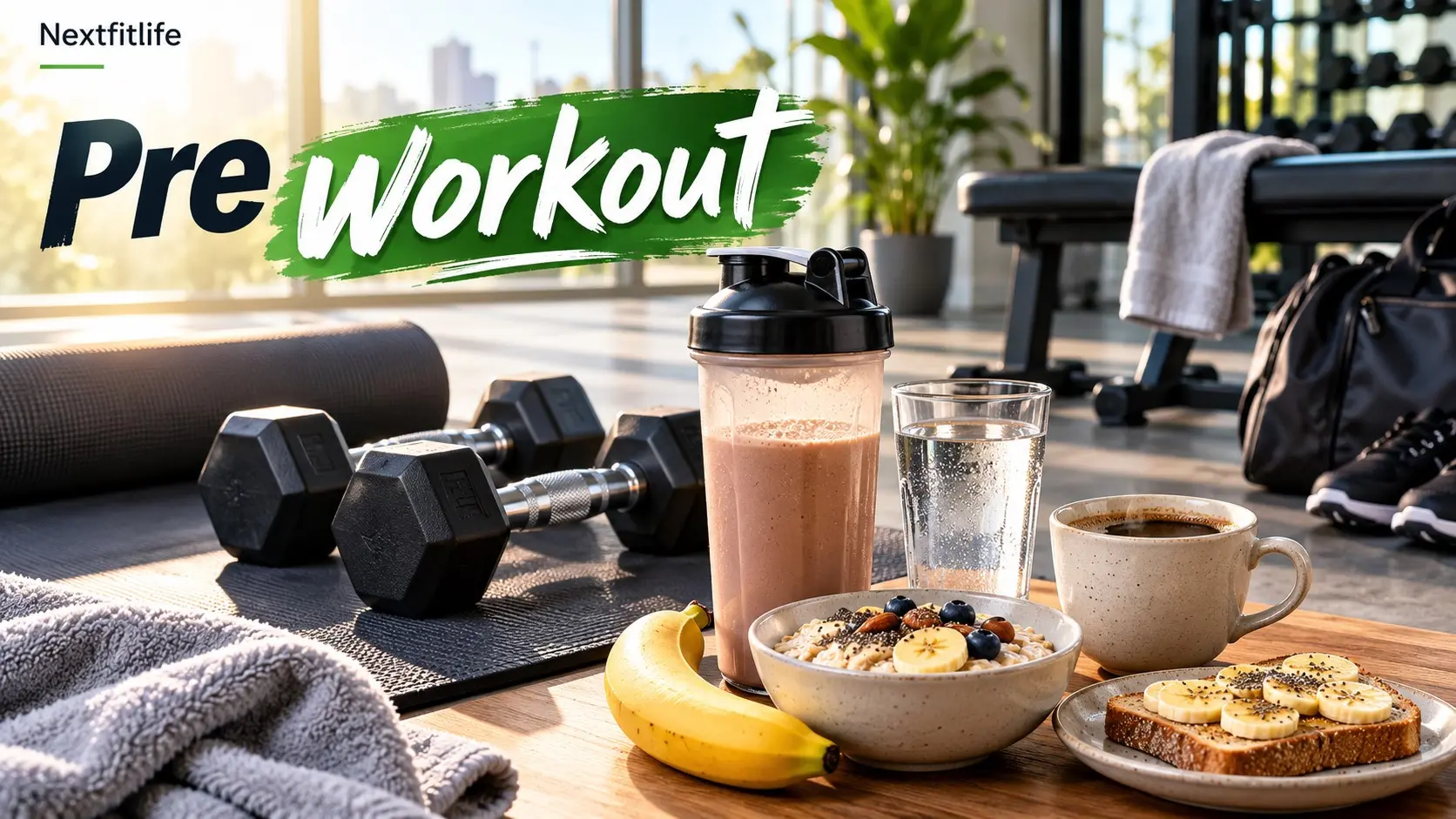
A good pre workout does not have to come from a brightly colored tub.
For many workouts, the basics work well: enough food earlier in the day, some carbohydrates before hard training, a little protein, water, and optional caffeine if you tolerate it.
Supplements can help in specific situations, but they are not the main reason muscle grows.
Muscle growth still depends on progressive resistance training, enough protein and total food, good recovery, and weeks or months of consistent work.
Important: This article is for general information and education. It does not replace medical advice, diagnosis, or treatment.
I am not a dermatologist or a doctor, and this content does not replace professional medical advice. What I share comes from real life experience, extensive research, and consultation with healthcare providers. Always consult qualified medical professionals for diagnosis and treatment of any health condition.
For the training side of muscle gain, visit the Strength Training and Muscle Building Guide. You can also explore the Foods and Nutrition Hub and the NextFitLife Fitness Hub.
Table of Contents
- Quick Answer
- What Pre Workout Really Means
- 11 Smart Pre Workout Tips
- Eat enough earlier
- Use carbs when useful
- Add protein
- Hydrate
- Use caffeine wisely
- Understand creatine
- Use beta alanine correctly
- Treat citrulline claims carefully
- Read the label
- Protect sleep
- Keep the basics first
- Best Pre Workout Foods
- Supplement Ingredient Guide
- Timing
- Muscle Gain
- Side Effects and Safety
- Frequently Asked Questions
- References and Sources
Pre Workout: Quick Answer
A useful pre workout can be food, fluids, caffeine, a supplement, or a mix of these.
For many resistance training sessions, a practical setup is:
- A normal meal two to four hours before training
- Or a smaller snack closer to training
- Carbohydrate if the workout will be hard or long
- Some protein if it fits your normal eating pattern
- Enough water
- Optional caffeine if you tolerate it
Creatine can also support strength and power over time, but you do not need to take it exactly before training.
Beta alanine also works through repeated daily use rather than an immediate energy boost.
The main goal of a pre workout strategy is to help you train well.
What Does “Pre Workout” Actually Mean?
The phrase can describe two different things.
First, it can mean anything you eat or drink before exercise.
Second, it can mean a pre workout supplement containing several ingredients such as caffeine, beta alanine, creatine, citrulline, amino acids, flavoring, and sweeteners.
These are not the same.
A banana and coffee are a pre workout strategy.
So is a normal lunch followed by an evening gym session.
You do not need a supplement to have a good workout.
Does Pre Workout Build Muscle Faster?
Not directly.
A supplement may improve energy, focus, repetitions, or power during a workout in some people.
If that improvement lets you perform more useful training over time, it could support better results.
But the supplement itself does not replace:
- Progressive resistance
- Enough weekly training volume
- Adequate protein
- Enough calories for your goal
- Sleep
- Recovery
A 2025 randomized trial in middle aged adults found that a multi ingredient pre workout and a carbohydrate drink produced similar resistance training outcomes over time.
This is a useful reminder that the basics may matter more than a long ingredient list.
1. Eat Enough Before You Worry About Supplements
Training on very little food can make some people feel weak, lightheaded, or unusually tired.
If you have eaten normally during the day and the workout is short, you may not need anything special.
If you have not eaten for several hours, a small meal or snack may improve comfort and training quality.
Simple options include:
- Banana and yogurt
- Toast and eggs
- Oats and milk
- Rice and chicken
- Fruit and Greek yogurt
- Potatoes and lean protein
The best choice depends on your digestion, schedule, and training intensity.
2. Use Carbohydrates When They Actually Help
Carbs before workout can be useful because carbohydrate is an important fuel for higher intensity exercise.
You may benefit most when:
- The workout is long.
- You are doing high volume resistance training.
- You are training after several hours without food.
- You are doing intervals or endurance work.
- You have another training session later in the day.
A short easy gym session may not require a special carbohydrate feeding.
Simple Pre Workout Carb Foods
- Banana
- Toast
- Oats
- Rice
- Potatoes
- Fruit
- Low fat cereal
Choose foods that digest comfortably.
3. Include Protein Without Obsessing Over the Clock
Protein before workout can contribute amino acids for muscle repair and adaptation.
But you do not need to drink protein at one exact minute before lifting.
Total daily intake matters more.
A normal protein rich meal within a few hours of training can be enough.
Good options include:
- Greek yogurt
- Milk
- Eggs
- Chicken
- Fish
- Lean meat
- Beans
- Lentils
- Tofu
For more on protein and body composition, see the NextFitLife Foods and Nutrition Hub.
4. Hydrate Before Training
Do not start a hard workout already thirsty and dehydrated.
Drink fluids throughout the day rather than trying to fix everything five minutes before exercise.
For most ordinary workouts, water is enough.
Long, hot, or very sweaty sessions may increase the need for fluid and electrolytes.
Your urine does not need to be completely clear all day.
Aim for normal hydration and use thirst, climate, sweat rate, and workout duration as practical guides.
5. Use Caffeine Wisely
Caffeine before workout is one of the better supported acute performance strategies.
It can reduce perceived effort and improve some endurance, repeated effort, power, and strength related outcomes.
But caffeine response is very individual.
Some people feel focused.
Others feel anxious, shaky, nauseated, or unable to sleep.
How Much Caffeine?
You do not need a giant dose.
Many studies use around 3 to 6 milligrams per kilogram of body weight, but useful effects can occur at lower amounts in some people.
For practical use, a small coffee or moderate supplement dose may be enough.
Higher doses bring more side effects and are not automatically more effective.
When to Take It
Caffeine is often taken roughly 30 to 60 minutes before exercise.
The ideal timing depends on the source, dose, stomach contents, and individual response.
A caffeinated gum or drink may act differently from a capsule or coffee.
6. Creatine Is Not Really a “30 Minute Pre Workout” Ingredient
Creatine before workout is often marketed as though it gives an immediate energy rush.
That is not its main role.
Creatine helps increase muscle creatine stores over repeated use.
NIH describes it as one of the most studied sports supplements and notes that it can improve strength, power, and repeated high intensity exercise.
Typical Approach
A common maintenance strategy is around 3 to 5 grams of creatine monohydrate daily.
A loading phase is optional.
Some research uses about 20 grams per day for several days, split into smaller doses, before moving to a maintenance intake.
You do not need a loading phase for creatine to work.
Before or After Training?
Timing appears far less important than regular use.
Studies comparing before and after exercise have not consistently shown a meaningful difference in long term strength or muscle outcomes.
A small 2026 pilot study suggested an acute pre exercise effect, but it included only 11 men and should not replace the much larger body of evidence about regular supplementation.
Consistency remains the practical priority.
7. Beta Alanine Works by Loading Over Time
Beta alanine is another ingredient that is often misunderstood.
It helps raise muscle carnosine levels.
Carnosine can help buffer changes in muscle acidity during hard exercise.
That process takes repeated intake.
Taking one scoop 20 minutes before your workout is not what makes beta alanine effective.
NIH notes that studies commonly use roughly 1.6 to 6.4 grams per day for several weeks.
Why Does Beta Alanine Make You Tingle?
Large single doses can cause temporary tingling called paresthesia.
This feeling does not mean the supplement is working better.
Dividing the daily dose into smaller servings can reduce the sensation.
8. Be Careful With Citrulline Claims
Citrulline is often marketed for nitric oxide, pumps, blood flow, and endurance.
The mechanism makes sense because citrulline can increase arginine availability, which contributes to nitric oxide production.
But evidence for actual exercise performance is mixed.
The NIH Office of Dietary Supplements states that current research does not strongly support citrulline as a performance enhancer.
Some studies show benefits, while others show little or no improvement.
This means citrulline may be optional rather than essential.
9. Read the Ingredient Label Instead of Trusting the Front
A product called “ultra,” “extreme,” or “pump matrix” tells you almost nothing.
Read the actual label.
Look for:
- Total caffeine
- Ingredient amounts
- Serving size
- Number of scoops per serving
- Other stimulant ingredients
- Warnings
A proprietary blend can make it harder to know how much of each ingredient you are taking.
A transparent formula is easier to evaluate.
10. Protect Your Sleep
A pre workout that improves one gym session but ruins your sleep can work against recovery.
Caffeine can remain active for hours.
If you train late, consider:
- A lower caffeine dose
- Coffee earlier in the day only
- A stimulant free pre workout
- No supplement at all
Do not assume a “non drowsy” feeling at bedtime means caffeine is no longer affecting sleep quality.
11. Keep the Training Basics Above the Supplement Stack
A pre workout for muscle gain is only useful when the actual workout is well designed.
Your program should include:
- Exercises you can progress
- Enough weekly resistance training
- Major muscle groups trained regularly
- Good technique
- Reasonable recovery
The 2026 ACSM resistance training guidance emphasizes consistency and progressive resistance. It also shows that training every set to complete failure is not required.
For more practical resistance training guidance, visit the Strength Training and Muscle Building Guide.
Best Pre Workout Foods by Timing
| Time Before Training | Example | Why It Works |
|---|---|---|
| 2 to 4 Hours | Rice, chicken, vegetables | Balanced meal with carbs and protein |
| 1 to 2 Hours | Oats and yogurt | Moderate fuel with time to digest |
| 30 to 60 Minutes | Banana and small yogurt | Light and easy to digest |
| Very Close to Training | Small piece of fruit or sports drink if needed | Quick carbohydrate with little food volume |
These are examples, not strict rules.
Your digestion may need more or less time.
Best Pre Workout for Muscle Gain
If muscle gain is your goal, the most important pre workout question is not “Which powder should I buy?”
Ask:
- Did I eat enough today?
- Did I get enough protein?
- Can I train hard without feeling weak?
- Am I recovering from the last session?
- Can I progress this workout over time?
A supplement can support the session.
It cannot compensate for a poor program or inadequate food.
Pre Workout Ingredient Guide
| Ingredient | Main Use | Evidence View | Key Point |
|---|---|---|---|
| Caffeine | Energy, focus, perceived effort | Strong for selected performance outcomes | More is not always better |
| Creatine | Strength and repeated high intensity work | Strong evidence | Daily use matters more than timing |
| Beta Alanine | Repeated hard effort | Context dependent | Needs repeated loading |
| Citrulline | Blood flow and possible performance support | Mixed and limited | Optional, not essential |
| Betaine | Possible power support | Limited and mixed | Not a core ingredient |
| BCAAs | Amino acids | Limited added value with enough protein | Whole protein is usually more useful |
Do Multi Ingredient Pre Workouts Work?
Sometimes.
A 2024 study found that one multi ingredient formula improved total repetitions, bench press peak power, reaction time, and perceived effort during an upper body resistance workout.
That shows an acute performance effect is possible.
But it does not prove that every product works.
It also does not prove that the formula builds more muscle over months.
A 2025 randomized trial in middle aged adults found that multi ingredient pre workout supplementation and carbohydrate alone produced similar resistance training outcomes.
So look beyond the first energetic workout.
Do You Need Citrulline Malate?
No.
The old article treated citrulline malate as a required foundation of a good pre workout.
Current NIH guidance is more cautious.
Studies have used several different doses and formulations, and results are inconsistent.
If a product contains citrulline, treat it as an optional ingredient rather than proof that the supplement is effective.
Do You Need Betaine?
Probably not.
Betaine has some small studies suggesting possible benefits for strength or power, but evidence is mixed.
NIH describes the potential performance benefits as modest and based on limited trials.
It should not be one of your first priorities.
Do You Need Alpha GPC or Huperzine A?
No.
These ingredients appear in many focus based pre workouts, but they do not have the same exercise performance evidence base as caffeine or creatine.
The old article recommended a specific stack containing both.
That was too confident.
A long supplement label is not automatically a better formula.
What About Nitric Oxide Boosters?
“Nitric oxide booster” is a marketing category rather than one ingredient.
Products may contain:
- Citrulline
- Arginine
- Beetroot or nitrate
Nitrate from beetroot has evidence for selected exercise performance settings, especially some endurance tasks, but effects vary.
Do not assume that feeling a bigger muscle pump means you will build more muscle.
Should You Take Pre Workout on an Empty Stomach?
You can, but you do not have to.
An empty stomach may make some stimulants feel stronger or cause more nausea.
If you feel shaky, sick, or lightheaded, try taking the product with food or lowering the dose.
For hard resistance training, having some food earlier may support better performance anyway.
Can You Take Pre Workout Every Day?
You do not need it every day.
If your supplement contains caffeine, frequent use can make the stimulant effect feel less noticeable in some people.
More importantly, daily late caffeine can harm sleep.
Use it when it is useful rather than because you feel unable to train without it.
There is no evidence based rule saying everyone must cycle off for one week every month.
Do You Need to Cycle Pre Workout?
No fixed cycling schedule is required.
If the product contains caffeine and you notice that you keep increasing the dose just to feel the same effect, reducing your caffeine intake for a period may be reasonable.
But switching from one high stimulant product to another is not a real caffeine break.
Creatine does not require routine cycling for healthy adults using normal amounts.
Can Pre Workout Improve Your Pump?
Possibly.
Some ingredients may influence blood flow or fluid shifts.
A 2026 study of a multi ingredient pre workout found greater temporary increases in quadriceps cross sectional area after exercise, which likely reflected short term muscle fluid shifts.
A bigger pump can feel motivating.
It should not be confused with permanent muscle growth.
Pre Workout and Strength
Caffeine can improve some strength and power outcomes.
Creatine can support strength gains over repeated training.
Beta alanine may help certain high intensity efforts.
But the most reliable way to get stronger remains progressive resistance training.
For a practical plan, see Best Workouts for Men Over 50 or the broader Strength Training Guide.
Pre Workout and Fat Loss
Caffeine may temporarily increase alertness and exercise capacity.
That does not turn pre workout into a reliable fat loss supplement.
Body fat changes primarily through long term energy balance.
A stimulant can also make you feel less hungry temporarily, but using high caffeine doses to suppress appetite is not a good weight management strategy.
For evidence based weight loss guidance, see How to Lose Weight in 2 Weeks and How to Lose Weight in a Healthy Way.
Pre Workout for Morning Training
If you train early, decide whether you perform better with or without food.
Option 1: Very Light
- Water
- Banana
- Coffee if wanted
Option 2: Small Meal
- Oats
- Milk or yogurt
- Fruit
Option 3: No Food
If you feel good training before breakfast and the session is manageable, you do not need to force food.
Eat afterward according to your normal plan.
Pre Workout for Evening Training
Evening training is where caffeine becomes more complicated.
If you normally sleep at 10 or 11 PM, a large caffeine dose in the evening may still affect your sleep.
Try:
- A meal a few hours before training
- A banana or another light carbohydrate snack
- Water
- A stimulant free supplement if you truly want one
You do not need caffeine to have a productive workout.
Who Should Be Careful With Stimulant Pre Workout?
Talk with a healthcare professional before using high stimulant products if you have:
- Heart rhythm problems
- Uncontrolled high blood pressure
- Significant anxiety or panic symptoms
- Pregnancy or breastfeeding
- Medication that interacts with stimulants
- A history of serious stimulant reactions
People younger than 18 should not simply follow adult supplement advice from a gym website.
Children and teenagers can be more sensitive to caffeine and should discuss sports supplements with a qualified healthcare professional.
Pre Workout Side Effects
Possible side effects depend on the ingredients.
| Ingredient | Possible Effect |
|---|---|
| Caffeine | Insomnia, restlessness, nausea, anxiety, rapid heart rate |
| Beta Alanine | Temporary tingling or itching |
| Creatine | Water related weight gain, occasional stomach upset |
| Citrulline | Possible stomach discomfort |
Do not keep increasing the dose when side effects appear.
Can Too Much Pre Workout Be Dangerous?
Yes.
Problems are more likely when people:
- Take multiple scoops
- Combine pre workout with energy drinks
- Add coffee on top of a high caffeine product
- Use products with unclear stimulant content
- Train in heat while dehydrated
Do not “dry scoop” powdered pre workout.
Mix and use products according to label instructions.
Large concentrated doses of caffeine can be dangerous.
Why Third Party Testing Matters
Dietary supplements are not all equal in quality.
Independent certification can help verify that the ingredients match the label and screen for contaminants or banned substances.
Competitive athletes have an extra reason to be careful because contamination can lead to an anti doping violation even when the ingredient was not intentionally taken.
Programs such as NSF Certified for Sport test products and manufacturing processes and screen for banned substances.
Certification does not prove that a supplement will improve your performance.
It improves confidence about what is in the product.
A Simple Pre Workout Decision Guide
| Situation | Simple Option |
|---|---|
| Short easy workout after a meal | Water may be enough |
| Hard workout after several hours without food | Light carb and protein snack |
| Early morning training | Water, fruit, optional coffee |
| Evening training | Food and water, little or no caffeine |
| Strength and power goal | Regular creatine plus good training |
| Need an acute boost | Moderate caffeine if tolerated |
8 Pre Workout Mistakes to Avoid
1. Thinking the Powder Builds Muscle
The training stimulus, food, and recovery create the long term adaptation.
2. Using More Caffeine Every Week
More stimulant can mean more side effects without more benefit.
3. Taking Caffeine Too Close to Bed
A great workout is not worth consistently poor sleep.
4. Treating Beta Alanine Tingling as Proof of Effectiveness
The tingling is a side effect, not a performance score.
5. Taking Creatine Only on Workout Days
Regular daily intake is simpler and better matches how creatine works.
6. Assuming Bigger Pumps Mean More Muscle
A temporary pump is not the same as long term hypertrophy.
7. Ignoring the Label
Check caffeine and serving size before taking multiple scoops.
8. Buying Supplements Before Fixing Food and Training
The basics should come first.
Conclusion
A smart pre workout strategy is much simpler than supplement marketing makes it sound.
Eat enough during the day. Use carbohydrate before demanding sessions when it helps. Include protein as part of your normal diet. Stay hydrated. Use caffeine carefully if you tolerate it, take creatine consistently if it fits your goals, and remember that beta alanine works through repeated intake rather than one scoop before the gym.
Most importantly, do not expect a supplement to build muscle for you.
Your next step is simple: look at your current pre workout routine and remove anything that does not clearly improve your training, comfort, or consistency.
References and Sources
- NIH Office of Dietary Supplements. Dietary Supplements for Exercise and Athletic Performance: Health Professional Fact Sheet.
https://ods.od.nih.gov/factsheets/ExerciseandAthleticPerformance-HealthProfessional/ - International Society of Sports Nutrition. Position Stand: Caffeine and Exercise Performance.
https://jissn.biomedcentral.com/articles/10.1186/s12970-020-00383-4 - Pre Workout Multi Ingredients or Carbohydrate Alone Promote Similar Resistance Training Outcomes in Middle Aged Adults. 2025.
https://pubmed.ncbi.nlm.nih.gov/40512050/ - A Single Dose Multi Ingredient Pre Workout Supplement Enhances Upper Body Resistance Exercise Performance. 2024.
https://pubmed.ncbi.nlm.nih.gov/38321990/ - Effects of Different Dietary Supplements Combined With Conditioning Training on Muscle Strength, Jump Performance, Sprint Speed, and Muscle Mass. 2025.
https://pubmed.ncbi.nlm.nih.gov/40717998/ - Timing of Creatine Supplementation Does Not Influence Gains in Muscle Hypertrophy or Strength From Resistance Training.
https://pubmed.ncbi.nlm.nih.gov/34610729/ - Creatine Monohydrate Timing Before or After Resistance Training. 2022.
https://pubmed.ncbi.nlm.nih.gov/36465581/ - Reducing the Risk of Unintentional Doping From Supplements: A Practical Guide for Athletes and Support Teams. 2026.
https://pubmed.ncbi.nlm.nih.gov/42639281/ - NSF Certified for Sport. Supplement Certification and Testing.
https://www.nsfsport.com/
Internal Links + Hub
- NextFitLife Fitness Hub for strength, cardio, mobility, home workouts, and exercise guidance.
- NextFitLife Foods and Nutrition Hub for protein, carbohydrates, hydration, meal planning, and nutrition guidance.
- Strength Training and Muscle Building Guide for progressive resistance training and muscle gain fundamentals.
- Different Types of Pull Ups for progressive upper body pulling strength.
- Shoulders and Legs Workout for a structured resistance training session.
- Best Workouts for Men Over 50 for strength, cardio, mobility, and healthy aging training.
- 5 Minute Ab Workout for a short core session.
- Healthy and Active Lifestyle for combining exercise, nutrition, sleep, and everyday movement.
- Physical Fitness and Mental Health for the wider relationship between exercise and wellbeing.
- How to Lose Weight in 2 Weeks for realistic short term weight loss guidance.
- How to Lose Weight in a Healthy Way for sustainable long term weight management.
About the Author
Adel Galal is a father of four, three sons and a daughter, and a grandfather of four, with 33 years of hands on parenting experience. He is the founder of Parnthub.com, based in Cairo, Egypt, where he shares practical guidance on feeding, development and family life from newborns to teenagers.
Adel is not a medical professional. Health articles cite trusted sources and are for general information only.
On NextFitLife, Adel researches and writes about fitness, nutrition, healthy aging, exercise performance, and practical lifestyle habits with a focus on separating useful evidence from supplement marketing.
Learn more about Adel and NextFitLife on the About Us page.
Frequently Asked Questions
What does pre workout do?
Pre workout can refer to food, caffeine, or a supplement taken before exercise. Some ingredients can improve energy, focus, perceived effort, power, or repetitions, but effects vary between people and formulas.
Do you need pre workout to build muscle?
No. Muscle growth depends mainly on progressive resistance training, enough protein and energy, sleep, and recovery. Pre workout supplements are optional tools.
What is the best pre workout ingredient?
There is no single best ingredient for every goal. Caffeine has strong evidence for selected acute performance benefits, while creatine has strong evidence for strength and repeated high intensity performance over regular use.
How long before training should I take pre workout?
Timing depends on the product. Caffeine is commonly used about 30 to 60 minutes before exercise. Food may need more time, while creatine and beta alanine do not depend on one precise pre workout window.
Should I take creatine before my workout?
You can, but taking it immediately before exercise is not required. Consistent daily intake matters more than whether creatine is taken before or after a session.
Does beta alanine work immediately?
No. Beta alanine works through repeated intake that raises muscle carnosine over time. The tingling sensation after a dose is a side effect and does not prove better performance.
Does citrulline improve workouts?
It may help some people or exercise tasks, but research remains mixed. NIH states that current evidence is not strong enough to treat citrulline as an essential performance supplement.
Can I take pre workout every day?
You do not need to. Daily caffeine may reduce the noticeable stimulant effect in some people and can interfere with sleep, especially when taken later in the day.
Do I need to cycle pre workout?
No fixed cycling schedule is required. Reducing caffeine for a period may be useful if you keep needing larger doses, but creatine does not require routine cycling in healthy adults using normal amounts.
Is coffee a good pre workout?
Yes, coffee can be a simple caffeine source for people who tolerate it. The caffeine amount varies by coffee type and serving size, so avoid combining large coffees with high caffeine supplements.
Can pre workout help with weight loss?
Caffeine may temporarily improve energy or exercise performance, but pre workout supplements do not replace a calorie deficit for fat loss. They should not be used mainly to suppress appetite.
Is pre workout safe?
Many healthy adults tolerate common ingredients at appropriate amounts, but side effects and interactions are possible. High stimulant doses, unclear labels, medication interactions, heart conditions, pregnancy, and contaminated supplements require extra caution.
What should I eat before a workout?
A useful pre workout meal can include carbohydrates and protein, such as oats and yogurt, rice and chicken, toast and eggs, or fruit and Greek yogurt. Choose portions and timing that digest comfortably.
Can teenagers take pre workout?
Teenagers should not simply use adult high stimulant products. Caffeine and other supplement ingredients require extra caution in younger people, and a healthcare professional should be consulted before using performance supplements.

Health & wellness writer with 30+ years of experience in nutrition, fitness, and healthy aging. Founder of NextFitLife.com — evidence-based health guidance.

