Published on: November 16, 2026
Updated on: November 16, 2026
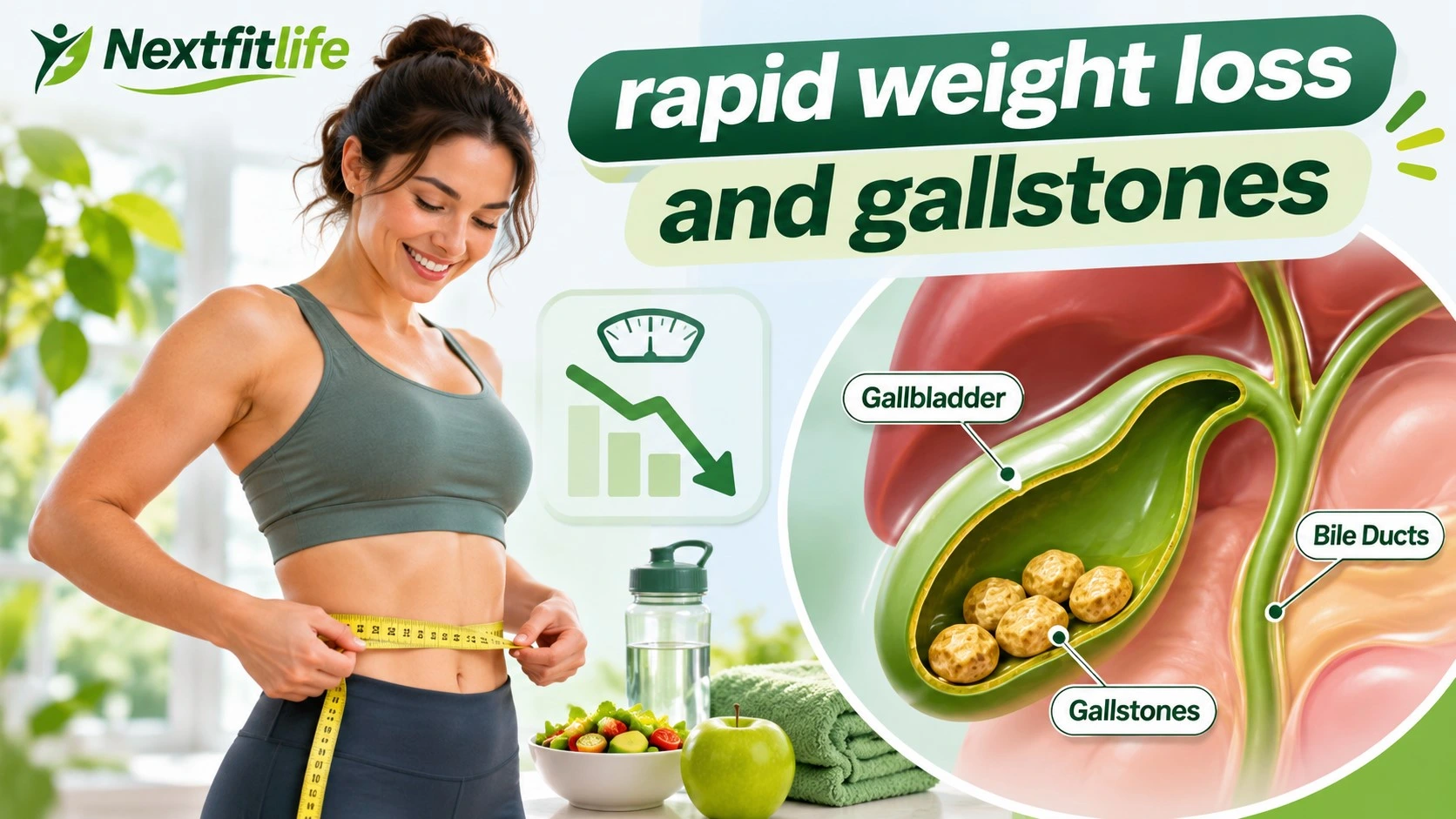
Yes, losing weight very fast can increase your chance of developing gallstones.
The problem is not healthy weight loss itself. Risk rises when weight drops quickly, especially during crash diets, prolonged fasting, a very low calorie diet, or the rapid loss that can follow bariatric surgery.
Quick answer: Rapid weight loss can raise gallstone risk because more cholesterol enters bile while the gallbladder may empty less often. A slower loss rate, regular meals, enough fiber, some healthy fat, and proper follow up after bariatric surgery can lower the risk.
Health note: This article is for general information and education. It does not replace medical advice, diagnosis, or treatment.
Get urgent medical care if you have severe or persistent upper abdominal pain, fever or chills, yellow skin or eyes, repeated vomiting, dark urine, pale stools, or pain that spreads toward the back. These can be signs of gallbladder inflammation, bile duct blockage, infection, or pancreatitis.
For a broader weight loss plan, see the NextFitLife Complete Weight Loss Guide and the Weight Loss and Metabolism Hub.
Table of Contents
- Why rapid weight loss can cause gallstones
- How fast is too fast?
- 6 major risk factors
- What a gallbladder attack feels like
- Gallstones versus complications
- How gallstones are diagnosed
- How to lower your risk during weight loss
- Bariatric surgery and ursodiol
- Gallstones and GLP 1 medicines
- When to seek urgent care
- References and Sources
- Related guides
- About the author
- Frequently asked questions
Why Can Rapid Weight Loss Cause Gallstones?
Your gallbladder stores bile made by the liver.
Bile helps your body digest fat. After you eat, the gallbladder normally contracts and sends bile into the intestine.
During fast weight loss, two things can work against you.
First, the liver can release more cholesterol into bile. Second, the gallbladder may empty less often when food intake becomes very low.
That creates conditions where cholesterol crystals can form and grow into gallstones.
NIDDK specifically warns that fast weight loss and long periods without eating can keep the gallbladder from emptying properly.
How Fast Is Too Fast?
There is no exact weight loss speed that guarantees a person will or will not form gallstones.
Still, there are useful ranges.
Mayo Clinic advises people trying to lose weight to aim for roughly 0.5 to 1 kilogram per week, or about 1 to 2 pounds.
Research reviews have found a clearer rise in gallstone risk when weight loss becomes very fast, especially above about 1.5 kilograms per week.
| Weight Loss Pattern | Gallstone Concern | Practical Response |
|---|---|---|
| About 0.5 to 1 kg per week | Common gradual loss range | Usually more sustainable for many adults |
| More than about 1.5 kg per week | Higher concern in research | Review the plan with a clinician |
| Very rapid loss after surgery | Known high risk period | Follow the bariatric team's prevention plan |
| Unplanned rapid loss | Needs medical assessment | Find the cause of the weight loss |
These are guides, not hard biological cutoffs.
If rapid loss is part of a medically supervised program, follow your care team's target rather than trying to slow the process on your own.
For more detail, read Healthy Rate of Weight Loss.
6 Serious Risk Factors to Know
1. Crash Diets Can Push Weight Down Too Fast
A crash diet often combines severe calorie restriction with fast weight loss.
That is a poor combination for the gallbladder because the body is moving more fat while food intake may be too low to trigger regular gallbladder emptying.
NIDDK recommends avoiding crash diets that promise very fast results.
A slower plan is less dramatic, but it is far easier to live with.
If you want a realistic comparison, see Healthy Weight Loss per Month.
2. Long Fasting Periods Reduce Gallbladder Emptying
Eating stimulates the gallbladder to contract.
Long periods without food give it fewer reasons to empty. That can allow bile to sit for longer.
Fasting once does not mean a gallstone will suddenly appear.
The bigger concern is a pattern of prolonged fasting combined with very rapid loss.
3. Bariatric Surgery Creates a High Risk Period
Weight can fall very quickly after bariatric surgery.
That rapid change is one reason gallstones and biliary sludge can develop during the months after procedures such as gastric bypass or sleeve gastrectomy.
This does not mean bariatric surgery is a bad treatment.
It means gallstone prevention deserves a place in follow up care.
4. Weight Cycling Can Add More Risk
Lose weight quickly. Regain it. Start another strict diet. Repeat.
This pattern is called weight cycling.
NIDDK warns that repeated cycles of losing and regaining weight can raise gallstone risk.
This is another reason I prefer a plan you can keep over a diet designed to produce the fastest possible first month.
5. Obesity Already Raises Gallstone Risk
Obesity itself is a gallstone risk factor.
People with obesity can have more cholesterol in bile, and the gallbladder may empty less effectively.
This creates an awkward situation.
Losing excess weight can improve long term health, yet losing it too quickly can temporarily raise gallstone risk.
The answer is not to avoid weight loss. It is to aim for a safer pace when that is medically appropriate.
6. Other Health Factors Can Stack With Rapid Loss
Rapid loss is only one piece of the risk picture.
Other factors linked with gallstones include:
- Female sex
- Older age
- Diabetes
- Crohn's disease
- Pregnancy
- Family history
- Some blood disorders
If several risk factors apply to you, an extreme diet makes less sense.
What Does a Gallbladder Attack Feel Like?
Many gallstones never cause symptoms.
Symptoms usually start when a stone blocks the normal flow of bile.
A typical gallbladder attack, also called biliary colic, can cause steady pain in the upper abdomen.
The pain is often:
- Under the right ribs
- In the upper middle abdomen
- Strong rather than mildly uncomfortable
- Longer than 30 minutes
- Sometimes present for several hours
Nausea or vomiting can occur too.
If you are unsure whether pain is coming from the liver or gallbladder, see How to Differentiate Gallbladder and Liver Pain.
Gallstones and Gallbladder Complications Are Not the Same
A stone sitting quietly in the gallbladder can cause no problem.
A stone that blocks a duct is different.
| Problem | What Happens | Possible Clues |
|---|---|---|
| Silent gallstones | Stones are present without blockage | No symptoms |
| Biliary colic | A stone temporarily blocks bile flow | Strong upper abdominal pain |
| Acute cholecystitis | Gallbladder becomes inflamed | Persistent pain, fever, tenderness |
| Bile duct blockage | A stone blocks a major bile duct | Pain, jaundice, dark urine, pale stools |
| Pancreatitis | A stone blocks near the pancreatic duct | Severe pain, often toward the back, vomiting |
What Is Acute Cholecystitis?
Acute cholecystitis means the gallbladder has become inflamed.
A gallstone blocking the gallbladder outlet is a common cause.
This pain tends to stay rather than coming and going quickly. Fever and marked tenderness can also develop.
It needs medical care because untreated inflammation can lead to infection and other complications.
Can Gallstones Cause Pancreatitis?
Yes.
Gallstones are an important cause of acute pancreatitis.
A stone can move from the gallbladder and block the area where bile and pancreatic fluid normally drain.
This can trigger inflammation of the pancreas.
If severe upper abdominal pain travels toward your back and comes with vomiting or marked illness, get urgent medical help.
For more detail, see the NextFitLife Pancreatitis Causes Guide.
How Are Gallstones Diagnosed?
A doctor starts with your symptoms and medical history.
Testing may include:
- Abdominal ultrasound
- Blood tests
- Other imaging if needed
Ultrasound is commonly used to look for gallstones.
Blood tests can also show signs of infection, inflammation, bile duct blockage, liver problems, or pancreatitis.
Does Every Gallstone Need Treatment?
No.
Many people have gallstones without ever knowing it.
If a stone is found by accident and causes no symptoms, treatment may not be needed right away.
Repeated painful attacks are different.
When gallstones cause symptoms or complications, surgery to remove the gallbladder is a common treatment.
How Can You Lower Gallstone Risk While Losing Weight?
You cannot prevent every gallstone, but you can avoid several things that raise risk.
1. Aim for a Gradual Rate of Loss
For many adults, about 0.5 to 1 kilogram per week is a practical range.
If a medical team has given you another target, follow that plan.
2. Avoid Crash Diets
Do not make extreme calorie restriction your first tool.
If a very low calorie diet is medically needed, use professional supervision.
3. Eat Regular Meals
Regular eating helps trigger gallbladder contraction.
You do not need to snack all day, but repeated prolonged fasting can be a problem during fast weight loss.
4. Eat Enough Fiber
NIDDK recommends foods such as vegetables, fruits, beans, peas, and whole grains as part of a gallstone friendly eating pattern.
If you need an easy template, see the High Protein High Fiber Diet Plan.
5. Include Some Healthy Fat
Do not assume that removing all fat protects the gallbladder.
Fat triggers the gallbladder to contract.
NIDDK includes healthy fats such as olive oil and fish oil in its general gallstone prevention guidance.
Useful foods include:
- Olive oil
- Fish
- Nuts
- Seeds
- Avocado
The goal is a moderate amount, not a very high fat diet.
6. Reduce Refined Carbs and Added Sugar
Build most meals from minimally processed foods.
Use more vegetables, whole fruit, legumes, whole grains, and useful protein foods while cutting back on frequent sugary drinks and highly refined foods.
Should You Eat Low Fat if You Already Have Gallstones?
This is where prevention advice and symptom advice can sound contradictory.
A large fatty meal makes the gallbladder contract. In someone with symptomatic stones, that can trigger pain.
If fatty meals clearly trigger attacks, a clinician may advise smaller or lower fat meals while you wait for treatment.
That is different from saying every person trying to prevent gallstones should eat almost no fat.
A balanced diet with modest amounts of unsaturated fat still makes sense for prevention.
What About Bariatric Surgery?
Bariatric surgery can produce large health benefits for people who need it.
It can also cause very fast weight loss, especially during the early months.
This creates a period where gallstone formation is more likely.
Your bariatric team may monitor symptoms and use preventive treatment when appropriate.
Can Ursodiol Help Prevent Gallstones?
Sometimes.
Ursodiol, also called ursodeoxycholic acid, is a prescription medicine.
NIDDK notes that doctors may use it to help prevent gallstones in people losing weight rapidly through a very low calorie diet or bariatric surgery.
It is not something to buy and start on your own.
If you expect major rapid weight loss under medical supervision, ask whether gallstone prevention is part of your treatment plan.
What About GLP 1 Weight Loss Medicines?
Modern weight management medicines can lead to large weight loss in some people.
The gallbladder does not care whether rapid loss came from surgery, severe dieting, or medicine. The speed and amount of weight change still matter.
If you use a GLP 1 medicine and develop right upper abdominal pain, fever, repeated vomiting, or jaundice, contact your medical team.
Do not assume every new digestive symptom is simply a normal medicine side effect.
What if the Weight Loss Is Unintentional?
That needs a different approach.
If you are losing a meaningful amount of weight without trying, make a medical appointment.
Unplanned weight loss has many possible causes.
Gallstones may exist at the same time, but they may not explain why you started losing weight.
Can Gallstones Go Away When Weight Loss Slows?
Not necessarily.
Slowing the weight loss can reduce one ongoing risk factor, but it does not guarantee that a stone already formed will disappear.
Some stones remain silent for years.
Others keep causing attacks.
Prescription bile acid medicines can dissolve certain cholesterol stones in selected patients, but treatment can take a long time and stones can return.
Can You Live Normally Without a Gallbladder?
Yes, most people can.
Your liver still makes bile after gallbladder removal.
Instead of being stored in the gallbladder, bile flows more continuously into the intestine.
Some people notice temporary digestive changes, but many return to a normal diet and normal daily life.
A Practical Weight Loss Pattern for Gallbladder Health
| Instead of | Try | Why |
|---|---|---|
| Crash dieting | Moderate calorie reduction | Slower weight loss |
| Long fasting periods | Regular balanced meals | Supports regular gallbladder emptying |
| Almost zero fat | Modest unsaturated fats | Supports gallbladder contraction |
| Low fiber processed foods | Vegetables, fruit, beans, whole grains | Fits gallstone prevention guidance |
| Repeated diet cycles | A maintainable eating plan | Reduces repeated weight cycling |
When Should You Seek Urgent Care?
Do not try to manage severe gallbladder symptoms with diet changes at home.
Get urgent medical help for:
- Severe abdominal pain
- Pain lasting longer than about 30 minutes
- Pain that spreads to your back
- Repeated vomiting
- Fever or chills
- Yellow skin or eyes
- Dark urine
- Pale stools
- Severe weakness
- Rapidly worsening illness
These signs can occur with acute cholecystitis, infection, bile duct blockage, or pancreatitis.
Conclusion
The link between rapid weight loss and gallstones is real, but that is not a reason to avoid healthy weight loss.
The smarter approach is steady loss, regular meals, enough fiber, moderate healthy fat, and fewer extreme diet cycles.
Your next step: if you are losing much faster than about 0.5 to 1 kilogram per week outside a medical program, review your plan. If you already have right upper abdominal pain, fever, vomiting, or jaundice, get medical advice rather than trying to fix it with another diet.
References and Sources
- National Institute of Diabetes and Digestive and Kidney Diseases. Dieting and Gallstones.
https://www.niddk.nih.gov/health-information/digestive-diseases/gallstones/dieting - National Institute of Diabetes and Digestive and Kidney Diseases. Eating, Diet, and Nutrition for Gallstones.
https://www.niddk.nih.gov/health-information/digestive-diseases/gallstones/eating-diet-nutrition - Mayo Clinic. Gallstones: Symptoms and Causes.
https://www.mayoclinic.org/diseases-conditions/gallstones/symptoms-causes/syc-20354214 - NHS. Gallstones.
https://www.nhs.uk/conditions/gallstones/ - National Library of Medicine, PubMed Central. Excess Body Weight and Gallstone Disease.
https://pmc.ncbi.nlm.nih.gov/articles/PMC8406364/
Related NextFitLife Guides
- Complete Weight Loss Guide
- Weight Loss and Metabolism Hub
- Healthy Rate of Weight Loss
- Healthy Weight Loss per Month
- How Much Weight Can You Lose in 3 Weeks?
- High Protein High Fiber Diet Plan
- Gallbladder vs Liver Pain Guide
- Pancreatitis Causes and Warning Signs
Frequently Asked Questions
Can rapid weight loss cause gallstones?
Yes. Rapid weight loss can increase cholesterol in bile and reduce normal gallbladder emptying, which makes gallstone formation more likely.
How fast can I safely lose weight to reduce gallstone risk?
For many adults, about 0.5 to 1 kilogram per week is a practical gradual rate. Medical programs may use different targets, so follow your clinician's plan when appropriate.
Why does fasting increase gallstone risk?
Long fasting periods give the gallbladder fewer chances to contract and empty. Combined with rapid weight loss, this can help create conditions that favor gallstone formation.
What does a gallbladder attack feel like?
A gallbladder attack often causes strong, steady pain in the upper right or upper middle abdomen. It may last longer than 30 minutes and can come with nausea or vomiting.
Can gallstones cause pancreatitis?
Yes. A gallstone can block drainage near the pancreas and trigger acute pancreatitis. Severe pain spreading to the back with vomiting needs urgent medical assessment.
Should I avoid all fat to prevent gallstones?
No. NIDDK includes modest amounts of healthy unsaturated fats in general gallstone prevention advice because eating fat helps the gallbladder contract and empty.
Can ursodiol prevent gallstones during rapid weight loss?
Doctors may prescribe ursodiol for some people undergoing rapid medically supervised weight loss or bariatric surgery. It is a prescription treatment and is not appropriate for everyone.
Does every person with gallstones need surgery?
No. Gallstones that cause no symptoms may need no immediate treatment. Repeated attacks, blockage, inflammation, or other complications make treatment more likely.
Can rapid weight loss from GLP 1 medicines affect the gallbladder?
Rapid weight loss from any method can be relevant to gallstone risk. If you use a weight loss medicine and develop upper right abdominal pain, vomiting, fever, or jaundice, contact your medical team.
When should gallstone pain be treated as urgent?
Get urgent care for severe or persistent pain, fever, chills, jaundice, repeated vomiting, dark urine, pale stools, or pain that spreads toward the back.