
Published on: October 21, 2023
Updated on: October 23, 2026
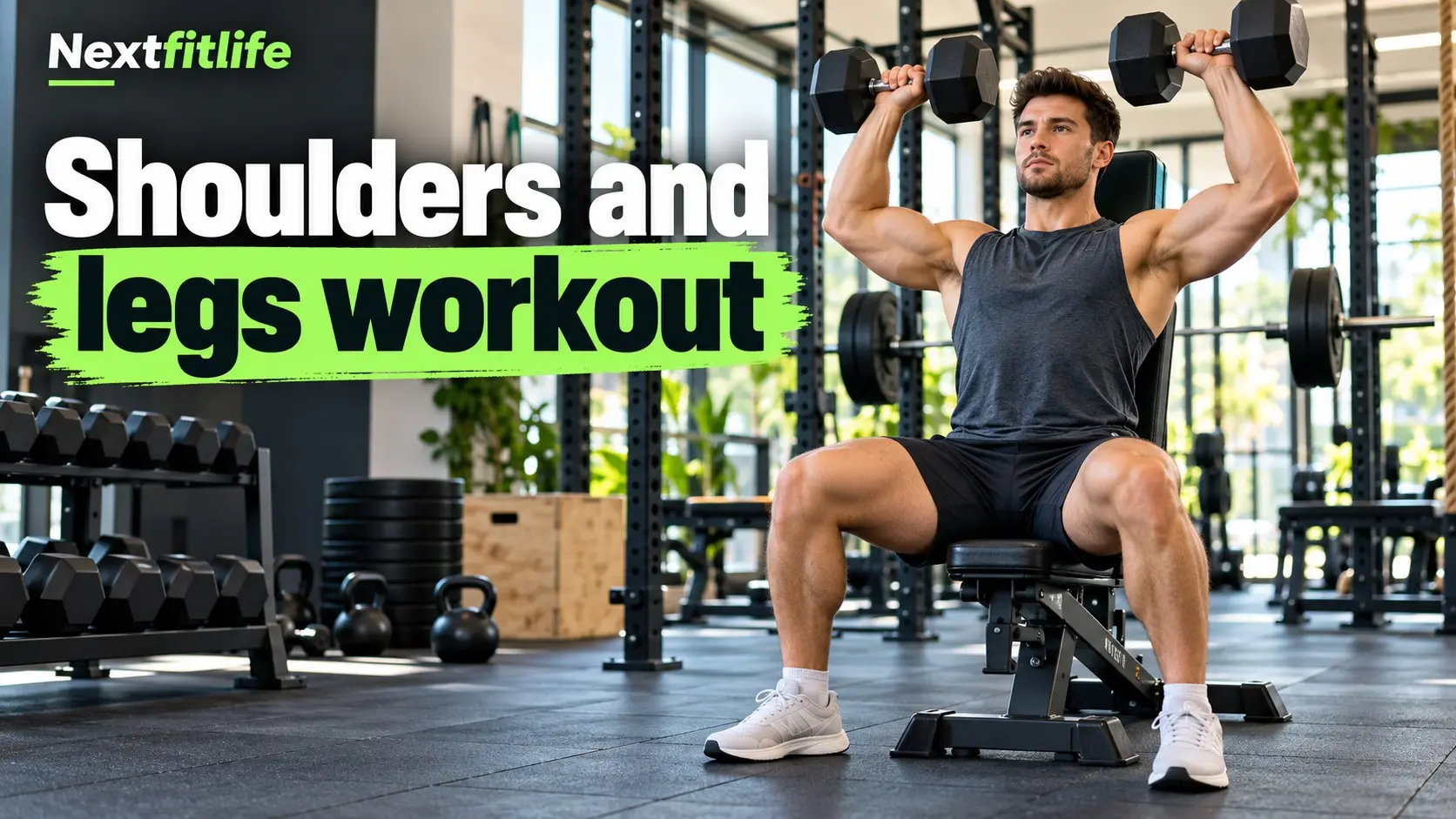
A shoulders and legs workout can be an excellent way to train two major areas in one session. You can pair squats, hinges, split squats, and calf work with shoulder presses, lateral raises, rear delt work, and carries without needing a separate gym day for every muscle.
The key is not simply doing more exercises.
You need the right movements, a sensible order, enough recovery, and gradual progression.
Current resistance training evidence shows that a wide range of programs can build strength and muscle. You do not need perfect equipment, endless sets, or every workout taken to complete muscle failure.
Important: This article is for general information and education. It does not replace medical advice, diagnosis, or treatment.
I am not a dermatologist or a doctor, and this content does not replace professional medical advice. What I share comes from real life experience, extensive research, and consultation with healthcare providers. Always consult qualified medical professionals for diagnosis and treatment of any health condition.
For more strength and workout guidance, visit the NextFitLife Fitness Hub and the Rear Delt Exercises Guide.
Table of Contents
- Quick Answer
- Why Train Shoulders and Legs Together?
- 13 Strong Exercises
- Goblet squat
- Romanian deadlift
- Reverse lunge
- Bulgarian split squat
- Step up
- Calf raise
- Dumbbell shoulder press
- Lateral raise
- Rear delt raise
- Band face pull
- Landmine or incline press
- Farmer carry
- Suitcase carry
- Complete Beginner Workout
- Intermediate Workout
- Sets, Reps, and Rest
- Exercise Order
- How Often to Train
- Knee and Shoulder Friendly Options
- Progressive Overload
- Nutrition and Recovery
- Common Mistakes
- Frequently Asked Questions
- References and Sources
Shoulders and Legs Workout: Quick Answer
Yes, you can train shoulders and legs in the same session.
There is no physiological rule saying shoulders need their own day or that legs must always be trained alone.
A good combined workout can include:
- One squat movement
- One hip hinge
- One single leg exercise
- One calf exercise
- One overhead or angled shoulder press
- One lateral shoulder movement
- One rear shoulder movement
- One loaded carry
You do not need every exercise in every workout.
Six to eight well chosen movements are enough for most people.
Why Train Shoulders and Legs Together?
The combination works well because the muscle groups do not compete heavily for the same movement patterns.
Your legs perform most of the work during squats, lunges, hinges, and step ups, while shoulder presses and raises mainly train the upper body.
This allows you to alternate lower and upper body exercises when useful.
For example:
Squat, shoulder press, Romanian deadlift, lateral raise.
Your legs get a short break while your shoulders work, and your shoulders recover while you return to the legs.
This can make the session efficient without turning it into rushed circuit training.
What Muscles Does This Workout Train?
Shoulders
The shoulder muscles include three major portions of the deltoid:
- Front deltoid
- Side deltoid
- Rear deltoid
The rotator cuff and muscles around the shoulder blade also help control shoulder movement.
This is why a complete shoulder routine should not consist only of overhead presses and front raises.
Presses already train the front deltoids strongly. Side and rear shoulder work often deserves more direct attention.
Legs and Hips
A balanced lower body session trains:
- Quadriceps
- Hamstrings
- Glutes
- Calves
- Hip stabilizers
Squats, hinges, lunges, step ups, and calf raises cover these areas well.
1. Goblet Squat
The goblet squat is a useful starting squat because holding the weight in front can help many people stay balanced.
How to Do It
- Hold one dumbbell close to your chest.
- Stand with a comfortable foot position.
- Bend at the knees and hips.
- Lower as far as you can control comfortably.
- Push through your feet and stand tall.
Your knees do not have to stay behind your toes at all costs.
Some forward knee travel is normal in a squat. Your anatomy, ankle mobility, stance, squat depth, and load all affect the position.
Suggested range: 6 to 12 repetitions.
2. Romanian Deadlift
The Romanian deadlift trains the hamstrings, glutes, and hip hinge pattern.
How to Do It
- Hold dumbbells in front of your thighs.
- Keep a soft bend in your knees.
- Push your hips backward.
- Let the weights travel close to the legs.
- Stop when you feel strong tension in the hamstrings and can keep control.
- Drive the hips forward to stand.
The goal is not to touch the weights to the floor.
Your useful range depends on mobility and control.
Suggested range: 6 to 12 repetitions.
3. Reverse Lunge
I often prefer reverse lunges over forward lunges for beginners because stepping backward can make balance and speed easier to control.
How to Do It
- Stand tall.
- Step one foot backward.
- Lower both legs under control.
- Push through the front foot to return.
- Repeat on the other side.
Your knees do not need to form an exact 90 degree angle.
Choose a step length and depth that feel stable.
Suggested range: 6 to 10 repetitions per leg.
4. Bulgarian Split Squat
This is a harder single leg exercise, so beginners do not need it immediately.
How to Do It
- Place the rear foot on a low stable bench or support.
- Keep most of your weight through the front leg.
- Lower under control.
- Push through the front foot and stand.
If balance becomes the limiting factor, use a normal split squat with both feet on the floor.
Suggested range: 6 to 10 repetitions per leg.
5. Step Up
Step ups train the quadriceps and glutes while using a pattern that carries over well to stairs and everyday movement.
How to Do It
- Choose a stable step.
- Place one foot fully on it.
- Drive through that leg to stand up.
- Lower under control.
Start with a low step.
A taller box is not automatically better.
Suggested range: 6 to 12 repetitions per side.
6. Standing Calf Raise
Calves help with walking, running, jumping, and pushing through the ground.
How to Do It
- Stand tall and use support if needed.
- Rise onto the balls of your feet.
- Pause briefly.
- Lower the heels under control.
Progress from both legs to single leg calf raises if appropriate.
Suggested range: 10 to 20 repetitions.
7. Dumbbell Shoulder Press
The shoulder press trains the front and side deltoids plus the triceps.
How to Do It
- Sit or stand tall with dumbbells near shoulder height.
- Brace your trunk comfortably.
- Press the weights upward.
- Lower them with control.
Do not force the weights into a painful overhead position.
A neutral grip, with palms facing more toward each other, can feel better for some shoulders.
Suggested range: 6 to 12 repetitions.
8. Dumbbell Lateral Raise
Lateral raises directly train the side deltoids.
You normally need far less weight here than you use for presses.
How to Do It
- Hold light dumbbells at your sides.
- Keep a small bend in the elbows.
- Raise your arms out to the sides.
- Stop around shoulder height or at a comfortable range.
- Lower slowly.
Avoid throwing the weights upward with your whole body.
Suggested range: 10 to 20 repetitions.
9. Rear Delt Raise
The rear deltoids are easy to neglect because you cannot see them in the mirror as easily as the front shoulders.
How to Do It
- Hinge forward slightly.
- Hold light dumbbells below the shoulders.
- Raise the arms outward with a soft elbow bend.
- Lower slowly.
Keep the movement controlled rather than turning it into a heavy row.
For more options, see Rear Delt Exercises.
Suggested range: 10 to 20 repetitions.
10. Resistance Band Face Pull
A face pull trains the rear shoulders and muscles around the upper back.
How to Do It
- Secure a resistance band to a safe anchor.
- Hold the band with both hands.
- Pull toward your face while letting the elbows move outward.
- Return under control.
Do not attach a band to an unstable object.
Suggested range: 10 to 20 repetitions.
11. Landmine or Incline Press
Some shoulders do not enjoy straight overhead pressing.
An angled press can be a useful alternative.
If you have access to a landmine setup, press the bar upward and forward rather than straight overhead.
At home, an incline dumbbell press can serve a similar purpose by reducing the overhead angle.
Suggested range: 8 to 12 repetitions.
12. Farmer Carry
The farmer carry trains grip, shoulders, legs, and trunk at the same time.
How to Do It
- Hold a dumbbell in each hand.
- Stand tall.
- Walk with controlled steps.
- Keep breathing normally.
Do not turn it into a race.
Suggested range: 20 to 60 seconds.
13. Suitcase Carry
This variation uses one weight instead of two.
Your trunk has to resist being pulled toward the loaded side while your shoulder and grip support the weight.
How to Do It
- Hold one dumbbell beside you.
- Stand upright without leaning.
- Walk slowly.
- Switch sides.
Suggested range: 15 to 45 seconds per side.
A Beginner Shoulders and Legs Workout
If you are new to resistance training, you do not need all 13 exercises.
| Exercise | Sets | Reps | Focus |
|---|---|---|---|
| Goblet Squat | 2 | 8 to 12 | Quads and glutes |
| Dumbbell Shoulder Press | 2 | 8 to 12 | Shoulders |
| Romanian Deadlift | 2 | 8 to 12 | Hamstrings and glutes |
| Lateral Raise | 2 | 10 to 15 | Side deltoids |
| Reverse Lunge | 2 | 6 to 10 each side | Legs and balance |
| Rear Delt Raise | 2 | 10 to 15 | Rear shoulders |
| Calf Raise | 2 | 12 to 20 | Calves |
Rest long enough to repeat the next set with good technique.
For many beginners, around one to two minutes works well for smaller exercises, while harder squats and hinges may need longer.
An Intermediate Shoulder and Leg Workout
| Exercise | Sets | Reps |
|---|---|---|
| Squat variation | 3 | 5 to 8 |
| Shoulder press | 3 | 6 to 10 |
| Romanian deadlift | 3 | 6 to 10 |
| Bulgarian split squat | 2 to 3 | 8 to 12 each leg |
| Lateral raise | 2 to 3 | 12 to 20 |
| Rear delt raise or face pull | 2 to 3 | 12 to 20 |
| Calf raise | 3 | 10 to 20 |
| Farmer carry | 2 to 3 | 20 to 60 seconds |
Should You Train Legs or Shoulders First?
Train the thing you care about most first.
If increasing squat strength is your priority, squat early while you are fresh.
If overhead press strength is more important, press first.
Research on exercise order shows that strength gains tend to favor movements performed earlier in a session.
Muscle growth appears less sensitive to exercise order when total work is similar.
A practical order is:
- Your highest priority compound movement
- Second compound movement
- Hip hinge or single leg work
- Shoulder accessory work
- Calves and carries
How Many Sets and Reps Should You Do?
There is no magic repetition range.
Current evidence shows that different loads can build muscle when sets are sufficiently challenging.
For practical training:
| Goal | Useful Approach |
|---|---|
| Strength | Heavier resistance with lower to moderate repetitions |
| Muscle growth | Moderate or lighter resistance with enough challenging weekly sets |
| Beginner fitness | One to three controlled sets across a comfortable repetition range |
ACSM's 2026 review found that strength was enhanced with heavier loads, two to three sets, and at least two weekly sessions.
For muscle growth, higher weekly volume tended to produce greater gains, with research supporting benefits around 10 or more weekly sets per muscle group.
That does not mean a beginner should jump straight to 10 hard sets for every muscle.
Start with less and build as needed.
Do You Need to Train to Failure?
No.
You do not need every set to end with a failed repetition.
Current ACSM evidence found that training to momentary muscle failure did not consistently improve outcomes.
A useful set should feel challenging, especially near the end, while your technique stays controlled.
Stopping with one or a few good repetitions still possible is a sensible approach for most recreational lifters.
How Often Should You Do This Workout?
Two sessions per week can work very well.
CDC recommends muscle strengthening activities on at least two days each week that work all major muscle groups.
Current resistance training evidence also shows strong gains with at least two weekly sessions.
A simple schedule could be:
Monday: shoulders and legs workout
Thursday: shoulders and legs workout
If you also train chest, back, and arms separately, you can use the combined workout once or twice weekly depending on your total volume.
Training frequency is a way to distribute work. It is not a score where more days automatically means more muscle.
How Should You Progress?
Progressive overload means gradually asking your body to do more.
You can progress by:
- Adding one repetition
- Adding a small amount of weight
- Adding a set
- Improving range of motion
- Improving control
- Using a harder exercise variation
Do not increase everything at the same time.
Suppose you perform goblet squats for 3 sets of 8 with good form.
Over several workouts, you reach 3 sets of 12 with the same weight and the final repetitions no longer feel difficult.
Increase the resistance slightly and begin again near the lower end of your repetition range.
What If Your Knees Hurt During Squats?
Knee discomfort does not automatically mean squats are bad for your knees.
Change the exercise before abandoning lower body training.
Try:
- A higher box squat
- A shallower comfortable depth
- A different stance
- A supported split squat
- A lower step up
- Lighter resistance
There is no universal need to stop the knees from moving past the toes.
A 2024 biomechanical review explains that squat joint loads change with stance, trunk position, depth, tibia position, and other technique variables.
Persistent swelling, locking, instability, or significant pain deserves professional assessment.
What If Your Shoulders Hurt Overhead?
Do not keep forcing a painful overhead press.
You can try:
- A neutral grip dumbbell press
- A landmine press
- An incline dumbbell press
- A smaller pain free range
- Lighter resistance
Persistent night pain, sudden weakness, loss of motion, or pain following an injury should be assessed.
Do You Need Front Raises?
Usually not.
The front deltoids already work hard in overhead presses, incline presses, bench presses, and many pushup variations.
If workout time is limited, I would usually prioritize side and rear shoulder work rather than adding several sets of front raises.
That creates a more balanced shoulder session without unnecessary volume.
Should You Superset Legs and Shoulders?
You can.
A useful pairing might be:
Goblet squat plus lateral raise
or
Romanian deadlift plus rear delt raise
Because the exercises use different main muscle groups, the pairing can save time.
Do not rush heavy compound lifts just to turn the workout into cardio.
If strength is the priority, give yourself enough rest to perform the important movements well.
How Long Should the Workout Take?
Most people do not need a two hour session.
A beginner routine can often fit into about 40 to 60 minutes once the exercises are familiar.
A higher volume intermediate workout may take longer.
Workout length matters less than completing useful work with good form and enough rest.
A Simple Warmup
You do not need a long stretching routine before lifting.
Try:
- Five minutes of easy walking or cycling.
- Several controlled bodyweight squats.
- A few hip hinges.
- Gentle shoulder circles.
- A light set of presses.
- A lighter practice set of your first leg exercise.
The warmup should prepare you to train, not tire you out.
Does Cardio Fit With This Workout?
Yes.
Strength and aerobic fitness serve different purposes.
CDC recommends at least 150 minutes of moderate aerobic activity each week or 75 minutes vigorous, plus strength training on at least two days.
You can place easy cardio:
- After strength training
- On separate days
- Earlier in the day if the sessions are separated
If leg strength is your priority, avoid exhausting your legs with hard cardio immediately before heavy squats or hinges.
For cardio choices, see Cycling Benefits and Walking vs Running.
What Should You Eat After the Workout?
You do not have to sprint toward a protein shake the second your final set ends.
Protein timing is much less dramatic than old gym advice suggested.
A 2025 systematic review found no important difference in lean body mass gains when protein was consumed before versus after resistance training.
Your overall eating pattern and total protein intake matter more than hitting an exact 30 minute window.
A normal meal after training might include:
- Chicken, rice, and vegetables
- Fish with potatoes and salad
- Eggs with whole grain toast
- Greek yogurt with oats and fruit
- Lentils with rice and vegetables
- Tofu with vegetables and noodles
For nutrition ideas, visit the NextFitLife Foods and Nutrition Hub.
How Much Recovery Do You Need?
Your legs may need more recovery than your side deltoids because the lower body exercises often involve more muscle and heavier loads.
Signs that recovery may be inadequate include:
- Performance falling for several sessions
- Persistent unusual fatigue
- Joint pain getting worse
- Sleep becoming poor
- Normal training loads suddenly feeling much harder
Ordinary muscle soreness does not always mean you need complete rest, and being sore is not proof that a workout was effective.
Judge recovery by performance and how you feel over several days.
10 Common Shoulders and Legs Workout Mistakes
1. Doing Too Many Exercises
More movements create more fatigue, not automatically better results.
2. Training Front Delts but Ignoring Rear Delts
Pressing already gives the front shoulders plenty of work. Include rear shoulder exercises too.
3. Using the Same Weight Forever
If the workout never becomes more challenging, progress may eventually slow.
4. Adding Weight Before Technique Is Ready
A heavier dumbbell does not fix poor movement.
5. Forcing Every Squat Into the Same Shape
People have different hip structure, limb lengths, ankle mobility, and training goals.
6. Believing Knees Must Never Pass the Toes
Forward knee travel can be a normal part of squatting and lunging.
7. Training Every Set to Failure
Complete failure is not required for good strength or muscle results.
8. Rushing Rest Periods
Rest enough to perform your important sets with quality.
9. Using Soreness as the Score
Progress is better measured through strength, repetitions, control, and training consistency.
10. Changing the Workout Every Week
Repeat useful movements long enough to improve them before replacing everything.
When Should You Get Medical Advice Before Training?
Ask a healthcare professional about appropriate exercise when you have a medical condition that changes training safety.
Examples include:
- Significant heart disease
- Uncontrolled high blood pressure
- Severe lung disease
- Recent surgery
- Severe osteoporosis
- Major knee, hip, or shoulder injury
- Repeated fainting
- Neurological conditions affecting movement
Stop exercising and seek urgent medical care for chest pain, fainting, sudden weakness, severe unusual shortness of breath, or new neurological symptoms.
Conclusion
A good shoulders and legs workout does not need dozens of exercises. Build the session around a squat, hip hinge, single leg movement, press, side and rear shoulder work, and a useful carry, then progress those movements over time.
Start with the beginner workout twice this week. Record your sets, repetitions, and resistance. Next week, improve one small thing rather than redesigning the entire program.
References and Sources
- American College of Sports Medicine. Resistance Training Prescription for Muscle Function, Hypertrophy, and Physical Performance in Healthy Adults. 2026.
https://pmc.ncbi.nlm.nih.gov/articles/PMC12965823/ - Centers for Disease Control and Prevention. Adult Activity: An Overview.
https://www.cdc.gov/physical-activity-basics/guidelines/adults.html - Straub RK, Powers CM. A Biomechanical Review of the Squat Exercise: Implications for Clinical Practice. 2024.
https://pubmed.ncbi.nlm.nih.gov/38576836/ - What Influence Does Resistance Exercise Order Have on Muscular Strength Gains and Muscle Hypertrophy? Systematic Review and Meta Analysis.
https://pubmed.ncbi.nlm.nih.gov/32077380/ - Resistance Training Prescription for Muscle Strength and Hypertrophy in Healthy Adults: Systematic Review and Network Meta Analysis.
https://pubmed.ncbi.nlm.nih.gov/37414459/ - Does Protein Ingestion Timing Affect Exercise Induced Adaptations? Systematic Review and Meta Analysis. 2025.
https://pubmed.ncbi.nlm.nih.gov/40647175/ - Physical Activity Guidelines for Americans, Second Edition.
https://www.cdc.gov/physical-activity/media/pdfs/Physical_Activity_Guidelines_2nd_edition.pdf
Internal Links + Hub
- NextFitLife Fitness Hub for strength, cardio, walking, mobility, and workout guidance.
- Rear Delt Exercises for building balanced shoulders and strengthening the back of the deltoids.
- Strengthening Exercises at Home for a complete full body resistance routine.
- Arm Exercises for Women Over 50 for upper body strength and resistance training guidance.
- How to Get Fit at 50 for a balanced approach to strength, cardio, balance, mobility, and recovery.
- Cycling Benefits for a lower impact cardio option that can complement strength training.
- Walking vs Running for choosing aerobic exercise around your goals and joints.
- Healthy and Active Lifestyle for combining workouts with regular daily movement.
- Physical Fitness and Mental Health for the wider benefits of staying physically active.
- Foods and Nutrition Hub for protein, carbohydrates, healthy meals, and recovery nutrition.
About the Author
Adel Galal is a father of four, three sons and a daughter, and a grandfather of four, with 33 years of hands on parenting experience. He is the founder of Parnthub.com, based in Cairo, Egypt, where he shares practical guidance on feeding, development and family life from newborns to teenagers.
Adel is not a medical professional. Health articles cite trusted sources and are for general information only.
On NextFitLife, Adel researches and writes about fitness, nutrition, weight management, healthy aging, and practical exercise with a focus on realistic progress, correct technique, and sustainable training.
Learn more about Adel and NextFitLife on the About Us page.
Frequently Asked Questions
Can I train shoulders and legs together?
Yes. Shoulders and legs can be trained effectively in the same session. Combining them can make a workout efficient because the main upper and lower body muscle groups do not heavily compete during most exercises.
Should I train shoulders or legs first?
Put your highest priority movement first. If leg strength is the main goal, start with your important squat or hinge. If shoulder pressing strength matters most, begin with the press.
How many exercises should a shoulders and legs workout have?
Most people can build a useful workout with about six to eight exercises. You do not need every possible shoulder and leg movement in one session.
How often should I train shoulders and legs?
Training each major muscle group around twice per week is a practical approach for many people. Your ideal frequency also depends on total weekly volume, recovery, goals, and training experience.
What are the best leg exercises?
Useful lower body movements include squats, Romanian deadlifts, split squats, reverse lunges, step ups, and calf raises. Choose variations that match your mobility, experience, equipment, and joints.
What are the best shoulder exercises?
A balanced shoulder routine can include an overhead or angled press, lateral raises, rear delt raises, face pulls, and loaded carries. Front raises are often optional because pressing already trains the front deltoids.
Should my knees stay behind my toes when squatting?
No universal rule requires your knees to remain behind your toes. Normal squat mechanics vary with body proportions, ankle mobility, stance, depth, and load. The goal is controlled, comfortable movement rather than forcing one position on everyone.
Do I need to train to failure to build muscle?
No. Current resistance training evidence does not show that complete muscle failure is required for good strength or muscle gains. Sets should be challenging while technique remains controlled.
How many sets should I do?
Beginners can make progress with one to three sets per exercise. Higher weekly volume can support more muscle growth as training experience increases, but more sets are not automatically better.
Can I superset shoulders and legs?
Yes. Pairing a leg movement with a smaller shoulder exercise can save time because the exercises use different main muscle groups. Give heavy compound exercises enough recovery if strength is your priority.
Do I need protein immediately after the workout?
No narrow 30 minute protein window is required. A normal protein rich meal before or after training can support recovery. Overall daily nutrition and protein intake remain more important than exact minute by minute timing.
How long should a shoulder and leg workout take?
A beginner workout can often be completed in about 40 to 60 minutes once the movements are familiar. Higher volume sessions may take longer. Workout quality matters more than making the session unusually long.

Health & wellness writer with 30+ years of experience in nutrition, fitness, and healthy aging. Founder of NextFitLife.com — evidence-based health guidance.

