Next review: September 2027 or sooner if major nutrition or weight management guidance changes
Written and source checked by: Adel Galal, Founder and Lead Writer at NextFitLife
Review status: Checked against current CDC weight management guidance, NIDDK weight management guidance, the Dietary Guidelines for Americans 2025 to 2030, and current physical activity recommendations. This article has not been medically reviewed by a physician, registered dietitian, obesity medicine specialist, or other licensed healthcare professional.Quick answer: A Simple Meal Plan for Weight Loss should help you eat slightly fewer calories without leaving you hungry all day. Build meals around protein, vegetables or fruit, fiber rich carbohydrates, and sensible portions of healthy fats. Repeat easy meals, plan snacks only when needed, drink mostly water, and adjust portions from your actual weight trend.
You do not need seven fancy breakfasts.
You do not need seventeen ingredients in every dinner.
And you do not need to spend Sunday afternoon preparing twenty plastic containers.
A useful weight loss meal plan is much less dramatic.
You find a few meals that work.
You repeat them.
You change the protein or vegetables when you get bored.
You keep portions reasonable.
Then you watch what your body actually does.
That is the plan.
The biggest mistake I see in meal plan articles is false precision.
They tell every reader to eat the same calorie number.
A smaller older adult, a tall active man, a woman who strength trains four times each week, and someone with severe obesity do not have identical energy needs.
So this plan gives you structure.
Not a made up universal prescription.
For the wider strategy, visit the NextFitLife Weight Loss and Metabolism Hub.
What makes a Simple Meal Plan for Weight Loss actually work?
A meal plan works when it helps create a calorie deficit you can maintain.
That means your food and drink intake is lower than the energy your body uses over time.
But calorie control is only part of the job.
A good plan should also help you:
- Feel reasonably full
- Get enough protein
- Eat vegetables and fruit
- Get enough fiber
- Meet nutrient needs
- Exercise when appropriate
- Sleep normally
- Eat with family or friends
- Continue the plan longer than one week
NIDDK says successful weight loss programs should include a healthy reduced calorie eating plan that is matched to the person's health, preferences, culture, and values.
That is exactly how I would approach meal planning.
The plan should fit your life.
Your life should not have to fit the plan.
The simple meal formula I would use
Forget perfect macros for a moment.
Start each main meal with four questions.
Where is the protein?
Examples:
- Eggs
- Fish
- Chicken
- Turkey
- Lean meat
- Greek yogurt
- Cottage cheese
- Beans
- Lentils
- Tofu
- Tempeh
Where are the vegetables or fruit?
Add color and volume.
Examples:
- Leafy greens
- Broccoli
- Peppers
- Tomatoes
- Carrots
- Cucumber
- Berries
- Apples
- Oranges
Where is the fiber rich carbohydrate?
Useful options include:
- Oats
- Beans
- Lentils
- Potatoes
- Brown rice
- Whole grain bread
- Quinoa
- Other whole grains
Where is the fat?
Use a sensible amount of:
- Olive oil
- Avocado
- Nuts
- Seeds
- Fatty fish
This basic formula gives you balanced meals without turning every plate into a maths exercise.
Do you need to eat exactly three meals?
No.
Three meals work well for many people because the pattern is simple.
Someone else may prefer:
- Three meals with no snacks
- Three meals and one snack
- Two larger meals
- A later breakfast
The meal schedule matters less than what happens across the whole day.
If skipping breakfast leaves you calm and comfortable until lunch, fine.
If it leaves you attacking the kitchen at 4 pm, eat breakfast.
Use the eating pattern that makes calorie control easier.
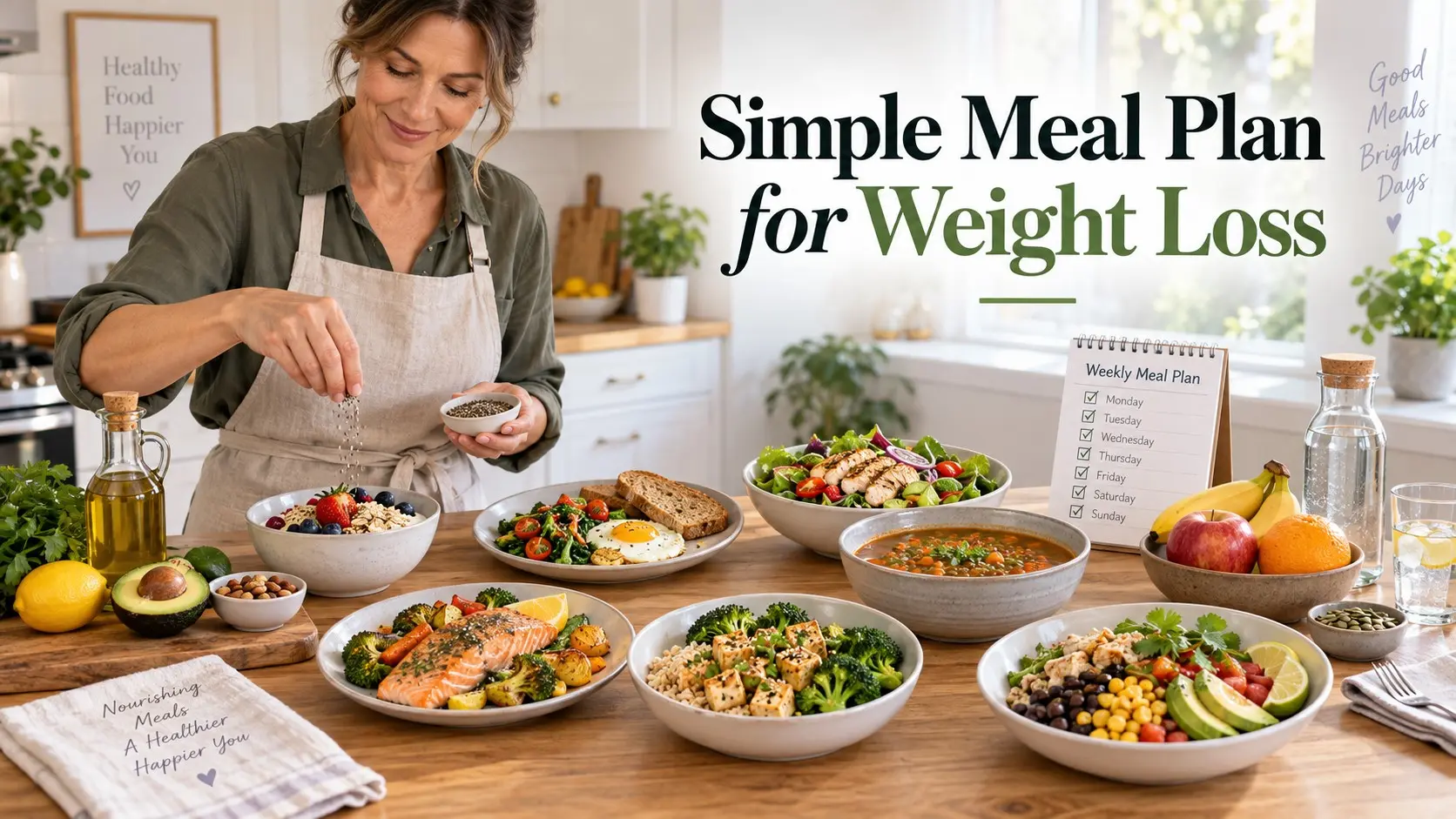
Your 7 day Simple Meal Plan for Weight Loss
This is an educational meal framework.
It does not prescribe calories for you.
Increase or decrease portions based on your body size, hunger, activity, medical needs, and weight trend.
Day 1
Breakfast: Plain Greek yogurt with berries, oats, and a small amount of nuts or seeds.
Lunch: Grilled chicken salad with mixed vegetables and potatoes or a whole grain.
Dinner: Salmon with broccoli, carrots, and potatoes.
Optional snack: Apple with a small amount of peanut butter.
Day 2
Breakfast: Eggs with spinach, tomatoes, and whole grain toast.
Lunch: Lentil soup with a side salad and whole fruit.
Dinner: Chicken with brown rice and mixed vegetables.
Optional snack: Plain Greek yogurt.
Day 3
Breakfast: Oatmeal cooked with milk or an appropriate fortified alternative, topped with berries and seeds.
Lunch: Tuna and white bean salad with cucumber, tomatoes, leafy greens, and lemon.
Dinner: Lean beef or tofu stir fry with broccoli, peppers, mushrooms, and rice.
Optional snack: Carrots and hummus.
Day 4
Breakfast: Cottage cheese with fruit and a small serving of oats or whole grain toast.
Lunch: Chicken or tofu bowl with quinoa, roasted vegetables, and leafy greens.
Dinner: White fish with green beans, potatoes, and salad.
Optional snack: Boiled egg and fruit.
Day 5
Breakfast: Vegetable omelet with fruit.
Lunch: Chickpea and tuna salad or a chickpea and tofu salad for a plant based version.
Dinner: Turkey, chicken, or bean patties with roasted vegetables and a whole grain.
Optional snack: Plain yogurt with berries.
Day 6
Breakfast: Greek yogurt, banana, oats, and chia seeds.
Lunch: Leftover protein with a large salad and potatoes, beans, or rice.
Dinner: Chicken, tofu, or lentil curry with vegetables and a moderate serving of rice.
Optional snack: Whole fruit and a few nuts.
Day 7
Breakfast: Eggs with vegetables and whole grain toast, or oatmeal with yogurt and fruit.
Lunch: Bean and chicken bowl, tuna salad, or leftover lentil soup.
Dinner: A flexible family meal built around protein, vegetables, a sensible carbohydrate portion, and a small amount of healthy fat.
Optional snack: Choose one only if genuinely hungry.
Why this 7 day meal plan is intentionally repetitive
Because repetition makes life easier.
This is a weekly meal plan, not restaurant entertainment.
You do not need a completely new breakfast every morning.
Repeating a few reliable meals reduces:
- Shopping decisions
- Food waste
- Preparation time
- Takeaway temptation
- Guessing about portions
Keep two breakfasts you like.
Keep three lunches.
Rotate a few dinners.
That is enough variety for many people.
What should breakfast look like for weight loss?
A useful breakfast contains enough food to prevent you from becoming very hungry an hour later.
I like to combine protein with a fiber source.
Examples:
- Greek yogurt, berries, and oats
- Eggs, vegetables, and whole grain toast
- Oatmeal with milk, fruit, and nuts
- Beans with eggs and tomatoes
- Tofu scramble with vegetables and potatoes
You can find more options in our Healthy Breakfast Foods guide.
What makes lunch work better?
Lunch should stop the 4 pm snack emergency.
That means lettuce alone is not enough.
A strong lunch usually includes:
- A clear protein source
- Plenty of vegetables
- A useful fiber rich carbohydrate
- A small amount of healthy fat
Examples:
- Chicken and quinoa bowl
- Tuna and bean salad
- Lentil soup
- Tofu and brown rice
- Egg and vegetable meal
For a full list, visit Healthy Lunch Ideas for Weight Loss.
What should dinner look like?
Dinner does not need to be tiny.
It needs to fit the whole day.
Build it around:
Protein + vegetables + carbohydrate + a reasonable amount of fat.
Examples:
- Fish, potatoes, and vegetables
- Chicken, rice, and salad
- Lentils, whole grains, and vegetables
- Tofu stir fry with rice
- Lean beef with vegetables and potatoes
That is normal food.
Normal food works.
Do you need snacks to lose weight?
No.
Snacks are useful only when they solve a real problem.
If you are hungry between meals, use a planned snack.
If you are eating because you are bored, tired, or standing beside an open cupboard, adding “healthy snacks” will not fix the real issue.
Useful healthy snacks for weight loss include:
- Whole fruit with Greek yogurt
- Apple with peanut butter
- Carrots with hummus
- Boiled eggs
- Cottage cheese and berries
- A small serving of nuts with fruit
Keep snacks simple.
Protein can make the meal plan easier
Protein for weight loss is useful because it supports muscle and can make meals feel more satisfying.
That does not mean protein melts fat.
It does not.
Use protein as meal structure.
Not as a miracle ingredient.
Our High Protein Foods for Weight Loss guide compares useful animal and plant options.
Fiber matters more than many meal plans admit
If a weight loss meal plan removes fruit, beans, lentils, whole grains, and most vegetables, I would ask why.
Fiber rich foods can help you build larger, more satisfying meals.
They also support bowel function.
Useful foods include:
- Vegetables
- Whole fruit
- Beans
- Lentils
- Oats
- Whole grains
- Nuts
- Seeds
Increase fiber gradually if your current intake is low.
A sudden huge increase can cause bloating or gas.
How should you handle portions?
Portion control does not mean weighing every cucumber slice.
Pay most attention to foods where small portions contain a lot of energy.
Examples:
- Cooking oil
- Nuts
- Nut butter
- Cheese
- Dressings
- Sauces
- Desserts
- Alcohol
Measure these foods a few times if you are unsure.
You may discover that your “small drizzle” of oil is much larger than you thought.
That information is useful.
No guilt required.
Do you need to count calories?
Not always.
Some people lose weight well by using:
- Regular meals
- Portion awareness
- Protein and fiber
- Less liquid sugar
- Meal preparation
Others benefit from tracking calories temporarily.
The goal is to learn.
Not to become afraid of food.
If calorie tracking creates obsessive behavior, severe restriction, binge eating, or anxiety, stop and ask for professional support.
How to meal prep without spending all Sunday cooking
Meal prep for weight loss does not need to mean thirty identical containers.
Prepare components.
Cook one or two proteins
Examples:
- Chicken
- Boiled eggs
- Lentils
- Tofu
Cook one carbohydrate base
Examples:
- Potatoes
- Brown rice
- Quinoa
- Oats
Prepare vegetables
Wash salad leaves.
Cut cucumbers and peppers.
Roast a tray of vegetables.
Keep quick extras ready
- Plain yogurt
- Fruit
- Beans
- Tinned tuna
- Nuts
- Frozen vegetables
Now you can assemble meals instead of cooking everything from zero.
A simple weekly shopping list
Protein
- Eggs
- Chicken or turkey
- Fish
- Greek yogurt
- Cottage cheese
- Beans
- Lentils
- Tofu
Vegetables
- Leafy greens
- Broccoli
- Carrots
- Peppers
- Tomatoes
- Cucumber
- Frozen mixed vegetables
Fruit
- Apples
- Berries
- Oranges
- Bananas
- Other whole fruit you enjoy
Carbohydrates
- Oats
- Potatoes
- Brown rice
- Whole grain bread
- Quinoa
- Beans and lentils
Healthy fat choices
- Olive oil
- Avocado
- Nuts
- Seeds
Can vegetarian and vegan eaters use this plan?
Yes.
Replace animal foods with suitable plant proteins.
Examples:
- Beans
- Lentils
- Tofu
- Tempeh
- Edamame
- Suitable fortified soy foods
A vegetarian may also use eggs, dairy, or both depending on personal choices.
Plant based eating still needs planning for protein and nutrients such as vitamin B12, iron, calcium, iodine, vitamin D, and omega 3 fats.
Individual needs vary.
Can people with diabetes use this meal plan?
The food pattern may contain useful components.
But diabetes changes the level of care needed.
Meal timing, carbohydrate amount, medicine, and insulin can interact.
If you use insulin or medicine that can cause low blood glucose, major diet changes may require medication adjustment.
Do not copy an online meal plan without discussing significant changes with your diabetes team.
What if you have kidney disease?
Do not assume a high protein weight loss plan is right for you.
Kidney disease can change recommendations for:
- Protein
- Potassium
- Phosphorus
- Sodium
- Fluid
Use individualized nutrition advice from your healthcare professional or renal dietitian.
What if you are pregnant or breastfeeding?
This meal plan is not a pregnancy weight loss prescription.
Pregnancy and breastfeeding have different energy and nutrient needs.
Do not intentionally pursue major weight loss during pregnancy unless you are following individual medical guidance.
How much weight should this meal plan produce?
No honest meal plan can promise you an exact number.
CDC guidance describes gradual loss of about 1 to 2 pounds per week as a pace that is more likely to be maintained for many people trying to lose weight.
Your rate may be different.
It depends on:
- Starting body size
- Actual calorie deficit
- Activity
- Medication
- Medical conditions
- Water retention
- Adherence
Do not force the scale to hit someone else's weekly target.
Why the scale can rise even when the plan is working
Body weight is not pure body fat.
It includes:
- Water
- Food
- Glycogen
- Waste
- Muscle
- Fat
A salty restaurant meal can move water upward.
A hard workout can move water upward.
A menstrual cycle can move water upward.
Constipation can move scale weight upward.
Look at the trend.
Not Tuesday morning alone.
What should you do if weight loss stops?
Do not throw away the whole plan.
A weight loss plateau needs a review.
Check:
- Portion size
- Cooking oil
- Drinks
- Snacks
- Alcohol
- Weekend eating
- Restaurant meals
- Daily movement
- Sleep
- Medication changes
If the trend has genuinely stopped for several weeks, make one small change.
For a step by step review, read Why Am I Not Losing Weight in a Calorie Deficit?
Should exercise be part of the meal plan?
A meal plan controls food.
A weight management plan should usually include movement when appropriate.
CDC guidance says adults should aim for at least 150 minutes of moderate aerobic activity per week and two days of muscle strengthening.
You can build toward that target.
Walking is a good place to start.
Strength training matters too.
Physical activity provides health benefits even when it does not create dramatic weight loss by itself.
A simple movement week to pair with the plan
| Day | Simple activity idea |
|---|---|
| Monday | Walk plus short strength session |
| Tuesday | Walk |
| Wednesday | Walk or other moderate activity |
| Thursday | Walk plus short strength session |
| Friday | Walk |
| Saturday | Longer enjoyable activity |
| Sunday | Rest or gentle movement |
Adapt this to your health and ability.
Some activity is better than none.
How to eat at restaurants without ruining the week
One restaurant meal does not ruin fat loss.
The problem is turning one meal into a three day event.
Use a few simple rules.
- Choose a protein rich main dish
- Add vegetables when possible
- Choose the carbohydrate you actually want
- Watch calorie heavy drinks
- Do not arrive starving
- Stop when comfortably full
Then return to your normal plan at the next meal.
No punishment.
No fasting all day to compensate.
Can dessert fit?
Yes.
A sustainable plan has room for food you enjoy.
You may decide to:
- Have a smaller portion
- Share dessert
- Choose dessert a few times each week
- Plan it into the meal
The goal is not purity.
It is consistency.
What about takeaway food?
You do not have to ban it.
But frequency and portions matter.
Helpful choices include:
- Grilled rather than heavily fried mains
- Vegetable sides
- Beans or lentils
- Rice or potatoes in a sensible portion
- Sauce on the side when practical
Use takeaway as part of your life.
Not the foundation of your weight loss meal plan.
Do you need special weight loss foods?
No.
You do not need:
- Fat burning cereal
- Diet cookies
- Detox drinks
- Meal replacement shakes for every meal
- Special low carb bread
- Expensive subscription meals
Some convenience products can help certain people.
They are optional.
Normal food is enough.
What should you drink?
Water should do most of the work.
Other drinks can include:
- Plain tea
- Plain coffee
- Milk or an appropriate alternative
- Low sugar drinks if useful
Watch drinks that quietly add a lot of energy:
- Soda
- Sweet tea
- Large coffee drinks
- Juice
- Alcohol
Liquid calories count too.
Why sleep belongs in a meal plan article
Because meal planning becomes harder when you are exhausted.
Poor sleep can affect:
- Hunger
- Food choices
- Energy
- Movement
- Training
A good plan is easier to follow when sleep is reasonably stable.
Do not treat chronic sleep deprivation as a willpower problem.
Common mistakes with a Simple Meal Plan for Weight Loss
Making breakfast too small
If breakfast leaves you hungry immediately, fix the meal.
Eating salad without protein
Add eggs, chicken, tuna, beans, lentils, tofu, or another suitable protein.
Pouring oil without noticing the amount
Healthy fat is still energy dense.
Turning nuts into an unlimited snack
Nutritious does not mean unlimited.
Drinking calories all day
Review coffee, juice, soda, and alcohol.
Skipping meals and overeating later
If skipping makes you lose control later, it is not helping.
Cooking seven complicated recipes
Repeat food.
Save your energy.
Ignoring weekends
Your calorie balance does not reset on Friday night.
Quitting when the scale pauses
Check the trend first.
How I build a Simple Meal Plan for Weight Loss
My approach is to remove the parts of meal planning that create false precision.
I do not think every adult should receive the same calorie target.
I do not think one breakfast is perfect for every person.
And I do not think healthy eating needs dozens of complicated recipes.
For this guide, I checked current CDC weight management guidance, NIDDK guidance on safe weight loss programs, current U.S. nutrition guidance, and current physical activity recommendations.
The consistent message is straightforward.
A successful plan should:
- Reduce calories appropriately
- Use nutritious foods
- Fit the reader's preferences and health
- Include activity when appropriate
- Track progress
- Include a maintenance plan
That is far more useful than handing everyone the same seven day menu and promising an exact result.
Conclusion
A Simple Meal Plan for Weight Loss should make healthy eating easier, not turn food into a full time job.
Build meals around protein.
Add vegetables and fruit.
Use fiber rich carbohydrates.
Watch portions of calorie dense foods.
Drink mostly water.
Repeat meals you enjoy.
Walk.
Strength train when appropriate.
Then use your real weight trend to decide whether portions need to change.
Your next step: choose two breakfasts, two lunches, and three dinners from this guide. Buy those foods this week and repeat them before trying to build a more complicated plan.
References and Sources
- Centers for Disease Control and Prevention
Steps for Losing Weight
https://www.cdc.gov/healthy-weight-growth/losing-weight/index.html
Used for gradual weight loss, healthy eating, physical activity, sleep, stress, and realistic weight management planning. - National Institute of Diabetes and Digestive and Kidney Diseases
Choosing a Safe and Successful Weight Loss Program
https://www.niddk.nih.gov/health-information/weight-management/choosing-a-safe-successful-weight-loss-program
Used for reduced calorie eating, individualized meal planning, realistic goals, habit tracking, and long term maintenance. - National Institute of Diabetes and Digestive and Kidney Diseases
Eating and Physical Activity to Lose or Maintain Weight
https://www.niddk.nih.gov/health-information/weight-management/adult-overweight-obesity/eating-physical-activity
Used for healthy eating patterns, vegetables, whole fruit, whole grains, protein foods, and physical activity. - United States Department of Health and Human Services and United States Department of Agriculture
Dietary Guidelines for Americans 2025 to 2030
https://odphp.health.gov/our-work/nutrition-physical-activity/dietary-guidelines/current-dietary-guidelines
Used for current guidance emphasizing whole, nutrient dense foods including protein, dairy, vegetables, fruit, healthy fats, and whole grains. - Centers for Disease Control and Prevention
Adult Physical Activity Guidelines
https://www.cdc.gov/physical-activity-basics/guidelines/adults.html
Used for current guidance recommending at least 150 minutes of moderate activity and at least two muscle strengthening days per week for adults.
Explore More on NextFitLife
Weight Loss and Metabolism Hub
Natural Weight Loss
High Protein Foods for Weight Loss
Healthy Lunch Ideas for Weight Loss
Healthy Breakfast Foods
Best Healthy Way to Lose Weight
Why Am I Not Losing Weight in a Calorie Deficit?
Foods and Nutrition Hub
About the Author
Adel Galal
Founder and Lead Writer at NextFitLife
Adel Galal is the founder and lead writer of NextFitLife.
He has maintained a personal interest in health, fitness, nutrition, sleep, wellness, and healthy aging for more than 30 years.
His health and wellness writing and research communication experience spans more than 15 years.
At NextFitLife, Adel researches foods, nutrition, weight management, fitness, general health, and healthy aging topics by comparing reputable sources, checking strong claims, explaining important limits, and translating technical guidance into practical everyday language.
Before focusing full time on NextFitLife, Adel spent 29 years working as an IT Manager for the Nestlé Egypt Region.
His professional background involved information systems, data, planning, problem solving, structured review, and information management.
These are transferable research and communication skills.
They are not medical credentials.
Adel is not a physician, registered dietitian, pharmacist, physiotherapist, psychologist, certified personal trainer, obesity medicine specialist, or other licensed healthcare professional.
This content is for general educational purposes and does not replace professional medical advice, diagnosis, or treatment. Consult an appropriately qualified healthcare professional for personal medical concerns. This article explains published guidance and does not provide a personal clinical assessment. Always consult qualified medical professionals for diagnosis and treatment of any health condition.
Learn more about Adel Galal and NextFitLife
Frequently Asked Questions
What is a Simple Meal Plan for Weight Loss?
A simple weight loss meal plan uses repeatable meals built around protein, vegetables or fruit, fiber rich carbohydrates, and sensible amounts of healthy fats while keeping total calorie intake appropriate for your needs.
What should I eat for breakfast to lose weight?
Useful breakfasts include Greek yogurt with fruit and oats, eggs with vegetables and whole grain toast, oatmeal with milk and berries, or a tofu scramble with vegetables.
What is a good lunch for weight loss?
A good lunch combines protein with vegetables and a useful fiber source. Examples include chicken and quinoa salad, tuna and white beans, lentil soup, or tofu with vegetables and brown rice.
What should I eat for dinner when losing weight?
Build dinner around a protein food, plenty of vegetables, a suitable portion of rice, potatoes, beans, lentils, or whole grains, and a sensible amount of healthy fat.
Do I need snacks to lose weight?
No. Snacks are optional. Use them when you are genuinely hungry between meals. Fruit with yogurt, boiled eggs, vegetables with hummus, or cottage cheese can be useful choices.
Do I need to count calories?
Not everyone needs to count calories. Some people create a calorie deficit through portion control, balanced meals, fewer high calorie drinks, and consistent meal planning.
How much weight can I lose with this meal plan?
No meal plan can promise an exact result. CDC guidance describes gradual loss of about 1 to 2 pounds per week as a common pace that is more likely to be maintained, but individual results vary.
Can I eat bread and still lose weight?
Yes. Bread can fit a weight loss diet. Choose a portion that fits your total intake, and whole grain bread can also contribute fiber and nutrients.
Can I eat rice while losing weight?
Yes. Rice does not prevent weight loss. Portion size and the total eating pattern matter more. Pair rice with protein and vegetables for a balanced meal.
Can I eat potatoes while losing weight?
Yes. Potatoes can fit a healthy weight loss plan. Preparation and portion size matter. Boiled, baked, or roasted potatoes can be useful carbohydrate choices.
Is fruit good for weight loss?
Whole fruit can fit very well. It provides water, fiber, vitamins, minerals, and sweetness. You do not need to remove fruit simply because it contains natural sugar.
Is protein important in a weight loss meal plan?
Yes. Protein supports muscle and can help meals feel satisfying. Good choices include eggs, fish, poultry, yogurt, beans, lentils, tofu, and other suitable protein foods.
Can vegetarians use this meal plan?
Yes. Use plant proteins such as beans, lentils, tofu, tempeh, and edamame. Vegetarians may also use eggs or dairy depending on their eating pattern.
Can I meal prep this plan?
Yes. Cook a protein, a grain or potato base, and vegetables in advance. Keep fruit, yogurt, beans, eggs, and other quick foods ready so meals can be assembled quickly.
What should I do if my weight stops dropping?
Review your trend over several weeks, then check portions, drinks, oil, snacks, weekends, restaurant meals, activity, sleep, and medication changes before making a small adjustment.

Health & wellness writer with 30+ years of experience in nutrition, fitness, and healthy aging. Founder of NextFitLife.com — evidence-based health guidance.