Published: March 2024
Last updated: July 16, 2026
Next review: July 2027
Written by: Adel Galal, Founder and Lead Writer at NextFitLife
Review status: Editorially reviewed and checked against current NHS, CDC, NIH, and WHO guidance. This page has not been medically reviewed by a doctor, pharmacist, or registered dietitian.
Reading time: About 18 minutes
But some foods, drinks, portions, and meal patterns may leave some people feeling less alert.
A large meal may feel heavy.
A sugary drink may provide quick energy followed by another period of hunger or tiredness.
Alcohol and late caffeine may disturb sleep quality.
Skipping balanced meals may also make it harder to meet your nutrition needs.
This does not mean that one food always causes fatigue.
Your response can change with your portion, sleep, activity, medicine, blood sugar, health, and what else you eat.
Constant tiredness should not be blamed on food without checking other causes.
Iron deficiency, vitamin B12 deficiency, diabetes, thyroid disease, sleep apnea, infection, stress, depression, pregnancy, menopause, and medicine can all cause tiredness.
This guide explains ten common foods to reduce energy in the way people use that search phrase.
It also gives balanced alternatives, meal ideas, medical warning signs, and simple ways to support steady energy.
Foods to Reduce Energy - Quick Answer
No food automatically drains your energy.
But the following choices may contribute to an energy crash, heavy feeling, hunger, or poor sleep in some people:
- Sugary soft drinks
- Energy drinks
- Candy eaten alone
- Sweet pastries used as a meal
- Sugary breakfast cereals
- Large, refined-grain meals with little protein or fibre
- Deep-fried meals
- Very large meals
- Alcohol
- Too much caffeine or caffeine late in the day
You do not need to ban these foods.
Use smaller portions.
Eat regular meals.
Pair carbohydrate foods with protein, fibre, or healthy fat.
Choose water instead of sugary drinks more often.
See a doctor when tiredness lasts, worsens, or affects normal daily life.
Editorial and Advertising Disclosure
This guide was written and editorially reviewed by Adel Galal.
Adel is a health and wellness writer.
He is not a doctor, pharmacist, sleep specialist, or registered dietitian.
This page cannot diagnose the cause of tiredness or low energy.
NextFitLife uses display advertising to support the website.
Advertising does not decide the foods, advice, medical warnings, references, or conclusions on this page.
Read the
Editorial Policy,
Medical Review Policy,
and
Corrections Policy.
Important Fatigue Safety Note
Food is only one possible part of tiredness.
Do not begin a strict diet to treat unexplained fatigue.
Do not take iron, vitamin B12, thyroid products, stimulants, or energy supplements without checking whether you need them.
See a doctor if you feel tired all the time and do not know why.
Seek urgent medical care when tiredness comes with:
- Chest pain
- Severe breathing trouble
- Fainting
- Confusion
- One-sided weakness
- Heavy bleeding
- Black stool
- A very fast or irregular heartbeat
- A rapidly worsening illness
What Does Energy From Food Mean?
Food gives the body calories.
Calories provide energy for movement, breathing, thinking, digestion, growth, and repair.
Carbohydrates, protein, and fat all provide energy.
They also have other jobs.
Carbohydrates
Carbohydrates are found in bread, rice, pasta, potatoes, fruit, beans, milk, sweets, and sugary drinks.
The body can use carbohydrates for fuel.
Fibre-rich carbohydrate foods may also support digestion and fullness.
Protein
Protein helps maintain muscles, organs, skin, enzymes, and immune proteins.
Protein foods include eggs, dairy, fish, poultry, meat, tofu, beans, lentils, nuts, and seeds.
Fat
Fat provides energy and helps the body absorb some vitamins.
Sources include olive oil, nuts, seeds, avocado, fish, dairy, and many prepared foods.
Feeling Energetic Is More Complex
Eating calories does not guarantee that you will feel alert.
Energy levels are also affected by:
- Sleep
- Stress
- Physical activity
- Hydration
- Blood sugar control
- Medicine
- Hormones
- Illness
- Iron and vitamin B12 status
Can Foods to Reduce Energy Really Cause Fatigue?
The exact phrase foods to reduce energy suggests that a food always makes the body tired.
That is not accurate.
A food may affect one person differently from another.
The portion and full meal matter.
A small dessert after a balanced meal is different from eating several pastries instead of lunch.
A cup of coffee in the morning is different from several energy drinks late at night.
Possible Reasons You Feel Tired After Eating
- The meal was very large
- You ate very quickly
- The meal had little protein or fibre
- You had not eaten for many hours
- You drank alcohol
- You slept poorly
- You have a blood sugar condition
- You have an underlying medical problem
Do Not Label Foods as Good or Bad
Most foods can fit sometimes.
The goal is to notice patterns.
Ask:
- How much did I eat?
- What did I eat with it?
- Had I slept well?
- Was I hydrated?
- Does this happen every time?
- Do I have other symptoms?
Top 10 Foods to Reduce Energy or Disturb Steady Energy
This list includes foods and drinks that may contribute to tiredness in some situations.
It does not mean that each item must be removed forever.
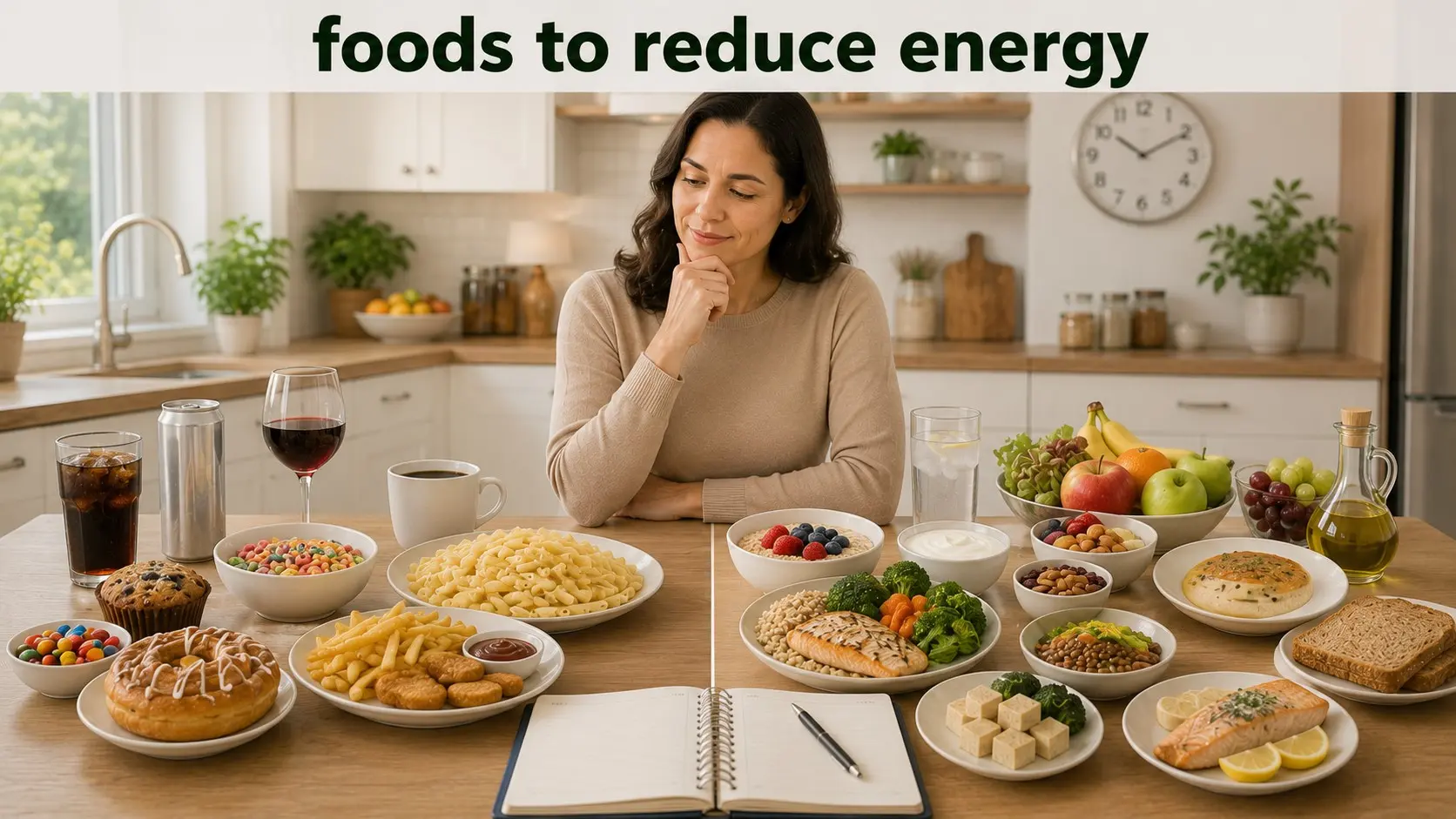
| Food or drink | Why it may affect energy | A more balanced choice |
|---|---|---|
| Sugary soft drinks | They provide added sugar with little protein or fibre. | Water, sparkling water, or unsweetened tea |
| Energy drinks | They may contain large amounts of caffeine, added sugar, and other stimulants. | Water, coffee or tea in a suitable amount, food, and rest |
| Candy eaten alone | It may satisfy hunger only briefly because it provides little protein or fibre. | Fruit with yogurt, nuts, or cheese |
| Sweet pastries used as a meal | They may contain much added sugar and fat with little protein. | Oatmeal, eggs, yogurt, or whole grain toast |
| Sugary breakfast cereal | Some products provide much added sugar and little fibre. | Whole grain cereal with milk, fruit, and nuts |
| Large, refined-grain meals | A meal made mainly from white bread, white rice, or pasta may lack protein, vegetables, and fibre. | Add vegetables, beans, eggs, fish, chicken, or tofu |
| Deep-fried meals | Large fried meals may feel heavy and may contain much saturated fat, sodium, and calories. | Baked, grilled, steamed, or roasted food |
| Very large meals | A large portion may cause fullness and post-meal sleepiness in some people. | Moderate meals and planned snacks |
| Alcohol | Alcohol can cause drowsiness and disrupt refreshing sleep. | Water, sparkling water, or an alcohol free drink |
| Late or excessive caffeine | Caffeine may delay sleep and reduce sleep quality. | Use less caffeine and avoid it later in the day |
1. Sugary Soft Drinks
Regular soda, fruit drinks, sweet tea, and sweet coffee can contain a large amount of added sugar.
They provide little or no protein and fibre.
They may also add calories without helping you feel full for long.
Replace one sugary drink with water.
Add lemon, cucumber, berries, or mint for flavour.
2. Energy Drinks
An energy drink may contain caffeine, sugar, guarana, and other stimulants.
It may make you feel alert for a short period.
But it cannot replace sleep.
Large caffeine amounts may cause:
- A fast heartbeat
- Anxiety
- Shaking
- Headache
- Stomach upset
- Difficulty sleeping
Avoid mixing energy drinks with alcohol.
Children and young teenagers should not use them as routine drinks.
3. Candy Eaten Alone
Candy can fit as an occasional treat.
But candy alone is not a balanced snack.
It usually provides little protein and fibre.
You may feel hungry again soon.
For a more filling snack, try:
- Fruit with yogurt
- Apple with nut butter
- Crackers with cheese
- A small handful of nuts
4. Sweet Pastries Used as a Meal
Doughnuts, sweet rolls, large muffins, and pastries may contain added sugar, refined flour, and fat.
They may provide little protein unless the meal includes another food.
You do not need to avoid them forever.
Use a smaller portion.
Add plain yogurt, milk, eggs, or fruit.
5. Sugary Breakfast Cereals
Breakfast cereal can be quick and useful.
But some products contain much added sugar and little fibre.
Read the label.
Choose a whole-grain cereal with less added sugar.
Add milk or fortified soy drink, fruit, and nuts or seeds.
6. Large Refined Grain Meals
White bread, white rice, and pasta are not harmful foods.
The problem is an unbalanced meal made almost entirely from one refined grain.
For example, a very large plate of plain pasta may provide little protein, vegetables, or fibre.
Build a more complete meal by adding:
- Beans
- Lentils
- Eggs
- Chicken
- Fish
- Tofu
- Vegetables
7. Deep Fried Meals
Fried chicken, chips, fried pastries, and large fast food meals may contain much fat, sodium, and calories.
A large serving may feel heavy.
Choose grilled, baked, steamed, or roasted food more often.
A small fried portion can still fit sometimes.
8. Very Large Meals
Eating a sizeable portion can cause fullness and sleepiness in some people.
Regular meals may feel easier than eating very little all day and one huge meal at night.
Try a moderate meal every few hours when this fits your schedule.
Eat slowly.
Pause before taking another serving.
9. Alcohol
Alcohol can make you feel sleepy.
But that does not mean it improves sleep.
Alcohol may disturb normal sleep and cause tiredness the next day.
It may also interact with medicines.
Do not drink alcohol to manage stress or insomnia.
Avoid alcohol during pregnancy.
10. Too Much Caffeine or Caffeine Late in the Day
Caffeine is found in coffee, tea, cola, chocolate, energy drinks, and some medicines.
It can improve alertness for a short time.
But caffeine used late in the day may make it harder to sleep.
Poor sleep can leave you tired the next day.
Reduce caffeine slowly if you use a large amount.
Stopping suddenly may cause a headache and tiredness.
Better Swaps for Foods to Reduce Energy
The goal is not food restriction.
It is a better balance.
| Instead of | Try |
|---|---|
| Regular soda | Water with fruit slices |
| Energy drink | Water, a regular meal, and rest |
| Candy alone | Fruit with yogurt or nuts |
| Pastry alone | Smaller pastry with eggs or yogurt |
| Sweet cereal | Whole grain cereal with milk and fruit |
| Plain large pasta plate | Pasta with vegetables and protein |
| Large fried meal | Baked protein with potatoes and vegetables |
| One huge evening meal | Regular meals and planned snacks |
| Alcohol before bed | Water or a caffeine-free drink |
| Late coffee | Decaffeinated coffee or herbal tea without stimulants |
How to Build Meals for Steady Energy
A practical meal contains more than one food group.
Start With a Carbohydrate Food
Choose one:
- Oats
- Bread
- Rice
- Pasta
- Potatoes
- Fruit
- Beans
Add Protein
Choose one:
- Eggs
- Yogurt
- Fish
- Chicken
- Beans
- Lentils
- Tofu
- Nuts
Add Vegetables or Fruit
Use produce that fits your budget, culture, allergies, and medical needs.
Add a Suitable Fat
Options include olive oil, avocado, nuts, seeds, and oily fish.
Use a Moderate Portion
Large meals may make some people feel sluggish.
Start with a comfortable portion.
Eat more when you remain hungry.
Breakfast Foods That Support Energy
Breakfast is not required at the same time for every person.
But skipping food for too long may lead to strong hunger later.
Balanced Breakfast Ideas
- Oatmeal with berries and yogurt
- Eggs with whole grain toast and tomato
- Plain yogurt with fruit, oats, and nuts
- Beans with toast and vegetables
- A smoothie with whole fruit, yogurt, and oats
When You Have Little Appetite
Try a small meal.
Examples include:
- Banana with yogurt
- Toast with nut butter
- Milk with oats
- A boiled egg with fruit
Hydration and Low Energy
Hydration supports normal body function.
Fluid needs change with weather, activity, health, pregnancy, and body size.
Water is usually the best basic drink.
Signs You May Need More Fluid
- Thirst
- Dry mouth
- Dark urine
- Headache
- Dizziness
These symptoms can also have other causes.
Do Not Force Large Amounts
More water is not always better.
People with kidney disease, heart failure, or low blood sodium may need a fluid limit.
Follow medical advice.
Caffeine, Sleep, and Next Day Fatigue
Caffeine may help alertness.
But it may also hide the need for sleep.
Caffeine later in the day can affect falling asleep and staying asleep.
Common Caffeine Sources
- Coffee
- Black tea
- Green tea
- Cola
- Energy drinks
- Chocolate
- Some headache medicine
Reduce It Gradually
Try moving your last caffeine drink earlier.
Mix regular and decaffeinated coffee.
Reduce the serving size.
A sudden stop may cause withdrawal symptoms.
Iron Deficiency and Low Energy
Iron deficiency can cause fatigue, weakness, poor concentration, pale skin, shortness of breath, and a noticeable heartbeat.
Food alone may not correct iron deficiency anemia.
A blood test is needed.
Iron Food Sources
- Lean meat
- Poultry
- Fish
- Beans
- Lentils
- Tofu
- Fortified cereal
- Seeds
Pair Plant Iron With Vitamin C
Try:
- Lentils with tomato
- Beans with peppers
- Fortified cereal with berries
- Tofu with broccoli
Do Not Take Iron Without Checking
Iron supplements can cause side effects.
Too much iron can be dangerous.
Keep iron supplements away from children.
Vitamin B12 Deficiency and Fatigue
Vitamin B12 deficiency can cause tiredness, weakness, anemia, palpitations, pale skin, and nerve symptoms.
Numbness or tingling can occur even without obvious anemia.
Vitamin B12 Food Sources
- Fish
- Meat
- Eggs
- Milk
- Yogurt
- Fortified cereal
- Fortified nutritional yeast
- Fortified plant drinks
Higher Risk Groups
Risk may be higher in:
- Older adults
- People following a vegan diet
- People with pernicious anemia
- People with digestive diseases
- People who had stomach or intestinal surgery
- People using some medicines for a long time
Ask for testing when symptoms or risk factors are present.
Other Causes of Tiredness and Fatigue
Do not assume that food is the cause.
Potential causes include:
- Not enough sleep
- Insomnia
- Sleep apnea
- Stress
- Depression
- Anxiety
- Pregnancy
- Menopause
- Iron deficiency anemia
- Vitamin B12 deficiency
- Diabetes
- Thyroid disease
- Infection
- Heart disease
- Kidney disease
- Medicine side effects
- ME or chronic fatigue syndrome
Keep a Simple Record
Write down:
- When tiredness starts
- How long does it last
- What you ate
- How you slept
- Medicine taken
- Other symptoms
This can help a clinician see patterns.
One-Day Meal Plan to Support Steady Energy
This is a general example.
Adjust it for allergies, culture, diabetes, kidney disease, pregnancy, and other medical needs.
Breakfast
Oatmeal with berries, plain yogurt, and ground seeds.
Morning Snack
An apple with smooth nut butter.
Lunch
Chicken, tofu, or beans with rice and mixed vegetables.
Afternoon Snack
Whole grain crackers with cheese or hummus.
Dinner
Baked fish or lentils with potatoes and green vegetables.
Drinks
Water through the day.
Use caffeine earlier when it is suitable for you.
Common Myths About Foods to Reduce Energy
Myth: Sugar Always Causes an Immediate Crash
No.
Responses differ.
The amount, meal, activity, and health condition matter.
Myth: Carbohydrates Make Everyone Tired
No.
Carbohydrates are a normal energy source.
Choose suitable portions and combine them with protein and fiber.
Myth: Coffee Creates Real Energy
Caffeine increases alertness.
It does not replace food or sleep.
Myth: Energy Drinks Fix Fatigue
No.
They may hide tiredness for a short time.
They do not treat the cause.
Myth: Iron Supplements Help Every Tired Person
No.
Iron only treats certain causes of deficiency.
Testing is important.
Myth: You Must Avoid Every Food on This List
No.
Portion, timing, balance, and frequency matter.
When Low Energy Needs Medical Care
Arrange a Medical Appointment When
- You feel tired most days
- Rest does not help
- Symptoms last several weeks
- Tiredness affects work or normal activities
- You lose weight without trying
- You feel very thirsty or urinate often
- You have pale skin or shortness of breath
- You snore loudly or wake gasping
- You have numbness or tingling
- You feel depressed or unable to cope
Seek Urgent Medical Help for
- Chest pain
- Severe breathing trouble
- Fainting
- Confusion
- A seizure
- One-sided weakness
- Heavy bleeding
- Black or bloody stool
- A very fast or irregular heartbeat with severe symptoms
Conclusion
The phrase foods to reduce energy usually means foods, drinks, and meal patterns that may leave some people tired or affect sleep.
Sugary drinks, energy drinks, candy, pastries, oversized meals, alcohol, and late caffeine may be worth reviewing.
You do not need to ban them all.
Use smaller portions.
Eat regular meals.
Pair carbohydrates with protein and fibre.
Drink water.
Protect your sleep.
Start by choosing one item from these list of foods to reduce energy, notice how it affects you, and replace it with a more balanced meal or drink this week.
References and Sources
- NHS. Tiredness and Fatigue.Open guidance about common fatigue causes, sleep, lifestyle, stress, anemia, diabetes, thyroid disease, ME, and when to contact a doctor.
- NHS. Self-Help Tips to Fight Tiredness.Open guidance about regular meals, healthy snacks, exercise, sleep, and persistent unexplained fatigue.
- Centers for Disease Control and Prevention. Healthy Eating Tips.Current guidance about nutrient-rich foods, added sugar, sugary drinks, sodium, labels, fruit, vegetables, protein, dairy, and whole grains.
- Centers for Disease Control and Prevention. About Sleep.Current guidance about sleep quality, caffeine, alcohol, large evening meals, healthy diet, activity, and signs of poor sleep.
- National Institutes of Health Office of Dietary Supplements. Iron Fact Sheet.Open guidance about iron deficiency, anemia, fatigue, weakness, concentration problems, food sources, risk groups, supplements, and excess iron.
- National Institutes of Health Office of Dietary Supplements. Vitamin B12 Fact Sheet.Open guidance about vitamin B12 deficiency, fatigue, anemia, nerve symptoms, food sources, risk groups, testing, and treatment.
Continue Reading on NextFitLife
Frequently Asked Questions
What are the principal foods to reduce energy?
Foods and drinks that may affect energy in some people include sugary drinks, energy drinks, candy, pastries, sugary cereal, large refined grain meals, deep-fried foods, enormous meals, alcohol, and late caffeine.
Do foods that reduce energy make everyone tired?
No. The effect depends on portion size, meal balance, sleep, activity, blood sugar, medicine, and personal health.
Does sugar cause an energy crash?
Some people report hunger or tiredness after a high-sugar food or drink. The response varies, and the full meal matters.
Are carbohydrates bad for energy?
No. Carbohydrates are an important energy source. Combine them with protein, fibre, vegetables, or healthy fats.
Why do I feel sleepy after an enormous meal?
A large meal may cause fullness and post-meal sleepiness. Smaller regular meals may feel better for some people.
Do energy drinks provide real energy?
They may provide caffeine and sugar, which can increase alertness for a short time. They do not replace sleep, food, hydration, or medical care.
Can coffee make me more tired?
Coffee may affect sleep when used late or in large amounts. Poor sleep can make you tired the next day.
What should I eat for steady energy?
Choose regular balanced meals with carbohydrate, protein, vegetables or fruit, and a suitable healthy fat.
Can low iron cause tiredness?
Yes. Iron deficiency anemia may cause fatigue, weakness, shortness of breath, poor concentration, and pale skin. A blood test is needed.
Can low vitamin B12 cause low energy?
Yes. Vitamin B12 deficiency can cause fatigue, anemia, weakness, palpitations, numbness, and tingling.
Should I take an energy supplement?
Not before checking the cause of tiredness. Supplements may contain caffeine, high vitamin doses, or ingredients that interact with medicine.
When should tiredness be checked by a doctor?
Arrange care when tiredness lasts several weeks, affects daily life, does not improve with rest, or occurs with other symptoms.
Is this article medical advice?
No. It provides general education. A qualified healthcare professional should diagnose persistent or severe fatigue.
Fatigue and Medical Disclaimer
This content is for education only.
It does not replace a medical examination, blood tests, sleep assessment, diagnosis, medicine review, nutrition therapy, or emergency care.
This content is for general educational purposes and does not replace professional medical advice, diagnosis, or treatment. Consult an appropriately qualified healthcare professional for personal medical concerns.
What I share comes from real-life experience, extensive research, and published health guidance.
Always consult qualified medical professionals for diagnosis and treatment of any health condition.
Seek urgent help for chest pain, severe breathing trouble, fainting, confusion, one-sided weakness, heavy bleeding, or rapidly worsening symptoms.

Health & wellness writer with 30+ years of experience in nutrition, fitness, and healthy aging. Founder of NextFitLife.com — evidence-based health guidance.