Published: Jan 7, 2025
Last updated: July 2026
Reviewed for accuracy: Editorially reviewed and fact-checked against digestive-health and medical sources
Reading time: 14–18 minutes
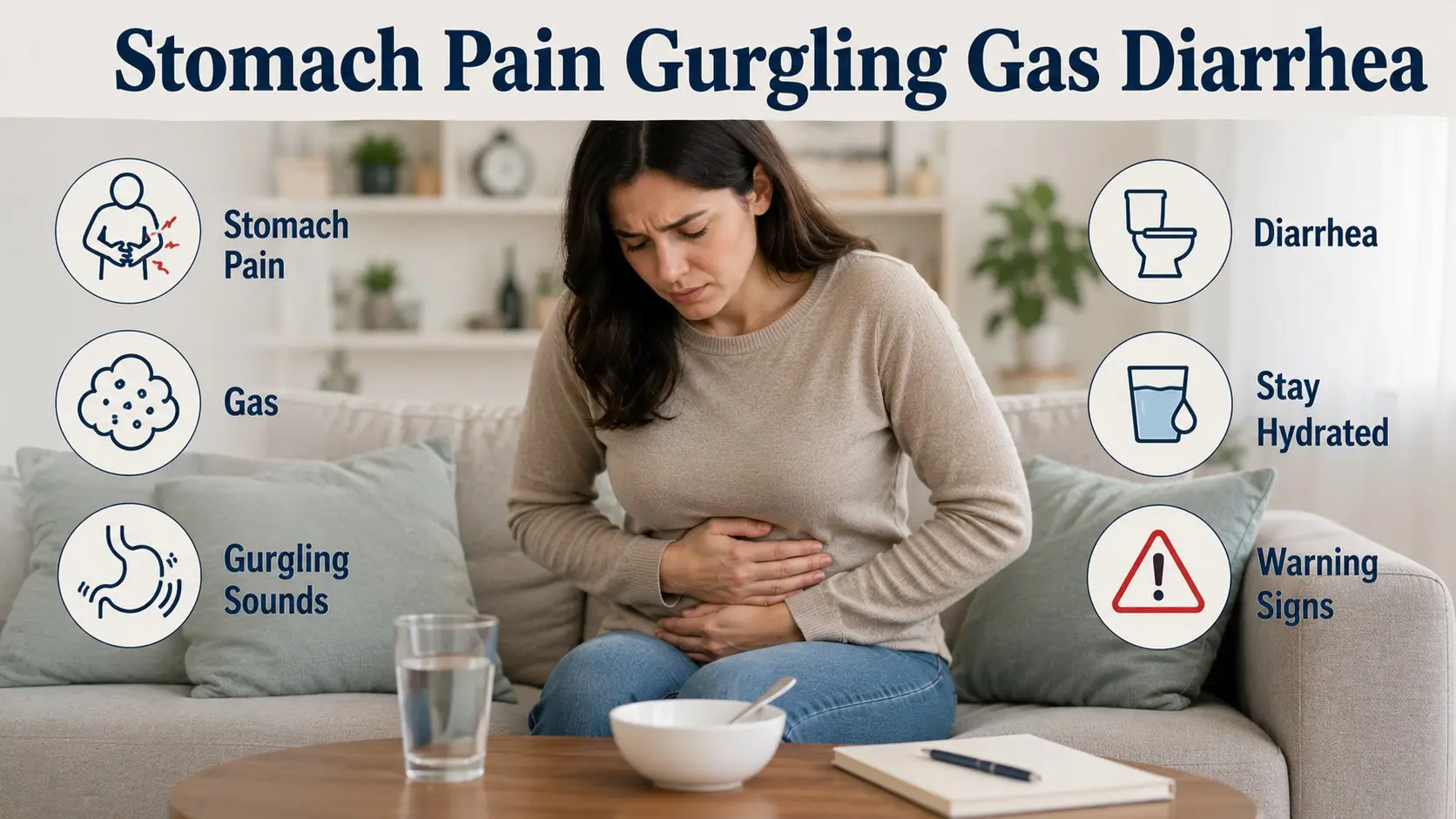
Stomach pain, gurgling, gas, and diarrhea can feel scary and awkward. Your belly may make loud sounds. You may feel cramps. You may feel bloated. You may need the bathroom fast.
Most of the time, this happens because the gut is moving food, fluid, air, and gas. It may happen after a heavy meal, a trigger food, stress, a stomach bug, food poisoning, or food intolerance.
Sometimes, it needs care. Pain with diarrhea can also happen with infection, inflammation, IBS, medicine side effects, or other gut problems. If pain is severe, diarrhea lasts, or you see blood, do not ignore it.
This guide explains common causes, fast relief steps, red flags, and when to see a healthcare professional.
For more digestive help, visit our Digestive Health & Gut Hub. You can also read our related guides on stomach gurgling and gas and stomach pain after eating.
Medical note: This article is for education only. It does not diagnose or treat any condition. If you have severe pain, bloody diarrhea, black stool, fever, repeated vomiting, dehydration, weight loss, chest pain, trouble breathing, or symptoms that keep getting worse, get medical help.
Quick Answer: Why Do I Have Stomach Pain, Gurgling, Gas, and Diarrhea?
You may have stomach pain, gurgling, gas, and diarrhea because your gut is irritated or moving faster than usual.
Common causes include:
- A stomach bug
- Food poisoning
- Eating too fast
- Too much gas
- Fizzy drinks
- Food intolerance
- Dairy intolerance
- Too much caffeine
- Greasy food
- Stress
- IBS
- Some medicines
- Antibiotics
- Inflammation in the gut
Many mild cases settle with fluids, rest, and simple food. But severe pain, blood, fever, dehydration, or diarrhea that lasts more than a few days needs medical advice.
Quick Fixes You Can Try First
For mild symptoms, try these simple steps.
- Sip water often.
- Use an oral rehydration solution if diarrhea is severe.
- Eat small meals.
- Choose bland foods for a short time.
- Rest.
- Sit upright.
- Take a short, gentle walk if you can.
- Avoid fizzy drinks.
- Avoid greasy food.
- Avoid alcohol.
- Pause dairy if it makes symptoms worse.
- Wash your hands often.
Do not use anti-diarrhea medicine if you have blood in your stool, a high fever, or a suspected serious infection unless a healthcare professional says it is safe.
When to See a Doctor
Speak with a healthcare professional if symptoms are strong, keep coming back, or do not improve.
Get medical help if you have:
- Diarrhea that lasts more than a few days
- Severe stomach pain
- Pain that gets worse
- Fever
- Repeated vomiting
- Blood in stool
- Black stool
- Signs of dehydration
- Unexplained weight loss
- Ongoing bloating
- Symptoms after travel
- Symptoms after antibiotics
- Symptoms that wake you from sleep
Seek urgent care if pain is sudden or severe, your belly is hard or swollen, you cannot pass stool or gas, you vomit blood, your stool is black and sticky, you have chest pain, or you cannot breathe.
What These Symptoms Mean Together
Each symptom gives a clue.
- Stomach pain may come from cramps, gas, infection, or inflammation.
- Gurgling is the sound of air, fluid, and stool moving.
- Gas may come from swallowed air or food breaking down in the gut.
- Diarrhea means loose or watery stool, often because the gut is moving too fast.
When all four happen together, the gut may be irritated. The cause may be mild, but red flags matter.
1. Stomach Bug
A stomach bug can cause cramps, gurgling, gas, nausea, vomiting, and diarrhea. It often comes on fast. It may spread from person to person.
What may help:
- Drink fluids.
- Rest.
- Eat simple foods when you can.
- Wash hands often.
- Avoid cooking for others while sick.
- Avoid sharing towels.
Get medical advice if you have dehydration, blood, high fever, severe pain, or symptoms that do not improve.
2. Food Poisoning
Food poisoning can happen after eating food with harmful germs or toxins. Symptoms may start within hours or later.
Possible signs include:
- Stomach cramps
- Diarrhea
- Vomiting
- Fever
- Nausea
- Weakness
Drink fluids. Rest. Get help if diarrhea is bloody, vomiting will not stop, fever is high, or you feel dehydrated.
3. Gas Trapped in the Gut
Gas can cause cramps and loud gurgling. It may feel like pressure or moving pain. You may feel better after passing gas or stool.
Gas can happen after:
- Eating fast
- Drinking fizzy drinks
- Chewing gum
- Eating beans or lentils
- Eating onions or cabbage
- Eating dairy if lactose is a problem
- Stress
For more detail, read Stomach Gurgling and Gas: Causes, Quick Fixes, and When to Worry.
4. Eating Too Fast
Eating fast can make you swallow air. It can also make your stomach work harder. This can cause gas, pain, burping, and gurgling.
Try this:
- Slow down.
- Chew well.
- Put your fork down between bites.
- Avoid eating while rushing.
- Stop before you feel too full.
This simple change can help many people.
5. Fizzy Drinks
Soda, sparkling water, beer, and energy drinks add gas to your stomach. This can cause burping, pressure, and gurgling.
If diarrhea is present, fizzy drinks may also make your belly feel worse.
Try still water for a few days and see if symptoms improve.
6. Dairy Intolerance
Some people cannot digest lactose well. Lactose is a sugar in milk and dairy. This can cause gas, gurgling, cramps, bloating, and diarrhea.
Common triggers include:
- Milk
- Ice cream
- Cream
- Some soft cheeses
- Milkshakes
If dairy seems to trigger symptoms, speak with a healthcare professional. Do not remove major food groups forever without a plan.
7. Too Much Caffeine
Coffee, energy drinks, and strong tea can speed up the gut in some people. This may lead to cramps, loose stool, gurgling, and urgency.
Try this:
- Cut back slowly.
- Do not drink coffee on an empty stomach if it bothers you.
- Avoid energy drinks.
- Drink water, too.
8. Greasy or Heavy Meals
Fried food and very heavy meals can upset the stomach. They may cause pain, reflux, gas, or diarrhea in some people.
Examples include:
- Fried chicken
- Fast food
- Greasy burgers
- Heavy cream sauces
- Large late-night meals
If symptoms happen after fatty meals often, speak with a healthcare professional, especially if pain is in the upper right belly or goes to the right shoulder or back.
9. Stress and Anxiety
The gut and brain are linked. Stress can make the gut move faster or feel more sensitive. This can cause pain, gurgling, gas, and diarrhea.
Simple steps:
- Breathe slowly for 2 minutes.
- Walk outside.
- Eat without rushing.
- Take a screen break.
- Write down what is worrying you.
- Talk to someone safe.
For more help, visit our Mental Health & Wellness Hub and read Self-Care Habits.
10. IBS
IBS can cause belly pain, gas, gurgling, bloating, diarrhea, constipation, or both.
IBS may be more likely if symptoms:
- Come and go
- Get worse with stress
- Change after certain foods
- Improve after passing stool
- Keep returning over time
Do not assume it is IBS without medical advice. Other gut problems can look similar.
11. Antibiotics
Antibiotics can change gut bacteria. This may cause loose stool, cramps, or diarrhea.
Call a healthcare professional if diarrhea after antibiotics is severe, watery, bloody, or linked with fever, pain, or dehydration.
Do not stop antibiotics early unless your healthcare professional tells you to.
12. Medicine or Supplement Side Effects
Some medicines and supplements can cause pain, gas, or diarrhea.
Possible triggers include:
- Antibiotics
- Magnesium
- Iron
- Some diabetes medicines
- Some pain medicines
- Some weight-loss medicines
- High-dose vitamins
- Protein powders
- Sugar-free products with sugar alcohols
If symptoms started after a new medicine, ask your healthcare professional what to do.
13. Food Intolerance
Food intolerance can cause pain, gas, gurgling, bloating, and diarrhea. It is not the same as a food allergy.
Possible triggers include:
- Dairy
- Wheat for some people
- Onions
- Garlic
- Beans
- Certain fruits
- Sugar-free gum
- Artificial sweeteners
Keep a food diary. Test one food at a time. Ask a healthcare professional if symptoms are strong.
14. Food Allergy
A food allergy can be serious. It may cause stomach pain, vomiting, diarrhea, rash, swelling, wheezing, or trouble breathing.
Seek urgent help if you have:
- Trouble breathing
- Swelling of lips, tongue, face, or throat
- Wheezing
- Fainting
- Fast worsening symptoms after food
This can be an emergency.
15. Gallbladder Problems
Gallbladder pain may happen after fatty meals. It may be felt in the upper right belly, middle upper belly, right shoulder, or back.
Get medical advice if pain is severe, keeps coming back, or comes with fever, vomiting, yellow skin, dark urine, or pale stool.
For related pain patterns, read How to Differentiate Gallbladder and Liver Pain.
16. Inflammatory Bowel Disease
Inflammatory bowel disease, or IBD, is separate from IBS. It includes Crohn’s disease and ulcerative colitis. It can cause diarrhea, pain, blood in stool, weight loss, fever, and fatigue.
IBD needs medical care. See a healthcare professional if symptoms are long-lasting, bloody, or linked with weight loss or fever.
17. Celiac Disease
Celiac disease is an immune reaction to gluten. Gluten is found in wheat, barley, and rye. It can cause diarrhea, gas, bloating, pain, fatigue, anemia, weight changes, and other symptoms.
Do not start a gluten-free diet before testing unless a healthcare professional tells you to. Testing may be less accurate if you stop gluten too soon.
18. Dehydration From Diarrhea
Diarrhea can make you lose water and salts. This can lead to dehydration.
Signs of dehydration include:
- Very little urine
- Dark urine
- Dry mouth
- Dizziness
- Fast heartbeat
- Extreme thirst
- Weakness
- Confusion
Drink fluids often. Oral rehydration solution may help. Get help quickly if dehydration signs are strong.
What to Eat When You Have Pain, Gas, and Diarrhea
For a short time, choose simple foods you can tolerate.
Options may include:
- Rice
- Toast
- Bananas
- Potatoes
- Oatmeal
- Soup
- Crackers
- Plain chicken
- Applesauce
Avoid heavy, greasy, spicy, or very sweet foods until symptoms calm.
What to drink?
Fluids matter most when diarrhea is present.
Try:
- Water
- Oral rehydration solution
- Broth
- Weak tea
- Diluted juice if tolerated
Avoid alcohol. Limit fizzy drinks and energy drinks. They may make symptoms worse.
Foods That May Make It Worse
During a flare, these may bother some people:
- Fried foods
- Very fatty meals
- Spicy foods
- Fizzy drinks
- Alcohol
- Coffee
- Milk
- Ice cream
- Sugar-free sweets
- Large meals
You do not need to avoid all these forever. This is just for symptom tracking.
Simple 24-Hour Gut Reset
This is for mild symptoms only.
Morning
- Sip water.
- Eat a small, simple meal.
- Avoid coffee if it worsens diarrhea.
Midday
- Eat bland food if hungry.
- Rest.
- Take a gentle walk if the pain is mild.
Evening
- Choose a light meal.
- Avoid greasy food.
- Sleep early.
If pain gets worse, diarrhea is severe, or red flags appear, get medical help.
How to Track Triggers
A simple diary can help.
Write down:
- What you ate
- What you drank
- Meal time
- Pain time
- Diarrhea time
- Gas and bloating
- Stress level
- Medicines or supplements
- Travel or sick contacts
Bring this list to your doctor if symptoms continue.
Red Flags You Should Not Ignore
Get care if you have:
- Severe stomach pain
- Pain that gets worse
- Bloody diarrhea
- Black stool
- Fever
- Repeated vomiting
- Signs of dehydration
- Weight loss
- Diarrhea for more than a few days
- Symptoms after antibiotics
- Symptoms after travel
- Severe weakness
- Confusion
- A hard, swollen belly
- Unable to pass stool or gas with pain
Do not wait if symptoms feel severe or dangerous.
How Doctors May Check These Symptoms
A healthcare professional may ask about food, travel, sick contacts, stool changes, medicines, and pain patterns.
They may consider:
- Physical exam
- Blood tests
- Stool tests
- Tests for infection
- Tests for inflammation
- Tests for celiac disease
- Medicine review
- Ultrasound if needed
- Colonoscopy if warning signs are present
You may not need all tests. The right test depends on your symptoms.
For more testing education, visit our Medical Tests & Screenings Hub.
What Not to Do
- Do not panic over normal belly sounds.
- Do not ignore severe pain.
- Do not ignore blood in stool.
- Do not use anti-diarrhea medicine with blood or high fever unless a doctor says it is safe.
- Do not stop prescribed medicine on your own.
- Do not cut out many foods forever without advice.
- Do not drink alcohol when diarrhea is active.
- Do not delay care if symptoms are getting worse.
FAQ about Stomach Pain, Gurgling Gas, Diarrhea
Why do I have stomach pain, gurgling, gas, and diarrhea?
It may be from a stomach bug, food poisoning, gas, food intolerance, dairy intolerance, stress, IBS, caffeine, greasy food, or medicine side effects.
How do I stop stomach gurgling and diarrhea fast?
Sip fluids often, rest, eat simple foods, avoid greasy foods, avoid fizzy drinks, and use oral rehydration solution if needed. Get medical help if symptoms are severe or bloody.
Is stomach gurgling with diarrhea normal?
It can happen with mild gut upset. It is more concerning if diarrhea lasts, pain is severe, or you have fever, blood, vomiting, dehydration, or weight loss.
Can gas cause stomach pain and diarrhea?
Gas can cause pain and gurgling. Diarrhea usually means the gut is irritated or moving fast. Gas and diarrhea can happen together with infection, food triggers, IBS, or intolerance.
What should I eat with stomach pain and diarrhea?
Choose simple foods like rice, toast, bananas, potatoes, soup, crackers, oatmeal, or plain chicken. Drink fluids. Avoid greasy, spicy, and very sweet foods until symptoms calm.
When should I worry about diarrhea?
Worry if diarrhea is bloody, black, severe, lasts more than a few days, causes dehydration, comes with fever, or happens with severe pain or repeated vomiting.
Can stress cause stomach pain, gas, and diarrhea?
Yes. Stress can affect gut movement and sensitivity. It may cause cramps, gas, gurgling, diarrhea, or constipation in some people.
Can dairy cause stomach pain and diarrhea?
Yes. People with lactose intolerance may get gas, bloating, cramps, gurgling, and diarrhea after milk, ice cream, or some dairy foods.
Should I take medicine for diarrhea?
Ask a pharmacist or doctor. Do not use anti-diarrhea medicine if you have bloody diarrhea, high fever, or suspected serious infection unless a healthcare professional says it is safe.
How long should stomach pain and diarrhea last?
Mild diarrhea from a stomach bug often improves in a few days. If it lasts more than a few days, gets worse, or has red flags, seek medical advice.
Related Reading
- Digestive Health & Gut Hub
- Health Hub
- Nutrition & Vitamins Hub
- Medical Tests & Screenings Hub
- Stomach Gurgling and Gas: Causes, Quick Fixes, and When to Worry
- Stomach Pain After Eating: Causes, Quick Fixes, and When to Worry
- Bowel Cancer and Stomach Noises: What Symptoms Matter Most
- Colon Cancer Warning Signs: Symptoms That Should Be Checked
- Healthy Lifestyle Roadmap: 14 Practical Tips for Better Health
- Effect of Unhealthy Lifestyle: Warning Signs, Health Risks, and How to Reset
Key Takeaway
Stomach Pain Gurgling Gas Diarrhea often happen when the gut is irritated or moving fast. Common causes include infection, food poisoning, gas, dairy intolerance, caffeine, greasy food, stress, IBS, and medicine side effects.
Mild symptoms may improve with fluids, rest, simple food, less fizzy drink, and gentle care.
Get medical help if pain is severe, diarrhea lasts, stool is bloody or black, fever is present, vomiting continues, dehydration signs appear, or symptoms keep getting worse.
Sources
- NIDDK — Symptoms & Causes of Gas in the Digestive Tract
- NIDDK — Symptoms & Causes of Diarrhea
- Mayo Clinic — Gas and Gas Pains
- NHS — Stomach Ache
- NHS — Diarrhoea and Vomiting

Health & wellness writer with 30+ years of experience in nutrition, fitness, and healthy aging. Founder of NextFitLife.com — evidence-based health guidance.