Last Updated: August 24, 2026
Next Review: August 2027, or sooner if major dermatology or nutrition guidance changes
Written and Source Checked By: Adel Galal, Founder and Lead Writer at NextFitLife
Medical Review Status: This article has not been medically reviewed by a dermatologist, doctor, registered dietitian, endocrinologist, pharmacist, or other licensed healthcare professional.
The best Healthy and Strong Hair Foods do not work like hair growth medicine.
Food gives your body raw materials.
Your hair follicles need enough energy and nutrients to function normally.
This includes protein, iron, zinc, essential fats, and many vitamins and minerals.
But there is an important difference between supporting normal hair health and treating hair loss.
If you already get enough nutrients, eating twice as much salmon, spinach, eggs, or biotin will not necessarily make your hair grow twice as fast.
And no food can cure every cause of thinning hair.
Hair loss can come from:
- Genetics
- Hormonal changes
- Thyroid disease
- Autoimmune disease
- Scalp disease
- Some medicines
- Major illness
- Severe stress
- Rapid weight loss
- Low calorie intake
- Iron deficiency
- Other nutrient deficiencies
The American Academy of Dermatology notes that not getting enough protein or iron can contribute to hair loss.
It also warns that eating too few calories can cause significant shedding.
So the best nutrition strategy is not a miracle food.
It is a varied and adequate diet.
Combine these food choices with the practical care habits in Tips for Healthy Hair to protect both the hair follicle and the visible hair shaft.
Food Cannot Diagnose or Cure Hair Loss
Do not assume that thinning hair means you need a vitamin supplement.
Hair loss can have many medical causes.
Seek professional assessment if you notice:
- Sudden patches of hair loss
- Rapidly increasing shedding
- A widening part
- A receding hairline
- Scalp pain or burning
- Scarring
- Thick scale or severe inflammation
- Loss of eyebrows or eyelashes
- Hair loss with fatigue
- Hair loss with unexplained weight change
- Hair loss after starting a medicine
Correcting a real nutritional deficiency may help.
Taking supplements when you are not deficient may provide no benefit and can sometimes cause harm.
What Are the Best Healthy and Strong Hair Foods?
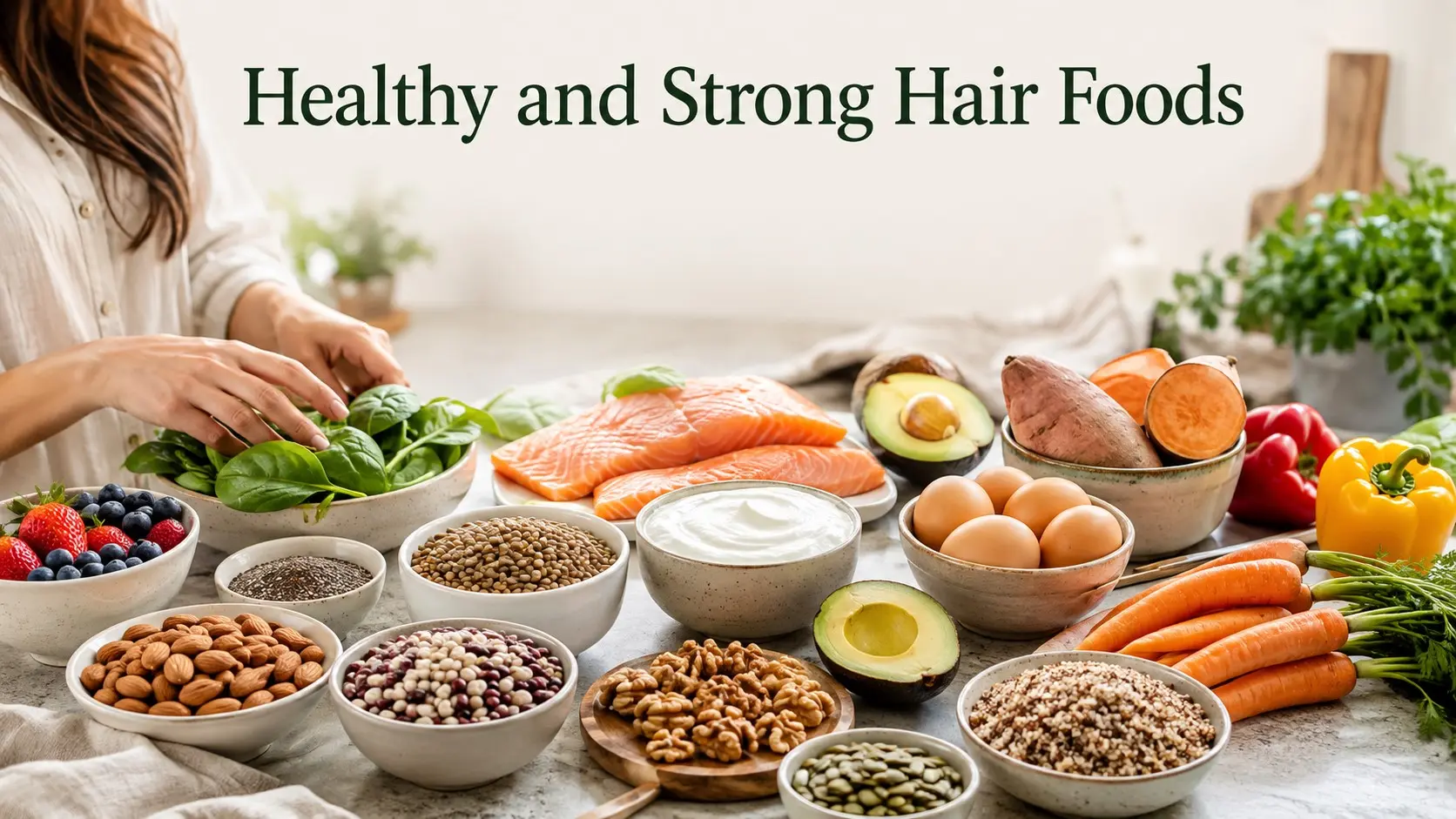
A practical list of Healthy and Strong Hair Foods includes:
- Eggs
- Salmon and trout
- Chicken and turkey
- Lean beef
- Lentils
- Beans and chickpeas
- Plain Greek yogurt
- Tofu and soy foods
- Spinach and other leafy greens
- Bell peppers, berries and citrus fruit
- Oysters and other seafood
- Almonds and walnuts
- Pumpkin, chia and other seeds
- Sweet potatoes and carrots
These foods provide useful combinations of protein, iron, zinc, vitamin C, vitamin D, biotin, healthy fats, and other nutrients.
You do not need all 14 every day.
Variety across the week matters more.
How Does Nutrition Affect Hair Health?
Hair grows from follicles inside the skin.
These follicles contain living cells.
Living cells need energy and nutrients.
Hair Is Mostly Protein
The visible hair shaft is largely made of a protein called keratin.
Your body therefore needs adequate dietary protein.
Blood Supplies the Follicle
Iron is needed to make hemoglobin.
Hemoglobin helps red blood cells carry oxygen throughout the body.
Many Nutrients Are Involved
Healthy follicles also depend on normal amounts of:
- Zinc
- Vitamin D
- Biotin
- Vitamin B12
- Folate
- Essential fatty acids
- Other vitamins and minerals
More Is Not Always Better
A deficiency can be a problem.
Excessive supplementation can also be a problem.
AAD warns that too much of some nutrients can actually contribute to hair loss.
1. Eggs
Eggs are a useful food for hair nutrition because they provide high quality protein.
They also provide several vitamins and minerals.
Eggs Provide
- Protein
- Biotin
- Vitamin B12
- Selenium
- Some vitamin D
What About Biotin?
Eggs are often promoted as a hair growth food because they contain biotin.
Biotin is required for normal metabolism.
But biotin deficiency is rare.
Eating eggs can be part of good nutrition.
It does not mean that extra biotin automatically makes hair grow faster.
Easy Ways to Use Eggs
- Boiled eggs
- Eggs with spinach
- Vegetable omelets
- Eggs with whole grain toast
2. Salmon and Trout
Fatty fish are excellent sources of protein.
They also provide omega 3 fats.
Salmon and Trout Can Provide
- Protein
- Vitamin D
- Vitamin B12
- Selenium
- EPA and DHA omega 3 fats
Vitamin D Source
NIH lists fatty fish such as salmon and trout among the best natural food sources of vitamin D.
Omega 3 Fats Are Useful Nutrients
They form part of a healthy dietary pattern.
But eating salmon has not been proven to regrow hair lost from genetic or autoimmune disease.
Other Fish Count Too
Try:
- Sardines
- Mackerel
- Herring
- Tuna
For more fat sources, read 20 Healthy Fats Food.
3. Chicken and Turkey
Chicken and turkey are straightforward sources of high quality protein.
Protein Supports Normal Tissue Formation
Your body uses dietary amino acids to build many proteins.
This includes keratin.
Choose Preparation Based on the Whole Meal
Try:
- Roasted chicken
- Grilled chicken
- Chicken with vegetables
- Turkey with whole grains
You Do Not Need Meat for Healthy Hair
Plant based protein can also meet protein needs when the diet is well planned.
4. Lean Beef
Lean beef provides protein, iron, zinc, vitamin B12, and other nutrients.
Heme Iron
Iron from meat is present in a form that is generally absorbed efficiently.
Iron Deficiency Can Matter
Low iron status can occur for several reasons.
It is especially important to investigate possible deficiency when hair loss occurs with:
- Fatigue
- Heavy menstrual bleeding
- Pregnancy
- Frequent blood donation
- Restricted diets
- Digestive disease
Do Not Eat Large Amounts of Red Meat Just for Hair
Hair health depends on the whole diet.
Iron is also available from plant foods.
5. Lentils
Lentils are useful for people who want protein and iron from plant foods.
Lentils Provide
- Plant protein
- Iron
- Folate
- Fiber
- Magnesium
- Other minerals
Add Vitamin C
Vitamin C can improve absorption of nonheme iron from plant foods.
Combine lentils with:
- Bell peppers
- Tomatoes
- Lemon
- Oranges
Lentils Are Affordable
You do not need expensive superfoods to support good nutrition.
6. Beans and Chickpeas
Beans and chickpeas provide a useful mix of plant protein, iron, zinc, folate, and fiber.
Useful Choices Include
- Black beans
- Kidney beans
- White beans
- Chickpeas
- Pinto beans
Use Them With Whole Grains
Beans with rice, bulgur, or another grain can form a nutritious meal.
Canned Beans Are Fine
Choose lower sodium options when available.
Draining and rinsing can remove some sodium.
7. Plain Greek Yogurt
Greek yogurt can provide a substantial amount of protein in a convenient serving.
It May Also Provide
- Calcium
- Vitamin B12
- Phosphorus
- Other nutrients
Vitamin D Varies
Some yogurt is fortified with vitamin D.
Others are not.
Check the nutrition label.
Choose Plain More Often
Plain yogurt can reduce added sugar compared with many flavored products.
Add Your Own Toppings
Try:
- Berries
- Oats
- Walnuts
- Chia seeds
Read Health Benefits of Yogurt for more detail.
8. Tofu and Other Soy Foods
Tofu is another useful protein choice.
Soy Foods Can Include
- Tofu
- Tempeh
- Edamame
- Fortified soy milk
They Can Provide
- Protein
- Iron
- Zinc
- Healthy fats
- Other nutrients
Fortified Soy Milk Can Add More Nutrients
Some products contain added:
- Calcium
- Vitamin D
- Vitamin B12
Compare labels because products differ.
9. Spinach and Other Leafy Greens
Leafy vegetables can contribute several important nutrients to a varied diet.
Spinach Provides
- Folate
- Iron
- Vitamin C
- Beta carotene
- Other vitamins and minerals
Plant Iron Is Absorbed Differently
Iron from plant foods is called nonheme iron.
Eating vitamin C rich foods with it can improve absorption.
Useful Pairings
Try spinach with:
- Bell peppers
- Tomatoes
- Lemon
- Beans
- Lentils
Spinach Does Not Cure Iron Deficiency
Significant iron deficiency may require medical investigation and treatment.
10. Bell Peppers, Berries and Citrus Fruit
These foods are useful sources of vitamin C.
Vitamin C Helps Absorb Plant Iron
This can make it especially useful with beans, lentils, tofu, and leafy vegetables.
Good Choices Include
- Red bell peppers
- Oranges
- Kiwi
- Strawberries
- Blueberries
- Grapefruit
Vitamin C Has Other Roles
Your body needs vitamin C for normal collagen formation and many other functions.
Fruit Is Better Than a Hair Gummy
A varied diet provides many nutrients together.
A supplement should not automatically replace food.
11. Oysters and Other Seafood
Oysters are particularly rich in zinc.
NIH Lists Oysters as a Major Zinc Source
Other sources include:
- Fish
- Crab
- Lobster
- Meat
- Poultry
Zinc Deficiency Can Cause Hair Loss
NIH notes that zinc deficiency can cause hair loss.
This Does Not Mean More Zinc Gives Everyone More Hair
Once your zinc needs are met, taking excessive amounts does not guarantee better hair growth.
Too Much Zinc Can Be Harmful
Long term excessive zinc supplementation can interfere with copper status and cause other health problems.
12. Nuts
Nuts provide healthy fats, plant protein, vitamin E, minerals, and other nutrients.
Useful Choices Include
- Almonds
- Walnuts
- Pistachios
- Peanuts
Walnuts Provide Plant Omega 3 Fat
They contain ALA, a type of omega 3 fatty acid.
Almonds Provide Vitamin E
Vitamin E is an antioxidant nutrient.
Portions Still Matter
Nuts are nutrient rich but energy dense.
A small portion is enough for many meals or snacks.
13. Seeds
Seeds provide a concentrated mix of healthy fats, minerals, fiber, and some protein.
Useful Seeds Include
- Pumpkin seeds
- Chia seeds
- Ground flax seeds
- Sunflower seeds
- Sesame seeds
Pumpkin Seeds Provide Zinc
They can contribute zinc within a varied plant based diet.
Chia and Flax Provide ALA
This is a plant form of omega 3 fat.
Seeds Are Not Hair Growth Medicine
They support good nutrition.
They cannot reverse follicle damage from scarring alopecia or advanced genetic hair loss.
14. Sweet Potatoes and Carrots
Sweet potatoes and carrots provide beta carotene.
Your Body Can Convert Beta Carotene to Vitamin A
Vitamin A is needed for normal cell function.
Food Sources Are Different From High Dose Supplements
Getting vitamin A from normal foods is not the same as taking large amounts of preformed vitamin A in supplements.
Too Much Vitamin A Can Be Harmful
AAD warns that excessive amounts of some nutrients, including vitamin A, have been linked to hair loss.
Do Not Megadose Vitamin A for Hair
More is not better.
A varied diet is the safer starting point.
Why Is Protein Important for Healthy Hair?
Protein is one of the most important nutrients to consider when overall intake is inadequate.
Hair Contains Keratin
Keratin is a protein.
Very Low Protein Intake Can Affect Hair
AAD states that inadequate protein intake can contribute to hair loss.
Protein Sources Include
- Eggs
- Fish
- Chicken
- Lean meat
- Yogurt
- Beans
- Lentils
- Tofu
- Nuts
- Seeds
You Do Not Need Extreme Protein Intake
Your needs depend on age, body size, activity, health, pregnancy, and other factors.
People with kidney disease may require individual advice.
What Is the Link Between Iron and Hair Loss?
Iron deficiency deserves attention when evaluating hair loss.
Iron Is Needed for Hemoglobin
Hemoglobin helps red blood cells carry oxygen.
People at Higher Risk of Low Iron Include
- People with heavy menstrual bleeding
- Pregnant people
- Frequent blood donors
- People with gastrointestinal disorders
- People who lose blood
- Some people who avoid meat and seafood
Food Sources Include
- Meat
- Seafood
- Poultry
- Beans
- Lentils
- Fortified cereals
Do Not Take Iron Without a Reason
Iron supplements can cause side effects.
Too much iron can be dangerous.
If deficiency is suspected, appropriate testing can help guide treatment.
Does Zinc Support Hair Health?
Your body needs zinc for normal cell growth, protein production, immune function, and wound healing.
Zinc Deficiency Can Cause Hair Loss
NIH includes hair loss among possible signs of zinc deficiency.
Zinc Food Sources Include
- Oysters
- Meat
- Fish
- Poultry
- Beans
- Nuts
- Whole grains
- Eggs
- Dairy products
Do Not Take Large Zinc Doses for Hair
Too much zinc can cause nausea and other problems.
Long term excessive intake can also reduce copper levels.
What About Vitamin D and Hair?
Vitamin D has several important roles in the body.
Researchers have also studied vitamin D status in several forms of hair loss.
Low Vitamin D Does Not Prove It Caused Your Hair Loss
An association is not the same as proof of cause.
Good Food Sources Are Limited
NIH lists fatty fish among the strongest natural food sources.
Other Sources Can Include
- Fortified milk
- Fortified plant milk
- Fortified cereals
- Some fortified yogurt
- Egg yolks
- Ultraviolet exposed mushrooms
Testing and Supplements Should Match Your Needs
Do not assume that taking a large vitamin D dose will regrow hair.
Does Biotin Make Hair Stronger?
Biotin is probably the most marketed hair vitamin.
Biotin Deficiency Can Cause Hair Thinning
This is real.
But Deficiency Is Rare
NIH states that most people get enough biotin from food.
Evidence for Extra Biotin Is Weak in Healthy People
NIH states that there is little scientific evidence supporting biotin supplements for improving hair, skin, or nails in people who are not deficient.
Biotin Is Found in Normal Foods
Sources include:
- Eggs
- Fish
- Meat
- Nuts
- Seeds
- Other foods
High Dose Biotin Can Affect Blood Tests
Large supplemental doses may cause false laboratory results.
This can interfere with some hormone and other important tests.
Tell your healthcare professional about biotin supplements before blood testing.
Do Healthy Fats Matter for Hair?
Your body needs essential fatty acids.
Healthy fats also help you absorb fat-soluble vitamins.
Useful Foods Include
- Salmon
- Sardines
- Walnuts
- Chia seeds
- Flax seeds
- Avocado
- Olive oil
Fat Does Not Directly Moisturize Hair From Inside
Eating more oil does not automatically make dry hair glossy.
Think About Overall Diet Quality
Healthy fat is one part of balanced nutrition.
Can Eating Too Few Calories Cause Hair Loss?
Yes.
This is an important issue in aggressive dieting.
AAD Warning
The American Academy of Dermatology states that eating too few calories every day can cause significant hair loss.
Rapid Weight Loss Can Trigger Shedding
The body may respond to major physical stress by shifting more hairs into the shedding phase.
Do Not Starve Yourself for Faster Weight Loss
A very aggressive diet can affect:
- Protein intake
- Iron intake
- Vitamin and mineral intake
- Overall energy availability
Choose Sustainable Weight Management
Read Healthy Way to Lose Weight if weight management is also one of your goals.
Can Vegetarian and Vegan Diets Support Healthy Hair?
Yes.
A well planned plant based diet can provide adequate nutrition.
Protein Sources Include
- Beans
- Lentils
- Chickpeas
- Tofu
- Tempeh
- Edamame
- Nuts
- Seeds
Iron Needs More Planning
Plant iron is absorbed less efficiently than heme iron.
Pair plant iron foods with vitamin C.
Zinc Also Deserves Attention
Beans, nuts, seeds, whole grains, and soy foods can contribute zinc.
Vitamin B12 Needs Special Attention in Vegan Diets
Vitamin B12 is naturally found mainly in animal foods.
People following vegan diets need reliable fortified foods or appropriate supplementation.
Vitamin D May Also Need Attention
Fortified foods can help.
Individual needs vary.
Should You Take Hair Growth Supplements?
Not automatically.
AAD Recommends Checking for Deficiency First
A blood test may help determine whether you are low in certain nutrients when your history suggests a possible deficiency.
Too Much Can Cause Harm
AAD specifically warns that excess amounts of some nutrients can worsen hair loss.
Biotin Can Distort Laboratory Results
This is an important safety issue.
Iron Can Be Dangerous in Excess
Do not take it simply because your hair is thinning.
Zinc Can Be Harmful in Large Amounts
Long term excess may lead to copper deficiency.
Food First Is a Good Starting Principle
AAD advises healthy adults to try to meet nutrient needs through food unless there is a medical reason for supplementation.
Use the Nutrition and Vitamins Hub before assuming a hair supplement is necessary.
Simple Meals Using Healthy and Strong Hair Foods
Breakfast Option 1
Eggs with spinach, bell peppers, and whole grain toast.
Breakfast Option 2
Plain Greek yogurt with berries, walnuts, oats, and chia seeds.
Lunch Option 1
Lentil soup with spinach and a squeeze of lemon.
Lunch Option 2
Chickpea bowl with vegetables, whole grains, avocado, and pumpkin seeds.
Lunch Option 3
Chicken with brown rice and mixed vegetables.
Dinner Option 1
Salmon with sweet potato and broccoli.
Dinner Option 2
Tofu with bell peppers, spinach, and brown rice.
Dinner Option 3
Lean beef with vegetables, beans, and a whole grain.
Snack Option 1
Plain yogurt with fruit.
Snack Option 2
A small portion of nuts with an orange.
Snack Option 3
Hummus with bell peppers and carrots.
For a broader eating plan, read Healthy Eating.
Common Myths About Healthy and Strong Hair Foods
Myth: Eggs Make Hair Grow Faster
No.
Eggs provide protein and nutrients.
They cannot guarantee faster hair growth.
Myth: Salmon Makes Hair Thick
No.
Salmon provides useful nutrients, but it cannot reverse every cause of thinning.
Myth: Spinach Prevents Hair Loss
No.
Spinach provides nutrients including nonheme iron.
It cannot prevent all forms of hair loss.
Myth: Biotin Is the Best Hair Growth Vitamin
No.
Biotin deficiency can cause thinning, but deficiency is rare and evidence for extra biotin in healthy people is limited.
Myth: Everyone With Hair Loss Needs Iron
No.
Iron should be used when there is a medical reason.
Myth: More Zinc Means More Hair
No.
Too much zinc can cause health problems.
Myth: Vitamin A Supplements Make Hair Stronger
No.
Excess vitamin A can actually be associated with hair loss.
Myth: Hair Gummies Are Better Than Food
No.
A varied diet provides protein, essential fats, fibre, vitamins, minerals, and many other compounds together.
Myth: Collagen Powder Is Required for Healthy Hair
No.
Your body can make proteins from amino acids obtained from many dietary protein sources.
Myth: Drinking More Water Makes Hair Grow Faster
No.
Normal hydration supports health, but extra water does not directly accelerate follicle growth.
Myth: Carrot Juice Prevents Hair Loss
No.
Carrots provide beta carotene, but no juice can prevent all forms of hair loss.
Myth: Hair Loss Always Means Poor Nutrition
No.
Genetic, autoimmune, hormonal, medical, and medication-related causes are common.
Myth: A Perfect Diet Can Cure Genetic Hair Loss
No.
Good nutrition supports normal body function but does not change the underlying genetics of androgenetic alopecia.
Myth: Food Can Cure Scarring Alopecia
No.
Scarring alopecia can permanently damage follicles.
Prompt dermatology treatment may be important.
References and Sources
This guide was checked against current open dermatology and nutrition guidance about protein, calories, iron, zinc, vitamin D, biotin, supplements, and hair loss.
- American Academy of Dermatology: Hair Loss, Tips for ManagingAAD guidance explaining that inadequate protein or iron and eating too few calories can contribute to hair loss. It also warns against blindly taking hair supplements because excessive amounts of some nutrients can worsen hair loss.
Read the AAD Hair Loss Nutrition and Care Guide
- National Institutes of Health Office of Dietary Supplements: BiotinNIH guidance explaining that biotin deficiency is rare, deficiency can cause thinning hair, evidence for extra biotin in healthy people is limited, and high doses may interfere with laboratory testing.
Read the NIH Biotin Fact Sheet
- National Institutes of Health Office of Dietary Supplements: IronNIH guidance covering the role of iron, iron deficiency, groups at increased risk, food sources including meat, seafood, poultry, beans and fortified foods, and the risks of inappropriate supplementation.
Read the NIH Iron Fact Sheet
- National Institutes of Health Office of Dietary Supplements: ZincNIH guidance describing zinc function, dietary sources, zinc deficiency, hair loss as one possible deficiency symptom, and risks from excessive supplementation.
Read the NIH Zinc Fact Sheet
- National Institutes of Health Office of Dietary Supplements: Vitamin DNIH guidance on vitamin D, food sources, fortified foods, fatty fish, egg yolks, mushrooms, recommended intake, deficiency, and supplement safety.
Read the NIH Vitamin D Fact Sheet
Conclusion
The best Healthy and Strong Hair Foods are ordinary nutrient rich foods.
Eat enough protein.
Include iron rich foods.
Get zinc from a varied diet.
Include healthy fats.
Eat vegetables and fruit.
Use vitamin D food sources and fortified foods when appropriate.
And avoid aggressive dieting that leaves you short of calories and nutrients.
Food can support normal hair health.
It cannot diagnose or cure every type of hair loss.
Take action today: Choose three Healthy and Strong Hair Foods from this guide and add them to balanced meals this week. If your hair is suddenly shedding, becoming patchy, thinning rapidly, or developing scalp pain or scarring, seek professional assessment instead of trying another vitamin or miracle food.
Continue Your Hair and Nutrition Plan on NextFitLife
Use these related guides for more information about daily hair care, nutrition, vitamins, healthy fats, protein, and whole body wellness.
- NextFitLife Health Hub
- Skin, Hair and Nail Health Hub
- Tips for Healthy Hair
- Healthy Eating
- Nutrition and Vitamins Hub
- Top 20 Healthy Foods
- 20 Healthy Fats Food
- Health Benefits of Yogurt
- Stress Effect on Health
Main Health Hub: Return to the NextFitLife Health Hub for the complete health library.
Hair Care: Read Tips for Healthy Hair for washing, conditioner, heat, detangling, hairstyles, scalp care, supplements, and hair loss warning signs.
Healthy Eating: Use Healthy Eating to build balanced meals with vegetables, fruit, protein, whole grains, healthy fats, and fibre.
Vitamins and Minerals: Visit the Nutrition and Vitamins Hub for information about deficiencies, supplements, food sources, and safety.
Healthy Foods: Read Top 20 Healthy Foods for a broader selection of nutrient-rich foods.
Healthy Fats: Use 20 Healthy Fats Food for fish, nuts, seeds, avocado, soy foods, and unsaturated oils.
Yogurt: Read Health Benefits of Yogurt for protein, calcium, live cultures, lactose tolerance, and sugar choices.
Stress: Read Stress Effect on Health if physical or emotional stress may be affecting your health or hair shedding.
Medical Disclaimer
I am not a dermatologist or a doctor, and this content does not replace professional medical advice.
This article explains published guidance and does not provide a personal clinical assessment.
Always consult qualified medical professionals for diagnosis and treatment of any health condition.
I am also not a registered dietitian, trichologist, endocrinologist, hematologist, pharmacist, or other licensed healthcare professional.
This article provides general nutrition and hair health education only.
It does not diagnose iron deficiency, zinc deficiency, vitamin D deficiency, biotin deficiency, thyroid disease, anemia, alopecia, hormonal disease, or another cause of hair loss.
It does not prescribe iron, zinc, biotin, vitamin D, protein supplements, or another treatment.
Do not take large doses of vitamins or minerals simply because your hair is thinning.
Your medical history, medicines, diet, pregnancy status, laboratory results, and cause of hair loss can change what is appropriate for you.
Frequently Asked Questions About Healthy and Strong Hair Foods
What are the best Healthy and Strong Hair Foods?
Useful choices include eggs, salmon, poultry, lean meat, lentils, beans, Greek yogurt, tofu, leafy vegetables, vitamin C rich fruit and vegetables, seafood, nuts, seeds, sweet potatoes, and carrots.
What food is best for healthy hair?
There is no single best food. Hair health depends on adequate overall nutrition, especially enough protein, energy, vitamins, minerals, and essential fats.
What should I eat for stronger hair?
Build meals with protein foods, vegetables, fruit, whole grains, beans, lentils, nuts, seeds, and healthy fats.
Do eggs help hair growth?
Eggs provide protein, biotin, vitamin B12, and other nutrients. They can support normal nutrition but cannot guarantee faster hair growth.
Does salmon help hair growth?
Salmon provides protein, vitamin D, vitamin B12, selenium, and omega-3 fats. It supports a nutritious diet but does not cure medical hair loss.
Is spinach good for hair?
Spinach provides folate, iron, vitamin C, beta carotene, and other nutrients. Significant iron deficiency still requires proper diagnosis and treatment.
Are lentils good for hair?
Yes. Lentils provide plant protein, iron, folate, fiber, and minerals.
Are beans good for hair?
Beans provide plant protein, iron, zinc, folate, fiber, and other nutrients.
Is Greek yogurt good for hair?
Greek yogurt is a useful protein food and can also provide calcium and vitamin B12. Some products are fortified with vitamin D.
Are nuts good for hair?
Nuts provide healthy fats, protein, vitamin E, and minerals. They can be part of a balanced hair nutrition plan.
Are seeds good for hair?
Yes. Seeds can provide healthy fats, protein, zinc, iron, vitamin E, and other nutrients depending on the type.
Are oysters good for hair?
Oysters are very rich in zinc. Zinc deficiency can cause hair loss, but excessive zinc supplementation is not recommended.
Does protein help hair?
Yes. Hair contains keratin, a protein, and inadequate dietary protein can contribute to hair loss.
Can low iron cause hair loss?
Iron deficiency can contribute to hair loss in some people. Testing may be appropriate when deficiency is suspected.
What foods contain iron for hair?
Sources include meat, seafood, poultry, beans, lentils, leafy vegetables, and iron-fortified cereals.
Does vitamin C help with iron absorption?
Yes. Vitamin C improves absorption of nonheme iron from plant foods.
Can low zinc cause hair loss?
Yes. NIH lists hair loss among possible symptoms of zinc deficiency.
What foods contain zinc?
Oysters, meat, seafood, poultry, beans, nuts, whole grains, eggs, and dairy foods can provide zinc.
Does vitamin D make hair grow?
Vitamin D is important for general health and has been studied in hair loss conditions, but taking extra vitamin D does not guarantee hair growth.
Which foods contain vitamin D?
Fatty fish such as salmon and trout are among the best natural sources. Fortified milk, fortified plant drinks, some yogurt, egg yolks, and ultraviolet-exposed mushrooms may also provide vitamin D.
Does biotin make hair grow faster?
Biotin deficiency can cause thinning hair, but deficiency is rare, and evidence supporting extra biotin for healthy people is limited.
Which foods contain biotin?
Biotin is found in foods including eggs, fish, meat, nuts, seeds, and many other foods.
Can biotin supplements interfere with blood tests?
Yes. High supplemental doses can produce misleading results in some laboratory tests.
Can eating too little cause hair loss?
Yes. AAD states that eating too few calories can cause significant hair loss.
Can rapid weight loss cause hair shedding?
Yes. Major calorie restriction or rapid weight loss can act as physical stress and may trigger increased shedding in some people.
Can a vegan diet cause hair loss?
A well planned vegan diet can support healthy hair. Problems can occur when protein, iron, zinc, vitamin B12, vitamin D, calories, or other nutrients are inadequate.
Should I take iron for hair loss?
Not unless there is a reason. Excess iron can be harmful, so suspected deficiency should be evaluated properly.
Should I take zinc for hair growth?
Do not take high dose zinc simply for hair growth. Too much zinc can cause health problems and copper deficiency.
Do hair gummies work?
They may help if they correct a real deficiency, but supplements do not reliably improve hair in everyone who already receives enough nutrients.
Can too many vitamins cause hair loss?
Yes. AAD warns that excessive amounts of some nutrients, including vitamin A, vitamin E, and selenium, have been linked with hair loss.
Does drinking water make hair grow faster?
No. Normal hydration supports health, but extra water has not been shown to accelerate hair follicle growth.
Can food cure genetic hair loss?
No. Healthy nutrition supports normal body function but cannot reverse the genetic cause of androgenetic alopecia.
Can food cure alopecia areata?
No. Alopecia areata is an autoimmune condition and may require medical assessment and treatment.
When should hair loss be checked by a dermatologist?
Seek assessment for sudden patches, rapidly increasing shedding, a widening part, scalp pain, scarring, severe inflammation, eyebrow loss, or progressive thinning.

Health & wellness writer with 30+ years of experience in nutrition, fitness, and healthy aging. Founder of NextFitLife.com — evidence-based health guidance.