Published: September 13, 2026
Last updated: September 13, 2026
Next review: September 2027, or sooner if major dermatology or nutrition guidance changes
Written and source checked by: Adel Galal, Founder and Lead Writer at NextFitLife
Medical review status: This article has not been medically reviewed by a dermatologist, doctor, or registered dietitian.
Healthy hair needs enough nutrition.
It does not need a miracle food.
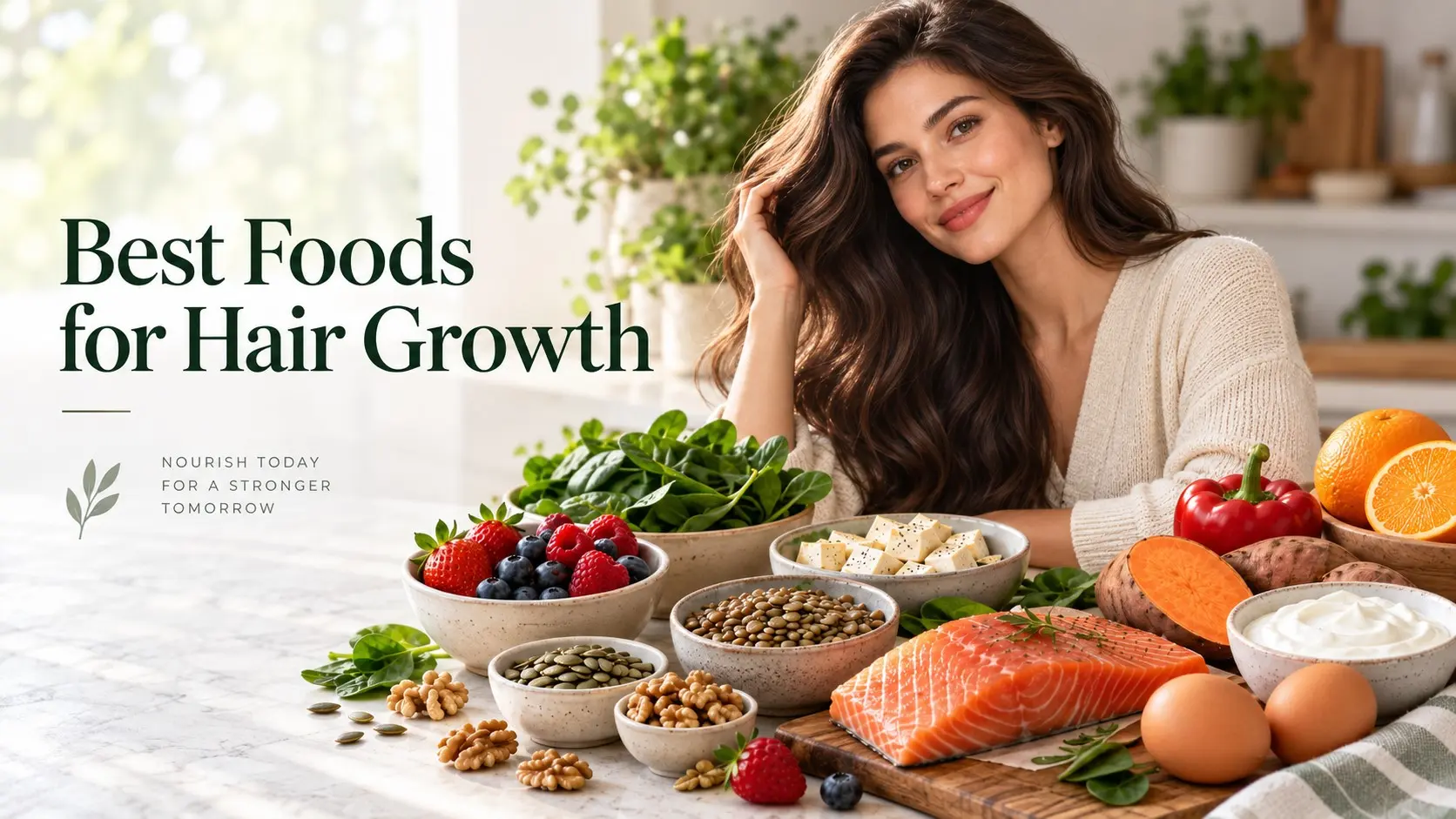
The Best Foods for Hair Growth provide protein, iron, zinc, vitamin B12, folate, vitamin D, healthy fats, vitamin C, and other nutrients your body needs to build and maintain normal hair.
But food has limits.
If your hair loss is caused by genetics, thyroid disease, alopecia areata, scalp disease, medication, severe stress, childbirth, or another medical problem, eating salmon and spinach will not fix the cause.
Nutrition matters most when your diet is missing something your body needs.
That is the honest place to start.
Important medical note: I am not a dermatologist or a doctor, and this content does not replace professional medical advice. This article explains published guidance and does not provide a personal clinical assessment. Always consult qualified medical professionals for diagnosis and treatment of any health condition.
Hair loss has many causes. Speak with a dermatologist or doctor if hair loss is sudden, patchy, severe, painful, associated with scalp redness or scarring, affects the eyebrows or eyelashes, follows major unexplained weight loss, or continues without a simple reason.
What Are the Best Foods for Hair Growth?
Quick answer: The Best Foods for Hair Growth include eggs, salmon, lean beef, shellfish, plain Greek yogurt, lentils, beans, tofu, pumpkin seeds, nuts and seeds, spinach, sweet potatoes, vitamin C-rich fruits and vegetables, and fortified foods. They provide nutrients linked with normal hair formation, especially protein, iron, zinc, vitamin B12, folate, vitamin D, and healthy fats.
Notice what is missing from that answer.
No gummy.
No magic powder.
No exotic berry.
No promise that one food will reverse baldness.
Hair Is Made From Protein
Hair shafts are built mainly from keratin.
Keratin is a protein.
Your body therefore needs enough protein intake to support normal tissue production.
Very low protein intake can contribute to hair changes and shedding.
The American Academy of Dermatology lists inadequate protein among nutrition problems that can cause noticeable hair loss.
That does not mean you need a huge protein diet.
You need enough for your body.
Useful foods include:
- Eggs
- Fish
- Chicken
- Lean meat
- Greek yogurt
- Cottage cheese
- Beans
- Lentils
- Tofu
- Tempeh
For more practical options, use the NextFitLife High Protein Foods Guide.
Iron Matters More Than Hair Gummies
Iron deficiency is one of the nutrition issues doctors think about when someone has unexplained hair shedding.
Your body uses iron for many jobs.
It is part of hemoglobin, which carries oxygen in the blood.
Hair loss can occur with iron deficiency, especially when iron deficiency becomes significant.
But this does not mean everyone losing hair should take iron.
Too much supplemental iron can be harmful.
A healthcare professional may consider your diet, symptoms, blood count, iron status, menstrual history, digestive health, and other factors before recommending treatment.
Ferritin and Hair Loss Are More Complicated Than Social Media Says
You may hear that everyone needs a specific ferritin number for hair growth.
The evidence is not that simple.
Ferritin reflects stored iron.
Very low iron stores deserve attention.
But there is no single internet ferritin target that can diagnose the cause of hair loss in every person.
Hair loss can happen with normal iron levels.
Low ferritin can also exist without being the only reason for shedding.
Use blood tests in context.
Do not treat one laboratory number without medical advice.
Zinc Deficiency Can Also Cause Hair Loss
Zinc deficiency can cause alopecia.
That is established.
It does not mean more zinc grows more hair when your zinc level is already adequate.
Useful food sources include:
- Oysters
- Meat
- Pumpkin seeds
- Lentils
- Greek yogurt
- Eggs
- Beans
- Nuts
The NIH lists pumpkin seeds, lentils, dairy foods, eggs, and several seafood and meat choices as zinc sources.
For a wider mineral guide, read Zinc and Magnesium Benefits.
Vitamin D Is Worth Attention, but Food Has Limits
Research continues to study the relationship between vitamin D and different forms of hair loss.
A recent systematic review found associations between vitamin D status and some hair conditions.
The evidence is not strong enough to claim that vitamin D supplements regrow hair in every person.
Vitamin D is also hard to get from food alone.
Useful sources include:
- Salmon
- Trout
- Tuna
- Egg yolk
- Fortified milk
- Fortified plant drinks
- Some UV exposed mushrooms
Do not take very high doses based on hair shedding alone.
What About Biotin?
Biotin is probably the most overmarketed hair nutrient.
True biotin deficiency can cause thinning hair.
True deficiency is also rare in people eating a normal mixed diet.
NIH states that severe biotin deficiency has not been reported in healthy people eating a normal mixed diet.
High quality evidence does not support routine high dose biotin supplements for ordinary hair loss when deficiency is absent.
This is why I prefer food first.
High Dose Biotin Can Interfere With Blood Tests
This part is easy to miss.
The FDA warns that high biotin intake from supplements can interfere with certain laboratory tests.
Some incorrect results can be clinically serious.
This includes some cardiac troponin tests.
If you use a hair supplement containing large amounts of biotin, tell your healthcare team before blood testing.
Do not assume a beauty vitamin is harmless because it is sold without a prescription.
14 Best Foods for Hair Growth and Hair Nutrition
| Food | Key Nutrients | Why It Belongs Here |
|---|---|---|
| 1. Eggs | Protein, vitamin B12, biotin, zinc, vitamin D | Easy protein food with several nutrients involved in normal tissue growth |
| 2. Salmon | Protein, vitamin D, vitamin B12, omega-3 fats | Combines protein with nutrients that can be harder to obtain from some diets |
| 3. Lean beef | Protein, heme iron, zinc, vitamin B12 | Provides highly absorbable iron plus zinc and protein |
| 4. Oysters and shellfish | Zinc, iron, vitamin B12, protein | Oysters are especially rich in zinc |
| 5. Plain Greek yogurt | Protein, vitamin B12, zinc | Simple protein food for breakfast or snacks |
| 6. Lentils | Protein, iron, zinc, folate, fibre | Useful plant source of several nutrients linked with hair health |
| 7. Beans and chickpeas | Protein, iron, zinc, folate, fibre | Affordable plant protein with iron and folate |
| 8. Tofu and tempeh | Protein, iron, zinc | Strong options for vegetarian and vegan diets |
| 9. Pumpkin seeds | Zinc, iron, protein, healthy fats | Easy mineral rich topping for yogurt, oats, and salads |
| 10. Walnuts, chia, and flaxseed | Healthy fats, ALA omega-3, protein, minerals | Useful plant sources of essential fats and nutrients |
| 11. Spinach and leafy greens | Folate, nonheme iron, carotenoids, vitamin C | Adds iron and folate to a varied diet |
| 12. Sweet potatoes | Beta-carotene, vitamin A activity | Food-based carotenoids support normal vitamin A nutrition |
| 13. Berries, citrus, and peppers | Vitamin C and plant compounds | Vitamin C helps the body absorb nonheme iron from plant foods |
| 14. Fortified foods | Iron, vitamin B12, vitamin D depending on product | Useful when a natural food source is limited, especially in vegan diets |
1. Eggs Give You Protein Without Complicated Planning
Eggs are useful because they provide several nutrients in a normal serving.
One egg gives protein plus vitamin B12, zinc, biotin, and a small amount of vitamin D.
You do not need raw eggs for hair.
Cook them safely.
In fact, eating large amounts of raw egg white can interfere with biotin absorption because raw egg white contains avidin.
Normal cooked eggs do not create this problem.
2. Salmon Covers Several Hair Nutrition Gaps at Once
Salmon gives you protein.
It is also one of the better natural food sources of vitamin D.
It provides vitamin B12.
And it provides long chain omega 3 fats.
That makes salmon nutritionally useful.
It does not mean omega-3 alone regrows hair.
A healthy food is still not a medication.
3. Lean Beef Brings Protein, Iron, Zinc, and B12
Lean beef is a concentrated source of several nutrients that come up in hair nutrition.
The iron in meat is heme iron.
Your body absorbs heme iron more efficiently than most plant-based nonheme iron.
Beef also supplies zinc and vitamin B12.
You do not need red meat to maintain healthy hair.
Vegetarian diets can provide the same essential nutrients with careful planning.
4. Oysters Are Especially Rich in Zinc
If we are talking about zinc, oysters stand out.
They also provide iron, vitamin B12, and protein.
Again, more zinc is not better.
Very high zinc supplement intake can cause problems and can interfere with copper status.
Use food.
Supplement a deficiency only when there is a reason.
5. Greek Yogurt Makes Protein Easy
Plain Greek yogurt is useful because it needs no cooking.
Use it for breakfast.
Add berries.
Add oats.
Add pumpkin seeds.
One simple bowl can provide protein, vitamin B12, zinc, vitamin C from fruit, and iron from seeds or fortified oats.
6. Lentils Are One of My Favourite Plant-Based Foods
Lentils provide:
- Protein
- Iron
- Folate
- Zinc
- Fiber
The iron is nonheme iron.
Pair lentils with a vitamin C food to improve absorption.
Try lentils with:
- Tomatoes
- Red peppers
- Broccoli
- Lemon
- Orange on the side
You do not need meat at every meal to support normal iron intake.
7. Beans and Chickpeas Bring Similar Benefits
Beans and chickpeas give you protein, iron, folate, zinc, and fibre.
They are also affordable.
Use them in:
- Soup
- Salad
- Curry
- Tacos
- Rice bowls
- Hummus
If you rely heavily on plant iron, include vitamin C rich foods regularly.
8. Tofu and Tempeh Help Vegetarian and Vegan Diets
Tofu and tempeh give you useful plant protein.
They also contain iron and zinc.
These foods are especially useful when meat, eggs, or dairy are not part of your diet.
But vegan hair nutrition needs more than soy.
You also need a reliable source of vitamin B12.
Natural plant foods do not provide dependable vitamin B12.
Use fortified foods or an appropriate B12 supplement when needed.
9. Pumpkin Seeds Give You Zinc and Iron
Pumpkin seeds are easy to use.
One ounce provides meaningful zinc according to NIH data.
Seeds also provide iron, protein, and fats.
Sprinkle them over:
- Oatmeal
- Yogurt
- Salad
- Soup
- Vegetable bowls
Keep the portion sensible.
Seeds are nutritious and energy dense.
10. Walnuts, Chia, and Flaxseed Add Essential Fats
These foods provide the plant omega 3 fat ALA.
They also add minerals, protein, and fiber.
There is no strong evidence that eating a handful of walnuts directly makes hair grow faster.
The benefit is broader.
They help make the overall diet nutritionally complete.
11. Spinach Provides Folate and Nonheme Iron
Spinach is useful.
It is not magical.
It gives you folate, nonheme iron, carotenoids, and other nutrients.
Plant iron from spinach is not absorbed as efficiently as heme iron.
Pairing spinach with vitamin C-rich foods helps.
Try:
- Spinach with red pepper
- Spinach with tomato
- Spinach with lemon
- Spinach with strawberries in a salad
12. Sweet Potatoes Give You Beta Carotene
Sweet potatoes are rich in beta carotene.
Your body can convert beta carotene into vitamin A.
Vitamin A is needed for normal cell function.
But do not turn this into a reason to take high dose vitamin A supplements.
Too much preformed vitamin A can actually contribute to hair loss.
Food based carotenoids are a much different safety issue.
For more food sources, use the NextFitLife Vitamin A Rich Foods Guide.
13. Vitamin C Foods Help You Use Plant Iron
This benefit is indirect but useful.
Vitamin C improves absorption of nonheme iron.
Good options include:
- Oranges
- Kiwi
- Berries
- Guava
- Red peppers
- Broccoli
- Tomatoes
So if your lunch is lentils and spinach, add peppers or fruit.
That is a more useful nutrition strategy than buying a hair gummy.
14. Fortified Foods Can Fill Real Gaps
Fortified foods are particularly useful when your diet excludes major food groups.
Examples include:
- Iron fortified cereal
- Vitamin B12 fortified cereal
- Fortified nutritional yeast
- Vitamin D fortified milk
- Fortified soy milk
- Other fortified plant drinks
Check the Nutrition Facts label.
Fortification varies between brands and countries.
What About Collagen for Hair Growth?
This is another marketing-heavy area.
Your digestive system breaks dietary collagen into amino acids and peptides.
The body then uses those building blocks where needed.
There is not strong evidence that eating collagen makes scalp hair grow faster in people who already get enough protein.
Collagen is also not vegan.
You can get the amino acids your body needs from normal protein foods.
Do Hair Growth Gummies Work?
Sometimes a supplement helps because it corrects a real deficiency.
That is different from saying hair gummies work for everyone.
The American Academy of Dermatology recommends testing for deficiency before taking nutrients such as iron, zinc, or biotin specifically for hair loss.
If your level is normal, taking more may not help.
Too much can cause harm.
Can Too Many Vitamins Cause Hair Loss?
Yes.
This is why more is not better.
Excess intake of some nutrients has been linked with hair loss.
Examples include excessive:
- Vitamin A
- Selenium
- Vitamin E in some contexts
High-dose iron and zinc also have their own toxicity risks.
Do not stack a multivitamin, hair gummy, mineral supplement, protein powder, and beauty supplement without checking the total amounts.
Rapid Weight Loss Can Trigger Hair Shedding
This is one of the most important sections in the article.
Very low-calorie dieting can trigger significant hair loss.
The American Academy of Dermatology warns that eating too few calories can cause hair loss.
Rapid weight loss is also a known trigger for telogen effluvium.
Telogen effluvium is a form of diffuse shedding.
It can appear after:
- Major illness
- Surgery
- High fever
- Childbirth
- Severe emotional or physical stress
- Rapid weight loss
- Very low-calorie eating
- Inadequate protein
The shedding often appears after the triggering event rather than on the same day.
If you are losing weight and your hair suddenly begins shedding heavily, do not simply add a biotin gummy.
Review the diet and speak with a healthcare professional.
Crash Diets Are Bad Hair Nutrition
A diet can contain vegetables and still be too restrictive.
If total food intake is too low, your body can run short of:
- Energy
- Protein
- Iron
- Zinc
- Essential fats
- Vitamins
- Minerals
This is one reason I do not recommend extreme detox diets, juice cleanses, or long periods of severe calorie restriction.
For safer eating habits, use the Nutrition Tips for Improving Your Health Guide.
Can a Vegan Diet Support Healthy Hair?
Yes.
But planning matters.
Useful vegan foods include:
- Lentils
- Beans
- Tofu
- Tempeh
- Edamame
- Pumpkin seeds
- Chia seeds
- Flaxseed
- Whole grains
- Vegetables
- Fruit
- Fortified foods
Pay extra attention to:
- Vitamin B12
- Iron
- Zinc
- Protein
- Vitamin D
- Iodine
- Omega-3 fats
Vitamin B12 needs a reliable fortified food or supplement source on a fully vegan diet.
Can Iron From Plants Support Hair?
Yes.
Plant foods contain nonheme iron.
The body absorbs it less efficiently than heme iron from animal foods.
This does not mean vegetarian diets cause hair loss.
Use:
- Lentils
- Beans
- Tofu
- Fortified grains
- Pumpkin seeds
- Spinach
Then add a vitamin C food to improve absorption.
Does Sugar Cause Hair Loss?
There is no simple rule that eating sugar directly makes hair fall out.
A recent systematic review found associations between some dietary factors and hair health, including a relationship between greater intake of sugary drinks and hair loss in some observational research.
That does not prove sugary drinks cause baldness.
The wider lesson is reasonable.
A diet dominated by sugary drinks and highly processed foods can push out protein, iron, zinc, vitamins, vegetables, fruit, and other useful foods.
Focus on overall diet quality.
Does Alcohol Affect Hair?
Heavy alcohol use can affect nutrition in many ways.
It can reduce diet quality.
It can contribute to deficiencies.
It can affect the liver and other organs.
Recent nutrition and hair research has also found associations between higher alcohol intake and poorer hair outcomes in some studies.
This does not mean one drink causes hair loss.
The dose and overall health context matter.
What Foods Will Make Hair Grow Faster?
No food reliably changes your natural hair growth rate in a healthy person who already meets nutrient needs.
This is the key point.
Correcting a deficiency can help normal growth recover.
Eating extra nutrients beyond what your body needs does not create super hair.
Hair growth rate is influenced by:
- Genetics
- Age
- Hormones
- Hair cycle
- Health
- Nutrition
- Medicines
- Scalp conditions
Food Cannot Fix Every Type of Hair Loss
Hair loss is a symptom.
There are many causes.
Androgenetic Alopecia
Androgenetic alopecia is a common genetic pattern hair loss.
Nutrition can support general health.
Food alone does not reverse the genetic process.
Alopecia Areata
This is an autoimmune condition.
It needs proper diagnosis and treatment.
Scarring Alopecia
Some inflammatory hair diseases can permanently damage hair follicles.
Early dermatology care matters.
Traction Alopecia
Tight hairstyles can damage hair follicles.
Food does not remove the pulling force.
Thyroid-Related Hair Loss
Thyroid disease can cause thinning.
You need thyroid evaluation and treatment when appropriate.
Telogen Effluvium
Stress, illness, childbirth, surgery, rapid dieting, and nutrient deficiencies can trigger diffuse shedding.
The trigger matters.
When Should Hair Loss Be Checked?
See a dermatologist or doctor if you notice:
- Sudden hair loss
- Round or patchy bald areas
- Large amounts of shedding
- Scalp pain
- Redness
- Burning
- Heavy scaling
- Scarring
- Loss of eyebrows or eyelashes
- Hair loss with fatigue or weakness
- Hair loss with unexplained weight change
- Hair loss with menstrual changes
- Hair loss after a new medicine
- Continued shedding without an obvious cause
The sooner the cause is identified, the more useful the treatment plan can be.
What Blood Tests Are Used for Hair Loss?
There is no universal hair loss blood panel.
A healthcare professional may choose tests based on your symptoms and history.
Depending on the situation, testing may include:
- Complete blood count
- Iron studies
- Ferritin
- Thyroid tests
- Vitamin D
- Vitamin B12
- Other tests when clinically indicated
Not everyone needs every test.
The physical pattern of hair loss is often just as important as the blood work.
A Simple Hair Nutrition Plate
Do not build meals around one hair nutrient.
Build a complete plate.
| Meal Part | Examples | Useful Nutrients |
|---|---|---|
| Protein | Eggs, fish, chicken, yogurt, lentils, tofu | Protein, iron, zinc, B12 depending on food |
| Vegetable | Spinach, broccoli, peppers, carrots | Folate, vitamin C, carotenoids, minerals |
| Carbohydrate | Potato, oats, whole grains, beans, rice | Energy, fibre, iron, B vitamins |
| Healthy fat | Olive oil, walnuts, seeds, avocado | Essential fats and fat-soluble nutrient absorption |
A Simple One-Day Hair Nutrition Example
Breakfast
Plain Greek yogurt with berries, oats, and pumpkin seeds.
Lunch
Lentil and spinach bowl with red peppers, tomato, whole grain bread, and olive oil.
Snack
Orange with a small handful of walnuts.
Dinner
Salmon with sweet potato and broccoli.
This is only an example.
You do not need these exact foods.
The pattern matters more.
Can You Eat the Same Hair Foods Every Day?
You can repeat foods.
But variety is useful.
Rotate:
- Eggs
- Fish
- Chicken
- Beans
- Lentils
- Tofu
- Yogurt
- Different vegetables
- Different fruit
- Different nuts and seeds
This gives you a wider mix of nutrients.
My Practical Approach to Food and Hair Growth
I do not start with biotin.
I start with the whole diet.
Is there enough food?
Is there enough protein?
Are iron-rich foods present?
Are zinc foods present?
Does the person eat vitamin B12 foods or fortified foods?
Is the diet extremely restrictive?
Was there recent rapid weight loss?
Are there medical symptoms that need testing?
That tells you much more than the front of a hair supplement bottle.
Conclusion
The Best Foods for Hair Growth are normal, rich foods that help your body meet its needs.
Start with protein foods such as eggs, fish, yogurt, lentils, beans, and tofu.
Add iron and zinc sources.
Use fruit and vegetables for vitamin C, folate, carotenoids, and other nutrients.
Include healthy fats.
Avoid extreme dieting.
And do not assume that more biotin, iron, zinc, selenium, or vitamin A means more hair.
Your next step: Look at one normal day of eating. Identify your main protein source, iron source, zinc source, and vitamin C food. If your diet is highly restrictive or your hair is shedding heavily, talk with a dermatologist or healthcare professional before buying another supplement.
References and Sources
The following open and publicly accessible sources were used to research and fact-check this article:
- American Academy of Dermatology. Hair Loss: Tips for Managing.AAD guidance explains that inadequate iron or protein intake and eating too few calories can contribute to hair loss. It also warns that excessive supplement intake can worsen hair loss and recommends checking for deficiencies before taking targeted supplements.Read the American Academy of Dermatology Hair Loss Guide
- Assessing the Relationship Between Dietary Factors and Hair Health: A Systematic Review. 2025.This open access systematic review included 17 studies with more than 61,000 participants and examined relationships between iron, vitamin D, protein, foods, beverages, and different hair outcomes. The authors also emphasized that more research is needed before broad nutrition treatment claims can be made.Read the Full Open Access Systematic Review
- National Institutes of Health Office of Dietary Supplements. Iron Fact Sheet for Health Professionals.NIH guidance covers iron functions, iron deficiency, heme and nonheme iron, food sources, absorption, supplementation, and toxicity.Read the NIH Iron Fact Sheet
- National Institutes of Health Office of Dietary Supplements. Zinc Fact Sheet for Health Professionals.NIH guidance explains zinc functions, food sources, groups at risk of inadequate intake, deficiency-related alopecia, supplementation, and excessive intake.Read the NIH Zinc Fact Sheet
- National Institutes of Health Office of Dietary Supplements. Biotin Fact Sheet for Health Professionals.NIH explains that biotin deficiency can cause hair thinning, but true deficiency is rare in people eating a normal mixed diet. High-dose biotin supplementation is not automatically useful when deficiency is absent.Read the NIH Biotin Fact Sheet
Continue Reading on NextFitLife
Use these related NextFitLife guides to build a stronger food-first nutrition plan:
- Nutrition and Vitamins HubExplore iron, zinc, vitamin B12, vitamin D, folate, vitamin C, supplement safety, nutrient deficiencies, and food sources.
- High Protein Foods GuideCompare eggs, fish, poultry, yogurt, lentils, beans, tofu, tempeh, and other protein-rich foods.
- Vitamin A Rich FoodsLearn how sweet potatoes, carrots, spinach, eggs, dairy, fish, and other foods contribute to vitamin A activity without relying on high-dose supplements.
- Zinc and Magnesium BenefitsReview zinc food sources, deficiency questions, supplements, mineral safety, and when medical testing matters.
- Nutrition Tips for Improving Your HealthBuild balanced meals around protein, vegetables, fruit, whole grains, useful fats, and enough total food.
- Top Healthy Foods GuideUse a wider mix of vegetables, fruit, beans, whole grains, fish, eggs, nuts, seeds, and other nutrient-rich foods.
- Healthy Skin 101Review realistic skin care, nutrition, supplement safety, sun protection, and common beauty myths.
Main nutrition hub: Visit the NextFitLife Nutrition and Vitamins Hub for more guidance on nutrient deficiencies, food sources, supplements, interactions, and food-first nutrition.
About the Author
Adel Galal is the Founder and Lead Writer at NextFitLife.
He focuses on making health, fitness, nutrition, and wellness information easier to understand and use in real life.
His content combines real-life experience, extensive research, and consultation with healthcare providers.
For hair nutrition articles, he separates established nutrient deficiencies from supplement marketing and does not treat normal food as a cure for medical hair loss.
Adel is not a dermatologist or a doctor, and this content does not replace professional medical advice. What he shares comes from real-life experience, extensive research, and consultation with healthcare providers.
Always consult qualified medical professionals for diagnosis and treatment of any health condition.
Learn more about Adel, NextFitLife, and the site's editorial approach on the About Us page.
Frequently Asked Questions
What are the best foods for hair growth?
Useful choices include eggs, salmon, lean beef, shellfish, Greek yogurt, lentils, beans, tofu, pumpkin seeds, nuts, spinach, sweet potatoes, vitamin C-rich fruits and vegetables, and fortified foods.
Can food make hair grow faster?
Food helps support normal hair growth when your diet meets your nutrient needs. Correcting a deficiency can help growth recover, but eating extra nutrients does not reliably make healthy hair grow faster than its natural rate.
What nutrient deficiency causes hair loss?
Several deficiencies can be linked with hair loss, including inadequate iron, zinc, protein, biotin, and some other nutrients. Hair loss also has many causes unrelated to food, so diagnosis matters.
Does iron deficiency cause hair loss?
Iron deficiency can contribute to hair loss. Do not take iron simply because your hair is thinning. Iron testing and the cause of deficiency should be considered before high-dose supplementation.
Is low ferritin responsible for hair loss?
Low iron stores can be relevant to some people with hair shedding, but there is no single ferritin target that explains every case. Ferritin should be interpreted with symptoms, blood tests, medical history, and the pattern of hair loss.
Does zinc help hair growth?
Correcting a zinc deficiency can help when deficiency is contributing to hair loss. Extra zinc has not been shown to make hair grow faster when zinc status is already adequate.
Does biotin grow hair?
Biotin deficiency can cause hair thinning, but true deficiency is rare. High-quality evidence does not support routine high-dose biotin supplements for ordinary hair loss in people without deficiency.
Can biotin affect blood tests?
Yes. High-dose biotin supplements can interfere with certain laboratory tests and cause incorrect results. Tell your healthcare team about biotin supplements before blood testing.
Are eggs good for hair growth?
Eggs provide protein, vitamin B12, biotin, zinc, and a small amount of vitamin D. They can contribute to a balanced diet that supports normal hair health.
Is salmon good for hair?
Salmon provides protein, vitamin D, vitamin B12, and omega-3 fats. These nutrients support general nutrition, but salmon does not directly treat genetic or medical hair loss.
Are lentils good for hair?
Yes. Lentils provide protein, iron, zinc, folate, and fibre. Pairing them with vitamin C-rich foods can improve absorption of their nonheme iron.
Are pumpkin seeds good for hair?
Pumpkin seeds provide zinc, iron, protein, and healthy fats. They can be part of a balanced diet, but they are not a proven standalone treatment for hair loss.
Is spinach good for hair?
Spinach provides folate, nonheme iron, carotenoids, and other nutrients. Pair it with a vitamin C-rich food to improve nonheme iron absorption.
Does vitamin D affect hair loss?
Research has found associations between vitamin D status and some forms of hair loss, but evidence does not show that vitamin D supplementation regrows hair in everyone. Deficiency should be assessed when clinically appropriate.
Can rapid weight loss make hair fall out?
Yes. Rapid weight loss, very low calorie intake, illness, surgery, childbirth, and severe stress can trigger telogen effluvium, a form of diffuse hair shedding.
Does not eating enough protein cause hair loss?
Yes. Significant protein deficiency can cause hair changes and hair loss. Most people should meet protein needs with a varied eating pattern rather than extreme high protein diets.
Can too many vitamins cause hair loss?
Yes. Excess intake of nutrients such as preformed vitamin A and selenium has been linked with hair loss. High-dose supplements can also create other health problems.
Can a vegan diet support healthy hair?
Yes. A well-planned vegan diet can provide protein, iron, zinc, folate, and healthy fats. A reliable vitamin B12 source from fortified foods or supplements is also needed.
Do hair growth supplements work?
Supplements can help when they correct a documented deficiency. Evidence is much weaker for routine use in people whose nutrient status is already adequate.
When should I see a dermatologist for hair loss?
Seek professional assessment for sudden, patchy, severe, painful, scarring, or persistent hair loss, loss of eyebrows or eyelashes, scalp inflammation, or shedding accompanied by other unexplained health symptoms.

Health & wellness writer with 30+ years of experience in nutrition, fitness, and healthy aging. Founder of NextFitLife.com — evidence-based health guidance.