Published: Jan 20, 2024
Last updated: July 18, 2026
Next review: July 2027
Written by: Adel Galal, Founder and Lead Writer at NextFitLife
Editorial review: Updated and checked against current nutrition and testosterone guidance
Medical review status: This article has not been medically reviewed by a doctor or registered dietitian
Reading time: About 17 minutes
Testosterone Boosting Foods are often promoted as a fast way to raise strength, energy, sexual desire, and athletic performance.
The truth is less dramatic.
No single food has been proven to quickly raise testosterone in a man whose level is already normal.
Food can still support normal testosterone production. It can provide zinc, vitamin D, magnesium, protein, and enough energy. These nutrients help the body work normally.
Food may be most helpful when a poor diet or a true nutrient shortage is part of the problem.
This guide explains 14 useful foods, the limits of the evidence, the signs of low testosterone, and when medical testing is needed.
For more nutrient guides, visit the NextFitLife Vitamins and Minerals in Food Hub.
Important Medical Note
This content is for general educational purposes and does not replace professional medical advice, diagnosis, or treatment. Consult an appropriately qualified healthcare professional for personal medical concerns. I am also not an endocrinologist, urologist, fertility specialist, pharmacist, registered dietitian, or sports medicine professional.
This content does not replace professional medical advice. This article explains published guidance and does not provide a personal clinical assessment.
Always consult qualified medical professionals for diagnosis and treatment of any health condition.
Do not stop medicine, begin testosterone treatment, or take large doses of zinc, vitamin D, magnesium, or herbal products because of this article.
Quick Answer: Do Testosterone Boosting Foods Work?
Testosterone Boosting Foods do not work like testosterone medicine.
They may support normal hormone health by helping you obtain:
- Zinc
- Vitamin D
- Magnesium
- Protein
- Healthy fats
- Enough food and energy
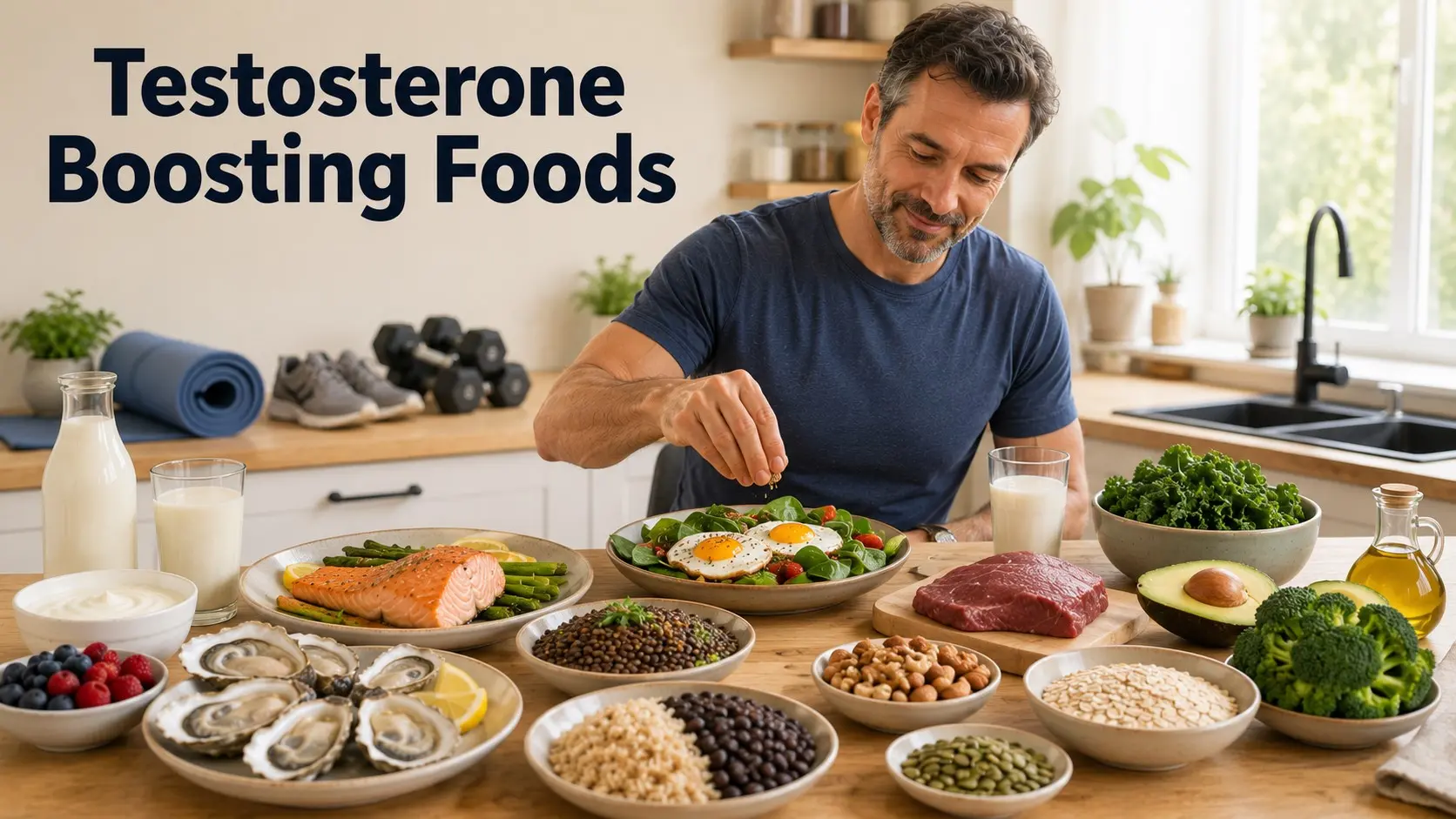
The most useful choices include oysters, fish, eggs, fortified milk, yogurt, lean beef, pumpkin seeds, beans, leafy greens, nuts, oats, avocado, olive oil, and vegetables.
These foods may help prevent poor intake. They cannot diagnose or cure hypogonadism.
What Is Testosterone?
Testosterone is a hormone.
Men make the most of it in the testicles. A small amount is also made by the adrenal glands.
The brain and pituitary gland help control production.
Testosterone supports:
- Male development during puberty
- Sexual desire
- Sperm production
- Muscle mass
- Bone health
- Red blood cell production
- Body hair
- Normal mood and wellbeing
A single symptom does not prove that testosterone is low.
Tiredness, low mood, weight gain, poor sleep, and reduced strength can have many causes.
What Is Low Testosterone?
Medical testosterone deficiency means more than one low blood result.
A diagnosis usually requires:
- Symptoms or physical signs
- A low morning testosterone result
- A second low morning result on another day
- Further tests when needed to find the cause
The American Urological Association uses a total testosterone result below 300 nanograms per deciliter as a reasonable supporting cutoff.
The exact meaning still depends on the laboratory, symptoms, timing, health, and medical assessment.
Do not diagnose low testosterone using an online quiz.
Possible Signs of Low Testosterone
Possible signs may include:
- Reduced sexual desire
- Fewer morning erections
- Erectile problems
- Reduced sperm production
- Difficulty with fertility
- Loss of muscle mass
- Reduced body hair
- Hot flashes
- Low bone density
- Breast enlargement
- Low energy
Many of these signs can come from medicine, stress, poor sleep, depression, thyroid disease, obesity, diabetes, anemia, or another condition.
Food Support Is Not the Same as a Testosterone Boost
The phrase Testosterone Boosting Foods is useful for search, but it can create the wrong promise.
A better meaning is foods that support normal nutrition and male hormone health.
A food may provide zinc or vitamin D. This does not prove that eating more will push testosterone above its normal range.
Correcting a nutrient shortage can help the body return to normal function.
Taking more after your needs are met may not create an extra benefit.
Best 14 Testosterone Boosting Foods
1. Oysters
Oysters contain more zinc per serving than most other foods.
Zinc is needed for many enzymes, immune function, cell growth, and normal reproduction.
A severe zinc shortage may affect testosterone levels and sperm health.
This does not mean that eating large amounts of oysters will raise normal testosterone.
A small serving can provide more than a full day of zinc.
Choose cooked oysters to reduce food safety risks.
Raw shellfish may contain harmful bacteria. The risk is greater for people with liver disease, diabetes, weak immunity, or serious health conditions.
2. Salmon
Salmon provides protein, vitamin D, vitamin B12, selenium, and omega 3 fats.
Vitamin D supports bones and normal muscle function.
Low vitamin D and low testosterone sometimes appear together. This does not prove that vitamin D supplements or salmon will raise testosterone.
Controlled studies have not shown a reliable testosterone increase in healthy men who take vitamin D.
Salmon remains a useful food because it provides several nutrients in one meal.
Learn more in the NextFitLife Vitamin D Benefits Men's Guide.
3. Sardines
Sardines provide protein, vitamin D, vitamin B12, selenium, and omega-3 fats.
Sardines with soft bones also provide calcium.
They are a simple choice for toast, salad, rice, or pasta.
Choose a lower-sodium product when you need to limit salt.
Sardines support a healthy eating pattern. They do not act as hormone medicine.
4. Eggs
Eggs provide protein, vitamin B12, choline, selenium, and a small amount of vitamin D.
The yolk contains most of the vitamin D and fat.
Cholesterol is used by the body to make steroid hormones. However, eating extra cholesterol does not automatically raise testosterone.
One or two eggs can fit into many healthy diets.
People with diabetes, heart disease, high cholesterol, or special medical diets should follow personal advice.
5. Fortified Milk or Fortified Soy Drink
Fortified milk often provides vitamin D, calcium, protein, and vitamin B12.
Fortified soy drinks can provide similar nutrients when dairy does not suit you.
Check the label. Not every plant drink has added vitamin D or enough protein.
Choose an unsweetened product when you want less added sugar.
Milk does not need to be full-fat to support testosterone.
The claim that whole milk gives a special hormone boost is not proven.
6. Plain Yogurt
Plain yogurt provides protein, calcium, vitamin B12, iodine, and zinc.
Some products also contain added vitamin D.
Choose plain yogurt to reduce added sugar.
Add berries, oats, nuts, or seeds.
Greek yogurt often provides more protein than standard yogurt.
Use lactose-free yogurt when lactose causes symptoms. Avoid dairy when you have a milk allergy.
7. Lean Beef
Lean beef provides zinc, protein, iron, vitamin B12, and selenium.
Zinc from animal foods is usually absorbed more easily than zinc from many plant foods.
A small lean portion can fit into a balanced diet.
You do not need to eat red meat every day.
Use fish, chicken, eggs, beans, lentils, tofu, and yogurt for variety.
Current healthy eating guidance favours whole, nutrient-rich foods and limits large amounts of highly processed food.
8. Pumpkin Seeds
Pumpkin seeds provide magnesium, zinc, protein, fibre, and unsaturated fat.
They are one of the most useful plant-based zinc-rich foods.
Add one or two tablespoons to oats, yogurt, soup, or salad.
A small handful also works as a snack.
Choose unsalted seeds when sodium is a concern.
9. Beans and Lentils
Beans and lentils provide magnesium, zinc, fibre, plant protein, iron, and slow-digesting carbohydrate.
They can support weight, heart, and blood sugar goals as part of a balanced diet.
Plant zinc is not absorbed as easily because beans contain phytate.
This does not make beans a poor food.
Soaking, cooking, sprouting, and eating a varied diet can help.
Start with a small amount if beans cause gas.
10. Leafy Green Vegetables
Spinach, kale, collard greens, and similar vegetables provide magnesium, folate, vitamin K, and plant compounds.
Magnesium supports normal muscle and nerve function.
A shortage may affect many body processes. Eating more magnesium after your needs are met is not proven to raise testosterone.
Add greens to eggs, soup, beans, rice, pasta, or salad.
Read the NextFitLife Magnesium Foods Guide for more choices.
11. Nuts
Almonds, cashews, walnuts, peanuts, and pistachios provide magnesium, protein, and unsaturated fat.
Walnuts also provide a plant form of omega-3 fat.
A small handful is a practical serving.
Nuts contain many calories in a small amount. Larger portions do not create a larger testosterone effect.
Avoid nuts if you have an allergy.
12. Oats and Whole Grains
Oats, brown rice, barley, quinoa, and whole grain bread provide energy, fibre, magnesium, and other nutrients.
Very low-calorie diets can reduce energy intake and may affect hormones, muscle, mood, and training.
Whole grains can help provide enough energy without depending on sweets or refined snacks.
Pair them with protein and vegetables.
Examples include oats with yogurt, rice with fish, and whole grain bread with eggs.
13. Avocado and Olive Oil
Avocado and olive oil provide healthy fats.
The body needs dietary fat for normal health and hormone production.
This does not mean that adding large amounts of fat raises testosterone.
Use moderate portions.
Add avocado to eggs, beans, salads, or toast.
Use olive oil with vegetables, fish, beans, and grains.
14. Broccoli and Other Cruciferous Vegetables
Broccoli, cauliflower, cabbage, kale, and Brussels sprouts provide fibre, vitamins, and plant compounds.
They support a nutritious eating pattern.
The claim that these vegetables remove estrogen and raise testosterone in men is too strong.
Human evidence does not show that eating broccoli acts as a hormone treatment.
Eat cruciferous vegetables because they are nutritious, not because they promise a rapid hormone change.
Foods Often Called Testosterone Boosters Without Strong Proof
Garlic
Garlic adds flavour and can fit into a healthy diet.
Animal studies cannot prove that raw garlic raises testosterone in men.
Ginger
Small studies have examined ginger in infertile men.
The evidence is not strong enough to call ginger a testosterone treatment.
Use ginger for flavour if you enjoy it.
Pomegranate Juice
Pomegranate provides plant compounds.
It has not been proven to produce a useful, lasting rise in testosterone.
Juice also contains concentrated sugar and little fibre.
Honey
Honey is an added sugar.
Small amounts can fit into a diet, but honey is not a proven testosterone booster.
Coffee
Coffee may briefly affect stress hormones or exercise performance.
It has not been proven to correct testosterone deficiency.
Too much caffeine can harm sleep, and poor sleep may affect hormone health.
Bananas
Bananas provide carbohydrates, potassium, fibre, and vitamin B6.
They do not contain bromelain. Bromelain comes from pineapple.
Bananas have not been proven to raise testosterone.
What About Soy Foods?
Soy is often blamed for lowering testosterone.
Normal amounts of tofu, tempeh, edamame, or soy milk have not been shown to reduce testosterone in men.
Soy foods provide protein, iron, zinc, and other nutrients.
Avoid soy if you have an allergy.
Choose fortified soy drink when you need a dairy alternative with protein, calcium, and vitamin D.
Do Testosterone Boosting Supplements Work?
Many products contain zinc, magnesium, vitamin D, fenugreek, tribulus, ashwagandha, boron, or mixed herbs.
The label may promise:
- Higher testosterone
- More muscle
- Better sexual performance
- Faster fat loss
- More energy
These promises may not be supported by strong human research.
Products may also contain:
- Unsafe doses
- Medicine ingredients not shown on the label
- Contaminants
- Ingredients that interact with medicine
- Substances banned in sport
Ask a doctor or pharmacist before using a testosterone booster.
Competitive athletes should use extra care with any supplement.
Zinc Supplement Safety
Adult men generally need about 11 milligrams of zinc each day.
The adult upper limit is 40 milligrams each day from all sources unless a clinician recommends another amount.
Too much zinc can cause:
- Nausea
- Vomiting
- Stomach pain
- Headaches
- Low copper
- Lower immunity
- Changes in cholesterol
Large zinc doses may also interact with antibiotics and other medicines.
Food is the safest starting point for most people.
Vitamin D Supplement Safety
Men aged 19 to 70 generally need 600 IU of vitamin D each day.
Men aged 71 and older generally need 800 IU.
The adult upper limit is 4,000 IU each day unless a clinician recommends a larger treatment dose.
Too much vitamin D can raise blood calcium and harm the kidneys or heart.
Do not use vitamin D as a testosterone booster.
Magnesium Supplement Safety
Adult men generally need 400 to 420 milligrams of magnesium each day.
The upper limit for magnesium from supplements and medicines is 350 milligrams each day unless a clinician recommends more.
This limit does not include magnesium naturally found in food.
Supplements may cause diarrhea, nausea, and cramps.
High amounts can be dangerous for people with kidney disease.
Diet Patterns That May Work Against Hormone Health
No food is solely responsible for low testosterone.
Some patterns may make normal health harder to support.
Severe Calorie Restriction
Very low food intake can reduce energy, protein, vitamins, minerals, and training recovery.
Avoid crash diets.
For safer guidance, read the NextFitLife Healthy Rate of Weight Loss Guide.
Very Low Protein Intake
Protein supports muscles and normal body tissues.
Useful lean protein sources include fish, eggs, chicken, yogurt, tofu, beans, and lentils.
Heavy Alcohol Use
Heavy alcohol use can affect sleep, the liver, sexual function, fertility, and hormones.
It may also replace nutritious food.
Large Amounts of Highly Processed Food
A pattern built mainly from sweets, fried foods, processed meat, sweet drinks, and refined snacks may provide too many calories and too few useful nutrients.
Focus more often on whole, nutrient-rich foods.
Body Weight and Testosterone
Obesity can be linked with lower testosterone.
Excess body fat may affect hormone signals and increase the conversion of testosterone into estrogen.
Sleep apnea, diabetes, and other conditions may also play a role.
Weight loss may improve testosterone in some men with obesity.
This does not mean every man with a larger body has low testosterone.
Use gradual, sustainable changes.
Aggressive weight loss can cause muscle loss and nutrient shortages.
Prediabetes and Metabolic Health
Insulin resistance, obesity, sleep problems, and low activity may occur alongside low testosterone.
This does not prove that one condition caused the others.
Balanced food, movement, sleep, and medical care can support overall health.
Use the NextFitLife 7 Day Meal Plan for Prediabetes when blood sugar is also a concern.
Exercise and Testosterone
Strength training can support muscles, bones, body composition, and physical performance.
Exercise may cause a short change in testosterone after a session.
This is not the same as curing medical testosterone deficiency.
A balanced routine may include:
- Resistance exercise
- Walking
- Cardiovascular activity
- Rest days
- Mobility work
More exercise is not always better.
Overtraining, injury, poor sleep, and not eating enough can harm recovery.
Sleep and Testosterone
Sleep quality matters for hormone signals, mood, appetite, and recovery.
Ongoing sleep loss may affect testosterone in some men.
Sleep apnea is also linked with obesity, tiredness, sexual problems, and lower testosterone.
Speak with a healthcare professional when you:
- Snore loudly
- Stop breathing during sleep
- Wake with headaches
- Feel very sleepy during the day
- Have difficult to control blood pressure
Stress and Mental Health
Long lasting stress can affect sleep, appetite, sexual desire, exercise, and mood.
Depression and anxiety may also cause symptoms that look like low testosterone.
Food cannot remove every source of stress.
Seek professional support when mood, worry, or stress affects daily life.
A One Day Testosterone Supporting Meal Plan
This example supports general nutrition. It is not a treatment plan for low testosterone.
Breakfast
Two eggs with spinach and mushrooms.
Add oats with plain yogurt and pumpkin seeds.
Lunch
Salmon or chickpea salad with leafy greens, tomatoes, whole grain bread, and olive oil.
Snack
Plain yogurt with berries and walnuts.
Dinner
Lean beef, tofu, or lentils with brown rice and broccoli.
Alternative Seafood Meal
Sardines with whole grain toast, tomato, cucumber, and avocado.
Simple Shopping List
Protein and Seafood
- Oysters
- Salmon
- Sardines
- Eggs
- Lean beef
- Chicken
- Tofu
- Plain yogurt
Plant Foods
- Pumpkin seeds
- Beans
- Lentils
- Spinach
- Kale
- Broccoli
- Oats
- Brown rice
- Nuts
- Avocado
Fortified Foods
- Fortified milk
- Fortified soy drink
- Fortified cereal
Testosterone, Fertility, and Treatment
Testosterone supports male development, but taking testosterone medicine can reduce sperm production.
Men who want children should tell their doctor before starting testosterone therapy.
Medical treatment may need a different approach when male fertility is a goal.
Food cannot treat blocked tubes, genetic conditions, varicocele, pituitary disease, testicular damage, or many other causes of infertility.
When to Request Medical Testing
Speak with a qualified healthcare professional when you have ongoing symptoms such as:
- Low sexual desire
- Fewer morning erections
- Erectile problems
- Infertility
- Reduced muscle mass
- Hot flashes
- Breast enlargement
- Bone loss
- A low-trauma fracture
- Loss of body hair
The clinician may order two early morning testosterone tests.
Further testing may include luteinizing hormone, follicle-stimulating hormone, prolactin, thyroid tests, blood count, iron studies, or other tests.
The correct tests depend on your symptoms and medical history.
Seek Prompt Medical Care
Get prompt medical care for:
- Sudden severe testicular pain
- A new testicular lump
- Severe headache with vision changes
- Chest pain
- Fainting
- Severe weakness
- A painful erection that lasts several hours
- Serious side effects after taking a supplement or hormone product
Common Myths About Testosterone Boosting Foods
Myth: Oysters quickly raise testosterone
Oysters provide a lot of zinc. They do not act like testosterone medicine.
Myth: Eggs always increase testosterone
Eggs provide protein and nutrients. Eating more eggs does not guarantee higher hormone levels.
Myth: Bananas contain bromelain
They do not. Bromelain is found in pineapple.
Myth: Broccoli removes estrogen from men
This claim is too simple and is not supported as a treatment for low testosterone.
Myth: Honey raises testosterone because it contains boron
Honey contains mostly sugar and is not a proven testosterone treatment.
Myth: Soy lowers male testosterone
Normal soy food intake has not been shown to lower testosterone in men.
Myth: A supplement is safer than testosterone medicine
Supplements can contain unsafe doses, drug ingredients, or contaminants.
Myth: One low test means you need treatment
A diagnosis requires symptoms and repeated low morning results.
Five High Authority References and Sources
- Endocrine Society: Testosterone Therapy in Men With HypogonadismOpen clinical guidance about symptoms, morning testing, repeat results, diagnosis, treatment, fertility, and monitoring.
- American Urological Association: Testosterone Deficiency GuidelineOpen professional guidance about diagnosis, the 300 nanogram cutoff, repeated morning testing, treatment, fertility, and safety.
- National Institutes of Health Office of Dietary Supplements: Zinc Fact SheetOpen guidance about daily zinc needs, oysters, meat, beans, nuts, whole grains, deficiency, upper limits, and interactions.
- National Institutes of Health Office of Dietary Supplements: Vitamin D Fact SheetOpen guidance about vitamin D needs, food sources, blood levels, supplements, toxicity, and current evidence.
- National Institutes of Health Office of Dietary Supplements: Magnesium Fact SheetOpen guidance about magnesium needs, plant food sources, supplements, safety limits, deficiency, and medicine interactions.
Conclusion: Testosterone Boosting Foods
Testosterone Boosting Foods cannot promise a fast or dramatic hormone increase.
They can provide zinc, vitamin D, magnesium, protein, healthy fats, and enough energy to support normal health.
Start by adding one useful food today. Try fish, eggs, pumpkin seeds, beans, leafy greens, yogurt, or whole grains.
Then work on sleep, movement, weight, and stress.
Speak with a qualified healthcare professional when symptoms continue. Proper testing is more useful than guessing or buying an unproven booster.
Internal Links and NextFitLife Hubs
- NextFitLife Foods and Nutrition Hub
- Vitamins and Minerals in Food Hub
- Vitamin D Benefits for Men
- Foods High in Magnesium
- Vitamin B12-Rich Foods
- Vitamins for Strong Bones and Joints
- Healthy Rate of Weight Loss
- 7 Day Meal Plan for Prediabetes
Frequently Asked Questions
What are the best testosterone-boosting foods?
Useful choices include oysters, salmon, sardines, eggs, fortified milk, yogurt, lean beef, pumpkin seeds, beans, leafy greens, nuts, oats, avocado, olive oil, and broccoli. These foods support nutrition but do not act like testosterone medicine.
Can food raise testosterone quickly?
No food has been proven to create a rapid and reliable increase in testosterone. Correcting a serious nutrient shortage may support normal production over time.
Do oysters increase testosterone?
Oysters provide a large amount of zinc. Zinc is needed for normal body functions. Oysters have not been proven to raise testosterone above a normal level.
Do eggs boost testosterone?
Eggs provide protein, vitamin D, selenium, and fat. They can fit into a balanced diet, but they do not guarantee a higher testosterone result.
Do bananas raise testosterone?
No strong evidence shows that bananas raise testosterone. Bananas provide carbohydrates, potassium, fibre, and vitamin B6. They do not contain bromelain.
Does coffee raise testosterone?
Coffee may briefly affect alertness or exercise performance. It does not treat testosterone deficiency. Too much caffeine may also harm sleep.
Does soy lower testosterone?
Normal amounts of soy foods have not been shown to lower testosterone in men. Tofu, tempeh, edamame, and soy milk can provide useful protein and nutrients.
Which vitamin is best for testosterone?
No vitamin works as a testosterone treatment. Vitamin D and zinc matter when a person is deficient. Taking extra amounts after needs are met may not raise testosterone.
How is low testosterone diagnosed?
A diagnosis usually requires symptoms plus two low early morning testosterone results taken on separate days. A doctor may order more tests to find the cause.
Can weight loss raise testosterone?
Gradual weight loss may improve testosterone in some men with obesity. Results differ, and crash diets may harm nutrition and muscle.
Does testosterone treatment affect fertility?
Yes. Testosterone medicine can reduce sperm production. Men who want children should discuss fertility before starting treatment.
When should I see a doctor?
Seek medical advice for ongoing low sexual desire, fewer morning erections, infertility, muscle loss, bone loss, hot flashes, breast enlargement, or other persistent symptoms.

Health & wellness writer with 30+ years of experience in nutrition, fitness, and healthy aging. Founder of NextFitLife.com — evidence-based health guidance.