Published: Jan 16, 2023
Last updated: September 22, 2026
Written and source-checked by: Adel Galal, Founder and Lead Writer at NextFitLife
Review status: Updated using the 2026 American Diabetes Association Standards of Care, NIDDK, CDC, and World Health Organization guidance. This article has not been medically reviewed by an endocrinologist or doctor.
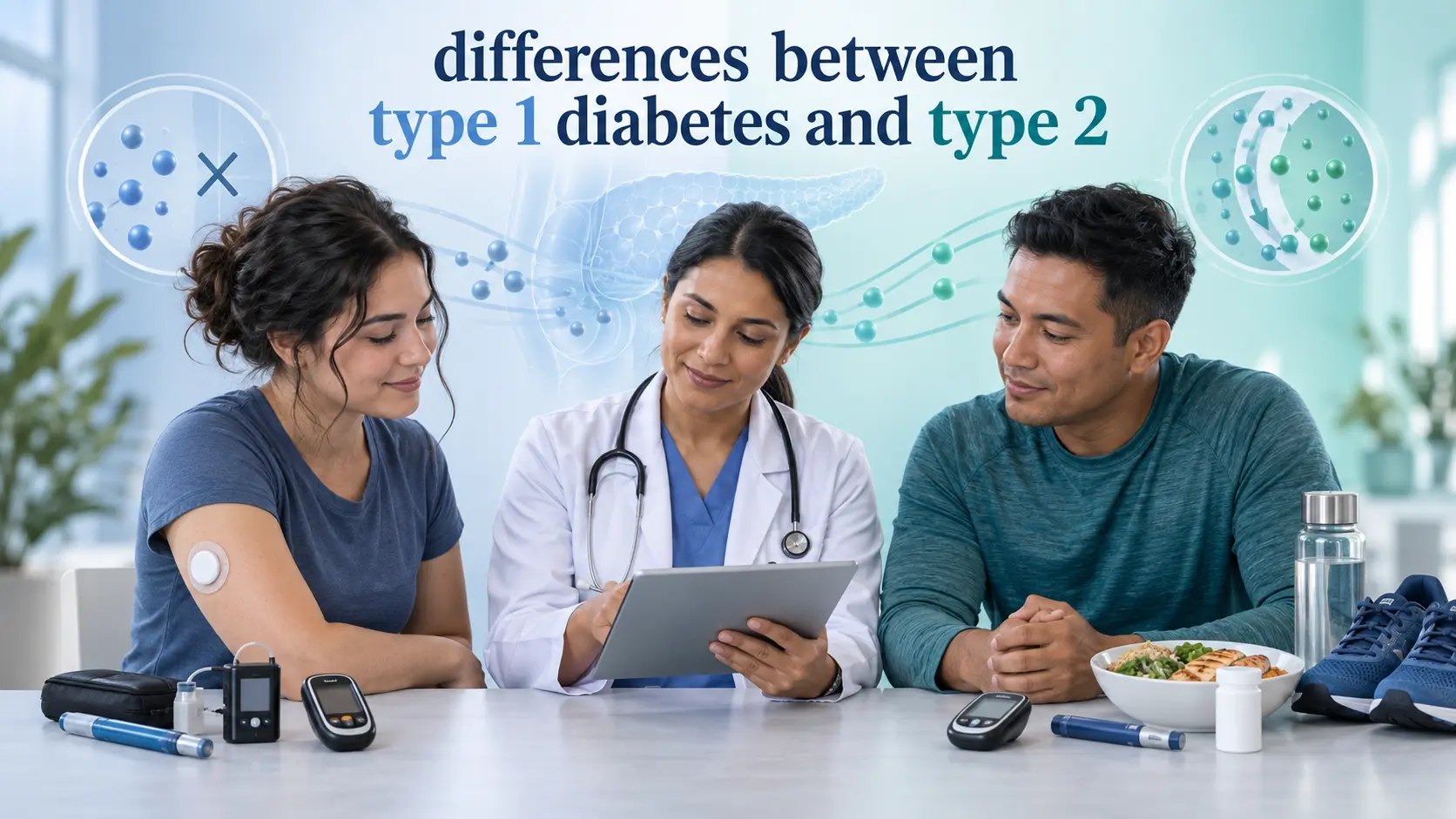
The most important differences between type 1 diabetes and type 2 involve what causes the disease, how much insulin the body makes, how quickly symptoms appear, which tests can clarify the diagnosis, and how each condition is treated.
Both conditions raise blood glucose. Both can affect children or adults. Both can damage the heart, kidneys, eyes, nerves, blood vessels, and feet when glucose stays high for too long.
But they are not the same disease.
Type 1 diabetes is mainly an autoimmune diabetes condition. The immune system attacks the beta cells in the pancreas that make insulin. Type 2 diabetes usually develops when the body becomes resistant to insulin and the pancreas eventually cannot make enough insulin to meet the body's needs.
Understanding that distinction can prevent one of the biggest diabetes mistakes: assuming someone's type from age, weight, or appearance alone.
Quick Answer: What Are the Main Differences?
Type 1 diabetes results from autoimmune destruction of insulin producing beta cells and eventually causes severe insulin deficiency, so insulin replacement is required. Type 2 diabetes usually involves insulin resistance plus a progressive loss of adequate insulin production. Treatment may include nutrition changes, physical activity, tablets, injectable medicines, insulin, or a combination.
Age and body size cannot confirm which type a person has.
Table of Contents
- Quick comparison
- 1. Cause
- 2. Insulin production
- 3. Insulin treatment
- 4. Age at diagnosis
- 5. Speed of symptoms
- 6. Risk factors
- 7. Body size
- 8. Autoantibodies
- 9. C peptide
- 10. DKA risk
- 11. Silent disease
- 12. Treatment choices
- 13. Prevention and delay
- 14. Remission
- Diagnosis
- What both types share
- Common myths
- References and Sources
- Frequently asked questions
Differences Between Type 1 Diabetes and Type 2 at a Glance
| Feature | Type 1 Diabetes | Type 2 Diabetes |
|---|---|---|
| Main cause | Autoimmune destruction of beta cells | Progressive loss of adequate insulin secretion, often with insulin resistance |
| Insulin production | Becomes very low or absent | Often present but inadequate for the body's needs |
| Insulin treatment | Required | May or may not be required |
| Age | Can occur at any age | Can occur at any age |
| Typical onset | Often faster once symptoms begin | Often gradual |
| Autoantibodies | Usually present in autoimmune type 1 | Usually absent |
| DKA | More common | Possible but less typical |
| Prevention | No established lifestyle method prevents autoimmune type 1 | Risk can often be reduced or onset delayed in high risk people |
| Remission | No established permanent remission after clinical disease begins | Remission is possible for some people |
1. The Cause Is Fundamentally Different
Type 1 diabetes
Type 1 diabetes is caused by autoimmune destruction of the beta cells in the pancreas.
Beta cells make insulin.
As more of these cells are destroyed, insulin production falls until the body cannot make enough insulin to control glucose safely.
Genes affect risk, but type 1 diabetes is not caused by eating sugar, carrying extra body weight, or failing to exercise.
Type 2 diabetes
Type 2 diabetes usually develops through a combination of insulin resistance and declining beta cell function.
The muscles, liver, and fat tissue do not respond to insulin as well as they should. The pancreas tries to compensate by producing more insulin, but over time it may no longer keep up.
Genes, age, body fat distribution, physical activity, previous gestational diabetes, sleep, some medicines, and other health and social factors can influence risk.
Type 2 diabetes should not be reduced to a statement about willpower.
2. Natural Insulin Production Is Different
Insulin acts like a signal that helps glucose move from the blood into cells.
With type 1
The body's ability to make insulin becomes severely reduced because beta cells are destroyed.
This is why insulin replacement is essential.
With type 2
The pancreas usually continues making insulin, especially early in the disease.
The problem is that the body may not respond to it effectively, and the pancreas may gradually lose the ability to produce enough.
That combination explains why someone with type 2 can have high insulin levels early in the disease and need insulin treatment years later.
3. Insulin Treatment Is Essential in Type 1
A person with clinical type 1 diabetes needs insulin to survive.
Insulin may be delivered through:
- Insulin pens
- Syringes
- Insulin pumps
- Automated insulin delivery systems
Nutrition and physical activity are important, but neither can replace insulin in type 1 diabetes.
Type 2 is different
Some people with type 2 manage glucose using nutrition changes, physical activity, and noninsulin medicines.
Others eventually need insulin.
Needing insulin does not mean treatment failed, and it does not mean type 2 has turned into type 1.
The diabetes type is defined by its underlying disease process, not by the medicine being used.
4. Both Types Can Develop at Any Age
The old rule of “juvenile diabetes” versus “adult diabetes” is too simple.
Type 1 diabetes can appear in:
- Children
- Teenagers
- Young adults
- Middle aged adults
- Older adults
Type 2 diabetes is more common with increasing age, but children and teenagers can develop it too.
Age changes probability.
It does not confirm the diagnosis.
What is LADA?
LADA means latent autoimmune diabetes in adults.
The 2026 ADA classification includes slowly progressive autoimmune diabetes in adults within the broader type 1 diabetes category.
Some adults make enough insulin at first that the disease resembles type 2. Autoantibody testing can reveal the autoimmune process.
5. Symptoms Often Appear at Different Speeds
Both types can cause similar symptoms:
- Frequent urination
- Strong thirst
- Increased hunger
- Unexplained weight loss
- Fatigue
- Blurred vision
- Slow healing
- Repeated infections
Type 1 can become obvious quickly
Once insulin production becomes severely limited, symptoms may develop over weeks or months.
Children can become ill quickly.
Some people first discover type 1 diabetes when they develop diabetic ketoacidosis.
Type 2 is often slower
Type 2 diabetes can develop gradually.
Some people have high glucose for years without obvious symptoms and discover it during routine blood testing.
6. The Risk Factors Are Different
Type 1 risk
Genetic susceptibility and autoimmune processes matter.
A family history of type 1 raises risk, but many people diagnosed with the disease have no close relative with type 1 diabetes.
Researchers continue to study why the autoimmune response begins.
Type 2 risk
Factors associated with a higher risk include:
- Family history
- Increasing age
- Prediabetes
- Overweight or obesity
- A larger waist circumference
- Lower physical activity
- Previous gestational diabetes
- Polycystic ovary syndrome
- High blood pressure
- Some medicines
- Genetic factors
Risk factors are not guarantees.
A person can develop type 2 diabetes without fitting the stereotype.
7. Body Size Cannot Diagnose the Diabetes Type
A person with type 1 diabetes can have overweight or obesity.
A person with type 2 diabetes can be lean.
This point is important because incorrect assumptions can delay the correct treatment.
The 2026 ADA guidance states that no single clinical feature confirms type 1 diabetes by itself.
Doctors may consider age, symptoms, body size, ketosis, family history, autoimmune history, treatment response, and laboratory testing together.
8. Autoantibodies Can Reveal Autoimmune Type 1 Diabetes
Standard glucose tests can diagnose diabetes.
They do not necessarily identify which type is present.
Diabetes autoantibodies help detect autoimmune diabetes.
Tests may look for antibodies involving:
- GAD
- IA 2
- ZnT8
- Insulin in selected situations
The ADA recommends standardized islet autoantibody testing in adults whose clinical features overlap with type 1 diabetes, such as younger age at diagnosis, unexplained weight loss, ketoacidosis, or a short time before insulin is required.
One negative antibody test does not always exclude type 1 diabetes, so results need professional interpretation.
9. C Peptide Can Help in Selected Cases
C peptide is released when the pancreas makes its own insulin.
Measuring it can help show how much natural insulin production remains.
Very low levels can support severe insulin deficiency.
Higher levels suggest that the pancreas is still making more insulin.
But C peptide is not a simple home test or a universal test for every newly diagnosed person.
The 2026 ADA classification algorithm uses C peptide in selected insulin treated people when diabetes type remains uncertain. Timing matters, and the result must be interpreted with the person's glucose level, kidney function, treatment, and clinical history.
10. DKA Is Much More Closely Linked With Type 1
Diabetic ketoacidosis, or DKA, develops when the body has too little insulin and begins breaking down fat quickly.
This produces ketones.
If ketones build up, the blood becomes dangerously acidic.
DKA is most common in type 1 diabetes.
It can also occur in type 2 diabetes.
DKA warning signs include
- Intense thirst
- Frequent urination
- Nausea
- Vomiting
- Abdominal pain
- Deep or difficult breathing
- Fruity smelling breath
- Severe tiredness
- Confusion
DKA needs urgent medical treatment.
11. Type 2 Can Remain Hidden for Much Longer
Type 1 diabetes can begin before symptoms appear because the autoimmune process develops in stages.
However, once insulin production becomes too low, symptoms may appear quickly.
Type 2 can remain unnoticed for a long time.
A person may feel normal even while glucose is gradually rising.
This is why diabetes screening matters for people with type 2 risk factors.
12. Treatment Options Are Different
Type 1 diabetes care
Treatment centers on insulin replacement and glucose management.
Care may include:
- Insulin therapy
- Continuous glucose monitoring
- Insulin pumps
- Automated insulin delivery
- Carbohydrate planning
- Physical activity planning
- Ketone testing during certain illnesses or high glucose episodes
- Hypoglycemia treatment education
Type 2 diabetes care
Treatment can include:
- Healthy eating patterns
- Regular physical activity
- Weight management when appropriate
- Metformin
- GLP 1 based medicines
- SGLT2 inhibitors
- Other glucose lowering medicines
- Insulin
- Blood pressure treatment
- Cholesterol treatment
Modern type 2 treatment considers more than glucose alone.
Heart disease, kidney disease, heart failure, weight goals, hypoglycemia risk, cost, side effects, and patient preferences can influence medication choice.
For more on cardiovascular risk, read Diabetes and Heart Diseases.
13. Prevention and Delay Are Different
Type 1 diabetes
There is no established diet, supplement, or exercise program that prevents autoimmune type 1 diabetes.
However, medicine can now delay progression in a specific group.
The 2026 ADA Standards recommend discussing teplizumab with selected people age 8 years or older who have stage 2 type 1 diabetes.
Stage 2 means autoimmune markers are present and glucose regulation has started changing, but symptomatic stage 3 diabetes has not yet developed.
Teplizumab delays progression.
It does not guarantee permanent prevention.
Type 2 diabetes
People with prediabetes or high type 2 risk can often reduce or delay their risk through changes such as:
- Regular physical activity
- A nutritious eating pattern
- Weight reduction when medically appropriate
- Regular screening
- Managing blood pressure and other cardiovascular risks
CDC prevention programs have shown that structured lifestyle changes can substantially reduce type 2 diabetes risk in people with prediabetes.
That does not mean every case is preventable.
14. Remission Means Something Different
Type 1 honeymoon phase
Some people make more insulin temporarily soon after type 1 diagnosis.
This is called the honeymoon phase.
Insulin requirements may fall for a while.
It is not a cure, and insulin should never be stopped without guidance from the diabetes team.
Type 2 remission
Some people with type 2 diabetes can reach remission.
This is more likely in certain people after substantial, sustained weight loss, especially earlier in the disease.
Remission does not mean the condition can be forgotten.
Glucose may rise again, so follow up remains necessary.
How Is Diabetes Diagnosed?
The usual tests identify whether glucose is in the diabetes range.
They do not automatically tell you whether the condition is type 1 or type 2.
| Test | Diabetes Range | Meaning |
|---|---|---|
| A1C | 6.5% or higher | Reflects longer-term glucose exposure |
| Fasting plasma glucose | 126 mg/dL or higher | Measured after at least 8 hours without calories |
| Two hour OGTT | 200 mg/dL or higher | Measured 2 hours after a standard 75 gram glucose drink |
| Random plasma glucose | 200 mg/dL or higher with classic symptoms or a hyperglycemic crisis | Measured regardless of the previous meal |
When there is no clear hyperglycemic crisis, an abnormal result usually needs confirmation with another abnormal test.
A1C Cannot Tell You Whether Diabetes Is Type 1 or Type 2
An A1C result can support a diabetes diagnosis.
It cannot reliably identify the diabetes type.
When the classification is uncertain, clinicians may consider:
- Autoantibodies
- C peptide in appropriate situations
- Symptoms and their speed of onset
- History of ketosis or DKA
- Family history
- Autoimmune history
- Response to treatment
- Genetic testing when monogenic diabetes is suspected
What Are the Three Stages of Type 1 Diabetes?
Modern diabetes care recognizes type 1 before classic symptoms start.
| Stage | Autoimmunity | Glucose | Symptoms |
|---|---|---|---|
| Stage 1 | Multiple islet autoantibodies | Normal | None |
| Stage 2 | Usually multiple islet autoantibodies | Abnormal but not yet overt diabetes | Usually none |
| Stage 3 | Autoimmune diabetes established | Meets diabetes criteria | Often present |
Identifying type 1 earlier can provide time for education, monitoring, specialist referral, and discussion of treatments that can delay stage 3 in selected patients.
Could It Be Another Type of Diabetes?
Yes.
Diabetes is broader than type 1 and type 2.
Other forms include:
- Gestational diabetes
- Monogenic diabetes such as MODY
- Diabetes caused by pancreatic disease
- Drug induced diabetes
- Diabetes associated with certain genetic conditions
When a person's age, family history, laboratory results, or response to treatment looks unusual, another classification may need to be considered.
What Type 1 and Type 2 Diabetes Have in Common
The diseases begin differently, but long term high glucose can injure many of the same organs.
Both can affect the heart
Diabetes increases cardiovascular risk.
Managing blood pressure, cholesterol, smoking, glucose, physical activity, and other risk factors matters in both types.
Read Diabetes and Heart Diseases for a deeper explanation.
Both can affect the kidneys
Diabetes can damage small blood vessels inside the kidneys.
Regular kidney monitoring helps identify problems earlier.
See Kidney Disease Symptoms for warning signs and testing information.
Both can affect nerves and circulation
Long term diabetes can contribute to nerve injury, reduced sensation, foot problems, and vascular disease.
For circulation basics, read How to Improve Blood Circulation.
Both can affect the eyes
Diabetes can damage blood vessels in the retina.
Regular eye examinations remain an important part of diabetes care.
Low Blood Sugar Can Happen in Either Type
Hypoglycemia is especially important for people taking insulin or medicines that can strongly lower glucose.
Symptoms can include:
- Shaking
- Sweating
- Hunger
- Dizziness
- Weakness
- Irritability
- Confusion
Severe hypoglycemia can lead to seizure or loss of consciousness.
People using insulin should have a personal plan for preventing, recognizing, and treating low glucose.
Food Matters in Both Types, but Food Did Not Cause Type 1
A nutritious eating pattern supports glucose management, cardiovascular health, kidney health, and general wellbeing.
That does not mean diet caused type 1 diabetes.
For type 2, food is one part of a much larger picture that includes genes, insulin resistance, activity, body composition, sleep, medicines, age, and social factors.
There is no single “diabetes diet” that fits every person.
For a heart friendly eating approach, read the NextFitLife DASH Diet Guide.
Exercise Helps Both, but Insulin Changes the Safety Plan
Physical activity supports cardiovascular health, fitness, muscle, and insulin sensitivity.
People who take insulin may need to plan exercise around:
- Current glucose
- Insulin dose and timing
- Food intake
- Exercise duration
- Exercise intensity
- Ketones
- Risk of delayed hypoglycemia
Do not change insulin doses based only on a general fitness article.
Can Type 1 Diabetes Include Insulin Resistance?
Yes.
A person can have autoimmune type 1 diabetes and also become insulin resistant.
Genetics, body composition, physical inactivity, hormones, medicines, and other factors can affect insulin sensitivity.
This is another reason real diabetes biology is more complex than a simple two column stereotype.
Can Type 2 Diabetes Eventually Require Insulin?
Yes.
Type 2 often involves progressive loss of beta cell function.
Insulin can become necessary when the pancreas no longer makes enough insulin to achieve safe glucose levels.
Starting insulin does not mean the disease changed into type 1.
Can Type 1 Be Mistaken for Type 2?
Yes, especially in adults.
A person may be older, have overweight, develop symptoms slowly, or initially respond to noninsulin medicine.
None of these features completely rules out autoimmune diabetes.
Classification deserves another look if:
- Unexplained weight loss appears
- Ketones develop
- DKA occurs
- Glucose worsens rapidly
- Insulin is needed much sooner than expected
- There is a strong autoimmune history
Can Type 2 Be Mistaken for Type 1?
Yes.
Some people with type 2 can present with very high glucose or even DKA.
No single symptom should be used alone to classify diabetes.
Eight Myths About the Differences Between Type 1 Diabetes and Type 2
Myth 1: Type 1 only happens in children
False. Type 1 diabetes can start at any age.
Myth 2: Type 2 only affects adults
False. Children and teenagers can develop type 2.
Myth 3: Sugar causes type 1 diabetes
False. Type 1 is an autoimmune disease.
Myth 4: Everyone with type 2 has obesity
False. Type 2 can occur across body sizes.
Myth 5: People with type 2 never need insulin
False. Some eventually need insulin, and others may need it temporarily.
Myth 6: Using insulin turns type 2 into type 1
False. Treatment does not change the cause of the disease.
Myth 7: Type 2 is always preventable
False. Risk can often be reduced, but genetics and other factors also contribute.
Myth 8: A1C tells you which type of diabetes you have
False. A1C can help diagnose diabetes but cannot determine type by itself.
Simple Way to Remember the Difference
Type 1: The immune system destroys insulin producing beta cells, causing severe insulin deficiency.
Type 2: The body commonly develops insulin resistance while beta cells gradually become unable to supply enough insulin.
Remember: Age, body size, and symptoms overlap. When classification is uncertain, appropriate medical testing matters.
When Should You Be Tested for Diabetes?
Ask about testing if you develop:
- Frequent urination
- Strong thirst
- Unexplained weight loss
- Unusual hunger
- Blurred vision
- Persistent fatigue
- Repeated infections
- Slow wound healing
- New numbness or tingling
People at higher risk of type 2 diabetes may need screening even without symptoms.
People with a close relative who has type 1 diabetes can also ask a clinician about autoantibody screening.
When Is Diabetes an Emergency?
Seek urgent care if severe symptoms suggest DKA or another hyperglycemic emergency.
Warning signs include:
- Repeated vomiting
- Severe dehydration
- Deep breathing
- Difficulty breathing
- Fruity smelling breath
- Severe weakness
- Confusion
- Fainting
- High ketones
A person can develop DKA before knowing they have diabetes.
Conclusion: Understanding the Differences Between Type 1 Diabetes and Type 2
The differences between type 1 diabetes and type 2 are much deeper than age or body weight.
Type 1 is mainly autoimmune and leads to severe insulin deficiency. Type 2 usually combines insulin resistance with a progressive loss of adequate insulin production.
Both can affect children and adults. Both can cause serious complications. Both need long term care.
If your diabetes type is uncertain, ask your healthcare professional whether the diagnosis fits your symptoms and history, and whether autoantibody testing, C peptide testing in an appropriate setting, or another test could help.
Correct classification is not just a label. It can change treatment, monitoring, education, and emergency planning.
Explore More NextFitLife Diabetes and Health Guides
- Diabetes and Heart Diseases
- Renal Glycosuria Guide
- Kidney Disease Symptoms
- DASH Diet Guide
- High Blood Pressure Guide
- How to Improve Blood Circulation
- Heart and Cardiovascular Health Hub
- General Wellness and Lifestyle Hub
- NextFitLife Health Hub
References and Sources
- American Diabetes Association Professional Practice Committee. Diagnosis and Classification of Diabetes: Standards of Care in Diabetes 2026. Current guidance on diagnostic thresholds, type 1 and type 2 classification, autoimmune testing, C peptide use, and stages of type 1 diabetes.
Read the 2026 ADA guidance - American Diabetes Association Professional Practice Committee. Prevention or Delay of Diabetes and Associated Comorbidities: Standards of Care in Diabetes 2026. Includes current guidance on type 2 prevention and teplizumab for selected people age 8 years and older with stage 2 type 1 diabetes.
Read the ADA prevention guidance - National Institute of Diabetes and Digestive and Kidney Diseases. Type 1 Diabetes. Covers autoimmune beta cell destruction, insulin treatment, autoantibodies, LADA, and C peptide testing.
Read the NIDDK type 1 diabetes guide - Centers for Disease Control and Prevention. Diabetic Ketoacidosis. Explains how DKA develops, why it is most common in type 1 diabetes, and why it can also occur in type 2.
Read the CDC DKA guide - World Health Organization. Diabetes Questions and Answers. Updated September 1, 2026. Covers the current definitions of type 1 diabetes, type 2 diabetes, insulin, complications, and prevention.
Read the WHO diabetes guide
These organizations do not endorse NextFitLife. Diabetes diagnosis, classification, insulin doses, medicines, glucose targets, food planning, and exercise advice must be individualized.
About the Author
Adel Galal is the Founder and Lead Writer of NextFitLife. He researches diabetes, nutrition, heart health, kidney health, fitness, blood pressure, healthy aging, and general wellness using established medical and public health sources.
For diabetes content, his approach is to separate diagnosis from assumptions, explain medical concepts in plain language, compare information with current clinical guidance, and clearly identify symptoms that may require urgent care.
Adel is not a doctor, endocrinologist, diabetes educator, registered dietitian, pharmacist, nurse, or other licensed healthcare professional.
This content is for general educational purposes and does not replace professional medical advice, diagnosis, or treatment. Consult an appropriately qualified healthcare professional for personal medical concerns. This article explains published guidance and does not provide a personal clinical assessment. Always consult qualified medical professionals for diagnosis and treatment of any health condition.
Learn more about Adel, NextFitLife, and the site's editorial approach at About NextFitLife and Founder Adel Galal.
Frequently Asked Questions About the Differences Between Type 1 Diabetes and Type 2
What is the main difference between type 1 diabetes and type 2?
Type 1 is primarily an autoimmune condition that destroys insulin producing beta cells. Type 2 usually involves insulin resistance plus a gradual decline in the pancreas's ability to make enough insulin.
Can adults develop type 1 diabetes?
Yes. Type 1 diabetes can develop at any age, including middle age and later adulthood.
Can children develop type 2 diabetes?
Yes. Type 2 is more common in adults, but children and teenagers can develop it.
Does everyone with type 1 diabetes need insulin?
Yes. Clinical type 1 diabetes causes severe insulin deficiency, so insulin replacement is required.
Does everyone with type 2 diabetes need insulin?
No. Some people manage type 2 with nutrition, physical activity, and noninsulin medicines. Others need insulin temporarily or permanently.
Can type 2 diabetes turn into type 1?
No. A person with type 2 may eventually need insulin, but insulin treatment does not change type 2 into autoimmune type 1 diabetes.
Does sugar cause type 1 diabetes?
No. Type 1 diabetes is an autoimmune disease. Eating sugar does not cause the immune system to destroy pancreatic beta cells.
Is type 2 diabetes caused only by lifestyle?
No. Genetics, age, insulin resistance, body composition, physical activity, previous gestational diabetes, medicines, and other health and social factors can all contribute.
Can a thin person have type 2 diabetes?
Yes. Type 2 diabetes occurs across different body sizes.
Can someone with obesity have type 1 diabetes?
Yes. Body size does not rule type 1 diabetes in or out.
Are type 1 and type 2 symptoms the same?
Many symptoms overlap, including thirst, frequent urination, fatigue, blurred vision, hunger, and weight loss. Type 1 often becomes symptomatic more quickly, while type 2 can develop slowly.
How do doctors know whether diabetes is type 1 or type 2?
Doctors consider symptoms, age, clinical history, ketosis, family history, autoimmune history, treatment response, and laboratory tests. Autoantibody testing can help identify autoimmune type 1 diabetes.
Can A1C tell the difference between type 1 and type 2?
No. A1C can help diagnose diabetes, but it does not identify the diabetes type by itself.
What is C peptide?
C peptide is released when the pancreas makes insulin. Testing it in appropriate situations can help estimate how much natural insulin production remains.
What are diabetes autoantibodies?
They are immune proteins associated with autoimmune damage to pancreatic beta cells. Their presence can support a diagnosis of type 1 diabetes.
What is LADA?
LADA means latent autoimmune diabetes in adults. It is a slowly developing form of autoimmune diabetes that can initially look like type 2.
Can type 2 diabetes cause DKA?
Yes. DKA is much more common in type 1, but people with type 2 can develop it too.
Can type 1 diabetes be prevented?
No established lifestyle program prevents autoimmune type 1 diabetes. Teplizumab can delay symptomatic stage 3 disease in selected people age 8 years or older who have stage 2 type 1 diabetes.
Can type 2 diabetes be prevented?
Risk can often be reduced or onset delayed in people with prediabetes through proven lifestyle changes such as physical activity, healthy eating, and weight reduction when medically appropriate.
Can type 2 diabetes go into remission?
Yes, remission is possible for some people, particularly after substantial sustained weight loss earlier in the disease. Continued monitoring is still needed.
Can type 1 diabetes go into remission?
There can be a temporary honeymoon phase with lower insulin needs, but this is not a cure or permanent remission.
Do both types cause the same complications?
Both can damage the heart, kidneys, eyes, nerves, blood vessels, and feet. Good long term management reduces risk.
Which type of diabetes is more serious?
Both are serious chronic conditions. Their immediate risks and treatments differ, but either can lead to major complications without appropriate care.
What A1C level diagnoses diabetes?
In nonpregnant people, an A1C of 6.5 percent or higher is one current diagnostic criterion. In the absence of unequivocal hyperglycemia, abnormal findings usually require confirmation.
When should diabetes symptoms be treated as an emergency?
Seek urgent care for repeated vomiting, severe dehydration, deep or difficult breathing, fruity smelling breath, confusion, fainting, or high ketones.

Health & wellness writer with 30+ years of experience in nutrition, fitness, and healthy aging. Founder of NextFitLife.com — evidence-based health guidance.