Published: September 11, 2026
Last updated: September 11, 2026
Next editorial review: September 2027 or sooner if major protein, dietary fat, or nutrition guidance changes
Written and source-checked by: Adel Galal, Founder and Lead Writer at NextFitLife
Medical review status: This article is educational and source-checked. It has not been medically reviewed by a doctor, registered dietitian, nephrologist, sports dietitian, or other licensed healthcare professional.
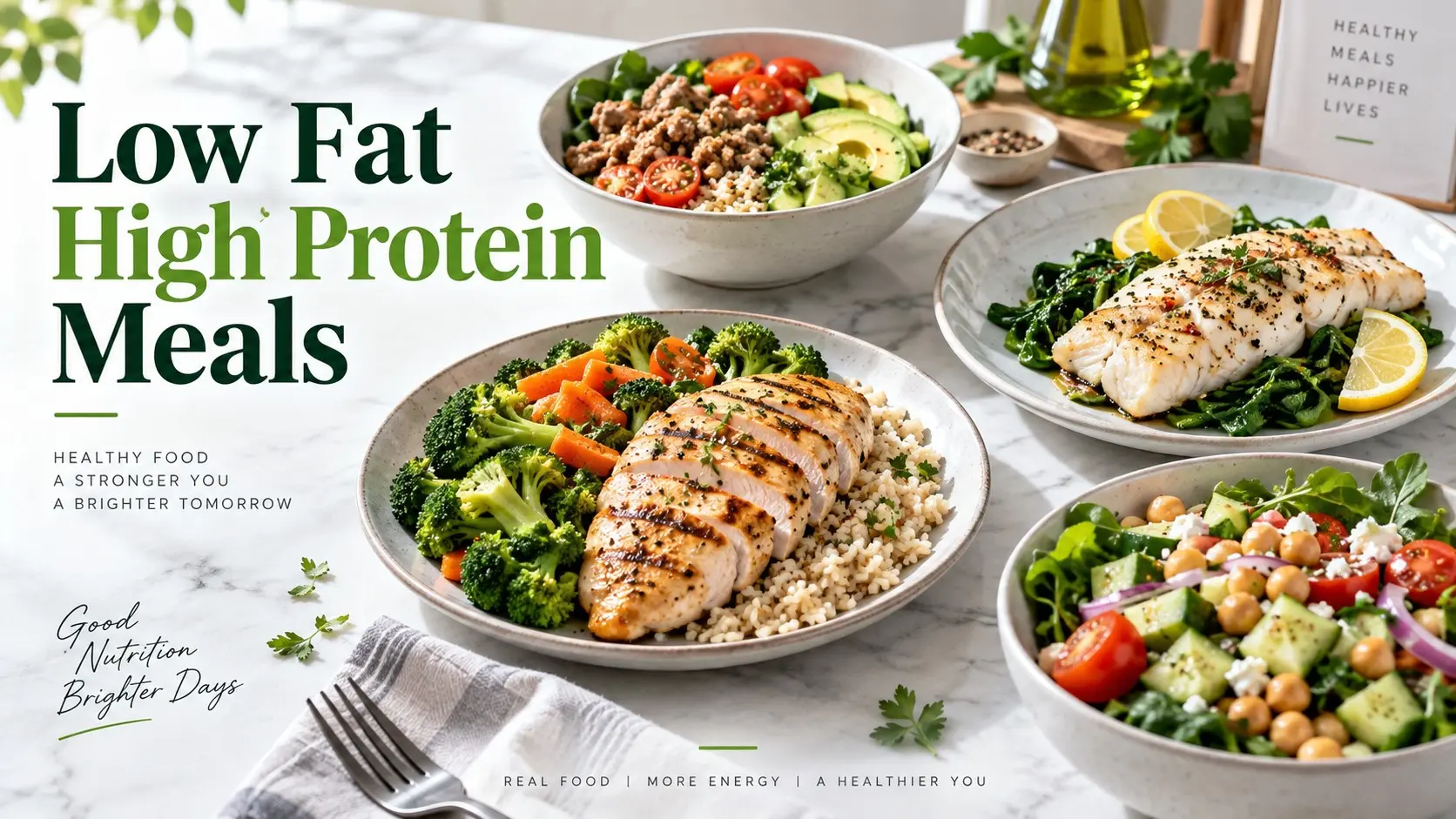
Low Fat High Protein Meals do not need to be dry chicken, egg whites, and steamed broccoli.
They also do not need to be fat-free.
A better meal uses a lean protein base, plenty of vegetables or fruit, a useful carbohydrate source, and a sensible amount of healthy fat.
That gives you protein without turning dinner into diet punishment.
Quick Answer: What Makes a Good Low Fat High Protein Meal?
A good low fat high protein meal starts with a lean protein such as chicken breast, turkey, white fish, shrimp, nonfat Greek yogurt, low-fat cottage cheese, egg whites, tofu, beans, lentils, or edamame. Add vegetables, fruit, potatoes, rice, oats, or whole grains. Keep rich sauces and added fats modest rather than removing all fat.
This article gives you 24 meals that follow that idea.
You will find:
- 6 breakfast meals
- 6 lunch meals
- 6 dinner meals
- 6 vegetarian or plant-based meals
If you want more protein ideas without the lower-fat focus, read High Protein Meals.
Medical and Nutrition Safety Note
This content is for general educational purposes and does not replace professional medical advice, diagnosis, or treatment. Consult an appropriately qualified healthcare professional for personal medical concerns. This article explains published guidance and does not provide a personal clinical assessment. Always consult qualified medical professionals for diagnosis and treatment of any health condition.
Most healthy adults can get enough protein from food.
Some people need a personal target.
Ask a doctor or registered dietitian before making a major increase in protein if you have kidney disease, advanced liver disease, kidney stones, a metabolic disorder, severe digestive disease, or another condition that changes your nutrition needs.
Pregnancy, breastfeeding, older age, competitive sport, surgery recovery, and eating disorders also deserve individualized advice.
Low Fat Does Not Mean Fat Free
This is the first thing I would fix in the old version of this topic.
Fat is a nutrient.
Your body needs it.
Fat helps with cell function.
It supplies essential fatty acids.
It also helps your body absorb fat-soluble vitamins.
The current Dietary Guidelines for Americans emphasize whole, nutrient-dense foods and include healthy fats as part of the eating pattern.
So this guide does not tell you to remove every drop of fat.
Instead, it reduces unnecessary fat from:
- Heavy cream sauces
- Large amounts of butter
- Deep frying
- Fatty processed meats
- Large cheese portions
- Excess cooking oil
Then it keeps useful amounts of foods such as fish, seeds, nuts, avocado, or liquid plant oils when they fit.
What Does Low Fat Mean Here?
The phrase low fat high protein meals is used here as a practical recipe style.
It is not a legal food label claim for every homemade recipe.
FDA rules use specific criteria before packaged foods, meals, or main dishes can officially carry a “low fat” nutrient claim.
Your homemade serving changes with:
portion size,
brand,
cooking oil,
sauce,
cheese,
and toppings.
So I would rather be accurate than pretend every bowl has an exact regulatory fat level.
The meals below are designed to be lower fat meal ideas built around lean protein.
How Much Protein Do You Need?
This answer has changed interestingly.
The longstanding U.S. Dietary Reference Intake gives healthy adults a protein RDA of 0.8 grams per kilogram of body weight per day.
That is the recommended allowance designed to cover the needs of nearly all healthy adults.
Current U.S. Dietary Guidelines for 2025 to 2030 now present a broader practical protein target of 1.2 to 1.6 grams per kilogram per day.
Athletes are different again.
The NIH Office of Dietary Supplements summarizes sports nutrition guidance at about 1.2 to 2.0 grams per kilogram per day for athletes.
That is why I would not give every reader one fixed protein number.
| Situation | Protein Guidance |
|---|---|
| Longstanding adult RDA | 0.8 g per kg per day |
| Current 2025 to 2030 U.S. practical target | 1.2 to 1.6 g per kg per day |
| Athletic training guidance summarized by NIH | 1.2 to 2.0 g per kg per day |
Your right intake depends on body size, activity, age, total calories, health, and goals.
How Much Protein Should One Meal Have?
You do not need an identical amount at breakfast, lunch, and dinner.
For an active adult, a meal containing around 20 to 40 grams of protein is often a useful practical range.
That is not a medical prescription.
A smaller person may need less.
A larger athlete may need more.
NIH sports guidance notes that athletes can use roughly 0.3 g/kg of high-quality protein around training and then at intervals throughout the day.
The bigger point is simple.
Do not put 90% of your day's protein into dinner and almost none into the rest of the day unless that pattern truly suits you.
What Foods Work Best for Low Fat High Protein Meals?
Skinless Chicken Breast
Chicken breast is easy to grill, roast, bake, poach, or air-cook.
It gives you a large amount of protein without much fat when the skin is removed.
Turkey Breast
Fresh turkey breast works well in wraps, bowls, sandwiches, soups, and salads.
Choose lower sodium versions when using processed sliced turkey often.
White Fish
Cod, haddock, pollock, tilapia, and similar fish give you lean protein.
They are useful when you want seafood without the higher fat content of salmon.
Shrimp
Shrimp is naturally lean.
The fat usually comes from butter, breading, or frying.
Egg Whites
Egg whites are mostly protein.
You can also combine egg whites with one whole egg when you want the nutrients and flavour of the yolk without using several whole eggs.
Nonfat Greek Yogurt
This works at breakfast.
It also replaces mayonnaise, sour cream, or creamy sauces in some recipes.
Low Fat Cottage Cheese
Cottage cheese works in sweet bowls, savoury bowls, scrambled eggs, pasta sauces, and snacks.
Beans and Lentils
Beans and lentils provide plant protein plus fibre.
They are not as protein-dense as chicken or fish per calorie, but they bring more than protein to the meal.
Tofu
Tofu works well when you want a meatless protein source.
Choose a firm or extra firm variety when cooking stir-fries or bowls.
Edamame
Edamame gives you soy protein and fibre.
It works especially well in grain bowls and salads.
What About Salmon, Nuts, Seeds, and Avocado?
They are healthy foods.
They are simply not low fat foods.
That does not mean you should avoid them.
Salmon gives you omega 3 fats.
Nuts and seeds provide unsaturated fats, minerals, and fibre.
Avocado supplies mostly unsaturated fat.
Use them when they fit your overall meal.
Do not confuse “higher fat” with “bad.”
If you are specifically trying to keep one meal lower in fat, control the portion instead of banning the food.
Should You Reduce Total Fat or Saturated Fat?
Fat quality matters.
If heart health is your main reason for changing your meals, saturated fat deserves more attention than simply making every meal as fat-free as possible.
The American Heart Association recommends a dietary pattern with less than 6% of calories from saturated fat for people aiming to lower LDL cholesterol.
That means replacing more saturated fat with unsaturated choices.
Think beans instead of sausage.
Skinless poultry instead of fatty processed meat.
Liquid plant oils instead of butter when appropriate.
24 Low Fat High Protein Meals
6 High Protein Breakfasts
1. Greek Yogurt Berry Oat Bowl
Protein anchor: nonfat Greek yogurt.
Add rolled oats, berries, cinnamon, and a small spoon of seeds if you want them.
Use plain yogurt so you control the sweetness.
This meal gives you protein, fruit, and a useful carbohydrate source without a heavy breakfast.
2. Egg White Spinach Breakfast Scramble
Cook egg whites with spinach, mushrooms, tomato, onion, and herbs.
Add one whole egg if you want more flavour and nutrients.
Serve it with whole-grain toast or potatoes.
A nonstick pan reduces the amount of cooking fat needed.
3. Cottage Cheese Fruit Oat Bowl
Use low-fat cottage cheese.
Add berries, sliced peach, apple, or pineapple.
Mix in a small serving of oats for extra carbohydrate and fibre.
Cinnamon works well here.
4. High Protein Overnight Oats
Combine oats with skim or low fat milk and nonfat Greek yogurt.
Add berries.
Refrigerate overnight.
The yogurt raises protein without turning breakfast into a protein powder recipe.
If you prefer powder, use it because it is convenient, not because whole food protein has failed.
5. Turkey Egg White Breakfast Wrap
Fill a whole grain tortilla with egg whites, fresh cooked turkey breast, peppers, onion, tomato, and salsa.
Skip large cheese portions.
A little cheese can still fit if you want it.
6. Tofu Vegetable Breakfast Bowl
Crumble firm tofu into a nonstick pan.
Add mushrooms, spinach, peppers, onion, turmeric, pepper, and garlic.
Serve it with potatoes or whole grain toast.
This is a useful high-protein vegetarian breakfast without eggs.
6 Low Fat High Protein Lunches
7. Chicken Quinoa Vegetable Bowl
Use grilled or baked skinless chicken breast.
Add cooked quinoa, cucumber, tomato, peppers, leafy greens, and lemon.
Use a measured amount of olive oil rather than pouring freely.
For more lunch ideas, see Healthy Lunch Ideas for Weight Loss.
8. Tuna White Bean Salad
Use tuna packed in water.
Mix it with rinsed white beans, celery, cucumber, tomato, parsley, lemon, and black pepper.
A yogurt and mustard dressing keeps the meal creamy without a large mayonnaise load.
9. Turkey Lentil Soup
Use lean ground turkey.
Add lentils, carrots, celery, onion, tomatoes, and low-sodium stock.
Season with cumin, paprika, garlic, and pepper.
The lentils add more protein plus fibre.
10. Shrimp Rice Salad Bowl
Cook shrimp with garlic, lemon, pepper, and herbs.
Add rice, cucumber, tomato, shredded cabbage, and leafy greens.
Use a light yogurt dressing or lemon vinaigrette.
11. Savoury Cottage Cheese Bowl
Start with low fat cottage cheese.
Add cucumber, tomato, peppers, herbs, cracked pepper, and a side of whole grain toast.
It takes minutes.
That matters on a workday.
12. Chicken Hummus Vegetable Wrap
Fill a whole grain wrap with chicken breast, lettuce, tomato, cucumber, grated carrot, and a thin layer of hummus.
Hummus contains fat.
That is fine.
The trick is using a sensible amount instead of treating the wrap like a bowl of dip.
6 Low Fat High Protein Dinners
13. Lemon Cod With Potatoes and Green Beans
Bake cod with lemon, garlic, parsley, and black pepper.
Serve it with boiled or roasted potatoes and green beans.
Use only the oil needed to prevent sticking and add flavour.
14. Chicken Tomato Whole Grain Pasta
Cook chicken breast strips.
Add tomato sauce, mushrooms, peppers, spinach, garlic, and herbs.
Serve over whole grain pasta.
Tomato sauce gives you moisture without needing cream.
15. Turkey and Bean Chilli
Use extra-lean ground turkey.
Add kidney beans or black beans, tomatoes, onion, peppers, garlic, chilli powder, paprika, and cumin.
Serve with rice or a baked potato if you want more carbohydrate.
Use Greek yogurt instead of sour cream on top.
16. Ginger Shrimp Vegetable Stir Fry
Stir-fry shrimp with broccoli, peppers, snap peas, mushrooms, garlic, and ginger.
Use a small amount of oil.
Add soy sauce or a lower-sodium alternative to taste.
Serve with rice.
17. Lean Beef and Broccoli Bowl
Choose a lean cut of beef.
Trim visible fat.
Cook it with broccoli, mushrooms, spring onion, garlic, and ginger.
Serve over rice.
Beef is not as lean as white fish or chicken breast, but a lean portion can still fit a lower fat meal.
18. Turkey Meatballs With Tomato Pasta
Mix lean ground turkey with oats or breadcrumbs, herbs, garlic, onion, and egg white.
Bake instead of frying.
Serve with tomato sauce, whole grain pasta, and vegetables.
This works well for meal prep.
6 Meatless Low Fat High Protein Meals
19. Lentil Tofu Tomato Curry
Use firm tofu and cooked lentils.
Simmer them with tomatoes, onion, garlic, ginger, spinach, curry powder, and other spices you enjoy.
Use tomato and stock as the sauce base instead of a large amount of coconut milk.
Serve with rice.
20. Seitan Fajita Bowl
Cook seitan with peppers, onions, cumin, smoked paprika, and lime.
Add rice, salsa, lettuce, and tomato.
Seitan is high in protein and relatively low in fat.
It is made from wheat gluten, so it is not suitable for people with celiac disease or a medically required gluten-free diet.
21. Tofu Edamame Vegetable Stir Fry
Combine firm tofu with shelled edamame.
Add broccoli, carrots, peppers, mushrooms, garlic, and ginger.
Use a small amount of cooking oil.
Serve it with rice or noodles.
22. Lentil Bolognese
Simmer lentils with tomato, mushrooms, carrots, celery, garlic, onion, and Italian herbs.
Serve with whole grain pasta.
This gives you protein and fibre without needing a meat substitute.
23. Black Bean and TVP Chilli
Use black beans and textured vegetable protein.
Add tomato, peppers, onion, garlic, cumin, chilli powder, and paprika.
TVP is a soy product that adds protein while keeping fat relatively low.
Check the label if sodium matters for you.
24. Edamame Soba Vegetable Bowl
Combine shelled edamame with soba noodles, shredded cabbage, carrot, cucumber, peppers, and spring onion.
Use a light soy, lime, and ginger dressing.
Check soba labels if you need gluten free food because many products contain wheat.
Which Meals Are Best for Weight Loss?
None of these meals causes weight loss by itself.
That claim needs to disappear from older nutrition articles.
A high-protein meal can help with fullness.
Lean protein can also make it easier to build a meal with fewer calories than one based on fried meat, heavy sauces, and large amounts of cheese.
But weight loss still depends on your overall energy intake over time.
Portions matter.
Drinks matter.
Snacks matter.
Your health matters.
Your activity matters.
If weight management is your goal, use the NextFitLife Weight Loss and Metabolism Hub.
Can High Protein Meals Help Preserve Muscle During Weight Loss?
Protein supplies the amino acids your muscles need.
Resistance training gives the body a reason to keep muscle.
That combination matters during a calorie deficit.
Do not rely on protein alone.
Lift weights or use another suitable resistance training method when your health allows.
For higher protein food choices, see High Protein Foods for Weight Loss.
Does Protein Burn Fat?
No food burns body fat in a meaningful way by itself.
Protein does require more energy to digest than fat or carbohydrate.
That is called the thermic effect of food.
But this is not permission to eat unlimited protein and expect fat to disappear.
Body fat loss still requires the broader energy balance to support it.
Does Low Fat Automatically Mean Low Calorie?
No.
A meal can be low in fat and still contain a lot of calories.
Large servings of:
- Rice
- Pasta
- Bread
- Sugar
- Sweet drinks
- Low fat desserts
can still push energy intake high.
If you want meals specifically designed around a lower calorie approach, see Low Calorie High Protein Meals.
Does High Protein Automatically Mean Healthy?
No.
Bacon contains protein.
Processed sausage contains protein.
A giant cheeseburger contains protein.
The word “protein” does not erase sodium, saturated fat, calories, or processing.
Look at the whole food.
Look at the whole meal.
How Do You Make a Meal Lower in Fat Without Making It Bland?
Use flavour that does not require a cup of cream or half a stick of butter.
Try:
- Lemon
- Lime
- Garlic
- Ginger
- Fresh herbs
- Chilli
- Smoked paprika
- Cumin
- Mustard
- Salsa
- Tomato sauces
- Vinegar
- Nonfat Greek yogurt sauces
A meal can be lean and still taste good.
7 Easy Swaps That Reduce Fat Without Ruining the Meal
- Use skinless chicken breast instead of chicken with skin.
- Bake or grill food instead of deep-frying it.
- Use Greek yogurt instead of a large amount of mayonnaise or sour cream.
- Choose tomato-based sauces more often than cream-based sauces.
- Measure cooking oil instead of pouring straight from the bottle.
- Choose lean ground meat when the recipe does not need a fattier version.
- Use strong flavours such as herbs, garlic, mustard, salsa, and spices instead of depending on fat for all the flavour.
Should You Remove Egg Yolks?
You do not need an all-or-nothing rule.
Egg whites are useful when you want more protein with little fat.
Whole eggs contain nutrients that egg whites do not.
A simple compromise is:
one whole egg plus several egg whites.
That gives you yolk flavour and nutrients while keeping the meal leaner than several whole eggs.
Should You Use Nonfat Dairy?
It depends on the meal.
Nonfat Greek yogurt is useful when the goal is to push protein up while keeping fat down.
Low-fat cottage cheese does the same.
That does not mean full-fat dairy is automatically unhealthy.
The current Dietary Guidelines include whole, reduced-fat, low-fat, and nonfat dairy as options.
Your total eating pattern matters.
What Are the Best Carbs to Pair With Lean Protein?
Protein is not the only nutrient you need.
Use carbohydrates that fit the meal and your activity.
Examples include:
- Potatoes
- Rice
- Oats
- Quinoa
- Whole grain bread
- Whole grain pasta
- Beans
- Lentils
- Fruit
Athletes especially need enough carbohydrate to support training.
Do not turn a high protein diet into accidental underfueling.
Where Does Fibre Fit?
Protein and fibre make a useful team.
Protein helps with fullness.
Fibre adds volume and supports digestive health.
Build meals around vegetables, fruit, beans, lentils, oats, or whole grains.
A chicken breast alone is protein.
A chicken breast with vegetables and potatoes is a meal.
How Much Fat Should a Healthy Diet Contain?
There is no reason for most healthy adults to try to reach zero fat.
Traditional Dietary Reference Intake guidance has placed total fat at about 20% to 35% of calories for adults.
Sports nutrition guidance summarized by NIH uses the same broad range for athletes.
The newer Dietary Guidelines emphasize food quality and healthy fats rather than treating total fat as the enemy.
So the real target here is:
less unnecessary fat,
less saturated fat when appropriate,
enough healthy fat,
and enough protein.
What Should a Balanced Low Fat High Protein Plate Look Like?
Use a simple template.
| Part of the Meal | Examples |
|---|---|
| Lean protein | Chicken, turkey, white fish, shrimp, tofu, beans, lentils, Greek yogurt |
| Vegetables or fruit | Broccoli, spinach, peppers, tomato, berries, kiwi, apples |
| Carbohydrate | Potatoes, oats, rice, quinoa, whole grain bread, pasta |
| Healthy fat | Small amount of olive oil, seeds, nuts, avocado, or naturally occurring fat |
That is a much better template than “protein plus nothing.”
How Can You Meal Prep These Meals?
Do not cook 24 different recipes on Sunday.
That sounds efficient until you actually try it.
Choose:
one or two proteins,
one carbohydrate,
two or three vegetables,
and two sauces or spice profiles.
For example:
- Bake chicken breast and turkey meatballs
- Cook rice or potatoes
- Roast broccoli, peppers, and carrots
- Make a yogurt herb sauce
- Make a tomato chilli sauce
Now the same ingredients become several meals.
A Simple Three-Day Meal Prep Example
Day 1
Breakfast: Greek yogurt berry oat bowl
Lunch: chicken quinoa vegetable bowl
Dinner: lemon cod with potatoes and green beans
Day 2
Breakfast: egg white spinach scramble
Lunch: tuna white bean salad
Dinner: turkey bean chilli
Day 3
Breakfast: cottage cheese fruit bowl
Lunch: chicken hummus wrap
Dinner: tofu edamame stir-fry
You can rotate from there.
How Do You Keep Meal Prep Food Safe?
Cook food thoroughly.
Cool leftovers promptly.
Refrigerate them in clean containers.
Reheat food properly before eating when the recipe requires it.
Do not leave cooked meat, fish, dairy, or rice sitting at room temperature for long periods.
If food smells wrong, looks wrong, or you do not know how it was stored, do not take a risk to save one meal.
Can Low Fat High Protein Meals Work for Muscle Building?
Yes.
Protein supports muscle repair and growth.
But building muscle also requires enough total energy.
If you make every meal extremely lean and tiny, you may struggle to eat enough calories.
For muscle gain, you may need larger carbohydrate portions and more healthy fats.
If your main goal is training performance, visit Healthy Fitness Foods.
Can These Meals Work Before a Workout?
Yes.
But timing changes what feels comfortable.
A meal close to training usually works better when it is not extremely high in fat or fibre.
Those nutrients slow digestion.
That can be useful at other times.
It may feel heavy immediately before hard exercise.
A simple pre-workout option could be:
Greek yogurt, oats, and fruit.
Or:
Chicken with rice and cooked vegetables.
What About After a Workout?
You do not need to race to a protein shake within five minutes.
Your body remains responsive to protein for much longer than that.
A normal meal containing high quality protein within the surrounding hours works well for most people.
NIH sports guidance notes that adequate total daily protein and repeated protein feedings through the day matter.
Are Protein Powders Needed?
No.
They are convenient.
That is different.
If Greek yogurt, chicken, fish, tofu, beans, eggs, cottage cheese, and other foods already cover your protein needs, you do not need a powder.
If a shake makes breakfast easier, use one that fits your needs.
Food first does not mean powder forbidden.
Can Vegetarians Make These Meals High in Protein?
Yes.
Use:
- Tofu
- Tempeh
- Seitan
- Edamame
- Lentils
- Beans
- Low-fat cottage cheese
- Greek yogurt
- Eggs and egg whites
For vegan meals, combine soy foods, legumes, grains, and varied plant foods across the day.
Can You Eat Low Fat High Protein Meals With Diabetes?
Many of these meals can fit.
But carbohydrate portions, medications, blood glucose patterns, and overall energy needs matter.
Do not assume “high protein” automatically means diabetes friendly.
Rice, pasta, bread, fruit, beans, and potatoes still contain carbohydrate.
Use a personal plan if your clinician has given you one.
What If You Have Kidney Disease?
Do not use a generic high protein target.
Protein needs can change with kidney disease.
The right intake depends on kidney function, treatment, dialysis status, nutrition status, and other medical factors.
A nephrologist or renal dietitian should guide you.
What If You Have High Cholesterol?
Focus on the whole pattern.
Use more:
- Beans
- Lentils
- Soy foods
- Fish
- Skinless poultry
- Whole grains
- Vegetables
- Fruit
Use less fatty processed meat and foods high in saturated fat.
A lower fat meal can help, but saturated fat quality matters more than chasing zero total fat.
What If You Are Always Hungry on Low Fat Meals?
Your meal may simply be too small.
Or it may be missing fibre.
Or carbohydrate.
Or enough fat.
A plate of egg whites and lettuce is technically lean.
It is also not much of a meal.
Add potatoes.
Add beans.
Add oats.
Add fruit.
Add a small amount of healthy fat.
Then see how you feel.
Common Mistakes With Low Fat High Protein Meals
Removing All Fat
This is unnecessary.
Eating Protein but Almost No Plants
Your diet still needs vegetables, fruit, legumes, and other fibre rich foods.
Using Processed Meat as the Main Protein
Protein quality includes the rest of the food.
Pouring Low Fat Sauce Full of Sugar Over Everything
Read the full label.
Making Every Meal Tiny
A tiny meal is not automatically a healthy meal.
Ignoring Carbohydrates
Carbohydrate supports training and provides useful foods such as oats, fruit, potatoes, grains, and legumes.
Eating the Same Protein Every Day
Variety helps you get a wider range of nutrients.
How I Evaluate Low Fat High Protein Advice
I have maintained a personal interest in health, fitness, nutrition, food choices, sleep, wellness, and healthy aging for more than 30 years.
My health and wellness writing and research communication experience spans more than 15 years.
Before focusing full-time on NextFitLife, I spent 29 years working as an IT Manager for the Nestlé Egypt Region.
That background developed skills in data analysis, structured review, information management, research organization, systems thinking, and problem-solving.
These are research and communication skills.
They are not medical or dietetic credentials.
My rule for this topic is simple.
I separate:
protein quantity,
food quality,
fat quantity,
fat type,
and the goal of the person eating the meal.
A meal can be high in protein and still be poor nutrition.
A meal can contain fat and still be healthy.
That distinction is what makes this subject useful.
Conclusion: Build Low Fat High Protein Meals That You Will Eat
Low Fat High Protein Meals should make eating easier, not turn food into a math test.
Choose a lean protein.
Add vegetables or fruit.
Add a useful carbohydrate.
Keep added fat sensible.
Use flavour.
Then stop trying to make every plate perfect.
Your next step is simple: choose four of the 24 meals above, buy the ingredients for those four, and rotate them this week. A small repeatable menu beats a perfect plan you never cook.
References and Sources
- U.S. Department of Health and Human Services and U.S. Department of Agriculture. Dietary Guidelines for Americans 2025 to 2030.Current federal nutrition guidance emphasizing whole, nutrient-dense foods including protein foods, dairy, vegetables, fruit, healthy fats, and whole grains.
- National Institutes of Health Office of Dietary Supplements. Dietary Supplements for Exercise and Athletic Performance.Open federal resource covering protein for training, muscle repair, protein timing, athlete protein needs, and the role of a balanced diet.
- National Academies Dietary Reference Intakes. Reference Tables.Open reference source showing the longstanding adult protein RDA of 0.8 grams per kilogram of body weight per day.
- U.S. Food and Drug Administration. Food Labeling Guide.Official source explaining regulatory definitions for nutrient content claims such as low fat. This matters because homemade meal ideas should not be confused with formal packaged food label claims.
Source:
FDA Food Labeling Guide - American Heart Association. Saturated Fats.Public guidance explaining saturated fat, food sources, replacement with unsaturated fats, and the AHA target of less than 6% of calories from saturated fat for an LDL-lowering eating pattern.
Continue Reading on NextFitLife
- High Protein Meals
- Low Calorie High Protein Meals
- High Protein Foods for Weight Loss
- Healthy Lunch Ideas for Weight Loss
- Healthy Fitness Foods
- Weight Loss and Metabolism Hub
- Healthy Foods Guide
- Nutrition and Vitamins Hub
- Explore NextFitLife Health Fitness Nutrition and Beauty Guides
About the Author
Frequently Asked Questions About Low Fat High Protein Meals
What are the best low fat high protein meals?
Good choices include chicken and vegetable bowls, cod with potatoes, shrimp stir-fry, turkey chilli, tuna and bean salad, nonfat Greek yogurt bowls, egg white scrambles, tofu bowls, lentil dishes, and low-fat cottage cheese meals.
What foods are high in protein but low in fat?
Useful options include skinless chicken breast, turkey breast, white fish, shrimp, tuna in water, egg whites, nonfat Greek yogurt, low-fat cottage cheese, some tofu products, seitan, and legumes.
How much protein do adults need?
The longstanding adult RDA is 0.8 grams per kilogram per day. Current 2025 to 2030 U.S. guidance presents a practical target of 1.2 to 1.6 grams per kilogram per day. Individual needs differ.
How much protein do athletes need?
NIH sports nutrition guidance summarizes athlete needs at roughly 1.2 to 2.0 grams of protein per kilogram of body weight per day.
Is 30 grams of protein per meal enough?
Thirty grams can be a useful meal amount for many adults, but there is no single ideal number for everyone. Body size, age, total daily protein, training, and health affect the right amount.
Are low fat high protein meals good for weight loss?
They can make a weight loss eating pattern easier by providing protein with controlled calories, but they do not cause weight loss by themselves. Total energy intake still matters.
Does protein burn belly fat?
No. Protein does not target belly fat. It can support fullness and muscle, but fat loss depends on the wider energy balance and lifestyle.
Should a high protein diet be low fat?
No. Healthy fats still belong in a balanced diet. A lower fat meal can be useful, but there is no need to remove all dietary fat.
Is all fat unhealthy?
No. Unsaturated fats from foods such as nuts, seeds, fish, avocado, and liquid plant oils can be part of a healthy eating pattern.
What fat should I limit?
Saturated fat deserves more attention than simply lowering all fat. The American Heart Association recommends limiting saturated fat, especially when reducing LDL cholesterol is a goal.
Is salmon a low-fat protein?
Salmon is high in protein but contains more fat than white fish such as cod. Much of that fat includes omega-3 fatty acids, so salmon can still be a nutritious choice.
Are eggs low fat?
Whole eggs contain both protein and fat. Egg whites contain protein with very little fat. Combining one whole egg with extra whites is one way to keep a meal leaner.
Is Greek yogurt good for low fat high protein meals?
Yes. Nonfat and low fat Greek yogurt provide concentrated protein and work in breakfast bowls, sauces, dips, and snacks.
Is cottage cheese high in protein?
Yes. Cottage cheese is a useful protein food, and low fat versions can fit well in lower fat meals.
Can vegetarians eat low fat high protein meals?
Yes. Tofu, seitan, edamame, lentils, beans, egg whites, Greek yogurt, and low fat cottage cheese provide many options.
Can vegans eat low fat high protein meals?
Yes. Useful choices include tofu, seitan, edamame, lentils, beans, peas, textured vegetable protein, and combinations of legumes and grains.
Are beans low fat and high protein?
Beans are naturally low in fat and provide protein plus fibre. They contain less protein per calorie than very lean meat or fish but remain useful protein foods.
Is tofu low fat?
Tofu contains some fat, but it can still fit a lower fat eating pattern. The amount varies by tofu type and serving size.
What can I eat for a low fat high protein breakfast?
Try nonfat Greek yogurt with oats and berries, an egg white vegetable scramble, low fat cottage cheese with fruit, overnight oats with Greek yogurt, or a tofu vegetable scramble.
What is an easy low fat high protein lunch?
A tuna white bean salad, chicken quinoa bowl, turkey lentil soup, shrimp rice bowl, or chicken vegetable wrap can work well.
What is an easy low fat high protein dinner?
Try baked cod with potatoes, turkey bean chilli, chicken tomato pasta, shrimp vegetable stir fry, or baked turkey meatballs.
Can I meal prep low fat high protein meals?
Yes. Cook one or two lean proteins, one grain or potato dish, several vegetables, and a light sauce. Mix the components into different meals over the next few days.
How can I reduce fat without losing flavour?
Use lemon, lime, garlic, ginger, chilli, herbs, mustard, salsa, tomato sauce, vinegar, spices, and Greek yogurt-based sauces.
Should I use protein powder?
Protein powder is optional. It can be convenient, but most people can get protein from ordinary foods when those foods fit their routine.
Can high protein meals help build muscle?
Adequate protein supports muscle repair and growth, but resistance training and enough total food energy are also needed.
Are low fat high protein meals good before exercise?
They can be. Meals that are moderate in fat are often easier to digest before training. Include enough carbohydrate for the activity you plan to do.
What should I eat after exercise?
A normal meal containing protein and carbohydrate works well for most people. Examples include chicken with rice, Greek yogurt with oats and fruit, or tofu with noodles and vegetables.
Can people with kidney disease eat a high protein diet?
Protein needs can change with kidney disease. Use a protein target recommended by your nephrologist or renal dietitian rather than a generic high protein plan.
Are low fat foods always healthier?
No. A low fat product can still contain large amounts of refined carbohydrate, sugar, sodium, or calories. Judge the full food or meal.
Can healthy fats be included in low fat high protein meals?
Yes. Use modest portions of foods such as olive oil, nuts, seeds, avocado, or fatty fish when they fit the meal and your nutrition goals.

Health & wellness writer with 30+ years of experience in nutrition, fitness, and healthy aging. Founder of NextFitLife.com — evidence-based health guidance.