Published on: October 4, 2025
Updated on: October 18, 2026
Written by: Adel Galal
Medical review status: This article has not been medically reviewed by a doctor, hematologist, gastroenterologist, registered dietitian, pharmacist, or other licensed healthcare professional.
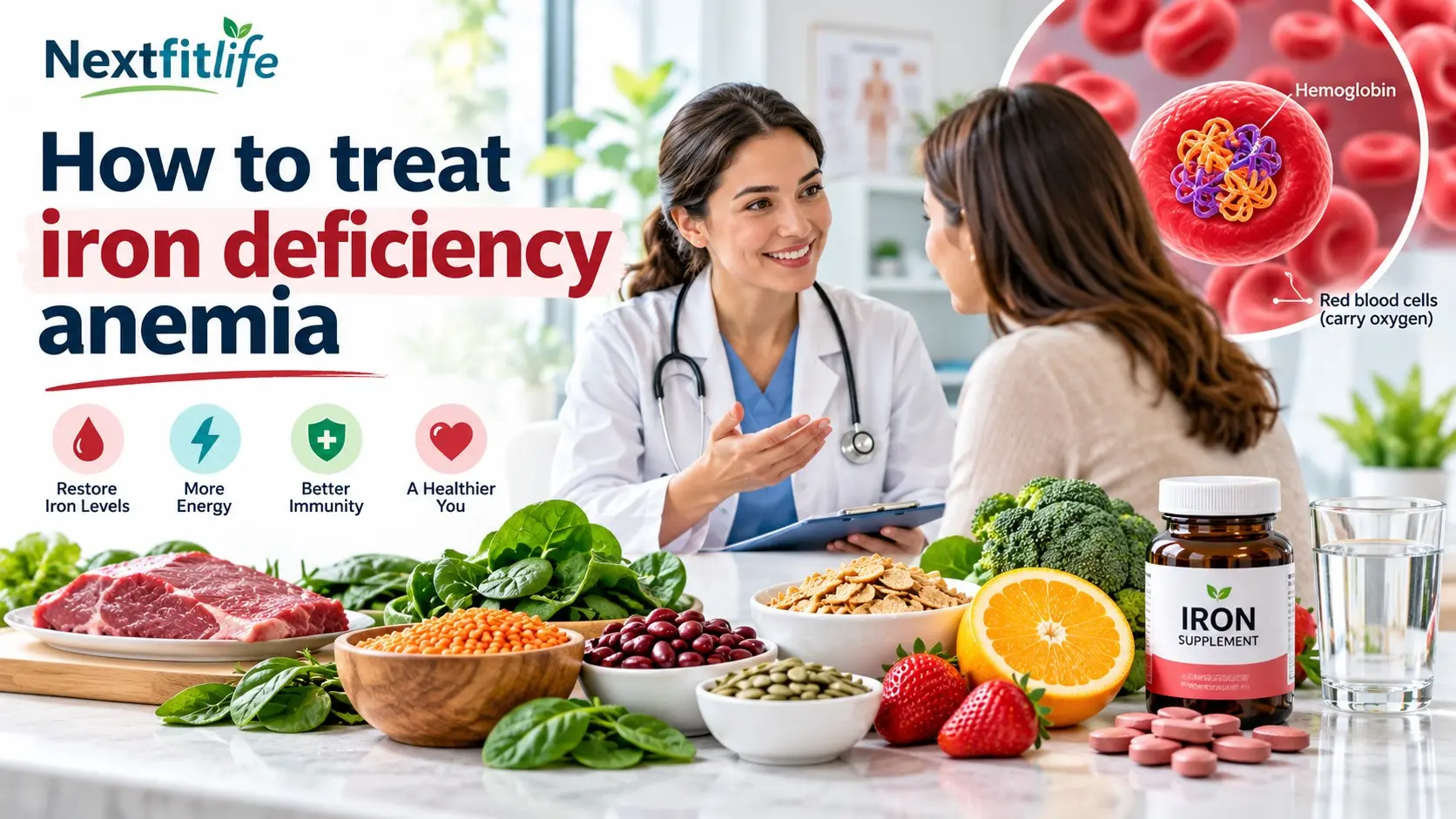
How to treat iron deficiency anemia depends on more than eating extra spinach or taking an iron tablet. The safest plan is to confirm that iron deficiency is really present, find out why iron was lost or poorly absorbed, replace the missing iron, and check that the blood count and iron stores recover.
Iron deficiency anemia can result from heavy periods, pregnancy, gastrointestinal bleeding, low iron intake, celiac disease, inflammatory bowel disease, bariatric surgery, frequent blood donation, medicines, or other health problems.
Food can support recovery, but confirmed anemia often needs oral iron. Some people need intravenous iron because tablets are poorly tolerated, do not work, or cannot be absorbed well enough.
This article is for general information and education. It does not replace medical advice, diagnosis, or treatment.
If your main question is about food, read How to Treat Low Iron Anemia and Foods That Help Iron Absorption. You can also visit the NextFitLife Nutrition and Vitamins Hub.
Table of Contents
- What iron deficiency anemia means
- 12 proven treatment steps
- Confirm anemia
- Confirm iron deficiency
- Find the cause
- Start oral iron when appropriate
- Use a practical dosing schedule
- Improve absorption
- Manage side effects
- Use iron rich foods
- Use IV iron when needed
- Treat blood loss
- Check the response
- Rebuild iron stores
- 8 unusual signs
- Ferritin and transferrin saturation
- Best iron rich foods
- Oral iron
- IV iron
- Heavy periods
- Digestive blood loss
- Celiac disease and H. pylori
- Pregnancy
- Recovery timeline
- Common mistakes
- Frequently asked questions
What Is Iron Deficiency Anemia?
Iron deficiency anemia happens when your body does not have enough iron to make enough healthy hemoglobin.
Hemoglobin is the protein in red blood cells that carries oxygen.
When hemoglobin falls, common symptoms can include:
- Fatigue
- Weakness
- Pale skin
- Shortness of breath
- Heart palpitations
- Headaches
- Dizziness
- Difficulty concentrating
Iron deficiency develops in stages. Iron stores can become depleted before hemoglobin falls low enough to meet the definition of anemia.
Iron Deficiency vs Iron Deficiency Anemia
These terms are related, but they are not identical.
Iron deficiency
Iron stores are low, but hemoglobin may still be normal.
Iron deficiency anemia
Iron stores are depleted enough that hemoglobin has fallen below the normal range for that person and laboratory.
This distinction matters because low ferritin can appear before anemia.
12 Proven Steps for How to Treat Iron Deficiency Anemia
1. Confirm That Anemia Is Present
A complete blood count, also called a CBC or FBC, is usually the first test.
It measures:
- Hemoglobin
- Hematocrit
- Red blood cell count
- Mean corpuscular volume
- Other blood cells
Iron deficiency often causes small red blood cells, but the MCV can still be normal early in the process.
2. Confirm That Iron Is Low
Ferritin is one of the most useful tests for stored iron.
A low ferritin strongly supports iron deficiency.
Other useful tests can include:
- Transferrin saturation
- Serum iron
- Total iron binding capacity
- Transferrin
- Reticulocyte hemoglobin in selected cases
- C reactive protein when inflammation may affect ferritin
3. Find Out Why Iron Became Low
Replacing iron without finding the cause can lead to repeated anemia.
Common causes include:
- Heavy menstrual bleeding
- Pregnancy
- Gastrointestinal bleeding
- Frequent blood donation
- Low iron intake
- Celiac disease
- Inflammatory bowel disease
- Bariatric surgery
- Stomach or bowel surgery
- Long term blood loss from another source
The question is not only, “How do I raise my iron?” It is also, “Why did my iron become low?”
4. Start Oral Iron When Appropriate
Oral iron is commonly used as first treatment.
Common forms include:
- Ferrous sulfate
- Ferrous fumarate
- Ferrous gluconate
No single oral iron formulation has been proven best for every person.
Ferrous sulfate is widely used because it is effective and inexpensive.
5. Use a Practical Iron Dosing Schedule
More iron is not always better.
Modern guidance generally supports giving oral iron no more than once per day.
For some people, alternate day iron may be easier to tolerate while still providing useful absorption.
The best schedule depends on:
- The product
- Elemental iron content
- Severity of deficiency
- Pregnancy
- Side effects
- Other medical problems
Follow the dose recommended for your situation.
6. Improve Iron Absorption
Vitamin C can increase absorption of nonheme iron.
Useful food pairings include:
- Lentils with tomatoes
- Beans with bell peppers
- Fortified cereal with strawberries
- Spinach with lemon
- Tofu with broccoli
You do not need huge amounts of juice. A normal serving of vitamin C rich food can help.
7. Manage Oral Iron Side Effects
Iron tablets can cause:
- Constipation
- Nausea
- Stomach discomfort
- Heartburn
- Diarrhea
- Dark stools
If side effects are difficult, options may include:
- Alternate day treatment
- A different dose
- A different preparation
- Taking the tablet with a little food
- IV iron when oral therapy is not workable
Tell your healthcare professional if side effects are making you skip treatment.
8. Eat More Iron Rich Foods
Food helps rebuild and maintain healthy iron stores.
Dietary iron comes in two main forms.
Heme iron
Heme iron comes from animal foods and is usually absorbed more efficiently.
Sources include:
- Lean beef
- Lamb
- Chicken
- Turkey
- Fish
- Shellfish
Nonheme iron
Nonheme iron comes from plant foods and fortified foods.
Sources include:
- Lentils
- Beans
- Chickpeas
- Tofu
- Spinach
- Pumpkin seeds
- Fortified breakfast cereal
Pair plant iron with vitamin C to improve absorption.
9. Use IV Iron When Needed
Intravenous iron delivers iron directly into the bloodstream.
It may be useful when:
- Oral iron is not tolerated
- Ferritin does not improve with oral treatment
- Oral iron is unlikely to be absorbed
- There is significant gastrointestinal disease
- There has been malabsorptive bariatric surgery
- Iron replacement is needed more quickly
- Specific kidney, heart, pregnancy, or inflammatory conditions make IV therapy appropriate
The number of infusions depends on the product, total iron deficit, body weight, and medical setting. It is not always a single treatment.
10. Treat Ongoing Blood Loss
If blood loss continues, anemia can return even after iron improves.
Possible causes include:
- Heavy periods
- Stomach ulcers
- Gastritis
- Inflammatory bowel disease
- NSAID related injury
- Colon disease
- Other sources of bleeding
The source of blood loss needs treatment too.
11. Check Whether Treatment Is Working
Blood tests should show whether the treatment is effective.
A CBC is often repeated during the first few weeks.
A clear rise in hemoglobin supports a good response.
If hemoglobin does not improve, consider:
- Ongoing bleeding
- Missed treatment
- Inadequate dosing
- Poor absorption
- Inflammation
- Another cause of anemia
12. Continue Long Enough to Rebuild Iron Stores
Hemoglobin may return to normal before iron stores are fully restored.
This is why oral iron is often continued for a period after hemoglobin normalizes.
Some adult guidelines recommend around three additional months, although the exact duration should follow ferritin, ongoing losses, symptoms, and clinical judgment.
8 Unusual Signs of Iron Deficiency Anemia
Fatigue and paleness are well known. Some clues are less obvious.
1. Craving Ice
Pagophagia means an intense urge to chew or eat ice.
It is a form of pica and is strongly associated with iron deficiency.
If a new craving for ice appears, it is reasonable to ask whether a CBC and ferritin test are appropriate.
2. Restless Legs
Low iron stores can be associated with restless legs syndrome.
Symptoms may include an uncomfortable urge to move the legs, especially at night or while resting.
Restless legs has other causes too, so ferritin is only part of the assessment.
3. Spoon Shaped Nails
Koilonychia means the nails become thin and curve inward like a spoon.
It can occur with long standing iron deficiency, but it is not present in most people with anemia.
4. Brittle Nails
Nails may become weak or break more easily.
This finding is not specific to iron deficiency and can also occur from trauma, aging, thyroid disease, or other causes.
5. Sore or Smooth Tongue
A smooth, sore, or inflamed tongue can occur with iron deficiency.
Vitamin B12 and folate deficiency can cause similar changes.
6. Cracks at the Corners of the Mouth
Angular cheilitis can cause painful cracks where the lips meet.
Iron deficiency is one possible cause, but infection, irritation, and other nutritional deficiencies can also contribute.
7. Difficulty Swallowing
Rare, long standing iron deficiency can be associated with esophageal webs and swallowing difficulty.
New or persistent difficulty swallowing should be assessed medically rather than assumed to be from iron deficiency.
8. Restless Concentration and Brain Fog
Iron deficiency anemia can reduce exercise tolerance and contribute to fatigue and difficulty concentrating.
However, brain fog is not specific to iron deficiency and can occur with sleep problems, thyroid disease, vitamin B12 deficiency, depression, medicines, and many other conditions.
What About Hair Loss?
Iron deficiency can coexist with diffuse hair loss, especially when iron stores are low.
However, there is no single ferritin number that proves hair loss is caused by iron deficiency or guarantees that raising ferritin will restore hair.
Other causes include:
- Genetics
- Thyroid disease
- Hormonal changes
- Stress
- Recent illness
- Low calorie intake
- Scalp disease
Symptoms at a Glance
| Symptom | Possible Link | Important Note |
|---|---|---|
| Fatigue | Reduced oxygen carrying capacity | Many other causes are possible |
| Pica | Strong association with iron deficiency | Often improves after treatment |
| Restless legs | Can be associated with low iron stores | Other causes exist |
| Spoon nails | Possible long standing deficiency | Not common in every case |
| Sore tongue | Can occur with iron deficiency | B12 and folate deficiency are alternatives |
| Hair loss | May coexist with low iron | Not diagnostic by itself |
What Blood Tests Diagnose Iron Deficiency Anemia?
| Test | What It Shows | Key Limitation |
|---|---|---|
| Hemoglobin | Whether anemia is present | Does not identify the cause |
| MCV | Average red blood cell size | Can still be normal early in iron deficiency |
| Ferritin | Stored iron | Can rise with inflammation |
| Transferrin saturation | How much transferrin carries iron | Should be interpreted with other iron tests |
| TIBC | Iron binding capacity | Not diagnostic alone |
| CRP | Inflammation | Helps provide context rather than measuring iron directly |
What Ferritin Level Means Iron Deficiency?
There is no single cutoff that fits every medical situation.
A very low ferritin strongly supports depleted iron stores.
NIH notes that ferritin below about 30 micrograms per liter suggests iron deficiency, while inflammation can raise ferritin and make interpretation more difficult.
Some gastrointestinal guidelines use a cutoff near 45 ng/mL when evaluating people who already have anemia.
This means ferritin should be interpreted with:
- Hemoglobin
- Symptoms
- Inflammation
- Transferrin saturation
- Clinical history
Do not treat a laboratory reference range as an absolute diagnosis by itself.
What Is Transferrin Saturation?
Transferrin saturation estimates the percentage of transferrin carrying iron.
It can be useful when ferritin is difficult to interpret, particularly with:
- Chronic inflammation
- Chronic kidney disease
- Inflammatory bowel disease
- Heart failure
Can You Have Iron Deficiency Without Anemia?
Yes.
Iron stores can fall before hemoglobin becomes low.
This means a person may have low ferritin but a normal CBC.
The decision to treat depends on the cause, symptoms, clinical setting, pregnancy status, and other risk factors.
Why Finding the Cause Matters
Iron deficiency anemia is often a sign of another problem.
The key question is:
The four broad reasons are:
- Blood loss
- Low intake
- Poor absorption
- Higher iron needs
Heavy Menstrual Bleeding
Heavy menstrual bleeding is a common cause of iron deficiency in people who menstruate.
Clues include:
- Soaking through pads or tampons frequently
- Periods lasting many days
- Passing large clots
- Needing double protection
- Waking at night to change protection
- Fatigue or dizziness during periods
Replacing iron is important, but the bleeding may also need treatment.
Gastrointestinal Blood Loss
Slow blood loss from the digestive tract may cause iron deficiency without visible red blood.
Possible causes include:
- Peptic ulcers
- Gastritis
- NSAID related injury
- Inflammatory bowel disease
- Polyps
- Vascular lesions
- Colon cancer
- Stomach cancer
Unexplained iron deficiency anemia should not automatically be blamed on diet.
Who May Need Gastrointestinal Evaluation?
Men and postmenopausal women with new unexplained iron deficiency anemia commonly need investigation for gastrointestinal blood loss.
Premenopausal women may also need gastrointestinal evaluation when:
- There is no clear menstrual explanation
- Anemia is severe or recurrent
- There are gastrointestinal symptoms
- There is unexplained weight loss
- There is visible blood in stool
- There are other warning signs
Celiac Disease and Iron Deficiency
Celiac disease damages the small intestine and can reduce iron absorption.
Iron deficiency anemia can sometimes appear before obvious digestive symptoms.
Testing may be appropriate when anemia is unexplained or does not respond as expected.
H. pylori and Iron Deficiency
Helicobacter pylori infection can contribute to iron deficiency in some people.
Testing may be considered when no other cause is found.
Treating the infection can help when it is contributing to the deficiency.
Frequent Blood Donation
Whole blood donation removes both red blood cells and iron.
Frequent donors can become iron deficient even while a pre donation hemoglobin check still looks acceptable.
People who donate often may need individualized advice about:
- Donation frequency
- Ferritin testing
- Iron rich foods
- Iron supplements
Athletes and Iron Deficiency
Endurance athletes can be at higher risk because of:
- Greater iron requirements
- Menstrual blood loss
- Gastrointestinal blood loss during intense exercise
- Foot strike hemolysis in runners
- Restricted diets
Reduced performance should not automatically be treated with iron without testing.
Best Iron Rich Foods
| Food | Iron Type | Smart Pairing |
|---|---|---|
| Lean beef | Heme | Vegetables or salad |
| Shellfish | Heme | Tomatoes or bell peppers |
| Lentils | Nonheme | Lemon or tomatoes |
| Beans | Nonheme | Bell pepper or citrus fruit |
| Tofu | Nonheme | Broccoli or tomatoes |
| Fortified cereal | Nonheme | Strawberries or kiwi |
| Spinach | Nonheme | Lemon or bell peppers |
| Pumpkin seeds | Nonheme | Vitamin C rich fruit |
Should You Eat Liver for Iron?
Liver is rich in iron and vitamin B12.
However, it is also very high in preformed vitamin A.
Pregnant people are generally advised to avoid liver because too much preformed vitamin A can harm fetal development.
For everyone else, liver does not need to be eaten several times per week to treat anemia.
Does Spinach Cure Iron Deficiency?
No.
Spinach is nutritious and contains nonheme iron, but its iron is absorbed less efficiently than heme iron.
It can support an iron rich diet, especially when paired with vitamin C, but it should not replace medical iron treatment when significant anemia is present.
Tea and Coffee
Tea and coffee contain compounds that can reduce nonheme iron absorption.
If you are actively correcting iron deficiency, separating tea and coffee from iron tablets or iron rich meals may help.
You do not have to eliminate them completely.
Calcium and Iron
Calcium may reduce iron absorption when large amounts are taken at the same time.
If you take a calcium supplement, your healthcare professional or pharmacist may advise taking it separately from iron.
You do not need to remove all dairy foods unless your care plan specifically requires it.
Iron and Levothyroxine
Iron can reduce absorption of levothyroxine.
These medicines usually need to be separated by several hours.
Follow the instructions for your specific thyroid medicine.
Iron and Some Antibiotics
Iron can interfere with absorption of selected antibiotics, including some tetracyclines and quinolones.
Ask a pharmacist how far apart your medicines should be taken.
Iron Deficiency Anemia During Pregnancy
Pregnancy raises iron requirements because iron is needed for:
- The growing fetus
- The placenta
- Expansion of maternal blood volume
Treatment may include:
- Iron rich food
- Oral iron
- IV iron in selected cases
- Treatment of another cause if present
Do not self prescribe high dose iron during pregnancy without professional guidance.
Iron Deficiency in Children
Children have different iron requirements and treatment doses from adults.
Iron deficiency during childhood can affect development and learning.
A child with suspected anemia should be assessed instead of receiving an adult iron supplement.
Iron Deficiency and Chronic Kidney Disease
Chronic kidney disease can cause anemia through several mechanisms.
These include:
- Low erythropoietin production
- Iron deficiency
- Inflammation
- Blood loss
- Dialysis related losses
Ferritin can be harder to interpret because chronic inflammation may raise it.
Read Chronic Kidney Disease for more context.
When Is IV Iron Better Than Tablets?
IV iron may be preferred when oral treatment:
- Causes unacceptable side effects
- Does not improve ferritin or hemoglobin
- Cannot be absorbed adequately
- Is too slow for the clinical need
It can also be useful in selected people with:
- Inflammatory bowel disease
- Chronic kidney disease
- Heart failure
- Malabsorptive bariatric surgery
- Pregnancy
Can a Blood Transfusion Treat Iron Deficiency?
A blood transfusion can raise hemoglobin quickly when anemia is severe and symptoms or clinical circumstances justify it.
However, transfused red blood cells do not fully replace depleted iron stores.
Iron therapy is usually still required when iron deficiency caused the anemia.
How Fast Does Iron Deficiency Anemia Improve?
| Change | Typical Pattern |
|---|---|
| Bone marrow response | Can begin within days |
| Hemoglobin | Should begin rising during the first few weeks when treatment is effective |
| Fatigue | May improve over days to weeks when anemia is the main cause |
| Iron stores | Usually take longer to restore than hemoglobin |
Why Might Iron Treatment Not Work?
Possible reasons include:
- The diagnosis is wrong or incomplete
- The iron dose is inadequate
- Tablets are not being taken consistently
- Blood loss continues
- Iron is poorly absorbed
- Celiac disease is present
- Inflammation is limiting iron availability
- Another anemia is present
If treatment is not working, reassessment is safer than simply increasing the dose yourself.
Common Treatment Mistakes
| Mistake | Better Approach |
|---|---|
| Taking iron for fatigue without testing | Confirm anemia and iron deficiency first |
| Using food alone for significant anemia | Use oral or IV iron when medically indicated |
| Calling every ferritin below 30 symptomatic | Interpret ferritin with hemoglobin, symptoms, inflammation, and clinical context |
| Assuming unexplained anemia is dietary | Look for blood loss and malabsorption |
| Taking iron several times daily automatically | Use a simpler evidence based schedule |
| Stopping when hemoglobin first becomes normal | Continue long enough to restore iron stores when advised |
| Using personal anecdotes as proof | Use laboratory response and clinical guidance |
A Simple Iron Rich Day
Breakfast
Iron fortified cereal with strawberries or kiwi.
Lunch
Lentils with tomatoes, bell peppers, and leafy greens.
Snack
Pumpkin seeds with an orange.
Dinner
Lean beef, fish, chicken, tofu, or beans with broccoli and tomatoes.
This meal pattern supports iron intake but does not replace prescribed treatment for established iron deficiency anemia.
When Should You See a Doctor?
Arrange medical assessment if you have:
- Persistent unexplained fatigue
- Shortness of breath
- Palpitations
- Frequent dizziness
- Pica or ice craving
- Restless legs
- Pale skin
- Heavy periods
- Blood in stool
- Black stools
- Difficulty swallowing
- Unexplained weight loss
- Repeatedly low ferritin
- Anemia that keeps returning
When Is Iron Deficiency Anemia an Emergency?
Seek urgent medical care for:
- Chest pain
- Fainting
- Severe shortness of breath
- Severe weakness
- A very fast or irregular heartbeat
- Heavy uncontrolled bleeding
- Vomiting blood
- Black tar like stool with dizziness or significant weakness
Conclusion: How to Treat Iron Deficiency Anemia Safely
How to treat iron deficiency anemia safely comes down to four goals: confirm the diagnosis, find the cause, replace the missing iron, and prove that treatment is working.
Food supports recovery, but significant anemia often needs oral or intravenous iron. Heavy menstrual bleeding, hidden gastrointestinal blood loss, celiac disease, pregnancy, frequent blood donation, poor absorption, and chronic illness can all change the plan.
If you are taking iron and your blood count is not improving, do not simply add more tablets. Ask whether the diagnosis, dose, absorption, ongoing bleeding, and other causes of anemia have been reviewed.
Treat the low iron, but also treat the reason it became low.
References and Sources
- American Gastroenterological Association. Management of Iron Deficiency Anemia.
Covers oral iron formulations, once daily and alternate day dosing, vitamin C, IV iron, intolerance, poor response, and malabsorption.
https://gastro.org/clinical-guidance/management-of-iron-deficiency-anemia/ - National Institutes of Health Office of Dietary Supplements. Iron Fact Sheet for Health Professionals.
Covers iron function, ferritin, hemoglobin, food sources, heme and nonheme iron, supplementation, pregnancy, medicine interactions, and proton pump inhibitors.
https://ods.od.nih.gov/factsheets/Iron-HealthProfessional/ - British Society of Gastroenterology. Guidelines for the Management of Iron Deficiency Anaemia in Adults.
Covers ferritin, transferrin saturation, gastrointestinal investigation, oral iron, alternate day dosing, IV iron, response monitoring, and treatment duration.
https://gut.bmj.com/content/70/11/2030 - NHS. Iron Deficiency Anaemia.
Covers symptoms, pica, restless legs, nail changes, causes, blood testing, iron tablets, diet, side effects, pregnancy, heavy periods, and gastrointestinal blood loss.
https://www.nhs.uk/conditions/iron-deficiency-anaemia/ - NHS. Iron.
Covers dietary iron needs, iron rich foods, heavy periods, supplement safety, and the danger of iron overdose in children.
https://www.nhs.uk/conditions/vitamins-and-minerals/iron/ - World Health Organization. Guideline on Haemoglobin Cutoffs to Define Anaemia.
Provides current guidance on hemoglobin interpretation and anemia definitions across population groups.
https://www.who.int/publications/i/item/9789240088542
Internal Links and Helpful NextFitLife Guides
- How to Treat Low Iron Anemia: Foods, Supplements, Tests and Care
- Foods That Help Iron Absorption
- Vitamin B12 Deficiency
- Symptoms of Vitamin B12 Deficiency
- Vitamin B12 Deficiency Treatment
- Chronic Kidney Disease
- Kidney Disease
- Nutrition and Vitamins Hub
- NextFitLife Health Hub
About the Author
Adel Galal is a father of four, three sons and a daughter, and a grandfather of four, with 33 years of hands on parenting experience. He is the founder of Parnthub.com, based in Cairo, Egypt, where he shares practical guidance on feeding, development, and family life from newborns to teenagers.
Adel is not a medical professional. Health articles cite trusted medical and public health sources and are for general information only.
I am not a doctor or licensed healthcare professional, and this content does not replace professional medical advice, diagnosis, or treatment. I share information based on extensive research, real life experience, and consultation with healthcare providers. Always consult a qualified healthcare professional for diagnosis, treatment, or guidance about any health condition.
Learn more on the NextFitLife About Us page.
Frequently Asked Questions
How do you treat iron deficiency anemia?
Treatment usually includes confirming iron deficiency, finding the cause, replacing iron with oral or intravenous treatment when needed, improving dietary intake, and repeating blood tests to confirm recovery.
Can food alone cure iron deficiency anemia?
Food can help, but moderate or severe iron deficiency anemia often needs iron replacement because food may not restore iron quickly enough.
What is the best test for iron deficiency?
Ferritin is one of the most useful tests for stored iron. Transferrin saturation and other iron studies can help when ferritin is affected by inflammation.
What ferritin level means iron deficiency?
A very low ferritin strongly supports iron deficiency. Values below about 30 micrograms per liter often suggest depleted iron stores, but thresholds vary with the clinical setting and inflammation.
Can ferritin be normal while iron is low?
Yes. Inflammation, infection, liver disease, and chronic illness can raise ferritin and make iron deficiency harder to detect.
Can iron deficiency occur without anemia?
Yes. Iron stores can fall before hemoglobin becomes low, so low ferritin may occur with a normal blood count.
What are unusual signs of iron deficiency?
Less obvious signs can include craving ice, restless legs, spoon shaped nails, brittle nails, a sore smooth tongue, cracks at the mouth corners, difficulty swallowing, and concentration problems.
Can low iron cause hair loss?
Iron deficiency can coexist with diffuse hair loss, but hair loss has many other causes and no single ferritin level proves that iron deficiency is responsible.
Should iron tablets be taken every day?
Oral iron is commonly taken once daily at most. Some people tolerate every other day dosing better. Follow the regimen recommended for your clinical situation.
Should I take vitamin C with iron?
Vitamin C can improve nonheme iron absorption. A vitamin C rich food or drink can be paired with iron if appropriate.
Can I drink coffee or tea with iron?
Tea and coffee can reduce nonheme iron absorption, so separating them from iron tablets or iron rich meals may help.
Can I take calcium and iron together?
Calcium can interfere with iron absorption when taken together. Ask a pharmacist whether your iron and calcium supplements should be separated.
Why does iron turn stool dark?
Dark stools are common with oral iron. Black tar like stool with dizziness, weakness, pain, or vomiting blood can signal gastrointestinal bleeding and needs urgent assessment.
When is IV iron needed?
IV iron may be used when oral iron is not tolerated, does not work, cannot be absorbed adequately, or iron needs to be replaced more quickly.
Does IV iron always work in one infusion?
No. Some IV iron products can deliver large doses, while others require multiple infusions. The schedule depends on the product and total iron deficit.
Can heavy periods cause iron deficiency anemia?
Yes. Heavy menstrual bleeding is a common cause and may need treatment in addition to replacing iron.
Can gastrointestinal bleeding cause low iron?
Yes. Ulcers, gastritis, inflammatory bowel disease, NSAID injury, polyps, and some cancers can cause slow gastrointestinal blood loss.
Can celiac disease cause iron deficiency anemia?
Yes. Celiac disease can damage the small intestine and reduce iron absorption, sometimes even when digestive symptoms are mild.
How quickly should iron treatment work?
Hemoglobin should usually begin rising within the first few weeks when treatment is effective. Rebuilding iron stores takes longer.
When is iron deficiency anemia an emergency?
Seek urgent care for chest pain, fainting, severe shortness of breath, severe weakness, a very fast or irregular heartbeat, heavy uncontrolled bleeding, vomiting blood, or black tar like stools with significant illness.

Health & wellness writer with 30+ years of experience in nutrition, fitness, and healthy aging. Founder of NextFitLife.com — evidence-based health guidance.