Published: September 27, 2026
Last updated: September 27, 2026
Written and source -checked by: Adel Galal, Founder and Lead Writer at NextFitLife
Medical review status: Educational nutrition content. This article has not been medically reviewed by a physician or registered dietitian.
If you want to absorb more iron from food, start with one simple habit: pair plant sources of iron with a food rich in vitamin C.
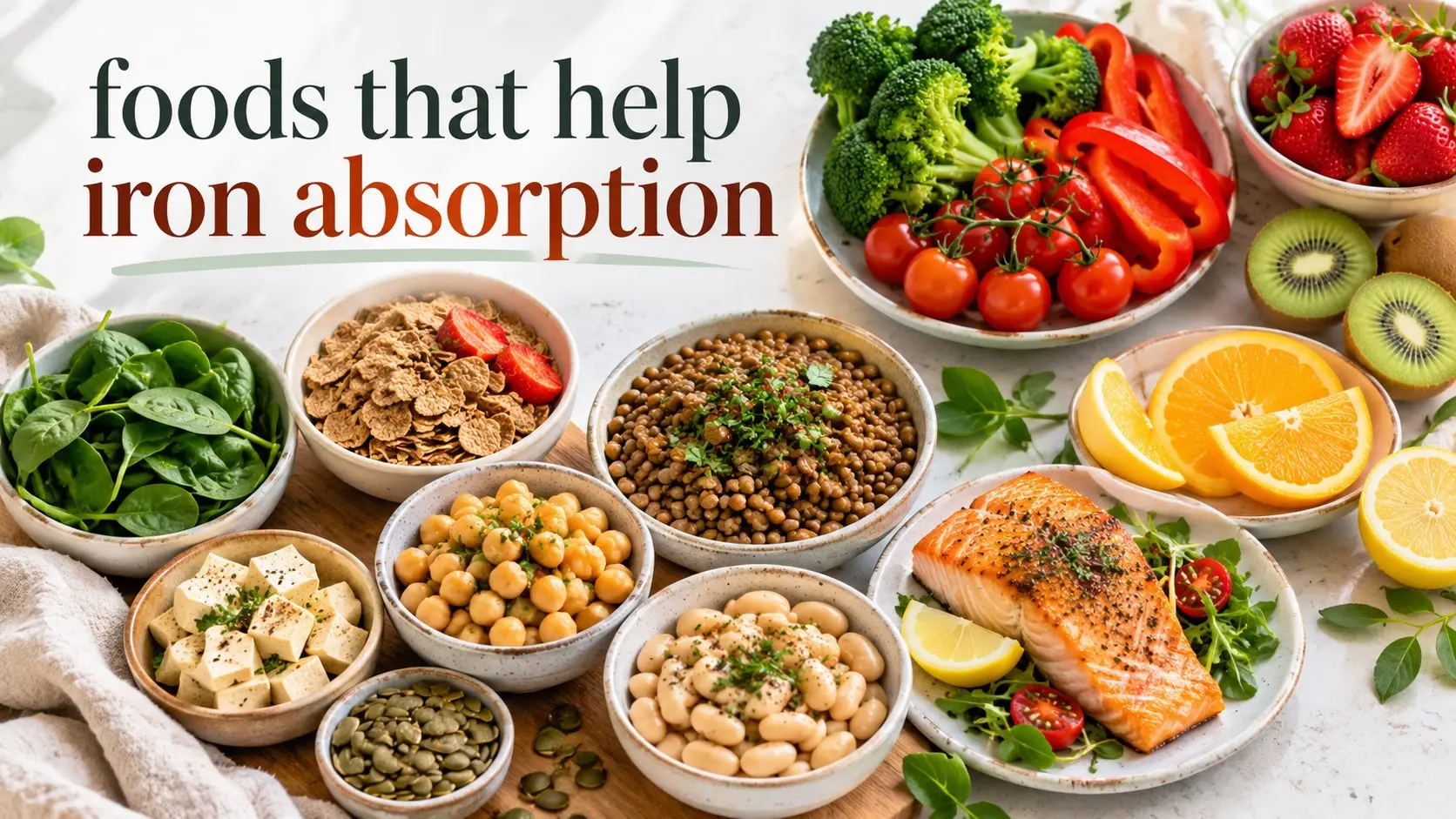
Think lentils with tomatoes, chickpeas with lemon, tofu with broccoli, or iron fortified cereal with strawberries. The food combination matters most for nonheme iron, which is the type found in plant foods and fortified foods.
Quick answer: The best foods that help iron absorption include red and green bell peppers, citrus fruit, kiwi, strawberries, tomatoes, broccoli, and other vitamin C rich foods. Eat them in the same meal as beans, lentils, chickpeas, tofu, leafy greens, seeds, or iron fortified foods. Meat, poultry, fish, and seafood can also improve absorption of plant iron eaten in the same meal.
You do not need to remove every food that can reduce iron absorption. That advice gets exaggerated online. A varied diet matters more than making every meal chemically perfect.
The goal of this guide is much more useful: learn which combinations are worth repeating, how to arrange a normal day of eating, what to do with tea and coffee, and when food is not enough to correct an iron problem.
Health note: This content is for general educational purposes and does not replace professional medical advice, diagnosis, or treatment. Consult an appropriately qualified healthcare professional for personal medical concerns. This article explains published guidance and does not provide a personal clinical assessment. Always consult qualified medical professionals for diagnosis and treatment of any health condition.
Table of Contents
- How food changes iron absorption
- Heme iron and nonheme iron
- The best vitamin C foods for iron
- 13 smart food pairings
- Daily iron meal ideas
- Tea and coffee timing
- Calcium and iron
- Phytates and plant foods
- Vegetarian and vegan iron
- How much iron adults need
- When food first is not enough
- References and Sources
- Related NextFitLife guides
- About the author
- Frequently asked questions
How Does Food Change Iron Absorption?
Iron on a nutrition label is not the same thing as iron your body actually absorbs. The form of iron matters, and so does the rest of the meal.
Vitamin C improves the absorption of nonheme iron. Meat, poultry, fish, and seafood can also make plant iron easier to absorb. On the other side, compounds called phytates and some polyphenols can reduce absorption during a meal.
There is an important bit of context here. These effects do not mean one cup of tea ruins your diet or that beans are poor foods because they contain phytates. In a varied diet, the effects are much less dramatic than they can look in single meal experiments.
That is why my approach is to improve the plate rather than create a list of forbidden foods.
For more background on minerals, deficiencies, food sources, and supplement safety, use the NextFitLife Nutrition & Vitamins Hub.
Heme Iron and Nonheme Iron Are Not Absorbed the Same Way
There are two main forms of dietary iron.
| Iron Type | Main Sources | Absorption | Meal Pairing |
|---|---|---|---|
| Heme iron | Meat, poultry, fish, seafood | More readily absorbed | Less affected by other foods |
| Nonheme iron | Beans, lentils, tofu, vegetables, seeds, fortified foods | Less readily absorbed | Benefits most from vitamin C rich foods |
If most of your iron comes from plants, food pairing deserves more attention because plant based iron is nonheme iron.
If you eat meat or seafood, you get heme iron as well, and those foods can also help improve the absorption of nonheme iron from the rest of the meal.
Which Foods Help Iron Absorption Most?
Vitamin C rich fruit and vegetables are the easiest answer.
Useful choices include:
- Red bell peppers
- Green bell peppers
- Oranges
- Lemons
- Kiwi
- Strawberries
- Tomatoes
- Broccoli
- Brussels sprouts
- Cabbage
- Cauliflower
- Potatoes
You do not need orange juice with every iron meal. A pepper, tomato, kiwi, broccoli serving, or piece of citrus fruit can do the same basic job.
For a deeper look at food sources, preparation, and everyday uses, read our Vitamin C Foods Guide.
13 Smart Food Pairings That Help Iron Absorption
This is where the advice becomes useful. Each pairing combines an iron source with something that can help your body make better use of it.
1. Lentils With Tomatoes and Red Bell Pepper
Lentils provide plant based iron, protein, and fiber. Add tomatoes and chopped red pepper and you bring vitamin C into the same meal.
This works in lentil soup, lentil salad, curry, or a simple lentil and rice bowl.
2. Beans With Tomato Salsa
Black beans, kidney beans, and white beans provide nonheme iron. Tomato salsa makes an easy partner, especially when it contains fresh pepper or lime juice too.
A bean bowl with salsa is far more realistic than trying to remember a separate iron supplement routine when you do not actually need one.
3. Chickpeas With Lemon
Lemon fits naturally with chickpeas.
Add it to hummus, chickpea salad, roasted chickpeas, or a bowl with vegetables. The chickpeas supply nonheme iron, while the lemon adds vitamin C to the same meal.
4. Tofu With Broccoli and Peppers
Tofu is a useful vegetarian iron source. Pair it with broccoli and peppers in a stir fry, rice bowl, or noodle dish.
This is a strong everyday choice for people who eat little or no meat because it combines an iron food with more than one vitamin C rich vegetable.
5. Iron Fortified Cereal With Strawberries
Fortified cereal can contain useful amounts of iron, but the amount differs by brand, so check the nutrition label.
Strawberries fit beside cereal without changing breakfast much. That makes this one of the easiest pairings to repeat.
6. Oatmeal With Kiwi
Oats contain some iron, while kiwi is rich in vitamin C.
Phytates in grains can reduce nonheme iron absorption, but that is not a reason to remove whole grains. Add a vitamin C food and keep the bigger picture in mind.
7. Spinach With Bell Pepper and Lemon
Spinach contains iron, but its iron is not especially easy to absorb. That makes pairing more useful.
Try spinach with sliced red pepper and lemon dressing. You get an iron containing vegetable alongside two vitamin C sources.
8. Hummus With Red Pepper
Hummus and sliced red pepper make a simple snack. Chickpeas and sesame contribute minerals, while the pepper provides plenty of vitamin C.
This is the kind of food pairing I prefer because you do not need a recipe or special product to use it.
9. Bean Chili With Tomatoes and Peppers
Bean chili already does much of the work for you. Beans supply nonheme iron, while tomatoes and peppers add vitamin C.
If you make chili with meat, you also add heme iron and the absorption benefit associated with meat in a mixed meal.
10. Beef With Beans and Peppers
Lean beef contains heme iron. Beans add nonheme iron, while peppers bring vitamin C.
This combination is useful because the meal does not rely on one iron source.
11. Fish With Lentils and Lemon
Fish provides heme iron and protein. Lentils add plant iron, and lemon brings vitamin C.
This is an easy pattern for people who eat seafood more often than red meat.
12. Iron Fortified Bread With Tomato
Check the label because bread fortification varies. If your bread contains added iron, tomato makes a simple vitamin C partner.
Think tomato toast, a vegetable sandwich, or fortified bread beside a tomato based soup.
13. Pumpkin Seeds With Kiwi or Orange
Pumpkin seeds contain nonheme iron. Pair a small serving with kiwi or orange for a snack that brings an iron source and vitamin C together.
The point is not that this snack cures low iron. It simply uses food pairing well.
A Simple Formula for Better Iron Meals
Iron rich food + vitamin C rich food + normal balanced meal
That is enough for most everyday meal planning.
You do not need to count the vitamin C in every tomato or calculate an absorption percentage. Choose an iron rich food, add colorful fruit or vegetables, and eat a varied diet across the day.
What does this look like across a normal day?
| Meal | Iron Source | Absorption Partner | Simple Meal |
|---|---|---|---|
| Breakfast | Iron fortified cereal | Strawberries or kiwi | Fortified cereal with fresh fruit |
| Lunch | Chickpeas | Lemon, tomato, pepper | Chickpea salad with lemon dressing |
| Snack | Pumpkin seeds | Kiwi | Small seed serving with fresh kiwi |
| Dinner | Lentils or tofu | Broccoli and red pepper | Lentil bowl or tofu stir fry |
Notice what is missing: no strange drink, no expensive powder, and no rule that forces you to eat the same food every day.
For broader meal planning ideas, see our nutrition tips for improving your health.
Do Tea and Coffee Stop Iron Absorption?
Tea and coffee contain polyphenols that can reduce nonheme iron absorption when taken with an iron containing meal.
You do not need to stop drinking them.
If your iron stores are normal and you eat a varied diet, there is little reason to fear an occasional coffee with food. If you have low iron, rely heavily on plant iron, or have been told to improve your iron intake, a practical change is to drink tea and coffee between meals instead of with your most iron rich meal.
This is a better rule than turning coffee into a forbidden food.
Should You Separate Dairy From Iron Rich Meals?
Calcium can reduce iron absorption during a meal. The effect is more complicated over a whole diet, and current evidence does not support removing nutritious calcium foods from every meal for healthy people.
If you are simply trying to eat well, keep dairy in your diet if it suits you.
If a clinician has diagnosed low iron and you are deliberately optimizing one iron rich meal, having your largest calcium serving at another time can be reasonable.
Iron supplements are different. Calcium, antacids, medicines, and food can affect how some iron supplements are absorbed, so follow the instructions given by your clinician or pharmacist rather than applying general food advice to a prescription treatment.
Do Beans and Whole Grains Block Iron?
They contain phytates, which can reduce nonheme iron absorption during a meal.
That does not make beans, lentils, nuts, seeds, and whole grains unhealthy. Many of them are also useful iron sources and provide protein, fiber, vitamins, and minerals.
I would not remove them simply because somebody labels phytate an iron absorption inhibitor.
Instead:
- Pair beans or grains with vitamin C rich produce
- Use a varied diet instead of relying on one iron source
- Soak or ferment foods when that is already part of your normal cooking style
- Do not turn food preparation into a medical ritual
Nutrition should still look like food.
Vegetarians and Vegans Need to Plan Iron More Carefully
Vegetarian and vegan diets can provide iron, but nearly all of it is nonheme iron. Because this form is less readily absorbed, people who avoid meat need to pay more attention to both intake and meal composition.
Useful vegetarian iron sources include lentils, beans, chickpeas, tofu, seeds, nuts, fortified cereal, fortified bread, and green vegetables.
A strong pattern looks like this:
Lentils + tomato
Beans + pepper
Tofu + broccoli
Fortified cereal + strawberries
Chickpeas + lemon
Simple combinations repeated regularly are more useful than searching for one perfect plant food.
How Much Iron Do Adults Need?
Iron requirements change with age, sex, pregnancy, and life stage. The figures below are the current daily recommendations used by the US National Institutes of Health for healthy adults.
| Group | Recommended Iron Per Day | Context |
|---|---|---|
| Adult men age 19 to 50 | 8 mg | Daily recommended amount |
| Adult women age 19 to 50 | 18 mg | Higher needs during menstruating years |
| Adults age 51 and older | 8 mg | Daily recommended amount |
| Pregnancy | 27 mg | Needs rise during pregnancy |
| Breastfeeding women age 19 to 50 | 9 mg | Daily recommended amount |
These are nutrition targets for healthy people. They are not treatment doses for iron deficiency.
Which Foods Give You Iron in the First Place?
Absorption tricks cannot help much if the diet contains very little iron.
Useful sources include lean meat, seafood, poultry, white beans, lentils, kidney beans, chickpeas, tofu, spinach, peas, nuts, seeds, dried fruit, and iron fortified foods such as some cereals and breads.
The exact iron amount varies with the food, serving size, brand, fortification, and preparation method.
Practical tip: Check the nutrition label on breakfast cereals, breads, and plant foods that are fortified. Two products that look nearly identical can contain very different amounts of added iron.
Is Spinach the Best Food for Low Iron?
No.
Spinach contains iron, but much of it is nonheme iron, and other compounds in spinach reduce how much becomes available for absorption.
Spinach is still a nutritious vegetable. Just stop treating it like an anemia medicine.
Use it as part of a meal with peppers, tomatoes, lemon, meat, fish, or another useful absorption partner.
Does Lemon Water Increase Iron Absorption?
It can contribute vitamin C if you consume it with an iron containing meal, but timing is the point.
A glass of lemon water many hours after eating beans does not travel backward and improve absorption from that meal.
If you like lemon, use it on chickpeas, lentils, vegetables, fish, or salads. That is simpler and makes culinary sense.
Do You Need Orange Juice With Iron?
No. Orange juice is only one vitamin C source.
Whole oranges, kiwi, strawberries, bell peppers, tomatoes, broccoli, cabbage, and other produce can work well too.
I prefer whole foods for daily use because they fit normal meals and give you more than one nutrient.
Does Cooking Reduce Vitamin C?
Vitamin C is sensitive to heat and prolonged storage, so some can be lost during cooking.
You do not need to eat every vegetable raw. Use a mix of fresh and cooked foods. Add fresh fruit at breakfast, raw pepper at lunch, tomato with beans, or lightly cooked broccoli at dinner.
That is more realistic than trying to preserve every milligram.
The Breakfast Pattern Worth Fixing if Your Iron Is Low
Consider this breakfast:
Iron fortified cereal + milk + coffee
The cereal may contain plenty of iron, but there is little vitamin C in the meal, and both calcium and coffee are present at the same time.
If your iron status is fine, this does not need to become a problem.
If you are actively working on low iron, however, the meal is easy to improve. Add strawberries or kiwi, and have coffee later. If your clinician has asked you to be especially careful about calcium around iron, move the largest dairy serving to another meal.
One practical adjustment beats a long list of food rules.
Food First Does Not Mean Food Only
This is the part many articles blur.
Someone who wants to maintain good iron intake is not in the same situation as someone with confirmed iron deficiency anemia.
Low iron can happen because of inadequate intake, blood loss, pregnancy, poor absorption, digestive disease, or other medical problems. A food list cannot identify the cause.
In September 2026, the American Society of Hematology released new clinical guidance designed to improve diagnosis of iron deficiency across several groups. The practical lesson for readers is simple: symptoms alone are not enough. Blood testing, including appropriate assessment of ferritin, helps clinicians determine whether iron stores are actually low.
If a healthcare professional confirms deficiency, treatment may include diet, oral iron, intravenous iron, or another plan based on the cause and severity.
Food still matters. It just should not be asked to do a medical treatment's job.
Who Should Be More Careful About Low Iron?
Some people have a greater chance of developing low iron because their needs are higher or because they lose or absorb iron differently.
- People with heavy menstrual bleeding
- Pregnant people
- Frequent blood donors
- People with some gastrointestinal conditions
- People after some forms of gastrointestinal surgery
- People with ongoing blood loss
- People eating diets that provide too little iron
- People who rely almost entirely on nonheme iron and do not plan intake carefully
Persistent tiredness does not prove that iron is low. Many health problems cause fatigue, so testing is more useful than guessing.
When Should You Speak With a Healthcare Professional?
Ask for medical advice if you have known anemia, low ferritin, persistent fatigue, unusual weakness, shortness of breath, dizziness, heavy menstrual bleeding, ongoing digestive symptoms, unexplained blood loss, or repeated low iron results.
Seek prompt medical care for severe shortness of breath, fainting, chest pain, major blood loss, black stools, or another serious new symptom.
Do not start a high dose iron supplement simply because you feel tired.
Iron supplements can cause side effects, interact with medicines, and become dangerous in excessive amounts. They are especially hazardous if accidentally swallowed by young children.
If you have an iron overload condition such as hemochromatosis, advice designed to increase iron absorption may be inappropriate for you. Follow your medical team's guidance instead.
My Practical Food First Rule
If you are healthy and simply want to improve dietary iron use, this is the routine I would keep:
- Choose a real iron source.
- Add a vitamin C rich food to the same meal.
- Pay more attention to pairing when most of your iron comes from plants.
- If your iron is low, have tea and coffee away from your most iron rich meals.
- Do not remove beans, whole grains, or dairy just because they can affect absorption during one meal.
- Use testing and medical advice when deficiency is suspected.
That approach is simple enough to use every day and careful enough to avoid the most common nutrition myths.
Conclusion
The most useful foods that help iron absorption are ordinary vitamin C rich foods that fit beside the iron foods you already eat. Add peppers to beans, tomatoes to lentils, broccoli to tofu, strawberries to fortified cereal, or lemon to chickpeas.
Start with your next meal. Choose one iron source and one vitamin C partner, then repeat the habit through the week. If blood tests show low iron or anemia, keep improving your food choices while working with a qualified healthcare professional to find and treat the cause.
References and Sources
The nutrition and medical information in this article was checked against current guidance from established government and professional health organizations. These sources are publicly accessible and were available when this article was updated.
- National Institutes of Health, Office of Dietary Supplements.
Iron: Fact Sheet for Health Professionals.
Used for recommended iron intake, food sources, heme and nonheme iron, vitamin C and iron absorption, phytates, polyphenols, calcium, vegetarian iron needs, and iron bioavailability.
URL:
https://ods.od.nih.gov/factsheets/Iron-HealthProfessional/
- National Institutes of Health, Office of Dietary Supplements.
Vitamin C: Fact Sheet for Health Professionals.
Used for vitamin C food sources and the role of vitamin C in improving absorption of nonheme iron from plant foods.
URL:
https://ods.od.nih.gov/factsheets/VitaminC-HealthProfessional/
- MedlinePlus, U.S. National Library of Medicine.
Iron in Diet.
Used for dietary iron sources, heme and nonheme iron, iron needs, and practical dietary guidance for getting enough iron.
URL:
https://medlineplus.gov/ency/article/002422.htm
- MedlinePlus, U.S. National Library of Medicine.
Iron Deficiency Anemia.
Used for causes, symptoms, diagnosis, blood loss, absorption problems, dietary context, and reasons professional assessment may be needed.
URL:
https://medlineplus.gov/ency/article/000584.htm
- American Society of Hematology.
Diagnosis of Iron Deficiency.
Used for current evidence based guidance on diagnosing iron deficiency and interpreting iron status using appropriate laboratory assessment rather than symptoms alone.
URL:
https://www.hematology.org/education/clinicians/guidelines-and-quality-care/clinical-practice-guidelines/iron-deficiency-anemia/diagnosis-of-iron-deficiency
Continue With NextFitLife Nutrition Guides
Use these related guides to build a fuller food and nutrition plan:
About the Author
Adel Galal is the founder and lead writer of NextFitLife. He researches health, fitness, nutrition, wellness, beauty, and healthy aging topics with a focus on turning complex information into clear choices people can use in daily life.
His editorial approach is food first, source aware, and practical. He compares established public health and medical sources, checks where evidence is strong or uncertain, and avoids presenting supplements or single foods as cures for medical conditions.
This content is for general educational purposes and does not replace professional medical advice, diagnosis, or treatment. Consult an appropriately qualified healthcare professional for personal medical concerns. This article explains published guidance and does not provide a personal clinical assessment. Always consult qualified medical professionals for diagnosis and treatment of any health condition.
Learn more about the author and NextFitLife editorial approach on the About Us page.
Frequently Asked Questions About Iron Absorption
What foods help iron absorption the most?
Vitamin C rich foods are the most useful everyday partners for nonheme iron. Good choices include bell peppers, oranges, kiwi, strawberries, tomatoes, broccoli, lemon, cabbage, and cauliflower.
What should I eat with iron rich foods?
Pair plant iron foods such as beans, lentils, tofu, seeds, leafy vegetables, or fortified cereal with a vitamin C rich fruit or vegetable. Examples include lentils with tomatoes, beans with peppers, tofu with broccoli, and cereal with strawberries.
Does vitamin C help iron absorption?
Yes. Vitamin C improves absorption of nonheme iron, the type found in plant foods and many fortified foods. Eating the vitamin C source in the same meal is the most practical approach.
Do coffee and tea reduce iron absorption?
Tea and coffee contain compounds that can reduce nonheme iron absorption when consumed with a meal. If your iron stores are low, having them between meals instead of with your most iron rich meal is a practical option.
Does calcium block iron absorption?
Calcium can reduce iron absorption during a meal, but the effect across a normal mixed diet is less clear. Most healthy people do not need to avoid dairy. People with diagnosed low iron can ask their clinician whether meal timing matters for them.
Are lentils good for iron?
Yes. Lentils provide nonheme iron along with protein and fiber. Pairing lentils with tomatoes, peppers, broccoli, lemon, or another vitamin C rich food can help improve iron absorption.
What fruit is best for iron absorption?
There is no single best fruit. Oranges, kiwi, strawberries, grapefruit, papaya, and other vitamin C rich fruits can all support absorption of nonheme iron when eaten with the iron containing meal.
Does lemon help iron absorption?
Yes. Lemon provides vitamin C, so using lemon juice with lentils, chickpeas, beans, vegetables, or another nonheme iron source can support absorption.
Can food fix iron deficiency anemia?
Food can support iron intake, but diagnosed iron deficiency anemia may need medical treatment and investigation of the cause. Blood loss, pregnancy, absorption problems, gastrointestinal disease, and other issues can contribute.
Should I take an iron supplement if I feel tired?
Not automatically. Fatigue has many possible causes. Ask a healthcare professional whether blood testing is appropriate before starting high dose iron unless you have already been advised to take it.

Health & wellness writer with 30+ years of experience in nutrition, fitness, and healthy aging. Founder of NextFitLife.com — evidence-based health guidance.