Published – February 24 Last Updated: February 24, 2026
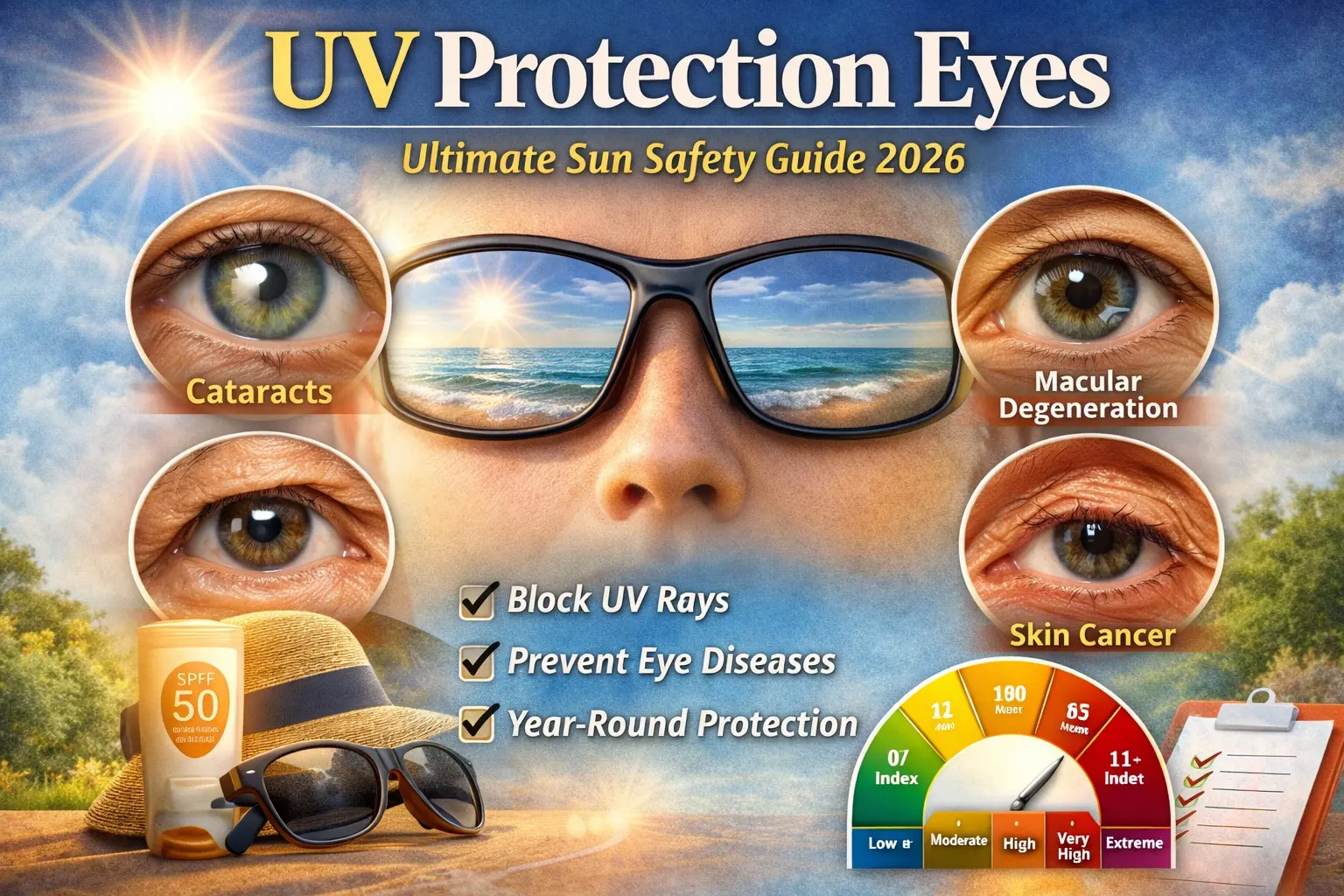
UV protection eyes is vital—comparable to applying sunscreen to your skin—since damaging ultraviolet rays speed up eye aging, elevate the chances of serious eye diseases, and cause irreversible harm to your sight. The bright side is that reliable sunglasses, along with intelligent everyday routines, can stop most of this damage in its tracks.
This guide teaches you –
- How UV rays harm your eyes
- Choosing the right sunglasses
- When and where protection matters most
- UV safety for all ages
Let’s protect your eyes from the sun! UV protection is one of the core lifestyle pillars in our complete eye health guide — the central resource for all vision care on NextFitLife.
What You’ll Learn
✓ UV damage to the eyes
✓ Types of UV radiation
✓ Best sunglasses features
✓ Year-round protection tips
✓ UV index explained
✓ Common protection mistakes
How UV Rays Damage Your Eyes
Understanding the danger helps you take it seriously.
What Is UV Radiation?
Ultraviolet light is invisible –
- Higher energy than visible light
- Comes mainly from the sun
- Three types: UVA, UVB, UVC
- Only UVA and UVB reach Earth
- Both damage your eyes
Invisible to you, sunlight still penetrates and affects your eyes.
Short-Term UV Damage
Immediate effects from too much sun –
Photokeratitis (sunburn of the eye)
- Extremely painful
- Feels like sand in the eyes
- Red, watery eyes
- Blurred vision
- Light sensitivity
- Usually temporary, but very uncomfortable
Happens from
- Bright sun on snow or water
- Welding without protection
- Tanning beds (very dangerous!)
- Extended time in intense sun
Long-Term UV Damage
Cumulative damage over the years causes –
Cataracts
- Clouding of the eye lens
- UV is a major risk factor
- Can develop 10-15 years earlier with UV exposure
- Leading cause of blindness worldwide
Macular degeneration
- Damages the central retina
- UV exposure increases risk
- Can cause permanent vision loss
Pterygium (surfer’s eye)
- Growth on white of the eye
- Caused by UV and wind
- Can grow over the cornea
- May need surgery
Pinguecula
- Yellow bump on eye white
- From UV and irritation
- Usually harmless but unsightly
Skin cancer around the eyes
- Eyelids are very sensitive
- 5-10% skin cancers occur here
- Can be serious
→ Complete guide – Complete Guide to Eye Health: Vision Care, Prevention & Wellness
Types of UV Radiation
Know what you’re protecting against.
UVA Rays
Long-wave UV radiation
- Penetrates deep into the eye
- Reaches retina and lens
- Linked to macular degeneration
- Linked to cataracts
- Present all day, year-round
Why it matters – Even on cloudy days!
UVB Rays
Medium-wave UV radiation
- Mostly absorbed by the cornea and lens
- Causes more immediate damage
- The main cause of photokeratitis
- Strongest 10 am-4 pm
- Varies by season
More intense in summer.
UVC Rays
Short-wave UV radiation
- Completely blocked by the atmosphere
- Not a concern from the sun
- Can come from artificial sources (welding)
Why You Need Protection from Both
Sunglasses block –
- 99-100% of UVA rays
- 99-100% of UVB rays
- Also called “UV 400” protection
- This is essential!
→ Cataract prevention: Cataract Prevention: How to Protect Your Vision Naturally
Choosing the Right Sunglasses
Not all sunglasses protect equally!
Essential Features
Look for these on the label
UV 400 protection:
- Blocks 99-100% of UV rays
- This is the most important feature
- Don’t buy sunglasses without this!
Large or wraparound frames
- Block the sun from the sides
- Prevent UV from entering around the lenses
- Better coverage = better protection
Affected-resistant lenses
- Polycarbonate is best
- Protects from injury too
- Especially important for sports and children
Lens Colour and Darkness
Common misconception – Dark lenses don’t equal UV protection!
Truth about lens colour
- UV protection comes from an invisible coating
- Dark lenses without UV coating are dangerous
- They make pupils dilate, letting in more UV
Different colours for different uses
- Gray: True colour perception, bright sun
- Brown/amber: Enhances contrast, good for sports
- Green: Good contrast, comfortable in bright light
- Yellow: Low light, overcast days
- Rose/red: Depth perception, snow sports
Most important – UV protection rating, not colour!
Polarized vs. Non-polarized
Polarized lenses
- Reduce glare from water, snow, and pavement
- Make vision more comfortable
- Successful in driving and water sports
- Don’t provide extra UV protection
Still need UV 400 rating!
Price vs. Protection
Expensive doesn’t always mean better protection
- $10 sunglasses can have UV 400
- $200 sunglasses might not
- Always check the label
- Protection matters more than brand
But quality differences exist
- Better optical clarity
- Scratch resistance
- Durability
- Comfort
When and Where UV Protection Matters Most
Your eyes demand far more sun protection than most people ever realize.
Time of Day
UV rays are strong
- 10 am to 4 pm
- Mid-day sun is the most dangerous
- But UV is present all daylight hours
Protect your eyes even in the morning and evening.
Seasons
Summer has the highest UV
- The sun is most direct
- Longer days
- More outdoor time
But UV is present year-round
- Winter snow reflects 80% of UV
- Spring and fall still have UV
- Never stop protecting!
Weather Conditions
Cloudy days are deceiving
- 80% of UV penetrates clouds
- You can still get UV damage
- Overcast doesn’t mean safe
Wear sunglasses even when cloudy!
High-Risk Locations
More UV exposure at
High altitudes
- UV increases 10-12% per 3,000 feet
- Mountain activities need extra protection
Near water
- Reflects up to 100% of UV
- Doubles your exposure
- Beach, lake, pool all reflect
Near snow and ice
- Reflects up to 80% of UV
- Winter sports need protection
- Skiing and snowboarding are critical
Near sand
- Reflects about 15% of UV
- Beach time needs protection
Open areas
- Less shade means more exposure
- Golf, tennis, hiking
- Outdoor sports
Understanding the UV Index
Know when protection is most critical.
What Is the UV Index?
Daily forecast of UV intensity
- Scale from 0 to 11+
- Predicts risk of sun damage
- Helps you plan protection
- Available in weather forecasts
UV Index Scale
Low (0-2)
- Minimal danger
- Still wear sunglasses for cumulative protection
Moderate (3-5)
- Moderate risk
- Protection is needed during midday
High (6-7)
- High risk of damage
- Protection essential
- Seek shade during midday
Very High (8-10)
- Very high risk
- Extra precautions needed
- Limit outdoor time midday
Extreme (11+)
- Extreme risk
- Take all precautions
- Avoid the sun during peak hours
Check the UV index daily in summer!
UV Index and Your Protection
Adjust protection based on the index
- Higher index = more critical to protect
- Never skip sunglasses when the index is 3+
- Consider additional protection (hat, shade)
- Plan outdoor activities around UV peaks
Complete UV Protection Strategy
UV protection eyes requires multiple approaches.
Sunglasses – Your First Defence
Wear them
- Every time you go outside during daylight
- Even on cloudy days
- Year-round, not just summer
- For any outdoor activity
- Even in the car (windshields block some UV)
Keep them
- In your car
- In your bag
- At your desk
- Multiple pairs in different locations
Add a Wide-Brimmed Hat
Hats provide extra protection
- Blocks the sun from above
- Shade’s face and eyes
- Reduces UV by 50%
- Wide brim (3+ inches) works best
Combine with sunglasses for maximum protection!
Seek Shade
Smart shade strategies
- Stay in shade during peak UV (10 am-4 pm)
- Use umbrellas at the beach
- Sit under trees or awnings
- Create shade when possible
Shade reduces UV by 50-75%.
Contact Lenses with UV Protection
Some contacts offer UV blocking
- Helpful as an extra layer
- Don’t replace sunglasses!
- Lenses don’t cover the entire eye
- Still need sunglasses for full protection
Car and Home Windows
Windows and UV
- Windshields block most UVB
- Side windows rarely block UVA
- Consider UV window film
- Wear sunglasses while driving
UV Protection for Different Ages
Everyone needs sun-damaged eye protection!
Babies and Toddlers (0-2 years)
Extra vulnerable
- Eyes let in more UV
- Can’t tell you if uncomfortable
- Need consistent protection
Protect them
- Keep in the shade as much as possible
- Sunglasses from 6 months old
- Hats every time outside
- Stroller with sun shade
Look for – Baby sunglasses with straps that stay on.
Children (3-12 years)
Critical protection years
- 80% of lifetime UV exposure before age 18
- Building habits
- Active outdoor time
Make it easy
- Let them choose fun sunglasses
- Make it part of the going outside routine
- Set an example by wearing yours
- Keep extras at school, in the car
Teens and Young Adults
Often neglects protection
- Think they’re invincible
- Want to look cool
- May resist sunglasses
Educate about
- Long-term damage
- Skin aging around the eyes
- Stylish sunglasses options
- Athletes need protection, too
Adults 40+
UV damage shows up
- Cataracts developing
- Macular degeneration risk
- Wrinkles from sun damage
Never too late to start protecting!
→ Age guide – Eye Health After 40: Essential Vision Care for Aging Eyes
Seniors 65+
Most vulnerable
- Cumulative damage visible
- Higher disease risk
- Eyes more sensitive
Essential protection
- Never go outside without sunglasses
- Add a hat always
- Seek shade
- Regular eye exams
→ Senior guide – Senior Eye Health: Protecting Vision in Your Golden Years
Common UV Protection Mistakes
Avoid these errors.
Mistake 1 – Only Wearing Sunglasses in Summer
Wrong – UV is present year-round, even in winter.
Right – Wear sunglasses every season, especially in the snow!
Mistake 2 – Thinking Dark = Protected
Wrong: Dark lenses without UV coating are dangerous.
Right – Check for UV 400 label, not lens darkness.
Mistake 3 – Skipping Protection on Cloudy Days
Wrong – 80% of UV penetrates clouds.
Right- Wear sunglasses even when overcast.
Mistake 4 – Only Protecting Eyes in Direct Sun
Wrong – UV reflects from surfaces, hits from all angles.
Right – Protect eyes in shade too, especially near water or snow.
Mistake 5 – Thinking Windows Fully Protect
Wrong – Car side windows rarely block UVA.
Right – Wear sunglasses while driving.
Mistake – 6 Not Protecting Children
Wrong – Kids get most lifetime UV exposure.
Right – Start protection from 6 months old.
Mistake 7 – Buying Fashion Over Function
Wrong – Pretty sunglasses without UV protection.
Right – UV 400 first, style second.
Frequently Asked Questions about UV Protection Eyes
Q: Do I need prescription sunglasses?
A: If you wear glasses, yes! Options include prescription sunglasses, clip-on, or transition lenses. Contact lens wearers still need sunglasses.
Q: Are expensive sunglasses better protection?
A: Not necessarily. A $15 pair with UV 400 protectives and a $300 designer pair. But quality may differ in other ways.
Q: Can I get UV protection for my eyes from regular glasses?
A: Many regular glasses have UV coating. Ask your optician. But sunglasses are darker for comfort in bright light.
Q: Do transition lenses replace sunglasses?
A: They help but don’t darken enough in cars (windshield blocks UV trigger). It is still useful for outdoor activities.
Q: How do I know if my sunglasses really have UV protection?
A: Check the label for UV 400 or 99-100% UVA/UVB. Your optician can test them with a UV meter.
Q: Is sun damage eyes reversible?
A: No. UV damage is cumulative and permanent. Prevention is essential!
Q: Can I tan with my eyes closed?
A: Don’t! UV penetrates closed eyelids. Always wear sunglasses when tanning (or better, don’t tan).
Final Thoughts
UV protection eyes is serious but simple to provide!
The key facts –
- UV damage is cumulative and permanent
- Increases cataract and AMD risk significantly
- Protection is easy and affordable
- Everyone needs it, every age
- Year-round protection is essential
Start today
- Buy quality UV 400 sunglasses
- Wear them every time you go outside
- Add a wide-brimmed hat
- Make it a habit for life
- Protect children too
Remember
- UV 400 is essential
- Dark doesn’t equal protection
- Cloudy days still have UV
- Winter snow reflects UV
- Start protecting the young
- Never too late to begin
Make sunglasses eye health protection automatic
- Keys, wallet, phone, sunglasses
- Part of leaving the house
- Just like sunscreen for skin
- Simple habit, huge benefit
Your eyes deserve protection from the sun. Start wearing those sunglasses today!
Reference
American Optometric Association – Ultraviolet (UV) protection
https://www.aoa.org/healthy-eyes
National Eye Institute (.gov)- protecting your eyes from the sun’s UV light
https://www.nei.nih.gov/research-and-training/research-news/protecting-your-eyes-suns-uv-light
Medical Disclaimer
This article is for information only. It does not replace professional medical advice. Always choose sunglasses with UV 400 protection and get regular eye exams.

Health & wellness writer with 30+ years of experience in nutrition, fitness, and healthy aging. Founder of NextFitLife.com — evidence-based health guidance.