Last updated: July 27, 2026 — Medically source-checked and updated for accuracy
Cataract Prevention: How to Protect Your Vision Naturally
Cataract prevention cannot guarantee that you will never develop a cataract. Aging, genetics, eye injuries, medical conditions, and certain medicines can all cause the normally clear lens inside the eye to become cloudy.
However, several practical habits may lower modifiable cataract risks and support healthier vision as you age. These include protecting your eyes from ultraviolet radiation, avoiding smoking, managing diabetes, preventing eye injuries, eating a balanced diet, and attending eye examinations at intervals recommended for your personal risk.
Quick answer: Can cataracts be prevented?
Not every cataract can be prevented. You may nevertheless reduce avoidable risks by wearing sunglasses that block 99% to 100% of UVA and UVB radiation, adding a brimmed hat, not smoking, managing blood sugar, using protective eyewear, reviewing long-term steroid use with your clinician, eating a varied diet, and having your eyes examined as recommended.
This guide explains what is known about cataract prevention, which popular claims are unsupported, what symptoms to watch for, and when an eye-care professional should examine your vision.
For a broader overview, visit our complete eye health guide or browse the Eye Health and Vision Resource Directory.
What Is a Cataract?
A cataract is a cloudy area in the lens of the eye. The lens sits behind the coloured part of the eye and helps focus light onto the retina. A healthy lens is normally clear, allowing light to pass through and form a sharp image.
As a cataract develops, changes within the lens scatter or block light. Vision may gradually become blurry, hazy, less colourful, or more sensitive to glare.
| Feature | Clear lens | Lens with a cataract |
|---|---|---|
| Light transmission | Light passes through clearly. | Light is scattered or partly blocked. |
| Vision quality | Images appear sharp and properly coloured. | Vision may appear blurry, faded, yellowed, or hazy. |
| Bright light | Normal tolerance of sunlight and headlights. | Glare, halos, or discomfort may increase. |
Most cataracts are age-related, but cataracts may also develop after an eye injury, radiation exposure, eye surgery, or prolonged use of some steroid medicines. Babies and younger adults can develop cataracts too, although age-related cataracts are the most common form.
Who Is More Likely to Develop Cataracts?
Getting older is the strongest general risk factor, but age is not the only influence. Cataract risk may be higher in people who:
- Have diabetes or persistently elevated blood glucose.
- Smoke or have smoked for many years.
- Spend substantial time in sunlight without adequate UV protection.
- Drink excessive amounts of alcohol.
- Have a family history of cataracts.
- Have experienced an eye injury.
- Have undergone surgery for another eye condition.
- Have received radiation treatment involving the upper body.
- Use oral, inhaled, injected, or eye-drop steroids for extended periods.
- Have inflammation inside the eye or certain other eye conditions.
Having one or more risk factors does not mean that you will definitely develop a visually significant cataract. It does mean that discussing your eye-examination schedule with an optometrist or ophthalmologist may be especially important.
9 Evidence-Based Ways to Lower Cataract Risk
The following steps cannot stop every cataract, but they address recognized and potentially modifiable risks.
1. Wear sunglasses that block UVA and UVB Radiation
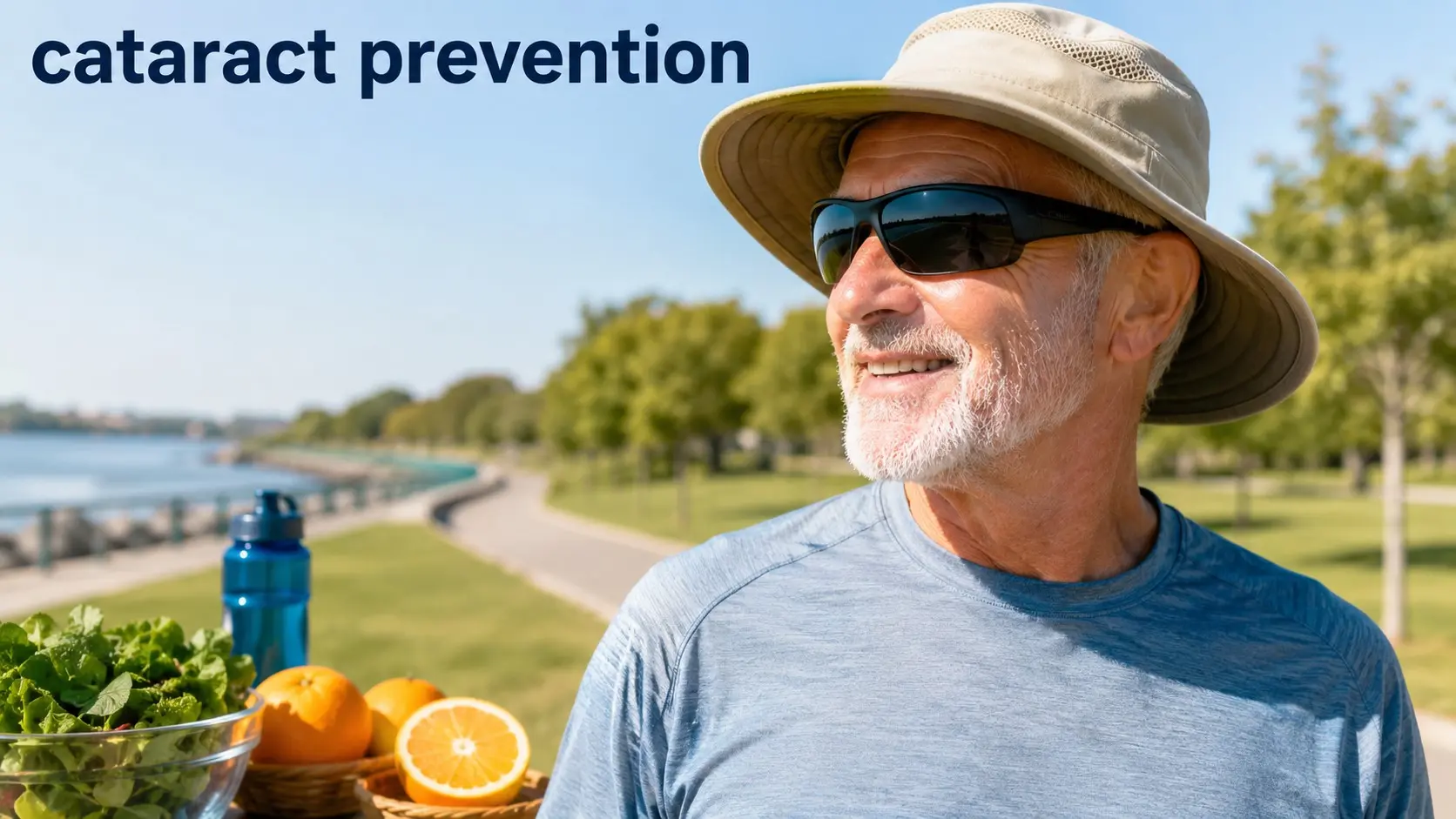
Ultraviolet radiation can damage eye tissues over time. When buying sunglasses, look for a label stating that the lenses block 99% to 100% of both UVA and UVB radiation or are rated UV400.
The darkness, colour, price, or designer label of a lens does not prove that it provides effective UV protection. A reasonably priced pair with a reliable UV label may provide better protection than expensive fashion sunglasses without an adequate rating.
- Wear UV-protective sunglasses whenever you are outdoors in daylight.
- Use them on cloudy days because UV radiation still reaches the eyes.
- Consider wraparound frames to reduce light entering from the sides.
- Take extra care around water, sand, snow, and reflective surfaces.
- Choose impact-resistant lenses when work or sport creates an injury risk.
Read our dedicated guide to UV protection for eyes for help choosing sunglasses and building safer sun habits.
2. Add a wide-brimmed hat
A brimmed hat provides additional shade and reduces direct sunlight reaching the eyes from above. It should be used with UV-blocking sunglasses rather than as a replacement for them.
For outdoor work, walking, gardening, travel, beach activities, or sport, combining a hat with well-fitting sunglasses is a simple protective routine.
3. Stop Smoking and avoid tobacco smoke
Smoking is a recognized modifiable cataract risk factor. Tobacco smoke exposes the body to chemicals that increase oxidative stress and damage multiple organs, including the eyes.
Stopping smoking does not dissolve an existing cataract. It does remove an ongoing risk and provides substantial benefits for cardiovascular, respiratory, metabolic, and eye health.
People who need support can speak with a doctor, pharmacist, or evidence-based smoking-cessation service. A structured plan and approved medicines can improve the chance of quitting successfully.
4. Manage Diabetes and Blood Sugar
People with diabetes are more likely to develop cataracts and may develop them at a younger age. High glucose levels can affect the lens and may contribute to changes that promote clouding.
Practical steps include:
- Taking diabetes medicines as prescribed.
- Following the nutrition and activity plan agreed with your healthcare team.
- Monitoring blood glucose when advised.
- Managing blood pressure and cholesterol as part of overall vascular health.
- Using an individualized A1C target rather than assuming one target is suitable for everyone.
- Attending recommended comprehensive and dilated eye examinations.
Important: Sudden blurry vision in a person with diabetes is not always caused by a cataract. Blood-glucose changes and retinal disease can also affect vision. New or worsening symptoms need professional assessment.
5. Protect Your Eyes From Injury
An eye injury can cause a traumatic cataract immediately or years later. Wear suitable safety eyewear during activities involving:
- Power tools, drilling, grinding, or cutting.
- Metal, wood, glass, or stone fragments.
- Chemicals, cleaning products, or agricultural sprays.
- Construction, manufacturing, or workshop tasks.
- Gardening and yard work.
- High-speed or contact sports.
Ordinary prescription glasses are not always designed to provide occupational or sports-impact protection. Ask an eye-care professional or safety specialist which standards apply to your activity.
6. Review long-term steroid use with your clinician
Steroid medicines are essential treatments for many inflammatory, allergic, autoimmune, respiratory, and eye conditions. However, long-term or high-dose exposure can increase the risk of cataracts and glaucoma in some people.
Do not stop prescribed steroids suddenly or reduce the dose yourself. Instead:
- Ask whether the lowest effective dose is being used.
- Ask whether an alternative treatment is appropriate.
- Tell your eye-care professional about oral, inhaled, injected, topical, and eye-drop steroids.
- Attend regular eye-pressure and lens examinations when advised.
7. Eat a Varied, nutrient-rich diet
A balanced diet supports overall eye, vascular, and metabolic health. Fruits, vegetables, whole grains, legumes, nuts, seeds, eggs, and fish can provide nutrients used by eye tissues.
However, no single “superfood” has been proven to prevent cataracts, and food cannot reverse a cloudy lens. The goal is a sustainable dietary pattern—not a miracle ingredient.
For practical meal ideas, read our guide to the best foods for eye health.
8. Limit excessive alcohol consumption
Heavy alcohol consumption is associated with several health risks and is listed among factors that may increase cataract risk. Drinking less—or not drinking—may be appropriate depending on your health, medicines, history, and personal preferences.
People who find it difficult to reduce alcohol use should seek confidential medical or behavioural support rather than attempting unsafe withdrawal alone.
9. Attend Eye Examinations at the Right Intervals
An eye examination does not physically prevent lens clouding. It can detect a cataract, measure its effect on vision, identify other eye diseases, and help an eye-care professional recommend appropriate monitoring or treatment.
The right schedule depends on age, symptoms, family history, diabetes, steroid exposure, previous eye disease, and other individual factors. People at increased risk may need examinations more often than people without known risks.
Cataract Prevention Summary Table
| Risk or concern | Practical action | Realistic benefit |
|---|---|---|
| UV exposure | Use sunglasses blocking 99%–100% UVA and UVB, plus a brimmed hat. | Reduces cumulative UV exposure to the eyes. |
| Smoking | Use evidence-based support to stop smoking. | Removes a recognized modifiable cataract risk. |
| Diabetes | Follow an individualized diabetes-care plan and eye-exam schedule. | Supports eye health and reduces the risk of diabetes-related vision complications. |
| Eye injury | Wear task-appropriate safety glasses or sports eye protection. | Helps prevent traumatic cataracts and other eye injuries. |
| Steroid exposure | Review long-term use with the prescribing clinician. | Identifies medicine-related risk without unsafe self-discontinuation. |
| Nutrition | Eat varied fruits, vegetables, whole grains, protein foods, nuts, and seeds. | Supports general eye, vascular, and metabolic health. |
| Gradual vision change | Arrange a comprehensive eye examination. | Helps identify cataracts and rule out other causes. |
What Foods May Support Eye Health?
Foods do not remove cataracts, but a nutritious dietary pattern can support the health of the eye and the conditions that affect it. It may also help with weight, blood pressure, blood glucose, and cardiovascular health.
Leafy Green Vegetables
Spinach, kale, collard greens, broccoli, and other green vegetables provide lutein, zeaxanthin, vitamin C, folate, and other nutrients.
Colourful Fruits and Vegetables
Citrus fruits, berries, peppers, tomatoes, carrots, pumpkin, and sweet potatoes contribute vitamins, carotenoids, fibre, and a wide range of plant compounds.
Nuts, Seeds, Beans, and Lentils
These foods can provide vitamin E, zinc, protein, fibre, and unsaturated fats. Appropriate serving sizes are important because nuts and seeds are energy-dense.
Eggs and Fish
Egg yolks contain lutein and zeaxanthin. Oily fish provides omega-3 fatty acids that play roles in retinal and general cardiovascular health.
Whole Grains and Minimally Processed Foods
Replacing heavily refined foods with higher-fibre options may support blood-glucose management and overall metabolic health.
Food-first perspective
A varied diet is more useful than focusing on one supplement or “cataract prevention food.” Diet supports health, but it is not a replacement for eye examinations, prescribed treatment, or cataract surgery when surgery becomes necessary.
Do Vitamins or AREDS2 Supplements Prevent Cataracts?
AREDS and AREDS2 supplements are not cataract-prevention treatments. These formulas were studied primarily in relation to age-related macular degeneration. National Eye Institute findings show that the formulas did not have an overall preventive effect on cataracts.
AREDS2 may be recommended for certain people with particular stages of age-related macular degeneration. It should not be taken merely because a person is older, has blurry vision, or wants to avoid cataract surgery.
High-dose supplements may also create risks or interact with medicines. For example:
- Some ingredients may affect bleeding risk or medicine absorption.
- Excessive zinc may cause side effects or contribute to copper deficiency.
- Beta-carotene-containing formulas are unsuitable for current or former smokers because of lung-cancer risk.
- Vitamin E and other high-dose nutrients may not be suitable for everyone.
Before taking an eye supplement, ask an eye-care professional:
- Do I have a condition for which this formula is recommended?
- Which exact formula and dose should I use?
- Could it interact with my medicines or health conditions?
- How will we know whether it remains appropriate?
For a broader explanation, see our guide to vitamins for eye health.
Can cataracts be reversed naturally?
No food, vitamin, supplement, eye exercise, herbal remedy, or lifestyle routine has been proven to reverse an established age-related cataract.
Early cataracts may sometimes be managed temporarily with:
- A new glasses or contact-lens prescription.
- Brighter lighting for reading and close work.
- Anti-glare measures.
- A magnifying device.
- Reducing night driving when glare makes it unsafe.
These adjustments may improve day-to-day function, but they do not remove the cloudy lens. Cataract surgery is currently the established way to remove a cataract that significantly affects vision.
Be cautious with unapproved cataract drops: Products sold online may claim to dissolve cataracts without surgery. Do not put an unapproved substance into your eyes. It may delay effective treatment, cause contamination, or directly injure the eye.
Do Eye Exercises Prevent Cataracts?
Eye exercises cannot prevent protein and structural changes inside the lens. They may help some people with specific focusing or eye-coordination problems when prescribed appropriately, but they do not prevent or remove cataracts.
Does reducing screen time prevent cataracts?
Ordinary computer and phone use is not considered a primary cause of age-related cataracts. Screens can contribute to temporary eye strain, dryness, headaches, or focusing fatigue. Taking breaks may improve comfort, but it does not reverse lens clouding.
Do Blue-Light Glasses Prevent Cataracts?
Blue-light-filtering glasses have not been established as a cataract-prevention treatment. Sunglasses specifically rated to block UVA and UVB radiation are the appropriate product for outdoor UV protection.
What Does the RNF114 cataract research mean?
In 2024, researchers supported by the National Institutes of Health reported laboratory and animal findings involving a protein called RNF114. The work examined how certain lens proteins were cleared in 13-lined ground squirrels and rats.
The research is scientifically interesting because it may help researchers explore future nonsurgical cataract treatments. However, the findings do not mean that an RNF114 eye drop or medicine is currently available.
| What the research showed | What it did not show |
|---|---|
| RNF114 was involved in clearing aggregated lens proteins in experimental systems. | It did not prove that a consumer eye drop can reverse human cataracts. |
| Animal and laboratory models showed potentially useful mechanisms. | It did not replace the need for human safety and effectiveness trials. |
| The pathway may guide future drug-development research. | It did not change current cataract-treatment guidelines. |
For now, cataract surgery remains the established treatment for a visually significant cataract.
What are the early signs of Cataracts?
An early cataract may cause no noticeable symptoms. As clouding progresses, symptoms include:
- Cloudy, hazy, or blurry vision.
- Colours appearing faded, dull, or yellowed.
- Difficulty seeing in dim light.
- Greater sensitivity to sunlight, lamps, or headlights.
- Halos around lights.
- Difficulty driving safely at night.
- Double vision in one eye.
- Needing brighter light for reading.
- Frequent changes in glasses or contact-lens prescription.
These symptoms are not unique to cataracts. Glaucoma, retinal disease, corneal problems, dry eye, medication effects, and other conditions can also alter vision. An examination is needed for an accurate diagnosis.
When Should You See an Eye Doctor?
Arrange a Routine or prompt examination when:
- Vision has gradually become blurry or hazy.
- Glare is making night driving difficult.
- Reading, work, cooking, walking, or hobbies have become harder.
- Colours appear less bright.
- Your prescription changes frequently.
- You have diabetes, significant steroid exposure, or a previous eye injury.
Seek Urgent Medical Care for:
- Sudden vision loss or a sudden major change in vision.
- Severe eye pain.
- A chemical splash or significant eye injury.
- Sudden double vision.
- New flashes of light or a sudden increase in floaters.
- A curtain, shadow, or dark area across part of the visual field.
- Marked redness accompanied by pain, nausea, or reduced vision.
These urgent symptoms are not typical of a slowly developing age-related cataract and may signal another eye emergency.
How are cataracts diagnosed?
An optometrist or ophthalmologist may use several parts of an eye examination, including:
- A visual-acuity test to measure how clearly you see.
- A slit-lamp examination to inspect the lens and other structures.
- A dilated examination to assess the retina and optic nerve.
- Glare or contrast testing when symptoms are difficult to measure with a standard chart.
- An updated refraction to determine whether fresh glasses improve vision.
The eye-care professional will also consider whether another condition—such as macular degeneration, diabetic retinopathy, glaucoma, or a corneal problem—is contributing to the symptoms.
When is cataract surgery considered?
You do not necessarily need surgery as soon as a cataract is diagnosed. Surgery is discussed when the cataract interferes with important daily activities or prevents the eye-care professional from adequately examining or treating another eye condition.
The decision may depend on whether you can safely:
- Read and perform close work.
- Drive during the day or at night.
- Recognize faces.
- Work or use equipment.
- Walk safely and avoid falls.
- Manage medicines and household tasks.
- Continue valued hobbies and activities.
During cataract surgery, the cloudy natural lens is removed and usually replaced with a clear artificial intraocular lens. An eye surgeon can explain lens options, expected benefits, possible risks, recovery, and whether other eye diseases may limit the final result.
A Simple Cataract-Risk Reduction Plan
Start Today
- Check whether your sunglasses state 99%–100% UVA and UVB protection or UV400.
- Place sunglasses where you will remember them before leaving home.
- Add a brimmed hat for prolonged outdoor activity.
- Use safety eyewear for hazardous work, gardening, chemicals, and sport.
- Do not smoke.
Build This Month
- Add vegetables or fruit to more meals.
- Review diabetes, blood-pressure, and cholesterol management with your healthcare team when applicable.
- List all steroid medicines, including inhalers and eye drops.
- Ask when your next comprehensive eye examination should occur.
- Reduce excessive alcohol intake and seek support when necessary.
Maintain Long Term
- Use UV protection consistently rather than only during holidays.
- Keep eye-protection equipment in good condition.
- Attend follow-up examinations based on your individual risk.
- Report meaningful vision changes rather than waiting for the next routine appointment.
- Do not rely on supplements or unapproved drops as substitutes for professional care.
My Approach to Cataract Prevention Research
Adel Galal’s editorial perspective
After more than 30 years of studying nutrition, fitness, healthy aging, and preventive wellness, I have learned to separate practical habits from unrealistic promises. Cataract prevention is a good example: protecting your eyes from UV radiation, avoiding smoking, managing diabetes, preventing injury, and attending eye examinations are sensible actions.
But no honest guide should promise that a food, vitamin, exercise, or natural remedy can guarantee prevention or reverse an established cataract. This article therefore prioritizes guidance from established eye-health organizations and clearly labels experimental research.
Key Takeaways
- Not every cataract can be prevented because age, genetics, injuries, and medical factors matter.
- Sunglasses should block 99% to 100% of UVA and UVB radiation or carry a UV400 rating.
- A brimmed hat adds shade but does not replace sunglasses.
- Smoking, diabetes, eye injury, heavy alcohol consumption, and long-term steroid use can increase risk.
- A healthy diet supports eye and metabolic health but does not dissolve cataracts.
- AREDS2 supplements do not prevent cataracts overall.
- No natural remedy or eye exercise has been proven to reverse a cataract.
- RNF114 findings remain experimental and are not an approved human treatment.
- Cataract surgery is the established treatment when clouding significantly affects daily life.
- Sudden vision changes require urgent assessment because cataracts usually progress gradually.
Frequently Asked Questions About Cataract Prevention
Can cataracts be completely prevented?
No. Aging, genetics, eye injuries, health conditions, and medicines can contribute to cataract formation. However, UV protection, avoiding smoking, diabetes management, protective eyewear, a balanced diet, and appropriate eye examinations can address several modifiable risks.
What is the best natural way to prevent cataracts?
There is no single best remedy. The most practical combined approach is to wear sunglasses that block 99% to 100% of UVA and UVB radiation, avoid smoking, manage diabetes, prevent eye injuries, eat a balanced diet, and follow an appropriate eye-examination schedule.
Which vitamin prevents cataracts?
No individual vitamin or supplement has been proven to reliably prevent cataracts. AREDS and AREDS2 supplements did not have an overall preventive effect on cataracts and are intended for certain people with age-related macular degeneration.
Can early cataracts be reversed naturally?
No. An established cataract cannot currently be reversed with food, vitamins, eye exercises, or herbal remedies. Updated glasses and brighter lighting may temporarily improve function, but surgery is the established treatment when the cataract significantly affects vision.
What sunglasses are best for cataract prevention?
Choose sunglasses labelled as blocking 99% to 100% of both UVA and UVB radiation or rated UV400. Wraparound frames may reduce light entering from the sides. Dark lenses and high prices do not automatically mean better UV protection.
Does diabetes increase cataract risk?
Yes. People with diabetes are more likely to develop cataracts and may develop them at a younger age. Following an individualized diabetes-care plan and attending recommended eye examinations are important.
Do eye exercises prevent cataracts?
No. Eye exercises cannot stop or reverse clouding inside the eye’s lens. They may be prescribed for specific focusing or coordination problems, but they are not cataract-prevention treatments.
Does staring at screens cause cataracts?
Normal screen use is not considered a primary cause of age-related cataracts. Screens can contribute to temporary eye strain and dryness, so breaks may improve comfort, but reducing screen time does not reverse lens clouding.
Can cataract eye drops replace surgery?
No approved eye drop currently removes an age-related cataract. Researchers are investigating possible nonsurgical treatments, but cataract surgery remains the established way to remove a visually significant cataract.
When should cataract surgery be considered?
Surgery may be considered when a cataract interferes with reading, driving, work, mobility, hobbies, or other important activities, or when it prevents adequate examination or treatment of another eye condition.
References and Medical Sources
- National Eye Institute — Cataracts: symptoms, risks, prevention, diagnosis, and treatment
- National Eye Institute — Ways to protect your vision
- National Eye Institute — AREDS and AREDS2 clinical-trial findings
- National Eye Institute — Cataract surgery
- Centers for Disease Control and Prevention — Diabetes and vision loss
- Centers for Disease Control and Prevention — Promoting eye health in people with diabetes
- National Institutes of Health — Experimental RNF114 cataract research
- American Academy of Ophthalmology — Cataract patient information
Part of the NextFitLife Eye Health Series
Continue learning through our Complete Eye Health Guide, browse the Eye Health and Vision Resource Directory, explore the best foods for eye health, or read our evidence-informed guide to vitamins for eyes.
Medical disclaimer
This article is for general education and does not provide a diagnosis or replace care from an optometrist, ophthalmologist, physician, pharmacist, or other qualified healthcare professional. Seek urgent assessment for sudden vision loss, severe eye pain, eye injury, new flashes or floaters, a curtain over the vision, or any rapid change in sight. Never stop prescribed steroid or diabetes medicine without guidance from the prescribing clinician.
Written by Adel Galal
Health and Wellness Writer | 30+ Years of Personal Study | Founder, NextFitLife.com
Adel Galal has spent more than 30 years studying nutrition, fitness, healthy aging, and preventive wellness. He creates accessible, source-informed health content for general readers. He is not a doctor, optometrist, or ophthalmologist. This article was editorially source-checked against guidance from the National Eye Institute, the National Institutes of Health, the CDC, and the American Academy of Ophthalmology.

Health & wellness writer with 30+ years of experience in nutrition, fitness, and healthy aging. Founder of NextFitLife.com — evidence-based health guidance.