Published: July 22, 2023
Last updated: July 20, 2026
Next review: July 2027
Written and source checked by: Adel Galal, Founder and Lead Writer at NextFitLife
Review status: Editorially reviewed and source checked. This article has not been medically reviewed by a doctor or registered dietitian.
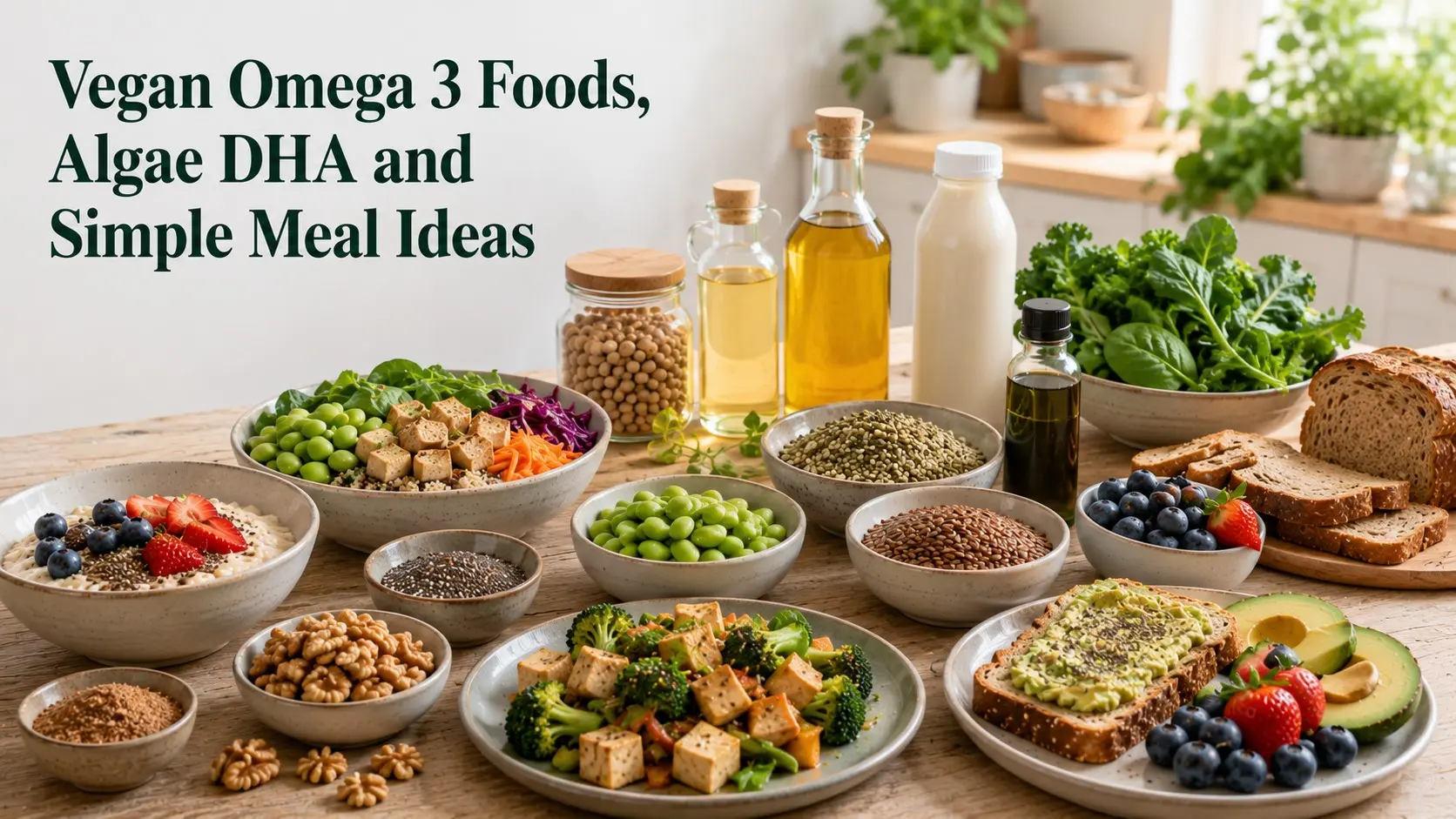
Vegan Omega 3 can come from seeds, nuts, plant oils, soy foods, fortified products, and oil made from microalgae.
These foods do not all provide the same type of omega 3.
Flaxseed, chia seeds, walnuts, hemp seeds, and plant oils mainly provide ALA omega 3.
ALA means alpha linolenic acid.
Your body can change some ALA into EPA and DHA.
But this change is limited.
Algae DHA and algae EPA provide these longer forms directly without fish.
This difference matters when you plan a vegan diet.
Omega 3 fats support normal cell structure and body functions.
DHA is also found in the brain and retina.
But Vegan Omega 3 is not a cure.
It cannot prevent every heart problem.
It cannot sharpen memory overnight.
It cannot remove joint pain or improve eyesight by itself.
The best approach is to eat a varied diet and ask for personal advice when a supplement may be useful.
This guide explains the main omega 3 types, daily ALA needs, the best vegan foods, algae supplements, simple meals, and important safety steps.
For wider heart nutrition guidance, visit the NextFitLife Heart Healthy Foods Hub.
Quick Answer
The best Vegan Omega 3 foods include ground flaxseed, chia seeds, walnuts, shelled hemp seeds, flaxseed oil, canola oil, soybean oil, tofu, edamame, and soybeans.
These foods mainly provide ALA.
Adult men generally need about 1.6 grams of ALA each day.
Adult women generally need about 1.1 grams each day.
Pregnancy and breastfeeding needs are different.
People who want direct vegan DHA or EPA can ask a qualified professional about an algae oil product.
Important Medical and Nutrition Note
This content is for general educational purposes and does not replace professional medical advice, diagnosis, or treatment. Consult an appropriately qualified healthcare professional for personal medical concerns.
This article explains published guidance and does not provide a personal clinical assessment.
Always consult qualified medical professionals for diagnosis and treatment of any health condition.
Do not use Vegan Omega 3 food or supplements instead of heart medicine, cholesterol medicine, blood pressure medicine, or treatment for another health condition.
Ask a doctor or pharmacist before using algae oil if you take blood thinners, medicines that affect clotting, or several supplements.
Seek personal guidance if you are pregnant, breastfeeding, under 18, preparing for surgery, or living with a bleeding disorder, heart disease, diabetes, kidney disease, or liver disease.
Do not give an omega 3 supplement to a baby or child unless a qualified pediatric professional recommends it.
What Is Vegan Omega 3?
Vegan Omega 3 means omega 3 fat that does not come from fish, shellfish, krill, or another animal source.
The most common vegan form is ALA.
ALA is found in seeds, nuts, soy foods, and plant oils.
The body cannot make ALA.
You must get it from food.
EPA and DHA are different omega 3 fats.
Fish get EPA and DHA by eating organisms that began with microalgae.
Vegan algae oil uses microalgae as the direct source.
This means a person can get DHA, and sometimes EPA, without using fish oil.
Omega 3 Is a Type of Unsaturated Fat
Omega 3 belongs to a group called polyunsaturated fats.
Your body needs dietary fat.
Fat helps form cell membranes.
It helps your body absorb vitamins A, D, E, and K.
It also provides energy.
Not all fats are the same.
A balanced eating pattern often uses nuts, seeds, avocados, olives, and liquid plant oils in place of frequent large amounts of butter, coconut oil, palm oil, and fatty processed foods.
Read our Healthy Eating Lifestyle Guide for a simple way to build balanced meals.
ALA, EPA, and DHA Explained Simply
ALA
Alpha linolenic acid is the essential plant omega 3.
Good sources include:
- Ground flaxseed
- Chia seeds
- Walnuts
- Hemp seeds
- Flaxseed oil
- Canola oil
- Soybean oil
- Soy foods
Your body can use ALA directly.
It can also change a small amount into EPA and DHA.
EPA
EPA means eicosapentaenoic acid.
Most food sources of EPA are marine foods.
Some vegan algae supplements provide EPA.
EPA is often studied in relation to triglycerides and inflammation.
This does not mean an over the counter supplement can treat a medical condition.
DHA
DHA means docosahexaenoic acid.
DHA is present in the brain, nerves, and retina.
Most natural dietary DHA comes from marine foods.
Vegan DHA usually comes from microalgae oil.
Does ALA Turn into Enough EPA and DHA?
The body can change ALA into EPA and then DHA.
However, the conversion is limited.
Reported total conversion is generally below 15 percent.
The amount can differ between people.
Genes, sex, age, health, and the rest of the diet may affect it.
This does not make plant ALA useless.
ALA is an essential nutrient with its own role.
It does mean that ALA food should not be described as equal to a measured amount of direct EPA or DHA.
How Much Vegan Omega 3 Do You Need?
Official United States intake values are set for ALA.
There is no United States Recommended Dietary Allowance for EPA or DHA.
| Life stage | Adequate ALA intake each day |
|---|---|
| Children age 1 to 3 | 0.7 grams |
| Children age 4 to 8 | 0.9 grams |
| Boys age 9 to 13 | 1.2 grams |
| Girls age 9 to 13 | 1 gram |
| Males age 14 and older | 1.6 grams |
| Females age 14 and older | 1.1 grams |
| Pregnancy | 1.4 grams |
| Breastfeeding | 1.3 grams |
These values are general.
They are not a treatment dose.
They do not tell you how much algae DHA or EPA to take.
Needs may change during pregnancy, childhood, illness, or medical treatment.
12 Best Vegan Omega 3 Food Sources
Food amounts can change by product, brand, growing conditions, and serving size.
Use the label or an official food database when you need a precise value.
1. Ground Flaxseed
Flaxseed is one of the strongest plant based omega 3 foods.
One tablespoon of whole flaxseed can provide about 2.35 grams of ALA.
Grinding helps your body reach the fat inside the seed.
Whole seeds may pass through the digestive system without being fully broken down.
Add ground flaxseed to:
- Oatmeal
- Plain soy yogurt
- Smoothies
- Soup
- Salad
- Bread or muffin mixtures
Start with a small amount if you are not used to fiber.
2. Chia Seeds
One ounce of chia seeds can provide about 5.06 grams of ALA.
Chia seeds also provide fiber.
Mix them with liquid and allow them to soften.
Use them in:
- Chia pudding
- Overnight oats
- Smoothies
- Plant yogurt
- Breakfast cereal
Dry chia seeds absorb liquid.
People with swallowing problems should ask a healthcare professional how to use them safely.
3. Walnuts
One ounce of English walnuts can provide about 2.57 grams of ALA.
Walnuts also provide protein, fiber, minerals, and other unsaturated fats.
Add a small handful to:
- Oatmeal
- Salad
- Fruit bowls
- Plant yogurt
- Homemade trail mix
Walnuts contain a lot of energy in a small serving.
Use an amount that fits your needs.
People with nut allergies must avoid them.
4. Shelled Hemp Seeds
Hemp seeds provide ALA, protein, and minerals.
The exact omega 3 amount varies by product.
Sprinkle them over:
- Soup
- Salad
- Toast
- Oats
- Smoothies
- Rice bowls
Read the label for the serving size and fat content.
5. Flaxseed Oil
One tablespoon of flaxseed oil can provide about 7.26 grams of ALA.
This is a large amount in a small serving.
Use it in cold food.
Add a little to salad dressing, cooked vegetables after heating, or a smoothie.
Do not use flaxseed oil for high heat frying.
Follow the bottle instructions for refrigeration and storage.
6. Canola Oil
Canola oil is also called rapeseed oil in some countries.
One tablespoon can provide about 1.28 grams of ALA.
It can be used for cooking, baking, and dressing.
Oil is energy dense.
Measure the amount when portions matter to you.
7. Soybean Oil
One tablespoon of soybean oil can provide about 0.92 grams of ALA.
It is used in many foods.
It can also be used in home cooking.
Look at the full meal rather than choosing a large amount of oil only for omega 3.
8. Edamame
Edamame are young soybeans.
Half a cup can provide about 0.28 grams of ALA.
Edamame also provides protein and fiber.
Use it in:
- Salad
- Soup
- Rice bowls
- Noodle meals
- Snacks
Choose unsalted edamame when sodium is a concern.
9. Tofu
Tofu contains a small amount of ALA.
The amount depends on the soybean type and how the tofu is made.
Tofu also provides plant protein.
Some tofu made with calcium salts can provide calcium.
Use tofu in:
- Breakfast scramble
- Stir cooked vegetables
- Soup
- Salad
- Curries
- Sandwich fillings
10. Soybeans and Soy Foods
Soybeans, soy milk, tempeh, and soy yogurt may contribute small amounts of ALA.
Amounts vary greatly.
Check the label.
Choose fortified soy milk when you also need vitamin B12, calcium, or vitamin D.
Read our Vitamin B12 Rich Foods Guide for more information about reliable vegan B12 sources.
11. Kidney Beans and Other Beans
Beans contain small amounts of ALA.
Half a cup of canned kidney beans provides about 0.10 grams.
This is not enough to make beans your main omega 3 source.
Beans are still useful because they provide protein and fiber.
Combine them with flaxseed, chia seeds, walnuts, or canola oil.
12. Vegan Algae Oil
Algae oil is not a normal whole food.
It is a vegan supplement made from microalgae.
Many products provide about 100 to 300 milligrams of DHA per serving.
Some products also provide EPA.
Amounts vary widely.
Read the Supplement Facts label.
Look at the amount of DHA and EPA, not only the total amount of oil.
ALA in Common Vegan Foods
The following amounts are selected estimates from the National Institutes of Health.
| Food | Serving | Approximate ALA |
|---|---|---|
| Flaxseed oil | 1 tablespoon | 7.26 grams |
| Chia seeds | 1 ounce | 5.06 grams |
| English walnuts | 1 ounce | 2.57 grams |
| Whole flaxseed | 1 tablespoon | 2.35 grams |
| Canola oil | 1 tablespoon | 1.28 grams |
| Soybean oil | 1 tablespoon | 0.92 grams |
| Edamame | Half a cup | 0.28 grams |
| Vegetarian refried beans | Half a cup | 0.21 grams |
| Kidney beans | Half a cup | 0.10 grams |
These amounts do not show how much EPA or DHA your body will make.
Conversion from ALA is limited and varies between people.
Is Seaweed a Good Vegan Omega 3 Source?
Seaweed is often described as a rich source of vegan DHA.
This is misleading.
Many common seaweeds do not provide a reliable amount of EPA or DHA in a normal serving.
The amount can vary by species and product.
Seaweed may provide iodine and other nutrients.
Too much iodine can also be harmful.
Do not depend on random seaweed snacks for a measured DHA intake.
Microalgae oil is a more direct and measurable vegan source.
Vegan Omega 3 and Heart Health
Vegan Omega 3 can be part of a heart healthy eating pattern.
Foods such as flaxseed, chia seeds, walnuts, soy foods, beans, and plant oils provide unsaturated fat, fiber, protein, and other nutrients.
Replacing some foods high in saturated fat with unsaturated plant foods may support healthier cholesterol levels.
But ALA is not identical to EPA and DHA.
The evidence for eating fish and seafood as part of a heart healthy pattern cannot be copied directly to flaxseed or walnuts.
People who do not eat fish can still build a heart healthy vegan diet.
The full pattern matters.
It may include:
- Vegetables
- Fruit
- Beans and lentils
- Whole grains
- Nuts and seeds
- Tofu and tempeh
- Unsaturated plant oils
- Less sodium
- Less added sugar
- Less saturated fat
Does Vegan Omega 3 Lower Triglycerides?
Prescription products containing EPA or EPA with DHA can lower very high triglycerides.
These products are medicines.
They are not the same as normal flaxseed, walnuts, or an over the counter algae capsule.
Do not treat high triglycerides on your own.
A doctor should review your blood test, diabetes risk, alcohol intake, medicines, and other causes.
Does ALA Lower Cholesterol?
ALA rich foods may be part of a pattern that supports heart health.
But one seed or oil will not fix high LDL cholesterol.
The full diet, activity, genetics, body weight, medicine, sleep, and smoking also matter.
Do not stop a statin or another medicine because you begin eating walnuts or flaxseed.
Learn more in our Complete Heart Health Guide.
Vegan Omega 3, the Brain, and the Eyes
DHA is an important part of brain and retinal tissue.
This does not mean more DHA always improves memory or vision.
Studies of omega 3 supplements for memory, dry eyes, and age related eye disease have produced mixed results.
Do not use an algae supplement to treat memory loss, dementia, blurred vision, or eye pain.
These problems need medical assessment.
For broader eye nutrition guidance, read our Foods for Eye Health Guide.
Pregnancy and DHA
DHA is involved in fetal brain and eye development.
A pregnant person who does not eat fish may ask a qualified maternity professional about algae DHA.
The correct product and amount depend on the full prenatal plan.
Check that the supplement does not contain extra herbs or very high vitamin doses.
Do not replace prenatal vitamins with algae oil.
Children
Children can get ALA from suitable foods such as ground flaxseed, chia seeds, soy foods, and seed oils.
Food must be served in a safe texture.
Whole nuts can be a choking risk for young children.
Ask a pediatric professional before giving algae oil or another supplement.
Can Vegan Omega 3 Reduce Inflammation or Joint Pain?
Omega 3 fats are involved in pathways related to inflammation.
This does not make Vegan Omega 3 a treatment for arthritis or chronic pain.
Research on joint symptoms often studies EPA and DHA supplements, not normal portions of ALA foods.
Results are not strong enough to replace medical treatment.
Seek care for joint swelling, redness, heat, injury, fever, or pain that continues.
What Is Algae Oil?
Algal oil supplements are made from microalgae.
They can provide direct DHA.
Some also provide EPA.
They are often suitable for vegans, but you should still check the label.
How to Read an Algae Oil Label
Look for:
- The amount of DHA per serving
- The amount of EPA per serving
- The number of capsules in one serving
- Vegan certification when needed
- Other oils and ingredients
- Allergen information
- The use by date
- Storage instructions
A label may say 500 milligrams of algae oil.
This does not mean it contains 500 milligrams of DHA.
Read the DHA and EPA lines.
Is Algae Oil Better Than Flaxseed?
They serve different purposes.
Flaxseed provides ALA, fiber, protein, and other nutrients.
Algae oil provides direct DHA and sometimes EPA.
One does not need to replace the other.
A balanced vegan plan may include ALA rich food and an algae product when personal guidance supports it.
Does Every Vegan Need Algae Oil?
No.
There is no universal rule that every vegan must take algae oil.
The decision can depend on age, pregnancy, diet quality, health, medicine, and personal goals.
Ask a registered dietitian, doctor, or pharmacist when you are unsure.
Simple Vegan Omega 3 Meal Ideas
Breakfast Idea 1: Flax and Berry Oatmeal
- Rolled oats
- Fortified soy milk
- Berries
- One tablespoon of ground flaxseed
- Cinnamon
Cook the oats with soy milk.
Add berries, cinnamon, and ground flaxseed after cooking.
Breakfast Idea 2: Chia Pudding
- Chia seeds
- Fortified soy milk
- Vanilla
- Fresh fruit
- A small amount of walnuts
Mix the chia seeds with soy milk.
Stir again after five minutes.
Cover and place in the refrigerator overnight.
Breakfast Idea 3: Tofu Scramble
- Firm tofu
- Spinach
- Peppers
- Mushrooms
- Whole grain toast
- A little canola oil
Cook the vegetables with a measured amount of oil.
Add crumbled tofu and your preferred spices.
Serve with toast.
Explore more morning meals in our Healthy Breakfast Ideas Guide.
Lunch Idea 1: Walnut Lentil Salad
- Cooked lentils
- Leafy vegetables
- Tomatoes
- Cucumber
- Chopped walnuts
- Lemon and canola oil dressing
Lunch Idea 2: Edamame Rice Bowl
- Edamame
- Brown rice
- Broccoli
- Carrots
- Tofu
- Hemp seeds
Dinner Idea 1: Tofu and Vegetable Stir Cook
- Tofu
- Mixed vegetables
- Noodles or rice
- A measured amount of canola oil
- Low sodium sauce
Dinner Idea 2: Bean and Walnut Pasta
- Whole wheat pasta
- White beans or lentils
- Tomato sauce
- Spinach
- Ground walnuts
Simple Snack Ideas
- An apple with walnuts
- Soy yogurt with ground flaxseed
- Edamame
- Oatcakes with hummus and hemp seeds
- Fruit with chia pudding
Seven Day Vegan Omega 3 Food Plan
This plan is for general education.
Change portions to fit your needs.
| Day | Simple Vegan Omega 3 choice |
|---|---|
| Day 1 | Oatmeal with ground flaxseed and berries |
| Day 2 | Chia pudding with soy milk and fruit |
| Day 3 | Lentil salad with walnuts and canola oil dressing |
| Day 4 | Tofu scramble with hemp seeds and whole grain toast |
| Day 5 | Edamame rice bowl with vegetables and tofu |
| Day 6 | Soy yogurt with chia seeds, fruit, and walnuts |
| Day 7 | Bean pasta with spinach and ground walnuts |
You can repeat meals.
You do not need a different omega 3 food every day.
How to Add Vegan Omega 3 Without Making Meals Too Large
Seeds, nuts, and oils provide many nutrients.
They also contain a lot of energy in small amounts.
You do not need to add flaxseed, chia seeds, walnuts, hemp seeds, nut butter, avocado, and oil to the same meal.
Choose one or two sources.
Examples include:
- Ground flaxseed in oats
- Walnuts in a salad
- Chia seeds in pudding
- Canola oil in cooking
- Hemp seeds on soup
The full eating pattern matters more than one large omega 3 bowl.
How to Store Vegan Omega 3 Foods
Unsaturated oils can change when exposed to heat, light, and air.
Ground Flaxseed
Keep ground flaxseed in a sealed container.
Store it in the refrigerator or freezer when the package recommends this.
Flaxseed Oil
Keep the bottle closed.
Store it in the refrigerator when directed.
Do not use oil that smells bitter, sharp, or unpleasant.
Walnuts and Seeds
Keep them in a cool, dry place.
Refrigeration or freezing can help them last longer.
Algae Oil
Follow the product instructions.
Keep it away from heat and direct light.
Do not use it after the stated date.
Vegan Omega 3 Supplement Safety
Omega 3 supplements can cause mild side effects.
These may include:
- Bad taste
- Bad breath
- Heartburn
- Nausea
- Stomach discomfort
- Diarrhea
- Headache
Bleeding and Medicine
High doses may affect bleeding.
Ask a doctor or pharmacist before using algae EPA or DHA if you take:
- Warfarin
- Another blood thinner
- A medicine that affects platelets
- Frequent anti inflammatory medicine
Tell your surgical team about every supplement before a planned procedure.
Do Not Use a Very High Dose
The United States Food and Drug Administration advises no more than five grams of EPA and DHA combined each day from supplements.
This is a safety ceiling.
It is not a target.
Most people should not take anything close to this amount without medical supervision.
Prescription Products Are Different
Prescription omega 3 medicine is used in some people with very high triglycerides.
Its dose, purity, and regulation differ from a normal supplement.
Do not replace prescription medicine with an algae product bought online.
Common Vegan Omega 3 Mistakes
Assuming ALA and DHA Are the Same
They are different fats.
ALA conversion to DHA is limited.
Calling Seaweed a Reliable DHA Source
Most seaweed products do not provide a measured amount of DHA.
Use the product label rather than a general claim.
Eating Whole Flaxseed Only
Ground flaxseed is easier for the body to use.
Adding Too Many Seeds and Oils
A large amount can make a meal much bigger than expected.
Use suitable portions.
Believing Vegan Omega 3 Prevents Heart Disease
No single nutrient can remove cardiovascular risk.
Blood pressure, cholesterol, diabetes, smoking, activity, sleep, medicine, and family history also matter.
Using Supplements Instead of Food
Algae oil does not provide fiber, protein, or the range of nutrients found in seeds, nuts, soy foods, vegetables, and whole grains.
Ignoring Vitamin B12, Iodine, Calcium, and Vitamin D
Omega 3 is only one part of vegan nutrition.
A balanced vegan plan must also consider other nutrients.
Using a Supplement to Treat Symptoms
Tiredness, memory changes, dry eyes, heart symptoms, and joint pain can have many causes.
Seek a proper assessment.
When to Seek Medical Advice
Speak with a qualified professional before using a Vegan Omega 3 supplement if you:
- Take blood thinners
- Have a bleeding disorder
- Have heart disease
- Have very high triglycerides
- Have diabetes
- Have kidney or liver disease
- Are pregnant or breastfeeding
- Are preparing for surgery
- Want to give it to a child
- Use several supplements
- Have an allergy to an ingredient
Seek urgent care for chest pain, severe shortness of breath, fainting, sudden weakness, trouble speaking, or another possible emergency.
Do not delay care while trying food or supplements.
Conclusion: Build a Balanced Diet with Vegan Omega 3
Vegan Omega 3 can come from ground flaxseed, chia seeds, walnuts, hemp seeds, plant oils, edamame, tofu, beans, and microalgae oil.
Plant foods mainly provide ALA.
Algae oil can provide direct DHA and sometimes EPA.
These forms are not identical.
You do not need to turn every meal into a large bowl of seeds and oil.
Choose one reliable ALA food each day.
Build the rest of your meals with vegetables, fruit, beans, whole grains, soy foods, and other suitable vegan foods.
Ask a qualified professional whether algae DHA or EPA is right for you.
Start today with one simple action.
Add ground flaxseed to oatmeal.
Make chia pudding.
Use walnuts in a salad.
Or check the DHA and EPA amounts on an algae oil label.
Save this Vegan Omega 3 guide and share it with someone who wants clear and practical plant based nutrition advice.
References and Sources
- National Institutes of Health Office of Dietary Supplements: Omega 3 Fatty Acids Fact Sheet for Health Professionals
- National Health Service: The Vegan Diet and Vegan Omega 3 Sources
- American Heart Association: Diet and Lifestyle Recommendations
- National Center for Complementary and Integrative Health: Omega 3 Supplements and Safety
- United States Department of Agriculture: FoodData Central
Frequently Asked Questions About Vegan Omega 3
What are the best Vegan Omega 3 foods?
The best Vegan Omega 3 foods include ground flaxseed, chia seeds, walnuts, shelled hemp seeds, flaxseed oil, canola oil, soybean oil, tofu, edamame, and soybeans. These foods mainly provide ALA.
Can vegans get enough omega 3 without fish?
Vegans can meet their ALA needs through seeds, walnuts, plant oils, and soy foods. People who want direct DHA or EPA can discuss algae oil with a qualified professional.
How much Vegan Omega 3 do adults need?
Adult men generally need 1.6 grams of ALA each day. Adult women generally need 1.1 grams. Pregnancy and breastfeeding needs are different.
Is ALA the same as EPA and DHA?
No. ALA is the essential plant omega 3. The body can change some ALA into EPA and DHA, but conversion is limited.
Is flaxseed better than chia seeds?
Both provide a useful amount of ALA. Ground flaxseed is easy to mix into food. Chia seeds also provide fiber and can form a soft gel in liquid. Choose the one you enjoy or use both at different meals.
Do walnuts contain Vegan Omega 3?
Yes. One ounce of English walnuts provides about 2.57 grams of ALA. Walnuts also provide fiber, protein, and other unsaturated fats.
Does seaweed provide DHA?
Most normal seaweed products do not provide a reliable measured amount of DHA. Microalgae oil is a more direct vegan source of DHA and sometimes EPA.
Does every vegan need an algae oil supplement?
No. Supplement needs depend on age, pregnancy, diet, health, medicine, and personal goals. Ask a registered dietitian, doctor, or pharmacist when you are unsure.
Is vegan algae oil as useful as fish oil?
Algae oil can directly provide DHA and sometimes EPA. The dose and ingredients vary. It should not be assumed to prevent disease or replace prescription omega 3 medicine.
Can Vegan Omega 3 lower cholesterol?
ALA rich foods can fit a heart healthy eating pattern. One food or supplement cannot treat high cholesterol. The full diet, genetics, activity, health, and medicine also matter.
Can Vegan Omega 3 improve memory or eyesight?
DHA is found in brain and retinal tissue, but taking more does not guarantee better memory or vision. Memory loss, blurred vision, eye pain, and other symptoms need medical assessment.
Can Vegan Omega 3 supplements cause side effects?
Yes. Possible side effects include bad taste, heartburn, nausea, stomach discomfort, diarrhea, and headache. High doses may interact with medicines that affect bleeding.

Health & wellness writer with 30+ years of experience in nutrition, fitness, and healthy aging. Founder of NextFitLife.com — evidence-based health guidance.