Last Updated: September 7, 2026
Topic: Healthy Breakfast Foods for Weight Gain
Reading Time: About 15 minutes
Written and Source-Checked by: Adel Galal, Founder and Lead Writer at NextFitLife
Review Status: This article is for education and general information. It has not been medically reviewed by a doctor or registered dietitian.
Healthy weight gain is not about eating junk food until the scale moves.
It is about giving your body more useful energy.
Breakfast can help.
Start with protein.
Add a useful carbohydrate.
Add some fat.
Then make the portion fit your appetite.
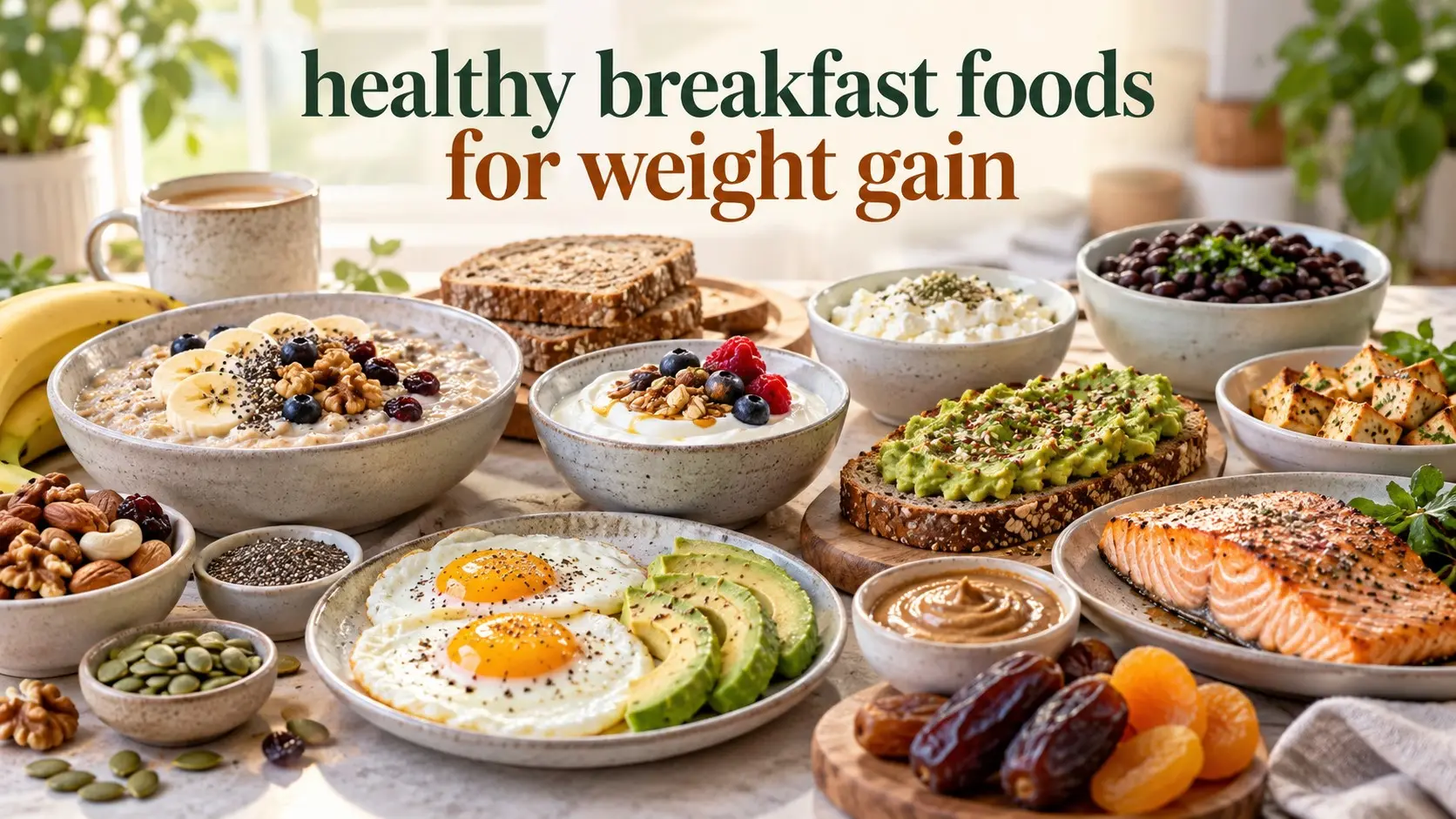
Quick answer: Useful healthy breakfast foods for weight gain include eggs, Greek yogurt, oats, milk, nut butter, nuts, seeds, avocado, whole grain bread, cottage cheese, bananas, dried fruit, tofu, beans, and salmon. Combine several foods to create a higher-calorie breakfast with protein and useful nutrients.
For the bigger nutrition picture, visit the NextFitLife Foods and Nutrition Hub.
You can also explore the Nutrition and Vitamins Guide.
What does healthy weight gain actually mean?
Your body weight rises when you take in more energy than you use over time.
But the type of food still matters.
The NHS advises adults who are trying to gain weight to do it gradually.
It suggests that some adults may try adding around 300 to 500 extra calories a day.
That is general guidance.
It is not a personal calorie prescription.
Your needs depend on your body, activity, health, appetite, age, and goals.
The NHS also recommends:
- Eating smaller meals more often
- Adding snacks between meals
- Using foods such as nuts, seeds, and cheese to add energy
- Including protein foods such as eggs, beans, fish, and lean meat
- Using strength activity to help build muscle
That is a much better plan than gaining weight mainly from cakes, sweets, and sugary drinks.
The goal is healthy weight gain.
When should you speak with a healthcare professional first?
This section matters.
Trying to gain weight is not always just a food problem.
Talk with a qualified healthcare professional if:
- You lost weight without trying
- Your weight dropped quickly
- You have very little appetite
- You have trouble swallowing
- You have ongoing vomiting or diarrhea
- You have severe stomach pain
- You feel weak or faint
- You have diabetes or another medical condition that affects food choices
- You are pregnant
- You have kidney, liver, heart, or digestive disease
- You have an eating disorder or a history of one
Mayo Clinic also recommends seeing a healthcare professional when low weight or weight loss may have an underlying cause.
A registered dietitian can help build a plan around your actual needs.
15 healthy breakfast foods for weight gain at a glance
| Food | Why it can help | Easy way to use it |
|---|---|---|
| 1. Eggs | Protein plus useful energy | Eggs with toast and avocado |
| 2. Greek yogurt | Protein and calories in a small volume | Add oats, fruit, nuts, and seeds |
| 3. Oats | Easy carbohydrate base | Cook with milk and add nut butter |
| 4. Milk | Adds energy and protein when suitable | Use in oats, cereal, or smoothies |
| 5. Nut butter | Compact source of calories and fat | Add to toast, oats, or banana |
| 6. Nuts | Energy-dense and easy to add | Mix into yogurt or oats |
| 7. Seeds | Add fat, protein, and texture | Use chia, pumpkin, sunflower, or sesame seeds |
| 8. Avocado | Useful source of unsaturated fat | Add to toast or eggs |
| 9. Whole grain bread | Easy carbohydrate source | Add eggs, cheese, avocado, or nut butter |
| 10. Cottage cheese | Protein-rich breakfast option | Pair with fruit, toast, nuts, or seeds |
| 11. Bananas | Easy carbohydrate and convenient food | Add to oats, yogurt, or nut butter toast |
| 12. Dried fruit | More compact than fresh fruit | Add a small serving to oats or yogurt |
| 13. Tofu | Plant protein | Make a tofu breakfast scramble |
| 14. Beans | Protein, carbohydrate, and fiber | Serve with eggs or toast |
| 15. Salmon | Protein and unsaturated fat | Serve with eggs, potatoes, or toast |
1. Eggs make breakfast easy to build
Eggs are one of the simplest protein rich foods to use in the morning.
They work with many other foods.
Try eggs with:
- Whole grain toast
- Avocado
- Cheese
- Potatoes
- Beans
- Vegetables
The trick is not the egg alone.
It is what you put around it.
Two eggs with plain coffee is a very different breakfast from eggs with toast, avocado, yogurt, and fruit.
If your goal is weight gain, build the meal.
2. Greek yogurt gives you a high-protein base
Plain Greek yogurt is easy to turn into a high-protein breakfast.
Start with yogurt.
Then add:
- Oats
- Banana
- Berries
- Nuts
- Seeds
- Nut butter
- Dried fruit
This lets you raise the energy of the meal without making the plate huge.
If dairy does not suit you, use an appropriate alternative with enough protein and nutrients for your needs.
3. Oats are one of the easiest breakfast bases
Oats are cheap in many places.
They are easy to prepare.
And they work with sweet or savoury foods.
For a more filling, high-calorie breakfast, cook oats with milk instead of water when suitable.
Then add nut butter.
Add banana.
Add nuts or seeds.
You have now turned plain oats into a much more substantial meal.
For more breakfast ideas, visit the Meal Prep and Recipes Hub.
4. Milk can make meals easier to increase
Milk can add both protein and energy.
Use it in:
- Oatmeal
- Cereal
- Smoothies
- Yogurt bowls
- Hot drinks
If you have lactose intolerance, lactose-free milk may work better.
Plant drinks vary a lot.
Some have much less protein than dairy milk.
Check the label if protein matters to your plan.
5. Nut butter gives you more energy without a huge portion
This is one of the easiest foods to use when appetite is small.
Peanut butter and other nut butters are calorie-dense foods.
A small amount adds more energy than the same-size portion of many fruits or vegetables.
Try nut butter with:
- Banana
- Toast
- Oatmeal
- Yogurt
- Smoothies
Choose a product that fits your allergies and preferences.
People with a nut allergy should avoid nut products and follow medical advice.
6. Nuts are easy to add without changing the whole meal
Almonds.
Walnuts.
Cashews.
Pistachios.
Peanuts.
Use the ones you enjoy.
Nuts provide energy in a small serving.
They also provide fat and some protein.
Add them to yogurt.
Add them to oats.
Eat them beside breakfast.
This is a simple way to increase a nutrient dense breakfast.
7. Seeds add useful calories with very little work
Seeds are small.
That makes them easy to add.
Try:
- Chia seeds
- Pumpkin seeds
- Sunflower seeds
- Sesame seeds
- Ground flaxseed
Mix them into oats or yogurt.
Add them to toast.
Use them in a smoothie.
Do not assume more is always better.
A normal serving is enough.
8. Avocado adds useful fat to breakfast
Avocado is easy to combine with eggs and bread.
It is a useful source of healthy fats.
Try:
Whole grain toast.
Avocado.
Eggs.
Add yogurt or fruit if you want a larger meal.
Simple.
9. Whole grain bread makes breakfast easier to expand
Bread is useful because you can put other foods on it.
That matters when you are trying to add energy.
Use toast with:
- Eggs
- Avocado
- Nut butter
- Cheese
- Beans
- Salmon
The Dietary Guidelines for Americans include whole grains as part of a nutrient rich eating pattern.
You do not need to fear carbohydrates when your goal is healthy weight gain.
10. Cottage cheese adds protein without much preparation
Cottage cheese is useful when you do not want to cook.
Pair it with:
- Fruit
- Toast
- Nuts
- Seeds
- Oats
You can make it sweet.
You can make it savory.
This is another easy option for breakfast for muscle gain when paired with enough total food and suitable strength training.
11. Bananas are easy to eat and easy to combine
Bananas work because they do not need preparation.
Use one with:
- Peanut butter
- Oatmeal
- Greek yogurt
- Toast
- A smoothie
A banana alone is not a complete weight gain breakfast.
A banana with oats, yogurt, and nut butter is a fresh meal.
Think in combinations.
12. Dried fruit gives you fruit in a smaller volume
Raisins, dates, apricots, and other dried fruit can add energy without taking up much space.
This can help when appetite is small.
Add some to oats.
Add some to yogurt.
Pair it with nuts.
Dried fruit is more concentrated than fresh fruit.
Use a sensible portion rather than eating straight from a large bag without noticing the amount.
13. Tofu gives you a plant-based protein breakfast
You do not need eggs or meat for every weight gain breakfast.
Tofu works well in a scramble.
Cook it with:
- Potatoes
- Vegetables
- Avocado
- Whole grain toast
- Beans
Add olive oil in cooking if it fits your eating pattern and you need more energy.
This can make a useful plant based meal.
14. Beans are underrated at breakfast
Breakfast does not have to be sweet.
Beans provide carbohydrate, protein, and fiber.
They work with:
- Eggs
- Toast
- Potatoes
- Avocado
- Tomatoes
Beans are normal breakfast foods in many cultures.
Your breakfast does not have to look like a cereal advertisement.
15. Salmon makes a strong savory breakfast
Salmon provides protein and fat.
It works well with:
- Eggs
- Toast
- Potatoes
- Avocado
- Vegetables
It can be a useful option when you prefer savory food in the morning.
You do not need salmon every day.
Variety is better.
How do you turn these foods into a weight gain breakfast?
Use a simple formula.
Protein plus carbohydrate plus fat plus fruit or vegetables.
For example:
Breakfast 1
Eggs plus avocado toast plus yogurt plus fruit.
Breakfast 2
Oatmeal made with milk plus banana plus nut butter plus seeds.
Breakfast 3
Greek yogurt plus oats plus nuts plus dried fruit plus berries.
Breakfast 4
Tofu scramble plus potatoes plus avocado plus toast.
Breakfast 5
Beans plus eggs plus cheese plus whole grain toast.
These are examples.
They are not personal meal prescriptions.
What if you get full very quickly?
Do not force a huge plate.
The NHS recommends smaller meals more often for people trying to gain weight.
That approach can work better when appetite is limited.
Try:
A smaller breakfast.
Then a snack 2 or 3 hours later.
For example:
- Yogurt with nuts
- Toast with nut butter
- Milk with a banana
- Cheese with bread
- Dried fruit with nuts
This can be easier than trying to eat one enormous meal.
Should you drink your calories?
Sometimes.
Liquid calories can help when appetite is poor.
The NHS suggests higher calorie drinks between meals for some people trying to gain weight.
A smoothie could include:
- Milk or another suitable drink
- Greek yogurt
- Banana
- Oats
- Nut butter
Do not fill up on large drinks right before a meal if that makes you eat less.
The NHS specifically warns against filling up on drinks before eating.
Do you need protein powder?
No.
You can gain weight without protein powder.
Food can supply protein.
Protein powder can be convenient for some people.
It is not required.
If you have kidney disease, liver disease, allergies, pregnancy, or take medicines, ask a qualified professional before making large supplement changes.
How much protein do you need?
There is no one high protein number that fits every reader.
Your needs change with body size, age, training, health, and goals.
If your goal is building muscle, spread protein-rich foods through the day.
Use foods such as:
- Eggs
- Fish
- Chicken
- Dairy
- Tofu
- Beans
- Lentils
A registered dietitian can calculate a personal target when you need one.
Should you strength train while gaining weight?
Strength work can help direct your plan toward gaining muscle rather than simply chasing body weight.
The NHS includes strength training or yoga among options for people trying to build muscle.
CDC guidance recommends muscle strengthening activity on at least 2 days each week for adults.
Use training that fits your ability.
Learn form before increasing resistance.
Visit the NextFitLife Strength Training Guide for beginner-friendly training information.
What foods should you avoid relying on?
You can enjoy treats.
You do not need a perfect diet.
But do not build your calorie surplus mainly from:
- Sugary drinks
- Candy
- Cakes
- Fried snack foods
- Highly processed food at every meal
The NHS specifically advises against relying on chocolate, cakes, and sugary drinks to gain weight.
The current Dietary Guidelines also place the focus on whole, nutrient-dense foods.
That gives you a better base.
Can you gain weight on a vegetarian or vegan diet?
Yes.
Useful plant foods include:
- Tofu
- Tempeh
- Soybeans
- Beans
- Lentils
- Nut butter
- Nuts
- Seeds
- Avocado
- Oats
- Whole grains
Plant-based diets need planning.
Vitamin B12 deserves special attention in vegan diets.
Iron, calcium, iodine, vitamin D, omega fats, and protein can also need attention depending on the eating pattern.
Use the Nutrition and Vitamins Guide for more nutrient information.
How fast should you try to gain weight?
Slow and steady is a better goal than forcing rapid gain.
The NHS describes healthy weight gain as gradual.
It suggests that some adults could try around 300 to 500 extra calories per day.
Again, that is public guidance.
Your personal target can be different.
If you are training for sport, recovering from illness, pregnant, or managing a health problem, individual advice makes more sense.
What if the scale does not move?
First, give the plan time.
Then look at what you actually eat.
You may be eating healthy food but not enough of it.
Try minor changes.
- Add nut butter to breakfast.
- Use milk in oats.
- Add nuts to yogurt.
- Add avocado to toast.
- Add a snack between breakfast and lunch.
Do not change five things at once.
Add one.
See what happens.
What if gaining weight feels emotionally hard?
This deserves care.
Food and body weight can become stressful.
If eating causes fear, guilt, loss of control, or strong body distress, talk with a qualified healthcare professional.
An eating disorder can affect people at anybody size.
Do not force a weight gain plan if food has become a source of serious emotional distress.
Conclusion
The best healthy breakfast foods for weight gain are foods you can eat often and combine well.
Start with protein.
Add oats, bread, potatoes, fruit, or another useful carbohydrate.
Add nuts, seeds, avocado, nut butter, or another suitable fat.
Then increase the meal slowly if your body needs more energy.
Your next step: Pick 3 foods from this list tomorrow morning. Build one simple breakfast around them. If that meal feels comfortable, repeat it and adjust the portion over time.
References and Sources
These sources are open to the public.
- National Health ServicePage: Healthy Ways to Gain Weight
Use: Gradual weight gain, additional calories, frequent meals, snacks, protein foods, calorie-dense additions, and warning signs.
Website: NHS.uk
URL: https://www.nhs.uk/live-well/healthy-weight/managing-your-weight/healthy-ways-to-gain-weight/
- Mayo ClinicPage: Underweight? See How to Add Pounds Healthfully
Use: Healthy weight gain, frequent eating, nutrient-rich calorie sources, drinks, strength activity, and medical assessment for low weight.
Website: MayoClinic.org
- United States Department of Health and Human Services and United States Department of AgriculturePage: Dietary Guidelines for Americans 2025 to 2030
Use: Current guidance on nutrient-dense protein foods, dairy, vegetables, fruits, healthy fats, and whole grains.
Website: Health.gov
- Centers for Disease Control and PreventionPage: Adult Activity An Overview
Use: Current adult physical activity and muscle strengthening guidance.
Website: CDC.gov
URL: https://www.cdc.gov/physical-activity-basics/guidelines/adults.html
- United States Department of AgriculturePage: FoodData Central
Use: Public nutrient data for foods and serving sizes.
Website: FDC.NAL.USDA.gov
Related NextFitLife Guides and Hubs
- NextFitLife Foods and Nutrition Hub
- Weight and Metabolism Food Guide
- Healthy Eating and Lifestyle Hub
- Meal Prep and Recipes Hub
- Nutrition and Vitamins Guide
- NextFitLife Fitness Hub
- Strength Training and Muscle Building Guide
Author Bio
Adel Galal is the founder and lead writer of NextFitLife.
He writes educational guides about health, fitness, foods, nutrition, beauty, and daily wellness.
His approach starts with factual questions readers ask.
He checks trusted nutrition guidance, public health sources, medical information, and current research.
He then turns that information into practical steps that are easier to understand.
NextFitLife focuses on food-first guidance, realistic habits, clear limits, and avoiding miracle claims.
I am not a dermatologist or A doctor, and this content does not replace professional medical advice. What I share comes from real-life experience, extensive research, and consultation with healthcare providers. Always consult qualified medical professionals for diagnosis and treatment of any health condition.
For this topic, Adel Galal is also not a registered dietitian, nutritionist, endocrinologist, gastroenterologist, eating disorder specialist, or licensed healthcare professional.
Weight gain needs can change with age, pregnancy, medical conditions, medicines, activity, appetite, digestive health, and eating disorder history.
Learn more about NextFitLife, Adel Galal, the editorial process, and source standards on the About Us page.
Frequently Asked Questions
What are the best healthy breakfast foods for weight gain?
Useful choices include eggs, Greek yogurt, oats, milk, nut butter, nuts, seeds, avocado, whole grain bread, cottage cheese, bananas, dried fruit, tofu, beans, and salmon.
What should I eat for breakfast if I want to gain weight?
Build breakfast from a protein food, a carbohydrate source, and a suitable fat. For example, eggs with avocado toast and yogurt or oatmeal with milk, banana, and nut butter.
How can I add calories to breakfast without eating a huge meal?
Add compact foods such as nut butter, nuts, seeds, avocado, milk, cheese, or dried fruit to foods you already eat.
Is peanut butter good for healthy weight gain?
Peanut butter can help add energy, fat, and some protein in a small amount. It works well with toast, oats, bananas, and smoothies if you do not have a peanut allergy.
Are eggs good for weight gain?
Eggs provide protein and fit easily into a higher energy breakfast when combined with foods such as toast, avocado, potatoes, beans, cheese, or yogurt.
What if I cannot eat a large breakfast?
Try a smaller breakfast and add a snack later. NHS guidance suggests smaller meals more often and snacks between meals for some adults trying to gain weight.
Do I need protein powder to gain weight?
No. Protein powder is not required. Eggs, dairy, fish, meat, tofu, beans, lentils, nuts, and other foods can provide protein.
Can I gain weight on a vegan diet?
Yes. Useful foods include tofu, soybeans, beans, lentils, nuts, seeds, nut butter, avocado, oats, and whole grains. A well planned vegan diet also needs a reliable vitamin B12 source.
How many extra calories should I eat to gain weight?
The NHS says some adults could try adding around 300 to 500 extra calories a day for gradual gain. This is general guidance and not a personal target for everyone.
When should I see a doctor about low weight?
Seek professional advice if you lose weight without trying, lose weight quickly, have severe appetite loss, digestive symptoms, weakness, swallowing problems, or another health concern.

Health & wellness writer with 30+ years of experience in nutrition, fitness, and healthy aging. Founder of NextFitLife.com — evidence-based health guidance.