Published: Jun 25, 2022
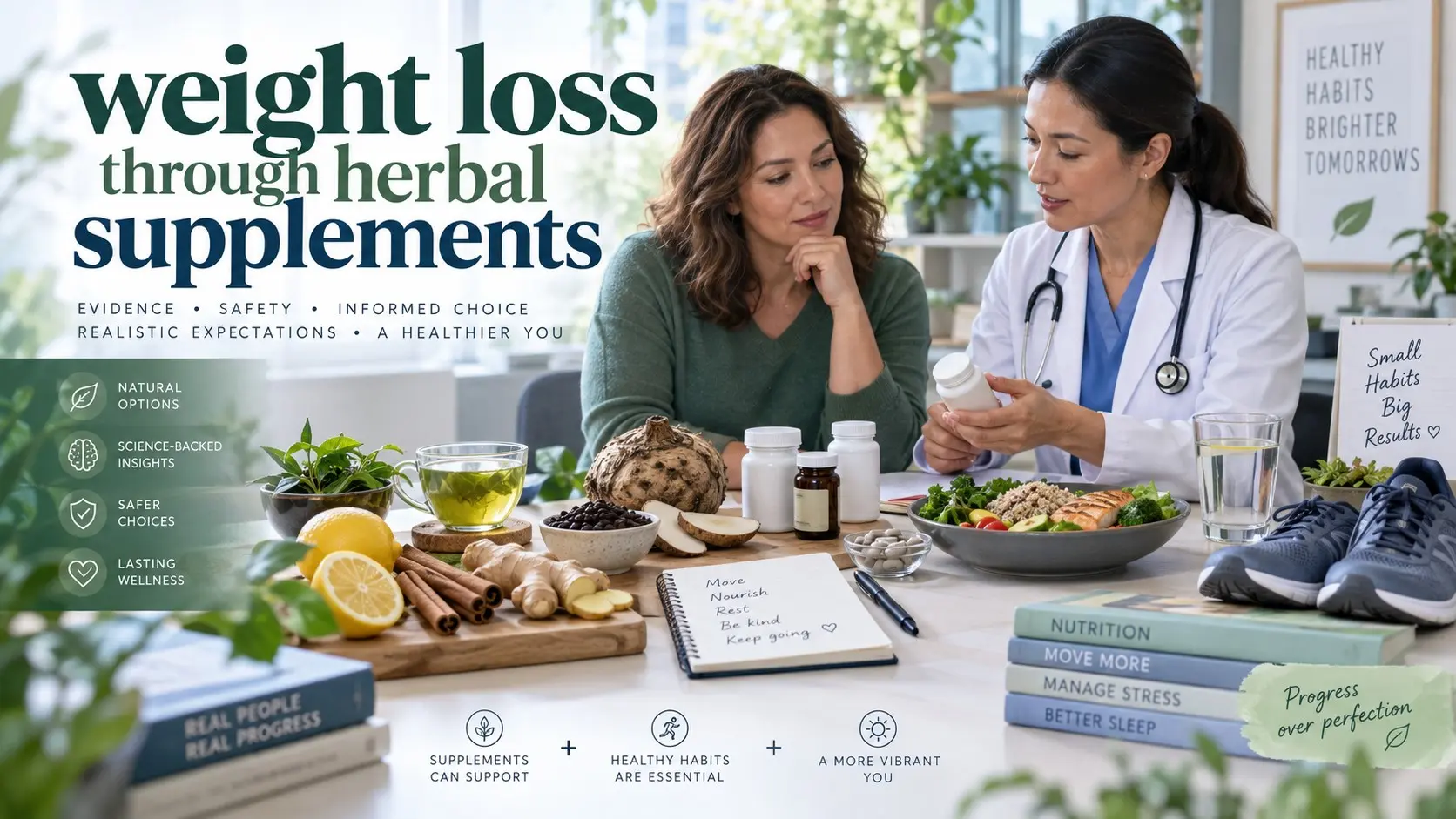
Topic: Weight Loss Through Herbal Supplements
Written and Source Checked by: Adel Galal, Founder and Lead Writer at NextFitLife
Medical Review Status: This article has been researched and source checked. It has not been independently reviewed by a licensed healthcare professional.
Reading Time: About 17 minutes
Weight loss through herbal supplements sounds simple.
Take a plant extract.
Burn more fat.
Feel less hungry.
Lose weight.
That is how many products are sold.
The science is much less simple.
Some herbs have been studied.
Some show small effects in some studies.
Many show little or no useful weight loss.
Some can cause side effects.
Some can interact with medicine.
Some weight loss products sold as natural supplements have even contained hidden drug ingredients.
I have maintained a personal interest in health, nutrition, fitness, supplements, sleep, and healthy aging for more than 30 years. I have also written and researched health and wellness topics for more than 15 years.
One rule is very important when I research supplements.
Natural does not mean proven.
Natural does not mean safe.
This guide explains what current evidence says about popular herbal weight loss supplements, where claims become exaggerated, and how to make safer choices.
If your main goal is safe fat loss, start with the NextFitLife Weight Loss and Metabolism Hub.
Quick Answer: Do Herbal Supplements Help With Weight Loss?
Most herbal and dietary supplements sold for weight loss have not been shown to produce large or reliable weight loss.
Some ingredients may produce a slight effect.
Others show little or no effect.
Many products contain several ingredients at once.
This makes it hard to know which ingredient caused a benefit or a side effect.
The NIH Office of Dietary Supplements states that evidence for weight loss supplements is inconclusive or unconvincing.
NCCIH also warns that many products promoted for fast weight loss have not been proven safe or effective.
The best proven foundation for healthy weight loss remains a safe eating pattern, appropriate energy intake, physical activity, sleep, behaviour support, and professional treatment when needed.
7 Critical Truths About Weight Loss Through Herbal Supplements
1. Natural Does Not Mean Safe
This is the most important rule.
A plant can contain strong chemicals.
A concentrated extract can act very differently from a normal food or cup of tea.
Some herbs affect heart rate.
Some affect blood pressure.
Some affect the liver.
Some affect blood sugar.
Some change how medicines work.
This is why supplement safety matters as much as possible benefit.
The NIH Office of Dietary Supplements explains that the safety of a botanical depends on the plant, the preparation, the concentration, the dose, and how it acts in the body.
A tea and a concentrated extract are not always equivalent.
2. Most herbal products do not cause large weight loss
Advertising often uses words such as:
- Fat burner
- Metabolism booster
- Appetite blocker
- Detox
- Thermogenic
- Natural slimming
- Rapid weight loss
These words sound impressive.
They do not prove a product works.
NIH reviews show that many popular weight loss supplements have little, no, or uncertain effects on body weight.
Some ingredients may lead to a small change.
A slight change is not the same as meaningful or lasting weight loss.
For a clearer look at what actually drives fat loss, read How Weight Loss Works.
3. Food and Herbal Extracts Are Not the Same Thing
Green tea is a good example.
Drinking green tea differs from taking a highly concentrated green tea extract.
NIH guidance says green tea as a beverage is safe for most adults.
Green tea extract can cause:
- Nausea
- Constipation
- Abdominal discomfort
- Higher blood pressure
- Liver injury in some people
This does not mean green tea itself is dangerous.
It means form and concentration matter.
The same rule can apply to many botanical supplements.
4. Multi Ingredient Products Are Harder to Judge
Many fat burner supplements contain several ingredients.
Some contain dozens.
One product may contain caffeine, green tea extract, bitter orange, guarana, herbs, vitamins, minerals, and other compounds.
This creates several problems.
You may not know which ingredient caused an effect.
You may not know which ingredient caused a side effect.
Two stimulants may affect the body more strongly when used together.
The finished product may also be very different from the product used in a research study.
A study on one plant does not prove that a blend containing that plant works.
5. Some Weight Loss Supplements Contain Hidden Ingredients
This is not a theoretical problem.
The FDA continues to find products promoted for weight loss that contain ingredients not listed on the label.
Some have contained prescription drug ingredients.
Others have contained banned or potentially dangerous chemicals.
FDA warnings continued during 2026.
A product can say “natural” on the package and still contain an undeclared drug.
The FDA also warns that its public notification list represents only a fraction of contaminated products on the market.
A product missing from the FDA warning database is not automatically safe.
6. Herbal Supplements Can Interact With Medicine
This risk is often ignored online.
Some herbal weight loss supplements can change the effect of prescription or over-the-counter medicines.
NIH lists examples involving:
Glucomannan, which can change the absorption of some oral medicines.
Green tea, which can interact with some medicines.
Bitter orange and caffeine, which may add to the effects of other stimulants.
Garcinia cambogia, which has been linked to a report of serotonin toxicity when combined with certain antidepressant medicines.
These are examples.
They are not a complete list.
Tell your doctor and pharmacist about supplements you use.
Do not assume a herb is irrelevant because it can be bought without a prescription.
7. Supplements Should Never Replace Proven Weight Management Care
Sustainable weight loss is not built around one capsule.
It usually depends on several parts working together.
These can include:
Food quality.
Portion awareness.
Regular movement.
Strength activity when appropriate.
Sleep.
Stress care.
Behavior support.
Medical care when needed.
Prescription treatment may also be appropriate for some people.
Metabolic surgery may be appropriate for some people with obesity.
These are medical decisions.
They should not be replaced by unproven supplements.
For a wider comparison, read Weight Loss Options.
What Does the Evidence Say About Popular Herbal Weight Loss Ingredients?
| Ingredient | What It Is Marketed For | What Current Evidence Suggests | Main Safety Concern |
|---|---|---|---|
| Green Tea Extract | Fat burning and metabolism | May produce a small effect on body weight, but results are limited | Concentrated extracts can cause stomach symptoms, higher blood pressure, and liver injury in some people |
| Garcinia Cambogia | Appetite control and fat blocking | NIH consumer guidance says it has little to no effect on weight loss | Can cause headache, nausea, and digestive symptoms and has important interaction concerns |
| Glucomannan | Fullness and appetite control | Has little to no effect on weight loss in NIH guidance | Can cause digestive symptoms and may affect absorption of oral medicines |
| Bitter Orange | Metabolism and appetite control | Evidence for meaningful weight loss is weak and contradictory | May affect heart rate or blood pressure and can be risky with other stimulants |
| Green Coffee Bean Extract | Fat metabolism | Some studies suggest a small effect, but research quality is poor | Contains caffeine and has not been studied well enough for strong conclusions |
| Hoodia | Appetite suppression | Research is limited and NIH guidance says it probably does not help people eat less or lose weight | Safety information is limited |
| Caffeine and Caffeine Herbs | Energy and metabolism | May temporarily increase energy use, but tolerance develops and weight effects are small | Can cause sleep problems, anxiety, rapid heartbeat, and other stimulant effects |
This table does not mean these products are recommended.
It summarizes what current public health sources say.
Green Tea for Weight Loss
Green tea is one of the most studied ingredients in this area.
It contains compounds called catechins.
It also contains caffeine.
Some research suggests green tea may lead to a small reduction in weight.
The effect is not large.
This is important because marketing often makes the effect sound much stronger.
Green Tea Drink Versus Green Tea Extract
This difference matters.
Normal green tea is not the same as a concentrated supplement.
Green tea extract has been linked with liver injury in some people.
That is one reason a concentrated extract should not be treated like an ordinary cup of tea.
Does Garcinia Cambogia Work?
Garcinia cambogia became popular because it contains hydroxycitric acid.
Products often claim this compound blocks fat production or reduces appetite.
The marketing is stronger than the evidence.
NIH consumer guidance says Garcinia cambogia has little to no effect on weight loss.
It can also cause:
Headache.
Nausea.
Digestive symptoms.
There are also medication interaction concerns.
Do not assume it is safe simply because it comes from fruit.
Does Glucomannan Help With Weight Loss?
Glucomannan is a soluble fiber made from konjac root.
It absorbs water.
This is why products claim it helps people feel full.
But feeling full does not automatically mean meaningful weight loss.
NIH guidance says glucomannan has little to no effect on weight loss.
It may also cause:
Gas.
Loose stools.
Diarrhea.
Constipation.
Abdominal discomfort.
It may also affect how some oral medicines are absorbed.
Does Bitter Orange Burn Fat?
Bitter orange contains synephrine.
It became popular after ephedra was removed from weight loss supplements in the United States.
Products often market bitter orange as a natural metabolism booster.
But NIH reviews describe the weight loss evidence as weak and contradictory.
Safety is also a concern.
Some studies and case reports have raised concerns about:
Higher heart rate.
Higher blood pressure.
Chest symptoms.
Serious cardiovascular events.
It can be especially concerning when combined with caffeine or other stimulants.
What About Green Coffee Bean Extract?
Green coffee bean extract comes from coffee beans that have not been roasted.
Some research suggests a small effect on weight.
But NIH notes that the available trials have major quality problems.
Green coffee also contains caffeine.
This matters if you already drink coffee, tea, energy drinks, or use another stimulant supplement.
What About Hoodia?
Hoodia has been sold as a natural appetite suppressant.
The idea became popular long before strong human evidence existed.
NIH says research is limited and Hoodia probably does not help people eat less or lose weight.
This is a good example of why popularity is not proof.
What About Raspberry Ketones?
Raspberry ketones became popular through advertising and media coverage.
Claims about fat burning were largely based on laboratory and animal research.
That is not the same as evidence of useful weight loss in people.
A product should not be called effective simply because it changes fat cells in a laboratory.
Human outcomes matter.
What About Berberine?
Berberine comes from several plants.
It has become very popular online.
Some people even call it a natural version of prescription weight loss medicine.
That comparison is misleading.
Berberine has biological effects.
It has been studied for blood sugar and metabolic outcomes.
But this does not make it a substitute for prescription obesity treatment.
It can also interact with medicines.
People with diabetes, liver problems, pregnancy, breastfeeding, or regular medicine use should not treat berberine like an ordinary food ingredient.
What About Ginger, Cinnamon, Cayenne, and Cumin?
These can be normal parts of food.
That is different from taking concentrated extracts for weight loss.
Adding cinnamon to oatmeal does not equal taking a concentrated cinnamon supplement.
Eating ginger in food does not equal using a high concentration extract.
Spices may help food taste good.
They can support an enjoyable healthy eating pattern.
But no common spice melts body fat.
Herbs That Reduce Water Are Not Burning Fat
This is another important point.
Some herbs are promoted as natural diuretics.
A diuretic can increase water loss.
Water loss can make the scale move down.
That is not the same as losing body fat.
When normal fluid balance returns, the scale can rise again.
Using diuretics for cosmetic weight loss can also be risky.
What Happened to Ephedra?
Ephedra is an important warning from supplement history.
It was once widely sold for weight loss.
It had stimulant effects.
It was linked to serious health risks.
The FDA banned dietary supplements containing ephedrine alkaloids in the United States because they presented an unreasonable risk of illness or injury.
This history matters.
A product being natural does not guarantee that it is harmless.
Can Herbal Weight Loss Supplements Damage the Liver?
Some can.
This risk depends on the ingredient, product, amount, and person.
Green tea extract is one example that has been linked to liver injury.
Other herbal and multi-ingredient supplements have also been linked with liver problems.
Get medical help if you develop symptoms such as:
- Yellow skin or eyes
- Dark urine
- Severe or lasting nausea
- Unusual tiredness
- Persistent abdominal pain
- Unexplained itching
These symptoms can have many causes.
They need medical assessment.
Who Should Be Especially Careful With Herbal Weight Loss Supplements?
Professional advice is especially important if you:
- Are pregnant
- Are breastfeeding
- Are under 18
- Have heart disease
- Have high blood pressure
- Have diabetes
- Have liver disease
- Have kidney disease
- Have a seizure disorder
- Have anxiety or heart rhythm problems
- Have an eating disorder or history of one
- Take prescription medicine
- Are preparing for surgery
Many supplements have not been adequately tested in pregnant people, breastfeeding people, or children.
How Are Dietary Supplements Regulated?
Dietary supplements are not regulated in the same way as prescription medicines.
In the United States, the FDA does not preapprove most supplements for safety and effectiveness before they reach the market.
The manufacturer is responsible for the product and its labeling.
The FDA can take action when a product is unsafe, contaminated, misbranded, or sold illegally.
This difference is important.
A bottle being sold in a store does not mean the FDA proved it works.
How Can You Judge a Weight Loss Supplement Claim?
Start with the claim.
Be very cautious if a product says:
- Lose weight without diet or exercise
- Melt fat fast
- Lose belly fat only
- Guaranteed weight loss
- No side effects
- Works for everyone
- Detox your fat
- Reset your metabolism instantly
- Secret ancient fat burner
Testimonials are not clinical evidence.
Before and after photos are not clinical evidence.
A social media influencer is not a safety study.
What Does Independent Supplement Testing Mean?
Some supplement makers use independent laboratories or certification programs.
This can help check whether a product contains what the label says.
It may also check for certain contaminants.
This can improve confidence in product quality.
But there is an important limit.
A quality seal does not prove that the supplement causes weight loss.
Purity and effectiveness are different questions.
Should You Buy Herbal Weight Loss Supplements Online?
Use extra caution.
The FDA has found contaminated weight loss products sold online and in stores.
Risk can be higher when a seller:
Does not give a real business address.
Makes extreme promises.
Sells products through social media messages.
Claims a product is a secret formula.
Does not provide a clear ingredient list.
Uses fake-looking medical endorsements.
Sells a supplement that acts like a prescription medicine.
If a product looks too good to be true, treat that as a warning sign.
Are Herbal Supplements Better Than Prescription Weight Loss Medicine?
No simple comparison can be made.
Prescription medicines go through formal testing and regulatory review for specific uses.
Dietary supplements do not go through the same approval process.
This does not mean prescription medicines are risk free.
They also have side effects and contraindications.
But they are studied and regulated differently.
If lifestyle changes have not been enough, talk with a qualified healthcare professional about evidence-based weight management choices.
See Weight Loss Options for a wider comparison.
What Actually Supports Healthy Weight Loss?
Natural weight loss is less exciting than a miracle pill.
It is also more realistic.
A useful plan may include:
Balanced meals.
Suitable portions.
Enough protein.
Vegetables and fruit.
Whole grains or other suitable high-fibre foods.
Regular walking.
Strength activity when safe.
Enough sleep.
Stress care.
Tracking when useful.
Professional support when needed.
Read Natural Weight Loss: 12 Safe Tips for a simple starting plan.
Supplements Versus Proven Weight Management Habits
| Approach | Evidence | Long Term Value | Main Concern |
|---|---|---|---|
| Balanced eating pattern | Strong foundation for weight management | High when it fits the person's life | Must be nutritionally adequate and realistic |
| Regular physical activity | Strong health evidence and useful for weight management | High when maintained | Must fit health and physical ability |
| Strength activity | Supports muscle and physical function | High when appropriate | Technique and health limitations matter |
| Sleep and behavior care | Important part of a complete plan | High | May require professional help when problems are severe |
| Herbal weight loss supplements | Usually limited, mixed, or weak | Uncertain | Side effects, interactions, contamination, and exaggerated claims |
| Prescription treatment | Evidence based for selected patients | Can be significant with medical follow up | Requires medical assessment and monitoring |
When Should You Stop a Supplement and Get Help?
Stop using a product and seek medical advice if you develop a concerning reaction.
Urgent symptoms can include:
- Chest pain
- Fainting
- Severe shortness of breath
- A very fast or irregular heartbeat
- Severe confusion
- Seizure
- Signs of a serious allergic reaction
- Yellow skin or eyes
- Severe abdominal pain
Seek urgent medical care when symptoms are severe.
What Should You Tell Your Healthcare Professional?
Bring the actual bottle if possible.
Tell them:
The full product name.
The ingredient list.
How often you use it.
When you started it.
Other supplements you use.
Prescription medicines you take.
Any symptoms you noticed.
This helps them check for interactions and possible side effects.
Conclusion: Be Careful With Weight Loss Through Herbal Supplements
Weight loss through herbal supplements is often marketed as easy, natural, and safe.
The evidence does not support that simple message.
Some ingredients may have small effects.
Many have little or uncertain benefit.
Some can cause side effects.
Some can interact with medicine.
Some weight loss products have contained dangerous hidden ingredients.
Do not let the word natural replace evidence.
Do not let a testimonial replace safety data.
And do not let a supplement replace proven health care.
Your next step: if you already use an herbal weight loss supplement, check its full ingredient list and discuss it with a qualified healthcare professional or pharmacist, especially if you take medicine or have a medical condition.
References and Sources
- National Institutes of Health Office of Dietary Supplements, Dietary Supplements for Weight LossThis detailed evidence review explains what is known about common weight loss supplement ingredients, including green tea, Garcinia cambogia, bitter orange, caffeine, glucomannan, green coffee, and other products.NIH Office of Dietary Supplements Weight Loss Fact Sheet
- National Center for Complementary and Integrative Health, Dietary Supplements Marketed for Weight LossNCCIH explains that most weight loss supplements have not been proven safe or effective and highlights concerns about green tea supplements, bitter orange, acai, stimulants, and contaminated products.NCCIH Weight Loss Supplement Guidance
- United States Food and Drug Administration, Weight Loss Product NotificationsThe FDA maintains current warnings about products promoted for weight loss that have been found to contain hidden or dangerous ingredients.FDA Weight Loss Product Notifications
- National Center for Complementary and Integrative Health, Dietary and Herbal SupplementsThis open resource explains supplement regulation, medicine interactions, contamination concerns, and why natural products are not automatically safe.NCCIH Dietary and Herbal Supplements
- Phytotherapy Research, Herbal Medicines for Weight Loss and Lipid Profile ImprovementThis open access 2025 scoping review examined 74 studies involving 5,508 adults and found mixed benefits, variable evidence, and safety concerns that ranged from mild side effects to serious reactions.Open Access Review of Herbal Medicines for Weight Loss
Explore More NextFitLife Weight Management Guides
- Weight Loss and Metabolism Hub
- Natural Weight Loss
- Weight Loss Options
- How Weight Loss Works
- Healthy Rate of Weight Loss
- Weight Loss Tracking
- Nutrition and Vitamins Hub
- NextFitLife Fitness Hub
About the Author
Adel Galal is the founder and lead writer of NextFitLife.com.
Adel has maintained a personal interest in health, fitness, nutrition, sleep, wellness, and healthy aging for more than 30 years.
His health and wellness writing and research communication experience spans more than 15 years.
At NextFitLife, Adel researches topics, compares reputable sources, separates established guidance from uncertain evidence, checks safety claims, and explains complex information in practical language.
Supplement articles receive extra caution because herbs and dietary supplements can involve drug interactions, side effects, contamination, and important medical decisions.
Before focusing on NextFitLife, Adel spent 29 years working as an IT Manager for the Nestlé Egypt Region.
That career developed skills in data analysis, research organization, information management, structured review, and problem solving.
These skills support his publishing work.
They are not medical qualifications.
Adel is not a physician, registered dietitian, pharmacist, dermatologist, or other licensed healthcare professional.
This content is for general educational purposes and does not replace professional medical advice, diagnosis, or treatment. Consult an appropriately qualified healthcare professional for personal medical concerns. This article explains published guidance and does not provide a personal clinical assessment. Always consult qualified medical professionals for diagnosis and treatment of any health condition.
Learn more about Adel Galal, NextFitLife, source checking, medical review standards, corrections, and editorial practices on the About Us page.
Frequently Asked Questions About Weight Loss Through Herbal Supplements
Does weight loss through herbal supplements work?
Most herbal weight loss supplements have not been shown to cause large or reliable weight loss. Some ingredients may have small effects, but many have little, mixed, or uncertain evidence.
What is the best herbal supplement for weight loss?
There is no herbal supplement that major United States health authorities recommend as the best solution for weight loss. Most evidence is limited, and safety varies by ingredient and product.
Is green tea good for weight loss?
Green tea may have a small effect on body weight. Drinking green tea is different from taking concentrated green tea extract. Extracts have been linked to liver injury in some people.
Does Garcinia cambogia help with weight loss?
NIH guidance says Garcinia cambogia has little to no effect on weight loss. It can also cause headache, nausea, digestive symptoms, and possible medicine interactions.
Does glucomannan help you lose weight?
NIH guidance says glucomannan has little to no effect on weight loss. It can cause digestive symptoms and may affect the absorption of some oral medicines.
Is bitter orange safe for weight loss?
Bitter orange has weak and contradictory evidence for weight loss. It can have stimulant effects and may be especially concerning when combined with caffeine or other stimulants.
Are natural fat burners safe?
Not necessarily. Natural does not mean safe. Some products can affect the heart, blood pressure, liver, blood sugar, or medicines. Some weight loss supplements have also contained hidden drug ingredients.
Can herbal weight loss supplements interact with medicine?
Yes. Some herbs and supplement ingredients can change how medicines work or increase side effects. Tell your doctor and pharmacist about every supplement you use.
Are weight loss supplements approved by the FDA?
Dietary supplements are not preapproved by the FDA for safety and effectiveness in the same way as prescription medicines. The FDA can take action against unsafe, contaminated, or illegally marketed products.
Can herbal supplements cause liver damage?
Some can. Green tea extract is one example linked with liver injury in some people. Multi-ingredient products can also make it difficult to identify the cause of a reaction.
Can I use herbal supplements instead of diet and exercise?
No. Supplements should not replace a sustainable eating pattern, physical activity, sleep, behaviour support, or medical care when needed.
What should I do before taking a weight loss supplement?
Review the full ingredient list and discuss the product with a qualified healthcare professional or pharmacist, especially if you take medicine, have a health condition, are pregnant, or are breastfeeding.

Health & wellness writer with 30+ years of experience in nutrition, fitness, and healthy aging. Founder of NextFitLife.com — evidence-based health guidance.