Published:
Jul 4, 2024
Last Updated:
August 19, 2026
Next Review:
August 2027, or sooner if major ear care guidance changes
Written and source checked by:
Adel Galal,
Founder and Lead Writer of NextFitLife
Medical Review Status:
This article has not been formally reviewed by an ear specialist, physician, audiologist, dermatologist, pharmacist, or another licensed healthcare professional.
You touch the opening.
There is a little moisture.
Should you worry?
Not always.
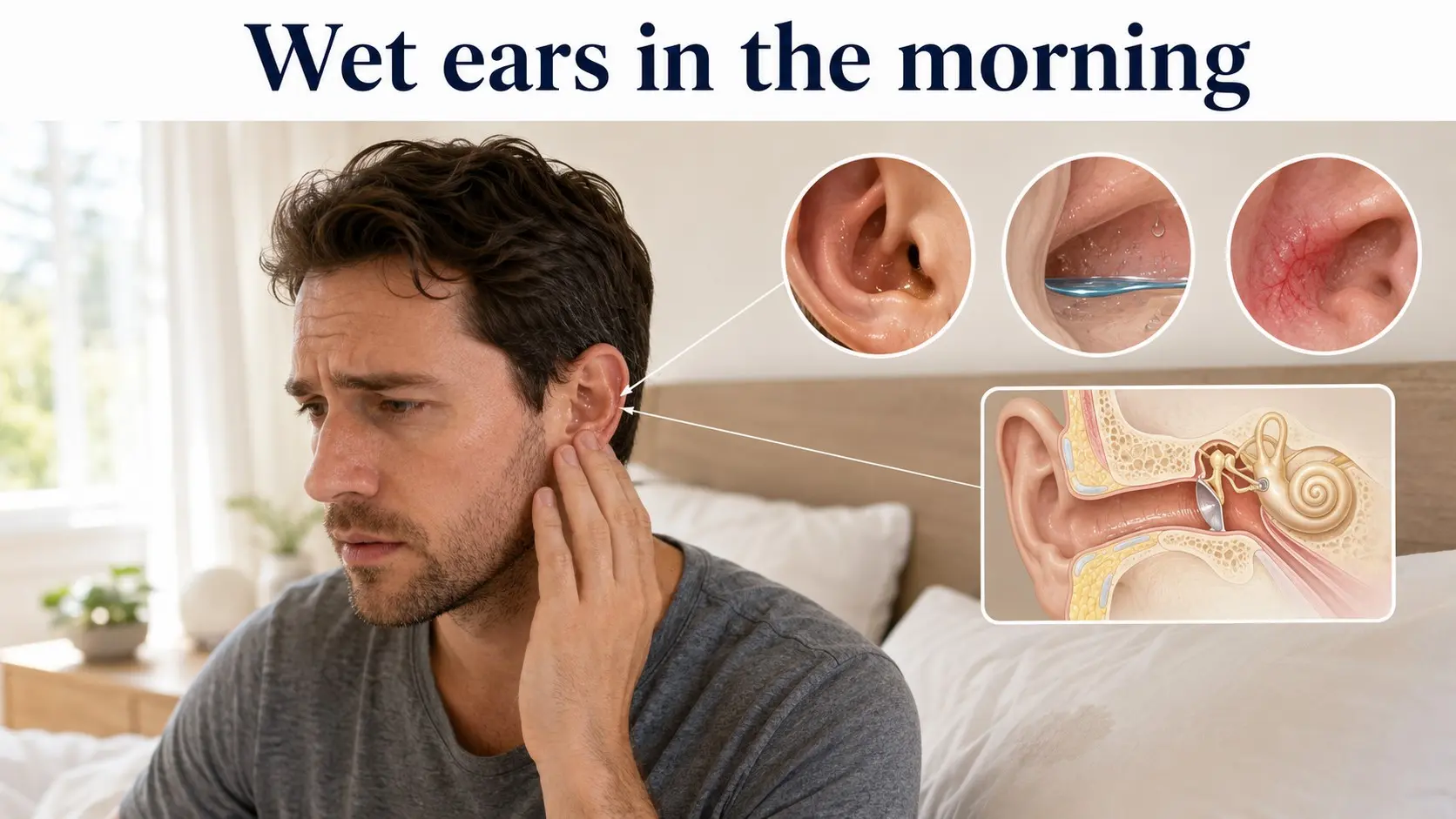
Wet ears in the morning can sometimes be caused by normal moist earwax or water that stayed in the outer ear after bathing or swimming.
But real ear discharge can also come from inflammation, infection, or a damaged eardrum.
The color matters.
The smell matters.
Pain matters.
Your hearing matters.
And whether the problem happens again matters.
This guide explains what morning ear moisture can mean, which signs are usually less concerning, what you should never put inside your ear, and when you should get medical help.
Quick Answer: Why Are My Ears Wet in the Morning?
Wet ears in the morning can have several causes.
Common possibilities include:
- Normal soft or wet earwax
- Water left in the ear after bathing or swimming
- An outer ear canal infection
- Fluid from a middle ear infection that has passed through the eardrum
- Skin inflammation such as eczema in the ear canal
- A less common ear condition that causes ongoing drainage
A small amount of wax without pain or hearing problems may be normal.
Repeated watery, yellow, green, bloody, or bad smelling drainage should be checked.
Seek medical care sooner if the discharge comes with pain, fever, dizziness, hearing loss, or recent ear or head injury.
Medical note:
This content is for general educational purposes and does not replace professional medical advice, diagnosis, or treatment. Consult an appropriately qualified healthcare professional for personal medical concerns. This article explains published guidance and does not provide a personal clinical assessment. Always consult qualified medical professionals for diagnosis and treatment of any health condition.
Wet Ears in the Morning at a Glance
- Earwax can naturally be soft or moist.
- A little water can remain after bathing or swimming.
- Ongoing moisture can irritate the ear canal.
- Swimmer's ear can cause itching, pain, redness, and drainage.
- A middle ear infection can sometimes cause a ruptured eardrum and drainage.
- Blood coming from inside the ear needs medical attention.
- Bad-smelling drainage that keeps returning should be checked.
- New hearing loss with drainage should be assessed.
- Clear watery drainage after a serious head injury needs urgent medical care.
- Do not put cotton swabs or other objects inside the ear canal.
Is Your Ear Really Draining Fluid?
This is the first question to ask.
A wet feeling does not always mean fluid is coming from behind the eardrum.
The moisture may be:
- Soft earwax
- Water
- Moisture on the outer ear
- Actual drainage from the ear canal
Look at what you can see at the outer opening.
Do not put anything inside.
Notice:
- The color
- The amount
- The smell
- Whether it stains your pillow
- Whether there is pain
- Whether your hearing has changed
6 Reasons for Wet Ears in the Morning
1. Normal Moist Earwax
Earwax is normal.
Its medical name is cerumen.
It protects and lubricates the skin inside the ear canal.
Earwax is not always hard or dry.
For some people, it is naturally soft and moist.
The wax may be:
- Yellow
- Golden
- Brown
- Sticky
- Soft
A small amount near the ear opening without pain, bad smell, fever, or hearing changes may simply be normal earwax.
You do not need to clean all wax from your ear.
It has a protective role.
2. Water Trapped in the Outer Ear
Did you shower before bed?
Did you swim in the evening?
A little water may remain in the outer ear canal.
Your ear may then feel wet when you wake.
You can let gravity help.
Tilt the affected ear downward.
Gently pull the outer ear in different directions.
Dry only the outside with a clean towel.
Do not push an object inside.
Water that stays inside the canal for a long time can damage the skin's natural protection and make infection more likely.
3. Swimmer's Ear
Swimmer's ear is an infection of the outer ear canal.
Its medical name is otitis externa.
It can happen when water stays in the ear canal.
The moisture creates an environment where bacteria can grow.
Possible symptoms include:
- Watery ear discharge
- Ear itching
- Redness
- Ear canal swelling
- Pain
- Pain when the outer ear is moved
- Reduced hearing in more severe cases
Do not assume that swimmer's ear only happens to swimmers.
Water from showers can also irritate the canal.
Scratching or using cotton swabs can damage the skin and increase the risk.
4. Middle Ear Infection and a Perforated Eardrum
A middle ear infection can cause fluid or pus to build behind the eardrum.
Pressure can increase.
Sometimes the eardrum develops a small opening.
This is called a perforated eardrum or ruptured eardrum.
Fluid may then drain into the ear canal.
The drainage can be:
- Clear
- Yellow
- White
- Pus like
- Slightly bloody
Some people notice that ear pain suddenly improves when the eardrum ruptures because pressure is released.
That does not mean the problem should be ignored.
You should get medical advice.
5. Eczema or Irritated Ear Canal Skin
The ear canal is lined with skin.
That skin can become inflamed.
Conditions such as eczema or psoriasis can make ear canal problems more likely.
You may notice:
- Itching
- Flaking
- Moisture
- Redness
- Watery drainage
Scratching the canal can make inflammation worse.
It can also let bacteria enter damaged skin.
6. Cholesteatoma
This cause is much less common.
But it is important.
A cholesteatoma is a collection of skin cells that develops inside the ear.
It usually affects one ear.
Possible signs include:
- Persistent watery drainage
- Smelly ear discharge
- Gradual hearing loss
- Ear pain
- Tinnitus
- Dizziness
- Ear infections that keep returning
A bad smelling discharge from one ear that does not clear should be medically assessed.
A cholesteatoma can damage structures inside the ear if it is not treated.
What Does the Color of Ear Drainage Mean?
Color can give a clue.
It cannot give you a diagnosis.
| What You Notice | Possible Explanation |
|---|---|
| Yellow or brown sticky material | May be normal earwax |
| Clear moisture after swimming or showering | May be trapped water |
| Watery drainage with itching or outer ear pain | Outer ear inflammation or swimmer's ear may be possible |
| Yellow, white, or pus like drainage | An infection may be possible |
| Clear or bloody drainage with hearing changes | A perforated eardrum may be possible |
| Persistent bad-smelling drainage from one ear | Needs medical assessment |
| Blood | Injury, infection, eardrum damage, or another cause needs assessment |
Do not diagnose an ear problem from colour alone.
Why Is There Ear Fluid on My Pillow in the Morning?
A visible stain on your pillow is different from simply feeling a little wax at the ear opening.
Fluid may drain more easily while you are lying on one side.
If you repeatedly see:
- Clear fluid
- Yellow fluid
- Pus
- Blood
- Bad smelling drainage
contact a healthcare professional.
Dried or crusted material on a pillow can sometimes be a sign that fluid drained from the ear during sleep.
Can You Have Ear Drainage Without Pain?
Yes.
Not every cause hurts.
Normal earwax may cause no pain.
Water can sit in the canal without pain.
Some chronic ear problems may also drain without severe pain.
This is why lack of pain does not always mean ongoing discharge can be ignored.
Repeated discharge should be assessed even if the ear does not hurt.
Why Does the Fluid From My Ear Smell Bad?
Normal earwax can have a mild natural odour.
A strong or unpleasant smell is different.
Bad-smelling drainage can occur with infection.
Persistent smelly ear discharge from one ear can also occur with cholesteatoma.
Do not try to cover the smell with drops or oils.
Have the ear examined.
What If My Wet Ear Also Itches?
Itching makes an outer ear canal problem more likely.
Possible causes include:
- Otitis externa
- Eczema
- Psoriasis
- Skin irritation
- Moisture trapped in the canal
Do not scratch inside the canal.
The skin there is thin.
Damage makes infection easier.
What If My Wet Ear Also Hurts?
Pain changes the picture.
Possible causes include an outer ear infection, middle ear infection, trauma, or eardrum injury.
Swimmer's ear often becomes more painful when you pull the outer ear or press the small flap in front of the canal.
Get medical advice if you have drainage and significant ear pain.
What If Ear Drainage Comes With Hearing Loss?
Do not ignore it.
Wax can reduce hearing when it blocks the ear.
An outer ear infection can also block the canal.
Middle ear fluid or eardrum damage can affect hearing too.
Persistent or new hearing loss with ear drainage deserves medical assessment.
Sudden unexplained hearing loss needs urgent medical care.
What If There Is Blood in the Ear?
Blood should not be treated as ordinary morning moisture.
It may come from:
- A scratched ear canal
- A foreign object
- An injured eardrum
- An infection
- Pressure injury
- Head trauma
Do not insert anything into the ear to find the source.
Get medical advice.
Learn more in
Ear Bleeding
.
Clear Ear Fluid After a Head Injury Needs Urgent Care
This situation is different from ordinary wet ears in the morning.
If clear watery fluid starts coming from the ear after a significant head injury, get urgent medical help.
Do not plug the ear.
Do not clean deep inside it.
Do not put drops into it.
Clear drainage after serious head trauma can be a sign of a significant injury.
What Can You Safely Do at Home?
Home care is only reasonable when symptoms are mild, and there are no warning signs.
If It Looks Like Normal Wax
Leave it alone unless it is blocking the ear or causing symptoms.
Clean only the visible outer ear.
If It Is Water After a Shower or Swim
Tilt your head so the affected ear faces down.
Gently pull the earlobe in different directions.
Dry the outside with a clean towel.
If Water Still Feels Trapped
A hair dryer may be used on its lowest heat and fan setting.
Hold it several inches away from the ear.
Do not use high heat.
If Drainage Keeps Returning
Stop trying to treat the problem yourself.
Have the ear examined.
The correct treatment depends on where the fluid is coming from.
Should You Put Ear Drops in a Wet Ear?
Not automatically.
The right ear drop depends on the cause.
Avoid self treating with drying drops when you have:
- Ear tubes
- A punctured eardrum
- Known swimmer's ear
- Active ear drainage
Wax drops may also be unsuitable when there is a known hole in the eardrum.
If liquid is actively coming out of your ear and you do not know why, ask a pharmacist or healthcare professional before putting drops inside.
Should You Use Cotton Swabs to Dry the Ear?
No.
Do not push a cotton swab into the ear canal.
It can:
- Push wax deeper
- Scratch the canal
- Increase infection risk
- Damage the eardrum
Clean only the outside of the ear.
What Else Should You Keep Out of Your Ear?
Do not put objects inside your ear canal.
That includes:
- Cotton swabs
- Hair pins
- Keys
- Pens
- Ear cleaning cameras used deep in the canal
- Other tools
You cannot safely see your own eardrum without proper examination.
Should You Use Ear Candles?
No.
Good evidence does not show that ear candles remove wax.
They can injure the ear.
They are not a treatment for ear discharge.
Should You Keep a Draining Ear Dry?
In many ear conditions, keeping water out of the ear is important.
This is especially true when a healthcare professional suspects a perforated eardrum.
Do not swim until you have appropriate advice.
Do not put your head under water.
If you have a known eardrum perforation, follow the ear protection instructions given by your healthcare professional.
Does Sleeping Position Cause Wet Ears?
Sleeping on one side does not normally create an ear infection by itself.
But existing wax, water, or drainage may become easier to notice after several hours lying down.
You may see moisture near the ear opening or on the pillow.
The important question is where the fluid came from.
Can Earbuds Make Your Ears Feel Wet?
Earbuds can reduce airflow around the ear canal.
They can also trap moisture.
Long periods of use may irritate sensitive ear canal skin in some people.
If your ears become wet, itchy, or sore after using earbuds:
- Take a break from them
- Keep the earbuds clean
- Let the outer ear dry
- Do not share earbuds
Ongoing drainage should not simply be blamed on earbuds.
Why Do My Ears Feel Wet After Swimming?
Water can remain inside the outer ear canal.
That can make the ear feel blocked or wet.
Long-lasting moisture can weaken the natural protective skin and wax in the canal.
This can lead to swimmer's ear.
Dry the outer ear carefully after swimming.
What Do Wet Ears in the Morning Mean in Children?
Children can have the same causes as adults.
But middle ear infections are especially common in children.
A child may not be able to explain what hurts.
Look for:
- Ear pulling
- Fever
- Irritability
- Trouble sleeping
- Reduced response to sounds
- Ear pain
- Fluid from the ear
- Pillow staining
A child with ear drainage should be assessed if you are unsure of the cause.
What About Children With Ear Tubes?
Ear tubes create a small pathway through the eardrum.
Drainage can sometimes occur through the tube when there is an ear problem.
Do not use random ear drops.
Follow the child's ear specialist or pediatrician instructions.
People with ear tubes should not use random ear drying drops unless a healthcare professional says they are appropriate.
When Should You See a Doctor for Wet Ears in the Morning?
Contact a healthcare professional if:
- Clear, white, or yellow fluid repeatedly drains from the ear
- The drainage contains blood
- The fluid smells bad
- Drainage lasts more than several days
- You have significant ear pain
- You have fever
- Your hearing has changed
- You feel dizzy
- The ear canal is swollen
- The outer ear is very red
- The problem keeps returning
- The drainage followed an ear injury
A healthcare professional can look inside the ear with an otoscope.
That helps identify whether the fluid is coming from the ear canal or through the eardrum.
When Is Ear Drainage Urgent?
Seek urgent medical care for:
- Clear watery drainage after a serious head injury
- Heavy bleeding from the ear
- Sudden hearing loss
- Severe dizziness
- Severe ear pain
- Facial weakness or drooping
- Severe illness with ear drainage
Do not block drainage from the ear after a significant injury.
How Does a Doctor Find the Cause?
The healthcare professional will usually ask:
- When did the wet feeling start?
- Is it one ear or both?
- What color is the fluid?
- Does it smell?
- Does the ear hurt?
- Have you been swimming?
- Did you recently have a cold?
- Has your hearing changed?
- Was there an injury?
- Have you used cotton swabs?
- Do you have ear tubes?
They can then examine the ear canal and eardrum.
Sometimes drainage may be collected for testing when an infection is difficult to treat.
Common Myths About Wet Ears
Myth: A Wet Ear Always Means Infection
No.
Soft earwax or trapped water can make an ear feel wet.
Myth: All Ear Drainage Is Normal Earwax
No.
Infection and eardrum problems can also cause drainage.
Myth: No Pain Means Nothing Is Wrong
No.
Some ongoing ear problems can cause drainage without severe pain.
Myth: Cotton Swabs Dry the Ear Safely
No.
They can injure the canal and push wax deeper.
Myth: You Should Use Ear Drops Any Time the Ear Feels Wet
No.
Some drops should not be used when the eardrum has a hole or when active drainage is present.
Myth: A Bad Smell Is Just Normal Wax
Not always.
Strong or persistent bad smelling drainage should be medically assessed.
Myth: Ear Candles Can Dry or Clean the Ear
No.
They are not a proven earwax treatment and can cause harm.
What Should You Track Before Your Appointment?
Write down:
- Which ear feels wet
- How often it happens
- The color
- The smell
- Whether it stains your pillow
- Ear pain
- Ear itching
- Hearing changes
- Tinnitus
- Dizziness
- Recent swimming
- Recent cold symptoms
- Recent injury
- Any ear drops you used
A simple record can help show whether the problem is improving or recurring.
How I Approach Research on Wet Ears in the Morning
I have spent more than fifteen years researching and writing about health, infections, fitness, nutrition, sleep, and everyday wellness.
I also bring more than thirty years of personal experience with fitness, nutrition, sleep habits, and general wellness.
A symptom like wet ears in the morning looks simple.
But there is an important first question.
Is it wax?
Is it water?
Or is fluid actually draining from the ear?
Those situations are not the same.
That is why I compare the appearance of the moisture with the other symptoms.
Pain matters.
Odor matters.
Hearing matters.
A recent injury matters.
Before focusing on NextFitLife, I spent twenty nine years in information technology management.
That work trained me to troubleshoot problems by separating similar symptoms into different possible causes.
I use the same structured approach here.
I compare current information from government health agencies, national health systems, medical references, and specialist sources.
I also remove advice that encourages readers to poke tools inside the ear or use random drops without knowing whether the eardrum is intact.
My goal is to explain the common possibilities without making a harmless bit of wax frightening and without making true ear drainage seem harmless.
References and Sources
The medical information in this guide was checked against these five high authority and publicly accessible sources.
- MedlinePlus, U.S. National Library of Medicine.
Ear Discharge. This medical reference explains earwax, clear drainage, pus, blood, outer ear infection, ruptured eardrums, warning signs, diagnosis, and when medical care is needed.
Open MedlinePlus Ear Discharge Guidance
. - Centers for Disease Control and Prevention.
Preventing Swimmer's Ear. This CDC resource explains how water trapped in the outer ear can lead to swimmer's ear, common symptoms, safe drying steps, ear drop precautions, and why objects should not be placed in the ear canal.
Open CDC Swimmer's Ear Guidance
. - NHS.
Earwax Build Up.This source explains normal earwax, blocked ear symptoms, safe wax care, why cotton swabs should not be used, and why wax drops are not appropriate with a perforated eardrum.
Open NHS Earwax Guidance
. - MedlinePlus, U.S. National Library of Medicine.
Ruptured Eardrum. This resource explains how infection, trauma, pressure changes, and objects in the ear can damage the eardrum and cause clear, pus-like, or bloody drainage with hearing changes.
Open MedlinePlus Ruptured Eardrum Guidance
. - NHS.
Cholesteatoma. This source explains persistent watery or smelly ear discharge, gradual hearing loss, pain, tinnitus, dizziness, recurrent infection, and why the condition needs treatment.
Open NHS Cholesteatoma Guidance
.
These organizations do not endorse NextFitLife.
Conclusion
Wet ears in the morning are not always a sign of disease.
Sometimes the moisture is normal earwax.
Sometimes it is water left after bathing or swimming.
But ongoing drainage can also come from an outer ear infection, irritated skin, a middle ear infection, or a damaged eardrum.
Color, smell, pain, hearing changes, and how often the drainage happens can help show when medical care is needed.
Do not put cotton swabs or random drops into a draining ear.
Your next step:
If you notice wet ears in the morning again, check the outer ear and pillow without putting anything inside the canal.
If the fluid keeps returning, smells bad, contains blood, causes pain, or comes with hearing loss, arrange a medical assessment.
Editorial Policies and Trust
About the Author

Frequently Asked Questions About Wet Ears in the Morning
Why are my ears wet in the morning?
Wet ears in the morning can come from soft earwax, water trapped after bathing or swimming, outer ear inflammation, an ear infection, or fluid draining through a damaged eardrum.
Is it normal for earwax to feel wet?
Yes.
Earwax can naturally be soft and moist.
A small amount near the ear opening without pain, bad smell, or hearing loss may be normal.
Why is there clear liquid in my ear when I wake up?
Clear moisture may be trapped water, but true clear ear drainage can have other causes.
Repeated clear drainage should be medically assessed, especially if there is pain, hearing loss, injury, or dizziness.
Why does my ear feel wet but nothing comes out?
Soft wax or small amounts of trapped water can create a wet sensation without visible drainage.
Persistent fullness, itching, pain, or hearing changes should be checked.
Can earwax leak onto my pillow?
Soft wax can move toward the outer ear naturally.
However, repeated wet stains on a pillow may also be drainage and should not automatically be assumed to be wax.
Can water stay in my ear overnight?
Yes.
Water can remain in the outer ear canal after swimming or bathing.
Tilt the ear downward and gently dry the outside.
Do not insert objects into the canal.
Can trapped water cause an ear infection?
Yes.
Water that stays in the outer ear canal can damage its natural protective barrier and create conditions that allow bacteria to grow.
This can cause swimmer's ear.
What are the symptoms of swimmer's ear?
Symptoms can include ear itching, pain, redness, swelling, drainage, and reduced hearing when the canal becomes swollen.
Why is my ear wet and itchy in the morning?
Itching with moisture can occur with swimmer's ear, eczema, psoriasis, or other irritation of the ear canal.
Avoid scratching inside the ear.
Why is my ear wet and painful?
Pain with drainage may occur with an outer ear infection, middle ear infection, trauma, or eardrum problem.
A painful draining ear should be assessed.
Why is yellow fluid coming from my ear?
Yellow material may sometimes be earwax.
Yellow liquid or pus-like drainage can also occur with infection.
Pain, fever, smell, or hearing changes make medical assessment more important.
Why is my ear discharge smelly?
Bad-smelling drainage can occur with infection.
Persistent smelly drainage from one ear can also occur with cholesteatoma and should be medically assessed.
Can an ear infection cause fluid on my pillow?
Yes.
A middle ear infection can sometimes rupture the eardrum and allow fluid to drain into the ear canal and onto bedding.
Can a ruptured eardrum cause a wet ear?
Yes.
A ruptured eardrum can cause clear, yellow, white, pus-like, or slightly bloody drainage.
It may also cause hearing loss or tinnitus.
Should I put ear drops in a wet ear?
Not until you know the cause.
Some drops should not be used when there is a perforated eardrum, ear tubes, swimmer's ear, or active drainage.
Ask a healthcare professional or pharmacist.
Should I use cotton swabs to dry my ear?
No.
Cotton swabs can push wax deeper, injure the ear canal, or damage the eardrum.
Can earbuds make my ears feel wet?
Earbuds can reduce airflow and trap moisture around the ear canal.
Take breaks and keep earbuds clean.
Persistent drainage still needs proper assessment.
Can eczema cause wet ears?
Yes.
Eczema and other skin conditions can inflame the ear canal and cause itching, flaky skin, irritation, and sometimes watery drainage.
What is cholesteatoma?
Cholesteatoma is an uncommon collection of skin cells inside the ear.
It can cause ongoing smelly drainage, gradual hearing loss, ear pain, tinnitus, dizziness, or repeated infections.
Is clear fluid from the ear after a head injury dangerous?
It can be.
Clear watery drainage after a significant head injury requires urgent medical assessment.
Do not block or clean deep inside the ear.
When should I see a doctor about wet ears in the morning?
Seek medical advice if drainage keeps returning, lasts several days, smells bad, contains blood, causes significant pain, or comes with fever, dizziness, swelling, or hearing changes.
When is ear drainage an emergency?
Seek urgent care for clear drainage after a serious head injury, heavy bleeding, sudden hearing loss, severe dizziness, facial weakness, or severe illness with ear drainage.
Medical Disclaimer
NextFitLife provides general educational information.
It does not provide medical advice, diagnosis, treatment, emergency care, or personal medical recommendations.
Always speak with an appropriately qualified healthcare professional about persistent ear drainage, hearing changes, ear pain, blood, fever, dizziness, injury, medicines, or treatment decisions.
Do not delay medical or emergency care because of information you read online.

Health & wellness writer with 30+ years of experience in nutrition, fitness, and healthy aging. Founder of NextFitLife.com — evidence-based health guidance.