Published: October 12, 2025
Last updated: August 8, 2026
Next review: August 2027, or sooner if kidney-stone guidance changes
Written and source checked by: Adel Galal, Founder and Editor of NextFitLife
Editorial expertise: Evidence-informed health, nutrition, fitness, healthy-aging, and patient-education content
Medical review status: This article has not been medically reviewed by a urologist, nephrologist, physician, renal dietitian, pharmacist, or another licensed healthcare professional.
Reading time: About 22 minutes
Quick Answer: What Are Kidney Stones?
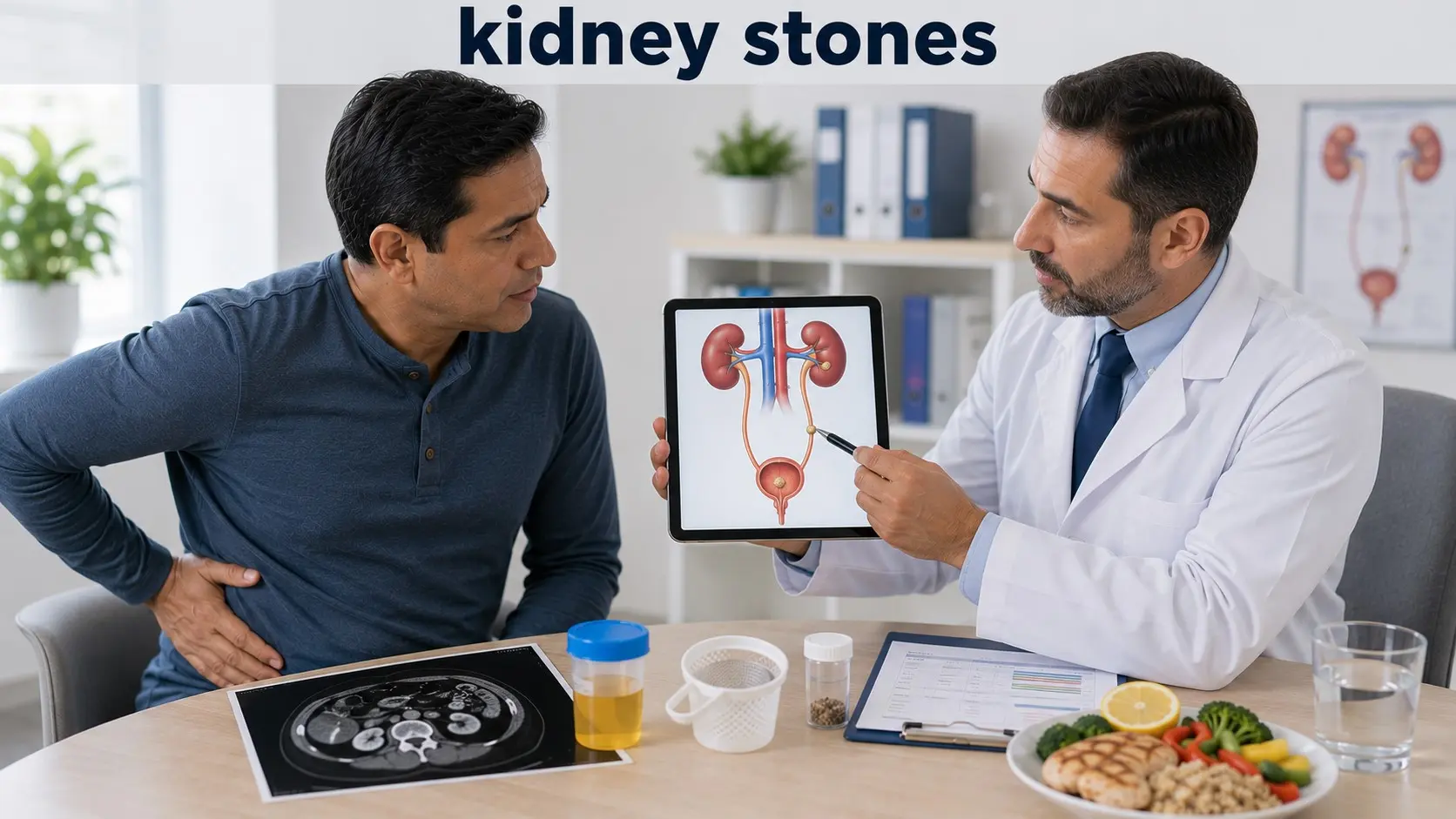
Kidney stones are hard deposits that form when minerals and other substances become concentrated and crystallize in urine. A stone may remain inside a kidney or move into a ureter, the narrow tube that carries urine to the bladder. There is no safe home method that can guarantee a stone will pass quickly.
A moving or obstructing stone can cause severe pain in the side or back that travels toward the lower abdomen or groin. Other symptoms may include blood in urine, nausea, vomiting, urinary urgency, or pain while urinating.
Treatment depends on the stone's size, location, composition, symptoms, and whether it is blocking urine or causing infection. Small stones may pass with medical supervision, suitable pain control, anti-nausea treatment, appropriate fluid intake, and follow-up. Other stones require shock wave lithotripsy, ureteroscopy, or percutaneous nephrolithotomy.
Seek urgent medical care for kidney-stone pain with fever or chills, an inability to urinate, persistent vomiting, severe uncontrolled pain, pregnancy, one functioning kidney, or rapidly worsening illness.
For broader kidney-health guidance, visit the Kidney Health & Disease Hub.
When Kidney-Stone Symptoms Need Urgent Medical Care
Contact an urgent medical service for:
- Severe or persistent side, back, abdominal, or groin pain
- Repeated vomiting or an inability to keep fluids down
- Visible blood in urine
- Pain or burning while urinating
- Very little urine
- Symptoms during pregnancy
- Symptoms when you have one functioning kidney
- Symptoms when you have a kidney transplant
- Pain that does not improve with advised medicine
- New symptoms in a child
Go to the nearest emergency department, emergency room, or A&E department for:
- Kidney-stone pain with fever or shaking chills
- An inability to urinate
- Confusion or difficulty waking
- Fainting or collapse
- Severe weakness
- Rapidly worsening illness
- Cold, pale, blue, grey, or mottled skin
- Other signs of sepsis
A blocked urinary system with infection can become life-threatening. Treatment may require emergency urinary drainage as well as antibiotics.
Medical and Editorial Notice
This guide was written and source checked by Adel Galal, Founder and Editor of NextFitLife and updated against current 2026 European Association of Urology guidance, NICE guidance, NIDDK information, and NHS patient guidance.
Adel is a health and wellness writer. He is not a urologist, nephrologist, physician, renal dietitian, pharmacist, emergency clinician, radiologist, or licensed healthcare professional.
This article is for educational purposes only. It cannot diagnose a kidney stone, determine whether a stone will pass, select pain medicine, prescribe tamsulosin, interpret a scan, or replace urgent or specialist care.
Stone treatment and prevention differ according to stone composition, size, location, infection risk, kidney function, pregnancy, age, anatomy, medicines, and previous stone history.
Do not delay urgent medical care while trying a home remedy. For general kidney-detox myths and supplement safety, see Kidney Cleanse: What Actually Supports Kidney Health.
NextFitLife uses display advertising to support the website. Advertising does not determine the emergency guidance, treatment information, source selection, prevention advice, or conclusions on this page.
Read the Editorial Policy, Medical Review Policy, Corrections Policy, and Medical Disclaimer.
What Are Kidney Stones?
Kidney stones are solid, pebble-like deposits that form in one or both kidneys when certain minerals and other substances become highly concentrated in urine.
The medical terms include:
- Nephrolithiasis: stones located in the kidney
- Urolithiasis: stones located anywhere in the urinary tract
- Ureterolithiasis: a stone located in a ureter
- Renal calculus: another term for a kidney stone
A stone may be as small as a grain of sand or grow much larger. Very small stones may remain unnoticed or pass without significant discomfort.
Symptoms often begin when a stone:
- Moves from the kidney into a ureter
- Blocks normal urine flow
- Causes pressure above the blockage
- Scrapes or irritates the urinary tract
- Occurs together with a urinary infection
Kidney stones and chronic kidney disease are different conditions, although obstruction, infection, or repeated stone complications may affect kidney health.
For broader kidney-function guidance, read How to Improve Kidney Function Safely: Daily Kidney Care.
What Are the Main Types of Kidney Stones?
Most patient guidance groups kidney stones into four major categories. Calcium stones are the most common category and include calcium oxalate and calcium phosphate stones.
| Major stone category | Common subtype or cause | Prevention focus |
|---|---|---|
| Calcium stones | Usually calcium oxalate; sometimes calcium phosphate | Fluids, appropriate dietary calcium, sodium management, and individualized urine-chemistry advice |
| Uric acid stones | Associated with persistently acidic urine; risk may rise with gout and some metabolic conditions | Urine-volume management, diet changes, and clinician-directed urine alkalization when appropriate |
| Struvite stones | Associated with urinary infection caused by certain bacteria | Treat infection and remove stone material when clinically necessary |
| Cystine stones | Caused by the inherited condition cystinuria | Specialist-directed high urine-volume targets, sodium management, urine alkalization, and medicines when needed |
Calcium Oxalate Stones
Calcium oxalate is a common stone composition. It does not mean that all calcium-rich foods should be removed. Calcium eaten with meals can bind oxalate in the digestive tract and reduce the amount absorbed.
Calcium Phosphate Stones
Calcium phosphate stones may occur with higher urine pH or selected metabolic conditions. Prevention should be based on blood and urine findings rather than automatically adding alkalizing products.
Uric Acid Stones
Uric acid stones are more likely to form in persistently acidic urine. Unlike most calcium stones, some uric acid stones can dissolve with clinician-directed urine alkalization.
Struvite Stones
Struvite stones are linked to certain urinary infections and may grow quickly. Diet or cranberry products do not replace infection treatment or urological management.
Cystine Stones
Cystine stones occur in people with cystinuria, a rare inherited condition. They usually require specialist follow-up and a more intensive prevention plan.
What Causes Kidney Stones?
Kidney stones form when urine contains more stone-forming material than the available fluid and natural inhibitors can keep dissolved.
Risk factors may include:
- Low urine volume
- Hot weather or heavy sweating
- Previous kidney stones
- A family history of stones
- High sodium intake
- High intake of selected animal proteins
- Low dietary calcium in some calcium oxalate stone formers
- Certain bowel diseases or intestinal surgery
- Obesity, diabetes, insulin resistance, or gout
- Recurrent urinary infections
- Hyperparathyroidism or high blood calcium
- Cystinuria and other inherited disorders
- Structural urinary-tract differences
- Certain medicines and supplements
- Prolonged immobility in selected situations
Does Family History Matter?
A family history can increase risk, but it does not make stones inevitable.
Family patterns may reflect:
- Inherited urine chemistry
- Cystinuria or another genetic disorder
- Shared dietary habits
- Shared climate and fluid habits
- Similar metabolic risk factors
Can Medicines Cause Stones?
Some medicines can contribute directly to crystals or change urine chemistry.
Examples may include selected:
- Antiviral medicines
- Antiseizure medicines
- Diuretics
- Antibiotics
- Calcium or vitamin supplements
- Weight-loss or laxative products
Do not stop a prescription medicine independently. Ask the prescriber or pharmacist whether it affects stone risk.
What Are the First Symptoms of a Kidney Stone?
Some kidney stones cause no symptoms. Pain often begins when a stone moves into a ureter, obstructs urine flow, or irritates the urinary tract.
Possible symptoms include:
- Sudden, severe pain in the side or back
- Pain below the ribs
- Pain moving toward the lower abdomen or groin
- Pain that comes in waves
- Nausea
- Vomiting
- Pink, red, or brown urine
- Blood detected only through urine testing
- Frequent or urgent urination
- Pain or burning while urinating
- Cloudy or bad-smelling urine
- Difficulty urinating
- Passing only a small amount of urine
- Fever or chills when infection is present
What Is Renal Colic?
Renal colic is severe pain caused by obstruction and muscular contractions as the urinary tract attempts to move urine and the stone past the blockage.
The pain may rise and fall in intensity because the ureter contracts in waves.
Can Kidney Stones Cause Blood in Urine?
Yes. A stone may irritate the lining of the kidney, ureter, bladder, or urethra.
Blood may be:
- Visible as pink, red, or brown urine
- Present only on a urine dipstick
- Detected through laboratory microscopy
Visible blood in urine should be medically assessed because stones are not the only possible cause.
Where Is Kidney-Stone Pain Located?
| Stone location or movement | Possible pain pattern |
|---|---|
| Inside the kidney without obstruction | May cause no pain or a dull flank discomfort |
| Upper ureter | Severe pain in the side or back below the ribs |
| Middle ureter | Pain may move toward the side or lower abdomen |
| Lower ureter | Pain may travel into the groin, testicle, vulva, or labial area |
| Near the bladder | Urgency, frequent urination, burning, or discomfort near the bladder |
Pain location cannot reliably identify the exact stone position without imaging.
How Are Kidney Stones Diagnosed?
Evaluation may include:
- A description of the pain and symptoms
- Previous stone history
- Family history
- A physical examination
- Urine testing
- Blood testing
- Imaging
- Analysis of a passed or removed stone
Urine Tests
Urine testing may look for:
- Blood
- White blood cells
- Bacteria
- Crystals
- Urine pH
- Other abnormalities
A urine culture may be required when infection is suspected.
Blood Tests
Blood tests may assess:
- Kidney function
- Serum creatinine
- Calcium
- Uric acid
- Electrolytes
- Markers of infection or inflammation
CT and Ultrasound
Imaging recommendations vary by age, pregnancy status, healthcare system, and clinical situation.
NICE recommends urgent low-dose non-contrast CT within 24 hours for adults with suspected renal colic, while ultrasound is recommended first during pregnancy and for children and young people. The 2026 European Association of Urology guideline uses ultrasound as the primary diagnostic imaging tool and uses non-contrast CT to confirm the diagnosis after initial ultrasound assessment when appropriate.
Both approaches reflect the same principle: imaging should confirm the diagnosis, identify the stone's size and location, assess obstruction, and balance diagnostic accuracy against radiation exposure.
Why Is Follow-Up Imaging Important?
Pain improving does not always prove that the stone has passed.
Follow-up may be required to confirm:
- Stone passage
- Resolution of obstruction
- Recovery of kidney drainage
- Whether a procedure is still needed
What May Help a Kidney Stone Pass Safely?
No home technique can guarantee fast kidney-stone passage. Passage depends on stone size, ureter location, anatomy, symptoms, kidney function, and whether infection or obstruction is present.
For a selected small stone without infection, severe kidney impairment, or another complication, care may include:
- Medical assessment
- Clinician-approved pain medicine
- Anti-nausea medicine
- Appropriate oral fluids
- An alpha-blocker in selected cases
- A urine strainer to collect the stone
- Follow-up imaging or urology review
Should You Force Large Amounts of Water?
No. Forced high-volume drinking during acute renal colic does not guarantee faster passage and may worsen discomfort, especially when urine flow is obstructed or vomiting prevents normal hydration.
Do not force large volumes of water if you:
- Are repeatedly vomiting
- Cannot keep fluids down
- Have severe uncontrolled pain
- Have reduced urine output
- Have heart failure
- Have advanced kidney disease
- Have a prescribed fluid restriction
Hospital fluids may be needed when vomiting or dehydration prevents safe oral intake.
Can Walking Help?
Light activity may be continued if it feels comfortable, but walking has not been proven to guarantee faster stone passage.
Stop and seek advice if activity causes:
- Worsening pain
- Dizziness
- Faintness
- Vomiting
- Weakness
Should You Strain the Urine?
A clinician may recommend urinating through a stone strainer.
Collecting the stone allows laboratory analysis, which can guide prevention.
How Do Stone Size and Location Affect Treatment?
Smaller stones generally have a better chance of passing than larger stones, but size alone does not determine the outcome.
Other factors include:
- Whether the stone is in the kidney or ureter
- How far it has moved down the ureter
- Urinary-tract anatomy
- Swelling around the stone
- Infection
- Pain and vomiting
- Kidney function
- Pregnancy
- Previous surgery or urinary reconstruction
| Stone situation | Possible management |
|---|---|
| Small stone without infection or kidney impairment | Observation, suitable pain relief, anti-nausea treatment, appropriate fluids, and follow-up |
| Selected ureter stone | An alpha-blocker may be offered to support passage |
| Persistent pain or failure to pass | Urology review and possible procedure |
| Large or complex stone | Shock wave lithotripsy, ureteroscopy, or percutaneous treatment |
| Obstructed and infected urinary system | Emergency drainage and infection treatment |
| Stone in a person with one functioning kidney | Prompt specialist assessment |
Do not use an online size chart to decide that medical follow-up is unnecessary.
Which Pain Medicines Are Used for Kidney Stones?
Acute renal colic can be extremely painful. Current 2026 European Association of Urology guidance recommends a nonsteroidal anti-inflammatory drug, or NSAID, as the first drug choice when it is medically suitable. NICE also recommends an NSAID first line for suspected renal colic.
NICE recommends intravenous paracetamol when NSAIDs are contraindicated or have not provided enough relief, with opioids considered when both options are unsuitable or insufficient. Local emergency protocols differ, so medication choice should be individualized.
When May NSAIDs Be Unsuitable?
NSAIDs such as ibuprofen, naproxen, diclofenac, or ketorolac may be unsafe or require extra caution with:
- acute kidney injury or significantly reduced kidney function
- dehydration
- stomach ulcers or gastrointestinal bleeding
- selected cardiovascular conditions
- pregnancy
- blood-thinning or interacting medicines
Do not combine multiple products containing the same active ingredient. If pain remains severe despite appropriate treatment, urgent reassessment may be needed rather than repeatedly increasing medicine at home.
When Are Alpha-Blockers Such as Tamsulosin Used?
Alpha-blockers are sometimes used as medical expulsive therapy for selected ureteral stones, but they are not a universal treatment for every kidney stone.
The 2026 European Association of Urology guideline reports the greatest benefit for distal ureteral stones larger than 5 mm and recommends offering an alpha-blocker as an option for distal ureteral stones about 5 to 10 mm when conservative management is appropriate. The EAU notes that this use is off label.
NICE uses a somewhat broader recommendation and says to consider alpha-blockers for distal ureteric stones under 10 mm. This difference is one reason the decision should be made by the treating clinician rather than from an online size chart.
Medical expulsive therapy should be stopped and reassessed if complications develop, such as infection, refractory pain, or worsening kidney function.
Possible Tamsulosin Side Effects
- dizziness or light-headedness
- lower blood pressure
- faintness
- headache
- nasal congestion
- ejaculation changes
Use tamsulosin only when prescribed or specifically advised for your situation.
Do Lemon Water or Natural Remedies Help Kidney Stones?
Natural products should be separated into:
- Measures that may support long-term prevention
- Products with uncertain evidence
- Claims that should not replace treatment
Can Lemon Water Prevent Kidney Stones?
Lemon and other citrus drinks contain citrate. Citrate can bind calcium and may reduce crystal formation in selected stone formers.
The benefit depends on:
- Stone type
- Urine citrate
- Urine pH
- The amount consumed
- Added sugar
- Kidney function
- Other medical conditions
Lemon water does not reliably dissolve an obstructing calcium stone or guarantee stone passage.
Prescribed potassium citrate provides a controlled treatment and should not be replaced with an unmeasured home drink.
Does Apple Cider Vinegar Treat Kidney Stones?
There is not enough reliable clinical evidence to recommend apple cider vinegar as a treatment to dissolve or speed the passage of kidney stones.
Concentrated vinegar may:
- Irritate the throat and stomach
- Worsen reflux
- Damage tooth enamel
- Lower potassium
- Interact with medicines
What About Chanca Piedra?
Chanca piedra is promoted as a traditional “stone breaker,” but evidence is not strong enough to use it as a substitute for established evaluation or treatment, and commercial products vary in composition and purity.
Its interactions, pregnancy safety, kidney effects, and appropriate dose are not sufficiently established.
Do not use it instead of imaging, pain management, infection treatment, or urological follow-up.
Does Kidney Bean Broth Dissolve Stones?
There is no good clinical evidence that kidney-bean pod broth dissolves a stone or makes it pass.
Kidney beans may be eaten as food when compatible with your nutrition and medical needs, but the strained broth is not a kidney-stone treatment.
Do Herbal Diuretics Flush Out Stones?
Herbal diuretics do not reliably remove an obstructing stone.
They may also cause:
- Dehydration
- Electrolyte changes
- Medicine interactions
- Delayed medical treatment
What Medical Procedures Remove Kidney Stones?
A urologist considers:
- Stone size
- Stone location
- Stone density and composition
- Urinary anatomy
- Obstruction
- Infection
- Kidney function
- Pregnancy
- Blood-thinning medicines
- Previous procedures
- Patient preferences
Shock Wave Lithotripsy
Shock wave lithotripsy, sometimes called SWL or ESWL, directs shock waves toward the stone to break it into smaller fragments.
The fragments then pass through urine.
Suitability depends on stone size, location, density, body anatomy, pregnancy status, bleeding risk, and other factors.
More than one session may be needed.
Ureteroscopy With Laser Lithotripsy
During ureteroscopy, a small scope passes through the urethra and bladder into the ureter or kidney.
The stone may be:
- Removed with a small basket
- Broken with a laser
- Fragmented and extracted
A temporary ureteral stent may be placed to support drainage.
Percutaneous Nephrolithotomy
Percutaneous nephrolithotomy, or PCNL, is commonly used for large, complex, or branching kidney stones.
The surgeon creates a small passage through the back into the kidney and removes the stone using specialized instruments.
Emergency Urinary Drainage
An infected, obstructed urinary system normally requires urgent drainage before definitive stone treatment.
Drainage may use:
- A ureteral stent
- A nephrostomy tube placed through the back
Open or Laparoscopic Surgery
Open, laparoscopic, or robotic surgery is uncommon for routine kidney stones but may be considered for selected complex situations.
Why Should a Passed Kidney Stone Be Analyzed?
Stone analysis identifies the material inside a passed or surgically removed stone.
Knowing the composition may help distinguish between:
- Calcium oxalate
- Calcium phosphate
- Uric acid
- Struvite
- Cystine
- Medicine-related stones
- Other uncommon materials
The result may change:
- Diet advice
- Fluid targets
- Medicine choices
- Blood testing
- Genetic evaluation
- Follow-up frequency
If you retrieve a stone, allow it to dry and store it according to the instructions provided by your clinic or laboratory.
Who Needs a 24-Hour Urine Test?
A 24-hour urine collection measures the amount and concentration of substances linked to stone formation.
It may assess:
- Total urine volume
- Calcium
- Oxalate
- Citrate
- Uric acid
- Sodium
- Creatinine
- Urine pH
- Other measurements
Testing may be especially useful for:
- Recurrent stone formers
- People with multiple stones
- People with one functioning kidney
- Children or young adults with stones
- People with cystine, uric acid, infection, or unusual stones
- People with bowel disease or bariatric surgery
- People with a strong family history
- People who want a targeted prevention plan
The collection must include all urine produced during the specified period. Missing samples can make the result less reliable.
How Can Kidney Stones Be Prevented From Returning?
Recurrence prevention should begin with understanding:
- The stone composition
- Urine volume
- Blood results
- 24-hour urine chemistry
- Diet and fluid habits
- Medicines
- Family and medical history
Common prevention measures may include:
- Drinking enough fluid to maintain dilute urine
- Reducing excess sodium
- Eating an appropriate amount of dietary calcium
- Moderating selected animal proteins
- Personalizing oxalate intake
- Increasing citrate when indicated
- Treating urinary infections
- Managing gout, diabetes, obesity, or bowel disease
- Taking prescribed preventive medicine
- Repeating urine and imaging tests when advised
Kidney-stone treatment differs from long-term CKD treatment. Read Kidney Disease Treatment: Tests, Medicines, Diet, and Daily Care.
How Much Fluid Helps Prevent Kidney Stones?
Drinking enough liquid, mainly water, is one of the most important prevention strategies for many stone formers.
Many recurrent stone formers are advised to drink enough to produce a high daily urine volume. The exact drinking amount varies because fluid is lost through sweat, breathing, exercise, heat, vomiting, and diarrhea.
Your target should consider:
- 24-hour urine volume
- Climate
- Physical activity
- Body size
- Pregnancy
- Kidney function
- Heart function
- Medicines
- Fluid restrictions
Practical Fluid Habits
- Spread fluids across the day.
- Drink more when sweating heavily if medically appropriate.
- Keep water accessible at work or while traveling.
- Drink with meals.
- Use a reusable bottle with a known volume.
- Follow a clinician-set target rather than relying only on urine color.
Urine color can be affected by medicines, vitamins, blood, and food, so it is not a perfect measurement.
Do not follow a high-fluid target without professional advice if you have kidney failure, heart failure, severe swelling, low urine output, or a prescribed fluid restriction.
Should People With Calcium Stones Avoid Calcium?
Usually not.
An unnecessarily low-calcium diet may increase calcium oxalate stone risk because less calcium is available inside the intestine to bind oxalate.
Many stone formers are advised to:
- Obtain an appropriate amount of calcium from food
- Consume calcium-containing foods with meals
- Avoid extreme calcium restriction
- Discuss calcium supplements with a healthcare professional
Supplement timing and dose matter. A supplement may be necessary for bone health or another medical reason, but it should be considered alongside stone history and diet.
How Do Sodium and Animal Protein Affect Stone Risk?
Sodium
High sodium intake can increase calcium released into urine, which may increase calcium-stone risk in susceptible people.
Common high-sodium sources include:
- Processed meat
- Fast food
- Instant noodles
- Packaged soup
- Salty snacks
- Pickled foods
- Commercial sauces
- Many frozen meals
Compare sodium per serving and account for the number of servings eaten.
Animal Protein
High intake of selected animal proteins may affect uric acid, urine acidity, calcium, and citrate.
A personalized plan may reduce portions or frequency of:
- Organ meats
- Large portions of red meat
- Selected seafood
- Processed meat
Protein needs should still support muscle, nutrition, age, pregnancy, and medical conditions.
Should You Avoid High-Oxalate Foods?
Not every kidney-stone patient needs a broad low-oxalate diet.
Oxalate restriction is most relevant to selected people with calcium oxalate stones and high urine oxalate.
Foods that may contain substantial oxalate include:
- Spinach
- Rhubarb
- Beet greens
- Selected nuts
- Chocolate or cocoa
- Wheat bran
- Strong black tea
The amount varies by food, portion, preparation, and database.
A safer approach may include:
- Avoiding extreme portions of the highest-oxalate foods
- Eating an appropriate calcium source with meals
- Maintaining adequate fluid intake
- Avoiding excessive vitamin C supplements when advised
- Working with a stone-focused dietitian
Do not eliminate a wide range of nutritious plant foods without confirming that urine oxalate is a concern.
How Does Prevention Differ by Stone Type?
| Stone type | Possible targeted prevention |
|---|---|
| Calcium oxalate | Appropriate fluids, normal dietary calcium with meals, sodium reduction, and individualized oxalate advice |
| Calcium phosphate | Identify high urine pH or an underlying disorder and use citrate only when clinically appropriate |
| Uric acid | Increase urine pH when prescribed, improve urine volume, and personalize purine and animal-protein intake |
| Struvite | Treat the urinary infection, remove stone material when needed, and monitor recurrence |
| Cystine | Intensive fluid plan, sodium management, urine alkalization, and specialist medicine when required |
Which Preventive Medicines May Be Used?
Depending on stone type and test results, a clinician may prescribe:
- Potassium citrate
- A thiazide-type diuretic
- Allopurinol
- Medicine for cystinuria
- Other treatment for an underlying metabolic condition
These medicines require individualized selection and monitoring.
Stone-prevention nutrition differs from a general CKD diet. For broader kidney nutrition guidance, read Diet for Kidney Disease: Foods and a Safer Eating Guide.
For adaptable kidney-health food ideas, read Kidney Healthy Foods: Best Foods, Tips, and Meal Ideas.
Can Kidney Stones Damage the Kidneys?
Most stones do not cause permanent kidney damage when identified and treated appropriately.
Risk may increase when there is:
- Prolonged obstruction
- Infection behind a blockage
- Repeated infections
- Stones in both urinary tracts
- One functioning kidney
- Repeated procedures or complex stone disease
- Another underlying kidney condition
For persistent eGFR reduction, urine albumin, or other signs of chronic damage, read Chronic Kidney Disease: Causes, Symptoms, and Treatments.
How Are Kidney Stones Different From a UTI?
| Feature | Kidney stone | Urinary tract infection |
|---|---|---|
| Pain | Often severe and wave-like in the side, back, abdomen, or groin | Often burning urination, lower abdominal discomfort, or kidney-area pain |
| Urine | May contain blood | May be cloudy, strong-smelling, or contain blood |
| Fever | Not expected with an uncomplicated stone | May occur, especially with kidney infection |
| Diagnosis | Imaging plus urine and blood tests | Urine testing and culture, with imaging in selected cases |
A stone and infection can occur together. Fever, chills, cloudy urine, burning urination, or rapidly worsening illness requires prompt medical assessment.
Common Kidney-Stone Mistakes to Avoid
- Do not assume every severe side pain is a kidney stone.
- Do not ignore fever or chills.
- Do not force excessive water during vomiting or severe obstruction.
- Do not assume that a pain-free period proves the stone passed.
- Do not stop follow-up imaging without medical advice.
- Do not remove all dietary calcium.
- Do not eliminate every oxalate-containing food without testing.
- Do not rely on lemon water to dissolve a calcium stone.
- Do not use apple cider vinegar as a primary treatment.
- Do not replace medical care with chanca piedra or kidney-bean broth.
- Do not take potassium citrate without appropriate assessment.
- Do not discard a passed stone when analysis is available.
What Questions Should You Ask a Urologist?
- Where is the stone located?
- How large is it?
- Is it blocking urine flow?
- Is my kidney function affected?
- Is there evidence of infection?
- Is it reasonable to wait for the stone to pass?
- Would an alpha-blocker be appropriate?
- Which pain medicine is safest for me?
- When should follow-up imaging be performed?
- When would a procedure become necessary?
- Which procedure best fits the stone's size and location?
- Should I collect the stone for analysis?
- Do I need a 24-hour urine collection?
- What fluid target should I follow?
- Should I change calcium, sodium, protein, oxalate, or citrate intake?
- Do I need preventive medicine?
- Which symptoms require emergency care?
Key Takeaway
Kidney stones form when stone-producing substances become concentrated and crystallize in urine.
Small stones may pass with appropriate medical supervision, pain control, anti-nausea care, fluids, and follow-up. Larger, obstructing, infected, or persistent stones may require shock wave lithotripsy, ureteroscopy, percutaneous nephrolithotomy, or emergency drainage.
Fever or chills with kidney-stone pain, inability to urinate, persistent vomiting, severe uncontrolled pain, confusion, or rapidly worsening illness requires urgent medical care.
Long-term prevention works best when it is based on stone analysis, blood tests, a 24-hour urine collection, fluid intake, and individualized nutrition.
Do not automatically avoid calcium or every oxalate-containing food. Do not rely on apple cider vinegar, chanca piedra, kidney-bean broth, or lemon water to remove an obstructing stone.
References and Authoritative Sources
- European Association of Urology: 2026 Urolithiasis Guidelines
- European Association of Urology: 2026 Urolithiasis Guideline Updates
- NICE: Renal and Ureteric Stones — Recommendations
- NIDDK: Kidney Stones
- NIDDK: Treatment for Kidney Stones
- NIDDK: Eating, Diet, and Nutrition for Kidney Stones
- NHS: Kidney Stones — Treatment
Source review date: August 8, 2026
These organizations do not endorse NextFitLife.
Frequently Asked Questions
What does a kidney stone feel like?
A symptomatic stone may cause sudden severe pain in the side or back below the ribs. The pain may come in waves and move toward the lower abdomen, groin, testicle, vulva, or labial area.
Can a kidney stone cause no symptoms?
Yes. A small stone may remain inside the kidney or pass without noticeable symptoms. Pain often begins when a stone moves into a ureter or blocks urine flow.
What are the main kidney-stone types?
The four major categories are calcium stones, uric acid stones, struvite stones, and cystine stones. Calcium stones include calcium oxalate and calcium phosphate subtypes.
How are kidney stones diagnosed?
Diagnosis may use the symptom history, physical examination, urine tests, blood tests, CT imaging, ultrasound, and analysis of a passed or removed stone.
Can a kidney stone pass on its own?
Some small stones pass without a procedure. The chance depends on size, location, anatomy, infection, symptoms, kidney function, and other individual factors.
How long does it take to pass a kidney stone?
There is no reliable timeline for every person. Some stones pass within days, while others take several weeks or require a procedure. Follow-up is needed to confirm passage and relief of obstruction.
Should you drink large amounts of water during a kidney-stone attack?
Do not force excessive fluid during severe pain, vomiting, reduced urine output, or suspected obstruction. Drink an appropriate amount and seek medical care when fluids cannot be kept down.
Does walking make a kidney stone pass faster?
Light activity may be continued when comfortable, but walking does not guarantee faster passage and should not replace imaging, pain control, or follow-up.
Does tamsulosin help kidney stones pass?
Tamsulosin may be prescribed as medical expulsive therapy for selected ureteral stones. It is not suitable for every stone or every patient.
Does lemon water dissolve kidney stones?
Lemon water does not reliably dissolve an obstructing calcium stone. Dietary citrate may help prevent selected stones, while prescribed potassium citrate provides a controlled medical treatment.
Does apple cider vinegar treat kidney stones?
There is not enough reliable clinical evidence to recommend apple cider vinegar as a treatment to dissolve or speed the passage of kidney stones.
Does chanca piedra break kidney stones?
Evidence remains limited, and products vary in composition and purity. It should not replace imaging, pain treatment, infection care, or urological follow-up.
Should people with calcium stones avoid dairy?
Usually not. Appropriate dietary calcium eaten with meals can bind oxalate in the intestine. Unnecessary calcium restriction may increase calcium oxalate stone risk.
Should everyone with stones avoid spinach and nuts?
No. Oxalate restriction is most relevant to selected people with calcium oxalate stones and high urine oxalate. The total diet, portions, and calcium intake matter.
Why should a passed stone be analyzed?
Stone analysis identifies its composition and can guide fluid, diet, medicine, blood-test, and urine-test recommendations.
Who needs a 24-hour urine test?
It may be useful for recurrent, multiple, inherited, unusual, or high-risk stones and for people who need a targeted prevention plan.
What procedures remove kidney stones?
Procedures may include shock wave lithotripsy, ureteroscopy with laser fragmentation, percutaneous nephrolithotomy, and emergency drainage for infected obstruction.
When is a kidney stone an emergency?
Seek emergency care for stone pain with fever or chills, inability to urinate, confusion, collapse, signs of sepsis, or rapidly worsening illness.
Is this article medically reviewed?
No. It was written and source checked using authoritative kidney-stone and urology guidance, but it has not been medically reviewed by a licensed healthcare professional.

Health & wellness writer with 30+ years of experience in nutrition, fitness, and healthy aging. Founder of NextFitLife.com — evidence-based health guidance.