Published: January 24, 2026, Last Updated: January 24, 2026
Yoga for back pain can truly transform how you feel every day. Think about it – that constant ache from long hours at a desk, stress building up, or even an old tweak that never quite went away. It affects millions of us. But here’s the bright side: simple, gentle yoga moves can bring actual relief.
They stretch tight muscles, build strength in the right places, and help your body heal naturally. In this complete guide, I’ll walk you through everything you need to start feeling better today, right from home.

Key Takeaways
- Yoga offers natural, lasting relief for most back pain.
- Start gently, listen to your body.
- Daily short practice beats occasional long ones.
- Combine stretches with strength poses.
- Be patient – results build over weeks.
My Story – How Yoga Changed My Back Pain
Let me share a bit about my journey. A few years back, my lower back pain was awful. I worked long hours sitting in front of a computer, and by the end of the day, standing up straight felt impossible. Mornings were the worst – stiff, sore, and grumpy.
I tried everything: pain pills, heating pads, even a fancy chair. Some helped a little, but nothing fixed the root issue. Then, a friend suggested trying gentle yoga for back pain relief. I was skeptical at first. Yoga? Me? But I gave it a shot with just a few easy poses.
Wow. After the first 10-minute session, I felt loose. After a week, the daily ache started fading. Now, years later, yoga is part of my routine. My back feels strong, flexible, and rarely hurts. I’ve seen the same in many others – friends, family, even online readers who emailed me their stories.
One reader said, “Your simple routine gave me my life back – no more missing walks with my kids.” Moments like that keep me sharing. If you’re dealing with back pain, I hope this guide does the same for you.
“Regular yoga sessions ease back pain and restore movement, rivaling physical therapy results.”.
Related : Lower Back Pain Exercises to Avoid: Protect Your Lumbar Health
Understanding Back Pain – Common Causes and Types
Back pain doesn’t just happen out of nowhere. Most comes from daily habits we can change from daily habits.
Here are the top reasons:
- Poor posture – Slouching rounds the spine and strains muscles.
- Sedentary lifestyle – Sitting too much tightens the hips and weakens the core.
- Stress – Tense muscles from worry or anxiety.
- Muscle imbalances – Tight hamstrings or weak glutes pull on the back.
- Injuries or conditions – Like herniated discs, sciatica, or arthritis.
Quick Fact Box: Back Pain Types and Yoga’s Role
| Pain Type | Common Symptoms | How Yoga Poses for Back Pain Help | Best Focus Areas |
| Lower Back Pain | Dull ache in low back, stiffness | Stretches hips, strengthens core | Hips, glutes, lower spine |
| Upper Back Pain | Tightness between the shoulders, neck pain | Opens chest, improves posture | Shoulders, upper spine |
| Sciatica | Shooting pain down the leg | Releases piriformis, gentle twists | Hips, hamstrings |
| Chronic Back Pain | Ongoing ache, flares with activity | Build long-term strength and flexibility | Full spine, core stability |
Yoga addresses these by promoting yoga to improve spine flexibility, releasing tension, and building balanced strength.
The Proven Benefits – Why Yoga Works for Back Pain
Science backs it up. Studies show yoga reduces pain intensity, improves mobility, and even lowers the need for pain meds.
Key benefits:
- Pain relief – Gentle stretches release endorphins, your body’s natural painkillers.
- Strength building – Poses engage core muscles that support the spine.
- Better flexibility – Loosens tight areas like hips and hamstrings.
- Stress reduction – Deep breathing calms the nervous system.
- Improved posture – Awareness carries into daily life.
One large review found yoga as effective as traditional exercises for yoga for chronic back pain. Another noted improvement in just 4-8 weeks of regular practice.
Essential Safety Tips – Practice Smart
Safety first – always. Yoga should feel good, not worse.
Important rules –
- Listen to your body. Mild stretching is okay; sharp pain means stop.
- Warm up gently. Start with easy breaths or walks.
- Use modifications. Props like pillows, blocks, or walls help.
- Avoid certain poses if you have specific issues (like deep forward bends with disc problems).
- Breathe steadily. Never hold your breath.
Important Note – If pain radiates to legs, you feel numbness, or have bowel/bladder changes, see a doctor right away. These could signal serious issues.
Common Mistakes to Avoid
- Forcing poses too deeply.
- Ignoring pain signals.
- Skipping warm-ups.
- Practicing on a full stomach.
Start slowly. Build confidence over time.
Top 15 Back Pain Yoga Poses with Step-by-Step Details
These are my favourites – proven for back pain relief stretches. I’ll include why each helps, steps, time, modifications, and tips.
1. Child’s Pose (Child’s Pose for Back Pain)
A resting stretch that gently opens the low back.
Why it helps – Releases tension in spine, hips, and shoulders. Calms the mind too.
Steps –
- Kneel on mat, big toes touch.
- Sit back on heels.
- Fold forward, arms extended or by sides.
- Rest forehead down.
Hold – 1-5 minutes. Breathe deeply.
Modification – Knees wide for comfort; pillow under torso.
Tip – Rock side to side for extra release.
2. Cat-Cow Pose (Cat Cow Pose Back Relief)
Warms the spine with gentle movement.
Why it helps: Improves flexibility, massages the spine, and relieves stiffness.
Steps –
- On hands and knees, wrists under shoulders.
- Inhale: Drop belly, lift chest and tailbone (Cow).
- Exhale: Round spine, tuck chin (Cat).
Do – 10-20 slow rounds.
Modification – Do sit on a chair if your knees hurt.
Tip: Sync with breath for flow.
3. Downward-Facing Dog (Downward Dog Back Stretch)
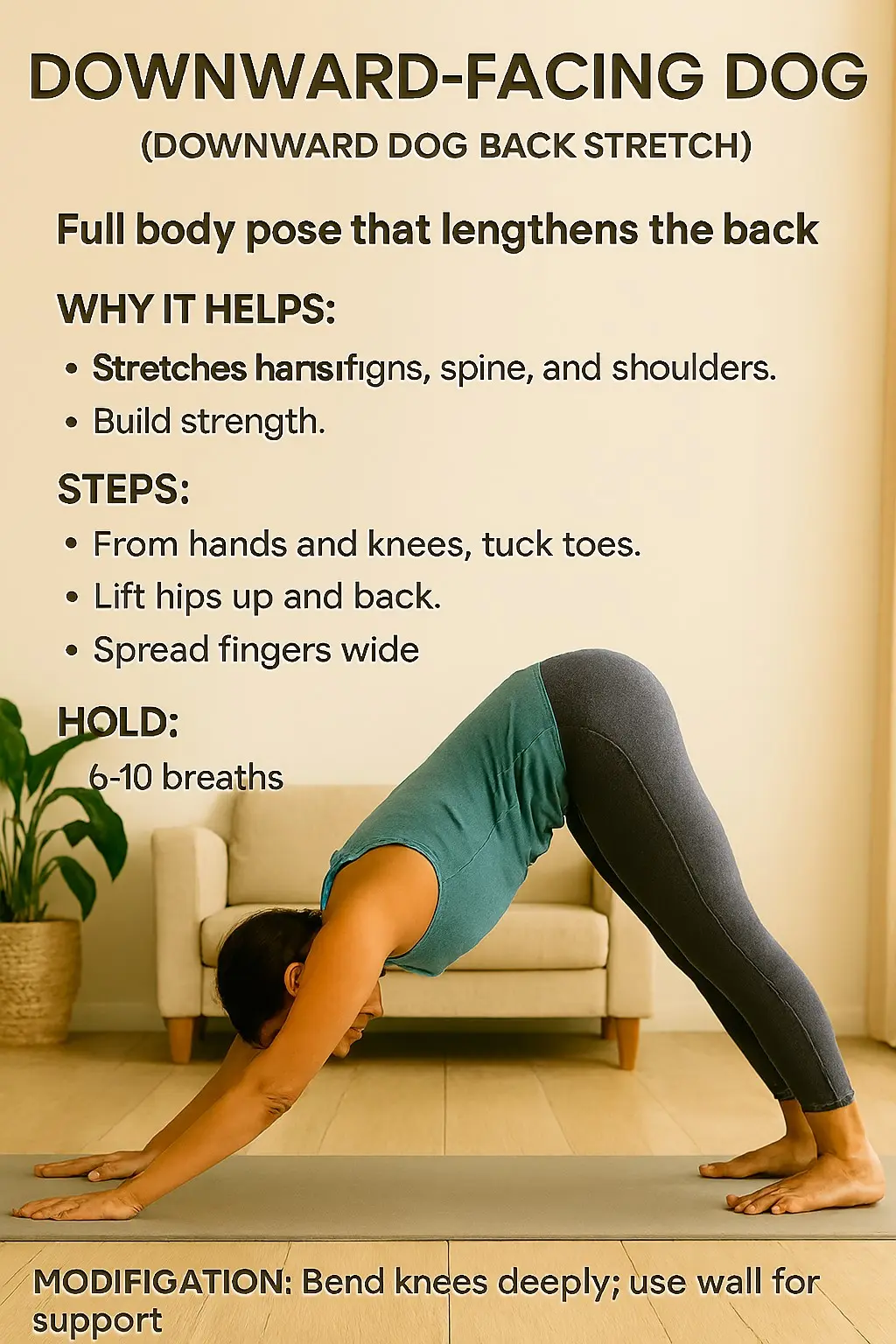
Full body pose that lengthens the back.
Why it helps: Stretches hamstrings, spine, and shoulders. Build strength.
Steps –
- From hands and knees, tuck toes.
- Lift hips up and back.
- Straighten legs as much as possible.
- Spread fingers wide.
Hold – 5-10 breaths.
Modification – Bend knees deeply; use the wall for support.
Tip – Pedal feet to warm calves.
4. Sphinx Pose
Gentle backbend for strength.
Why it helps – Strengthens low back muscles safely.
Steps –
- Lie on belly, legs extended.
- Place forearms down, elbows under shoulders.
- Lift chest gently.
- Relax glutes.
Hold – 30-60 seconds.
Modification – Just lift head if too much.
Tip – Gaze forward, not up.
5. Cobra Pose
Slightly stronger backbend.
Why it helps – Opens chest, strengthens spine.
Steps –
- Lie on belly.
- Hands under shoulders.
- Press into hands, lift chest.
- Keep elbows hugged in.
Hold – 20-30 seconds. Repeat 3 times.
Modification – Low Cobra – lift just a little.
Tip – Avoid crunching low back.
6. Bridge Pose
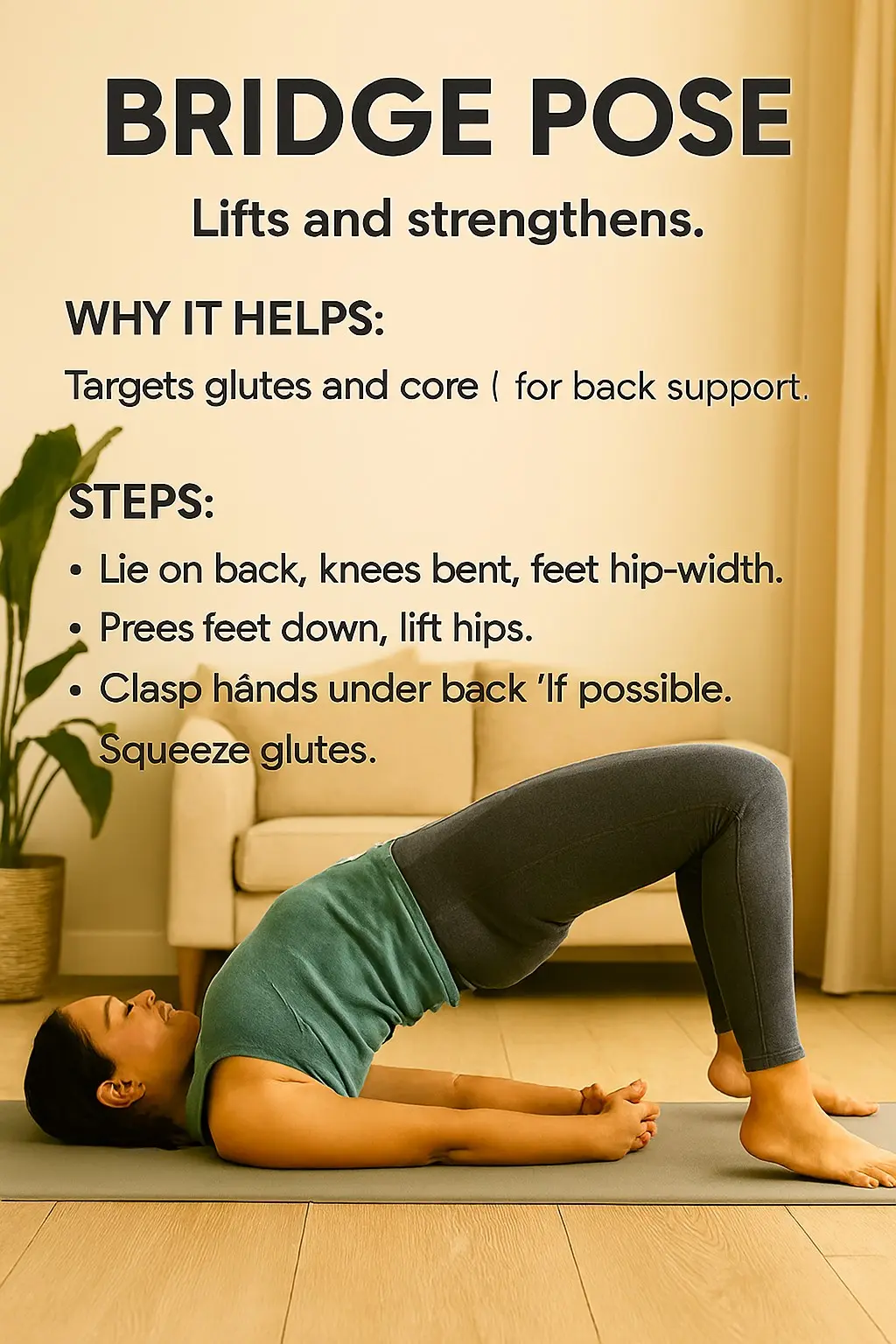
Lifts and strengthens.
Why it helps Targets glutes and core for back support.
Steps:
- Lie on back, knees bent, feet hip-width.
- Press feet down, lift hips.
- Clasp hands under back if possible.
- Squeeze glutes.
Hold – 5-10 breaths. Repeat 3 times.
Modification – Place block under sacrum for rest.
Tip – Keep knees over ankles.
7. Knees to Chest
Simple hug for release.
Why it helps: Compresses low back gently.
Steps:
- Lie on your back.
- Hug both knees to the chest.
- Rock side to side.
Hold – 1-2 minutes.
Tip – successful relief.
8. Reclining Twist (Yoga for Sciatica Pain)
Detoxifying twist.
Why it helps – Releases spinal tension, eases sciatica.
Steps-
- Lie on your back.
- Hug one knee in, drop to the opposite side.
- Look over the opposite shoulder.
Hold – 1 minute on each side.
Modification – Pillow under the knee.
9. Pigeon Pose (Modified)
Deep hip opener.
Why it helps: Tight hips often cause back pain – this frees them.
Steps –
- From the tabletop, bring one knee forward.
- Extend the other leg back.
- Fold forward over the front leg.
Hold – 1-2 minutes each side.
Modification- Use pillows under the hips; do the reclining version.
10. Low Lunge
Stretches on the front of the hips.
Why it helps: Counteracts sitting.
Steps –
- Step one foot forward, back knee down.
- Shift hips forward.
- Lift chest.
Hold: 5 breaths on each side.
11. Thread the Needle
Upper back release.
Why it helps: Eases shoulder tension affecting back.
Steps –
- Thread one arm under other.
- Rest shoulder and head down.
Hold – 1 minute each.
12. Seated Forward Bend
Hamstring focus.
Why it helps: Loose hamstrings reduce back pain.
Steps –
- Sit legs are extended.
- Fold forward from the hips.
Hold – 1 minute.
13. Locust Pose
Back strengthener.
Why it helps: Builds supporting muscles.
Steps –
- Lie on belly.
- Lift chest, arms, and legs.
Hold – 20 seconds. Repeat.
14. Happy Baby
Playful release.
Why it helps: Opens hips and low back.
Steps –
- Lie on back.
- Grab outer feet.
- Rock gently.
Hold- 1-2 minutes.
15. Legs Up the Wall
Ultimate recovery.
Why it helps: Drains tension, reduces swelling.
Steps –
- Sit side to wall.
- Swing legs up.
- Relax arms by sides.
Hold – 5-10 minutes.
Complete Routines for Every Level
10-Minute Beginner Yoga for Back Pain Routine
Successful start daily.
- Child’s Pose – 2 minutes
- Cat-Cow – 10 rounds
- Downward Dog – 5 breaths
- Knees to Chest – 1 minute
- Reclining Twist – each side
- Legs Up the Wall – 3 minutes
20-Minute Intermediate Routine
Add flow and strength.
- Cat-Cow warm-up
- Downward Dog – 10 breaths
- Low Lunge each side
- Sphinx to Cobra
- Bridge – 3 holds
- Pigeon on each side
- Thread the Needle
- Happy Baby
- Final twist and rest
Morning vs Evening Variations
Morning yoga for back pain – Focus on energizing – more Cat-Cow, Downward Dog, Bridge.
Evening: Relaxing – longer holds in Child’s Pose, twists, Legs Up the Wall.
Special Routine for Sciatica
Gentle focus on hips: Pigeon, Figure-4 stretch, Reclining Twist.
Building a Lasting Habit
Consistency wins. Start with 10 minutes daily.
Tips:
- Set a regular time.
- Use phone reminders.
- Track in a journal – note pain levels 1-10.
- Pair with habits: Stand hourly, walk daily, fix posture.
After 2 weeks, most notice less pain. By month 2, big changes.
Complementary Practices for Faster Relief
Yoga shines alone but combines for the best results.
- Daily walks – 20-30 minutes.
- Posture checks – Shoulders back, screen at eye level.
- Core work – Planks or bird-dog (McGill Big 3).
- Heat/cold therapy – Before or after practice.
- Hydration and sleep – Key for muscle recovery.
FAQs About Yoga for Back Pain
Which is the best yoga for back pain?
The best yoga style for back pain is gentle Hatha or therapeutic yoga that focuses on alignment and mindful movement. Yin yoga and restorative yoga are also excellent for chronic pain. Avoid intense styles like Power Yoga or Ashtanga initially, as they can aggravate existing pain. Start with basic poses like Cat-Cow, Child’s Pose, and Bridge, then gradually progress as your strength and flexibility improve.
Should you do yoga if your back hurts?
Yes, you can practice gentle yoga for back pain relief even when hurting but choose restorative poses only. Avoid deep backbends, intense twists, or any movement that increases pain. Focus on child’s pose for back pain, gentle stretches, and breathing exercises. If pain is severe (8-10 on pain scale), rest for 24-48 hours first. When in doubt, consult your doctor or physical therapist before practicing.
What are the Big 3 exercises for back pain?
The “Big 3” back exercises developed by Dr. Stuart McGill are:
(1) Modified Curl-Up for front core strength,
(2) Side Plank for lateral stability, and
(3) Bird-Dog for coordinated back strength.
In yoga terms, these translate to:
(1) Gentle crunches or Boat Pose modifications,
(2) Side Plank or supported variations, and
(3) Bird-Dog or Balancing Table Pose. These yoga exercises to strengthen core and back create a stable foundation for spinal health.
How to remove back pain quickly?
For immediate relief, try this sequence:
(1) Cat-Cow Pose for 2 minutes to mobilize the spine,
(2) Child’s Pose for 3 minutes to decompress the lower back,
(3) Knees-to-Chest while lying down for 2 minutes,
(4) Supine Twist for 2 minutes each side, and
(5) rest in a comfortable position. Combine with ice (first 48 hours) or heat (after 48 hours) for 15-20 minutes. Back pain relief stretches work best when done gently and consistently rushing leads to injury.
Conclusion
Yoga for back pain is more than exercise – it’s a way to reclaim comfort and freedom. You’ve taken the first step by reading this. Now, roll out a mat, try one pose, and see how it feels.
Your back deserves care. You deserve to move without pain. Start today – small steps lead to big changes. Feel amazing again. You’ve got this!
Reference
- Harvard Health Publishing: “The Safe Way to Do Yoga for Back Pain” – https://www.health.harvard.edu/staying-healthy/the-safe-way-to-do-yoga-for-back-pain
- Yoga Journal: 8 Poses for Lower Back Pain –
- https://www.yogajournal.com/poses/yoga-by-benefit/back-pain/yoga-lower-back-pain/

Adel Galal is a health and wellness writer with over 30 years of experience studying and writing about health, fitness, nutrition, and healthy living. He is the founder of NextFitLife.com, where he shares practical, evidence-based guidance to support long-term health at any age. Adel’s mission is simple:
to help people make smarter health choices that fit real life, at any age.