Last Updated:
August 20, 2026
Next Review:
August 2027, or sooner if important migraine treatment, medicine, pregnancy, or emergency headache guidance changes
Written and Source Checked by:
Adel Galal, Founder and Lead Writer of NextFitLife
Medical Review Status:
This article has not been formally reviewed by a physician, neurologist, pharmacist, nurse, emergency clinician, or another licensed healthcare professional.
Light may hurt.
Sound may feel too loud.
You may feel sick.
You may want the pain gone right now.
That is understandable.
But there is no safe method that can promise instant relief for every migraine.
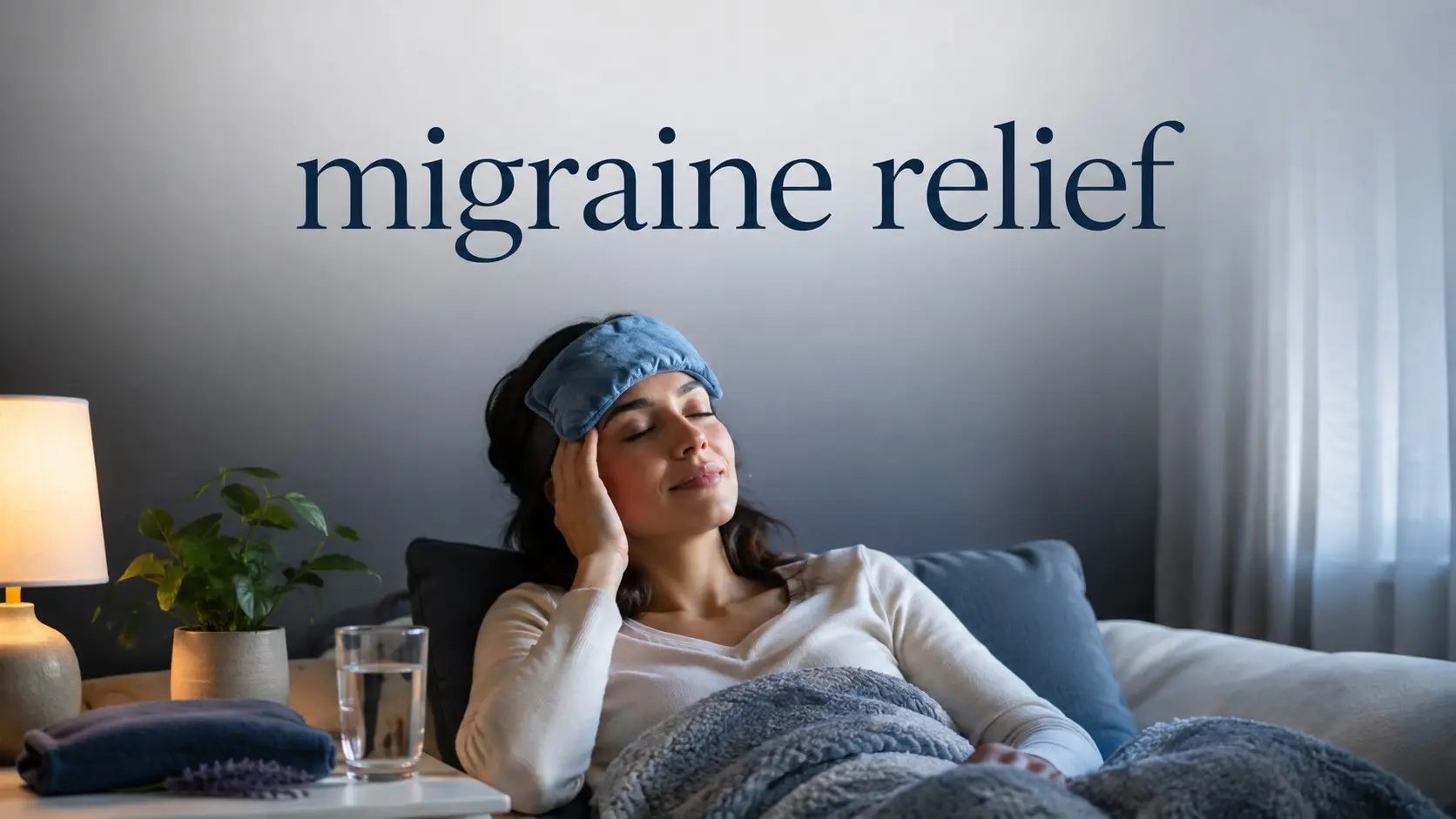
Good migraine relief starts with simple steps.
Rest can help.
A dark room may help.
A cold pack may feel soothing.
Fluids may help when you are dehydrated.
The right migraine medicine can also help.
Some people need prescription treatment.
The best choice depends on your health, symptoms, other medicines, and how often attacks happen.
This guide gives you eight safer steps to use during a migraine attack.
It also explains when a headache may not be a normal migraine and needs urgent care.
Quick Answer: What Can Help a Migraine Attack?
For safer migraine relief, you can:
- Rest in a dark and quiet place.
- Try a cool cloth or cold pack.
- Drink fluids if you may be dehydrated.
- Use appropriate migraine medicine early and exactly as directed.
- Treat nausea when needed.
- Reduce light, sound, odors, and other sensory stress.
- Use gentle relaxation and rest.
- Track attacks and avoid overusing headache medicine.
Seek urgent medical help for a sudden extreme headache, new weakness, confusion, seizure, serious vision changes, or other new neurological symptoms.
Medical note:
This content is for general educational purposes and does not replace professional medical advice, diagnosis, or treatment. Consult an appropriately qualified healthcare professional for personal medical concerns. This article explains published guidance and does not provide a personal clinical assessment. Always consult qualified medical professionals for diagnosis and treatment of any health condition.
When a Headache Needs Emergency Medical Care
Do not assume every severe headache is migraine.
Seek emergency medical care for:
- A headache that starts suddenly and becomes extremely painful very fast
- New weakness in the face, arm, or leg
- New numbness
- Trouble speaking
- Trouble understanding speech
- Loss of vision
- New double vision
- New confusion
- Severe drowsiness
- A seizure
- A very high fever with signs of meningitis
- A severe headache after a recent head injury
These symptoms can happen with serious conditions such as stroke, bleeding around the brain, infection, or another neurological emergency.
Do not drive yourself if you may be having a medical emergency.
When to Get Prompt Medical Advice
Contact a healthcare professional promptly if:
- A migraine attack lasts longer than 72 hours
- Your usual migraine aura lasts longer than one hour
- Your attacks are becoming more severe
- Your attacks are becoming more frequent
- Your normal migraine pattern has changed
- You are having attacks more than once a week
- You are finding it hard to control the attacks
- You are pregnant and have a new or severe migraine pattern
- You recently gave birth and have a severe headache
A change from your normal pattern deserves attention.
What Does a Migraine Attack Feel Like?
Migraine is more than a normal headache.
A typical migraine headache may be:
- Moderate or severe
- Throbbing or pulsing
- Worse on one side
- Worse when you move
Other common migraine symptoms include:
- Nausea
- Vomiting
- Sensitivity to light
- Sensitivity to sound
- Sensitivity to smells
- Fatigue
An attack may last from several hours to several days.
Not every person has every symptom.
What Is Migraine Aura?
Some people have migraine aura.
Aura can happen before or during a migraine attack.
It may cause:
- Flashing lights
- Zigzag lines
- Blind spots
- Tingling
- Numbness
- Trouble speaking
- Dizziness
Typical aura develops over a short time and usually lasts less than one hour.
A first episode of new neurological symptoms should not simply be assumed to be migraine.
Seek medical advice, especially if the symptoms are unusual for you.
1. Rest in a Dark and Quiet Room
Bright light and noise can make migraine symptoms harder to tolerate.
A simple first step is to reduce stimulation.
Try:
- Closing the curtains
- Turning off bright screens
- Lowering room lights
- Reducing noise
- Lying down if it feels safe
- Closing your eyes
A dark room for migraine is not a cure.
It may make the attack easier to tolerate.
NHS and MedlinePlus both list lying or resting in a dark room as a useful step during an attack.
2. Try a Cool Cloth or Cold Pack
Some people find cold soothing during a migraine.
You can try:
- A cool damp cloth
- A gel cold pack
- A wrapped ice pack
Place it gently on:
- The forehead
- The temple
- The back of the neck
Never put bare ice directly on the skin.
A cold pack for migraine may help you feel more comfortable.
It should not be described as changing blood flow in a way that cures migraine.
Use it because it may feel soothing.
3. Drink Fluids if You Need Them
Dehydration can contribute to headaches.
Vomiting can also make dehydration worse.
For simple migraine hydration, try small amounts of fluid.
Water is fine for many people.
If nausea is strong, take small sips.
Do not force large amounts of water quickly.
Do You Need an Electrolyte Drink?
Not always.
Water may be enough.
An oral rehydration drink may be useful if you have lost a lot of fluid through vomiting or another cause.
People with kidney, heart, or fluid balance problems should follow medical advice about fluid intake.
4. Use Migraine Medicine Safely
Medicine can be an important part of acute migraine treatment.
The best medicine depends on:
- Your age
- Other health conditions
- Pregnancy
- Other medicines
- How severe the attack is
- What has worked before
Simple Pain Medicines
For some people, suitable options may include:
- Ibuprofen
- Another suitable NSAID
- Paracetamol, also called acetaminophen
These medicines are not safe for everyone.
For example, NSAIDs may not be suitable for some people with stomach ulcers, kidney disease, bleeding risk, certain heart conditions, or pregnancy.
Follow the label.
Ask a pharmacist or healthcare professional if you are unsure.
Triptans
Triptans for migraine are prescription medicines designed to treat migraine attacks.
Examples include:
- Sumatriptan
- Rizatriptan
- Zolmitriptan
- Eletriptan
A triptan is not suitable for every person.
Use it only as prescribed.
NICE recommends a triptan with either an NSAID or paracetamol as one option for acute migraine treatment.
A healthcare professional may also use one medicine alone depending on the person.
What if One Triptan Does Not Work?
One failed triptan does not always mean all triptans will fail.
NICE advises that another triptan can be considered when one is consistently ineffective.
Discuss this with the prescriber.
Newer CGRP Medicines
Newer medicines called gepants block CGRP pathways involved in migraine.
A CGRP migraine medicine may be suitable for selected people.
For example, NICE recommends rimegepant for acute migraine in certain adults when triptans have not worked well enough or cannot be used and standard pain medicines have also not worked well enough.
Access and prescribing rules vary by country.
Do Not Use Someone Else's Prescription
Never borrow:
- A triptan
- A gepant
- A prescription nausea medicine
- Any other prescription migraine medicine
A medicine that is safe for one person may not be safe for another.
5. Treat Nausea When Needed
Migraine nausea can be severe.
Vomiting may also make it difficult to keep oral medicine down.
A clinician may recommend an antiemetic.
This is a medicine used to reduce nausea and vomiting.
NICE recommends considering an antiemetic with acute migraine treatment.
Some people may need a medicine that does not need to be swallowed when vomiting is severe.
Do not take a prescription nausea medicine unless it has been prescribed or recommended appropriately for you.
6. Reduce Light, Noise, Smells, and Other Sensory Stress
During an attack, the brain may become very sensitive to normal input.
Try reducing:
- Bright lights
- Phone brightness
- Television
- Loud music
- Strong perfume
- Strong cooking odors
You do not need to make your home completely silent every day.
This step is mainly about making the current attack easier to tolerate.
7. Use Gentle Relaxation and Rest
Stress does not cause every migraine.
But stress can be a migraine trigger for some people.
Pain can also make your whole body tense.
Try simple relaxation.
Slow Breathing
- Get comfortable.
- Relax your shoulders.
- Breathe in gently.
- Breathe out slowly.
- Repeat without forcing your breath.
Stop if this makes you dizzy or uncomfortable.
Rest or Sleep
Some people improve after sleep.
If you can sleep safely, a nap or normal sleep may help.
Do not take extra sedating medicine just to force sleep unless a healthcare professional has told you to do so.
8. Avoid Medication Overuse
Taking headache medicine too often can create another problem.
It is called medication overuse headache.
The headache may become more frequent.
The medicine may seem to help less.
NICE advises clinicians to consider medication overuse when headaches develop or worsen during frequent use of acute headache medicines.
The NHS gives a simple public rule:
Try not to use painkillers for headaches on more than two days each week unless your clinician has given you a different plan.
Keep a Migraine Diary
A migraine diary can record:
- The date
- How long the attack lasted
- Pain level
- Aura
- Nausea
- Sleep
- Possible triggers
- Medicine used
- Whether the medicine worked
This can help you and your healthcare professional decide whether your treatment plan needs to change.
Can Caffeine Help Migraine?
Sometimes.
A small amount of caffeine may help some people during the early part of an attack.
But caffeine is not a migraine cure.
Too much caffeine may trigger attacks in some people.
Regular heavy caffeine use can also lead to withdrawal headaches.
Do not suddenly make a large change if you drink a lot of caffeine every day.
Track your own pattern.
What Should You Eat During a Migraine?
There is no special food that stops a migraine for everyone.
If you can eat, choose food that feels easy to tolerate.
Simple options may include:
- Toast
- Oatmeal
- Rice
- Yogurt if tolerated
- Banana
- Soup
The goal is comfort and normal nutrition.
Do not expect one food to cure the attack.
Do Not Skip Meals Often
Skipping meals can trigger migraine in some people.
Regular meals may help with migraine prevention.
Do Essential Oils Stop a Migraine?
Essential oils should not be presented as proven fast treatment for migraine.
Strong smells can actually make nausea or headache worse for some people.
Peppermint, lavender, eucalyptus, and other oils do not replace evidence based migraine treatment.
Avoid putting essential oils:
- In the eyes
- Inside the nose
- Inside the ears
- On irritated skin
Stop using a scented product if the smell worsens your symptoms.
Do Pressure Points Stop Migraine?
There is no pressure point that reliably stops migraine for everyone.
Gentle massage may feel relaxing.
It should not be described as a cure.
Do not use painful pressure on the head, neck, or face.
Can a Migraine Be Treated in Five Minutes?
There is no safe treatment that can promise to end every migraine in five minutes.
Some people begin to feel better quickly.
Others need more time.
The response depends on:
- The medicine
- How early it is used
- The severity of the attack
- Nausea or vomiting
- The individual person
Be careful with any product that promises instant or guaranteed migraine relief.
When Should Migraine Medicine Be Taken?
Many acute migraine medicines work best when taken early in the headache phase.
Follow the instructions for your specific medicine.
People with aura should follow their prescribed treatment plan because the best timing can depend on the medicine.
Never exceed the recommended dose in an attempt to make the medicine work faster.
What if You Vomit During a Migraine?
Severe vomiting can make oral medicine difficult to use.
Take small sips of fluid if you can.
A healthcare professional may recommend:
- An antiemetic
- A nasal medicine
- Another medicine that does not need to be swallowed
Seek medical advice if you cannot keep fluids down or you develop signs of dehydration.
Migraine Relief During Pregnancy
Pregnancy changes medicine safety.
Do not assume your normal migraine medicine is safe during pregnancy.
NICE recommends paracetamol as an acute option during pregnancy.
Use of a triptan or an NSAID requires an individual discussion about benefits and risks.
A new or severe headache during pregnancy or soon after birth should be medically assessed.
Seek urgent advice rather than self treating a major change in your headache pattern.
What About Migraine With Vertigo?
Some people have vestibular migraine.
Vertigo may happen with:
- Headache
- Light sensitivity
- Sound sensitivity
- Nausea
- Motion sensitivity
A headache does not have to happen during every vestibular migraine episode.
If dizziness or spinning is a major symptom, read:
Causes of Vertigo
.
When Do You Need Migraine Prevention?
Acute medicine treats an attack.
Preventive care tries to reduce future attacks.
Talk with a healthcare professional if:
- Migraine attacks happen often
- They are severe
- They interfere with work or school
- You miss normal activities
- Acute medicines do not work well
- You need acute medicine too often
Preventive treatment may include medicine and lifestyle changes.
Options depend on the individual.
Simple Daily Habits That May Reduce Migraine Attacks
Daily habits cannot prevent every attack.
But they may help.
- Keep a regular sleep routine.
- Eat meals at regular times.
- Stay hydrated.
- Exercise regularly when you are well.
- Manage stress.
- Track true personal triggers.
- Avoid medication overuse.
Do not create a long list of food restrictions unless you see a clear repeated pattern.
Common Migraine Relief Myths
Myth: Migraine Is Just a Bad Headache
False.
Migraine is a neurological condition that can include nausea, light sensitivity, sound sensitivity, aura, and other symptoms.
Myth: One Remedy Works for Everyone
False.
People respond differently to migraine treatments.
Myth: Essential Oils Can Stop Any Migraine
False.
Essential oils are not established as reliable acute migraine treatment.
Myth: Pressure Points Can Cure Migraine
False.
Massage may feel good, but there is no pressure point that reliably cures a migraine attack.
Myth: More Pain Medicine Means Faster Relief
False.
Taking more than the recommended dose can be dangerous.
Frequent use can also contribute to medication overuse headache.
Myth: Every Severe Headache Is Migraine
False.
New severe headaches can have other causes.
Know the emergency signs.
Myth: Migraine Has an Instant Cure
False.
There is no guaranteed instant cure.
The goal is safe and effective symptom relief.
Build a Simple Migraine Attack Kit
A small kit can make an attack easier to manage.
You might include:
- Your approved migraine medicine
- A reusable cold pack
- Water
- An eye mask
- A simple nausea plan
- Your medicine list
- Emergency contact information
Do not include medicines that were not prescribed or recommended for you.
What to Write in a Migraine Diary
Record:
- Date
- Time the attack started
- How long it lasted
- Pain level
- Aura
- Nausea
- Vomiting
- Light sensitivity
- Sound sensitivity
- Sleep the night before
- Meals
- Stress
- Menstrual timing when relevant
- Medicine used
- How well the medicine worked
A clear diary can be more useful than guessing at dozens of possible triggers.
When Should You See a Migraine Specialist?
Your primary care clinician can manage many migraine cases.
Specialist care may be useful when:
- The diagnosis is not clear
- Attacks remain severe
- Several treatments have failed
- Migraine is becoming chronic
- You have unusual neurological symptoms
- Medication overuse is difficult to control
A neurologist or headache specialist can review other treatment choices.
Key Takeaway
A migraine attack can be painful and frightening.
But you do not need miracle claims.
Start with simple and safe steps.
Rest.
Reduce light and sound.
Try a cool pack.
Drink fluids when needed.
Use appropriate medicine correctly.
Treat nausea.
Avoid taking headache medicine too often.
Know your emergency signs.
How I Research Migraine Relief
I have spent more than fifteen years researching and writing about health and wellness.
I also bring more than thirty years of personal experience with fitness, nutrition, sleep habits, and everyday wellness.
Migraine is a topic where simple promises can be misleading.
A person in pain naturally wants a fast answer.
That makes phrases such as instant cure very attractive.
My research approach is different.
I ask what a step is really meant to do.
Does it reduce pain?
Does it help nausea?
Does it reduce sensory stress?
Does it prevent dehydration?
Is it safe with other health conditions?
Could using it too often cause another headache problem?
I also separate comfort measures from medical treatment.
A cold pack may feel soothing.
A dark room may reduce sensory stress.
Neither should be presented as a cure.
Prescription migraine medicine has a different role.
It needs proper selection and safe use.
Before focusing on NextFitLife, I spent twenty nine years in information technology management.
That background developed my skills in research, problem solving, systems thinking, troubleshooting, and comparing claims against evidence.
I use the same method when researching migraine.
For this article, I reviewed current NICE migraine guidance, the NHS migraine guide, NINDS, MedlinePlus, and the VA and DoD headache guideline.
My goal is to give readers practical options without turning comfort measures or medicines into unsafe promises.
References and High Authority Sources
This article was checked against these five public and high authority sources.
National Institute for Health and Care Excellence
Headaches in Over 12s: Diagnosis and Management. Clinical guideline CG150.This guideline covers acute migraine medicines, triptans, NSAIDs, paracetamol, antiemetics, rimegepant, medication overuse, migraine prevention, pregnancy, and headache warning signs.
NHS
Migraine.This guide covers migraine symptoms, aura, urgent warning signs, pain medicines, triptans, gepants, nausea medicine, dark room rest, hydration, and migraine self care.
National Institute of Neurological Disorders and Stroke
Migraine.This resource explains migraine symptoms, acute treatment, triptans, CGRP medicines, pain relievers, nausea care, rest, cold packs, fluids, diaries, and preventive treatment.
MedlinePlus
Migraine.This National Library of Medicine resource covers diagnosis, migraine symptoms, treatment, quiet dark room rest, cool packs, fluids, medicines, and prevention.
United States Department of Veterans Affairs and Department of Defense
Clinical Practice Guideline for Management of Headache. 2023.This evidence based guideline provides a clinical algorithm and fifty two recommendations for headache diagnosis and management.
Source Review Date:
August 20, 2026
These organizations do not endorse NextFitLife.
Conclusion
Safe migraine relief is not about finding a miracle cure.
Rest in a dark room.
Reduce light and noise.
Try a cool pack.
Drink fluids when needed.
Use appropriate medicine exactly as directed.
Treat nausea when needed.
Track your attacks.
Avoid medication overuse.
Most important, know the signs that mean a headache needs urgent medical care.
Your next step:
Create a simple migraine plan before your next attack. Write down the medicine you are allowed to use, what helps you rest, and which warning signs mean you should seek medical care. If your current migraine relief plan is not working, speak with a qualified healthcare professional about better options.
Editorial Policies and Trust
Frequently Asked Questions About Migraine Relief
What is the fastest way to get migraine relief?
There is no single fastest method for everyone. Rest in a dark quiet room, use your approved migraine medicine early, try a cold pack, drink fluids if needed, and reduce light and sound.
Can a migraine be cured in five minutes?
No treatment can promise to end every migraine in five minutes. Some people begin to improve quickly, but response time varies.
Should I lie down during a migraine?
Many people find resting or lying down in a dark quiet room helpful during an attack.
Does a cold pack help migraine?
A cool cloth or wrapped cold pack may feel soothing during a migraine. Never place bare ice directly on the skin.
Does drinking water stop migraine?
Water may help if dehydration is contributing to the headache. It will not stop every migraine attack.
Should migraine medicine be taken early?
Many acute migraine medicines work best when used early in the headache phase. Follow the instructions for your specific medicine.
What pain medicines can help migraine?
Suitable options for some people may include ibuprofen, another NSAID, or paracetamol. Medicine choice depends on health conditions, pregnancy, other medicines, and individual risks.
What is a triptan?
A triptan is a prescription medicine designed to treat migraine attacks. Examples include sumatriptan, rizatriptan, zolmitriptan, and eletriptan.
Do triptans work for everyone?
No. Different people respond differently. A healthcare professional may consider another triptan when one consistently does not work.
What is a gepant?
A gepant is a newer migraine medicine that blocks CGRP pathways. Rimegepant is one example used for selected adults.
Can migraine nausea be treated?
Yes. A healthcare professional may recommend an antiemetic to reduce nausea or vomiting during migraine.
What if I cannot keep migraine medicine down?
Speak with a healthcare professional. Some migraine and nausea medicines are available in forms that do not need to be swallowed.
Does caffeine help migraine?
A small amount may help some people, but too much caffeine or caffeine withdrawal can trigger headaches in others.
Do essential oils stop migraine?
Essential oils are not proven as reliable acute migraine treatment. Strong smells can also make migraine symptoms worse for some people.
Does peppermint oil cure migraine?
No. Peppermint oil should not be presented as a proven migraine cure.
Does lavender oil cure migraine?
No. Lavender may smell relaxing to some people, but it is not a proven migraine cure and strong odors can worsen symptoms in others.
Do pressure points stop migraine?
No pressure point reliably stops migraine for everyone. Gentle massage may feel relaxing but should not replace appropriate treatment.
What food stops a migraine?
There is no food that stops migraine for everyone. If you can eat, choose simple food that you tolerate well.
Can skipping meals trigger migraine?
Yes. Skipping meals or eating irregularly can trigger attacks in some people.
How much headache medicine is too much?
Frequent use of acute headache medicine can lead to medication overuse headache. The NHS advises trying not to use painkillers for headaches on more than two days a week unless you have another medical plan.
What is medication overuse headache?
Medication overuse headache can happen when acute headache medicines are used too often and headaches become more frequent or harder to treat.
When should I see a doctor about migraine?
See a healthcare professional if attacks are severe, getting worse, happening more than once a week, difficult to control, or different from your usual pattern.
When is a migraine an emergency?
Seek emergency care for a sudden extreme headache, new weakness, speech problems, severe confusion, seizure, major vision loss, or severe headache after a head injury.
Is a migraine lasting more than 72 hours concerning?
Yes. An attack lasting more than 72 hours needs prompt medical advice.
Should aura last more than one hour?
Typical migraine aura usually lasts less than one hour. Seek medical advice if aura lasts longer or is unusual for you.
Is migraine during pregnancy different?
Medicine safety changes during pregnancy. New or severe headache during pregnancy or soon after birth should be medically assessed.
Can migraine cause vertigo?
Yes. Vestibular migraine can cause vertigo and balance symptoms, sometimes even without headache during the same episode.
How can I prepare for my next migraine attack?
Keep your approved medicine, water, cold pack, eye mask, treatment instructions, and emergency contact information easy to reach.
Medical Disclaimer
NextFitLife provides general educational and informational health content.
This article cannot diagnose migraine, stroke, meningitis, medication overuse headache, pregnancy complications, or another cause of headache.
Migraine medicine is not safe for every person.
Medicine choice can depend on pregnancy, age, heart health, kidney health, stomach problems, other medicines, and other medical conditions.
Do not take another person's prescription medicine.
Do not exceed the recommended dose of a pain medicine, triptan, gepant, or other migraine treatment.
Seek emergency medical care for a sudden extreme headache, new weakness, speech problems, severe confusion, seizure, major vision changes, or another serious neurological symptom.

Health & wellness writer with 30+ years of experience in nutrition, fitness, and healthy aging. Founder of NextFitLife.com — evidence-based health guidance.