
Updated on: October 29, 2026
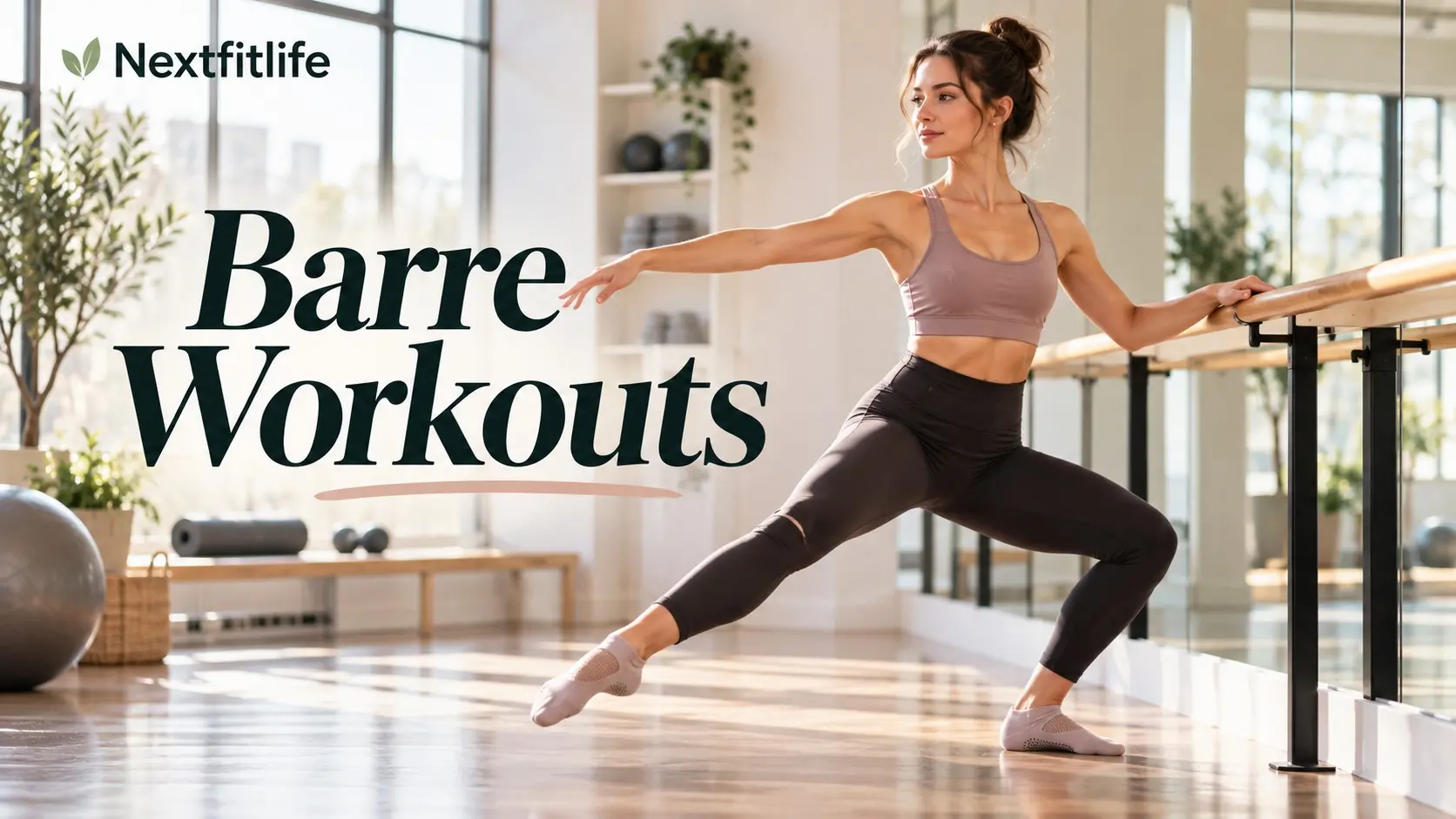
Barre Workouts mix small, controlled movements with strength work, balance, core training, and stretching. Most classes use a ballet style barre for support, but you do not need dance experience to start.
If you are new to barre, think of it as controlled resistance training rather than ballet practice. You may use your body weight, light dumbbells, a resistance band, or a sturdy support while you work your legs, glutes, arms, back, and core.
The biggest value is not getting a certain body shape. Barre can help you build muscular endurance, improve control, practice balance, increase comfortable range of motion, and add variety to your fitness routine.
This article is for general information and education. It does not replace medical advice, diagnosis, or treatment.
Quick answer: Barre workouts can be a useful low impact way to train strength endurance, balance, mobility, coordination, and core control. Beginners can start with two short sessions each week and build gradually. Barre does not magically create longer muscles, and it does not need to replace walking, cardio, or progressive strength training.
Table of Contents
- What are barre workouts?
- Eight benefits of barre workouts
- Muscular endurance
- Lower body strength
- Core control
- Balance
- Mobility and flexibility
- Posture awareness
- Low impact training
- Mind body focus
- What barre cannot do
- Muscles used during barre
- Beginner barre exercises
- Twenty minute beginner routine
- How often to do barre
- Barre versus Pilates
- Barre versus strength training
- What you need for barre at home
- Common mistakes
- Safety and when to stop
- Frequently asked questions
What Are Barre Workouts?
Barre workouts are exercise sessions inspired partly by ballet conditioning. Modern classes often mix ballet style positions with exercises that resemble Pilates, bodyweight strength work, stretching, and light resistance training.
The barre itself is mainly a support. You may hold it while doing pliés, calf raises, leg lifts, hip extensions, balance work, and small controlled pulses.
Many classes also include floor work, planks, bridges, abdominal exercises, and light dumbbell movements.
You do not need a dance background. In fact, a good beginner class should teach positions in plain language and give you easier options when you need them.
If you prefer exercising at home, visit the NextFitLife Home Workouts and Equipment Guide. It explains how to build a safer workout space and choose simple equipment.
8 Smart Benefits of Barre Workouts
1. Builds Muscular Endurance
A barre class often asks you to hold a position or repeat a controlled movement several times. Your muscles must keep producing force even as they become tired.
This can build muscular endurance, especially in the thighs, glutes, calves, shoulders, and core.
That is different from training for maximum strength. Heavy resistance training asks your muscles to produce more force. Barre often uses lighter resistance for longer sets.
Both approaches can have a place in a balanced fitness program.
2. Trains the Legs and Glutes
Many barre exercises place a lot of work on your lower body.
Pliés train the thighs and hips. Calf raises work the lower legs. Hip extensions and leg lifts train the glutes. Single leg exercises also make the hip muscles work to keep you steady.
The movements may look small, but they can become challenging when you move slowly and maintain good position.
If you want heavier lower body strength work too, see our Leg Exercises With Dumbbells guide.
3. Challenges Your Core
Your core helps control your trunk while your arms and legs move.
During barre, you may need to keep your ribs, pelvis, and spine steady while performing leg lifts, holds, planks, or standing balance exercises.
This creates useful core strength and endurance practice without needing hundreds of crunches.
A good cue is simple: keep breathing while your stomach and trunk stay gently braced. Do not hold your breath just to make a position feel stronger.
4. Gives You Balance Practice
Barre often includes heel raises, narrow stances, and movements performed on one leg.
The barre gives you support, so you can adjust how much help you use.
This makes barre a useful way to practice balance training in a controlled setting.
Balance becomes especially important as we age, although the difficulty should always match the person. Older adults may benefit from regular balance activity alongside aerobic and strengthening exercise.
5. Supports Mobility and Flexibility
Barre classes usually move the hips, ankles, shoulders, and spine through several positions. Many sessions also finish with stretching.
This may help you improve or maintain comfortable movement and flexibility.
More range is not always better, though. You only need enough motion to perform the exercise with control.
If mobility and stretching are important goals for you, explore the NextFitLife Yoga and Flexibility Guide.
6. Improves Posture Awareness
Barre cannot permanently “fix” posture, but it can make you more aware of how you hold your body.
Classes often ask you to control your ribs, shoulders, pelvis, and head while you move.
This body awareness can help you notice when you are leaning, twisting, or using more range than you can control.
Think about posture as a position that changes with the task rather than one perfect pose you must hold all day.
7. Offers Low Impact Training
Many barre classes use little or no jumping, which makes them low impact workouts.
Low impact does not mean easy. A long wall sit, slow plié, or controlled leg lift can still be hard.
It also does not mean risk free. Your knees, hips, back, shoulders, and feet still experience load, so form and sensible progression matter.
Choose a beginner version first if you have not exercised for a while.
8. Builds Focus and Movement Control
Small movements require attention.
You need to notice where your feet are, how your knees move, whether your trunk stays steady, and when your form begins to change.
This creates a strong mind body connection and encourages deliberate movement instead of rushing through repetitions.
For many people, that focused style also makes exercise more enjoyable.
What Barre Workouts Cannot Do
Barre is useful, but it is not magic.
Some fitness marketing claims that barre creates “longer muscles.” Exercise does not physically lengthen your muscles into a different body type.
Your muscle shape is influenced by anatomy and genetics. Training can make muscles stronger and may increase their size, but a workout cannot turn short muscles into long muscles.
Barre also does not guarantee fat loss from the thighs, waist, arms, or any other single body area.
Body fat changes depend on many factors, including total energy intake, activity, health, sleep, and genetics.
It is better to judge barre by what training can actually improve: strength endurance, control, balance, movement skill, mobility, and consistency.
What Muscles Does Barre Work?
| Area | Common Barre Movements | Main Training Role |
|---|---|---|
| Thighs | Pliés, holds, controlled squats | Knee and hip control |
| Glutes | Leg lifts, hip extensions, bridges | Hip strength and stability |
| Calves | Relevés and heel raises | Ankle strength and balance |
| Core | Planks, standing balance, floor work | Trunk control |
| Shoulders and arms | Light dumbbells, arm raises, holds | Upper body endurance |
| Back | Rows, arm positions, trunk control | Postural control and upper body support |
7 Beginner Barre Exercises to Learn First
1. Supported Plié
Stand tall and lightly hold a sturdy support.
Place your feet a comfortable distance apart. Turn the feet out only as far as your hips allow without forcing them.
Bend your knees while keeping them moving in the same general direction as your toes. Rise with control.
Start with 8 to 12 repetitions.
2. Calf Raise
Stand tall with both feet flat.
Hold the barre lightly. Slowly lift your heels, pause, then lower them under control.
Avoid rolling to the outside of your feet.
Start with 8 to 15 repetitions.
3. Standing Hip Extension
Hold the support and stand tall.
Move one leg a short distance behind you without arching your lower back.
Squeeze the glute, return slowly, then repeat.
The movement does not need to be large.
4. Side Leg Lift
Stand with one side near the barre.
Keep your trunk steady and lift the outside leg a small distance to the side.
Lower it slowly.
If your body begins leaning, reduce the range.
5. Glute Bridge
Lie on your back with your knees bent and feet on the floor.
Push through your feet and lift your hips to a comfortable height. Pause, then lower with control.
You should feel the glutes working without forcing your back into a large arch.
6. Wall Push Up
Place your hands on a wall and step back.
Bend your elbows and bring your chest toward the wall. Push away until your arms are straight again.
Keep your body controlled from your head to your heels.
7. Supported Single Leg Balance
Stand next to your support.
Shift your weight onto one foot and lift the other foot slightly.
Use as much support as you need.
Hold for 10 to 20 seconds, then switch sides.
A Simple 20 Minute Barre Workout for Beginners
This sample routine is designed as a starting point for a generally healthy adult. You can make it shorter if you are new to exercise.
| Section | Exercise | Amount |
|---|---|---|
| Warm up | Easy march, arm circles, gentle hip movement | 3 minutes |
| Legs | Supported plié | 2 sets of 8 to 12 |
| Calves | Calf raises | 2 sets of 10 to 15 |
| Hips | Hip extensions | 8 to 12 each side |
| Upper body | Wall push ups | 8 to 12 |
| Glutes | Glute bridges | 10 to 15 |
| Balance | Supported single leg balance | 10 to 20 seconds each side |
| Cool down | Easy walking and comfortable stretches | 3 minutes |
Move slowly enough to stay in control. You do not need to chase a muscle burn.
When this routine becomes easy, increase one thing at a time. You might add a few repetitions, use slightly more resistance, or choose a harder version of an exercise.
If you want to understand how gradual strength progression works, read Minimum Effective Dose Strength Training.
How Often Should You Do Barre Workouts?
For a beginner, two sessions per week is a practical starting point.
That gives you time to learn the exercises and see how your body responds.
If you recover well and enjoy the sessions, you may choose to add another day.
You do not need to perform the same hard barre routine every day.
Your weekly exercise plan should also consider aerobic fitness and broader strength work. Current public health guidance recommends that most adults work toward at least 150 minutes of moderate intensity aerobic activity each week, or the equivalent amount of vigorous activity, plus muscle strengthening activity on at least two days.
For a simple guide to combining these pieces, visit How to Build a Fitness Program.
Barre Versus Pilates
Barre and Pilates overlap, but they are not the same workout.
| Feature | Barre | Pilates |
|---|---|---|
| Typical position | More standing work | Often more floor or equipment work |
| Main style | Ballet inspired movements, holds and repetitions | Controlled trunk and limb movement |
| Common equipment | Barre, light weights, bands, ball | Mat or specialized Pilates equipment |
| Good for | Strength endurance, balance and movement control | Core control, movement quality and strength |
You do not have to choose one forever. Pick the style you enjoy and can practice safely.
Barre Versus Traditional Strength Training
Barre can strengthen muscles, especially if you are new to resistance exercise.
However, a typical barre class may not provide enough resistance to maximize strength or muscle growth over time.
The 2026 American College of Sports Medicine guidance shows that resistance training works with many tools, including body weight and bands. It also makes an important point: the resistance and training volume should match your goal.
If your main goal is becoming much stronger, progressive resistance training should remain part of your plan.
Barre can then serve as an extra session for movement control, endurance, balance, and variety.
For more traditional resistance training guidance, visit our Strength Training After 40 guide or the broader beginner fitness guide.
What Do You Need for Barre at Home?
You can start a barre workout at home with very little equipment.
- A stable barre, countertop, or other support that will not move
- A clear floor area
- A fitness mat for floor exercises
- Comfortable clothing
- Optional light dumbbells
- Optional resistance band
- Optional small exercise ball
A chair can work for some exercises, but only if it is solid and will not slide or tip. Do not pull hard on the back of a lightweight chair.
You also do not need special socks unless the floor or studio requires them. Good traction matters more than fashion.
Common Barre Mistakes
Forcing Your Feet to Turn Out
Your turnout should come from a comfortable hip position.
Do not twist your feet far outward while your knees point somewhere else.
Making Every Movement Tiny
Barre often uses small pulses, but that does not mean every exercise should use a tiny range.
Use the range that fits the exercise and that you can control.
Chasing the Burn
A burning muscle can happen during long sets, but pain is not a measure of workout quality.
Good training is about repeatable effort and progression.
Holding Your Breath
Keep breathing throughout each set.
If a position makes you brace so hard that you cannot breathe normally, reduce the difficulty.
Using the Barre to Hold Your Whole Body Up
The barre is mainly there for balance.
Use a light grip when possible. If you have to pull hard on it, the exercise may be too difficult or your position may need to change.
Thinking Barre Must Replace Other Exercise
A varied fitness program can include barre, walking, cycling, traditional resistance training, mobility work, sports, or other activities you enjoy.
No single workout needs to do everything.
Barre Workout Safety
Low impact training can still be challenging, so start at a level you can control.
Stop an exercise if you develop sharp pain, sudden joint pain, unusual weakness, numbness, or a feeling that something is wrong.
Seek urgent medical help if exercise brings on chest pain, fainting, severe shortness of breath, sudden weakness, severe dizziness, confusion, or another sudden serious symptom.
Speak with a qualified healthcare professional before starting or greatly increasing exercise if you have a medical condition, recent surgery, an active injury, significant joint problems, heart symptoms, severe balance problems, pregnancy related concerns, or another condition that may affect safe movement.
If an instructor tells you that pain is simply something to push through, choose a different instructor.
How to Make Barre Work Better for You
Start with movements you can control.
Then give your body a reason to adapt.
You can progress by adding repetitions, using a slightly stronger resistance band, using a little more weight, choosing a harder variation, improving your balance support, or increasing the range you can control comfortably.
Do not change everything at once.
Consistency matters more than making every workout harder than the last.
This fits with current resistance training guidance, which emphasizes regular participation and a program that matches your goals and ability.
Conclusion
Barre Workouts can be a useful part of a balanced exercise plan, especially if you enjoy controlled movement, low impact strength work, balance practice, and a strong focus on form.
They can help build muscular endurance, train the legs and core, improve movement control, and add flexibility and balance work to your week.
Just keep the claims realistic. Barre does not create longer muscles, spot reduce fat, or replace every other type of exercise.
Your next step: try the 20 minute beginner routine above twice this week. Keep the movements comfortable, use support when needed, and build from there.
References and Sources
- American College of Sports Medicine. Resistance Training Guidelines Update, 2026.
https://acsm.org/resistance-training-guidelines-update-2026/ - Currier BS, D'Souza AC, Fiatarone Singh MA, et al. American College of Sports Medicine Position Stand: Resistance Training Prescription for Muscle Function, Hypertrophy, and Physical Performance in Healthy Adults. Medicine & Science in Sports & Exercise. 2026.
https://pubmed.ncbi.nlm.nih.gov/41843416/ - Centers for Disease Control and Prevention. Physical Activity Recommendations.
https://www.cdc.gov/physical-activity-basics/guidelines/index.html - National Institute of Diabetes and Digestive and Kidney Diseases. Tips for Starting Physical Activity.
https://www.niddk.nih.gov/health-information/weight-management/tips-get-active/tips-starting-physical-activity - Cleveland Clinic. Behind Barre: What It Is and How To Make It Work for You.
https://health.clevelandclinic.org/what-is-barre
Internal Links + Hub
- NextFitLife Fitness
- Home Workouts and Equipment Guide
- Yoga, Flexibility, Mobility and Balance Guide
- Fitness Program Guide
- How to Start Fitness
- Minimum Effective Dose Strength Training
- Leg Exercises With Dumbbells
- Strength Training After 40
About the Author
Adel Galal is the founder and lead writer of NextFitLife.com. He has maintained a personal interest in health, fitness, nutrition, sleep, wellness, and healthy aging for more than 30 years, with more than 15 years of health and wellness writing experience.
His work focuses on comparing credible sources, explaining what the evidence can and cannot show, and turning complex health and fitness information into practical guidance readers can understand.
Adel is not a doctor, physical therapist, dietitian, or certified personal trainer. NextFitLife articles are educational and do not replace individual medical care or professional exercise advice.
Learn more about Adel and NextFitLife on the About Us page.
Frequently Asked Questions About Barre Workouts
Are barre workouts good for beginners?
Yes. Barre can work well for beginners when the exercises are simple and the instructor offers modifications. Start with short sessions and use the barre or another stable support as much as needed.
Can barre workouts build muscle?
Barre provides resistance, so beginners may gain some strength and muscle. However, people who want to maximize muscle growth usually need progressive resistance training with enough load and weekly training volume.
How many times a week should I do barre?
Two sessions per week is a practical starting point for beginners. You can add another session if you recover well and it fits your overall exercise plan.
Does barre help with weight loss?
Barre uses energy and can be part of an active lifestyle, but it does not guarantee weight loss. Changes in body weight depend on total energy balance and many personal factors.
Can barre make your muscles longer?
No. Exercise cannot physically lengthen your muscles into a different body type. Barre can improve strength, movement control, flexibility, and posture awareness, which may change how you move and carry yourself.
Do I need ballet experience for barre?
No. A beginner barre class should explain each movement without expecting you to know ballet terms or technique.
Is barre cardio or strength training?
It can include elements of both. Most barre classes emphasize muscular endurance and resistance work. A faster class may raise your heart rate, but not every barre session reaches moderate aerobic intensity for long enough to replace dedicated cardio.
Can I do barre workouts at home?
Yes. You can do many barre exercises at home with a stable support, clear floor space, and a mat. Light dumbbells or bands are optional.

Health & wellness writer with 30+ years of experience in nutrition, fitness, and healthy aging. Founder of NextFitLife.com — evidence-based health guidance.

