Published on: 2024
Last updated: September 13, 2026
Next review: September 2027, or sooner if major sports nutrition, weight management, or exercise guidance changes
Written and source checked by: Adel Galal, Founder and Lead Writer at NextFitLife
Medical review status: This article has not been medically reviewed by a doctor, registered dietitian, sports dietitian, exercise physiologist, or certified personal trainer.
No food gives you visible abs.
That is the most useful place to start.
Eggs do not burn belly fat.
Salmon does not uncover your six pack.
Spinach does not remove fat from your waist.
Green tea does not melt abdominal fat.
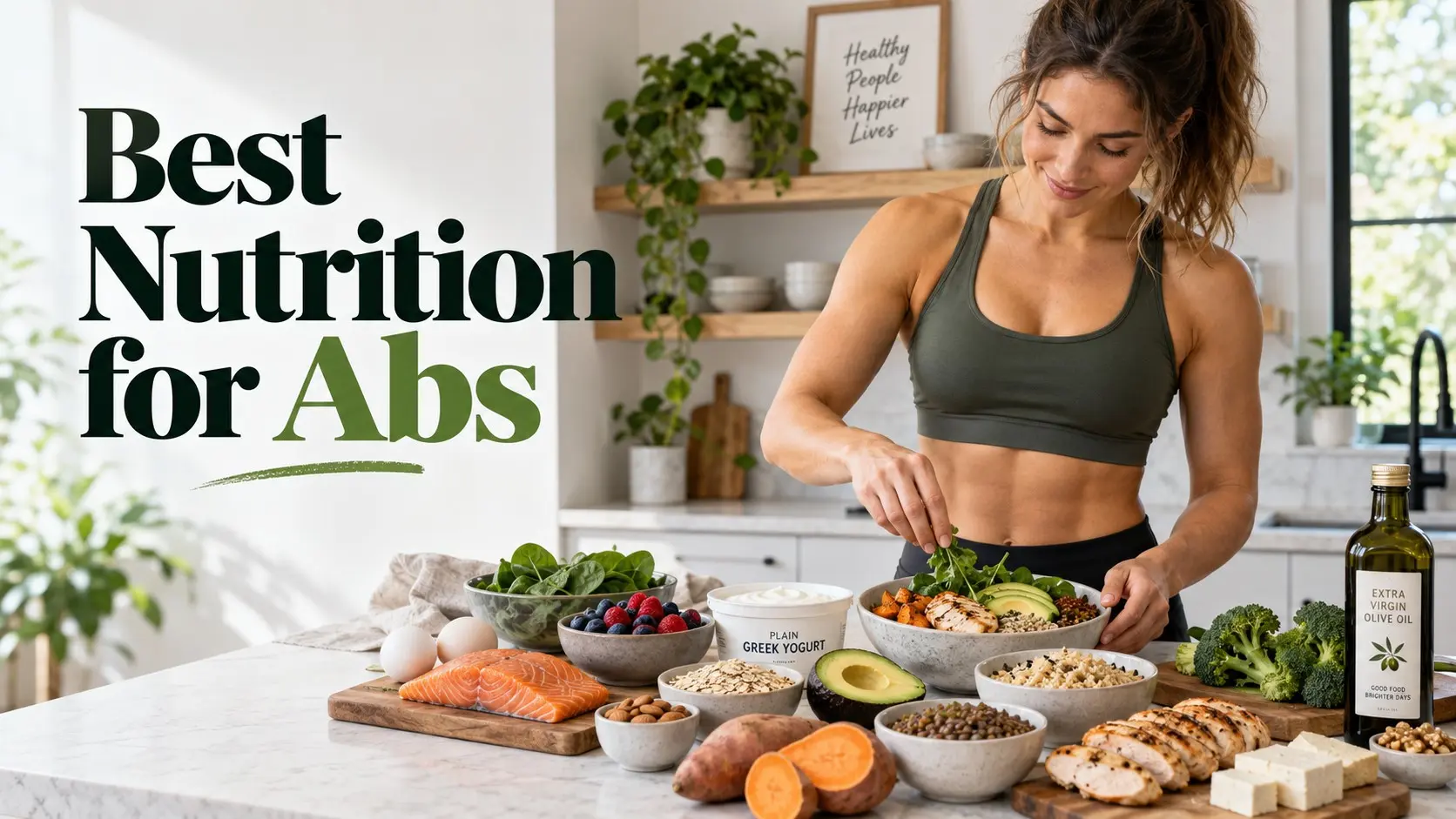
The Best Nutrition for Abs is a full eating pattern that helps you train well, get enough protein, manage body fat when that is your goal, preserve muscle, and stay healthy enough to keep going.
That usually means:
- Enough protein
- Vegetables and fruit
- Whole grains and other useful carbohydrates
- Beans and lentils
- Healthy fats
- Mostly minimally processed foods
- Enough total food to train and recover
- A modest calorie deficit only when fat loss is appropriate
Visible abs are an appearance goal.
They are not a requirement for fitness.
You can have a strong, healthy core without a visible six pack.
Important medical note: I am not a dermatologist or A doctor, and this content does not replace professional medical advice. What I share comes from real-life experience, extensive research, and consultation with healthcare providers. Always consult qualified medical professionals for diagnosis and treatment of any health condition.
Speak with a qualified healthcare professional or registered dietitian before starting a fat loss diet if you are pregnant, breastfeeding, under 18, have kidney disease, diabetes, heart disease, a history of an eating disorder, unexplained weight loss, missed periods, severe fatigue, or another condition that affects nutrition or exercise.
What Is the Best Nutrition for Abs?
Quick answer: Best Nutrition for Abs means eating enough protein to support muscle, using vegetables, fruit, whole grains, beans, and minimally processed foods for fiber and nutrients, and managing total calorie intake if body fat loss is needed. Combine this with resistance training, core work, regular activity, sleep, and enough recovery.
That answer is less exciting than a list of ten “fat-burning” foods.
It is also more useful.
Visible Abs Need Two Different Things
There are two parts to the look people usually mean by defined abs.
First: You need abdominal muscle.
Second: There needs to be little enough fat covering that muscle for some definition to show.
Food helps with both.
Protein and enough total nutrition support muscle.
Energy balance influences fat gain or loss.
Training builds the muscle.
Genetics affects where your body stores and loses fat.
That means two people at the same body weight can look very different around the waist.
You Cannot Choose Exactly Where Fat Comes Off First
Core exercises are useful.
They strengthen the abdominal muscles.
They can make the muscles larger and stronger.
But doing hundreds of crunches is not a reliable replacement for overall body fat management.
Research on local fat loss is mixed.
An older randomized trial found that abdominal exercises improved muscular endurance but did not significantly reduce abdominal fat.
More recent small studies have raised questions about whether some local effects can occur under specific training conditions.
For practical purposes, I would not build a fat loss plan around spot reduction.
Train your abs to strengthen them.
Manage overall body composition with the full diet and training plan.
For core training ideas, see the NextFitLife Ab Workouts Guide.
Calorie Balance Matters More Than Any One Food
Body fat loss requires your body to use more energy than you eat over time.
This is called a calorie deficit.
CDC guidance explains that physical activity raises energy use and that combining activity with reduced calorie intake creates the deficit that leads to weight loss.
That does not mean eating as little as possible.
Very aggressive dieting can make training worse.
It can increase hunger.
It can reduce daily movement.
It can increase the risk of losing muscle.
It can also make the plan impossible to maintain.
If fat loss is your goal, use a realistic deficit.
If weight is already healthy and performance is good, you may not need a deficit at all.
For weight loss troubleshooting, read Why I Am Not Losing Weight in a Calorie Deficit?.
Protein Is the First Nutrient I Would Check
Your abdominal muscles are muscle tissue.
Muscle needs adequate protein intake.
Protein also helps meals feel filling.
This can make a fat loss diet easier to follow.
Resistance training plus enough dietary protein helps support lean mass.
A 2024 systematic review in adults with overweight or obesity found that higher protein intake during weight loss was more effective for preserving muscle mass than lower intake.
The exact amount you need depends on:
- Body size
- Training
- Age
- Calorie intake
- Health
- Overall diet
You do not need to turn every meal into a protein contest.
You do need a reliable protein source throughout the day.
12 Winning Food Choices for Abs Nutrition
| Food | Main Nutrition Value | Why It Fits? |
|---|---|---|
| 1. Eggs | Protein, vitamin B12, choline | Simple protein for breakfast or meals |
| 2. Plain Greek yogurt | Protein, calcium, vitamin B12 | Easy high-protein snack or breakfast |
| 3. Chicken or turkey | Protein | Makes it easy to build a protein-centred meal |
| 4. Salmon | Protein, omega-3 fats, vitamin D, vitamin B12 | Provides protein plus useful unsaturated fats |
| 5. Lentils and beans | Protein, fibre, iron, folate | Supports fullness and plant-based meals |
| 6. Tofu and tempeh | Plant protein, iron, minerals | Useful meat-free protein choices |
| 7. Oats | Carbohydrate, fibre | Useful workout fuel and filling breakfast food |
| 8. Potatoes, rice, and whole grains | Carbohydrate and varied nutrients | Support training and make meals satisfying |
| 9. Berries and whole fruit | Fibre, vitamins, water, plant compounds | Adds sweetness without relying on added sugar |
| 10. Spinach, broccoli, and vegetables | Fibre, vitamins, minerals | Adds volume and nutrition to meals |
| 11. Nuts and seeds | Unsaturated fats, protein, fibre, minerals | Small portions add useful fats and texture |
| 12. Avocado and olive oil | Unsaturated fats | Useful fat sources when portions fit energy needs |
1. Eggs Make Protein Simple
Eggs are useful because they are easy.
You get protein without complicated preparation.
Try eggs with:
- Oats
- Whole grain toast
- Potatoes
- Vegetables
- Fruit
Eggs do not target belly fat.
They simply make a balanced meal easier.
2. Plain Greek Yogurt Works for Breakfast or Snacks
Greek yogurt provides a concentrated source of protein.
Add:
- Berries
- Oats
- Chia seeds
- Walnuts
Choose plain yogurt when you want more control over added sugar.
If you have lactose intolerance, a lactose free version may be easier to tolerate.
3. Chicken and Turkey Make Protein Easy to Plan
Chicken and turkey are simple protein foods.
Use them with:
- Rice
- Potatoes
- Whole grains
- Vegetables
- Salad
You do not need dry chicken breast at every meal to get lean.
Food should still taste good.
4. Salmon Gives You Protein Plus Useful Fat
Salmon provides protein and long-chain omega-3 fats.
It also supplies vitamin D and vitamin B12.
What it does not do is “burn abdominal fat.”
The old version of this article gave salmon too much credit.
Use salmon because it is nutritious.
Do not treat it like a fat burner.
5. Lentils and Beans Are Excellent Abs Foods
This may surprise people who think abs require a meat-heavy diet.
Beans and lentils provide:
- Protein
- Fiber
- Iron
- Folate
- Carbohydrate
Fibre can make meals more filling.
That can help with calorie control.
Beans do cause gas in some people.
That does not make them a bad food.
Increase portions gradually if your usual diet is low in fiber.
6. Tofu and Tempeh Give Plant Based Protein
You do not need animal food to build a strong core.
Tofu and tempeh are useful sources of plant protein.
Add them to:
- Rice bowls
- Stir-fry meals
- Salads
- Vegetable dishes
- Wraps
A well-planned vegan diet can support strength training.
Total protein and the full diet still matter.
7. Oats Give You Useful Carbohydrate and Fibre
Carbohydrates are not the enemy of visible abs.
This myth needs to go.
Your body uses carbohydrate during many forms of training.
Oats provide carbohydrate plus fibre.
Try oats with yogurt, milk, fortified soy milk, berries, or eggs on the side.
8. Potatoes, Rice, and Whole Grains Can Fit Too
You do not need to remove rice to see abdominal definition.
You do not need to remove potatoes.
You do not need a zero carbohydrate diet.
WHO's 2026 healthy diet guidance says that for most people, carbohydrates should come mainly from whole grains, vegetables, fruit, and pulses.
Training also needs energy.
Use portions that fit your total needs.
9. Berries and Whole Fruit Make Sweet Food Easier
Berries provide fibre and natural sweetness.
Whole fruit can help replace foods with lots of added sugar.
Good options include:
- Berries
- Apples
- Oranges
- Kiwi
- Melon
- Bananas
Fruit does not make you fat simply because it contains sugar.
Total diet and energy balance matter.
10. Vegetables Help Build Bigger Meals for Fewer Calories
This is practical.
Vegetables provide water, fibre, vitamins, minerals, and food volume.
Use:
- Spinach
- Broccoli
- Carrots
- Peppers
- Cucumber
- Tomatoes
- Zucchini
- Leafy greens
A large vegetable serving can make a fat loss meal feel much less like dieting.
11. Nuts and Seeds Are Healthy but Easy to Overeat
Almonds, walnuts, pumpkin seeds, chia seeds, and flaxseed are useful foods.
They provide unsaturated fats, minerals, some protein, and fibre.
They are also energy-dense.
A small handful and half a bag are very different portions.
This is one food group where portion awareness helps when fat loss is the goal.
12. Avocado and Olive Oil Are Healthy Fats, Not Free Calories
Avocado and olive oil provide mainly unsaturated fats.
They can absolutely fit an abs diet.
But healthy fat still provides energy.
Pouring unlimited oil over a salad does not make the calories disappear.
Use enough for flavour and nutrition.
You do not need to avoid fat.
You do need perspective.
The Best Plate for Abs Is Boringly Normal
I would use a simple meal structure.
| Meal Part | Examples | Purpose |
|---|---|---|
| Protein | Eggs, chicken, fish, yogurt, tofu, beans, lentils | Supports muscle and satiety |
| Vegetables or fruit | Broccoli, spinach, peppers, berries, fruit | Provides fibre, nutrients, and food volume |
| Carbohydrate | Oats, rice, potatoes, beans, whole grains | Supports training and energy |
| Fat | Olive oil, avocado, nuts, seeds | Adds flavour and essential fats |
You do not need a separate “six-pack food pyramid.”
How Much Protein Do You Need for Defined Abs?
There is no single protein number that fits every reader.
A person's needs depend on body size, training, age, calorie intake, and health.
Higher protein intake can be especially useful during fat loss because dieting can reduce both fat and lean tissue.
A 2024 systematic review in adults with overweight or obesity found better muscle mass preservation when protein intake was higher.
Longstanding resistance training research also suggests that increasing protein helps muscle gain when paired with strength training, but benefits eventually level off.
You do not need huge amounts.
Spread protein across meals.
Use real food first.
If you have kidney disease or another condition that affects protein intake, use individual medical nutrition advice.
Do You Need Protein Powder?
No.
Protein powder is convenient.
It is not required.
You can get protein from:
- Eggs
- Fish
- Chicken
- Greek yogurt
- Cottage cheese
- Milk
- Soy milk
- Lentils
- Beans
- Tofu
- Tempeh
A shake can help when food is not practical.
It does not produce better abs simply because it comes in a shaker bottle.
Do Carbohydrates Hide Your Abs?
No.
Carbohydrate does not automatically become belly fat.
Your overall energy balance matters.
Carbohydrate also supports hard training.
Useful carbohydrate foods include:
- Oats
- Potatoes
- Rice
- Fruit
- Beans
- Lentils
- Whole grains
Very low carbohydrate diets can work for some people.
They are not required for abdominal definition.
Should You Cut Bread?
No, unless you have a reason.
Whole grain bread can provide carbohydrate, fiber, and nutrients.
Regular bread can fit too.
The portion and the rest of the meal matter.
Do not remove entire food groups just because an influencer has visible abs.
Fiber Helps More Than People Think
Fiber does not burn belly fat.
It can still make a fat loss diet easier.
Fiber rich foods tend to add volume and can help with fullness.
WHO's current guidance recommends at least 25 grams of naturally occurring fiber per day for people older than age 10.
Good sources include:
- Vegetables
- Fruit
- Beans
- Lentils
- Oats
- Whole grains
- Nuts
- Seeds
Increase fibre gradually if your usual intake is low.
Does Bloating Mean You Are Gaining Belly Fat?
No.
Bloating and body fat are different.
Your abdomen can look different after:
- A large meal
- Constipation
- Gas
- Extra sodium
- Menstrual cycle changes
- A high fiber meal
- Travel
- Digestive problems
That does not mean you gained abdominal fat in one afternoon.
For digestive nutrition guidance, use the NextFitLife Gut Health Foods Guide.
Does Sodium Hide Your Abs?
Sodium can affect fluid balance.
A salty meal can temporarily change scale weight or how tight your stomach looks.
That is not the same as fat gain.
Do not dehydrate yourself or aggressively remove salt just to look leaner.
Normal hydration and normal eating are safer.
Green Tea Is Not an Abs Shortcut
The old article treated green tea like a metabolism booster.
That gave it too much importance.
Green tea can be a low-calorie drink.
Replacing sugary drinks with unsweetened tea can reduce calorie intake.
That is useful.
But drinking green tea does not target abdominal fat enough to replace diet and training.
Avocado Does Not Balance Your Hormones for Abs
Avocado is nutritious.
It provides fibre, potassium, and unsaturated fat.
That does not mean half an avocado automatically “balances hormones” or removes belly fat.
Use it because you enjoy it, and it fits the meal.
Skip the magic language.
Spinach Does Not Block Fat Storage
Spinach is a good vegetable.
That is enough.
You do not need spinach extract to make spinach valuable.
Fresh or cooked spinach contributes fiber, folate, vitamin K, carotenoids, and other nutrients.
Eat it as food.
Do You Need to Avoid Processed Foods Completely?
No.
Processing is not one thing.
Plain yogurt is processed.
Frozen vegetables are processed.
Canned beans are processed.
Those can all fit a healthy diet.
The bigger concern is a diet dominated by highly processed foods that make it easy to eat a lot of energy while getting little fiber or food variety.
The 2025 to 2030 Dietary Guidelines prioritize whole, nutrient dense foods and recommend reducing highly processed foods with excess refined carbohydrates, added sugars, sodium, and unhealthy fats.
What Should You Limit for Better Abs Nutrition?
I would focus on frequency rather than banning foods.
| Food or Habit | Why It Can Make Progress Harder | Better Approach |
|---|---|---|
| Sugary drinks | Easy calories with little fullness | Use water, unsweetened drinks, or smaller portions |
| Frequent alcohol | Adds energy and can affect sleep and recovery | Drink less or choose alcohol free options |
| Constant snack foods | Can add energy with little satiety | Use structured meals and planned snacks |
| Large portions of calorie-dense sauces and oils | Healthy fats still contain energy | Use enough for flavour, not unlimited amounts |
| Crash dieting | Makes recovery, training, hunger, and muscle retention harder | Use a gradual, repeatable plan |
Alcohol Can Work Against the Goal
Alcohol adds energy.
It can also disturb sleep.
Poor sleep can make training and appetite management harder.
You do not need perfect abstinence to have abdominal definition.
But frequent heavy drinking does not help.
Do You Need to Eat Six Small Meals?
No.
Meal frequency is personal.
Three meals can work.
Three meals and a snack can work.
More frequent meals can work.
The important parts are:
- Total energy intake
- Protein
- Nutrient quality
- Hunger control
- Training
- Consistency
Choose a meal pattern you can repeat.
What Should You Eat Before an Abs Workout?
You do not need special core workout nutrition.
If you are doing a normal gym session, eat the way you would for other strength training.
A simple meal can include:
- Oats with yogurt
- Banana with Greek yogurt
- Rice with chicken or tofu
- Toast with eggs
- Fruit with yogurt
If you train comfortably without eating first, that can work too.
There is no special “abs food” that must be eaten before crunches.
What Should You Eat After Training?
Have a normal meal with protein and carbohydrate.
Examples:
- Chicken with rice and vegetables
- Salmon with potatoes and broccoli
- Tofu with rice and vegetables
- Greek yogurt with fruit and oats
- Eggs with potatoes and fruit
- Lentils with rice and vegetables
Protein supports recovery.
Carbohydrate helps replenish training fuel.
You do not need an expensive recovery product.
Resistance Training Matters for Visible Abs
Diet alone can make you lighter.
It does not automatically build muscle.
Resistance training gives your body a reason to maintain and build lean tissue.
Train the full body.
Do not only train abs.
Useful movements can include:
- Squats
- Rows
- Presses
- Hip hinges
- Lunges
- Pulling movements
- Core exercises
Current CDC guidance recommends muscle strengthening activity at least two days each week for adults.
For home training options, see the NextFitLife Home Workouts Guide.
Cardio Can Help, but You Do Not Need to Live on a Treadmill
A 2025 meta analysis found that aerobic, resistance, and combined training can all reduce body fat.
A separate 2025 review found that prolonged exercise reduced both abdominal visceral fat and abdominal subcutaneous fat in adults with overweight or obesity.
That supports a mixed approach.
Walk.
Lift.
Use cardio you enjoy.
Train the core too.
You do not need punishment workouts.
Sleep Belongs in an Abs Plan
This is not a food tip.
It still matters.
Poor sleep can make appetite, recovery, mood, and training harder to manage.
Visible abs are not created by staying awake late to fit in another workout.
Recovery is part of training.
A Simple One-Day Abs Nutrition Example
| Meal | Example |
|---|---|
| Breakfast | Eggs, oats, berries, and plain yogurt |
| Lunch | Chicken or tofu, rice, broccoli, tomato, and olive oil |
| Snack | Greek yogurt with fruit or a small portion of nuts |
| Dinner | Salmon or lentils, potatoes, spinach, and vegetables |
This is only an example.
Your calorie and portion needs can be very different.
A Simple Seven-Day Food Rotation
| Day | Main Protein | Carbohydrate | Produce |
|---|---|---|---|
| Day 1 | Eggs and yogurt | Oats and potatoes | Berries and broccoli |
| Day 2 | Chicken | Rice | Spinach and peppers |
| Day 3 | Lentils | Whole grains | Tomatoes and fruit |
| Day 4 | Salmon | Potatoes | Broccoli and berries |
| Day 5 | Tofu | Rice | Vegetable stir fry |
| Day 6 | Beans and yogurt | Whole grain bread | Salad and fruit |
| Day 7 | Chicken, eggs, or tempeh | Potatoes or rice | Mixed vegetables |
Do You Need to Count Calories?
Not everyone does.
Some people can create a suitable energy deficit by improving portions and food quality.
Others find short-term tracking useful.
Tracking is a tool.
It should not control your life.
If counting food causes anxiety, obsessive behaviour, bingeing, or fear around meals, stop and seek qualified support.
There Is No Universal Body Fat Percentage for Abs
You will see exact numbers online.
I would not promise them.
Abdominal definition varies with:
- Genetics
- Sex
- Age
- Fat distribution
- Muscle size
- Skin
- Lighting
- Posture
- Hydration
Two people can have the same body fat percentage and very different visible abs.
Do not chase someone else's number.
Visible Abs Are Not Always the Healthiest Goal
This matters.
Some people can maintain visible abdominal definition comfortably.
Others need an eating pattern that is too restrictive to maintain that look year-round.
A strong core is useful.
Healthy body weight is useful.
Good blood pressure, fitness, sleep, strength, and metabolic health matter.
A permanent magazine photo look is not required.
Signs Your Abs Diet Is Too Aggressive
Get professional help if a fat loss diet leads to:
- Persistent dizziness
- Fainting
- Severe fatigue
- Hair loss
- Missed menstrual periods
- Constant food thoughts
- Binge eating
- Purging
- Fear of normal foods
- Rapid unexplained weight loss
- Worsening training performance
The goal should not cost your health.
My Practical Approach to Nutrition for Abs
I would not start by banning bread.
I would not start by buying protein powder.
I would not start by drinking green tea three times a day.
I would ask:
Is there protein at most meals?
Are vegetables and fruit present?
Is fiber high enough?
Are liquid calories frequent?
Are portions of calorie-dense foods larger than expected?
Is strength training consistent?
Is sleep adequate?
Is the calorie deficit real but not extreme?
That tells you far more than a list of fat-burning foods.
Conclusion
The Best Nutrition for Abs is not a magic list.
It is a repeatable eating pattern.
Use eggs, fish, chicken, yogurt, beans, lentils, tofu, oats, rice, potatoes, fruit, vegetables, nuts, seeds, avocado, and olive oil in portions that fit your needs.
Get enough protein.
Train your whole body.
Train your core.
Use a realistic calorie deficit only when fat loss is appropriate.
Sleep.
Recover.
And remember that visible abs are optional.
Your next step: Look at tomorrow's three main meals. Add a clear protein source to each one, add vegetables or fruit, and choose one useful carbohydrate instead of cutting entire food groups.
References and Sources
The following accessible sources were used to research and fact-check this article:
- Centers for Disease Control and Prevention. Physical Activity and Your Weight and Health. Updated April 7, 2026.CDC explains the relationship between calorie intake, physical activity, calorie deficit, healthy weight management, aerobic activity, and muscle strengthening.Read the CDC Physical Activity and Weight Guide
- World Health Organization. Healthy Diet. Updated January 26, 2026.WHO provides current guidance on food variety, whole grains, vegetables, fruit, pulses, dietary fiber, carbohydrate, free sugars, and healthy fats.Read the WHO Healthy Diet Guidance
- United States Department of Health and Human Services and United States Department of Agriculture. Dietary Guidelines for Americans, 2025 to 2030.The current guidelines prioritize nutrient dense whole foods, vegetables, fruits, protein foods, healthy fats, whole grains, and fewer highly processed foods with excess added sugar, sodium, refined carbohydrates, and unhealthy fat.Read the Current Dietary Guidelines for Americans
- Lafontant K and colleagues. Comparison of Concurrent, Resistance, or Aerobic Training on Body Fat Loss: A Systematic Review and Meta-Analysis. 2025.This systematic review and meta-analysis compared resistance, aerobic, and combined training and found that different exercise modes can contribute to reductions in body fat.Read the Full Open Access Exercise and Body Fat Review
- Ueshima J and colleagues. Enhanced Protein Intake on Maintaining Muscle Mass, Strength, and Physical Function in Adults With Overweight or Obesity: A Systematic Review and Meta Analysis. 2024.This review evaluated protein intake during weight loss and found that higher protein intake can help preserve muscle mass in adults with overweight or obesity.Read the Protein and Muscle Preservation Review on PubMed
Continue Reading on NextFitLife
Use these related NextFitLife guides to build a stronger nutrition and training plan:
- Weight Loss and Metabolism HubLearn about calorie balance, protein, fibre, portions, exercise, sleep, weight loss plateaus, and safe progress.
- Why Am I Not Losing Weight in a Calorie Deficit?Check hidden calories, water weight, tracking, sleep, movement, medicine, stress, constipation, and realistic weight trends.
- Ab Workouts for MenUse core exercises to strengthen abdominal muscles while remembering that core work alone is not a complete fat loss strategy.
- Home Workouts and Equipment GuideBuild full body strength with bodyweight training, dumbbells, resistance bands, kettlebells, and simple home exercise options.
- Top Healthy Foods GuideBuild meals around vegetables, fruit, whole grains, beans, fish, eggs, yogurt, nuts, seeds, and other nutrient rich foods.
- Nutrition and Vitamins HubExplore protein, vitamins, minerals, food sources, deficiency questions, supplements, and food first nutrition.
Main weight management hub: Visit the NextFitLife Weight Loss and Metabolism Hub for more practical guidance on food, portions, activity, sleep, and sustainable fat loss.
About the Author
Adel Galal is the Founder and Lead Writer of NextFitLife.
Adel has maintained a personal interest in health, fitness, nutrition, sleep, wellness, and healthy aging for more than 30 years.
His health and wellness writing experience spans more than 15 years.
At NextFitLife, his role is to research topics, compare reputable sources, identify important limits in the evidence, and turn complex health and fitness information into clear steps readers can use.
For nutrition and body composition articles, he reviews public health guidance, sports nutrition research, systematic reviews, weight management evidence, and exercise science before writing practical recommendations.
Adel is not a doctor, registered dietitian, certified personal trainer, exercise physiologist, physiotherapist, endocrinologist, or other licensed healthcare professional.
This article provides general education only and does not prescribe a personal calorie target, body fat goal, weight loss rate, diet, supplement plan, or exercise program.
Learn more about Adel Galal, NextFitLife, and the site's editorial approach on the About Us page.
Frequently Asked Questions
What is the best nutrition for abs?
The best nutrition for abs is a balanced eating pattern with adequate protein, vegetables, fruit, fiber rich carbohydrate foods, and suitable fats. If reducing body fat is appropriate, total calorie intake must also support a realistic calorie deficit.
What foods help reveal abs?
No individual food reveals abs. Foods such as eggs, fish, Greek yogurt, chicken, beans, lentils, tofu, oats, potatoes, fruit, vegetables, nuts, and seeds can help build a nutritious eating pattern.
Do you need a calorie deficit to get visible abs?
If body fat needs to decrease for your abdominal muscles to become visible, a calorie deficit is required for fat loss. People who are already lean enough may not need further weight loss.
Can you lose belly fat with ab exercises?
Ab exercises build and strengthen abdominal muscles. They should not be relied on as the main method for reducing abdominal fat. Overall diet, activity, resistance training, and body composition matter more.
How much protein should I eat for abs?
Protein needs differ with body size, age, training, calorie intake, and health. People doing resistance training or losing weight may benefit from higher protein intake, but there is no one amount that fits everyone.
Do I need protein powder for abs?
No. Protein powder is only a convenient food product. Eggs, fish, poultry, yogurt, beans, lentils, tofu, tempeh, milk, and fortified soy drinks can provide protein too.
Are eggs good for abs?
Eggs are a useful protein food and can fit a diet aimed at muscle maintenance or fat loss. They do not burn belly fat directly.
Is salmon good for abs?
Salmon provides protein, omega 3 fats, vitamin D, and vitamin B12. It can fit a balanced diet but does not specifically burn abdominal fat.
Is Greek yogurt good for abs?
Plain Greek yogurt provides protein and can make an easy breakfast or snack. Pair it with fruit, oats, nuts, or seeds as part of a balanced meal.
Are beans good for abs?
Yes. Beans provide protein and fiber and can make meals filling. They can fit both weight management and muscle supporting diets.
Can I eat rice and still get abs?
Yes. Rice can fit a diet for abdominal definition. Total calorie intake, protein, training, and overall food quality matter more than removing one carbohydrate food.
Can I eat potatoes and still get abs?
Yes. Potatoes provide carbohydrate and several nutrients. Portion size and the overall meal matter more than avoiding potatoes.
Do carbs hide your abs?
No. Carbohydrates do not automatically cause abdominal fat. Excess total energy intake over time can increase body fat. Carbohydrates also support training performance.
Should I stop eating bread to get abs?
No. Bread can fit a balanced diet. Whole grain options can provide more fibre, but regular bread can also fit when portions and the overall diet match your needs.
Does green tea burn belly fat?
Green tea is a low-calorie drink when unsweetened, but it should not be treated as a belly fat-burning method. Replacing sugary drinks with unsweetened tea can help reduce calorie intake.
Does avocado help reveal abs?
Avocado provides fiber and unsaturated fat. It can fit a healthy diet, but it does not balance hormones or specifically remove belly fat.
How important is fiber for abs?
Fiber supports digestion and can make meals more filling. Vegetables, fruit, beans, lentils, oats, whole grains, nuts, and seeds are useful sources.
Should I avoid fat to get abs?
No. Dietary fat is essential. Use suitable portions of foods such as olive oil, avocado, nuts, seeds, and fish. Fat is energy dense, so portion awareness can help during fat loss.
Can I get abs without cardio?
It is possible to change body composition without formal cardio, but aerobic activity has important health benefits and can increase energy expenditure. Resistance training, daily movement, and diet remain important too.
How often should I train abs?
Your core can be trained as part of a balanced strength program. Frequency depends on exercise difficulty, total training volume, fitness level, and recovery. More is not automatically better.
Do I need visible abs to be healthy?
No. Visible abs are an appearance trait, not a health requirement. You can have excellent fitness, strength, blood pressure, metabolic health, and core function without a visible six pack.
Why do my abs look different after eating?
Food volume, gas, constipation, fluid balance, sodium, menstrual cycle changes, and bloating can temporarily change how your abdomen looks. That is not the same as gaining body fat.
Is very low body fat always healthy?
No. Extremely low body fat or aggressive dieting can affect energy, hormones, menstrual function, training, mood, sleep, and overall health. Individual healthy ranges differ.
What should I eat after an ab workout?
A normal meal with protein and carbohydrate is enough. Examples include chicken with rice, salmon with potatoes, tofu with rice, yogurt with fruit and oats, or lentils with grains.

Health & wellness writer with 30+ years of experience in nutrition, fitness, and healthy aging. Founder of NextFitLife.com — evidence-based health guidance.