Published on: August 20, 2025
Updated on: October 17, 2026
Written and source checked by: Adel Galal, Founder and Lead Writer at NextFitLife
Medical review status: This article has not been medically reviewed by a doctor, cardiologist, nephrologist, endocrinologist, pharmacist, obstetric clinician, registered nurse, or registered dietitian.
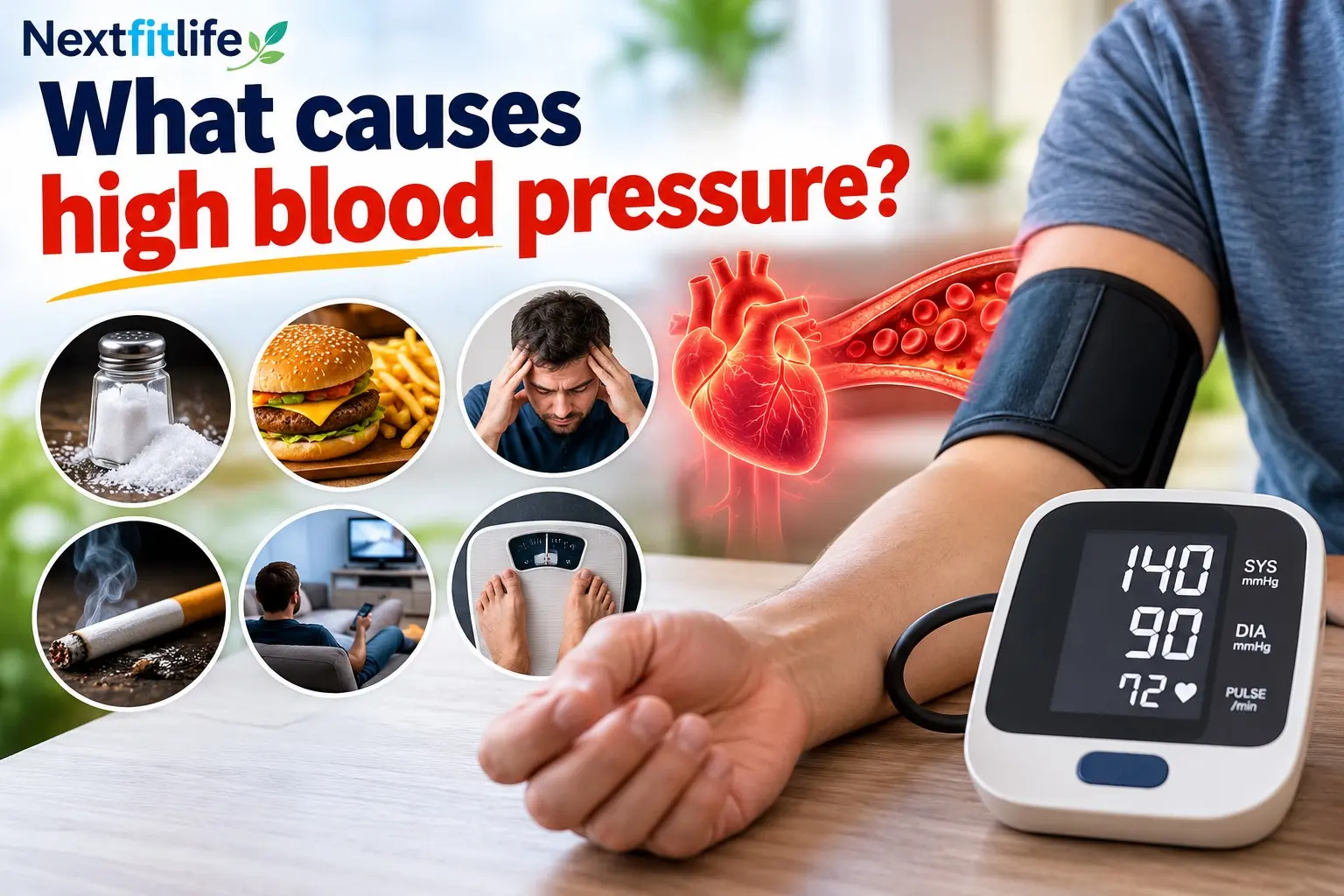
If you are wondering what causes high blood pressure, the answer is usually not one food, one stressful day, or one bad habit.
Most adults have primary hypertension. It develops gradually through a mix of genetics, aging, artery changes, kidney and hormone regulation, excess sodium, low potassium intake, body weight, physical activity, sleep, alcohol, nicotine, stress, diabetes, and other factors.
A smaller group has secondary hypertension, where another condition, medicine, supplement, or substance is pushing blood pressure higher. Kidney disease, sleep apnea, primary aldosteronism, thyroid disorders, narrowed kidney arteries, pregnancy related disorders, stimulants, and some medicines are important examples.
High blood pressure usually causes no clear symptoms. You can feel completely normal while it slowly affects the heart, brain, kidneys, eyes, and arteries.
This article is for general information and education. It does not replace medical advice, diagnosis, or treatment.
If you want to understand the top blood pressure number first, read Systolic Blood Pressure. For accurate home readings, see How to Check Heart Health at Home.
Table of Contents
- What high blood pressure means
- Current blood pressure categories
- Primary vs secondary hypertension
- 15 critical causes and contributors
- Age and artery stiffness
- Family history and genetics
- Excess sodium
- Low potassium intake
- Physical inactivity
- Excess body weight
- Alcohol
- Nicotine and smoking
- Poor sleep
- Sleep apnea
- Diabetes and insulin resistance
- Kidney disease
- Hormone disorders
- Medicines and supplements
- Stimulants and recreational drugs
- Stress and blood pressure
- Pregnancy related hypertension
- White coat and masked hypertension
- Resistant hypertension
- Symptoms and silent disease
- How doctors find the cause
- Safe home measurement
- How to prevent high blood pressure
- DASH and sodium
- Exercise and weight
- When medicine is needed
- Emergency readings
- Frequently asked questions
What Is High Blood Pressure?
High blood pressure, also called hypertension, means the pressure of blood against artery walls stays higher than it should over time.
Blood pressure is written as two numbers.
The first number is systolic blood pressure. It measures artery pressure while the heart contracts.
The second number is diastolic blood pressure. It measures pressure while the heart relaxes between beats.
Both numbers matter.
Current Adult Blood Pressure Categories
| Category | Systolic | Diastolic |
|---|---|---|
| Normal | Below 120 | Below 80 |
| Elevated | 120 to 129 | Below 80 |
| Stage 1 hypertension | 130 to 139 | Or 80 to 89 |
| Stage 2 hypertension | 140 or higher | Or 90 or higher |
| Severe hypertension | Higher than 180 | And or higher than 120 |
These are current U.S. categories for nonpregnant adults.
Other health systems use different diagnostic thresholds. For example, some international definitions use 140 over 90 mm Hg measured on separate days to define clinical hypertension.
That difference does not mean readings below 140 over 90 are risk free.
Primary vs Secondary Hypertension
This distinction helps explain why two people with the same blood pressure may need different evaluations.
Primary hypertension
Primary hypertension, sometimes called essential hypertension, has no single identifiable cause.
It develops gradually through interacting factors involving:
- Genes
- Kidneys
- Hormones
- Nervous system
- Blood vessels
- Diet
- Sleep
- Activity
- Body weight
- Environment
This is the most common type.
Secondary hypertension
Secondary hypertension is caused or strongly driven by another medical problem, medicine, or substance.
Finding the cause can change treatment.
Possible clues include:
- Blood pressure becoming high at an unusually young age
- Sudden severe hypertension
- Blood pressure rapidly getting worse
- Low potassium
- Kidney function worsening
- Hypertension that stays high despite several medicines
- Strong sleep apnea symptoms
- Signs of hormone disease
15 Critical Causes and Contributors to High Blood Pressure
1. Age and Artery Stiffness
Blood pressure tends to rise as people get older.
One reason is that large arteries gradually become thicker and less elastic.
Healthy arteries stretch each time the heart pumps.
When arteries become stiffer, the same heartbeat creates greater pressure.
This is why isolated systolic hypertension becomes more common with age.
Aging raises risk, but high blood pressure should not be dismissed as normal aging.
2. Family History and Genetics
High blood pressure can run in families.
Genes can influence:
- Salt sensitivity
- Kidney sodium handling
- Hormone systems
- Blood vessel function
- Body weight
- Diabetes risk
Family members also share food habits, stressors, activity patterns, and environments.
A family history does not mean hypertension is unavoidable.
It means prevention and early screening matter more.
3. Excess Sodium
Sodium is an essential mineral, but too much can increase blood pressure in many people.
Excess sodium can make the body retain more fluid and can affect blood vessel function.
The effect is stronger in people who are salt sensitive.
Common high sodium sources include:
- Restaurant meals
- Fast food
- Processed meats
- Canned soups
- Instant noodles
- Salty snacks
- Sauces
- Frozen meals
- Packaged foods
Most sodium does not come from the salt shaker. It often comes from processed and restaurant food.
4. Low Potassium Intake
Potassium helps with fluid balance, nerve function, muscle function, and blood vessel health.
A diet low in potassium rich foods may make blood pressure harder to control.
Useful food sources include:
- Beans
- Lentils
- Potatoes
- Tomatoes
- Leafy vegetables
- Bananas
- Oranges
- Avocado
- Yogurt
- Fish
5. Physical Inactivity
Regular movement helps the heart and blood vessels work efficiently.
Low physical activity can contribute to:
- Higher blood pressure
- Weight gain
- Insulin resistance
- Poor cardiovascular fitness
You do not need extreme workouts to benefit.
Walking, cycling, swimming, resistance training, and other moderate activities can all support blood pressure control.
6. Excess Body Weight
Overweight and obesity can increase blood pressure through several pathways.
Extra body fat can affect:
- Kidney sodium handling
- Hormones
- Inflammation
- Insulin sensitivity
- Sleep apnea risk
- Nervous system activity
The heart may also need to pump blood through a larger body mass.
For adults with overweight or obesity, even moderate weight loss may improve blood pressure and metabolic health.
7. Too Much Alcohol
Alcohol can raise blood pressure.
Heavy or frequent drinking can also contribute to:
- Abnormal heart rhythms
- Weight gain
- Poor sleep
- Liver disease
- High triglycerides
Drinking less can improve blood pressure in some people.
You do not need to start drinking alcohol for heart health.
8. Nicotine and Smoking
Nicotine activates the nervous system.
It can:
- Raise heart rate
- Temporarily raise blood pressure
- Tighten blood vessels
Smoking also damages arteries and greatly increases cardiovascular risk.
Nicotine exposure may come from cigarettes, vaping, nicotine pouches, and other products.
Stopping tobacco protects the heart even when it does not immediately normalize every blood pressure reading.
9. Poor Sleep
Sleep helps regulate the nervous system, metabolism, hormones, and blood pressure.
Repeated short or poor quality sleep may make blood pressure harder to control.
Common contributors include:
- Shift work
- Insomnia
- Irregular sleep schedules
- Stress
- Sleep apnea
Good sleep is part of cardiovascular prevention, not just a way to feel less tired.
10. Obstructive Sleep Apnea
Obstructive sleep apnea repeatedly blocks airflow during sleep.
Each event can trigger:
- Low oxygen
- Adrenaline release
- Blood pressure surges
- Sleep disruption
Possible clues include:
- Loud snoring
- Witnessed breathing pauses
- Gasping during sleep
- Morning headaches
- Daytime sleepiness
- Frequent nighttime urination
- Difficult to control hypertension
Sleep apnea is especially important when blood pressure stays high despite treatment.
11. Diabetes and Insulin Resistance
Diabetes and high blood pressure often occur together.
High glucose, insulin resistance, kidney changes, inflammation, excess body weight, and artery damage can all contribute.
Having both conditions increases the risk of:
- Heart attack
- Stroke
- Kidney disease
- Peripheral artery disease
Managing glucose and blood pressure together is more useful than focusing on only one number.
12. Kidney Disease
The kidneys are central to blood pressure control.
They regulate:
- Sodium
- Fluid
- Hormones
- Blood vessel tone
Chronic kidney disease can raise blood pressure.
High blood pressure can also damage the kidneys.
This can create a cycle where each condition makes the other worse.
Possible kidney related causes include:
- Chronic kidney disease
- Glomerular disease
- Polycystic kidney disease
- Narrowed kidney arteries
Kidney evaluation may include blood creatinine, estimated kidney filtration, urine testing, electrolytes, and urine albumin.
13. Hormone Disorders
Hormones play a major role in sodium, fluid, heart rate, and blood vessel control.
Primary aldosteronism
Primary aldosteronism occurs when the adrenal glands produce too much aldosterone.
This hormone makes the kidneys hold sodium and lose potassium.
It can cause difficult hypertension.
Low potassium is a clue, but normal potassium does not rule it out.
Thyroid disease
Both overactive and underactive thyroid disease can affect blood pressure and heart rate.
Pheochromocytoma
This rare adrenal tumor can release large amounts of stress hormones.
Possible symptoms include:
- Episodes of very high blood pressure
- Headache
- Sweating
- Palpitations
Most people with these symptoms do not have this rare tumor.
Cushing syndrome
Too much cortisol can raise blood pressure and produce metabolic and physical changes.
14. Medicines and Supplements
Sometimes the hidden cause is in the medicine cabinet.
Medicines and products that may raise blood pressure include some:
- NSAID pain relievers such as ibuprofen and naproxen
- Cold and sinus decongestants
- Corticosteroids
- Antidepressants
- Antipsychotic medicines
- ADHD and other stimulant medicines
- Hormonal contraceptives
- Transplant medicines
- Cancer treatments
- Weight loss products
- Energy products
- Licorice root products
15. Stimulants and Recreational Drugs
Stimulants can sharply activate the cardiovascular system.
Examples include:
- Cocaine
- Methamphetamine
- Other amphetamine type drugs
- Some stimulant weight loss products
- Some high dose energy products
They can cause severe blood pressure elevation and dangerous heart or brain complications.
Does Stress Cause High Blood Pressure?
Stress can raise blood pressure temporarily.
Stress hormones make the heart beat faster and can narrow blood vessels.
Chronic stress may also affect blood pressure indirectly through:
- Poor sleep
- Alcohol
- Smoking
- Less physical activity
- Comfort eating
- Missed medicine
But it is too simple to say that hypertension is only caused by stress.
If readings stay high when you are calm and measuring correctly, they still deserve assessment.
Can Anxiety Cause High Blood Pressure?
Anxiety can cause temporary blood pressure spikes.
This may be especially obvious during panic or medical visits.
Repeated home readings help show whether pressure stays high outside stressful moments.
Do not assume chronic high readings are harmless because you have anxiety.
What Is White Coat Hypertension?
White coat hypertension means blood pressure is high in a clinic but lower outside the medical setting.
Stress during appointments may contribute.
It is not simply something to ignore.
Home monitoring or 24 hour ambulatory blood pressure monitoring can help identify the pattern.
What Is Masked Hypertension?
Masked hypertension is the opposite pattern.
Your clinic blood pressure may look normal, while readings at home, work, or during sleep are high.
This can be missed if only office readings are used.
What Is Resistant Hypertension?
Resistant hypertension generally describes blood pressure that remains above goal despite appropriate treatment with several blood pressure medicines, usually including a diuretic, or pressure that requires several medicines to control.
This pattern should trigger a careful review of:
- Measurement technique
- Medicine adherence
- Sodium intake
- NSAID use
- Alcohol
- Sleep apnea
- Kidney disease
- Primary aldosteronism
- Other secondary causes
Sometimes apparent resistant hypertension is caused by incorrect readings or white coat hypertension.
Why Primary Aldosteronism Matters More Than Many People Realize
Primary aldosteronism is a treatable hormone cause of hypertension.
It may be missed because people often expect potassium to be low.
Potassium can be normal.
Testing often starts with an aldosterone to renin ratio when the clinical pattern suggests the condition.
Finding it matters because treatment can be more targeted.
Can High Blood Pressure Start Suddenly?
Yes, but sudden onset raises different questions than gradual hypertension.
A rapid change may occur because of:
- Kidney disease
- Kidney artery narrowing
- Hormone disorders
- New medicine
- Stimulant use
- Pregnancy related disease
- Severe pain or illness
A sudden sustained change deserves medical review.
High Blood Pressure During Pregnancy
Pregnancy requires special blood pressure rules.
High blood pressure during pregnancy may be related to:
- Chronic hypertension
- Gestational hypertension
- Preeclampsia
Preeclampsia can affect several organs and can become serious quickly.
Do not start, stop, or change blood pressure medicine during pregnancy without medical guidance because some common blood pressure medicines are not suitable during pregnancy.
Does Menopause Cause High Blood Pressure?
Blood pressure often becomes more common in women with age, including after menopause.
Several factors can contribute:
- Age related artery stiffness
- Hormonal changes
- Body composition changes
- Sleep problems
- Lower physical activity
- Metabolic changes
Do not assume a rising blood pressure is harmless because menopause is occurring.
Does Caffeine Cause High Blood Pressure?
Caffeine can temporarily raise blood pressure in some people.
Regular coffee intake does not affect everyone in the same way.
If you suspect caffeine is affecting your readings, compare measurements under similar conditions.
Do not drink caffeine for at least 30 minutes before a formal home blood pressure measurement.
Can Dehydration Cause High Blood Pressure?
Dehydration can affect blood pressure, heart rate, kidney function, and fluid regulation.
The response is not always simple.
Some people develop low pressure, while stress hormones and blood vessel tightening can sometimes raise pressure.
Do not treat chronic hypertension simply by drinking more water.
People with heart failure or kidney disease may need specific fluid guidance.
Does Pain Raise Blood Pressure?
Yes.
Acute pain can temporarily activate the stress response and raise blood pressure.
If blood pressure is high during severe pain, repeat it later under calm conditions when appropriate.
A persistent high pattern still needs evaluation.
Can a Full Bladder Raise Blood Pressure?
Yes.
A full bladder can affect a reading.
Empty your bladder before checking blood pressure at home.
This simple step makes your measurements more consistent.
Does High Blood Pressure Cause Headaches?
Routine hypertension usually does not produce a dependable headache pattern.
Headaches are common and have many causes.
Severely elevated pressure with a severe new headache and neurologic symptoms is different and may require emergency assessment.
Do not use headache alone as a home blood pressure test.
Does High Blood Pressure Cause Nosebleeds?
Most nosebleeds are not caused by ordinary hypertension.
Dry air, nose picking, irritation, injury, medicines, and nasal problems are common causes.
Severely elevated blood pressure may occur during a stressful nosebleed, but the nosebleed does not reliably tell you how high your blood pressure is.
Why High Blood Pressure Is Called a Silent Condition
Most people feel nothing.
That is exactly why screening matters.
Untreated hypertension can slowly affect:
- Heart
- Brain
- Kidneys
- Eyes
- Arteries
Waiting for symptoms can mean waiting until damage has already occurred.
How High Blood Pressure Damages the Heart
The heart must pump against arterial pressure with every beat.
Long term hypertension can contribute to:
- Thickening of the left ventricle
- Coronary artery disease
- Heart attack
- Heart failure
- Atrial fibrillation
Read Symptoms of Heart Disease for signs that deserve attention.
How High Blood Pressure Affects the Brain
Hypertension is a major modifiable risk factor for stroke.
It can damage large and small blood vessels in the brain.
Long term hypertension, especially during midlife, is also linked with poorer cognitive health later in life.
Managing blood pressure protects more than the heart.
How High Blood Pressure Affects the Kidneys
Persistent high pressure can damage tiny kidney blood vessels.
As kidney function falls, blood pressure may become even harder to control.
That is why kidney testing matters when hypertension is diagnosed.
How High Blood Pressure Affects the Eyes
Hypertension can damage tiny blood vessels in the retina.
Severe disease may affect vision.
Sudden vision change with severely high blood pressure is an emergency warning sign.
How Doctors Find the Cause of High Blood Pressure
The first step is confirming that blood pressure is truly high.
This may involve:
- Repeated office measurements
- Validated home measurements
- 24 hour ambulatory monitoring
Once hypertension is confirmed, evaluation may include:
- Medical history
- Family history
- Physical examination
- Medicine review
- Supplement review
- Alcohol and nicotine use
- Sleep history
- Cardiovascular risk assessment
Blood and Urine Tests
Depending on the situation, testing may include:
- Kidney function
- Electrolytes
- Blood glucose
- A1C
- Cholesterol
- Blood count
- Urinalysis
- Urine albumin to creatinine ratio
- Thyroid testing
Additional tests may be used when a secondary cause is suspected.
Tests for Secondary Hypertension
Depending on the clues, doctors may order:
- Aldosterone and renin testing
- Sleep study
- Kidney ultrasound
- Kidney artery imaging
- Adrenal hormone tests
- Other endocrine testing
- Echocardiogram
Not everyone needs every test.
How to Measure Blood Pressure Correctly at Home
Bad technique can make a normal blood pressure look high.
Use the right device
Use a validated automatic upper arm monitor with the correct cuff size.
Do not rely on a cuffless watch or ring for diagnosis or treatment decisions.
Thirty minutes before measuring
Avoid:
- Exercise
- Caffeine
- Nicotine
- Smoking
Empty your bladder.
Rest first
Sit quietly for at least five minutes.
Do not talk, text, or scroll through your phone.
Correct posture
- Keep your back supported.
- Keep feet flat on the floor.
- Do not cross your legs.
- Place the cuff on bare skin.
- Support your arm.
- Keep the cuff near heart level.
Take two readings
Take two readings about one minute apart.
Record both.
Look for a pattern over time rather than reacting to every small change.
How to Prevent High Blood Pressure
You cannot change every risk factor, but you can change many.
The strongest prevention plan is usually a group of realistic habits rather than one trick.
1. Use a DASH Style Eating Pattern
DASH stands for Dietary Approaches to Stop Hypertension.
The pattern emphasizes:
- Vegetables
- Whole fruits
- Whole grains
- Beans
- Peas
- Lentils
- Nuts
- Seeds
- Fish
- Poultry
- Lower fat dairy when appropriate
- Unsaturated plant oils
It limits excess:
- Sodium
- Added sugar
- Sugary drinks
- Fatty processed meats
- Saturated fat
2. Reduce Excess Sodium
The 2025 U.S. guideline recommends reducing sodium intake, with less than 2,300 mg per day as a useful limit and movement toward 1,500 mg when appropriate.
You do not have to remove every grain of salt from food.
The biggest gains often come from reducing heavily processed and restaurant foods.
3. Eat More Potassium Rich Foods When Safe
Dietary potassium can help counter some effects of sodium.
Food is generally preferred over supplements.
Good choices may include:
- Beans
- Lentils
- Potatoes
- Leafy greens
- Tomatoes
- Fruit
- Yogurt
- Fish
People with kidney disease or medicines that raise potassium need individual advice.
4. Move Regularly
Regular aerobic and resistance activity supports blood pressure control.
Current guidance supports about 75 to 150 minutes of aerobic and or resistance activity per week, depending on intensity and personal ability.
Activities can include:
- Walking
- Cycling
- Swimming
- Dancing
- Strength training
Start at a level that is safe for your fitness and health.
5. Reach a Healthier Weight if Needed
Weight loss is not necessary or appropriate for every person.
But for adults with overweight or obesity, modest sustainable weight loss can improve blood pressure and metabolic health.
Avoid:
- Crash diets
- Severe dehydration
- Stimulant fat burners
- Unregulated weight loss products
6. Protect Your Sleep
Aim for a consistent sleep schedule.
Ask about sleep apnea if you have:
- Loud snoring
- Breathing pauses
- Nighttime choking
- Daytime sleepiness
- Morning headache
- Resistant hypertension
7. Reduce or Avoid Alcohol
Less alcohol is generally better for blood pressure.
If you choose to drink, current U.S. hypertension guidance advises no more than two drinks per day for men and one per day for women.
You do not need alcohol for cardiovascular health.
8. Stop Smoking and Nicotine Use
Stopping tobacco reduces the risk of heart attack, stroke, cancer, lung disease, and vascular disease.
If quitting is difficult, evidence based support can include counseling and approved stop smoking medicines.
9. Manage Stress Without Blaming Yourself
Stress management can help your cardiovascular health, but hypertension should not be framed as a personal failure.
Useful strategies can include:
- Regular activity
- Slow breathing
- Consistent sleep
- Social support
- Relaxation exercises
- Professional mental health support
Work schedules, income, food access, neighborhood conditions, caregiving, trauma, and access to healthcare can all influence blood pressure.
10. Take Prescribed Medicine Consistently
If you need medicine, taking it correctly is part of prevention because controlled blood pressure helps prevent:
- Stroke
- Heart attack
- Heart failure
- Kidney disease
Feeling well does not mean you no longer need treatment.
When Is Blood Pressure Medicine Recommended?
The 2025 U.S. guideline recommends medication plus lifestyle treatment for all adults with an average blood pressure of at least 140 over 90 mm Hg.
Medication may also begin at 130 over 80 mm Hg in people with higher cardiovascular risk, including some adults with:
- Known cardiovascular disease
- Previous stroke
- Diabetes
- Chronic kidney disease
- Higher predicted cardiovascular risk
People at lower cardiovascular risk may first receive a lifestyle treatment period when average blood pressure is in the stage 1 range.
What Blood Pressure Goal Is Used During Treatment?
The overall 2025 U.S. treatment goal is below 130 over 80 mm Hg for most adults with hypertension.
The goal may need individual adjustment when there is:
- Pregnancy
- Frailty
- Limited life expectancy
- Dizziness
- Falls
- Another clinical reason
Do not increase medicine yourself simply to chase one target number.
Why Two Blood Pressure Medicines May Be Used
Blood pressure is controlled through several body systems.
Using two complementary medicines can sometimes control pressure better than pushing one medicine to a very high dose.
For many people with stage 2 hypertension, current guidance favors starting two first line medicines from different classes, often in one combination tablet.
Common first line drug classes include:
- ACE inhibitors
- ARBs
- Calcium channel blockers
- Thiazide type diuretics
The right combination depends on health history, kidney function, potassium, pregnancy status, and other conditions.
Can High Blood Pressure Be Reversed?
Some people can bring blood pressure into a healthy range through lifestyle change, weight loss when appropriate, treatment of sleep apnea, removal of a blood pressure raising medicine, or treatment of a secondary cause.
Others continue to need long term medication.
A normal reading while taking medicine does not prove hypertension has disappeared.
Can High Blood Pressure Be Prevented Completely?
Not every case can be prevented.
Genetics, aging, kidney disease, pregnancy history, and some medical conditions cannot be fully controlled.
But healthy habits can significantly lower risk and may delay hypertension even when family history is strong.
Common High Blood Pressure Mistakes
| Mistake | Why It Can Mislead You | Better Approach |
|---|---|---|
| Waiting for symptoms | Most hypertension is silent | Measure blood pressure |
| Diagnosing yourself from one reading | Pressure varies through the day | Use repeated accurate readings |
| Using a cuff that is too small | Can produce a falsely high reading | Use the correct cuff size |
| Stopping medicine when numbers improve | Treatment may be why the number is controlled | Change medicine only with the prescriber |
| Using supplements instead of treatment | Evidence and safety vary | Use guideline based treatment |
| Ignoring snoring and sleep apnea | Sleep apnea can drive resistant hypertension | Ask about sleep testing |
| Blaming every high reading on stress | Chronic hypertension can still be present | Check a calm home pattern |
| Trusting a smartwatch blood pressure estimate | Cuffless devices are not yet reliable enough for diagnosis | Use a validated upper arm cuff |
When Should You Book a Medical Appointment?
Arrange a medical review if:
- Your home readings are repeatedly 130 over 80 or higher
- Your blood pressure suddenly rises from its normal pattern
- Your readings remain high despite medicine
- You have a large repeated difference between arms
- You have low potassium
- Your kidney function has changed
- You have strong sleep apnea symptoms
- You are young and develop significant hypertension
- You recently started a medicine that may raise blood pressure
- You are pregnant and develop high readings
When Is High Blood Pressure an Emergency?
For nonpregnant adults, a reading higher than 180 systolic or higher than 120 diastolic is severely high.
If you do not have serious symptoms:
- Sit quietly.
- Wait at least one minute.
- Repeat the measurement using correct technique.
- If the repeat remains severely high, contact a healthcare professional promptly.
Call emergency services immediately when a severely high reading occurs with:
- Chest pain
- Shortness of breath
- Back pain
- Numbness
- Weakness
- Vision change
- Speech difficulty
- Confusion
- Seizure
- Collapse
Do not wait for another home remedy to work.
Conclusion: Know the Cause, Then Treat the Whole Risk
Understanding what causes high blood pressure is more useful than blaming one food, one emotion, or one bad day.
Most hypertension develops from several interacting factors, while some cases come from kidney disease, sleep apnea, hormone problems, medicines, pregnancy related disorders, or other identifiable causes.
Measure your blood pressure correctly, reduce the risk factors you can change, and get persistent high readings evaluated. If a secondary cause is present, finding it may change treatment. If blood pressure is severely high with serious symptoms, call emergency services immediately.
References and Sources
- American Heart Association and American College of Cardiology. 2025 High Blood Pressure Guideline.
Supports the current adult blood pressure categories, treatment goal, risk based medication decisions, lifestyle recommendations, home monitoring, resistant hypertension evaluation, and pregnancy guidance.
https://professional.heart.org/en/science-news/2025-high-blood-pressure-guideline - American Heart Association. Top Things to Know: 2025 High Blood Pressure Guideline.
Covers categories, cardiovascular risk, treatment thresholds, healthy weight, DASH, sodium, dietary potassium, physical activity, alcohol, stress, and the below 130 over 80 treatment goal.
https://professional.heart.org/en/science-news/2025-high-blood-pressure-guideline/top-things-to-know - National Heart, Lung, and Blood Institute. High Blood Pressure Causes and Risk Factors.
Covers age, genetics, salt sensitivity, sleep, activity, alcohol, caffeine, stress, stimulants, medicines, chronic kidney disease, sleep apnea, obesity, diabetes, and thyroid problems.
https://www.nhlbi.nih.gov/health/high-blood-pressure/causes - Centers for Disease Control and Prevention. About High Blood Pressure.
Covers the definition of hypertension, silent disease, organ damage, risk factors, prevention, exercise, healthy diet, sodium, alcohol, weight, and stress.
https://www.cdc.gov/high-blood-pressure/about/ - Centers for Disease Control and Prevention. High Blood Pressure Risk Factors.
Covers family history, age, diabetes, obesity, sodium, potassium, inactivity, alcohol, tobacco, pregnancy, and other risk factors.
https://www.cdc.gov/high-blood-pressure/risk-factors/index.html - Centers for Disease Control and Prevention. Preventing High Blood Pressure.
Covers DASH style food choices, healthy weight, physical activity, smoking cessation, and alcohol reduction.
https://www.cdc.gov/high-blood-pressure/prevention/index.html - National Institute of Diabetes and Digestive and Kidney Diseases. High Blood Pressure and Kidney Disease.
Explains the two way relationship between hypertension and kidney disease, symptoms, diagnosis, and kidney complications.
https://www.niddk.nih.gov/health-information/kidney-disease/high-blood-pressure
Internal Links and Helpful NextFitLife Guides
- Systolic Blood Pressure: Causes, Risks and Prevention
- How to Check Heart Health at Home
- Blood Pressure Higher at Night
- Low Diastolic Blood Pressure
- Orthostatic Hypotension Symptoms
- Symptoms of Heart Disease
- Signs of a Heart Attack
- Congestive Heart Failure
- Heart Palpitations Causes
- Heart Health After 50
- How to Improve Blood Circulation in Legs
- Foods That Increase Blood Flow
About the Author
Adel Galal is the Founder and Lead Writer at NextFitLife. He researches heart health, blood pressure, circulation, nutrition, fitness, sleep, and healthy aging and turns current medical and public health guidance into clear practical information for everyday readers.
I am not a doctor or licensed healthcare professional, and this content does not replace professional medical advice, diagnosis, or treatment. I share information based on extensive research, real life experience, and consultation with healthcare providers. Always consult a qualified healthcare professional for diagnosis, treatment, or guidance about any health condition.
Learn more about Adel Galal, NextFitLife, and the site's editorial approach on the About Us page.
Frequently Asked Questions
What causes high blood pressure?
Most high blood pressure comes from several interacting factors, including age, genetics, sodium intake, low potassium intake, inactivity, excess body weight, poor sleep, alcohol, nicotine, diabetes, kidney disease, and other health conditions.
What is the most common cause of high blood pressure?
Most adults have primary hypertension, which has no single cause. It develops gradually through genetics, aging, kidney and hormone regulation, blood vessel changes, diet, activity, body weight, sleep, and other factors.
What is secondary hypertension?
Secondary hypertension is high blood pressure caused or strongly driven by another condition, medicine, or substance, such as kidney disease, sleep apnea, primary aldosteronism, thyroid disease, or certain medicines.
Can stress cause high blood pressure?
Stress can temporarily raise blood pressure, and chronic stress may indirectly increase risk through sleep, alcohol, smoking, inactivity, and eating patterns. Persistent hypertension should not automatically be blamed on stress.
Can anxiety raise blood pressure?
Yes. Anxiety can temporarily raise heart rate and blood pressure, especially during panic or medical visits. Home measurements can help identify whether pressure stays high when you are calm.
Does salt cause high blood pressure?
Excess sodium can raise blood pressure, especially in people who are salt sensitive. Most sodium in many diets comes from packaged and restaurant foods.
Can low potassium cause high blood pressure?
Low dietary potassium can make blood pressure harder to control. Potassium rich food may help many adults, but people with kidney disease or certain medicines need individual advice.
Can being overweight cause high blood pressure?
Excess body weight can increase hypertension risk through effects on the kidneys, hormones, insulin sensitivity, nervous system, inflammation, and sleep apnea risk.
Can poor sleep cause high blood pressure?
Repeated short or poor quality sleep can contribute to higher blood pressure. Obstructive sleep apnea is an especially important cause of difficult to control hypertension.
Can kidney disease cause high blood pressure?
Yes. Kidney disease can raise blood pressure because the kidneys help control sodium, fluid, hormones, and blood vessel tone. High blood pressure can also damage the kidneys.
Can thyroid disease raise blood pressure?
Yes. Both overactive and underactive thyroid disease can affect blood pressure and heart rate.
Can medicines cause high blood pressure?
Yes. Some NSAID pain relievers, decongestants, steroids, antidepressants, stimulants, hormonal contraceptives, transplant medicines, cancer treatments, and weight loss products can raise blood pressure.
Can alcohol cause high blood pressure?
Yes. Excess alcohol can raise blood pressure and may make hypertension harder to control.
Can smoking cause high blood pressure?
Nicotine temporarily raises blood pressure and heart rate, while smoking damages blood vessels and greatly increases the risk of heart attack and stroke.
Does caffeine cause high blood pressure?
Caffeine can temporarily raise blood pressure in some people. It does not affect everyone equally, but caffeine should be avoided for at least 30 minutes before a formal blood pressure measurement.
Why is my blood pressure high only at the doctor?
This may be white coat hypertension, where clinic readings are high but home readings are lower. Home or ambulatory monitoring can help confirm the pattern.
What is masked hypertension?
Masked hypertension means clinic readings appear normal while blood pressure is high outside the clinic. Home or ambulatory monitoring can uncover it.
Can high blood pressure be prevented?
Not every case can be prevented, but risk can often be reduced with healthy eating, less sodium, regular activity, healthy weight, good sleep, less alcohol, no smoking, and management of diabetes and other conditions.
Can high blood pressure be controlled without medicine?
Some people can control mild hypertension through lifestyle changes, but many people need medicine too. The decision depends on average blood pressure, cardiovascular risk, kidney disease, diabetes, and other factors.
When is high blood pressure an emergency?
A reading above 180 systolic or 120 diastolic is severely high. If it occurs with chest pain, shortness of breath, weakness, numbness, vision changes, speech trouble, confusion, seizure, or collapse, call emergency services immediately.

Health & wellness writer with 30+ years of experience in nutrition, fitness, and healthy aging. Founder of NextFitLife.com — evidence-based health guidance.