
Updated on: October 17, 2026
Written and source checked by: Adel Galal, Founder and Lead Writer at NextFitLife
Medical review status: This article has not been medically reviewed by a cardiologist, physician, pharmacist, registered nurse, dietitian, or other licensed healthcare professional.
Systolic blood pressure is the top number in a blood pressure reading. It shows the pressure inside your arteries while your heart contracts and pushes blood forward.
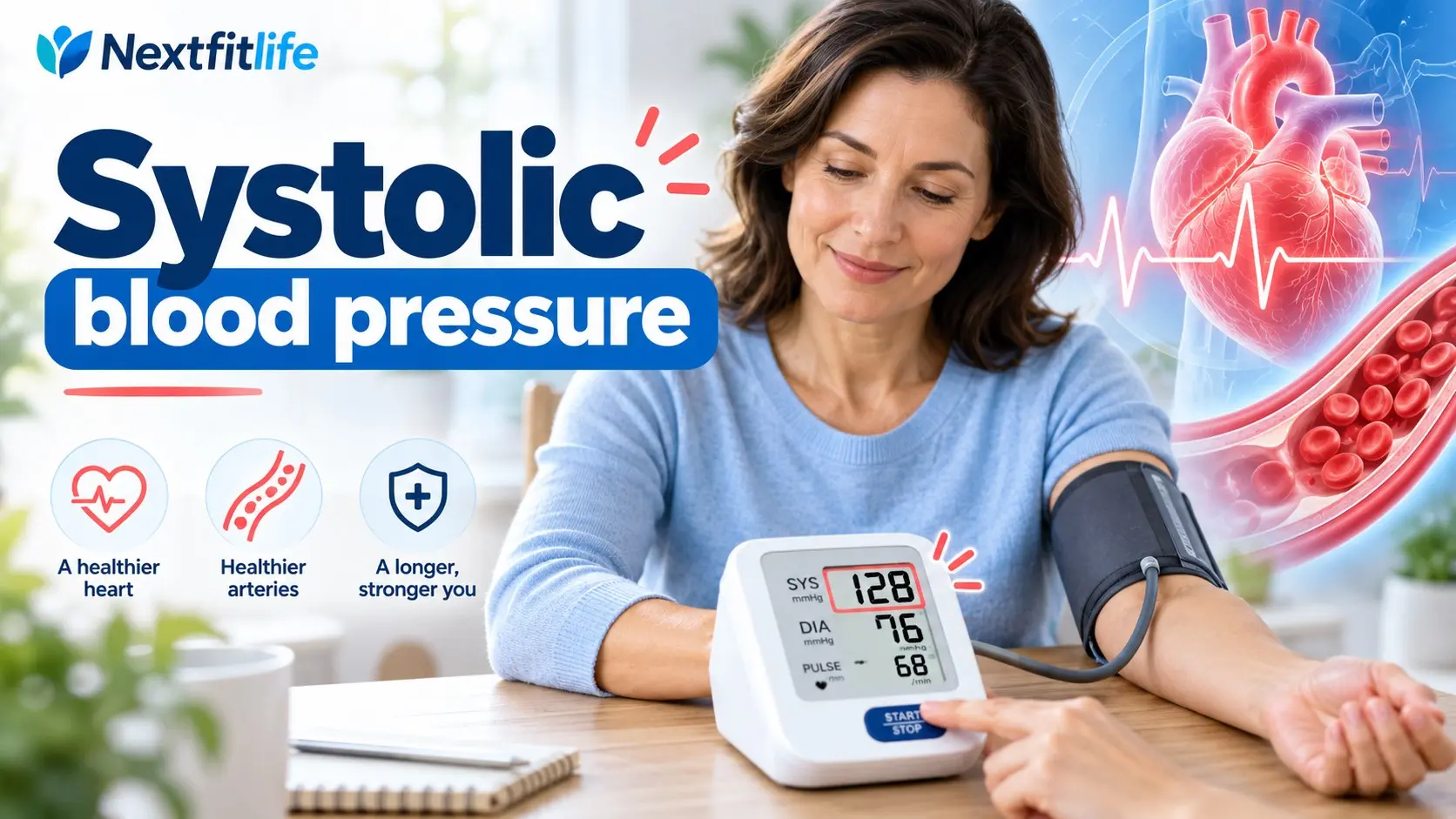
If your blood pressure is 128 over 76 mm Hg, the systolic number is 128.
A high top number matters even when the bottom number looks normal. This pattern is called isolated systolic hypertension, and it becomes more common as arteries become stiffer with age.
One high reading does not confirm hypertension. Blood pressure changes from minute to minute, so correct technique and repeated measurements matter far more than one isolated number.
This article is for general information and education. It does not replace medical advice, diagnosis, or treatment.
For a practical guide to checking your own readings, see How to Check Heart Health at Home. If your readings mainly rise at night, read Blood Pressure Higher at Night.
Table of Contents
- What systolic blood pressure means
- Systolic vs diastolic pressure
- Current blood pressure categories
- 11 critical systolic blood pressure facts
- Isolated systolic hypertension
- Why systolic pressure rises with age
- Common causes of high systolic pressure
- Secondary hypertension
- Low systolic pressure
- Pulse pressure
- Correct home measurement
- White coat and masked hypertension
- Health risks of high systolic pressure
- Lifestyle treatment
- Blood pressure medicine
- Pregnancy and systolic pressure
- Common blood pressure myths
- Emergency warning signs
- Frequently asked questions
What Is Systolic Blood Pressure?
Blood pressure measures the force that circulating blood places on artery walls.
It is written as two numbers.
For example:
The first number is the systolic blood pressure.
The second number is the diastolic blood pressure.
Systolic pressure reaches its peak when the main pumping chamber of the heart contracts and sends blood into the arteries.
Systolic vs Diastolic Blood Pressure
| Number | What It Measures | Example |
|---|---|---|
| Systolic | Artery pressure while the heart contracts | 128 in a reading of 128 over 76 |
| Diastolic | Artery pressure while the heart relaxes between beats | 76 in a reading of 128 over 76 |
Both numbers matter.
Either number can place a reading into a hypertension category.
Current Adult Blood Pressure Categories
The 2025 American Heart Association and American College of Cardiology guideline uses these categories for nonpregnant adults.
| Category | Systolic | Diastolic |
|---|---|---|
| Normal | Below 120 | Below 80 |
| Elevated | 120 to 129 | Below 80 |
| Stage 1 hypertension | 130 to 139 | Or 80 to 89 |
| Stage 2 hypertension | 140 or higher | Or 90 or higher |
| Severe hypertension | Higher than 180 | And or higher than 120 |
These numbers are categories, not a substitute for a personal treatment plan.
Your clinician may consider age, cardiovascular disease, stroke history, diabetes, kidney disease, pregnancy, fall risk, medicines, and overall cardiovascular risk when planning treatment.
11 Critical Facts About Systolic Blood Pressure
1. The Top Number Can Be High Even When the Bottom Number Is Normal
You might have a reading such as:
The bottom number is below 80, but the top number is high.
This pattern can be isolated systolic hypertension.
It is especially common in older adults.
The normal diastolic number does not cancel out the high systolic number.
2. Systolic Pressure Often Rises as Arteries Become Stiffer
Healthy large arteries stretch when the heart pumps.
Over time, arteries can become thicker and less elastic.
This is called arterial stiffness.
The heart then pushes blood into a less flexible arterial system, which can raise systolic pressure.
This helps explain why isolated systolic hypertension becomes more common with age.
It does not mean high blood pressure becomes normal with age.
3. There Is No Special 140 Systolic Normal Range for Seniors
Older internet charts sometimes suggest that a systolic pressure of 120 to 140 is automatically normal after age 60.
That is misleading.
Current U.S. adult blood pressure categories do not redefine 140 systolic as normal simply because a person is older.
Older adults may need more individualized treatment because of:
- Frailty
- Dizziness
- Falls
- Orthostatic hypotension
- Kidney disease
- Multiple medicines
That is different from declaring a higher pressure normal.
4. One High Reading Does Not Diagnose Hypertension
Blood pressure is dynamic.
It can rise temporarily because of:
- Stress
- Anxiety
- Pain
- Exercise
- Caffeine
- Nicotine
- A full bladder
- Talking during the reading
- Cold temperature
- Illness
A poor cuff fit or incorrect body position can also change the number.
Repeated properly measured readings provide a much better picture.
5. High Systolic Pressure Usually Has No Symptoms
This deserves emphasis because it is commonly misunderstood.
Most people with hypertension feel normal.
You cannot reliably tell your blood pressure from:
- Headache
- Facial warmth
- Feeling stressed
- Nosebleed
- Tiredness
- How strongly your heart is beating
These symptoms can happen for many reasons.
The only dependable way to know your current blood pressure is to measure it.
6. High Systolic Pressure Can Damage Organs Over Time
Persistent high pressure puts extra stress on blood vessels and organs.
Over time, uncontrolled hypertension can increase the risk of:
- Stroke
- Coronary artery disease
- Heart attack
- Heart failure
- Atrial fibrillation
- Kidney disease
- Eye damage
- Peripheral artery disease
- Aortic disease
- Cognitive decline
The goal of treatment is not simply to improve a monitor reading.
It is to reduce these long term risks.
7. Your Systolic Number Depends on How You Measure It
A blood pressure reading can be wrong even when the monitor works perfectly.
Common errors include:
- Using the wrong cuff size
- Putting the cuff over clothing
- Talking
- Crossing your legs
- Holding your arm unsupported
- Keeping the arm below heart level
- Checking immediately after exercise
- Checking immediately after coffee
- Checking with a full bladder
Good technique comes before interpretation.
8. Home Blood Pressure Monitoring Can Be Very Useful
Home monitoring can help:
- Confirm a pattern
- Track treatment
- Spot white coat hypertension
- Spot masked hypertension
- Show your clinician a longer record
Use a validated automatic upper arm cuff.
Current American guidance advises against depending on cuffless smartwatch blood pressure estimates for diagnosis or treatment decisions.
9. Lifestyle Changes Matter, but Medicine Is Sometimes Needed
Healthy habits help everyone with elevated or high blood pressure.
But lifestyle treatment does not always replace medicine.
The 2025 U.S. guideline recommends blood pressure lowering medicine for all adults with average blood pressure of at least 140 over 90 mm Hg.
Treatment may begin at 130 over 80 for people with higher cardiovascular risk, including some people with:
- Known cardiovascular disease
- Previous stroke
- Diabetes
- Chronic kidney disease
- Higher predicted cardiovascular risk
For lower risk adults with readings of at least 130 over 80, lifestyle treatment may be tried first before medication is added if pressure remains high.
10. The Goal Is Usually Below 130 Over 80 During Treatment
The 2025 American guideline uses a treatment goal below 130 over 80 mm Hg for most adults with hypertension.
That does not mean everyone should adjust medicine until their home systolic number is as low as possible.
Treatment still needs to consider:
- Symptoms
- Frailty
- Falls
- Standing blood pressure
- Kidney function
- Pregnancy
- Medicine side effects
- Overall health
11. Very High Systolic Pressure Has Different Rules From Routine Hypertension
A routine reading of 138 systolic and a reading above 180 are not the same situation.
If systolic pressure is higher than 180 or diastolic pressure is higher than 120:
- Stay seated
- Wait at least one minute if you have no emergency symptoms
- Measure again correctly
If the repeat reading remains that high without serious symptoms, contact a healthcare professional promptly.
If you also have chest pain, shortness of breath, weakness, numbness, vision change, trouble speaking, or another new serious symptom, call emergency services.
What Is Isolated Systolic Hypertension?
Isolated systolic hypertension means the top number is high while the bottom number stays below 80 mm Hg under current U.S. categories.
Examples include:
- 132 over 76
- 146 over 72
- 158 over 78
The higher systolic number still counts.
This pattern becomes common with aging because large arteries lose some flexibility.
It can also occur with other health conditions.
Is Isolated Systolic Hypertension Dangerous?
It can raise cardiovascular risk when it persists.
Possible long term complications include:
- Stroke
- Heart disease
- Heart failure
- Kidney disease
- Eye damage
The treatment decision should consider the average pressure and the person's overall cardiovascular risk.
Why Does Systolic Blood Pressure Rise With Age?
Several changes can contribute.
Arteries become stiffer
Large arteries gradually lose elasticity.
Each heartbeat then creates a larger pressure wave.
Kidneys change
The kidneys help control sodium, fluid, and hormones that influence blood pressure.
Age related kidney changes can make pressure regulation more difficult.
Long term risk exposure adds up
Years of:
- High sodium intake
- Smoking
- Diabetes
- High cholesterol
- Low physical activity
can affect artery health.
What Causes High Systolic Blood Pressure?
Most adults with hypertension have primary hypertension.
This develops gradually through several factors rather than one single cause.
Contributors can include:
- Age
- Genetics
- High sodium intake
- Low dietary potassium
- Low physical activity
- Overweight or obesity
- Poor sleep
- Excess alcohol
- Nicotine
- Chronic stress
Can Salt Raise Systolic Blood Pressure?
Yes.
Sodium can increase blood pressure, especially in people who are salt sensitive.
Major sodium sources often include:
- Packaged foods
- Processed meat
- Restaurant meals
- Fast food
- Instant noodles
- Salty sauces
- Canned soups
- Snack foods
Reducing excess sodium is an important part of blood pressure management.
Can Potassium Help Blood Pressure?
Dietary potassium can support blood pressure control because it helps the body balance sodium and affects blood vessel function.
Food sources include:
- Beans
- Lentils
- Vegetables
- Fruit
- Potatoes
- Yogurt
- Some fish
Can Caffeine Raise Systolic Pressure?
Caffeine can cause a short term rise in blood pressure in some people.
The response varies.
If you want to understand your own response, compare carefully measured readings under similar conditions rather than judging from one number after coffee.
Avoid caffeine for at least 30 minutes before a formal home blood pressure reading.
Can Stress Raise Systolic Blood Pressure?
Yes.
Stress hormones can temporarily:
- Speed the heart
- Tighten blood vessels
- Raise blood pressure
That does not mean chronic hypertension is simply caused by “being stressed.”
A repeated high pattern still needs proper measurement and assessment.
Can Poor Sleep Raise Blood Pressure?
Yes.
Short or poor quality sleep can affect blood pressure control.
Obstructive sleep apnea is especially important.
Possible clues include:
- Loud snoring
- Breathing pauses during sleep
- Waking gasping
- Morning headache
- Daytime sleepiness
- Difficult to control hypertension
Repeated high readings with these symptoms may justify a sleep evaluation.
Medical Causes of High Systolic Pressure
Some high blood pressure has an identifiable underlying cause.
This is called secondary hypertension.
Possible causes include:
- Chronic kidney disease
- Renal artery disease
- Sleep apnea
- Thyroid disorders
- Adrenal gland disorders
- Primary aldosteronism
- Certain congenital blood vessel problems
Secondary causes become particularly important when hypertension:
- Begins unusually young
- Appears suddenly
- Becomes severe quickly
- Is difficult to control despite several medicines
- Comes with unusual laboratory results
Medicines That Can Raise Blood Pressure
Some medicines and substances may raise systolic pressure.
Examples can include:
- Some decongestants
- Some anti inflammatory pain medicines
- Some antidepressants
- Hormonal birth control
- Stimulant medicines
- Some weight management medicines
- Some immune suppressing medicines
- Illegal stimulants such as cocaine and methamphetamine
Do not stop prescribed medicine without speaking with the prescriber.
What Causes a Temporary Systolic Blood Pressure Spike?
A single high top number can occur because of:
- Exercise
- Stress
- Pain
- Fear
- Caffeine
- Nicotine
- Cold temperature
- A full bladder
- Talking
- Incorrect cuff size
- An unsupported arm
The answer is not to ignore the number.
Repeat it correctly and look for a pattern.
What Is White Coat Hypertension?
White coat hypertension happens when blood pressure is repeatedly high in a healthcare setting but lower outside the clinic.
Stress may contribute.
Home or 24 hour ambulatory monitoring can help identify the pattern.
White coat hypertension should not simply be ignored because it can still be linked with cardiovascular risk.
What Is Masked Hypertension?
Masked hypertension is nearly the opposite.
Clinic readings look normal, but blood pressure is high at home, at work, or during sleep.
This can be missed if doctors rely only on office measurements.
Home monitoring or ambulatory monitoring can reveal it.
What Is Ambulatory Blood Pressure Monitoring?
Ambulatory blood pressure monitoring uses a cuff that you wear during normal activities and sleep.
It measures blood pressure automatically throughout the day and night.
It can help identify:
- White coat hypertension
- Masked hypertension
- Nighttime hypertension
- Abnormal sleeping blood pressure patterns
Read Blood Pressure Higher at Night for more about nighttime readings.
What Is Low Systolic Blood Pressure?
Low blood pressure is often described as a reading below about 90 over 60 mm Hg.
But low pressure is not defined safely by the systolic number alone.
A person with:
is very different from a healthy young adult with:
Symptoms and the cause matter.
What Causes Low Systolic Pressure?
Possible causes include:
- Dehydration
- Blood loss
- Severe infection
- Some medicines
- Very slow heart rate
- Heart attack
- Heart failure
- Heart valve disease
- Hormone disorders
- Pregnancy
Symptoms that matter
Low blood pressure deserves more attention when paired with:
- Dizziness
- Fainting
- Confusion
- Blurred vision
- Severe weakness
- Cold clammy skin
- Chest pain
- Shortness of breath
What Is Pulse Pressure?
Pulse pressure is the difference between systolic and diastolic pressure.
For example:
Another example:
A wider pulse pressure becomes more common with arterial stiffness and aging.
It can also occur with certain heart valve and circulatory conditions.
One wide reading does not diagnose a disease.
High Systolic Plus Low Diastolic Pressure
A pattern such as:
deserves more context.
The systolic pressure is high.
The diastolic pressure is low.
The pulse pressure is wide.
This may become more common with age and arterial stiffness.
Do not try to raise the bottom number by eating extra salt.
Show repeated readings to your healthcare professional.
For more detail, read Low Diastolic Blood Pressure.
How to Measure Systolic Blood Pressure Correctly at Home
Accurate technique is one of the highest value things you can do.
Choose the right monitor
Use a validated automatic upper arm monitor.
Check that the cuff fits your upper arm correctly.
Routine wrist and finger devices are generally less reliable.
30 minutes before measuring
Avoid:
- Caffeine
- Smoking or nicotine
- Exercise
Empty your bladder before the reading.
Rest first
Sit quietly for at least five minutes.
Do not talk or use your phone.
Sit correctly
- Keep your back supported.
- Keep both feet flat.
- Do not cross your legs.
- Place the cuff on bare skin.
- Support the arm.
- Keep the cuff near heart level.
Take two readings
Take two readings about one minute apart.
Record them.
A series of careful readings is more useful than one number.
How Arm Position Changes the Systolic Number
Your arm should be supported at heart level.
If it hangs below heart level, the reading can be falsely high.
If you hold the arm up without support, muscle tension can also affect the result.
Use a table or cushion to keep the arm relaxed.
Why Cuff Size Matters
A cuff that is too small can produce a falsely high reading.
A cuff that does not fit properly may make both numbers less reliable.
Measure your upper arm and follow the sizing guide for your monitor.
Should You Take Blood Pressure in Both Arms?
When blood pressure is first assessed, a healthcare professional may compare both arms.
A small difference can occur normally.
A large repeated difference deserves medical review.
For routine home tracking, follow the arm your healthcare professional recommends.
Should You Average Your Blood Pressure?
Blood pressure diagnosis and treatment decisions should not depend on the highest number you ever see.
Doctors often use repeated readings and averages to understand the underlying pattern.
A typical home log may include:
| Date | Reading 1 | Reading 2 | Notes |
|---|---|---|---|
| Monday AM | 136 / 78 | 132 / 76 | Rested five minutes |
| Monday PM | 130 / 76 | 128 / 74 | No symptoms |
| Tuesday AM | 134 / 77 | 131 / 75 | Before breakfast |
These numbers are examples only.
Does Systolic Blood Pressure Change During the Day?
Yes.
Blood pressure follows a daily pattern and responds to activity.
It can change with:
- Exercise
- Meals
- Stress
- Sleep
- Medicines
- Caffeine
- Pain
- Temperature
That is another reason one isolated reading can be misleading.
Systolic Blood Pressure During Exercise
Systolic pressure normally rises during aerobic exercise because the heart pumps more blood.
This is different from resting hypertension.
Exercise blood pressure interpretation depends on:
- Age
- Fitness
- Workload
- Medication
- Health history
Do not try to diagnose exercise hypertension with random home checks during a workout.
Can Exercise Lower Resting Systolic Pressure?
Regular physical activity can help reduce blood pressure over time.
A practical program often includes:
- Brisk walking
- Cycling
- Swimming
- Other moderate aerobic activity
- Strength training when appropriate
Many adults can work toward at least 150 minutes of moderate activity each week, but the right program depends on health and fitness.
People with chest pain, severe uncontrolled blood pressure, fainting, or significant heart disease should seek individual exercise guidance.
The DASH Eating Pattern
DASH stands for Dietary Approaches to Stop Hypertension.
The eating pattern emphasizes:
- Vegetables
- Whole fruits
- Whole grains
- Beans
- Lentils
- Nuts
- Seeds
- Fish
- Lower fat dairy when appropriate
It limits:
- Excess sodium
- Highly processed foods
- Added sugar
- Excess saturated fat
The goal is a sustainable eating pattern rather than one “blood pressure superfood.”
Does Weight Loss Lower Systolic Pressure?
For people with overweight or obesity, sustainable weight loss can improve blood pressure.
It may also help:
- Blood sugar
- Sleep apnea
- Cholesterol
- Physical fitness
The goal should be a realistic long term plan rather than rapid crash dieting.
Smoking, Nicotine, and Systolic Pressure
Nicotine activates the nervous system and can raise heart rate and blood pressure temporarily.
Smoking also damages blood vessels and substantially increases cardiovascular risk.
Stopping tobacco use protects far more than the blood pressure number alone.
Alcohol and Blood Pressure
Excess alcohol can raise blood pressure.
If you drink, reducing alcohol may improve blood pressure and reduce other health risks.
Alcohol should not be started for heart health.
Stress Management and Blood Pressure
Stress management can support blood pressure care.
Helpful methods may include:
- Regular exercise
- Good sleep
- Slow breathing
- Relaxation
- Time outdoors
- Social support
- Professional mental health support when needed
These tools support treatment but do not replace medicine when medicine is medically indicated.
When Is Blood Pressure Medicine Needed?
The decision depends on the average pressure and cardiovascular risk.
Under the 2025 U.S. guideline, medicine is recommended along with lifestyle treatment for adults with average blood pressure at least 140 over 90 mm Hg.
Medicine may also be started at lower levels when cardiovascular risk is higher.
The treatment plan can include medicines from several classes, such as:
- ACE inhibitors
- ARBs
- Thiazide type diuretics
- Calcium channel blockers
Other medicines may be used based on the person's health conditions.
Why Two Medicines May Be Started for Stage 2 Hypertension
The 2025 guideline prefers starting two first line blood pressure medicines from different classes in a single combination pill for many adults with stage 2 hypertension.
This can:
- Improve blood pressure control
- Reduce the number of separate tablets
- Improve adherence
The exact treatment is individualized.
Do Not Stop Blood Pressure Medicine When Your Number Improves
If medication lowers your systolic pressure, that often means the treatment is working.
It does not automatically mean hypertension has disappeared.
Stopping medicine suddenly can allow pressure to rise again.
Always discuss changes with the person prescribing it.
Can Blood Pressure Become Too Low During Treatment?
Yes.
Treatment should reduce high pressure without causing harmful symptoms.
Tell your healthcare professional if you develop:
- Dizziness
- Fainting
- Repeated weakness
- Falls
- Blurred vision after standing
Standing blood pressure may need to be checked.
Read Orthostatic Hypotension Symptoms if your symptoms mainly occur after standing.
Systolic Blood Pressure During Pregnancy
Pregnancy uses different blood pressure safety rules.
Current American guidance defines hypertension during pregnancy as systolic pressure of 140 or higher or diastolic pressure of 90 or higher.
Severe hypertension during pregnancy is systolic pressure of 160 or higher or diastolic pressure of 110 or higher.
Pregnancy related high blood pressure can be linked with:
- Gestational hypertension
- Preeclampsia
- Chronic hypertension
High Systolic Blood Pressure and the Brain
High blood pressure is one of the most important modifiable risk factors for stroke.
Long term hypertension can damage small blood vessels in the brain.
Current guidance also places greater emphasis on the link between uncontrolled hypertension and cognitive decline.
Managing blood pressure therefore protects more than the heart.
High Systolic Pressure and the Heart
The heart must pump against arterial pressure every day.
When pressure stays high, the left ventricle can become thicker.
Over time, hypertension can contribute to:
- Coronary artery disease
- Heart failure
- Atrial fibrillation
- Heart attack
Read Symptoms of Heart Disease for warning signs that deserve attention.
High Systolic Pressure and the Kidneys
The kidneys contain many tiny blood vessels.
Persistent high pressure can damage them.
The relationship goes both ways.
Kidney disease can also make blood pressure more difficult to control.
People with hypertension may need tests for:
- Kidney function
- Urine protein
- Electrolytes
High Systolic Pressure and the Eyes
High blood pressure can damage small retinal blood vessels.
Severe hypertension may cause more serious visual problems.
Sudden vision change with severely high pressure can be an emergency.
Can You Feel Your Systolic Blood Pressure?
No.
You may sometimes feel symptoms while your pressure is high, but symptoms cannot tell you the number.
For example, anxiety can produce:
- Headache
- Fast heartbeat
- Flushing
- Dizziness
and also temporarily raise blood pressure.
This does not mean those symptoms are a reliable blood pressure gauge.
Common Systolic Blood Pressure Myths
| Myth | What Is More Accurate |
|---|---|
| 140 is normal after age 60 | Current adult categories still classify systolic 140 or higher as stage 2 hypertension. |
| I can feel when my pressure is high | Most hypertension causes no reliable symptoms. |
| My bottom number is normal, so 150 systolic is fine | A high systolic number still matters and can represent isolated systolic hypertension. |
| One reading of 135 proves hypertension | Diagnosis is based on properly obtained repeated readings and clinical assessment. |
| Garlic can replace medicine | No food or supplement should replace prescribed hypertension treatment. |
| If medicine works, I can stop it | The improvement may be the result of treatment. Medicine changes belong with the prescriber. |
| A smartwatch can replace a cuff | Current U.S. guidance does not recommend relying on cuffless devices for accurate blood pressure management. |
A Simple Systolic Blood Pressure Action Plan
| Reading Pattern | What It May Mean | Next Step |
|---|---|---|
| Below 120 with diastolic below 80 | Normal category | Maintain heart healthy habits |
| 120 to 129 with diastolic below 80 | Elevated blood pressure | Lifestyle care and routine follow up |
| 130 to 139 repeatedly | Stage 1 hypertension range | Discuss cardiovascular risk and treatment plan |
| 140 or higher repeatedly | Stage 2 hypertension range | Medical review and treatment |
| Higher than 180 | Severe hypertension range | Repeat after one minute if no emergency symptoms, then contact healthcare professional promptly if still high |
| Higher than 180 with serious symptoms | Possible hypertensive emergency | Call emergency services |
When Should You Book a Medical Review?
Arrange a healthcare visit when:
- Your systolic readings are repeatedly 130 or higher
- Your readings have risen significantly from your normal pattern
- Your systolic number is repeatedly high while diastolic remains normal
- Your blood pressure remains high despite medicine
- Your readings differ greatly between home and clinic
- Your pressure is repeatedly high at night
- You develop dizziness after blood pressure treatment
- Your readings changed after starting a new medicine
- You have kidney disease or diabetes with high readings
When Is High Systolic Blood Pressure an Emergency?
For a nonpregnant adult, systolic blood pressure higher than 180 mm Hg or diastolic pressure higher than 120 mm Hg is severely high.
If you do not have serious symptoms:
- Stay seated.
- Wait at least one minute.
- Repeat the measurement correctly.
- If it remains extremely high, contact a healthcare professional promptly.
If you also have any serious new symptom, call emergency services.
Emergency symptoms include
- Chest pain
- Shortness of breath
- Back pain
- New weakness
- New numbness
- Vision changes
- Difficulty speaking
- Another sudden severe neurologic or cardiovascular symptom
Do not wait for the pressure to fall on its own when these symptoms are present.
Conclusion: Understand the Top Number and Follow the Pattern
Systolic blood pressure is far more than the first number on a monitor. It reflects the pressure in your arteries each time the heart contracts, and persistent elevation can affect the heart, brain, kidneys, eyes, and blood vessels.
Do not panic over one high reading, but do not dismiss repeated high readings either. Measure correctly, record a pattern, improve the risk factors you can change, and follow an individual treatment plan when medicine is needed.
Your next step is simple: use a validated upper arm cuff, take two careful readings about one minute apart, record both numbers, and show a repeated high pattern to a qualified healthcare professional.
References and Sources
- American Heart Association and American College of Cardiology. 2025 High Blood Pressure Guideline.
Used for current adult blood pressure categories, treatment goals, cardiovascular risk based treatment, home monitoring, combination therapy, pregnancy guidance, and cuffless device limitations.
https://professional.heart.org/en/science-news/2025-high-blood-pressure-guideline - American Heart Association. Home Blood Pressure Monitoring.
Used for validated upper arm monitor selection, correct cuff size, preparation, arm position, resting time, repeated readings, and emergency thresholds.
https://www.heart.org/en/health-topics/high-blood-pressure/understanding-blood-pressure-readings/monitoring-your-blood-pressure-at-home - American Heart Association. Understanding Blood Pressure Readings.
Used for normal, elevated, stage 1, stage 2, and severe hypertension categories.
https://www.heart.org/en/health-topics/high-blood-pressure/understanding-blood-pressure-readings - American Heart Association. Signs and Symptoms of High Blood Pressure.
Used for the fact that hypertension usually has no reliable symptoms and for severe hypertension emergency guidance.
https://www.heart.org/en/health-topics/high-blood-pressure/know-your-risk-factors-for-high-blood-pressure/what-are-the-symptoms-of-high-blood-pressure - National Heart, Lung, and Blood Institute. High Blood Pressure Causes and Risk Factors.
Used for aging, arterial stiffness, sodium sensitivity, sleep, exercise, alcohol, medicines, kidney disease, sleep apnea, thyroid disease, obesity, and other hypertension risks.
https://www.nhlbi.nih.gov/health/high-blood-pressure/causes - National Heart, Lung, and Blood Institute. High Blood Pressure Diagnosis.
Used for blood pressure categories, repeated measurement, diagnosis, and health risks linked with elevated systolic pressure.
https://www.nhlbi.nih.gov/health/high-blood-pressure/diagnosis - Mayo Clinic. Isolated Systolic Hypertension.
Used for isolated systolic hypertension, age related arterial stiffness, high top number with a normal bottom number, and the need for repeated measurements.
https://www.mayoclinic.org/diseases-conditions/high-blood-pressure/expert-answers/hypertension/faq-20058527
Internal Links and Helpful NextFitLife Guides
- How to Check Heart Health at Home
- Blood Pressure Higher at Night
- Low Diastolic Blood Pressure
- Orthostatic Hypotension Symptoms
- Symptoms of Heart Disease
- Signs of a Heart Attack
- Congestive Heart Failure
- Heart Palpitations Causes
- Heart Health After 50
- Brisk Walking Heart Rate
- Foods That Increase Blood Flow
- How to Improve Blood Circulation in Legs
About the Author
Adel Galal is the Founder and Lead Writer at NextFitLife. He researches heart health, blood pressure, circulation, nutrition, fitness, sleep, and healthy aging and turns current medical and public health guidance into clear practical information for everyday readers.
I am not a doctor or licensed healthcare professional, and this content does not replace professional medical advice, diagnosis, or treatment. I share information based on extensive research, real life experience, and consultation with healthcare providers. Always consult a qualified healthcare professional for diagnosis, treatment, or guidance about any health condition.
Learn more about Adel Galal, NextFitLife, and the site's editorial approach on the About Us page.
Frequently Asked Questions
What is systolic blood pressure?
Systolic blood pressure is the top number in a blood pressure reading. It measures pressure inside the arteries while the heart contracts and pumps blood.
What is a normal systolic blood pressure?
For nonpregnant adults under current U.S. guidelines, normal blood pressure means systolic pressure below 120 mm Hg and diastolic pressure below 80 mm Hg.
Is systolic blood pressure of 120 high?
A systolic reading from 120 to 129 with diastolic pressure below 80 is classified as elevated blood pressure rather than hypertension.
Is 130 systolic high blood pressure?
A repeated systolic pressure from 130 to 139 falls into the stage 1 hypertension category under current U.S. guidelines.
Is 140 systolic high?
Yes. A systolic pressure of 140 mm Hg or higher is classified as stage 2 hypertension under current U.S. adult blood pressure categories.
Is 140 systolic normal for someone over 60?
No. Blood pressure commonly rises with age, but current adult guidelines do not classify 140 systolic as normal simply because someone is older than 60.
What is isolated systolic hypertension?
Isolated systolic hypertension means the top number is high while the bottom number remains below 80 mm Hg. It is especially common in older adults.
Why does systolic pressure rise with age?
Large arteries tend to become thicker and stiffer with age. The heart then pumps into a less flexible arterial system, which can raise systolic pressure.
What causes high systolic blood pressure?
Common contributors include age, genetics, high sodium intake, low physical activity, overweight, poor sleep, excess alcohol, nicotine, chronic kidney disease, sleep apnea, thyroid disease, and some medicines.
Does high systolic blood pressure cause symptoms?
Usually not. Most people with hypertension feel normal, which is why measuring blood pressure is more reliable than judging it from symptoms.
Can stress raise systolic blood pressure?
Yes. Stress can temporarily raise heart rate and tighten blood vessels, causing systolic pressure to rise. Repeated hypertension still needs proper assessment.
Can caffeine raise systolic blood pressure?
Yes. Caffeine can cause a temporary rise in some people. Avoid caffeine for at least 30 minutes before a formal home blood pressure measurement.
Can salt raise systolic blood pressure?
Yes. Excess sodium can raise blood pressure, especially in people who are salt sensitive. Packaged and restaurant foods are major sodium sources.
What is pulse pressure?
Pulse pressure is the difference between systolic and diastolic pressure. A reading of 120 over 80 has a pulse pressure of 40 mm Hg.
Why is my systolic high but diastolic normal?
This pattern may be isolated systolic hypertension. Age related arterial stiffness is a common cause, although other factors may also contribute.
Can systolic blood pressure be too low?
Yes. Low blood pressure can cause dizziness, weakness, blurred vision, or fainting. The systolic number, diastolic number, symptoms, medicines, and cause all matter.
How should I measure systolic pressure at home?
Use a validated upper arm monitor, avoid caffeine, nicotine, and exercise for 30 minutes, empty your bladder, rest quietly for five minutes, support your arm at heart level, and take two readings about one minute apart.
Can a smartwatch measure systolic blood pressure accurately?
Current American guidance advises against relying on cuffless devices such as smartwatches for accurate blood pressure diagnosis or treatment decisions until their precision improves.
When should I see a doctor about my systolic pressure?
Arrange medical review if systolic readings are repeatedly 130 or higher, rise significantly from your normal pattern, or remain high despite treatment.
When is systolic blood pressure an emergency?
A systolic pressure higher than 180 mm Hg is severely high. If it occurs with chest pain, shortness of breath, weakness, numbness, vision change, difficulty speaking, or another serious new symptom, call emergency services immediately.

Health & wellness writer with 30+ years of experience in nutrition, fitness, and healthy aging. Founder of NextFitLife.com — evidence-based health guidance.

