Published on: December 2025
Updated: October 19, 2026
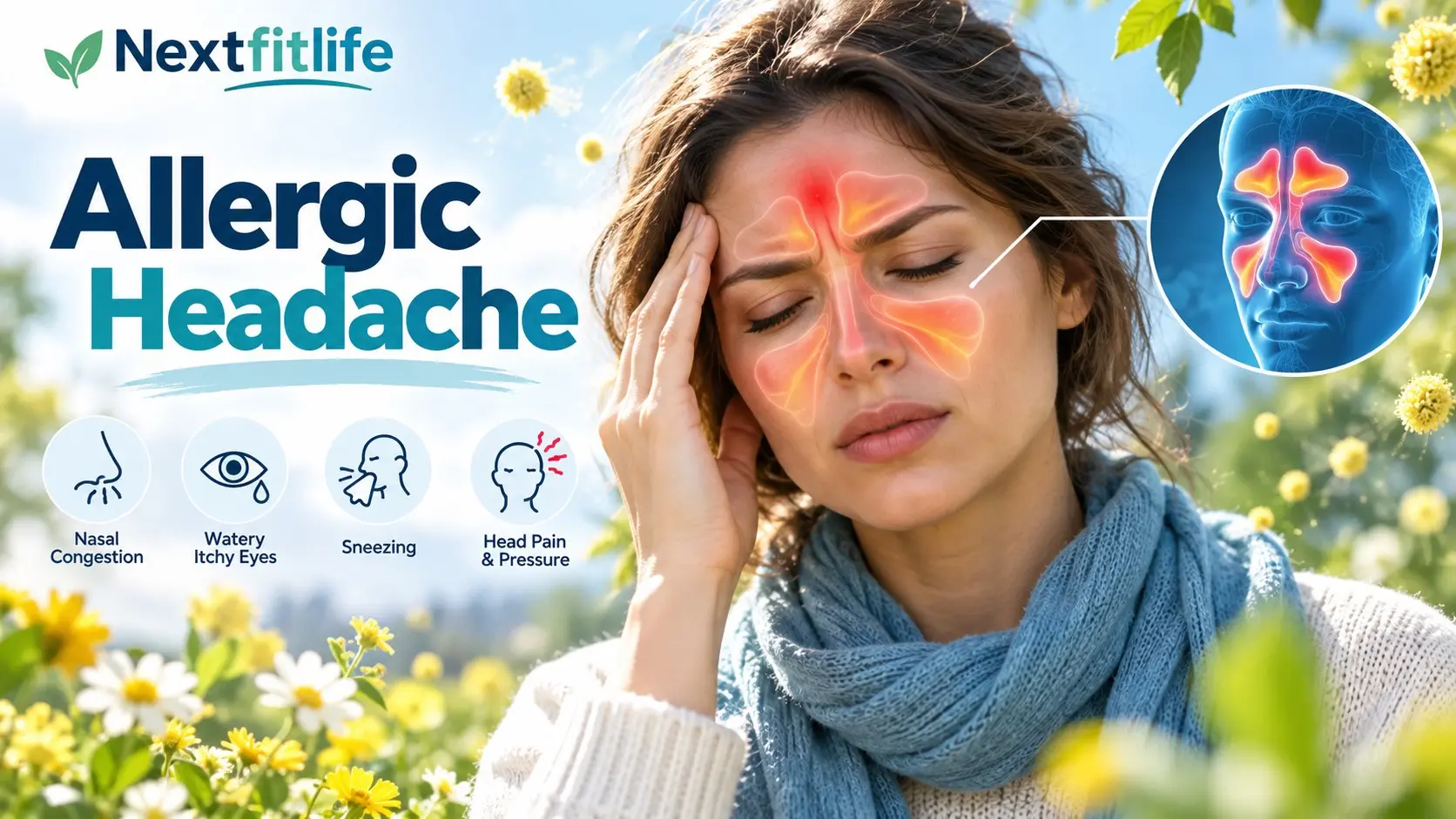
An allergic headache usually means a headache that appears at the same time as allergy symptoms such as sneezing, congestion, itchy eyes, or nasal pressure. However, this phrase can be misleading because allergies do not always cause a distinct type of headache.
Many people who think they have a sinus or allergy headache actually have migraine. Migraine itself can cause facial pressure, nasal congestion, watery eyes, and pain around the forehead or cheeks, so the symptoms can overlap.
Quick answer: If your headache appears with seasonal allergy symptoms, treating the allergy may help. However, throbbing pain, nausea, sensitivity to light or sound, or headaches that keep returning may point toward migraine rather than a true sinus problem. Severe or sudden headache, weakness, confusion, stiff neck, fainting, vision loss, or a new headache after injury needs urgent medical attention.
Medical notice: This article is for general information and education. It does not replace medical advice, diagnosis, or treatment.
I am not a dermatologist or a doctor, and this content does not replace professional medical advice. What I share comes from real life experience, extensive research, and consultation with healthcare providers. Always consult qualified medical professionals for diagnosis and treatment of any health condition.
Get urgent medical help now for a sudden explosive headache that reaches maximum intensity very quickly, a headache with weakness or numbness on one side, trouble speaking, confusion, fainting, seizure, severe vision change, stiff neck with fever, or severe headache after a head injury.
A new severe headache during pregnancy or soon after childbirth also needs prompt medical assessment.
Table of Contents
- What an Allergic Headache Really Means
- Allergy Headache vs Migraine
- Sinus Headache vs Allergy Symptoms
- Common Allergy Triggers
- 11 Clues That Help Explain the Headache
- When Allergies May Trigger Migraine
- How Doctors Diagnose the Cause
- Allergy Treatment That May Help
- Safer Headache Relief
- Saline Rinses and Nasal Sprays
- Decongestant Safety
- Allergy Testing and Immunotherapy
- Food Allergy and Headache Myths
- How to Prevent Seasonal Symptoms
- When to See a Doctor
- References and Sources
- Frequently Asked Questions
What Is an Allergic Headache?
The term allergic headache is commonly used when a headache occurs during an allergy flare. Typical allergy symptoms may include:
- Sneezing
- Runny nose
- Blocked nose
- Itchy nose
- Itchy or watery eyes
- Nasal pressure
- Postnasal drip
Allergic rhinitis causes inflammation inside the nose. That inflammation can create a feeling of facial pressure or fullness.
However, headache specialists and allergy experts recognize an important problem: facial pressure does not automatically mean the sinuses are causing the headache.
Migraine can produce nasal congestion, watery discharge, facial pressure, and pain around the eyes or forehead. This is one reason migraine is often mistaken for a sinus or allergy headache.
LSI: allergy headache symptoms, sinus pressure, nasal congestion headache, seasonal allergies, and migraine with nasal symptoms often overlap.
For more related guidance, visit the NextFitLife Allergy Headache Guide.
Allergic Headache vs Migraine
Migraine is frequently confused with sinus or allergy headache because migraine can activate nerves that also affect the nose and eyes.
| Feature | Allergy Symptoms | Migraine |
|---|---|---|
| Sneezing | Common | Not a typical core feature |
| Itchy eyes or nose | Common | Uncommon |
| Nasal congestion | Common | Can occur |
| Facial pressure | Can occur | Can occur |
| Throbbing pain | Not typical of allergy alone | Common |
| Nausea | Uncommon | Common |
| Light or sound sensitivity | Not typical | Common |
| Worse with activity | Not typical | Common |
If headache attacks repeatedly come with nausea, light sensitivity, sound sensitivity, or throbbing pain, migraine becomes more likely even if you also have a blocked nose.
Sinus Headache Is Also Often Misunderstood
Many people use the phrase sinus headache for any pain around the forehead, cheeks, nose, or eyes.
True headache caused by acute sinus disease is usually accompanied by other signs of sinus inflammation or infection rather than pain alone.
Features That May Suggest Sinusitis
- Thick or discolored nasal mucus
- Reduced sense of smell
- Facial or dental pain
- Symptoms following an upper respiratory infection
- Fever in some cases
Migraine can also worsen when you bend forward and may cause clear nasal drainage, congestion, and pressure. Those findings by themselves do not prove sinusitis.
For more detail, read Sinus Headache: Smart Relief Steps and Warning Signs.
11 Critical Clues That Help Explain an Allergic Headache
1. Sneezing and Itching Point Toward Allergy
Repeated sneezing together with an itchy nose, itchy eyes, or watery eyes is typical of allergic rhinitis.
If the headache appears mainly when these symptoms flare, allergy may be contributing to the overall problem.
2. Seasonal Timing Can Be a Useful Clue
Headaches that repeatedly appear during the same pollen season may be linked with seasonal allergies or with migraine triggered by seasonal changes.
Timing alone cannot identify which one is responsible, but a symptom diary can reveal useful patterns.
3. Throbbing Pain Favors Migraine
A pulsing or throbbing headache, especially when moderate or severe, fits migraine better than uncomplicated allergic rhinitis.
4. Light and Sound Sensitivity Favor Migraine
If normal light seems painfully bright or everyday sounds become difficult to tolerate, migraine should be considered.
5. Nausea Also Points Toward Migraine
Nausea or vomiting is much more characteristic of migraine than of nasal allergy.
6. Itchy Eyes Strongly Support Allergy
Itchy watery eyes often occur with pollen, dust mite, pet, or mold allergy.
Migraine can make the eyes water, but itching is more typical of allergy.
7. Thick Nasal Mucus May Suggest Sinus Disease
Thick or discolored nasal drainage with reduced smell and facial or dental pain may suggest sinusitis rather than simple allergy.
Color alone does not prove bacterial infection, so antibiotics should not be started without proper evaluation.
8. Clear Congestion Can Occur in Both Allergy and Migraine
This is one of the reasons self diagnosis is difficult.
Clear nasal drainage may occur during an allergic reaction, but migraine can also produce clear watery nasal symptoms.
9. Pain Triggered by Normal Activity Favors Migraine
If walking upstairs, bending, or routine movement makes the headache clearly worse, migraine becomes more likely.
10. Repeated Headaches Need More Than Allergy Medicine
If the nasal symptoms improve but headaches keep returning, the headache itself needs separate assessment.
Treating allergy alone will not control migraine or another primary headache disorder.
11. New Neurological Symptoms Are Not Typical Allergy
Weakness, numbness, confusion, difficulty speaking, severe imbalance, fainting, or persistent vision loss should never be dismissed as allergy symptoms.
These findings need urgent medical evaluation.
Can Allergies Trigger Migraine?
Allergic rhinitis and migraine can occur in the same person, and some people notice that migraine attacks become more frequent when allergy symptoms are active.
Several mechanisms may contribute, including inflammation, sleep disruption, nasal discomfort, weather changes, and exposure to strong odors.
However, this does not mean histamine directly explains every migraine attack.
The practical point is simple: if you have both allergies and migraine, both problems may need treatment.
Common Allergens That Can Worsen Symptoms
Pollen
Tree, grass, and weed pollen can trigger seasonal allergic rhinitis.
Dust Mites
Dust mite exposure can produce year round nasal symptoms in sensitive people.
Pet Allergens
Proteins from skin flakes, saliva, and urine can trigger symptoms. The problem is not simply pet hair.
Mold
Mold spores can trigger allergic symptoms in some people, particularly in damp environments.
Workplace Allergens
Flour, laboratory animals, wood dust, chemicals, and other occupational exposures can cause or worsen rhinitis in susceptible workers.
How Is an Allergic Headache Diagnosed?
There is no single test for an “allergic headache.” Diagnosis involves working out two separate questions:
- Do you actually have an allergy?
- What type of headache are you experiencing?
A Clinician May Ask About
- Where the pain occurs
- Whether it throbs or feels like pressure
- How long attacks last
- Whether light or sound bothers you
- Whether you feel nauseated
- Whether you sneeze or have itchy eyes
- Whether symptoms change with the seasons
- Whether certain environments trigger symptoms
- Which medicines help
- How often pain relievers are used
Allergy Testing
When the history suggests allergic rhinitis, an allergist may use skin testing or blood testing for specific allergens.
Testing should be guided by symptoms and likely exposures rather than ordering a very broad panel without a clear reason.
Headache Assessment
Migraine is usually diagnosed from the symptom pattern and medical history. Brain imaging is not required for every person with a typical stable migraine pattern and a normal neurological examination.
Imaging or other testing may be appropriate when the headache pattern is unusual or red flags are present.
Allergic Headache Treatment Starts With the Correct Diagnosis
The best treatment depends on whether the main problem is allergic rhinitis, migraine, sinusitis, tension type headache, or another condition.
Simply taking an antihistamine every time your head hurts can delay the correct diagnosis.
Treating Allergic Rhinitis
Intranasal Corticosteroid Sprays
For persistent allergic rhinitis, nasal corticosteroid sprays are among the most effective treatments.
They reduce nasal inflammation and can improve:
- Congestion
- Sneezing
- Runny nose
- Nasal itching
They work best when used correctly and consistently during the period they are needed.
They are not the same as bodybuilding steroids, and very little medicine reaches the rest of the body when used at recommended nasal doses.
Antihistamines
Second generation antihistamines can help sneezing, itching, and runny nose.
Examples include cetirizine, loratadine, and fexofenadine.
Some antihistamines can still cause drowsiness, so check the label and see how you respond before driving or operating equipment.
A 2026 review highlighted that oral antihistamines differ somewhat in effectiveness and side effect profiles, so the best option can vary between individuals.
Intranasal Antihistamines
Nasal antihistamines are another treatment option and can work relatively quickly for rhinitis symptoms.
Some people with persistent symptoms may benefit from a combination of an intranasal antihistamine and intranasal corticosteroid under professional guidance.
Saline Nasal Rinses Can Help Congestion
Saline irrigation can wash pollen, dust, mucus, and other particles from the nose and may reduce nasal symptoms.
Use safe water.
For nasal irrigation, use distilled, sterile, or previously boiled and cooled water according to product and public health guidance. Do not use untreated tap water in a nasal rinse device.
Clean the device after use and allow it to dry.
Decongestants Need More Caution Than the Old Article Suggested
Decongestants can reduce nasal blockage for some people, but they are not suitable for everyone.
Pseudoephedrine
Oral pseudoephedrine can relieve congestion but may raise heart rate or blood pressure and can cause insomnia, jitteriness, or difficulty urinating.
People with certain heart conditions, high blood pressure, glaucoma, prostate problems, or medication interactions should ask a pharmacist or clinician before using it.
Oral Phenylephrine
Oral phenylephrine should not be promoted as an effective congestion treatment.
The U.S. FDA has proposed removing oral phenylephrine from the over the counter monograph after reviewing evidence and concluding that the recommended oral dose is not effective for nasal congestion.
Nasal Decongestant Sprays
Topical nasal decongestants can work quickly, but repeated use can cause rebound congestion.
They should usually be limited to short term use unless a clinician gives different instructions.
Pain Relief for Headache
For occasional headache, medicines such as acetaminophen or an anti inflammatory pain reliever may help some adults.
However, they are not right for everyone.
People with kidney disease, stomach ulcers, bleeding problems, certain heart conditions, liver disease, pregnancy, medication interactions, or allergy to these medicines should seek professional advice.
Using pain medicine too often can also contribute to medication overuse headache.
If you need headache medicine many days each month, discuss the pattern with a healthcare professional.
What If the Headache Is Actually Migraine?
When migraine is the main problem, allergy medicine may reduce nasal symptoms without adequately treating the headache.
Migraine treatment may involve:
- Early use of an appropriate pain reliever
- Prescription migraine medicines when indicated
- Regular sleep
- Regular meals
- Good hydration
- Reducing known personal triggers
- Preventive migraine treatment for frequent attacks
For recurrent headaches, keeping a headache diary can help separate seasonal allergies from migraine patterns.
Allergy Immunotherapy May Help Selected People
Allergy immunotherapy gradually exposes the immune system to specific allergens.
It may be delivered as allergy shots or, for selected allergens, tablets placed under the tongue.
Immunotherapy is generally considered when:
- Allergic rhinitis is confirmed
- Symptoms remain troublesome
- Avoiding the allergen is difficult
- Medicines are not enough or cause problems
- A person wants a longer term treatment approach
It is not an instant headache cure, and treatment usually continues over a prolonged period.
Food Allergy Is Not the Same as a Food Trigger for Migraine
The old article linked aged cheese, chocolate, fermented foods, tomato products, nuts, citrus, and other foods with “food allergy headache.” That wording is misleading.
A true food allergy usually causes symptoms such as:
- Hives
- Swelling
- Itching
- Vomiting
- Wheezing
- Breathing difficulty
- Anaphylaxis in severe cases
Headache alone is not a typical way to diagnose food allergy.
Some foods may trigger migraine in individual people, but a migraine food trigger is not the same as an immune mediated food allergy.
Routine food allergy testing is not recommended simply because someone has rhinitis or recurrent headaches without a history suggesting true food allergy.
Does Histamine in Food Cause Allergic Headaches?
The answer is not simple.
Histamine is involved in allergic reactions, but that does not mean every headache after eating a histamine containing food is an allergy.
Some people report symptoms after particular foods, but broad low histamine diets can become unnecessarily restrictive.
If food repeatedly causes headache or other symptoms, keep a structured diary and discuss the pattern with a clinician or dietitian rather than removing many foods at once.
How to Reduce Pollen Exposure
If pollen clearly triggers your allergic rhinitis, reducing exposure may lessen nasal symptoms.
Practical Steps
- Check local pollen forecasts when available.
- Keep windows closed when pollen levels are high.
- Use air conditioning when appropriate.
- Change clothes after heavy outdoor pollen exposure.
- Shower after spending long periods outdoors when symptoms are severe.
- Avoid drying bedding outdoors during peak pollen periods if pollen is a major trigger.
Pollen levels vary by plant, weather, geography, and time of year. There is no universal rule that pollen is always highest at one exact time every day.
How to Reduce Dust Mite Exposure
For people with confirmed dust mite allergy, useful measures can include:
- Using allergen resistant mattress and pillow covers
- Washing bedding regularly
- Reducing indoor humidity when it is high
- Vacuuming with appropriate filtration
- Reducing heavy dust collecting items in the bedroom when practical
You do not need to sterilize the entire house. The goal is to lower exposure enough to improve symptoms.
How to Reduce Mold Exposure
Visible indoor mold usually means moisture is present.
Fix leaks, improve ventilation, and keep damp areas dry.
Large or persistent mold problems may need professional remediation, especially when water damage is extensive.
Pet Allergy Management
Pet allergy is usually caused by proteins from skin flakes, saliva, or urine rather than fur itself.
If testing and symptoms confirm a pet allergy, strategies can include:
- Keeping the pet out of the bedroom
- Using HEPA filtration
- Cleaning fabrics and surfaces regularly
- Washing hands after close contact
- Discussing medication or immunotherapy with an allergist
When Should You See an Allergist?
Consider an allergy evaluation if:
- Sneezing, congestion, or itchy eyes keep returning
- Symptoms occur during specific seasons
- You suspect dust mites, pets, pollen, or mold
- Over the counter treatment is not controlling symptoms
- You are not sure what triggers the allergy
- You want to discuss immunotherapy
For more information, read Allergies That Cause Headaches.
When Should You See a Headache Specialist or Doctor?
Arrange medical assessment if:
- Headaches keep returning
- You have headaches on many days each month
- Headaches interfere with work, sleep, school, or family life
- Light or sound sensitivity accompanies the pain
- You have nausea with headaches
- You frequently use pain medicines
- Your headache pattern changes
- The diagnosis is unclear
Allergic Headache Red Flags
| Red Flag | Why It Matters | Action |
|---|---|---|
| Sudden explosive headache | Can signal bleeding or another emergency | Emergency assessment |
| Weakness or speech trouble | Possible neurological emergency | Emergency assessment |
| Fever with stiff neck | Can signal serious infection | Urgent medical care |
| New headache after head injury | May require imaging or observation | Prompt assessment |
| New severe headache in pregnancy or postpartum | Some pregnancy related conditions can cause dangerous headaches | Prompt medical care |
| Seizure or fainting | Not typical of simple allergy | Emergency assessment |
Common Myths About Allergic Headache
Myth 1: Facial Pressure Means You Have a Sinus Headache
False. Migraine can cause facial pressure and nasal congestion.
Myth 2: Allergies Always Directly Cause the Headache
False. Allergies may contribute to discomfort or trigger migraine in some people, but another headache disorder may be the main cause.
Myth 3: Antihistamines Treat Every Allergy Related Headache
False. Antihistamines treat allergy symptoms. They do not automatically treat migraine or another primary headache disorder.
Myth 4: Oral Phenylephrine Is a Reliable Decongestant
Current FDA review does not support the effectiveness of recommended oral phenylephrine doses for nasal congestion.
Myth 5: Every Food Headache Is a Food Allergy
False. Food triggered migraine and true food allergy are different conditions.
Myth 6: Antibiotics Treat Sinus Pressure From Allergies
False. Antibiotics do not treat allergic rhinitis or migraine and are only appropriate for selected bacterial infections.
A Simple Action Plan
- Track when the headache starts and what symptoms come with it.
- Note sneezing, itching, congestion, nausea, and light sensitivity.
- Check whether symptoms follow pollen, pets, dust, or another clear exposure.
- Treat confirmed allergy symptoms correctly.
- Avoid overusing decongestants or pain medicines.
- Use safe saline irrigation if it helps nasal symptoms.
- Discuss recurrent headaches with a clinician.
- Seek urgent care for neurological symptoms or a sudden severe headache.
Key Takeaways
- An allergic headache is not always a distinct headache disorder.
- Allergic rhinitis can cause congestion and facial pressure.
- Migraine often causes nasal symptoms and can be mistaken for sinus headache.
- Itchy eyes and repeated sneezing strongly support allergy.
- Nausea and light or sound sensitivity favor migraine.
- Intranasal corticosteroids are effective for persistent allergic rhinitis.
- Antihistamines can help sneezing, itching, and runny nose.
- Oral phenylephrine should not be relied on as an effective nasal decongestant.
- True food allergy is different from a food triggered migraine.
- Allergy immunotherapy can help selected people with confirmed allergy.
- Sudden severe headache or neurological symptoms require urgent assessment.
References and Sources
- American College of Allergy, Asthma & Immunology.
Headaches and Allergies.
https://acaai.org/allergies/symptoms/headaches/ - American Academy of Allergy, Asthma & Immunology.
Rhinitis Practice Parameter Update.
https://www.aaaai.org/Aaaai/media/Media-Library-PDFs/Allergist%20Resources/Statements%20and%20Practice%20Parameters/Rhinitis-2020-A-practice-parameter-update.pdf - Mayo Clinic.
Sinus Headaches: Symptoms and Causes.
https://www.mayoclinic.org/diseases-conditions/sinus-headaches/symptoms-causes/syc-20377580 - U.S. Food and Drug Administration.
Key Information About Over the Counter Oral Phenylephrine.
https://www.fda.gov/drugs/understanding-over-counter-medicines/key-information-about-nonprescription-over-counter-otc-oral-phenylephrine - Mayo Clinic.
Sinus Headaches: Diagnosis and Treatment.
https://www.mayoclinic.org/diseases-conditions/sinus-headaches/diagnosis-treatment/drc-20377584 - American Academy of Allergy, Asthma & Immunology.
Efficacy and Safety of Oral Antihistamines for Allergic Rhinitis.
https://www.aaaai.org/tools-for-the-public/latest-research-summaries/the-journal-of-allergy-and-clinical-immunology-in/2026/safe
Conclusion: Treat the Cause Behind an Allergic Headache
An allergic headache can be confusing because allergy symptoms, sinus pressure, and migraine often overlap. The safest approach is to identify the pattern rather than assume that every headache during allergy season comes from the sinuses.
Control confirmed allergy symptoms, keep track of migraine features such as nausea or light sensitivity, and seek medical advice when headaches recur or interfere with daily life. If a headache is suddenly severe or comes with neurological symptoms, do not treat it as an allergy. Get urgent medical help.
Internal Links + Hub
About the Author
Adel Galal is a father of four, three sons and a daughter, and a grandfather of four, with 33 years of hands on parenting experience. He is the founder of Parnthub.com, based in Cairo, Egypt, where he shares practical guidance on feeding, development and family life from newborns to teenagers.
Adel is not a medical professional; health articles cite trusted sources and are for general information only. At NextFitLife, he focuses on making health information easier to understand so readers can make informed choices and discuss symptoms with qualified healthcare professionals.
Frequently Asked Questions
What does an allergic headache feel like?
An allergic headache may feel like facial pressure or discomfort around the forehead, cheeks, nose, or eyes while allergy symptoms such as sneezing, congestion, or itchy eyes are active. However, migraine can cause very similar facial and nasal symptoms.
Can allergies cause migraines?
Allergies and migraine can occur together, and some people notice more migraine attacks when allergy symptoms are active. Allergy inflammation, poor sleep, weather changes, and other factors may contribute, but not every migraine during allergy season is directly caused by histamine.
How can I tell an allergy headache from migraine?
Itching and repeated sneezing favor allergy, while nausea, throbbing pain, light sensitivity, sound sensitivity, and pain that worsens with normal activity favor migraine. Congestion and facial pressure can occur with either condition.
Do antihistamines help an allergic headache?
Antihistamines can reduce allergy symptoms such as sneezing, itching, and runny nose. They may help a headache indirectly when allergy symptoms are contributing, but they do not reliably treat migraine or every type of headache.
What is the best treatment for allergic rhinitis?
For persistent allergic rhinitis, intranasal corticosteroid sprays are among the most effective treatments. Antihistamines and other treatments may also be useful depending on the symptoms and the individual.
Is facial pressure always a sinus headache?
No. Migraine commonly causes facial pressure, congestion, and watery nasal symptoms. True headache from sinus disease is more likely when other sinus symptoms such as thick nasal discharge, reduced smell, or signs of infection are also present.
Can food allergy cause headache?
Headache alone is not a typical way to diagnose food allergy. True food allergy more often causes hives, swelling, itching, vomiting, wheezing, or breathing problems. Some foods may trigger migraine without causing an allergic reaction.
When should an allergic headache be treated as an emergency?
Seek urgent medical help for a sudden explosive headache, weakness or numbness, difficulty speaking, confusion, fainting, seizure, severe vision change, stiff neck with fever, or a severe headache after a head injury.
Can allergy immunotherapy reduce headache symptoms?
Allergy immunotherapy can reduce allergic rhinitis symptoms in selected people with confirmed allergies. If headaches are partly driven by allergy symptoms, they may improve, but immunotherapy is not a direct migraine treatment.

Health & wellness writer with 30+ years of experience in nutrition, fitness, and healthy aging. Founder of NextFitLife.com — evidence-based health guidance.