Published on: November 14, 2025
Previously updated: May 2026
Updated on: October 18, 2026
Written by: Adel Galal
Medical review status: This article has not been independently reviewed by an ENT specialist, neurologist, primary care doctor, allergist, pharmacist, or other licensed healthcare professional.
A sinus headache can feel like deep pressure in your forehead, cheeks, nose, or around the eyes. But one of the most important things to know is that many headaches that feel “sinus related” are actually migraine.
True sinus related pain usually appears with clear nasal symptoms such as congestion, drainage, reduced smell, facial pressure, or a recent respiratory infection.
If the headache is throbbing, keeps returning, or comes with nausea, light sensitivity, or sound sensitivity, migraine becomes more likely.
This article is for general information and education. It does not replace medical advice, diagnosis, or treatment.
For fast symptom guidance, read How to Get Rid of a Sinus Headache Instantly. If the pain feels centered around your nose, see Nasal Headache.
Table of Contents
- What a sinus headache really is
- Sinus headache vs migraine
- 13 smart relief steps
- Use saline spray
- Use safe nasal irrigation
- Apply a warm compress
- Rest
- Hydrate normally
- Use pain medicine safely
- Consider a nasal steroid
- Treat allergies
- Use decongestants carefully
- Keep indoor air comfortable
- Avoid smoke and irritants
- Watch the symptom timeline
- Recheck recurring headaches
- Natural remedies
- Bacterial sinusitis
- Chronic sinusitis
- ENT evaluation
- Medication overuse
- Red flags
- Frequently asked questions
What Is a Sinus Headache?
A sinus headache is a common phrase for head or facial pain that occurs with inflamed sinuses.
The medical condition behind true sinus related pain is usually rhinosinusitis.
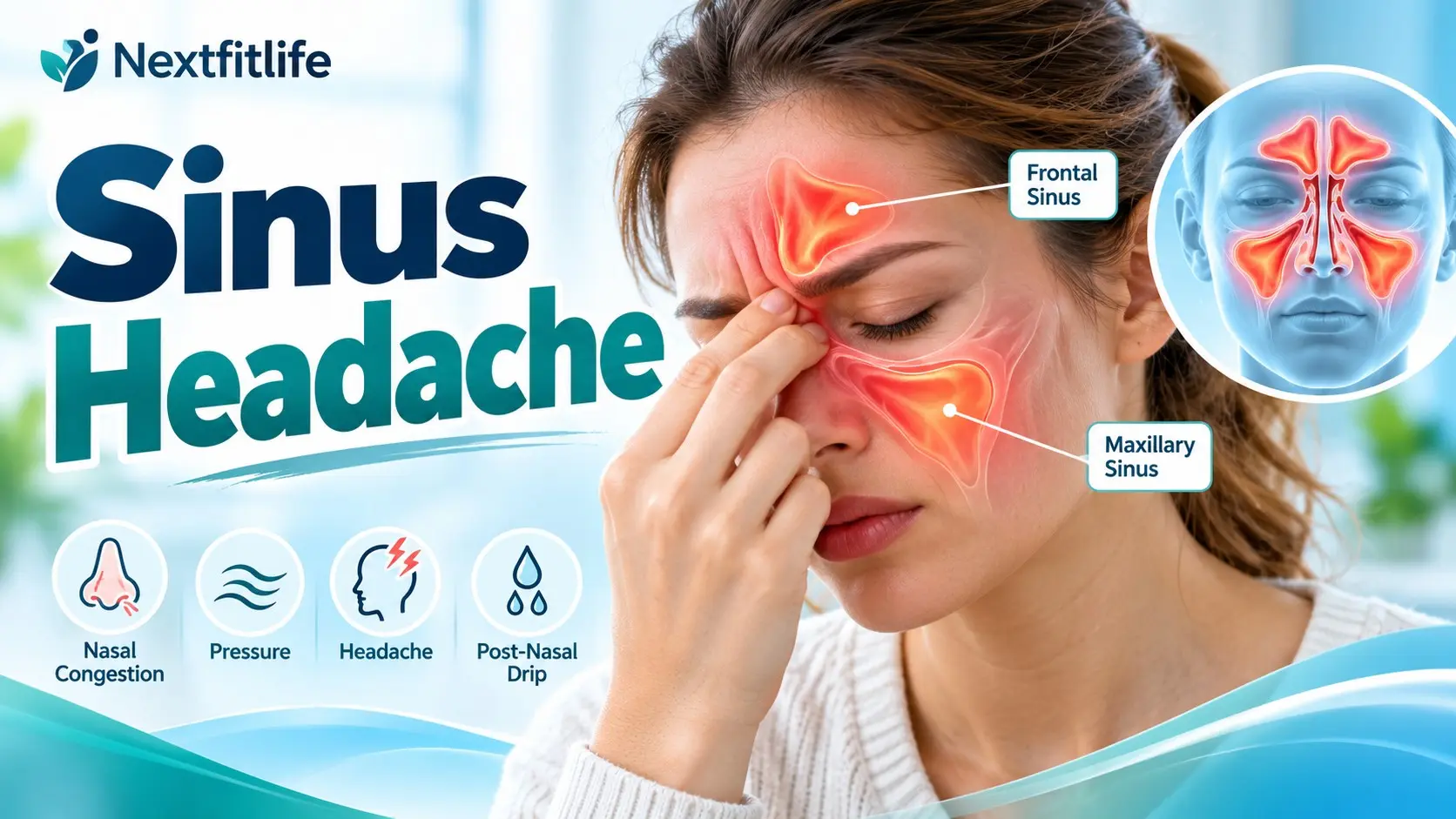
Your sinuses are air filled spaces around the:
- Forehead
- Cheeks
- Nose
- Eyes
When the lining becomes inflamed, you may develop nasal congestion, mucus, facial fullness, reduced smell, and pain.
However, pain in these areas does not automatically mean your sinuses are the cause.
Sinus Headache vs Migraine
This is one of the most important distinctions.
Migraine can cause:
- Nasal congestion
- Runny nose
- Watery eyes
- Eye redness
- Facial swelling
- Forehead pressure
- Pain around the eyes
This happens because migraine can activate nerves that also affect the face and nose.
| Clue | Sinusitis Related Pain | Migraine |
|---|---|---|
| Nasal congestion | Common | Can occur |
| Facial pressure | Common | Can occur |
| Nausea | Less typical | Common |
| Light sensitivity | Less typical | Common |
| Throbbing pain | Less typical | Common |
| Reduced smell | Common | Less typical |
| High fever | Can occur with infection | Not typical |
Read Migraines vs Headaches if attacks keep returning.
What Causes a True Sinus Headache?
Several problems can inflame the nose and sinuses.
Viral respiratory infections
Most acute sinus infections begin with a virus.
A cold can swell the nasal and sinus lining and cause:
- Congestion
- Drainage
- Pressure
- Headache
- Cough
Bacterial sinusitis
Some sinus infections become bacterial.
This is more likely when symptoms persist, are severe, or worsen after an initial improvement.
Allergic rhinitis
Allergic rhinitis causes nasal inflammation after exposure to triggers such as:
- Pollen
- Dust mites
- Pet dander
- Mold
Chronic rhinosinusitis
Chronic rhinosinusitis involves persistent nasal and sinus inflammation lasting 12 weeks or longer.
Structural problems
A deviated septum, nasal polyps, or other structural problems may contribute to poor airflow or sinus drainage.
Typical Sinusitis Symptoms
Symptoms can include:
- Facial pressure
- Nasal congestion
- Nasal drainage
- Reduced smell
- Postnasal drip
- Cough
- Upper tooth discomfort
- Headache
- Fatigue
One symptom by itself is not enough to diagnose sinusitis.
13 Smart Sinus Headache Relief Steps
1. Start With Saline Nasal Spray
Saline spray can moisten nasal tissue and loosen mucus.
It is simple and does not contain a medicated decongestant.
2. Use Saline Nasal Irrigation Safely
Saline nasal irrigation can wash mucus, pollen, and debris from the nose.
Use only:
- Distilled water
- Sterile water
- Previously boiled and cooled water
Do not use untreated tap water.
3. Apply a Warm Compress
A comfortably warm cloth over the forehead or cheeks can soothe pressure.
This is a comfort measure rather than a cure.
4. Rest
Viral illness can leave you tired.
Good rest may also reduce headache triggers linked to poor sleep.
5. Drink According to Your Normal Needs
Normal hydration is helpful during illness.
You do not need to force two or three liters of water just to thin sinus mucus.
Drink enough to avoid dehydration unless your healthcare professional has told you to restrict fluid.
6. Use Pain Medicine Safely
Depending on your health, common options may include:
- Acetaminophen
- Ibuprofen
- Naproxen
NSAIDs such as ibuprofen and naproxen need extra care if you have:
- Kidney disease
- Stomach ulcers
- Bleeding problems
- Blood thinner use
- Some heart conditions
- Pregnancy
7. Consider an Intranasal Corticosteroid
Intranasal corticosteroids reduce inflammation.
Examples include:
- Fluticasone
- Budesonide
- Mometasone
They may help in viral or bacterial rhinosinusitis and are especially useful in allergy or chronic inflammation.
They usually work over time rather than instantly.
8. Treat Allergies When They Are the Trigger
Allergy symptoms often include:
- Sneezing
- Itchy nose
- Itchy eyes
- Clear drainage
- Congestion
Depending on the person, treatment may include saline, intranasal steroids, antihistamines, or allergen control.
9. Use Decongestants Carefully
Decongestants may provide temporary relief for some people, but evidence for treating acute sinusitis itself is weaker than for saline, nasal steroids, and appropriate pain medicine.
Topical nasal decongestants should only be used for a short time because overuse can cause rebound congestion.
10. Keep Indoor Air Comfortable
Dry air can irritate nasal passages.
A clean humidifier may improve comfort if your indoor air is very dry.
Clean it often so it does not spread mold or bacteria.
11. Avoid Smoke and Strong Irritants
Smoke and fumes can make nasal inflammation worse.
Try to avoid:
- Cigarette smoke
- Secondhand smoke
- Vaping aerosols
- Strong cleaning chemicals
- Heavy fragrance that triggers symptoms
12. Watch the Timeline
How long symptoms last can help separate viral illness from possible bacterial sinusitis.
Symptoms that keep improving are usually less concerning than symptoms that persist or worsen.
13. Reconsider the Diagnosis if the Headache Keeps Returning
If headaches return repeatedly but each episode is treated as sinusitis, ask whether migraine or another headache disorder fits better.
This is especially important if you have nausea, light sensitivity, sound sensitivity, or throbbing pain.
Which Treatments Have the Best Evidence?
| Treatment | Role | Key Point |
|---|---|---|
| Saline irrigation | Symptom relief | Use safe water |
| Intranasal corticosteroid | Reduces inflammation | Often needs consistent use |
| Pain medicine | Reduces pain | Choose based on your health |
| Antibiotics | Selected bacterial cases | Not for most viral cases |
| Decongestants | Temporary congestion relief | Limited evidence for acute sinusitis itself |
Natural Sinus Headache Relief: What Is Worth Trying?
The word “natural” does not automatically mean effective or safe.
The most reasonable low risk comfort measures are simple.
Saline
Saline has a clear role in sinus symptom care.
For chronic rhinosinusitis, clinical guidelines support saline irrigation and intranasal corticosteroids.
Warm compress
A warm compress may ease facial pressure.
Keep it warm rather than hot.
Warm drinks
Warm drinks may soothe the throat and make congestion feel more comfortable.
The effect is supportive rather than curative.
Humidified air
A clean humidifier may help if dry air is irritating your nasal passages.
There is no need to chase a fixed humidity number for every person.
What About Steam Inhalation?
A warm shower may feel soothing.
However, leaning over a bowl of boiling water is not a good home treatment because spilled hot water can cause severe burns.
Humid air may improve comfort, but it does not cure sinus infection.
Does Eucalyptus Oil Treat Sinus Headache?
Eucalyptol has been studied in some respiratory conditions, but that does not mean adding concentrated eucalyptus oil to boiling water or a nasal rinse is a proven or necessary sinus headache treatment.
Do not place essential oil inside the nose or add it to a neti pot.
Strong oils can irritate sensitive nasal tissue.
Does Ginger Help?
Ginger can be part of a healthy diet and ginger tea may feel soothing.
There is not strong clinical evidence that ginger tea treats acute sinusitis or reliably stops sinus headache.
Does Honey Help?
Honey may soothe cough or throat irritation in some adults and older children.
It does not cure sinus infection or directly open blocked sinuses.
Honey should never be given to children younger than one year.
Does Apple Cider Vinegar Help?
There is no good evidence that apple cider vinegar clears sinus infection, thins mucus enough to treat sinusitis, or cures sinus headache.
It can irritate the mouth, throat, and stomach.
Do Spicy Foods Clear the Sinuses?
Spicy food can briefly increase nasal secretions and make your nose feel more open.
This effect is temporary.
It does not treat the underlying inflammation or infection.
Does Pineapple or Bromelain Treat Sinusitis?
Pineapple is a nutritious food.
It should not replace proven sinus treatments.
The evidence is not strong enough to recommend pineapple or bromelain as primary treatment for acute sinus headache.
Do Garlic and Onion Cure Sinus Infection?
No.
Garlic and onion can be part of a healthy diet, but eating them does not replace evidence based treatment for bacterial or chronic sinus disease.
How to Use a Neti Pot Safely
Safety matters more than the type of irrigation device.
Use only:
- Distilled water
- Sterile water
- Previously boiled and cooled water
Tap water may contain organisms that are safe to swallow but are not safe to introduce into the nose.
Also:
- Use saline rather than plain water
- Wash the device after use
- Let it dry completely
- Do not share the device
What Is Rebound Congestion?
Rebound congestion can happen when medicated nasal decongestant sprays are used for too long.
The nose becomes more blocked, leading the person to use more spray.
This creates a cycle that can be hard to break.
Follow the product label and ask a pharmacist if you find yourself needing the spray repeatedly.
Oral Decongestants
Some oral decongestants can reduce congestion temporarily.
They are not right for everyone.
Ask a pharmacist or clinician before using one if you have:
- High blood pressure
- Heart disease
- Thyroid disease
- Glaucoma
- Prostate problems
- Pregnancy
- Medicine interactions
What About Oral Phenylephrine?
Do not assume every oral “decongestant” works equally well.
The U.S. FDA has proposed removing oral phenylephrine from the over the counter monograph because available evidence did not support its effectiveness as an oral nasal decongestant.
Products containing it may still be sold while the regulatory process continues.
Check the active ingredient and ask a pharmacist if you are unsure.
When Is Bacterial Sinusitis More Likely?
Most acute sinus infections are viral.
Bacterial infection becomes more likely in three main patterns.
| Pattern | Typical Clue |
|---|---|
| Persistent | Symptoms continue for at least 10 days without improvement |
| Severe | High fever with purulent drainage or significant facial pain for several days |
| Worsening | Symptoms begin to improve and then become worse again |
Does Yellow or Green Mucus Mean Bacterial Sinusitis?
No.
Colored mucus can appear during viral infections too.
Color by itself does not tell you whether antibiotics are needed.
The symptom timeline and severity matter much more.
Do You Need Antibiotics?
Many sinus infections improve without antibiotics.
For uncomplicated bacterial sinusitis, current adult guidance also supports watchful waiting when reliable follow up is available.
If antibiotics are chosen, the healthcare professional will select the medicine based on age, allergy history, other illnesses, local resistance patterns, and other factors.
Do not use leftover antibiotics.
When Is Imaging Needed?
Most uncomplicated acute sinusitis does not need imaging.
A scan may be useful when:
- A complication is suspected
- The diagnosis is uncertain
- Symptoms are chronic
- Episodes keep returning
- Surgery is being considered
What Is Chronic Rhinosinusitis?
Chronic rhinosinusitis means persistent inflammation lasting 12 weeks or longer.
Symptoms may include:
- Blocked nose
- Reduced smell
- Drainage
- Facial pressure
Treatment differs from a short viral infection.
Current guidelines support saline irrigation, intranasal corticosteroids, or both for symptom relief.
When Should You See an ENT Specialist?
ENT assessment may help if:
- Symptoms last 12 weeks or longer
- Sinus infections keep returning
- You have a persistent one sided blocked nose
- You have nasal polyps
- A deviated septum may be contributing
- Your sense of smell remains reduced
- Standard treatment is not helping
When Should You Consider Migraine Instead?
Migraine becomes more likely when you have:
- Recurring attacks
- Nausea
- Light sensitivity
- Sound sensitivity
- Throbbing pain
- Pain made worse by normal activity
- Weather related attacks
- Normal sinus evaluations between attacks
Can Weather Trigger a Sinus Headache?
Weather can affect both nasal symptoms and migraine.
Cold air, dry air, pollen, humidity, and pressure changes may affect how your nose feels.
But weather is also a common migraine trigger.
A repeated weather related “sinus headache” may therefore be migraine rather than sinus infection.
Can a Tooth Problem Feel Like a Sinus Headache?
Yes.
The roots of the upper teeth sit close to the maxillary sinuses.
Dental infection can create cheek or facial pain that feels like sinus pressure.
Read Headache From Tooth Infection if tooth tenderness or gum symptoms are present.
Medication Overuse Headache
Using headache medicine too often can eventually contribute to more frequent headaches.
If you need acute pain medicine several days every week, get the headache pattern reassessed instead of continuing the same treatment over and over.
When Is Sinus Headache an Emergency?
Seek emergency medical care for:
- A sudden severe headache that reaches maximum intensity quickly
- Weakness or numbness
- Trouble speaking
- Severe confusion
- Seizure
- Fainting
- High fever with a stiff neck
- Major vision change
- Double vision
- Severe swelling around an eye
- Difficulty moving an eye
- Severe headache after head trauma
When Should You Arrange a Medical Appointment?
Arrange medical care if:
- Symptoms last at least 10 days without improving
- Symptoms improve and then become worse
- Fever or facial pain is severe
- Headaches keep returning
- One side of the nose stays blocked
- Your sense of smell stays reduced
- Sinus symptoms last 12 weeks or longer
- You repeatedly need decongestant sprays
- You need headache medicine often
Common Sinus Headache Myths
| Myth | What Is More Accurate |
|---|---|
| Every facial headache is sinusitis | Migraine often causes sinus like symptoms. |
| Green mucus means antibiotics | Color alone does not prove bacterial infection. |
| Boiling water steam is the best natural cure | It adds burn risk and does not cure sinusitis. |
| Eucalyptus oil belongs in a sinus rinse | Nasal rinses should use properly prepared saline only. |
| Two liters of water clears sinusitis | Normal hydration is useful, but there is no universal sinus clearing water target. |
| Natural remedies always work better | Evidence is strongest for specific treatments such as saline and intranasal steroids in appropriate situations. |
A Simple Same Day Relief Plan
- Ask whether the headache looks more like sinusitis or migraine.
- Use saline spray or safe saline irrigation.
- Apply a comfortably warm compress.
- Rest.
- Drink normally.
- Use an appropriate pain reliever if it is safe for you.
- Consider an intranasal steroid if nasal inflammation or allergy is important.
- Use decongestants carefully and only when appropriate.
- Avoid smoke and strong irritants.
- Watch the duration and pattern of symptoms.
Conclusion: Treat a Sinus Headache by Treating the Cause
A sinus headache should not automatically be treated as a bacterial sinus infection.
Start with the most useful clues. Look for congestion, drainage, reduced smell, fever, duration, and whether symptoms are improving or getting worse.
Use safe symptom relief such as saline, a warm compress, appropriate pain medicine, and intranasal steroids when suitable. Be careful with decongestants, boiling steam, essential oils, and unproven natural remedies.
If attacks keep returning with nausea, light sensitivity, or throbbing pain, ask whether migraine fits better.
If symptoms persist, worsen, or include eye or neurologic red flags, seek medical care.
References and Sources
- American Academy of Otolaryngology Head and Neck Surgery Foundation. Clinical Practice Guideline: Adult Sinusitis Update 2025.
Covers viral and bacterial rhinosinusitis, saline irrigation, intranasal corticosteroids, pain relief, watchful waiting, antibiotics, imaging, and chronic rhinosinusitis.
https://aao-hnsfjournals.onlinelibrary.wiley.com/doi/10.1002/ohn.1344 - Centers for Disease Control and Prevention. Sinus Infection Basics.
Covers sinusitis symptoms, viral causes, antibiotic use, symptom relief, and when medical care may be needed.
https://www.cdc.gov/sinus-infection/about/ - Centers for Disease Control and Prevention. Adult Outpatient Antibiotic Guidance.
Covers severe, persistent, and worsening bacterial sinusitis patterns and appropriate antibiotic decision making.
https://www.cdc.gov/antibiotic-use/hcp/clinical-care/adult-outpatient.html - American Migraine Foundation. Autonomic Symptoms of Migraine.
Explains why migraine can cause nasal congestion, runny nose, watery eyes, eye redness, and facial swelling that resemble sinus disease.
https://americanmigrainefoundation.org/resource-library/autonomic-symptoms-of-migraine/ - U.S. Food and Drug Administration. Is Rinsing Your Sinuses With Neti Pots Safe?
Covers safe nasal irrigation water, proper cleaning, and why untreated tap water should not be used.
https://www.fda.gov/consumers/consumer-updates/rinsing-your-sinuses-neti-pots-safe - U.S. Food and Drug Administration. Oral Phenylephrine Information.
Explains the FDA proposal to remove oral phenylephrine as a nonprescription oral nasal decongestant ingredient because current evidence did not support effectiveness.
https://www.fda.gov/drugs/understanding-over-counter-medicines/key-information-about-nonprescription-over-counter-otc-oral-phenylephrine
Internal Links and Helpful NextFitLife Guides
- How to Get Rid of a Sinus Headache Instantly
- Nasal Headache
- Does a Blocked Nose Cause Headaches?
- Migraines vs Headaches
- Living With Hemiplegic Migraine
- COVID Headache
- Headache From Tooth Infection
- What Causes Allergies
- NextFitLife Health Hub
About the Author
Adel Galal is a father of four, three sons and a daughter, and a grandfather of four, with 33 years of hands on parenting experience. He is the founder of Parnthub.com, based in Cairo, Egypt, where he shares practical guidance on feeding, development, and family life from newborns to teenagers.
Adel is not a medical professional. Health articles cite trusted medical and public health sources and are for general information only.
I am not a doctor or licensed healthcare professional, and this content does not replace professional medical advice, diagnosis, or treatment. I share information based on extensive research, real life experience, and consultation with healthcare providers. Always consult a qualified healthcare professional for diagnosis, treatment, or guidance about any health condition.
Learn more on the NextFitLife About Us page.
Frequently Asked Questions
What is a sinus headache?
A sinus headache is a common term for facial or head pain that occurs with inflamed sinuses, usually together with nasal symptoms such as congestion, drainage, or reduced smell.
How do I know if my headache is sinus or migraine?
Migraine is more likely when pain is recurring, throbbing, worsened by activity, or paired with nausea, light sensitivity, or sound sensitivity. Sinusitis is more likely with clear nasal inflammation or infection.
Can migraine cause sinus pressure?
Yes. Migraine can cause facial pressure, nasal congestion, runny nose, watery eyes, eye redness, and facial swelling.
What is the fastest safe sinus headache relief?
Saline, a warm compress, appropriate pain relief, rest, and intranasal treatment when suitable may reduce symptoms. No remedy can guarantee instant relief.
Does saline help sinus headache?
Saline can loosen mucus and wash irritants from nasal passages. It is also recommended for symptom relief in chronic rhinosinusitis.
Can I use tap water in a neti pot?
No. Use distilled, sterile, or previously boiled and cooled water for nasal irrigation.
Does steam treat sinusitis?
Humid air may feel soothing, but boiling water steam does not cure sinusitis and can cause burns.
Does eucalyptus oil cure sinus headache?
No. Eucalyptus oil is not a proven cure and concentrated essential oil should not be placed inside the nose or added to nasal irrigation.
Does ginger cure sinusitis?
No. Ginger can be part of a healthy diet and tea may feel soothing, but it is not proven treatment for acute sinusitis.
Does apple cider vinegar clear the sinuses?
There is no good clinical evidence that apple cider vinegar clears sinus infection or treats sinus headache.
Does green mucus mean I need antibiotics?
No. Green or yellow mucus can occur during viral infections. Duration, severity, and worsening pattern matter more than color alone.
When is bacterial sinusitis more likely?
It is more likely when symptoms persist for at least 10 days without improvement, are severe with high fever and facial pain, or worsen after initially improving.
Do all bacterial sinus infections need antibiotics?
No. Watchful waiting can be appropriate for selected uncomplicated cases when reliable follow up is available.
Do nasal steroid sprays help sinusitis?
Yes. Intranasal corticosteroids can provide modest symptom relief and are especially useful in chronic rhinosinusitis and allergy related inflammation.
Can nasal decongestant spray make congestion worse?
Yes. Using a topical decongestant longer than recommended can cause rebound congestion.
Is oral phenylephrine effective for congestion?
The FDA has proposed removing oral phenylephrine as an oral nonprescription nasal decongestant ingredient because available evidence did not support its effectiveness.
Can allergies cause sinus headache symptoms?
Allergies can cause congestion and facial pressure, but severe recurring headache may also be migraine.
When does sinusitis become chronic?
Chronic rhinosinusitis generally means persistent symptoms and inflammation lasting 12 weeks or longer.
When should I see an ENT specialist?
ENT assessment may help when sinus symptoms last 12 weeks or longer, infections keep returning, one side stays blocked, nasal polyps are suspected, or treatment is not working.
When is a sinus headache an emergency?
Seek urgent care for a sudden severe headache, weakness, numbness, trouble speaking, confusion, seizure, fainting, high fever with stiff neck, major vision changes, double vision, or severe eye swelling.

Health & wellness writer with 30+ years of experience in nutrition, fitness, and healthy aging. Founder of NextFitLife.com — evidence-based health guidance.