Published: September 20, 2026
Last updated: September 20, 2026
Next review: September 2027, or sooner if major dermatology or skincare guidance changes.
Written and source-checked by: Adel Galal, Founder and Lead Writer at NextFitLife
Medical review status: This article has not been medically reviewed by a dermatologist, pharmacist, allergist, or other licensed healthcare professional.
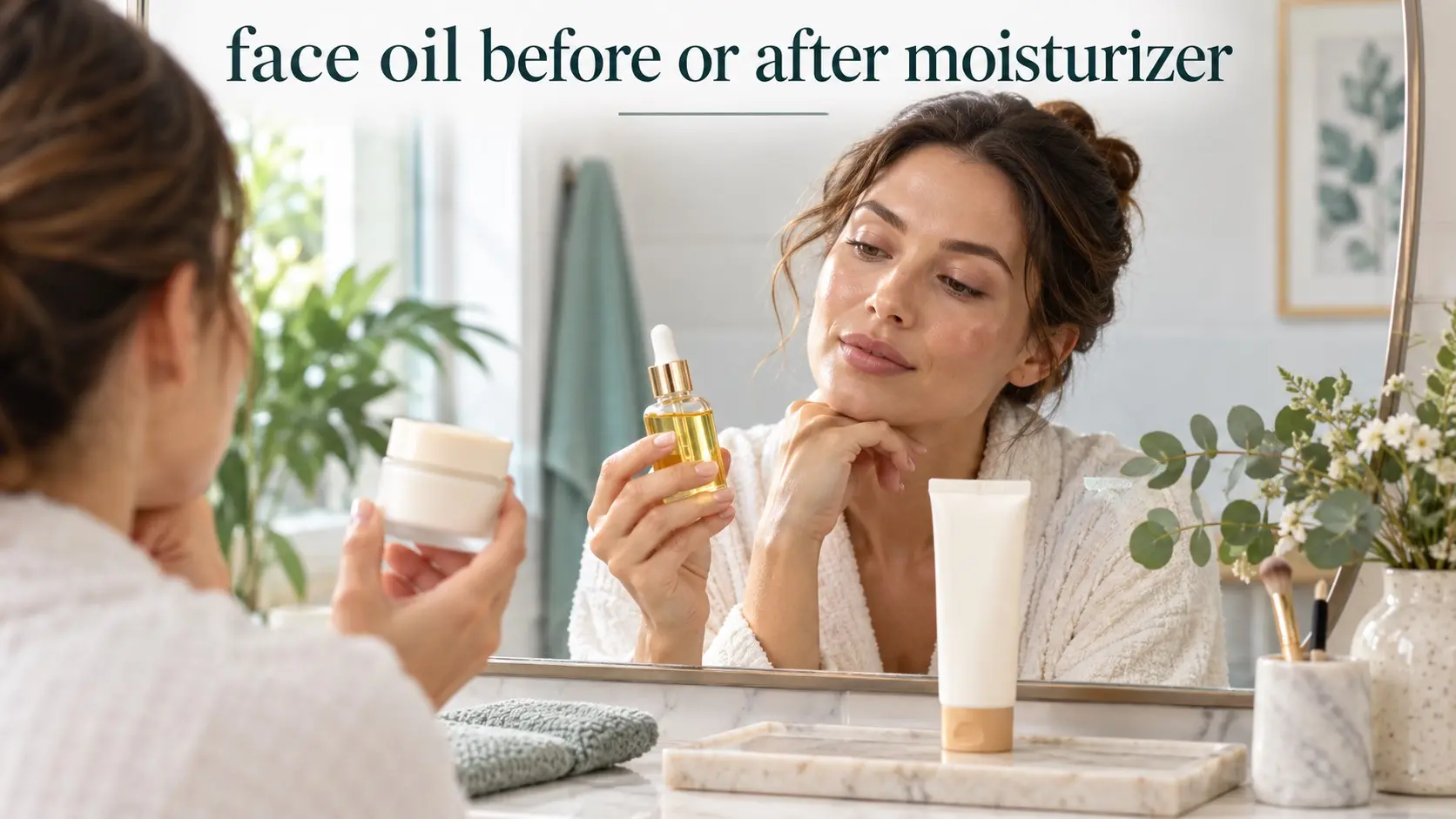
For a plain cosmetic facial oil, I would usually start with moisturizer and use oil only if your skin still needs extra softness afterward.
But that is a practical default.
It is not a universal dermatology law.
Some dermatologists' guidance places facial oil before moisturizer.
Product formulas also differ.
That means the best answer to face oil before or after moisturizer depends on what the oil contains, what moisturizer you use, your skin type, and whether sunscreen or prescription treatment is also part of the routine.
The biggest mistake is treating face oil as if it were essential.
It is not.
A good moisturizer may already give your skin everything it needs.
For broader skincare guidance, visit the NextFitLife Skin Health Guide and Healthy Skin 101.
Medical Notice
I am not a dermatologist or A doctor, and this content does not replace professional medical advice. What I share comes from real-life experience, extensive research, and consultation with healthcare providers. Always consult qualified medical professionals for diagnosis and treatment of any health condition.
This article discusses cosmetic skincare.
Prescription medicines, eczema, rosacea, severe acne, allergic reactions, pregnancy, and other medical concerns can change which products are appropriate.
Follow the directions for prescribed treatments rather than changing their order because of a general skincare article.
Quick Answer: Should Face Oil Go Before or After Moisturizer?
There is no clinically proven universal order for every facial oil and every moisturizer.
For a simple plain oil used mainly for softness or to reduce moisture loss, applying moisturizer first and a small amount of oil afterward is a practical option, especially for dry skin at night.
However, some dermatologist guidance recommends facial oil before moisturizer.
Follow the instructions for the specific product if they differ.
In the morning, sunscreen should remain the final skincare protection step.
Table of Contents
- Face Oil and Moisturizer Are Not the Same
- 9 Smart Rules for Layering Face Oil
- Start With Moisturizer as the Main Hydration Step
- Use Oil Only When It Adds Something
- Dry Skin Usually Benefits Most
- Be Cautious With Acne Prone Skin
- Keep Sensitive Skin Simple
- Follow Treatment Product Directions
- Keep Sunscreen Last in the Morning
- Use Less Oil Than You Think
- Stop If Your Skin Clearly Dislikes It
- Dry Skin vs Dehydrated Skin
- Can Face Oil Help the Skin Barrier?
- Can Oil Replace Moisturizer?
- Should You Mix Oil Into Moisturizer?
- Should Oil Go on Damp Skin?
- Popular Facial Oils
- Morning Routine
- Evening Routine
- Common Layering Mistakes
- When to See a Dermatologist
- References and Sources
- Conclusion
- Continue Reading on NextFitLife
- About the Author
- Frequently Asked Questions
Face Oil and Moisturizer Do Different Jobs
This distinction makes the whole question easier.
A typical moisturizer contains a water phase plus several types of moisturizing ingredients.
These ingredients can include:
- Humectants
- Emollients
- Occlusives
Humectants
Humectants help attract and hold water in the outer skin.
Common examples include glycerin, urea, and hyaluronic acid.
Emollients
Emollients help soften rough skin and smooth the spaces between surface skin cells.
Occlusives
Occlusives reduce water loss from the skin surface.
A single moisturizer can contain ingredients from all three groups.
A facial oil is different.
Most plain oils are largely lipid-based and contain little or no water.
They can make skin feel smoother.
They can add emollience.
Some lipid rich products can also help reduce transepidermal water loss.
But oil is not the same as adding water to the skin.
9 Smart Rules for Using Face Oil With Moisturizer
1. Treat Moisturizer as Your Main Hydration Step
If your skin feels dry or tight, start with moisturizer.
A well-formulated moisturizer gives you a water-containing product plus ingredients that help hold that water in the skin.
Apply it after cleansing while the skin is still slightly damp, when that suits your routine.
The American Academy of Dermatology recommends applying moisturizer after washing when skin is dry and notes that applying it while some water remains on the skin can help trap that water.
Then decide whether you actually need anything else.
If your skin feels comfortable, stop.
You have not failed skincare by using fewer products.
2. Add Face Oil Only When It Has a Clear Job
Face oil is optional.
I would use it for one main reason:
Your moisturizer is good, but parts of your face still feel dry or rough.
In that case, apply a small amount of oil to those areas.
That might be your cheeks.
It might be around the mouth.
It does not automatically need to cover your entire face.
This is especially useful at night when sunscreen and makeup do not need to sit on top.
3. Dry Skin Has the Strongest Case for Facial Oil
Dry skin tends to benefit most from extra emollient or occlusive support.
A practical evening routine can look like this:
- Gentle cleanser
- Needed treatment
- Moisturizer
- Small amount of facial oil on dry areas
Do not assume more oil means better barrier repair.
Start small.
The goal is comfortable skin, not a visible oil film that remains for hours.
For a broader routine, read Face Care Routine for Dry Skin.
4. Acne-Prone Skin Should Be More Selective
This is where I would be cautious.
Acne-prone skin does not automatically need a separate oil.
Cleveland Clinic dermatologist guidance specifically warns that facial oils can be too occlusive for some people with acne prone skin.
If you want to try one, look for a simple product labeled:
- Noncomedogenic
- Oil free when choosing the rest of the routine
- Won't clog pores
No label guarantees that every person will tolerate a product.
Introduce one product at a time.
If closed comedones, whiteheads, or inflammatory pimples clearly increase after adding the oil, stop using it.
Do not call that reaction “purging” just because the product is new.
A simple cosmetic oil is not an acne treatment that needs a purge phase.
Read How to Get Rid of Whiteheads for evidence-based clogged pore care.
5. Sensitive Skin Usually Benefits From Fewer Ingredients
Natural is not another word for gentle.
A plant oil can still irritate skin.
Essential oils can irritate skin.
Added fragrance can irritate skin.
Botanical mixtures can contain many potential triggers.
For sensitive skin, I would prefer a simple fragrance-free product over an oil blend filled with perfume and plant extracts.
Introduce only one new product at a time.
This makes reactions easier to identify.
If a product causes strong burning, swelling, blistering, or a painful rash, stop using it.
The NextFitLife Skin Health Guide explains a simpler approach to sensitive and irritated skin.
6. Prescription and Active Treatments Get Priority
A bottle with an oily texture is not automatically “just an oil.”
Read the label.
A product can contain:
- Retinoids
- Salicylic acid
- Azelaic acid
- Prescription medicine
- Other active ingredients
If it is a treatment, its instructions matter more than a generic skincare layering rule.
The American Academy of Dermatology recommends applying prescribed medicines or treatments after cleansing and before moisturizer unless your treatment instructions say otherwise.
Retinoids deserve particular care.
Moisturizer is sometimes used to improve tolerance.
Do not change the order of a prescription treatment because an influencer says oil always goes last.
7. Keep Sunscreen as the Final Morning Skincare Step
This rule matters more than where the oil goes.
Your morning routine should finish with sunscreen before makeup.
A simple order is:
- Cleanse
- Treatment if needed
- Serum if useful
- Moisturizer
- Optional very small amount of facial oil
- Sunscreen
But there is a practical test.
If the facial oil makes your sunscreen pill, separate, slide, or spread unevenly, remove the oil from the morning routine.
Use it at night instead.
Do not mix oil directly into sunscreen.
Sunscreen is tested as a complete formulation.
Use it as directed.
8. Start With Less Oil Than You Think
You do not need a face dripping in oil.
Start with a tiny amount.
Press it over the areas that feel dry.
Add more only if needed.
I would not turn an exact number of drops into a universal rule.
Dropper sizes differ.
Oil thickness differs.
Face size differs.
What matters is the result.
Your skin should feel comfortable.
It should not feel coated for the rest of the night.
9. Stop Using an Oil That Clearly Makes Your Skin Worse
This sounds obvious.
Skincare marketing makes people ignore it.
Stop or reassess the oil if you notice:
- New clogged pores
- More inflammatory acne
- Persistent itching
- Burning
- Redness
- Swelling
- Greasy discomfort
- Pilling under sunscreen
You do not need to make every product work.
Your skin does not know how much the bottle cost.
Dry Skin and Dehydrated Skin Are Not Quite the Same Problem
These terms are often mixed.
Dry skin refers mainly to skin with low surface oils and impaired barrier function.
“Dehydrated skin” is a common cosmetic term used for skin that lacks water.
A facial oil can soften dry skin.
But a pure oil contains little or no water.
If the problem is tight, dehydrated-feeling skin, adding more oil without a suitable moisturizer can leave you shiny and still uncomfortable.
Use the water-containing moisturizer first.
Then decide whether you need extra lipid support.
Can Face Oil Repair the Skin Barrier?
The phrase “barrier repair” gets used too freely.
Some oils and lipid-rich products can support the outer skin by improving softness and reducing water loss.
That does not mean every oil repairs a damaged barrier equally.
Different oils have different fatty acid profiles and cosmetic properties.
The evidence for established moisturizers is much stronger than the evidence behind many fashionable individual oils.
If your skin barrier feels irritated after too many acids, scrubs, retinoids, or harsh cleansers, simplify first.
- Use a gentle cleanser
- Stop unnecessary irritating products
- Use a bland moisturizer
- Protect skin from ultraviolet exposure
Add facial oil later only if your skin still feels dry and tolerates it.
Can Face Oil Replace Moisturizer?
I would not make oil the default replacement.
A typical moisturizer can supply water plus humectants, emollients, and occlusive ingredients.
A pure facial oil cannot reproduce all of those functions.
Some people still like oil alone.
That is a cosmetic preference.
But if your skin is persistently dry, irritated, or affected by eczema, a properly formulated moisturizer usually makes more sense as the foundation.
Should You Mix Face Oil Into Moisturizer?
I prefer layering.
Apply moisturizer first.
Then place oil only where it is useful.
That keeps the original moisturizer formula intact and lets you control the amount of oil.
Mixing two simple cosmetic products in your palm is not automatically harmful.
It is simply unnecessary in many routines.
There are two products I would not casually customize this way:
- Prescription treatments
- Sunscreen
If the manufacturer specifically tells you to mix products from the same system, follow those instructions.
Should You Apply Face Oil to Damp Skin?
Use the dampness for moisturizer first.
After cleansing, leave the skin slightly damp.
Apply moisturizer.
Then add your optional oil if needed.
AAD guidance specifically recommends applying moisturizer after washing while some water remains on the skin.
This gives you water and moisturizing ingredients first.
The lipid step comes afterward if your skin still wants it.
What About Squalane, Jojoba Oil, Rosehip Oil, and Argan Oil?
These products are not interchangeable.
Squalane
Squalane is used as a lightweight emollient in many cosmetic products.
It usually feels less heavy than some traditional plant oils.
That does not mean it treats acne or every type of irritated skin.
Jojoba Oil
Jojoba is technically a liquid wax rather than a traditional triglyceride oil.
It is widely used in cosmetics because of its texture and stability.
I would still judge it by how your own skin responds rather than claims that it can “balance” oil production.
Rosehip Oil
Rosehip oil contains unsaturated fatty acids and is widely marketed for scars, pigmentation, and aging.
Those claims are much stronger than the evidence for many over-the-counter products.
Think of it primarily as a cosmetic emollient unless a specific claim is backed by good evidence.
Argan Oil
Argan oil is another plant oil used for emollience.
Again, tolerance matters more than marketing language.
You do not need an exotic oil for healthy skin.
What About Coconut Oil or Olive Oil on the Face?
I would not automatically move kitchen oils into the bathroom.
Coconut oil can feel very heavy on facial skin.
Olive oil contains useful lipids but is not automatically ideal for every face.
Acne-prone or oily skin may find heavy oils uncomfortable or pore-clogging.
A properly formulated cosmetic product gives you more predictable texture and stability.
Simple skincare does not mean improvised skincare.
Can Oily Skin Use Face Oil?
It can.
It does not have to.
This distinction matters.
Oily skin still needs a healthy barrier.
That does not mean it needs another oil layer.
A lightweight noncomedogenic moisturizer may be enough.
If you want to experiment with oil, use very little and introduce it slowly.
If your skin becomes more congested, remove it.
For a broader routine, see the NextFitLife Oily Skin Care Guide.
What About Combination Skin?
Treat the areas differently.
A shiny forehead and dry cheeks do not need identical products.
Use your normal moisturizer across the face if it works well.
Then apply a tiny amount of oil only to dry cheeks or other rough areas.
There is no rule saying every skincare product must cover every square centimetre of your face.
What If Moisturizer Plus Oil Feels Too Greasy?
Take the oil out.
That is the first fix.
If your moisturizer already leaves your skin comfortable, the oil has no necessary job.
You can also try:
- A lighter moisturizer
- Oil only on dry areas
- Oil only at night
- Less oil
Do not keep adding powder, mattifying serum, or extra cleanser just to compensate for an oil your skin never needed.
Why Are Your Products Pilling?
Pilling is when skincare rolls into little flakes or balls on the skin.
Several things can contribute.
- Using too much product
- Applying many layers
- Rubbing too aggressively
- Layering formulas that do not sit well together
- Adding another oily layer before sunscreen
Simplify before buying anything new.
Use less product.
Let each layer settle.
If removing the facial oil stops the pilling, you have your answer.
A Simple Morning Routine With Facial Oil
If you truly need oil in the morning:
- Gentle cleanser or water rinse when appropriate
- Prescribed or chosen treatment
- Serum when useful
- Moisturizer
- Very small amount of facial oil if needed
- Broad spectrum sunscreen
- Makeup if desired
If the oil interferes with sunscreen, skip it.
Sunscreen wins that argument.
For the bigger picture, see Healthy Skin 101.
A Simple Evening Routine With Facial Oil
Night is the easiest place for oil.
- Remove makeup and sunscreen
- Cleanse gently
- Apply prescribed treatment or active product as directed
- Use moisturizer
- Add facial oil only if your skin still feels dry
That is enough.
You do not need toner, essence, three serums, two creams, sleeping mask, and oil because somebody put them in a ten-step graphic.
Where Do Retinoids Fit?
Retinoids are treatment products.
They should not be treated as ordinary cosmetic oil even when the formula feels oily.
Follow the instructions for your retinoid.
Moisturizer can sometimes be used to reduce irritation.
Some people apply moisturizer after the retinoid.
Others use moisturizer before and after as a buffering approach when advised or tolerated.
If you use prescription tretinoin or another prescription retinoid, follow your clinician's instructions.
Do not mix the prescription directly into facial oil unless specifically directed to do so.
What About Vitamin C, Niacinamide, and Hyaluronic Acid?
These products normally belong before heavier moisturizers and oils when their formulation is water-based.
Vitamin C
Use according to its product directions.
Many people use vitamin C in the morning before moisturizer and sunscreen.
Niacinamide
Niacinamide is often supplied in lightweight serums or moisturizers.
Use the product texture and instructions to determine placement.
Hyaluronic Acid
Hyaluronic acid is a humectant.
A lightweight hydrating serum usually goes before moisturizer.
The moisturizer then supplies additional ingredients to reduce water loss.
Oil remains optional.
9 Common Face Oil Mistakes
1. Using Oil Instead of Hydration
Pure oil does not supply a water phase.
2. Assuming Oil Is Essential
Many people do perfectly well without one.
3. Using Too Much
A thick, shiny coating rarely means better results.
4. Applying Oil Over Sunscreen
Keep sunscreen as your final morning skincare step.
5. Mixing Oil Into Sunscreen
Use sunscreen as formulated and tested.
6. Using Heavy Oil on Congested Skin
Acne-prone skin may not tolerate it.
7. Assuming Natural Means Gentle
Plant ingredients can irritate skin.
8. Calling Every Breakout a Purge
A plain oil is not supposed to cause a therapeutic purge.
9. Continuing a Product That Clearly Irritates You
Burning and inflammation are not signs that skincare is “working.”
What Should Men Know About Facial Oil?
The same skin biology applies.
Men do not need a separate scientific rule for facial oil.
Oil can be useful for dry skin or around facial hair.
But beard oil and facial skincare oil are not always designed for the same job.
Fragranced beard oils may irritate sensitive facial skin.
If you shave, do not pile fragranced oil onto freshly irritated skin just because it feels dry.
A bland moisturizer may be a better starting point.
See the NextFitLife Men's Skin Care Routine.
When Should You See a Dermatologist?
Face oil is a cosmetic choice.
Persistent skin disease needs something more.
Seek professional care for:
- Severe or painful acne
- Acne that is causing scars
- A persistent facial rash
- Repeated swelling after skincare
- Strong burning or blistering
- Severe eczema
- Possible rosacea
- Cracked or infected skin
- Sudden unexplained sensitivity
Seek urgent medical help for trouble breathing, swelling of the tongue or throat, fainting, or a severe widespread allergic reaction.
References and Sources
- American Academy of Dermatology: Skin Care Product Order
Dermatologist guidance on cleansing, treatment products, moisturizer, sunscreen, makeup, and avoiding excessive product layering.
Read the AAD skincare order guidance - American Academy of Dermatology: Moisturizer for Acne Prone Skin
Guidance on oil-free and noncomedogenic moisturizers and applying moisturizer after cleansing to help retain water.
Read the AAD acne moisturizer guidance - Cleveland Clinic: The Correct Order for Skin Care Products
Dermatologist guidance covering product order, optional facial oils, acne risk, treatments, moisturizer, and keeping routines simple.
Read the Cleveland Clinic skincare guide - Cochrane Review: Emollients and Moisturizers for Eczema
Open systematic review covering moisturizers, emollients, skin hydration, water loss, and skin barrier support.
Read the Cochrane review - Clinical Review of Moisturizers and Skin Barrier Function
Open medical review describing humectants, emollients, occlusives, transepidermal water loss, and how moisturizers support dry skin.
Read the clinical moisturizer review
Conclusion: Keep the Routine Simpler Than the Marketing
If you are still asking about face oil before or after moisturizer, start with the simplest useful answer.
Use moisturizer as your main hydration step.
If your skin still feels dry, try a small amount of plain facial oil.
If the product directions specify a different order, follow them.
If oil makes acne, irritation, pilling, or sunscreen application worse, remove it.
You do not need facial oil simply because it exists.
Your action today: use your normal moisturizer tonight, wait a few minutes, and assess your skin. Add a tiny amount of facial oil only to areas that still feel dry. If the moisturizer already does the job, stop there.
Continue Reading on NextFitLife
Use these NextFitLife guides to learn more about skincare order, dry skin, oily skin, acne, healthy skin, and building a simpler routine.
- Skin Health: Complete Guide
- Healthy Skin 101
- Face Care Routine for Dry Skin
- Natural Skin Care Routine for Oily Skin
- How to Get Rid of Whiteheads
- Men's Skin Care Routine
Frequently Asked Questions About Face Oil and Moisturizer
Should face oil go before or after moisturizer?
There is no universal evidence-based order for every formula. For a plain facial oil used for extra softness, moisturizer first and a small amount of oil afterward is a practical option. Follow the product instructions if they recommend a different order.
Why do some dermatologists recommend face oil before moisturizer?
Product order depends on formulation. Cleveland Clinic dermatologist guidance places optional face oil before moisturizer. This shows why the common rule that every oil must always go last is too absolute.
Can face oil replace moisturizer?
A pure facial oil is not equivalent to a standard moisturizer because it rarely contains a water phase or the same combination of humectants, emollients, and occlusive ingredients.
Does face oil hydrate skin?
Facial oil mainly adds lipids and softness. It does not supply water to the way a water-containing moisturizer does. Some oils can also help reduce water loss from the skin surface.
Should dry skin use face oil?
Dry skin is one of the skin types most likely to appreciate an additional oil layer. Start with moisturizer and add a small amount of oil only if the skin still feels dry.
Should oily skin use face oil?
Oily skin does not need facial oil simply because oil is marketed as balancing. A lightweight noncomedogenic moisturizer may be enough. Stop facial oil if it clearly increases congestion or breakouts.
Can acne-prone skin use facial oil?
Some people with acne-prone skin tolerate certain oils, while others become more congested. Choose simple noncomedogenic products and introduce one product at a time.
Can facial oil clog pores?
Some oils and formulations can contribute to clogged pores in susceptible skin. The response depends on the formula and the individual.
What does noncomedogenic mean?
Noncomedogenic means a product is designed to reduce the chance of clogging pores. It does not guarantee that no individual will break out from it.
Can I use face oil on sensitive skin?
Yes, if your skin tolerates it, but use simple, fragrance-free formulas. Essential oils, fragrance, and complex botanical blends can irritate sensitive skin.
Do I put face oil before sunscreen?
If you use facial oil in the morning, sunscreen should still be the final skincare protection step. Skip morning oil if it interferes with smooth and even sunscreen application.
Can I put face oil over sunscreen?
I would not. Facial oil applied over sunscreen may disturb the sunscreen film. Keep sunscreen as the final skincare layer before makeup.
Can I mix facial oil with sunscreen?
No. Do not dilute or mix sunscreen with facial oil unless the sunscreen manufacturer specifically instructs you to do so. Use sunscreen as formulated.
Can I mix face oil with moisturizer?
You can combine simple cosmetic products if their instructions allow it, but layering gives you better control. Apply moisturizer first, then add oil only where needed.
Should face oil be applied to damp skin?
Apply moisturizer to slightly damp skin first. Then add oil if you need extra emollience. This gives your skin a water-containing moisturizing step before the lipid layer.
How much facial oil should I use?
Start with the smallest amount that leaves the dry areas comfortable. There is no universal number of drops because product viscosity and dropper size vary.
Is squalane good for facial skin?
Squalane is widely used as a lightweight cosmetic emollient. It can soften skin, but it should not be treated as a cure for acne or another medical skin condition.
Is jojoba oil good for the face?
Jojoba is used in many cosmetic formulas and is technically a liquid wax. Whether it suits your face depends on your individual skin and the complete formulation.
Does rosehip oil remove acne scars?
Rosehip oil is commonly marketed for scars and pigmentation, but those claims are stronger than the evidence for many cosmetic products. Established acne scars often need professional treatment.
Can I use coconut oil on my face?
Coconut oil can feel heavy and may not suit acne-prone or oily facial skin. A cosmetic moisturizer designed for your skin type is usually easier to control.
Why does my face feel greasy after moisturizer and oil?
You may simply be using more emollient product than your skin needs. Remove the oil, or apply it only to dry areas.
Why does my skincare pill after facial oil?
Pilling can occur from too much product, too many layers, rubbing, or incompatible formulas. Reduce the amount and remove the oil if it is clearly causing the problem.
Should facial oil go before or after retinol?
Retinoids are active treatments, so follow the specific product or prescription directions. Do not use a generic oil layering rule to override treatment instructions.
Is facial oil necessary for healthy skin?
No. Many people need only gentle cleansing, moisturizer, and sunscreen for a basic routine. Facial oil is an optional cosmetic step.
When should I stop using facial oil?
Stop or reassess it if you develop increased clogged pores, acne, persistent burning, itching, swelling, redness, or another clear reaction.

Health & wellness writer with 30+ years of experience in nutrition, fitness, and healthy aging. Founder of NextFitLife.com — evidence-based health guidance.